
Weight Loss Wonders or Risk Factors? A Deep Dive into Incretin Therapy
Disclaimer: The information provided in this article is for educational and informational purposes only. It is not intended as medical advice, diagnosis, or treatment. Products and compounds referenced are for research use only and are not approved for human or veterinary consumption. Always consult a qualified professional regarding health or medical decisions.
Why Incretin Mimetics for Weight Loss Are Reshaping Metabolic Research
Incretin mimetics for weight loss represent one of the most significant shifts in metabolic research in decades. These compounds — primarily GLP-1 and GIP/GLP-1 receptor agonists — have demonstrated weight reduction outcomes that rival bariatric surgery in controlled studies.
Here is a quick comparison of the most researched incretin mimetics, based on published clinical data:
| Compound | Mechanism | Average Weight Loss (Research Models) | Notable Finding |
|---|---|---|---|
| Semaglutide | GLP-1 agonist | ~15–16% | ~80% of subjects lost ≥5% body weight |
| Tirzepatide | GIP + GLP-1 dual agonist | ~20–22% | Greater A1C reduction than GLP-1-only agents |
| Liraglutide | GLP-1 agonist | ~6–8% | Established longer-term safety profile |
| Retatrutide | GLP-1 + GIP + glucagon triple agonist | ~24% | Highest weight reduction observed in phase 2 trials |
All figures are from published research and clinical trials. These compounds are referenced for research purposes only.
The numbers above are hard to ignore. In 2005, the first GLP-1 agonist (exenatide) opened a new chapter in metabolic science. Two decades later, newer agents are producing results that have researchers and clinicians rethinking what is possible in obesity treatment.
But the story is more complex than the headline numbers suggest. Questions around lean mass loss, adherence thresholds, long-term weight maintenance, and research accessibility all shape how these compounds are evaluated and used in laboratory settings.
This article compares the leading incretin mimetics studied for weight reduction — examining their mechanisms, efficacy data, body composition effects, and practical considerations for researchers.
I’m Jay Daniel, Founder and CEO of BioGenix Peptides, with years of hands-on experience in peptide research and sourcing — including close study of incretin mimetics for weight loss and their evolving role in metabolic science. In the sections below, I’ll break down what the research actually shows, so you can evaluate each compound with clarity.
Incretin mimetics for weight loss terms to learn:
Understanding Incretin Mimetics for Weight Loss and Metabolic Pathways
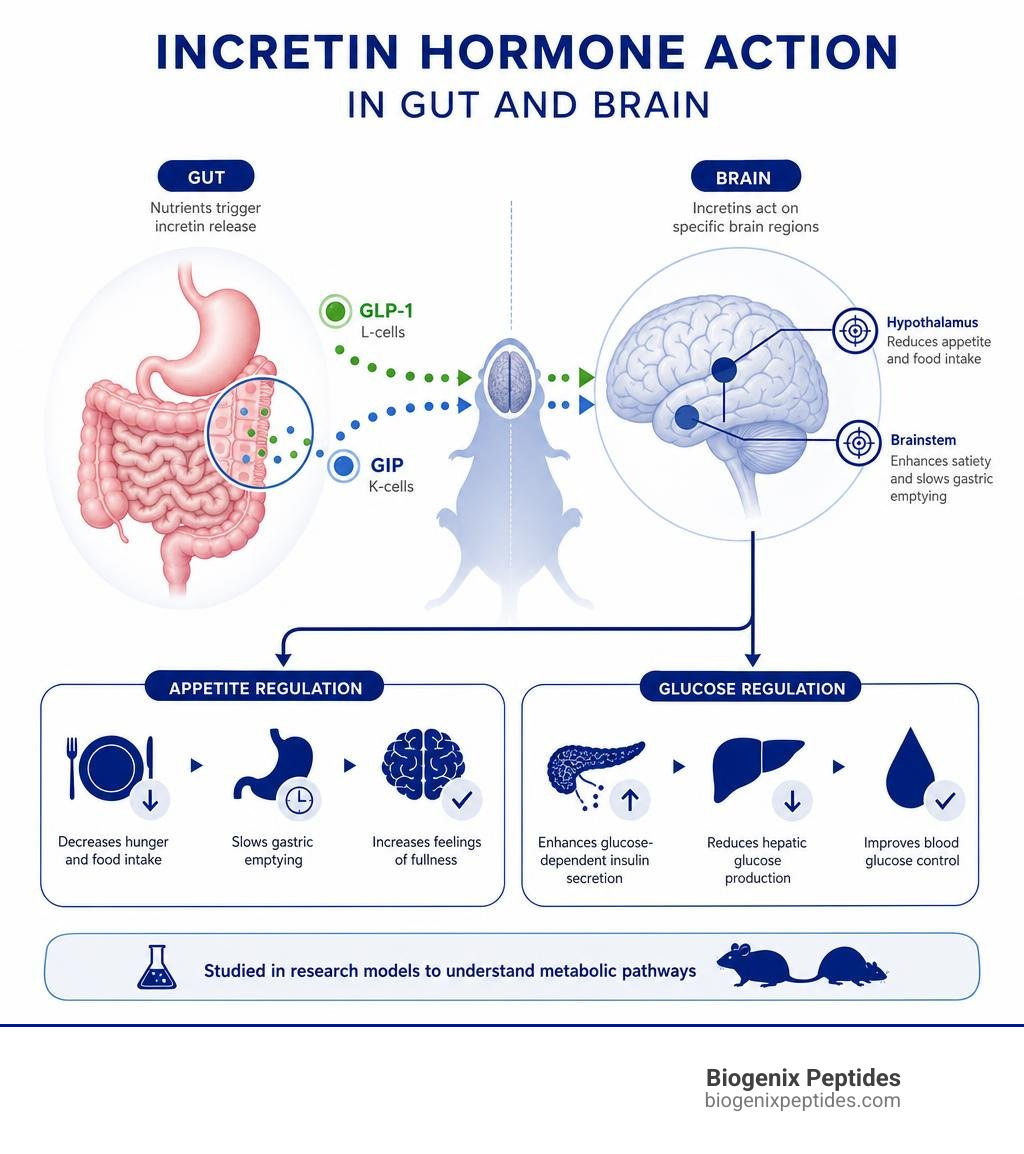
To understand why these research compounds are so effective, we must first look at natural physiology. Incretins are gut-derived metabolic hormones released after food consumption. They play a vital role in regulating insulin release, blood glucose levels, and digestion. The two primary incretin hormones are glucagon-like peptide-1 (GLP-1) and glucose-dependent insulinotropic polypeptide (GIP).
In healthy organisms, these hormones signal the pancreas to release insulin in response to food, but they only do so when blood glucose is elevated. This glucose-dependent mechanism significantly minimizes the risk of hypoglycemia compared to older metabolic compounds.
Beyond insulin regulation, incretin mimetics delay gastric emptying. This slower digestion rate keeps food in the stomach longer, extending physical fullness. In laboratory settings, this pathway is critical to understanding how appetite is regulated over long periods.
For a foundational look at how these mechanisms operate, you can read more about Incretins: What Are They, and How Are They Beneficial?. To explore how these biochemical pathways are classified, check out our ultimate guide to the incretin mimetic class as well as our detailed GLP-1 pathway explanations.
Mechanisms of GLP-1 and GIP Receptor Agonists
The true power of incretin mimetics for weight loss lies in their dual action on the gut and the brain. While delayed gastric emptying handles the physical sensation of fullness, these peptides also cross the blood-brain barrier to target metabolic control centers in the hypothalamus.
Specifically, these agents interact with appetite-regulating pathways by inhibiting agouti-related peptide (AgRP) neurons. AgRP neurons are the body’s primary “hunger triggers”—when active, they drive search-and-consume behaviors. By blunting these neurons, incretin mimetics actively suppress the drive to eat.
This neural pathway inhibition prevents the drop in leptin levels that typically occurs during weight reduction. Normally, when fat mass decreases, leptin levels plunge, signaling the brain that the organism is starving. This triggers a massive hunger response and slows metabolic rate—a survival adaptation known as the “energy homeostasis rebound.” Incretin mimetics essentially bypass this defense mechanism, allowing sustained caloric reduction without triggering the panic button in the brain.
To understand the broader implications of these pathways, you can read our guide on what GLP-1 peptides are and review our complete guide to GLP-1 peptides.
Currently Researched Incretin Mimetics for Weight Loss Efficacy
Metabolic research has advanced from simple single-hormone mimics to complex multi-receptor agonists. The primary compounds under active investigation include:
- Liraglutide: A first-generation daily GLP-1 receptor agonist that paved the way for modern weight management research.
- Semaglutide: A weekly GLP-1 receptor agonist that demonstrated a major leap forward in potency and receptor affinity.
- Tirzepatide: A dual GIP and GLP-1 receptor agonist. By activating both pathways, it achieves synergistic effects on both insulin secretion and appetite suppression.
- Retatrutide: A triple receptor agonist targeting GLP-1, GIP, and glucagon receptors, showing the most pronounced weight reduction in recent trials.
These multi-receptor approaches represent the cutting edge of peptide design. Researchers interested in how these multi-pathway compounds operate can read our analysis of dual and triple agonist research as well as our deep dive into retatrutide metabolic tri-agonist analysis.
Comparative Efficacy: Incretin Therapy vs. Traditional Interventions
Historically, non-pharmacologic interventions (such as caloric restriction and basic exercise programs) or older metabolic compounds yielded modest results. Traditional weight-loss models rarely exceeded a 5% to 8% reduction in total body weight, with high rates of regain due to the body’s compensatory hunger pathways.
In contrast, modern incretin therapies produce weight reduction that matches or exceeds historical benchmarks. This is because they do not simply rely on willpower; they biochemically alter the energy balance equation. For a thorough exploration of this paradigm shift, researchers can refer to the paper How should we think about the unprecedented weight loss efficacy of incretin-mimetic drugs?.
Clinical Trial Benchmarks for Weight Reduction
The clinical data gathered over the last few years highlights a clear hierarchy of efficacy among these research compounds:
- Liraglutide: In initial 68-week studies, subjects achieved an average weight reduction of approximately 8%, with some long-term cohorts maintaining around 6%.
- Semaglutide: Research models showed an average weight loss of nearly 15% in initial trials, reaching up to 16% in structured 68-week evaluations. Approximately 80% of participants in these trials achieved at least a 5% reduction in total body weight.
- Tirzepatide and Retatrutide: These newer multi-agonists induce an average of 15% to 24% weight loss in adults with overweight or obesity. Retatrutide, in particular, has demonstrated up to 24.2% weight reduction at its highest evaluated concentrations over 48 weeks.
- Glycemic Control: Across all these agents, researchers observe an A1C reduction of 1% to 2% in subjects with Type 2 diabetes, showing their profound impact on glucose disposal.
For those tracking the latest phase 3 developments, read our breakdown of the TRIUMPH-4 phase 3 study on retatrutide.
The Impact of Imperfect Adherence on Incretin Mimetics for Weight Loss
One of the most fascinating findings in recent mathematical modeling of peptide pharmacokinetics is the concept of “adherence forgiveness.” In clinical settings, patient compliance is notoriously low. However, mathematical simulations show that incretin mimetics are surprisingly resilient to occasional missed schedule steps.
The data reveals:
- Maintaining 80% adherence to the protocol yields approximately 90% of the weight loss achieved under perfect conditions.
- Maintaining only 50% adherence still yields nearly 70% of the weight loss seen with perfect compliance.
This indicates that the traditional 80% compliance threshold required for clinical efficacy in other drug classes may not strictly apply to incretin mimetics for weight loss. Missed applications do not cause massive, immediate fluctuations in body weight, provided consecutive misses are limited. This forgiveness is due to the extended half-life of weekly formulations, which maintain steady-state receptor activation even when administration schedules are slightly delayed.
To understand how to safely manage these titration schedules and maintain stable concentrations, see our comprehensive guide to retatrutide protocols and safety.
Body Composition Dynamics: Lean Mass Loss and Health Implications
While the total scale weight reduction achieved with incretin therapies is impressive, the quality of that weight loss is a subject of intense scientific debate. When an organism undergoes rapid weight loss, it does not just lose adipose tissue; it also sheds lean muscle mass.
Losing muscle mass can have serious physiological consequences, including a reduced basal metabolic rate, physical weakness, and an increased risk of sarcopenia and frailty. This is particularly concerning in older research models where muscle recovery is slower. For a comprehensive overview of how to address this challenge, you can read our guide to muscle preservation during therapy and review the clinical perspectives in Incretin-Based Weight Loss Pharmacotherapy: Can Resistance Exercise Optimize Changes in Body Composition?.
Quantifying Muscle Loss During Rapid Weight Reduction
Data from body composition sub-studies reveals that incretin therapies can cause a rapid and significant loss of lean mass—averaging about 10% of total weight lost, or roughly 6 kg of absolute muscle mass.
To put this in perspective:
- A 6 kg loss of muscle mass is equivalent to a decade or more of natural age-related muscle decline (sarcopenia).
- Even when the percentage of lean mass appears stable or improved on paper (because fat mass dropped even faster), the absolute loss of functional muscle tissue remains highly significant.
This rapid decline in skeletal muscle tissue poses a major hurdle for long-term metabolic health. To understand how these dynamics change across different age brackets, read our analysis on navigating GLP-1 therapy in older populations.
Mitigating Muscle Loss with Resistance Training and Nutrition
To counter this muscle loss, researchers are looking at combined protocols that pair peptide administration with targeted lifestyle interventions.
- Resistance Exercise: Studies show that supervised resistance training interventions lasting more than 10 weeks can elicit an average increase of 3 kg in lean mass and a 25% increase in strength.
- Nutritional Support: High protein intake acts as a chemical signal to preserve muscle protein synthesis during periods of deep caloric deficits.
By combining resistance exercise with incretin therapy, research models show optimized body composition outcomes—allowing maximum fat loss while preserving vital skeletal muscle. To learn more about this biological synergy, read our article on why exercise and GLP-1s are highly compatible.
Research Accessibility, Cost Barriers, and Acquisition Dynamics
For laboratory researchers and institutions, acquiring high-purity reference compounds is a major logistical and financial challenge. Commercial, brand-name versions of these peptides are exceptionally expensive—often costing upwards of $1,000 per month.
Furthermore, insurance coverage for these premium weight-management therapies is highly restricted. As of May 2024, only about one-third of employer-sponsored health plans in the U.S. covered these compounds for weight management. Medicaid coverage is limited to roughly 30% of state plans, ACA Marketplace coverage is under 1%, and Medicare has strict statutory prohibitions against covering weight-loss medications (though exceptions exist for specific cardiovascular risk reduction).
These strict insurance policies and high retail costs create massive barriers for researchers who need to run comparative studies but face tight institutional budgets. To address these limitations, many laboratories look for alternative sourcing to obtain high-purity peptides without commercial markups. For strategies on managing these research constraints, read our guide on obtaining results on a limited budget.
Sourcing Challenges and the Focus on Receptor Agonists
Because of the high cost of commercial options, researchers must establish strict verification protocols when sourcing peptides for laboratory programs. Ensuring chemical purity (ideally >99% analytical purity verified via HPLC and Mass Spectrometry) is vital to obtaining reliable, reproducible scientific data.
To understand why the medical and scientific community remains so focused on these specific pathways despite the high cost barriers, you can read our detailed piece on why scientific interest in these agonists remains high.
Availability Variations and Research Equity
The gap between clinical prescription access and direct laboratory research access can slow down metabolic science. While well-funded private institutions can easily afford commercial-grade reference materials, independent labs and smaller academic programs often struggle. This lack of research equity highlights the need for reliable, affordable, and high-purity peptide sources to ensure that metabolic research continues to advance globally.
Long-Term Considerations: Weight Maintenance and Rebound Prevention
A critical question in metabolic science is what happens when the compound is removed. Because incretin mimetics work by actively suppressing the body’s natural hunger signals and blunting AgRP neurons, stopping the compound removes this biochemical block.
Once the peptide is cleared from the system:
- The energy homeostasis system responds vigorously.
- Compensatory food intake increases rapidly as the brain attempts to restore the lost fat mass.
- Clinical trials show that weight regain after stopping semaglutide or tirzepatide occurs faster than the initial weight loss.
This reality suggests that long-term, low-concentration maintenance protocols may be necessary to prevent rebound weight gain. Additionally, the development of oral small-molecule agonists may offer a more scalable, cost-effective solution for long-term metabolic management.
For instance, the development of oral GLP-1 aleniglipron by Structure Therapeutics has shown promising phase II results, achieving up to 16.3% placebo-adjusted weight loss at 44 weeks without reaching a plateau. To review the latest corporate and clinical updates on oral alternatives, check out the Structure Therapeutics Inc. March 2026 Earnings Call Transcript.
Frequently Asked Questions about Incretin Therapy
What are the primary side effects of incretin therapies in research?
The most common adverse events observed in research subjects are gastrointestinal, including mild-to-moderate nausea, vomiting, diarrhea, and constipation. These effects are typically most pronounced during initial protocol steps or when concentration levels are increased too quickly. Less common but more serious risks include pancreatitis, gallbladder disease, and a boxed warning regarding thyroid C-cell tumors. Additionally, researchers monitor systemic hydration and oral health, as dry mouth and altered saliva pH can occur. For more on this, read our guide on protecting oral health during administration.
How do oral incretin mimetics compare to subcutaneous options?
Oral formulations (such as oral semaglutide, aleniglipron, or orforglipron) offer a non-invasive alternative to liquid subcutaneous formats. While liquid formulations typically have higher bioavailability and more predictable absorption rates, oral small-molecule agonists are highly scalable and easier to store, making them an exciting area of future research. To learn more about the science behind these delivery formats, see our scientific weight loss guide.
Can lifestyle modifications prevent weight regain after stopping incretin therapy?
Yes, but it requires a highly structured approach. Preserving lean muscle tissue through intensive resistance training and maintaining a high-protein diet are critical to keeping the basal metabolic rate elevated. Additionally, combining GLP-1 agonists with complementary pathways, such as amylin mimetics, can help sustain satiety after stopping primary therapy. For an exploration of these synergetic pathways, read about our cagrilintide pathway synergy research.
Conclusion
Incretin mimetics for weight loss have fundamentally changed our understanding of metabolic biology. By targeting gut-brain pathways, these compounds offer unprecedented weight-reduction capabilities. However, researchers must balance these impressive results against the risks of muscle loss, the challenge of long-term weight maintenance, and the high cost of sourcing.
At BioGenix Peptides, we are committed to supporting the scientific community by providing high-purity compounds for laboratory research. To view our selection of metabolic research materials, explore our GLP-1 research compounds.