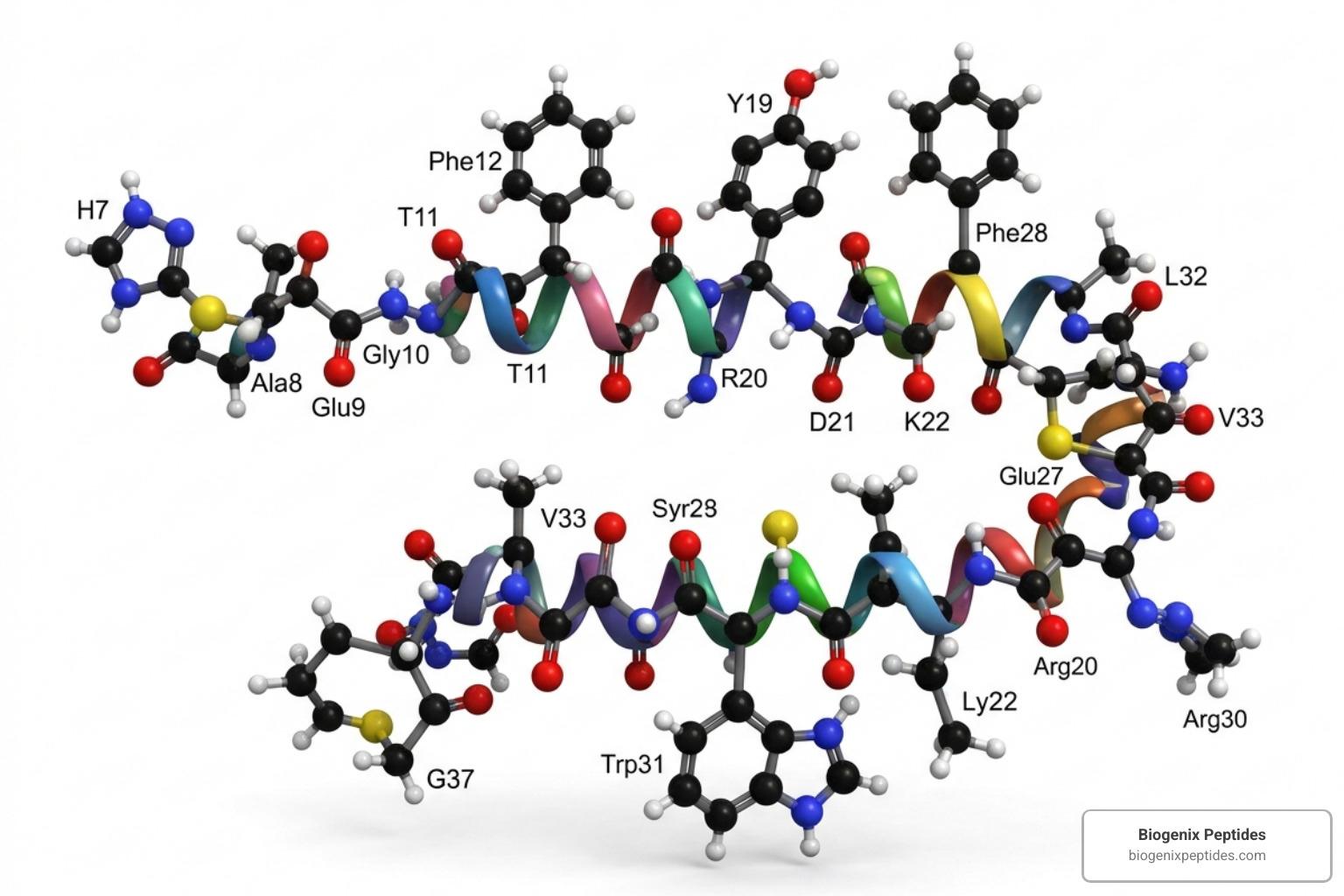
What Are GLP 1 Peptides and Why Is Everyone Talking About Them?
Why Glucagon Like Peptide Is One of the Most Researched Hormones in Science
Disclaimer: The information provided in this article is for educational and informational purposes only. It is not intended as medical advice, diagnosis, or treatment. Products and compounds referenced are for research use only and are not approved for human or veterinary consumption. Always consult a qualified professional regarding health or medical decisions.
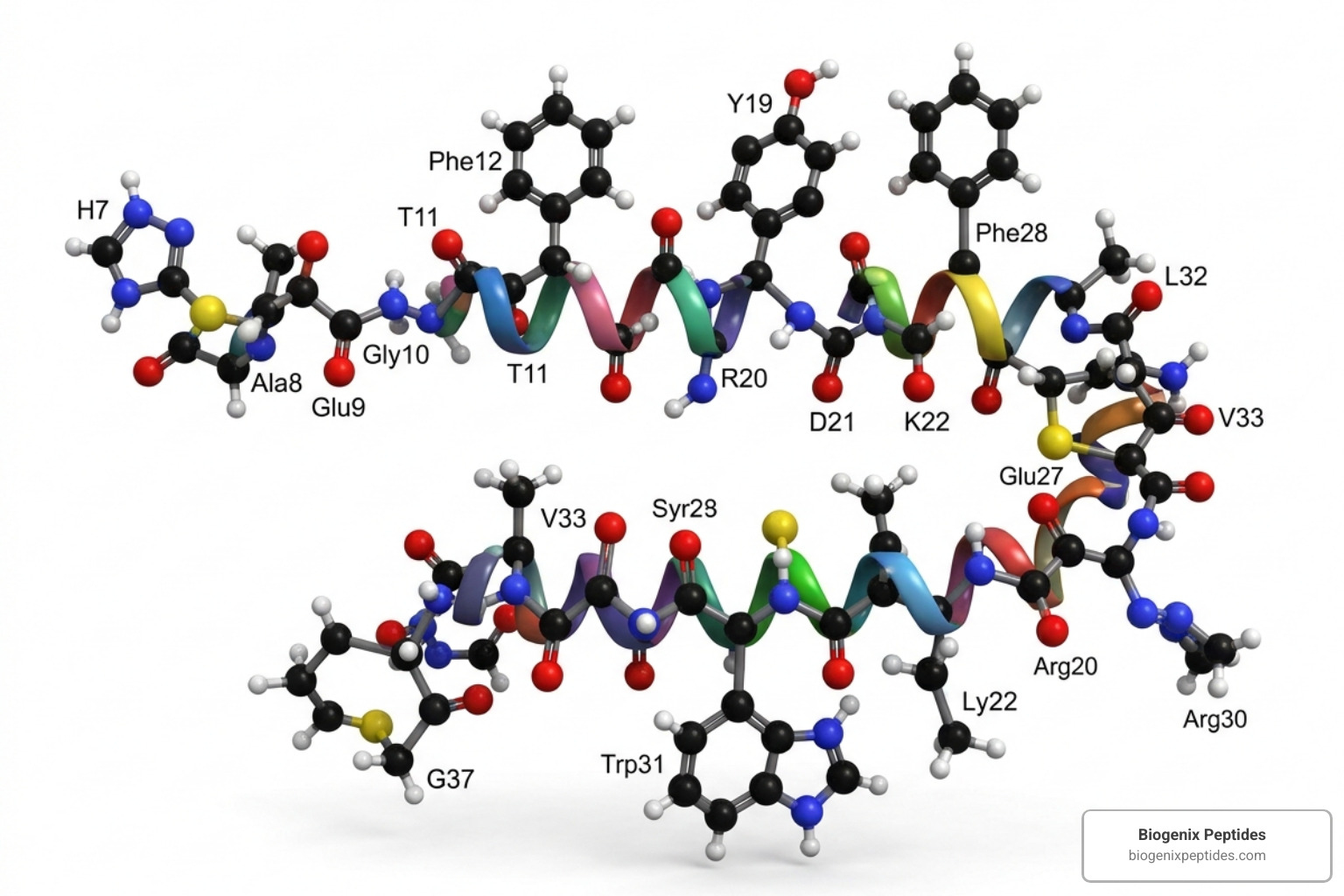
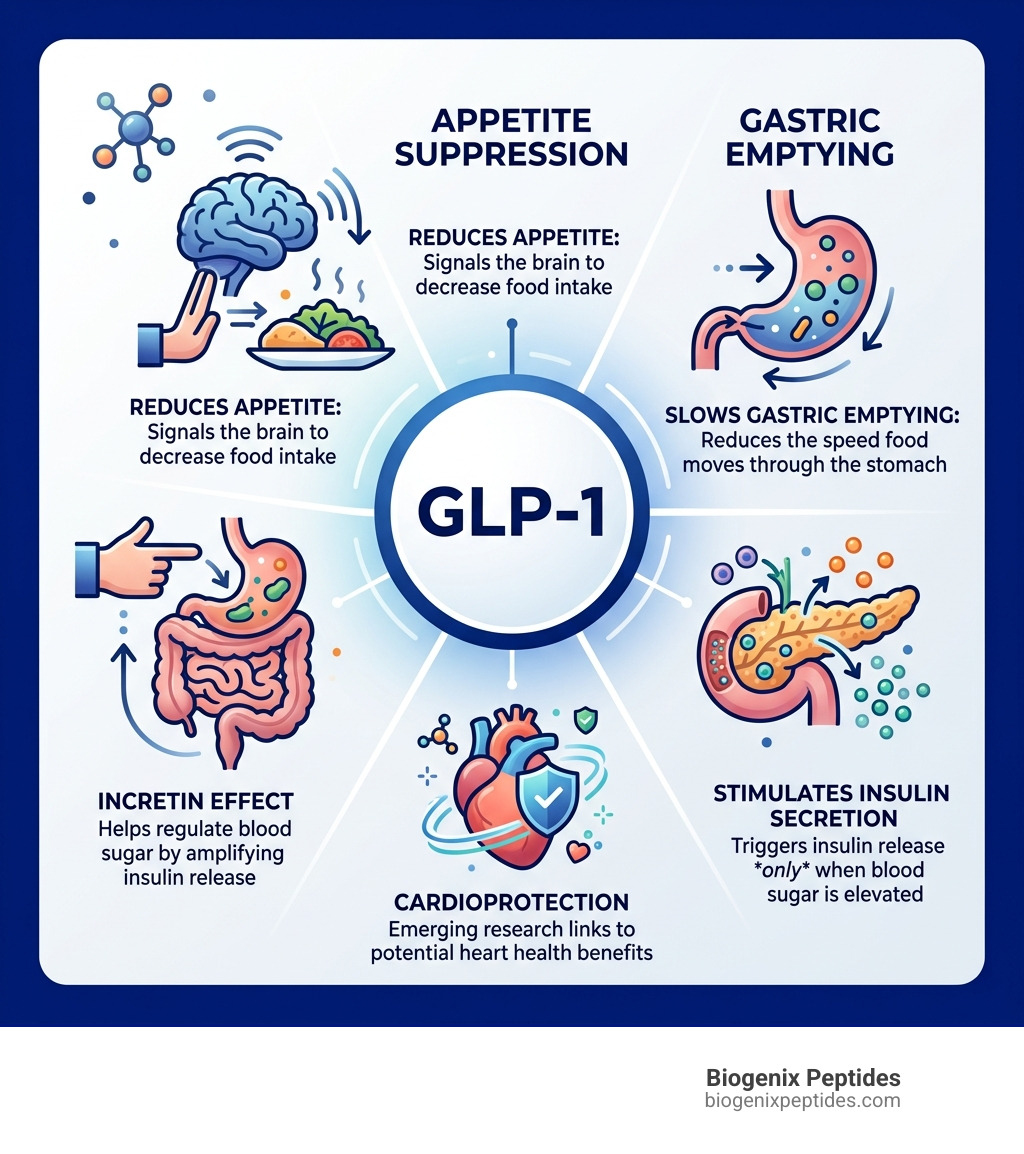
Glucagon like peptide (GLP-1) is a naturally occurring hormone produced in the gut, brain, and pancreas that plays a central role in regulating blood sugar, appetite, and digestion.
Here is a quick overview of what it does:
| Function | What It Means |
|---|---|
| Stimulates insulin secretion | Triggers insulin release only when blood sugar is elevated |
| Slows gastric emptying | Reduces the speed food moves through the stomach |
| Reduces appetite | Signals the brain to decrease food intake |
| Supports β-cell health | May promote pancreatic beta-cell survival and growth |
| Cardio and neuroprotective | Emerging research links it to heart and brain health benefits |
GLP-1 is secreted primarily from intestinal L-cells in the distal ileum and colon, and from neurons in the brainstem. It is short-lived in the body — with a half-life of just 1–2 minutes — yet its effects are powerful enough to have sparked an entire class of research compounds and clinical therapies.
What makes this hormone especially fascinating is its origin. GLP-1 does not come from a dedicated gene. Instead, it is carved out of a larger precursor protein called proglucagon — the same precursor that produces glucagon in the pancreas. Depending on which tissue processes it, the result is a completely different hormone with very different effects.
That tissue-specific biology is part of why researchers have been so captivated by this molecule for decades.
I’m Jay Daniel, Founder and CEO of BioGenix Peptides, and through years of hands-on work in peptide research and development, I’ve closely followed the science surrounding glucagon like peptide and its rapidly expanding role in metabolic and molecular research. In this guide, we’ll break down the full biology of GLP-1 — from its discovery to its mechanisms and beyond.
The Biological Origin of Glucagon Like Peptide
The journey of glucagon like peptide begins with the proglucagon gene. This gene is expressed in three primary locations: the pancreatic alpha-cells, the enteroendocrine L-cells of the distal ileum and colon, and a specific set of neurons in the brainstem known as the nucleus tractus solitarii (NTS).
While the gene is the same in all these locations, the final product is not. This is due to a process called posttranslational processing. In the gut and the brain, an enzyme called PCSK1/3 (prohormone convertase 1/3) acts like a pair of biological scissors, snipping the large proglucagon protein to release GLP-1, GLP-2, oxyntomodulin, and glicentin.
According to research from Glucagon-like peptide 1 (GLP-1) – Bachem, the proglucagon precursor has a molecular weight of approximately 18,000. From this, the 37-amino acid peptide we know as GLP-1 is formed. Interestingly, in humans, the majority of circulating GLP-1 (about 80%) exists in the form of GLP-1 (7-36amide), while the remaining 20% is GLP-1 (7-37).
Tissue-Specific Posttranslational Processing
The “magic” of glucagon like peptide lies in how the body differentiates between its various needs. In the pancreas, the environment is different. Instead of PCSK1/3, the alpha-cells utilize an enzyme called PCSK2.
When PCSK2 processes proglucagon, it primarily produces glucagon—a hormone that raises blood sugar, effectively doing the opposite of GLP-1. This tissue-specific cleavage is why the same genetic blueprint can lead to two hormones with antagonistic roles. In the gut, the focus is on the Glp 1 Incretin Pathways Explained, where the processing yields GLP-1 and GLP-2, both of which support metabolic and intestinal health.
Historical Discovery and Evolution
The discovery of GLP-1 is a classic tale of scientific detective work. In the early days of endocrinology, researchers noticed that early insulin preparations often caused a brief, paradoxical rise in blood sugar before lowering it. They attributed this to a “toxic fraction” in the insulin, which was later identified as pancreatic glucagon.
However, the plot thickened when scientists observed “glucagon-like immunoreactivity” in subjects who had undergone a total pancreatectomy. If the pancreas was gone, where was this glucagon-like material coming from? This led to the identification of intestinal glucagon-like substances. By the 1980s, the cloning of the proglucagon gene revealed the existence of two distinct “glucagon-like” sequences, eventually named GLP-1 and GLP-2. This solidified the “incretin concept”—the idea that gut-derived hormones significantly amplify the insulin response to oral glucose compared to intravenous glucose.
Physiological Mechanisms and the Incretin Effect
The primary claim to fame for glucagon like peptide is its role as an incretin hormone. When we eat, the presence of nutrients in the digestive tract triggers the release of GLP-1. Its most critical function is stimulating glucose-dependent insulin secretion from pancreatic beta-cells.
The “glucose-dependent” part is vital: GLP-1 only prompts the release of insulin when blood glucose levels are high. This acts as a natural safeguard against hypoglycemia (dangerously low blood sugar). Beyond insulin, GLP-1 also suppresses the secretion of glucagon, further helping to stabilize blood sugar levels.
| Feature | GLP-1 | GIP (Glucose-dependent Insulinotropic Polypeptide) |
|---|---|---|
| Primary Source | Intestinal L-cells (Distal) | Intestinal K-cells (Proximal) |
| Insulin Secretion | Stimulates (Glucose-dependent) | Stimulates (Glucose-dependent) |
| Glucagon Secretion | Inhibits | Stimulates (at low glucose) |
| Gastric Emptying | Slows significantly | Minimal effect |
| Appetite | Reduces centrally | Minimal effect on satiety |
How Glucagon Like Peptide Activates the GLP-1 Receptor
To exert its effects, GLP-1 must bind to the GLP-1 Receptor (GLP-1R). This receptor is a member of the Class B G protein-coupled receptor family. It features a distinct 7-transmembrane structure and is highly conserved across species; for instance, there is roughly 90% sequence homology between rat and human GLP-1R proteins.
When GLP-1 binds to its receptor on the pancreatic beta-cells, it triggers a cascade of intracellular signaling, primarily involving the activation of adenylate cyclase and the rise of cyclic AMP (cAMP). As detailed in Glucagon-like peptide 1 (GLP-1) – PMC, this process enhances the sensitivity of the insulin-secreting machinery to glucose, leading to a robust but controlled insulin release.
Nutrient-Stimulated Secretion Pathways
GLP-1 isn’t just floating around at high levels all the time. In healthy humans, fasting concentrations of total GLP-1 are quite low, typically between 5–10 pmol/L. However, after a mixed meal, these levels can surge up to 40 pmol/L.
The secretion is stimulated by various nutrients, including:
- Carbohydrates: Simple sugars like glucose are potent triggers.
- Fatty Acids: Certain fats interact with receptors on L-cells to prompt release.
- Proteins: Amino acids also play a role in the secretory response.
Interestingly, although L-cells are located primarily in the distal ileum and colon (the lower parts of the small and large intestine), GLP-1 levels rise within minutes of eating. This suggests a “proximal-to-distal” neuroendocrine reflex, where the presence of food in the upper gut signals the lower gut to start secreting GLP-1. You can find more about these specific products in our Category/Glp 1 section.
Pharmacokinetics and the Challenge of Half-Life
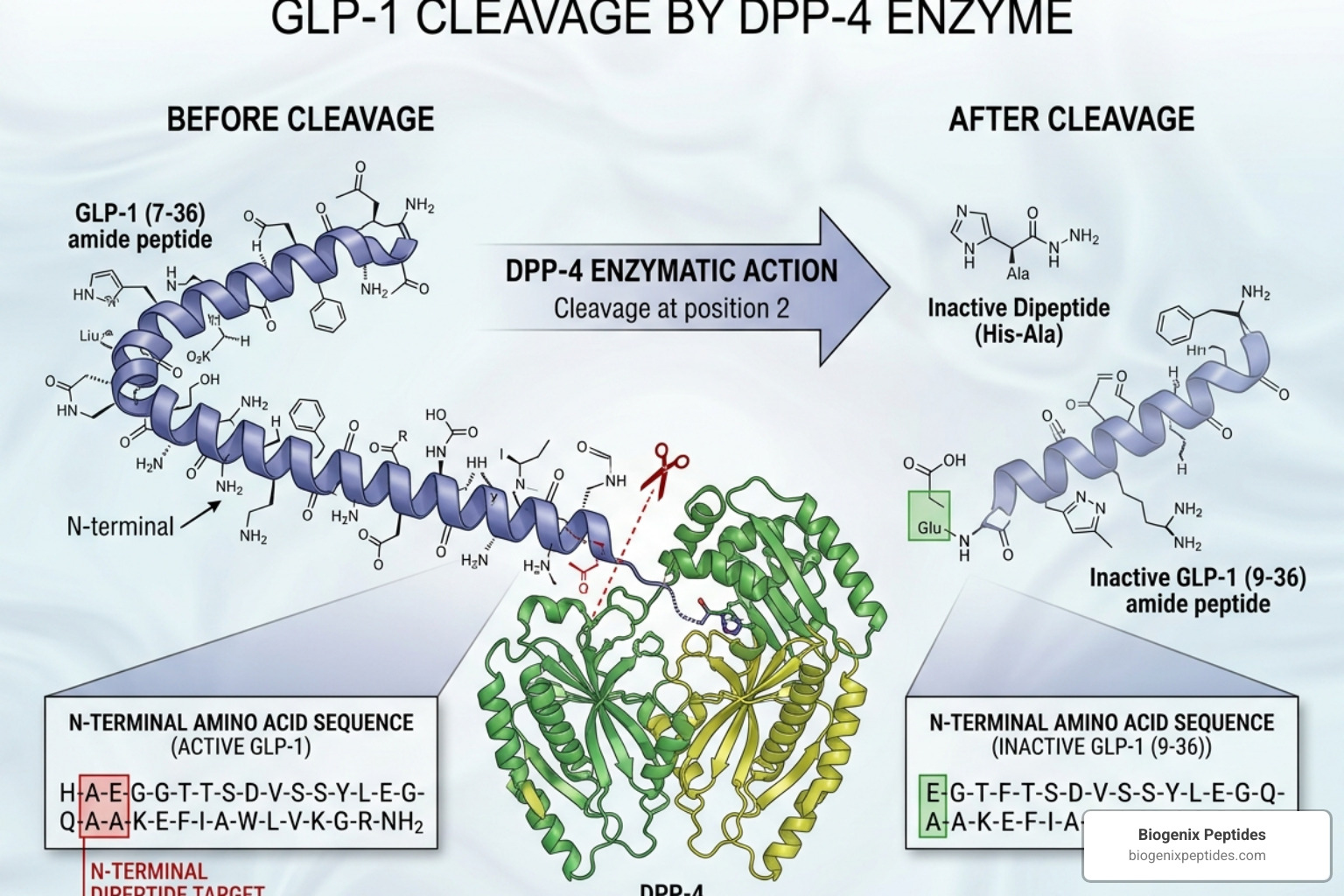
If glucagon like peptide is so beneficial, why don’t we just use the native version for research? The answer lies in its extreme fragility. Native GLP-1 has an incredibly short half-life of roughly 1 to 2 minutes.
The primary culprit for this rapid disappearance is an enzyme called dipeptidyl peptidase-4 (DPP-4). This enzyme specifically targets the amino-terminal end of the GLP-1 molecule, cleaving it and rendering it inactive almost immediately after it enters the bloodstream. In fact, only about 10–15% of the GLP-1 secreted by the gut actually reaches the systemic circulation in its active form. The rest is degraded in the gut capillaries or by the liver.
Molecular Stability and Biased Agonism
To overcome this rapid degradation, researchers have developed various modifications to the GLP-1 molecule. By changing specific amino acids in the sequence, they can create “GLP-1 receptor agonists” that are resistant to DPP-4 cleavage, allowing them to remain active in the body for hours or even days.
Research in this field also looks at “biased agonism.” This refers to the ability of certain molecules to activate specific signaling pathways within the receptor while ignoring others. This can influence how the receptor internalizes (moves from the cell surface to the interior) and how it desensitizes over time. Understanding these molecular nuances is a core focus for those browsing our Product Category/Glp 1 offerings.
Therapeutic Implications in Modern Research
The discovery of the GLP-1 pathway has revolutionized metabolic research. Because GLP-1 influences so many systems—the pancreas, the stomach, and the brain—it has become a cornerstone in the study of type-2 diabetes and obesity.
As noted by the Cleveland Clinic, GLP-1 receptor agonists have been successfully used to help manage blood sugar and support weight loss in clinical settings. The reason researchers are so focused on these compounds is their “pleiotropic” nature—meaning they have multiple effects across different organ systems. We dive deeper into this fascination in our article on Why Your Doctor Is Obsessed With Glp 1 Receptor Agonists.
Future Directions for Glucagon Like Peptide Agonists
The next frontier in GLP-1 research involves “poly-agonists.” These are single molecules designed to activate multiple receptors simultaneously. For example:
- Dual Agonists: Target both GLP-1 and GIP receptors.
- Triple Agonists: Target GLP-1, GIP, and Glucagon receptors.
Compounds like Retatrutide are currently at the forefront of this research, aiming to maximize metabolic impact by engaging multiple pathways at once. You can read more about this in our research summary on Glp 1 Dual And Triple Agonist Peptides Semaglutide Tirzepatide And Retatrutide In Research or view specific research materials like Retatrutide Glp 3 30Mg.
Beyond Metabolism: Cardio and Neuroprotection
While blood sugar and weight are the most famous targets, the reach of glucagon like peptide extends much further. Evidence suggests that GLP-1R activation has significant anti-inflammatory effects and may offer protection to the heart and brain.
In the cardiovascular system, GLP-1 has been linked to improved endothelial function and increased natriuresis (the excretion of sodium by the kidneys), which can help manage fluid balance. In the brain, GLP-1 receptors in the hypothalamus and reward centers modulate food-seeking behavior and may even offer neuroprotective benefits against degenerative processes. This is why many are starting to see these compounds as a Change Of Heart For Cardiac Care.
Frequently Asked Questions about GLP-1
What is the difference between GLP-1 and pancreatic glucagon?
While both originate from the proglucagon gene, they are processed by different enzymes. In the pancreas, PCSK2 creates glucagon, which raises blood sugar. In the gut, PCSK1/3 creates GLP-1, which lowers blood sugar by stimulating insulin and slowing digestion. They are essentially biological opposites.
Why does native GLP-1 require biochemical modification for research?
Native GLP-1 is destroyed by the enzyme DPP-4 within 1–2 minutes. For any meaningful research into its long-term physiological effects, the peptide must be modified to resist this enzyme or be delivered via a continuous infusion, which is often impractical for large-scale studies.
How does GLP-1 influence the central nervous system?
GLP-1 crosses the blood-brain barrier in certain areas and is also produced locally in the brainstem. It acts on the hypothalamus to increase feelings of fullness (satiety) and on the hindbrain to slow gastric emptying. It also interacts with dopaminergic reward pathways, potentially reducing the “reward” feeling associated with high-calorie foods.
Conclusion
At BioGenix Peptides, we believe that understanding the fundamental biology of glucagon like peptide is essential for any researcher looking to explore the cutting edge of metabolic science. From its humble beginnings as a “toxic fraction” in early insulin to its current status as a multi-billion dollar research focus, GLP-1 has proven to be one of the most versatile and impactful hormones in the human body.
Whether it is the incretin effect, the slowing of gastric emptying, or the emerging neuroprotective benefits, the potential for GLP-1-based research continues to grow. As we move into 2026, the development of dual and triple agonists promises to unlock even more secrets of human metabolism.
If you are looking to further your understanding or explore high-quality materials for your next project, we invite you to Explore the full range of GLP-1 research compounds available through our platform. The future of metabolic innovation is here, and it is written in the sequence of GLP-1.