Cagrilintide: The Secret Catalyst for GLP-1 Pathways
Introduction
How a next-generation amylin analog quietly amplifies the effects of GLP-1–based metabolic research.
GLP-1–based research compounds like Semaglutide, Tirzepatide, and Retatrutide dominate the metabolic conversation. But quietly emerging alongside them is a different class of peptide—one that doesn’t compete with GLP-1 analogs at all. Instead, it appears to amplify and complement their activity.
That peptide is Cagrilintide, a long-acting amylin analog engineered for stability, longevity, and deep central appetite signaling. In many research models, Cagrilintide behaves less like a “standalone” compound and more like a force multiplier for GLP-1 pathways.
If GLP-1 is the engine, Cagrilintide is the turbocharger.
What Is Cagrilintide?
Layman Explanation
Cagrilintide is a synthetic peptide designed to mimic amylin, a hormone that helps the brain understand when it is full. GLP-1 compounds already influence hunger and how the body handles food, but amylin works on a different set of receptors in the brain.
When researchers combine Cagrilintide with GLP-1 analogs in experimental models, they’re essentially turning up two different “fullness” and appetite-control systems at once. That’s where the idea of Cagrilintide as a “secret catalyst” comes from.
Product Link → Cagrilintide
Scientific Explanation
Cagrilintide is a long-acting amylin receptor agonist with structural modifications designed to:
- Increase circulating half-life through albumin binding
- Resist fibrillation and aggregation issues seen with native amylin
- Provide stable activation at AMY1, AMY2, and AMY3 receptors
- Drive sustained central satiety signaling at hypothalamic and brainstem targets
Unlike GLP-1 agonists, which primarily act as incretin mimetics, Cagrilintide operates within the neuroendocrine and amylin receptor space, especially in areas responsible for meal size, reward-driven feeding, and gastric motility.
Why Cagrilintide Is the “Secret Catalyst” for GLP-1s
The word “catalyst” fits Cagrilintide because GLP-1 analogs and amylin analogs don’t compete with one another—they complement each other. By activating different but related signaling pathways, Cagrilintide can deepen and broaden the overall metabolic response observed in research.
1. Dual-Pathway Appetite Control
GLP-1 compounds influence gut-brain communication, insulin response, and gastric emptying. Cagrilintide, on the other hand, targets central satiety circuitry through amylin receptors. Together, they create a layered, two-system approach to appetite regulation:
- GLP-1 pathway: Incretin signaling, glucose-dependent insulin modulation, gut-brain communication
- Amylin pathway (Cagrilintide): Satiety, meal size suppression, reward-based feeding behaviors
2. Enhanced Hypothalamic Signaling
Cagrilintide activates brain areas such as the paraventricular nucleus, area postrema, and nucleus tractus solitarius—regions heavily involved in fullness, meal termination, and food reward. GLP-1 agonists act on overlapping but distinct neural circuits. The combination creates a broader “map” of appetite regulation throughout the central nervous system.
3. Smoother, More Sustained Satiety Curves
GLP-1 analogs are associated with delayed gastric emptying via vagal and hormonal routes. Cagrilintide adds a second layer of gastric regulation through amylin receptor pathways. In research models, this can translate into a more stable and sustained satiety profile across the dosing interval.
4. Addressing Reward-Driven Eating
One of the most compelling aspects of amylin signaling is its interaction with dopaminergic reward circuits. While GLP-1 analogs strongly modulate hunger, Cagrilintide targets the “wanting” or craving component of eating behavior. That dual influence is a key reason the combination is so heavily investigated.
5. Combination Research: GLP-1 + Cagrilintide
Preclinical and clinical research using GLP-1 analogs plus Cagrilintide has reported:
- Greater suppression of appetite-related signaling markers
- Reductions in meal size and frequency
- Improved energy-balance and thermogenic gene expression
- Metabolic outcomes that often surpass GLP-1 monotherapy in the same models
These findings support the idea of Cagrilintide as a GLP-1 “amplifier” rather than a replacement.
How Cagrilintide Works: Mechanism Overview
Amylin Receptor Activation
Amylin receptors are heterodimers consisting of a calcitonin receptor (CTR) plus one of several Receptor Activity Modifying Proteins (RAMP1–3). These combinations create the AMY1, AMY2, and AMY3 receptor subtypes.
Cagrilintide has high affinity for multiple amylin receptor subtypes, allowing it to modulate satiety, gastric motility, and nutrient handling in a dose- and time-dependent manner in research settings.
Product Link → Cagrilintide
Central Satiety and Hypothalamic Effects
Through its action in the hypothalamus and brainstem, Cagrilintide influences:
- Meal size and duration
- Motivation to initiate feeding
- Responsiveness to palatable, high-reward foods
GLP-1 compounds alone do not fully cover this reward-related domain, which is why the combination has become so interesting for modern metabolic research.
Gastric Motility and Nutrient Flow
Both GLP-1 and amylin signaling can slow gastric emptying, but they do so via partly different mechanisms. Cagrilintide’s amylin receptor activity contributes to:
- Regulated nutrient delivery to the intestine
- Steadier postprandial responses
- A longer-lasting perception of fullness after meals in research models
Extended Half-Life Design
Structural modifications enable Cagrilintide to bind albumin and circulate with a prolonged half-life, allowing for once-weekly research dosing. This conveniently parallels modern GLP-1 analog schedules and makes it a practical partner in combination protocols under controlled research conditions.
Layman Recap: Why Cagrilintide Matters
At a simple level:
- GLP-1 compounds help the body manage how food is processed and how hunger signals travel from the gut to the brain.
- Cagrilintide helps the brain understand “I’ve had enough” and can reduce the drive to keep eating.
Put together, they create a deeper, more complete form of appetite and energy regulation in research models than either pathway on its own. That’s why many investigators see Cagrilintide not as an alternative to GLP-1s, but as the secret catalyst that brings out their full potential.
Exploring Cagrilintide in Your Research
BioGenix Peptides provides high-purity, third-party tested research peptides aligned with strict quality standards. Cagrilintide is typically investigated alongside GLP-1–based compounds such as Semaglutide, Tirzepatide, and Retatrutide in modern metabolic and appetite-regulation models.
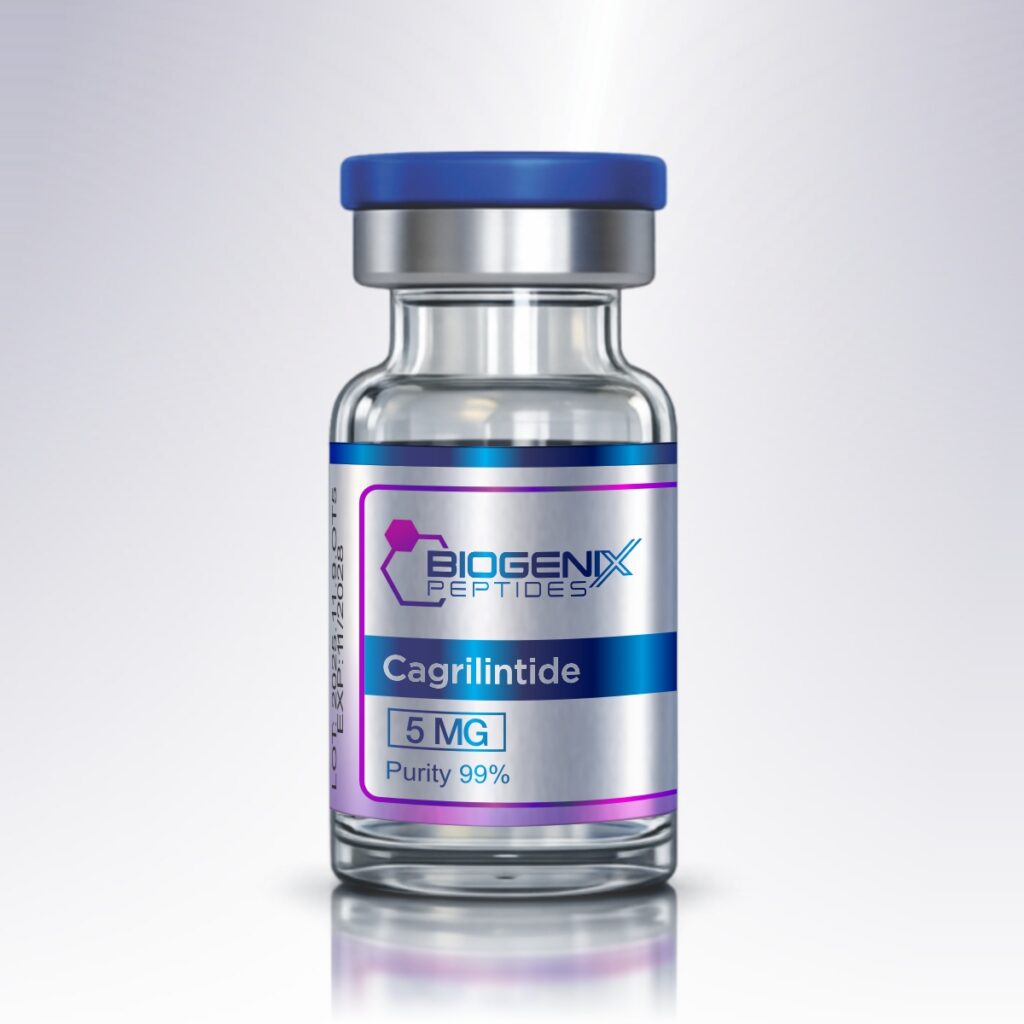
Cagrilintide 5mg
Cagrilintide is a novel, long-acting amylin analogue currently under investigation for its effects on metabolic regulation and appetite control. Its structure features N-terminal lipidation, which enhances stability by binding to serum albumin, extending its circulating half-life. By mimicking and amplifying the actions of natural amylin, Cagrilintide has been studied for its influence across both homeostatic (energy balance) and hedonic (reward-driven) appetite regulation pathways.
In Stock
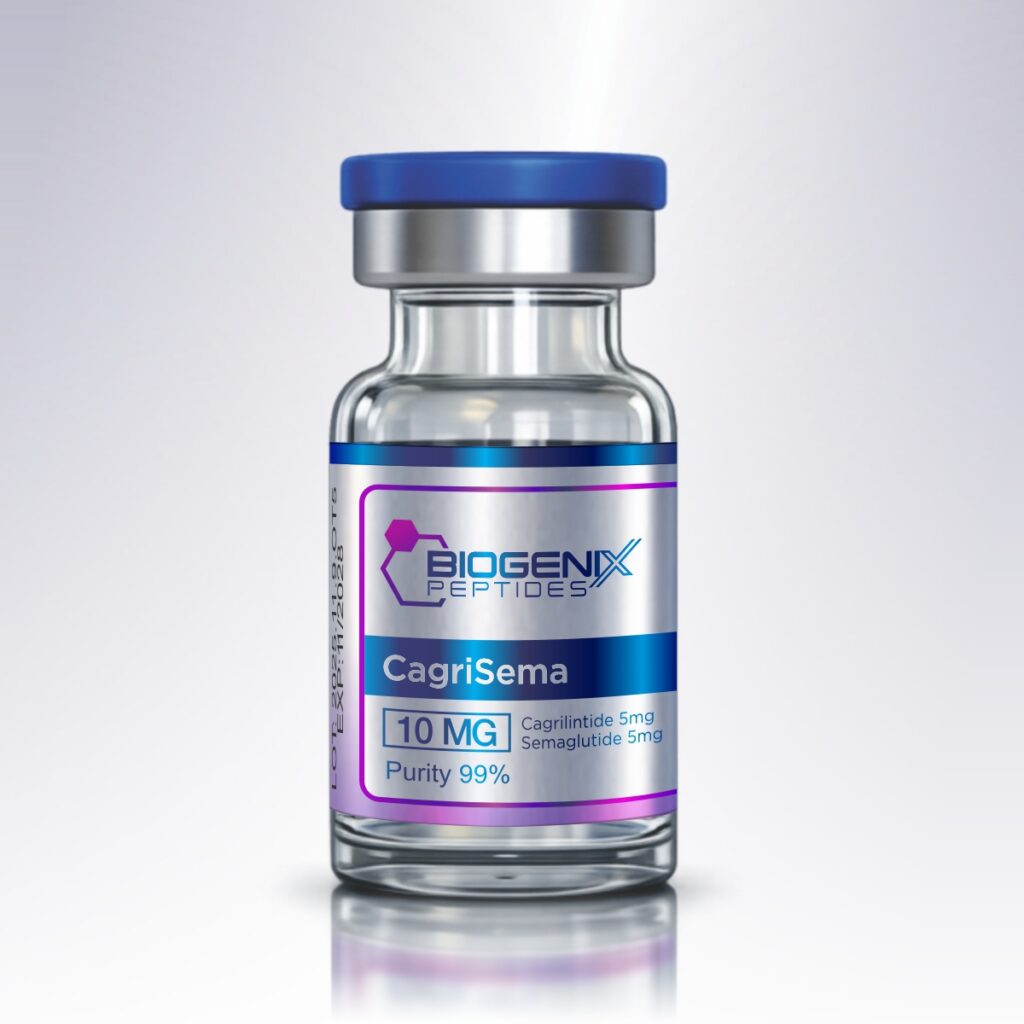
Cagrilintide | Semaglutide Blend 10 mg
Cagrilintide + Semaglutide is a dual-agonist research pairing that targets complementary pathways in appetite control, energy regulation, and metabolic balance. Cagrilintide, a long-acting amylin analogue, enhances satiety, slows gastric emptying, and influences reward-driven feeding signals. Semaglutide, an extended-duration GLP-1 receptor agonist, modulates glucose handling, gastric motility, and overall energy intake. When examined together, the two peptides demonstrate additive—potentially synergistic—effects on weight reduction, appetite suppression, and metabolic outcomes by engaging both homeostatic and hedonic appetite-regulation systems.
In Stock