The GLP-1 Guide to Not Melting Away Your Muscle
Why GLP-1 Agonists Muscle Preservation Matters More Than the Number on the Scale
GLP-1 agonists muscle preservation is one of the most important — and most overlooked — concerns for anyone using semaglutide, tirzepatide, or similar weight loss medications.
Here’s the quick answer if you need it now:
How to preserve muscle mass on GLP-1 agonists:
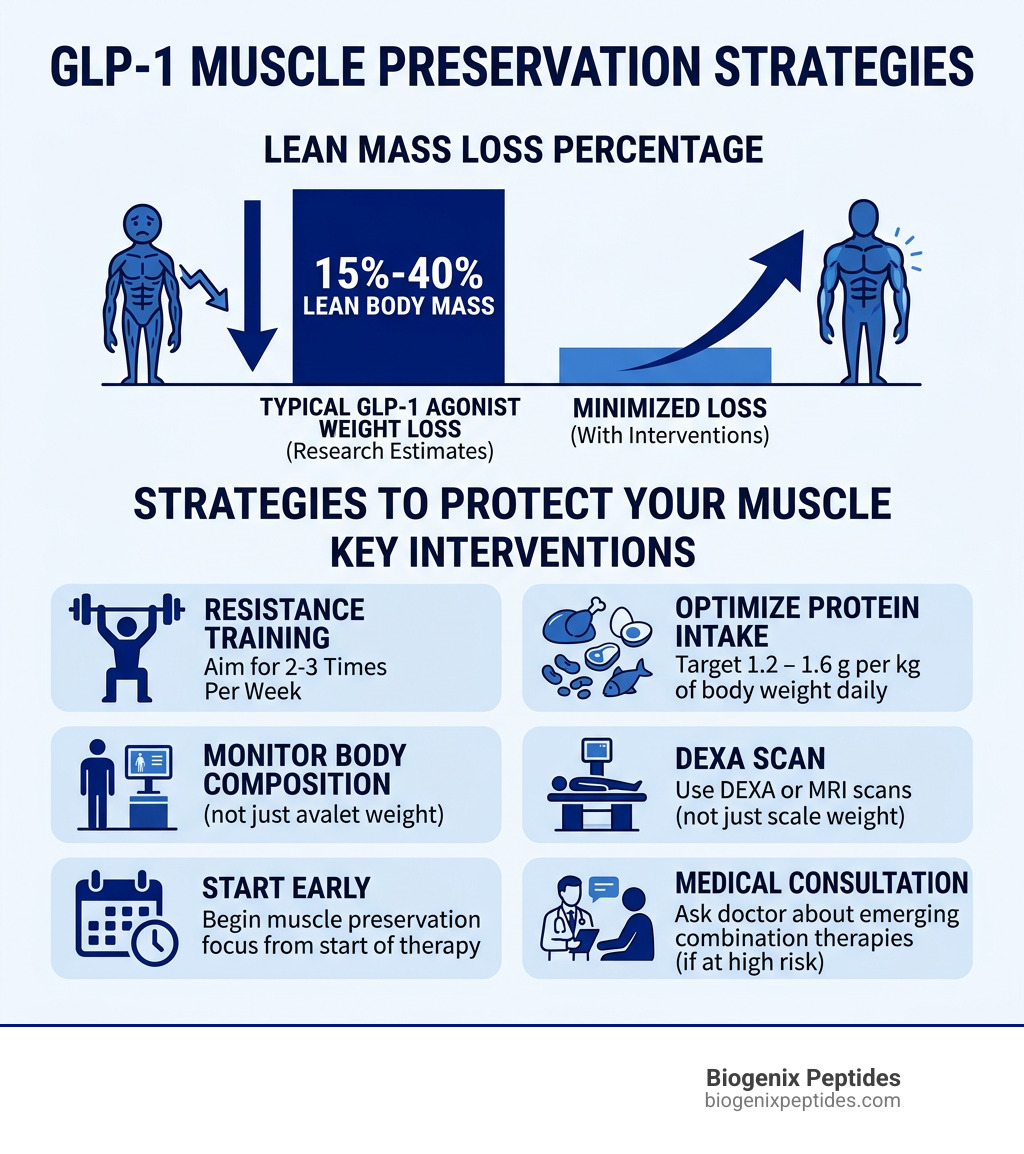
- Do resistance training at least 2-3 times per week
- Eat enough protein — aim for 1.2–1.6 g per kilogram of body weight daily
- Monitor body composition with DEXA or MRI, not just scale weight
- Start early — don’t wait until you’ve already lost significant weight
- Ask your doctor about emerging combination therapies if you’re at high risk for muscle loss
GLP-1 receptor agonists (GLP-1 RAs) like semaglutide have become one of the fastest-growing drug classes in modern medicine — usage of incretin-based therapies has surged by 587% in the last five years in the United States alone. The weight loss results are real and often dramatic.
But here’s the problem most people aren’t talking about: not all of that weight is fat.
Research shows that anywhere from 15% to 40% of total weight lost on GLP-1 therapies can come from lean body mass — which includes skeletal muscle. For a 60-year-old person losing 20 kg (44 lbs), that could mean losing 2.5–3 kg of muscle alongside the fat. In older adults, or anyone already at risk for sarcopenia (age-related muscle loss), that’s not a small detail. It can directly affect strength, balance, metabolism, and quality of life.
The good news? This isn’t inevitable. And that’s exactly what this guide is about.
I’m Jay D Daniel, Founder and CEO of BioGenix Peptides and a peptide research specialist who has spent years studying the intersection of metabolic health, body composition, and peptide science — including the rapidly evolving research on GLP-1 agonists muscle preservation. From that background, this guide breaks down what the clinical evidence actually says and what you can do about it.
Understanding Weight Loss and GLP-1 Agonists Muscle Preservation

When we talk about weight loss, we usually focus on the “weight” part. But from a biological perspective, your body sees weight loss as a potential energy crisis. Incretin mimetics like Semaglutide and Tirzepatide are incredible tools for managing this process, but they change how our bodies manage their “savings accounts” (fat) and their “machinery” (muscle).
Scientific research on GLP-1 effects on muscle mass suggests that while these drugs are transformative for obesity management, they may unintentionally contribute to skeletal muscle reduction if not managed correctly. This is why we advocate for a shift in focus: from total weight loss to high-quality weight loss.
How Incretin Mimetics Drive Weight Reduction
GLP-1 receptor agonists work by mimicking a natural hormone in your body that regulates appetite. They bind to receptors in the brain to increase satiety (that “I’m full” feeling) and slow down gastric emptying, which keeps food in your stomach longer. This creates a significant calorie deficit without the intense hunger typically associated with dieting.
Furthermore, these peptides improve insulin sensitivity and help regulate blood glucose levels. However, because the calorie deficit can be so steep, the body may look to lean tissue for energy. Fat cannot be converted into glucose, so the body may break down muscle through the glucose-alanine cycle to maintain blood sugar levels if intake is too low.
Clinical Evidence for GLP-1 Agonists Muscle Preservation
The data is clear: lean mass loss is a universal side effect of significant weight reduction, regardless of the method. In clinical trials for semaglutide, up to 40% of the weight lost was attributed to lean body mass. For tirzepatide, that number was closer to 25%.
To put this in perspective, you can watch the Mass General Brigham Grand Rounds on GLP-1 data where researchers explain that while these numbers sound scary, they aren’t necessarily “uniquely” high compared to intensive dieting or bariatric surgery. The goal isn’t to reach zero muscle loss—that’s biologically impossible during a massive deficit—but to keep it within a healthy range (ideally under 25% of total loss).
The Impact of Rapid Weight Loss on Lean Body Mass
Losing 40% of your weight from lean mass isn’t just about losing “gains” at the gym. Lean body mass includes your organs, bone, and connective tissue, though skeletal muscle makes up the largest portion. When muscle mass drops too low while body fat remains relatively high, we enter a state called “sarcopenic obesity.” This is particularly dangerous because muscle accounts for roughly 70% of your body’s glucose disposal. Less muscle means a harder time maintaining metabolic health in the long run.
Comparing GLP-1s to Bariatric Surgery and Dieting
Is the muscle loss from GLP-1s worse than other methods? Generally, no. The “one-fourth rule” has long suggested that 25% of weight loss is typically fat-free mass.
| Method | Typical Lean Mass Loss | Weight Loss Velocity |
|---|---|---|
| Standard Dieting | ~25% | Slow to Moderate |
| GLP-1 Agonists | 25% – 40% | Rapid |
| Bariatric Surgery | 20% – 35% | Very Rapid |
The challenge with GLP-1s is the velocity of loss. When you lose weight very quickly, the body has less time to adapt, making GLP-1 agonists muscle preservation strategies even more critical. Research on thigh muscle composition changes shows that while mass may decrease, the quality of the remaining muscle can actually improve, with less fatty infiltration (myosteatosis) than before.
Risks to Bone Health and Physical Function
It’s not just about muscle. Rapid weight loss is also linked to a decrease in Bone Mineral Density (BMD). A 10% reduction in total body weight has been associated with a 2.2% decrease in lumbar and total hip BMD.
For older adults, this combination of muscle and bone loss can increase the risk of falls and fractures. However, a scientific study on bone health during GLP-1 therapy noted that combining GLP-1 treatment with consistent exercise can actually abolish these decreases in BMD, protecting your skeletal integrity while you shed the fat.
Proven Methods to Protect Your Strength
If you’re using these medications, you shouldn’t just sit back and watch the scale drop. You need to be proactive. Strategies for minimizing muscle loss during incretin use emphasize a two-pronged approach: mechanical tension (exercise) and nutritional support (protein).
Practical Tips for GLP-1 Agonists Muscle Preservation
- Prioritize Resistance Training: Load-bearing exercise is the single most effective way to signal to your body that it needs to keep its muscle. Aim for 2-3 sessions per week focusing on progressive overload.
- Optimize Protein Intake: We recommend 1.2–1.5g of protein per kilogram of body weight. Because GLP-1s suppress appetite, you have to be intentional. Focus on high-quality sources rich in leucine, which helps overcome “anabolic resistance.”
- Even Distribution: Don’t eat all your protein at dinner. Spreading it across 3+ meals better supports muscle protein synthesis throughout the day.
- Supplement Wisely: Consider Muscle Growth & Performance Peptides or supplements like HMB and Vitamin D, which have shown promise in preserving lean mass during energy deficits.
The Role of Muscle Quality and Composition
Interestingly, GLP-1 agonists muscle preservation isn’t just about the amount of muscle, but how it functions. Studies using MRI have shown that patients on liraglutide experienced a reduction in thigh muscle fatty infiltration.
By clearing out the fat inside the muscle, you improve the muscle’s “metabolic quality.” This means that even if the muscle is slightly smaller, it may be more efficient at clearing glucose and producing force. This is a key reason why some patients on semaglutide actually report feeling stronger or more mobile despite a lower number on the scale.
The Future of Muscle Maintenance and Research
The next wave of obesity medicine isn’t just about more weight loss; it’s about better weight loss. Researchers are currently looking at multi-agonist peptides and combination therapies that specifically target fat while sparing muscle.
Breakthroughs in Combination Treatments
One of the most exciting recent developments is the BELIEVE study, which looked at the combination of bimagrumab (an ActRII inhibitor) and semaglutide. The results were staggering:
- Semaglutide alone: 71.8% of weight loss came from fat.
- Bimagrumab + Semaglutide: 92.8% of weight loss came from fat.
- Bimagrumab alone: 100% of weight loss was fat, and participants actually saw a 2.5% increase in total lean mass.
This suggests a future where we pair GLP-1s with “anabolic anchors” to ensure we only melt away what we don’t want. You can read more about these dual and triple agonist peptides like Retatrutide, which are being studied for their superior metabolic profiles.
Check out our deep dive into what we learned from the Triumph-4 Phase 3 study on Retatrutide for the latest on these breakthroughs.
Frequently Asked Questions about GLP-1 Muscle Loss
Does everyone lose muscle on GLP-1 agonists?
To some degree, yes. Any time you are in a significant calorie deficit, the body will utilize some lean tissue for energy. However, the amount of loss varies wildly based on your protein intake and whether or not you lift weights. Without these interventions, loss can be as high as 40%; with them, it can be kept to a much healthier minimum.
Can exercise completely prevent lean mass loss?
In most cases of rapid weight loss, you will still lose some lean mass (which includes water and connective tissue), but resistance training can specifically protect skeletal muscle. In some “super-responder” cases, individuals have even gained small amounts of muscle while losing fat, though this is more common in beginners.
How do GLP-1s affect bone density in the long term?
While rapid weight loss generally lowers BMD, GLP-1 RAs have shown some direct protective effects on bone cells (osteoblasts). The key is to combine the medication with load-bearing exercise, which provides the mechanical stress bones need to stay strong.
Conclusion
At Biogenix Peptides, we believe that the goal of any weight loss journey should be improved functional integrity and long-term wellness. While GLP-1 receptor agonists are a “breakthrough of the year” for a reason, they are part of a larger puzzle.
By focusing on GLP-1 agonists muscle preservation from day one — through high protein intake, resistance training, and consistent monitoring — you can ensure that the “new you” is not just thinner, but stronger, healthier, and more metabolically resilient.
Ready to optimize your metabolic research? Explore our full range of GLP-1 products and performance-focused peptides to support your health goals.
Disclaimer: This guide is for informational purposes only and does not constitute medical advice. Always consult with a healthcare professional before starting any new medication or exercise program.
Sema (GLP-1) 10mg
Semaglutide is a long-acting GLP-1 receptor agonist (GLP-1RA) investigated for its effects on glycemic regulation and body-weight–related outcomes in controlled research settings. It is structurally optimized for extended systemic exposure, supporting once-weekly dosing paradigms in experimental models. Semaglutide is an acylated GLP-1 analog featuring a C18 fatty-diacid side chain attached to Lys26 via a spacer, a modification that enhances albumin binding and resistance to enzymatic degradation. This design yields a ~1-week half-life while preserving high affinity and selectivity for GLP-1R.…
Sema (GLP-1) 20mg
Semaglutide is a long-acting GLP-1 receptor agonist (GLP-1RA) investigated for its effects on glycemic regulation and body-weight–related outcomes in controlled research settings. It is structurally optimized for extended systemic exposure, supporting once-weekly dosing paradigms in experimental models. Semaglutide is an acylated GLP-1 analog featuring a C18 fatty-diacid side chain attached to Lys26 via a spacer, a modification that enhances albumin binding and resistance to enzymatic degradation. This design yields a ~1-week half-life while preserving high affinity and selectivity for GLP-1R.…
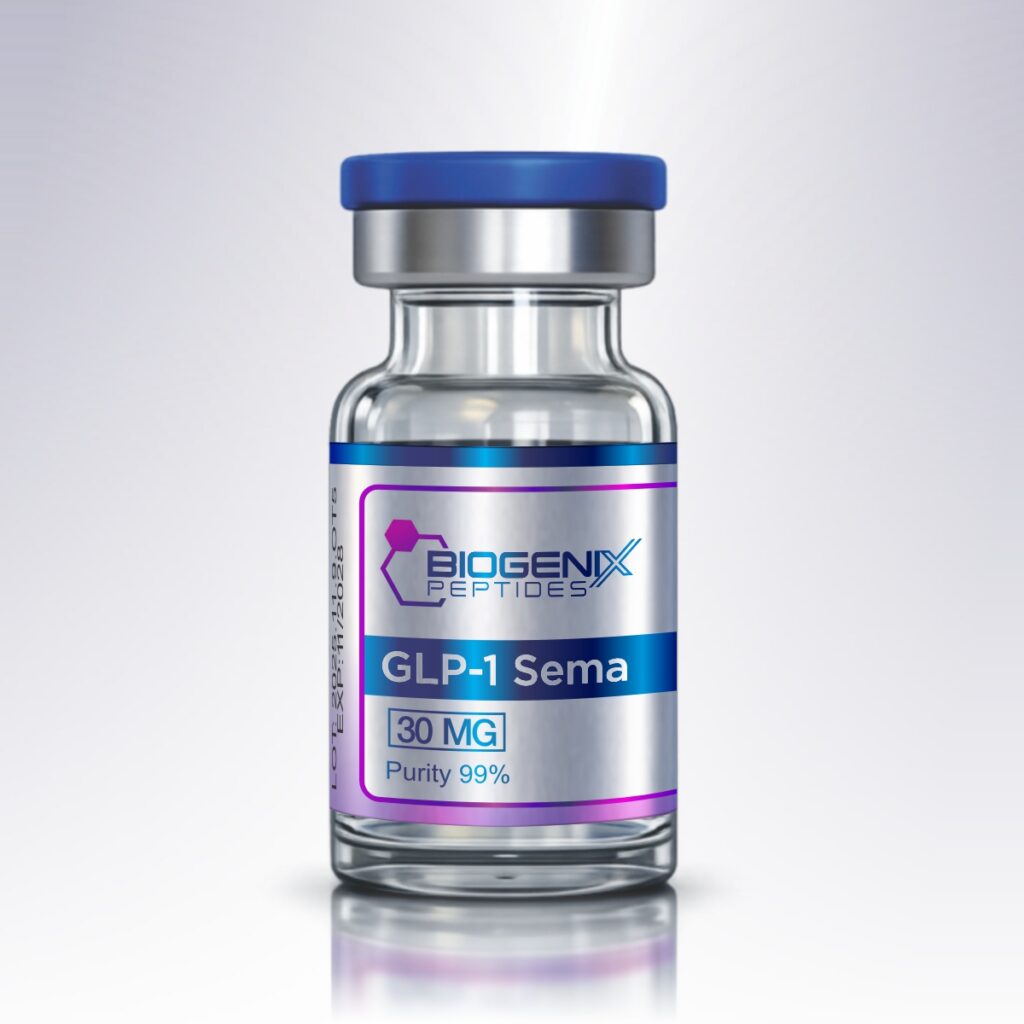
Sema (GLP-1) 30mg
Semaglutide is a long-acting GLP-1 receptor agonist (GLP-1RA) investigated for its effects on glycemic regulation and body-weight–related outcomes in controlled research settings. It is structurally optimized for extended systemic exposure, supporting once-weekly dosing paradigms in experimental models. Semaglutide is an acylated GLP-1 analog featuring a C18 fatty-diacid side chain attached to Lys26 via a spacer, a modification that enhances albumin binding and resistance to enzymatic degradation. This design yields a ~1-week half-life while preserving high affinity and selectivity for GLP-1R.…
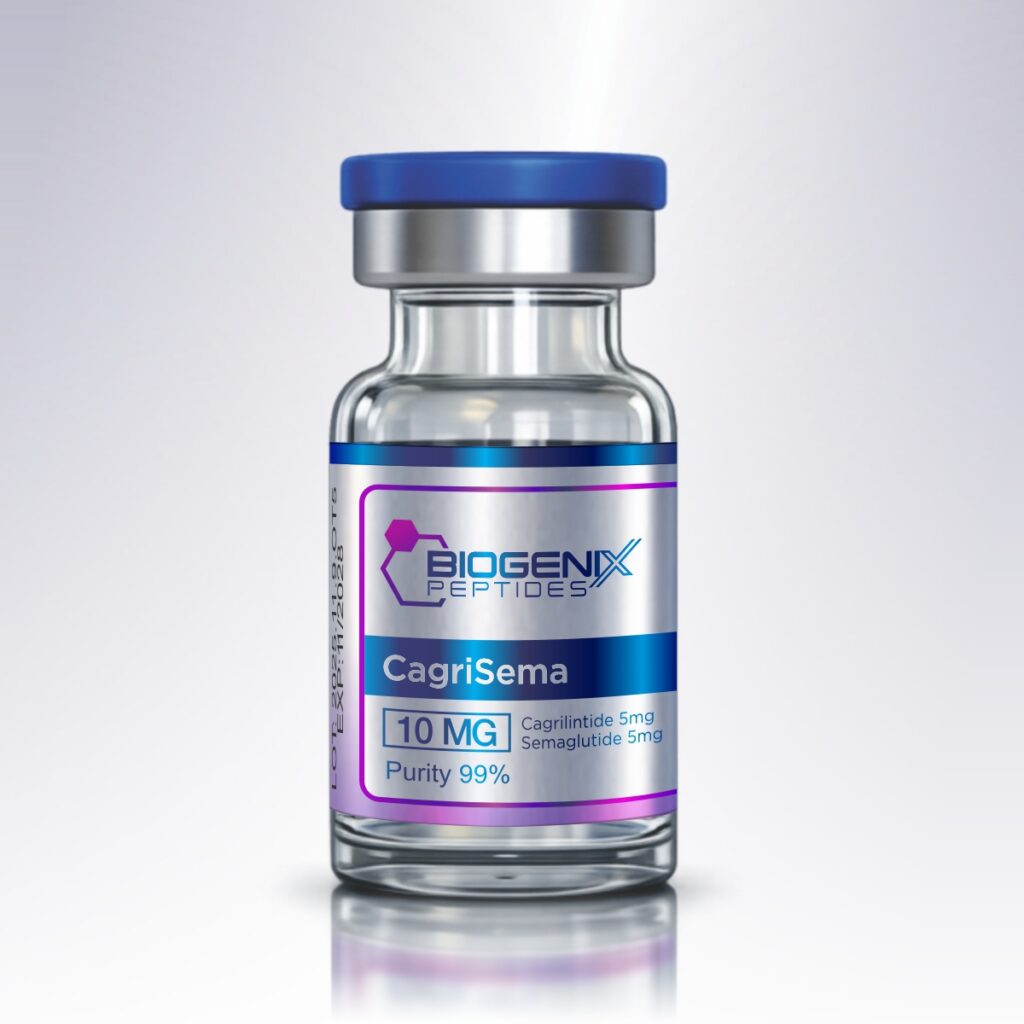
Cagrilintide | Semaglutide Blend 10 mg
Cagrilintide + Semaglutide is a dual-agonist research pairing that targets complementary pathways in appetite control, energy regulation, and metabolic balance. Cagrilintide, a long-acting amylin analogue, enhances satiety, slows gastric emptying, and influences reward-driven feeding signals. Semaglutide, an extended-duration GLP-1 receptor agonist, modulates glucose handling, gastric motility, and overall energy intake. When examined together, the two peptides demonstrate additive—potentially synergistic—effects on weight reduction, appetite suppression, and metabolic outcomes by engaging both homeostatic and hedonic appetite-regulation systems.
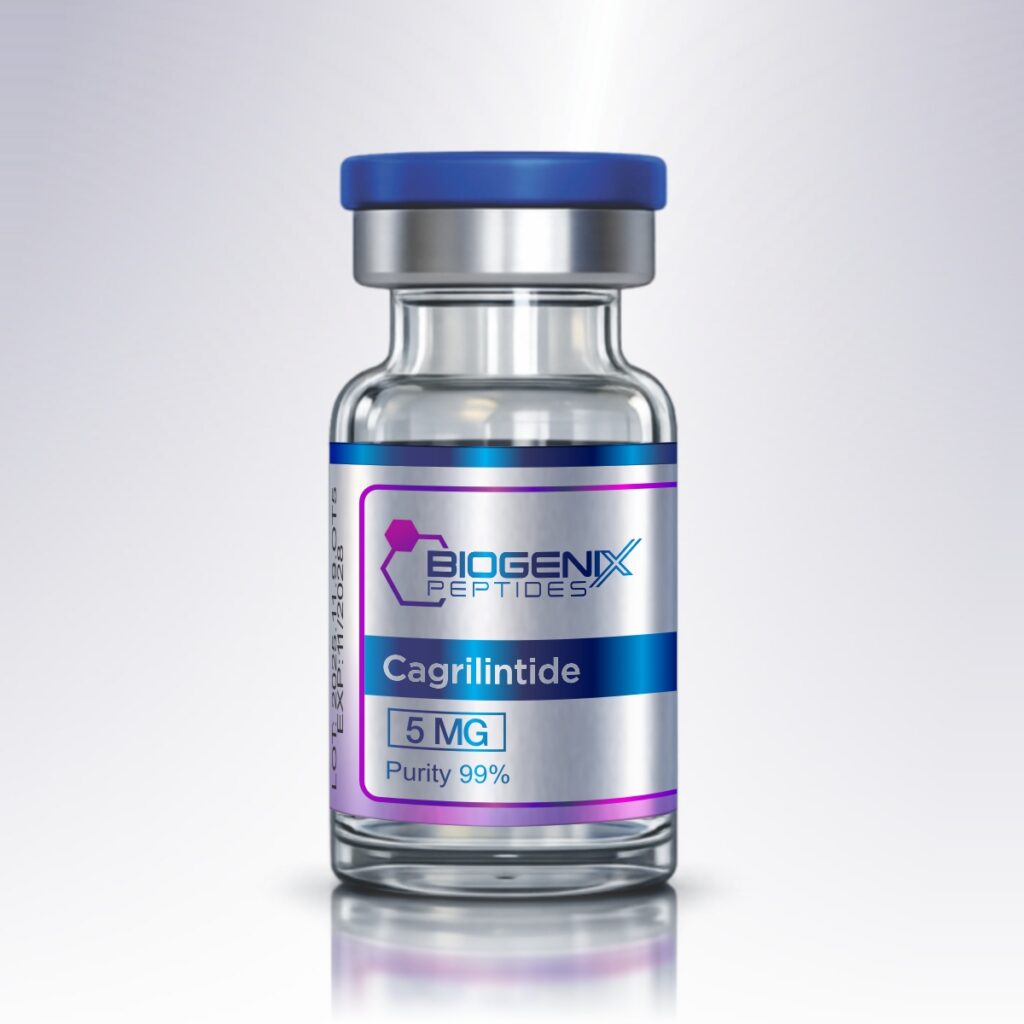
Cagrilintide 5mg
Cagrilintide is a novel, long-acting amylin analogue currently under investigation for its effects on metabolic regulation and appetite control. Its structure features N-terminal lipidation, which enhances stability by binding to serum albumin, extending its circulating half-life. By mimicking and amplifying the actions of natural amylin, Cagrilintide has been studied for its influence across both homeostatic (energy balance) and hedonic (reward-driven) appetite regulation pathways.