
Why Exercise and GLP-1s are a Match Made in Metabolic Heaven
Disclaimer: The information provided in this article is for educational and informational purposes only. It is not intended as medical advice, diagnosis, or treatment. Products and compounds referenced are for research use only and are not approved for human or veterinary consumption. Always consult a qualified professional regarding health or medical decisions.
Why GLP-1 Agonists and Exercise Together Outperform Either Alone

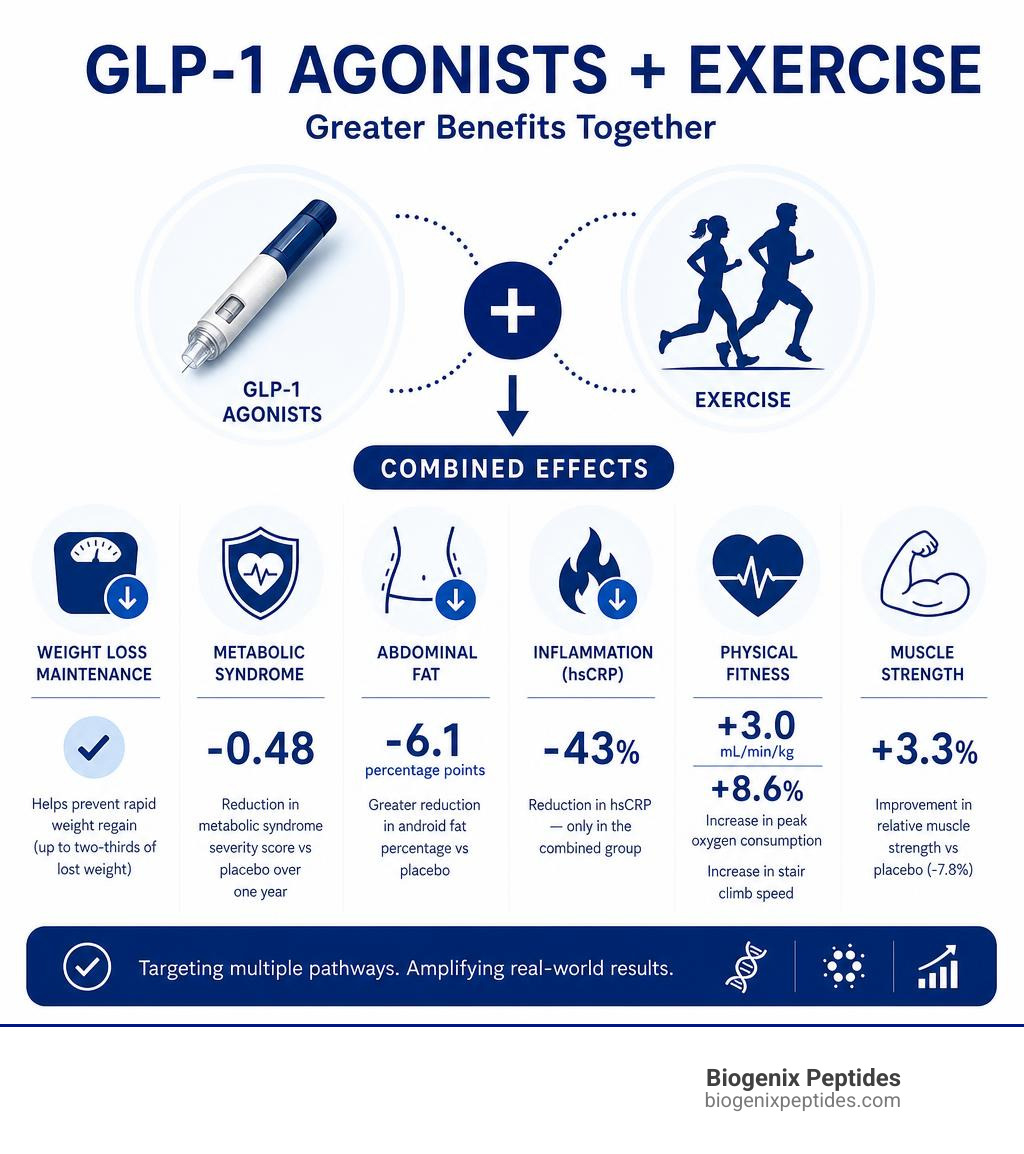
GLP-1 agonists exercise synergy describes how combining incretin-based pharmacotherapy with structured physical activity produces metabolic benefits greater than either approach alone. Here is a quick summary of what the research shows:
| Combined Effect | What the Research Shows |
|---|---|
| Weight loss maintenance | Exercise helps prevent the rapid weight regain (up to two-thirds of lost weight) that commonly follows GLP-1RA discontinuation |
| Metabolic syndrome | Combination reduced metabolic syndrome severity score by -0.48 vs placebo over one year |
| Abdominal fat | Android fat percentage dropped 6.1 percentage points more in the combined group vs placebo |
| Inflammation | hsCRP fell by 43% only in the combined group — not in either single-treatment group |
| Physical fitness | Adding exercise to GLP-1RA therapy improved peak oxygen consumption by 3.0 mL/min/kg and stair climb speed by 8.6% vs pharmacotherapy alone |
| Muscle strength | Relative muscle strength improved +3.3% with the combination vs -7.8% with placebo |
GLP-1 receptor agonists have become one of the most talked-about tools in obesity and metabolic research. They can drive weight losses of 10–15% or more. But the science is increasingly clear: the drug alone is not the whole story.
Structured exercise does something the medication cannot do on its own. It preserves lean mass. It improves cardiorespiratory fitness. It reduces inflammation in ways that pharmacotherapy alone does not replicate. And emerging evidence suggests exercise may actually improve the body’s responsiveness to GLP-1 — not just by raising GLP-1 levels, but by reducing GLP-1 resistance through gut microbiota changes and reductions in ectopic fat.
In short, these two interventions appear to work through overlapping but distinct pathways — which is exactly what makes their combination so compelling to researchers.
I’m Jay Daniel, Founder and CEO of BioGenix Peptides, and my work in peptide science and research innovation has given me a front-row seat to the growing body of evidence on GLP-1 agonists exercise synergy and what it means for metabolic health research. I’ll walk you through the mechanisms, the data, and practical research protocols that reflect what the science currently supports.
Key GLP-1 agonists exercise synergy vocabulary:
- GLP-1 agonists muscle preservation
- GLP-1 agonists cardiovascular outcomes
- GLP-1 agonists elderly patients
The Science of GLP-1 Agonists Exercise Synergy
When we evaluate the physiological impact of glucagon-like peptide-1 receptor agonists (GLP-1RAs) alongside physical activity, we observe a profound biological intersection. Research indicates that the combination of exercise and GLP-1 receptor agonist treatment yields far greater improvements in cardiometabolic markers than either intervention can achieve in isolation. Rather than simply adding the effects of one to the other, the two interventions work in tandem to optimize metabolic pathways.
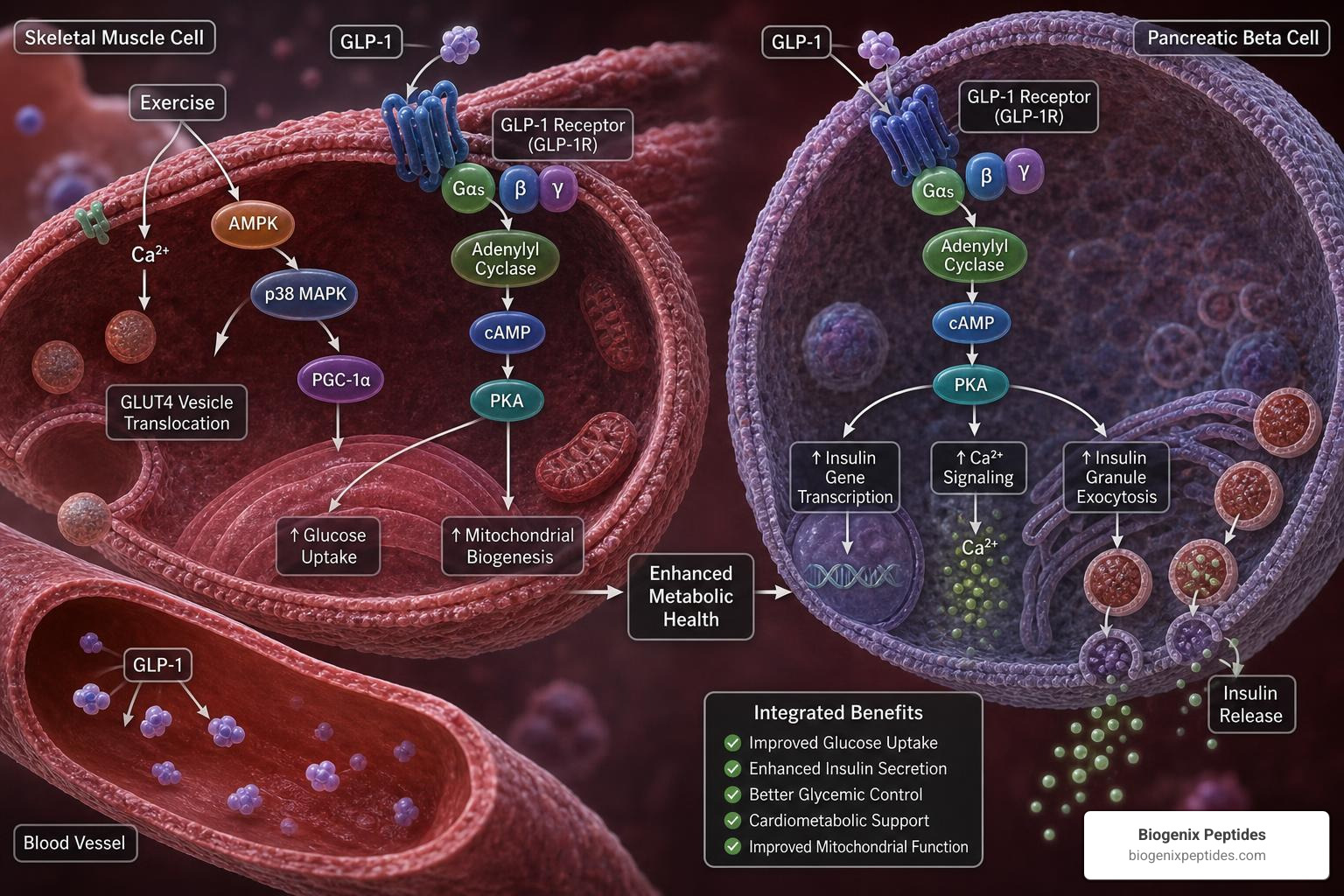
At the cellular level, GLP-1RAs mimic the endogenous incretin hormone, binding to receptors that stimulate glucose-dependent insulin release, delay gastric emptying, and promote satiety. When we look at Understanding GLP-1 Incretin Pathways, we see that these pathways are highly receptive to external physiological signals. Exercise acts as one of the most powerful external signals available, altering tissue sensitivity and blood flow to amplify the therapeutic potential of these peptides.
Ameliorating GLP-1 Resistance Through Physical Activity
In type 2 diabetes and severe obesity, researchers frequently observe a state of “GLP-1 resistance.” In this state, target tissues—particularly the pancreas and brain—exhibit diminished sensitivity to both endogenous and exogenous GLP-1 molecules. Interestingly, clinical studies indicate that chronic exercise may improve GLP-1 resistance rather than simply increasing the absolute secretion of the hormone.
This improvement in sensitivity is heavily mediated by the gut-brain axis and changes in the intestinal environment. Physical activity alters the gut microbiota, promoting greater bacterial diversity and shifting the composition at the phylum, family, and genus levels. This restructured microbiome produces higher levels of short-chain fatty acids (SCFAs), such as butyrate and propionate.
These SCFAs act as signaling molecules that upregulate GLP-1 receptor expression and improve the cellular machinery of pancreatic beta-cells. By enhancing beta-cell function, exercise restores the pancreas’s ability to read and respond to potentiating incretins and neural signals, effectively breaking through the physiological ceiling of GLP-1 resistance.
Neural Convergence and GLP-1 Agonists Exercise Synergy
Both physical activity and GLP-1 receptor agonists exert powerful, coordinated control over the central nervous system, particularly within the hypothalamic appetite circuits. Incretin mimetics directly target the pro-opiomelanocortin (POMC) neurons to promote fullness, while simultaneously inhibiting the neuropeptide Y (NPY) and agouti-related peptide (AgRP) neurons, which are responsible for driving hunger and “food noise.”
Exercise converges on these very same neural networks. Regular physical activity has been shown to modulate hypothalamic sensitivity to satiety peptides and stimulate the release of brain-derived neurotrophic factor (BDNF). This neurotrophin plays a key role in energy balance and cognitive function.
According to research on lifestyle prioritization and GLP-1 agonists, combining these therapies prevents the compensatory increase in appetite that typically occurs when an individual experiences a large energy deficit. The neural signaling pathways align to reinforce healthy eating patterns, enhance executive function, and promote energy expenditure, creating a highly stable environment for long-term weight maintenance.
Preserving Lean Mass: The GLP-1 Guide to Not Melting Away Your Muscle
A major challenge in rapid weight loss is the preservation of lean skeletal muscle. When the body undergoes a severe calorie deficit, it does not selectively burn adipose tissue; a significant portion of the lost weight comes from structural proteins and muscle fibers. This risk is especially pronounced in senior populations, where the accelerated loss of lean mass can lead to sarcopenia, frailty, and a higher risk of falls. Researchers studying this phenomenon can find helpful insights in our resource on Navigating GLP-1 Therapy in the Elderly.
To combat this, implementing a structured resistance training protocol is essential. For a deep dive into the physiological mechanisms of muscle preservation, review The GLP-1 Guide to Not Melting Away Your Muscle.
Without physical stimulus, the body downregulates muscle protein synthesis. By introducing mechanical tension through resistance training, researchers can trigger the mammalian target of rapamycin (mTOR) pathway, offsetting the catabolic state induced by caloric restriction.
Caloric Deficit + Inactivity ---> Muscle Protein Breakdown ---> Loss of Lean Mass & Lower RMR
Caloric Deficit + Resistance Training ---> mTOR Activation ---> Muscle Preservation & Stable RMR
Divergent Muscle Outcomes in Weight Loss Interventions
Data from landmark clinical trials highlight the extent of lean mass loss during rapid weight reduction:
- STEP-1 Trial (Semaglutide): Participants experienced a weight reduction where lean mass comprised approximately 9.7% of the total loss, with fat mass accounting for 19.3%.
- SURMOUNT-1 Trial (Tirzepatide): Over 72 weeks of therapy, approximately 25% of the total weight lost was classified as lean mass, while 75% was fat mass.
- Real-World Liraglutide Cohorts: Observations show that up to 22% of total weight loss consists of lean tissue in standard clinical applications.
This loss of fat-free mass can depress the resting metabolic rate, making weight maintenance incredibly difficult once the therapy is altered or discontinued.
However, a secondary analysis of a randomized controlled trial published in Sports Medicine reveals a solution. The research on physical fitness and GLP-1 receptor agonist treatment demonstrated that while peptide therapy alone did not improve physical functional performance or cardiorespiratory fitness, combining the peptide with structured exercise preserved absolute muscle strength and increased relative muscle strength normalized to body weight (+3.3% in the combined group versus a loss of -7.8% in the placebo group).
Shared and Distinct Mechanisms of Metabolic Restoration
To appreciate the full scope of GLP-1 agonists exercise synergy, we must look at how these two interventions restore metabolic function through different physiological pathways. While GLP-1 receptor agonists primarily manage glycemic control via pancreatic insulin secretion and delayed gastric emptying, exercise improves insulin sensitivity directly at the skeletal muscle level by recruiting GLUT4 glucose transporters independent of insulin signaling.
This dual approach is highly effective for cardiovascular protection. For a complete analysis of these cardiac benefits, read Why GLP-1 Agonists Are a Change of Heart for Cardiac Care. By combining these mechanisms, researchers can target visceral and ectopic fat depots—such as pericardial and hepatic fat—which are primary drivers of cardiovascular disease and systemic insulin resistance.
| Feature / Pathway | GLP-1 Receptor Agonists (GLP-1RAs) | Structured Exercise | Combined Synergistic Effect |
|---|---|---|---|
| Primary Site of Action | Pancreas, Hypothalamus, GI Tract | Skeletal Muscle, Cardiovascular System | Systemic metabolic restoration |
| Glucose Uptake Mechanism | Glucose-dependent pancreatic insulin secretion | Insulin-independent GLUT4 translocation | Maximized clearance of circulating glucose |
| Ectopic & Visceral Fat | Moderate reduction via systemic energy deficit | High reduction via lipolysis and lipid oxidation | Targeted clearance of android and visceral fat depots |
| Cardiorespiratory Fitness | Minimal direct impact on VO2peak | Significant increase in stroke volume and capillary density | Clinically meaningful gains in aerobic capacity |
| Systemic Inflammation | Direct anti-inflammatory action on immune cells | Myokine-mediated reduction of pro-inflammatory cytokines | Synergistic drop in hsCRP and oxidative stress |
Myokines and Inflammation Reduction
Skeletal muscle is now recognized as an active endocrine organ. During contraction, muscle fibers synthesize and secrete peptides called myokines, which play a major role in mediating the systemic benefits of exercise. Myokines such as irisin, apelin, and interleukin-6 (IL-6) enter the circulation and communicate with adipose tissue, the liver, and the brain.
- Irisin & Apelin: These exercise-induced peptides promote the browning of white adipose tissue, increasing mitochondrial density and uncoupling protein 1 (UCP1) expression, which boosts resting energy expenditure.
- Interleukin-6 (IL-6): While chronically elevated IL-6 from adipose tissue is pro-inflammatory, acute pulses of IL-6 from contracting muscle act as anti-inflammatory signals. This muscle-derived IL-6 slows gastric emptying—mimicking and reinforcing the gastric effects of GLP-1RAs—and stimulates GLP-1 secretion from intestinal L-cells.
This myokine signaling network helps explain why the combination of exercise and peptide therapy produces such a dramatic drop in systemic inflammation. In clinical trials, high-sensitivity C-reactive protein (hsCRP) levels—a key marker of cardiovascular risk—decreased by 43% only in the cohort that combined structured exercise with GLP-1RA therapy, while neither intervention alone achieved a statistically significant reduction.
Practical Research Protocols for Combining Peptides and Physical Activity
When designing research protocols to evaluate GLP-1 agonists exercise synergy, it is critical to implement structured, progressive exercise regimens. Relying on casual physical activity guidelines is often insufficient to preserve lean mass or drive cardiorespiratory adaptations.
Instead, structured programs should align with the World Health Organization (WHO) physical activity guidelines while incorporating targeted resistance training. Researchers studying these clinical combinations can find valuable context in Understanding the Benefit of Combining GLP-1 Agonists With Exercise.
For protocols utilizing advanced multi-receptor agonists, reviewing GLP-1 Dual and Triple Agonist Peptides in Research provides excellent insight into how compounds like tirzepatide and retatrutide interact with physical training.

Designing a Structured Exercise Protocol for Peptide Research
To achieve reproducible results in metabolic research, we suggest a structured, three-phase protocol designed to maximize cardiovascular fitness and skeletal muscle preservation:
- Cardiorespiratory Conditioning (Aerobic Phase):
- Frequency: 3 sessions per week.
- Intensity: Moderate-to-vigorous intensity, targeting 64% to 90% of maximum heart rate (or approximately 75% of heart rate reserve).
- Duration: 45 to 60 minutes per session, utilizing cycling, brisk walking, or rowing.
- Skeletal Muscle Preservation (Resistance Phase):
- Frequency: 2 to 3 sessions per week (non-consecutive days, totaling 60 to 90 minutes weekly).
- Modality: Free weights, resistance bands, or bodyweight exercises targeting major muscle groups (squats, chest presses, rows, and core stabilization).
- Progression: Progressive overload, increasing resistance or volume by 5% when the subject can easily complete the target repetitions.
- Functional & Mobility Assessment:
- To accurately monitor progress, researchers should use functional physical tests rather than relying solely on scale weight. Recommended assessments include the stair climb power test (which showed an 8.6% improvement in combined clinical groups) and peak oxygen consumption (VO2peak) relative to fat-free mass.
Frequently Asked Questions about Metabolic Peptides and Exercise
How does GLP-1 agonists exercise synergy prevent weight regain?
When individuals discontinue GLP-1RA therapy, they often experience a rapid return of “food noise” and a compensatory increase in appetite, leading to a regain of up to two-thirds of their lost weight within a year.
According to research on physical fitness after diet-induced weight loss, combining the peptide with structured exercise during the weight-loss phase helps preserve resting metabolic rate by maintaining fat-free muscle mass. Additionally, exercise stabilizes appetite-regulating hormones in the brain, helping to prevent the metabolic rebound and weight regain that typically follows the cessation of pharmacotherapy.
Does exercise improve GLP-1 resistance in type 2 diabetes models?
Yes. In type 2 diabetes, the body’s natural incretin response is often impaired. Physical activity helps restore this response by increasing gut microbiota diversity and promoting the production of short-chain fatty acids (SCFAs). These SCFAs act as signaling molecules that improve GLP-1 receptor expression and enhance pancreatic beta-cell sensitivity, allowing the body to respond more effectively to both natural and synthetic incretin molecules.
What are the limitations of current combined peptide and exercise studies?
While the short-term benefits of combined therapy are clear, several research gaps remain. Many clinical trials are limited to 12 to 52 weeks, leaving the long-term sustainability of these habits unclear.
Additionally, as discussed in the guide on Fitness for People Taking GLP-1 Agonists, real-world adherence can be challenging due to transient gastrointestinal side effects like nausea and fatigue during the initial titration phases. Future research must focus on long-term adherence, cost-effectiveness, and strategies to ensure these combined interventions are accessible to diverse patient populations.
Conclusion
The scientific evidence collected up to May 2026 confirms that relying on pharmacotherapy alone is rarely the optimal path to long-term metabolic health. While GLP-1 receptor agonists are highly effective tools for weight loss and glycemic control, their true potential is unlocked when paired with structured physical activity.
By preserving lean muscle tissue, reducing systemic inflammation, and restoring incretin sensitivity, GLP-1 agonists exercise synergy represents a highly effective approach to metabolic restoration.
For researchers looking to explore these pathways, sourcing high-purity compounds is a critical first step. We invite you to Explore GLP-1 Peptides for Research at Biogenix Peptides to support your next metabolic study.