

The Complete Guide to GLP-1 Peptides
Disclaimer: The information provided in this article is for educational and informational purposes only. It is not intended as medical advice, diagnosis, or treatment. Products and compounds referenced are for research use only and are not approved for human or veterinary consumption. Always consult a qualified professional regarding health or medical decisions.
What Are GLP-1 Peptides? A Research Overview

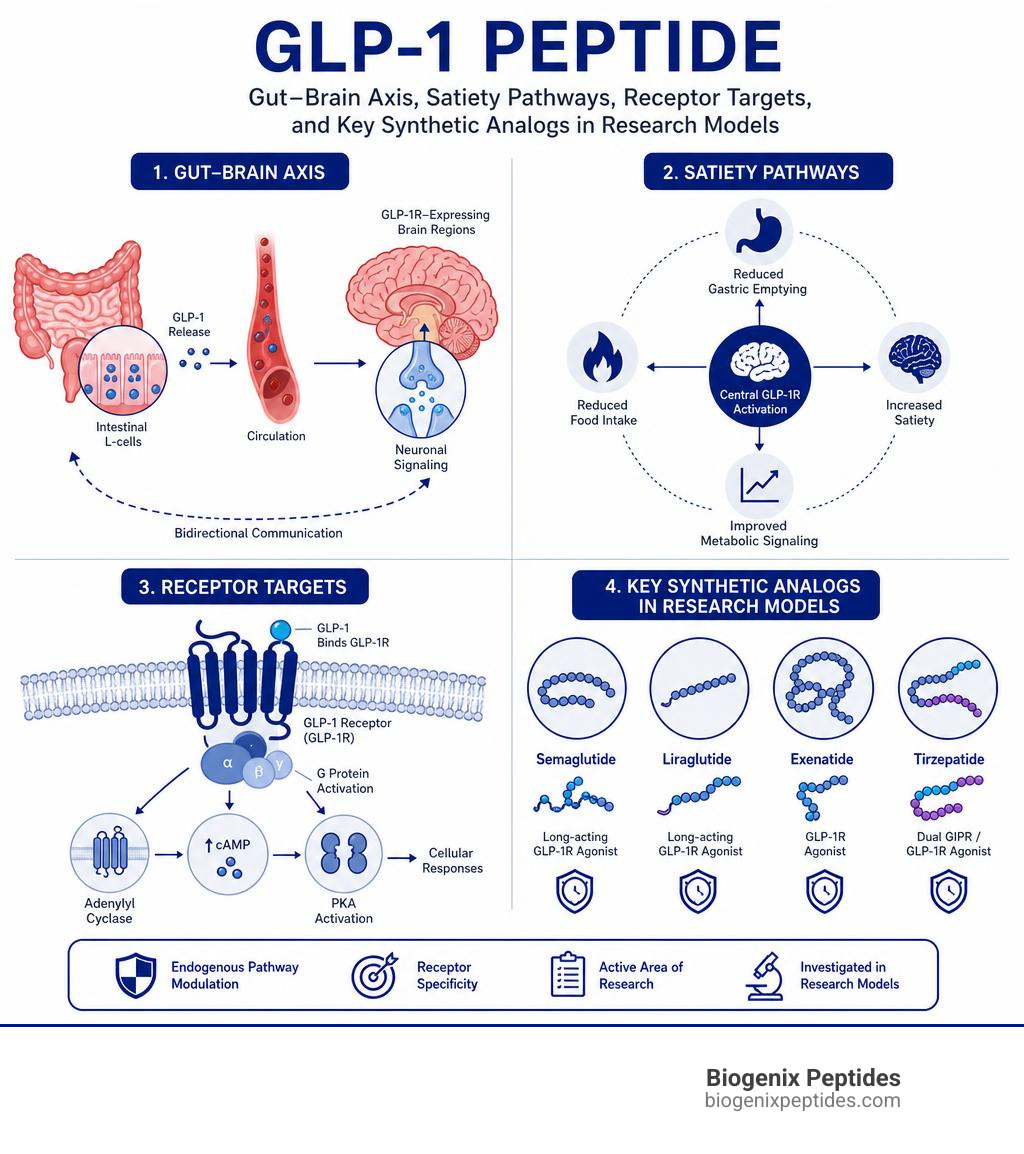
GLP-1 peptides are a class of signaling molecules derived from the glucagon-like peptide-1 hormone — a naturally occurring incretin produced in the gut that plays a central role in glucose regulation, appetite signaling, and metabolic research.
Here’s a quick overview of what researchers need to know:
| Topic | Key Facts |
|---|---|
| What they are | Short-chain peptides that mimic or interact with the GLP-1 receptor |
| Natural source | Secreted by intestinal L-cells in response to food intake |
| Primary research areas | Glucose homeostasis, satiety pathways, cardiometabolic signaling |
| Key synthetic analogs studied | Semaglutide, liraglutide, exenatide, tirzepatide |
| Half-life (native GLP-1) | Less than 2 minutes — rapidly degraded by DPP-4 enzymes |
| Research status | Active area of metabolic and molecular biology research |
Over the past two decades, interest in GLP-1 receptor pathways has grown enormously. Researchers have moved from studying the native hormone to engineering synthetic analogs with extended half-lives, improved receptor selectivity, and novel delivery mechanisms.
The science has expanded well beyond simple glucose regulation. Today, GLP-1 peptide research touches on gut-brain axis signaling, pancreatic beta-cell biology, cardiovascular pathways, and even emerging multi-receptor agonist compounds like retatrutide — a triple agonist targeting GLP-1, GIP, and glucagon receptors simultaneously.
Yet alongside this scientific progress, the landscape has become more complex. Compounded and unapproved versions of GLP-1-related compounds have flooded the market, raising serious quality and safety concerns. As of July 31, 2025, the FDA had received over 600 adverse event reports linked to compounded semaglutide alone — a reminder that research-grade purity and sourcing standards matter enormously.
This guide covers the full picture: from the molecular biology of GLP-1 peptides, to regulatory considerations, delivery challenges, and emerging research frontiers.
I’m Jay Daniel, Founder and CEO of BioGenix Peptides, and I’ve spent years working directly in peptide sourcing, quality control, and research applications — including the rapidly evolving field of glp-1 peptides. My goal here is to cut through the noise and give researchers a clear, science-backed reference they can actually use.
Scientific Classification and Mechanisms of GLP-1 Peptides
To understand how glp-1 peptides function in laboratory models, we must first look at the cellular level. When these peptides bind to the GLP-1 receptor (GLP-1R), a G-protein coupled receptor, they trigger a cascade of intracellular events. This binding stimulates adenylyl cyclase, which increases intracellular cyclic adenosine monophosphate (cAMP) and activates protein kinase A (PKA).
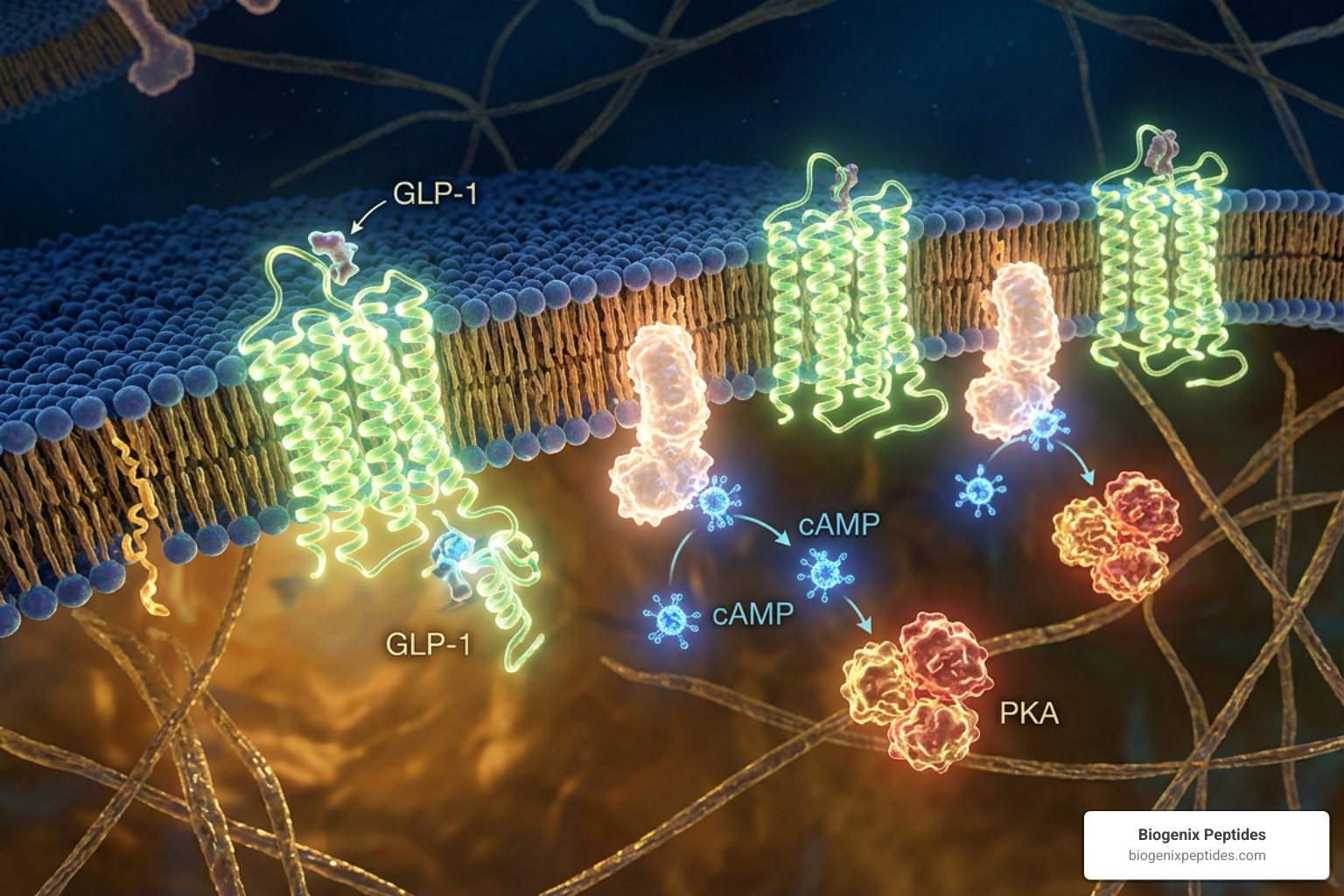
This pathway is responsible for the insulinotropic action of the peptide. In pancreatic beta-cells, this signaling cascade promotes glucose-dependent insulin secretion, meaning insulin is released only when glucose concentrations are elevated. Additionally, GLP-1R activation suppresses glucagon secretion from alpha-cells and slows gastric emptying, which helps stabilize glycemic fluctuations in animal models. Learn more about incretin pathways to see how these mechanisms function in real-time.
Endogenous Incretin Pathways and Biological Functions
In nature, the proglucagon gene is expressed in the intestinal L-cells, where tissue-specific post-translational processing yields native GLP-1. The primary active biological forms are GLP-1 (7-36) amide and GLP-1 (7-37).
Once released into the bloodstream, native GLP-1 has an incredibly short lifespan. It is rapidly degraded by the enzyme dipeptidyl peptidase-4 (DPP-4), which cleaves the two N-terminal amino acids. This cleavage converts the active hormone into GLP-1 (9-36) amide, which lacks insulinotropic activity and acts as a weak antagonist or independent metabolic regulator.
Because the half-life of native GLP-1 is less than two minutes, using the natural hormone in long-term metabolic studies is highly impractical. For a deeper dive into these pathways, you can explore the Scientific research on GLP-1 biological functions.
Molecular Engineering of Synthetic GLP-1 Peptides
To overcome the rapid degradation caused by DPP-4, molecular engineers have developed synthetic analogs. These modifications drastically extend the half-life of the molecules while maintaining, or even enhancing, their affinity for the GLP-1 receptor.
Take semaglutide as a prime example of structural engineering. It features a 94% sequence homology to native human GLP-1, but contains key modifications:
- Aib Substitution: The alanine at position 2 is replaced with alpha-aminobutyric acid (Aib), which blocks DPP-4 from recognizing and cleaving the peptide.
- Lipid Modification: A C18 fatty diacid chain is attached to lysine at position 26 via a gamma-glutamic acid and double-mini-PEG linker. This modification allows the peptide to bind reversibly to albumin, shielding it from renal clearance and extending its half-life to approximately 7 days.
For a detailed chemical breakdown, see the Structural analysis of semaglutide. These structural breakthroughs have paved the way for advanced laboratory investigations. To learn more about how these synthetic variants are classified, read about What are GLP-1 research molecules?.
Comparative Analysis of Approved and Compounded Formulations
In metabolic research, the distinction between commercially approved therapeutics and compounded or unapproved formulations is critical. While approved medications undergo rigorous clinical trials and strict manufacturing oversight, compounded variations often introduce variables that can compromise research integrity.

Compounded formulations are often prepared by state-licensed pharmacies when a drug is in short supply. However, these preparations do not undergo the same pre-market review as standard therapeutics. A major concern in the research community is the use of unauthorized salt forms (such as semaglutide sodium or semaglutide acetate) instead of the free-base form of the peptide. The FDA has warned that these salt forms are chemically distinct and have not been proven safe or effective.
| Feature | Approved Clinical Formulations | Compounded / Unapproved Formulations |
|---|---|---|
| Regulatory Review | Full pre-market review for safety and efficacy | No pre-market review or approval |
| Active Ingredient | Base peptide (e.g., Semaglutide free-base) | Often uses unapproved salt forms (sodium/acetate) |
| Manufacturing Standards | Strict CGMP compliant facilities | Variable compounding pharmacy standards |
| Purity Verification | Guaranteed batch-to-batch consistency | Risk of contaminants or concentration errors |
| Research Suitability | High (standardized control) | Low (introduces compounding variables) |
Regulatory Status and Quality Control Standards
The proliferation of unapproved versions of these peptides has led to significant regulatory scrutiny. The FDA has highlighted multiple safety concerns, particularly regarding concentration errors in compounded products. Because compounded liquid preparations require precise syringe alignment, manual preparation has occasionally led to severe adverse events requiring hospitalization.
The statistics highlight the scope of the problem:
- As of July 31, 2025, the FDA received 605 reports of adverse events associated with compounded semaglutide.
- During the same period, 545 reports of adverse events were linked to compounded tirzepatide.
To monitor these issues, the FDA relies on the MedWatch program, encouraging researchers and clinicians to report any quality issues or adverse events. You can read the official statements on FDA concerns with unapproved weight loss drugs.
Distinguishing Research Peptides from Clinical Therapeutics
For laboratory investigators, sourcing authentic research-grade peptides is paramount. Clinical therapeutics are formulated specifically for patient care, whereas laboratory-grade compounds are intended solely for in vitro or animal studies.
True research peptides must meet ultra-high purity standards (typically $\ge99\%$ purity verified by High-Performance Liquid Chromatography and Mass Spectrometry). Researchers must exercise extreme caution when purchasing compounds online, as many products labeled “for research purposes” are manufactured in substandard facilities without proper quality control. To protect your study designs, read our guide on Identifying authentic research peptides.
Key Research Findings on Dual and Triple Agonists
The frontier of metabolic research is no longer limited to single-receptor targeting. Scientists are now focusing on multi-receptor agonists that combine GLP-1 activity with other metabolic pathways to achieve synergistic effects.
By co-activating receptors like the glucose-dependent insulinotropic polypeptide (GIP) receptor and the glucagon receptor, these next-generation compounds can modulate energy expenditure, lipid metabolism, and satiety pathways far more effectively than single-target peptides. To understand how these multi-agonists are transforming metabolic science, check out the Research on dual and triple agonist pathways.
Multi-Receptor Synergy in Metabolic Research
The most prominent example of triple agonism currently under investigation is retatrutide. This single peptide molecule targets three distinct receptors:
- GLP-1 Receptor: Regulates insulin secretion and slows gastric emptying.
- GIP Receptor: Synergizes with GLP-1 to enhance insulin secretion and modulate lipid deposition.
- Glucagon Receptor: Increases energy expenditure and promotes hepatic glucose output regulation.
In phase 3 clinical trials, such as the TRIUMPH-4 study, this triple-receptor approach demonstrated unprecedented efficacy in weight reduction and glycemic control compared to single-receptor agonists. For a deeper dive into these findings, explore our resources on Retatrutide metabolic research findings and the Retatrutide phase 3 study analysis. When researching retatrutide, investigators must follow strict laboratory safety protocols and precise fluid administration guidelines to ensure reproducible data.
Amylin Co-Agonism and Satiety Amplification
Another exciting pathway in metabolic research is the combination of GLP-1 receptor agonists with amylin analogs. Amylin is a peptide hormone co-secreted with insulin that promotes satiety through distinct neuroendocrine pathways.
Cagrilintide, a long-acting amylin analog, is currently being studied in combination with semaglutide. This combination targets two separate satiety pathways in the brain, leading to a synergistic reduction in food intake without a proportional increase in gastrointestinal side effects. Researchers can read more about this mechanism in our articles on Cagrilintide pathway synergy and Amylin signaling and satiety research.
Challenges in Oral Delivery and Bioavailability
While subcutaneous fluid delivery remains the standard for peptide administration in laboratory models, developing reliable oral formulations is a major goal in pharmaceutical science. Peptides are naturally fragile molecules, and oral delivery presents several massive hurdles:
- Enzymatic Degradation: Proteolytic enzymes in the stomach and small intestine rapidly break down peptide chains into inactive amino acids.
- Acidic Environment: The highly acidic pH of the stomach can denature the peptide’s secondary structure.
- Intestinal Epithelial Barrier: Large hydrophilic macromolecules like peptides cannot easily cross the tight junctions of the intestinal epithelium, resulting in extremely low bioavailability (often less than 1%).
To bypass these barriers, researchers utilize permeation enhancers like sodium N-(8-[2-hydroxybenzoyl]amino)caprylate (SNAC). SNAC transiently increases the local pH in the stomach, protecting the peptide from pepsin degradation while facilitating its transcellular absorption across the gastric mucosa. To explore the compounds currently being studied for these delivery challenges, browse our Diabetes and obesity peptide research catalog.
Future Directions in Researching GLP-1 Peptides
Beyond simple chemical permeation enhancers, metabolic research is exploring cutting-edge delivery platforms to improve the stability and release profile of glp-1 peptides:
- Nanoparticles: Encapsulating peptides in polymeric or lipid-based nanoparticles protects them from enzymatic cleavage and allows for targeted release in the intestinal tract.
- Engineered Gut Microbiota: Researchers are studying genetically modified strains of gut bacteria designed to secrete GLP-1 directly within the host’s intestinal lumen.
- Sustained-Release Microspheres: Biodegradable microspheres can slowly release active peptides over weeks or months, reducing the frequency of administration needed in animal models.
These delivery innovations are critical as researchers continue to study the systemic benefits of incretins, including their impact on cardiovascular health. To read about these systemic benefits, check out the Cardiovascular outcomes in incretin research.
Frequently Asked Questions about Incretin Research
What is the difference between native GLP-1 and synthetic analogs?
Native GLP-1 has a half-life of less than two minutes because it is rapidly cleaved by the DPP-4 enzyme. Synthetic analogs are chemically engineered with specific structural modifications — such as the Aib substitution at position 2 or the addition of fatty diacid chains — that prevent enzymatic degradation and allow the peptide to remain active in the system for much longer periods.
Why are salt forms of these compounds discouraged in research?
Salt forms, such as semaglutide sodium or semaglutide acetate, are chemically different from the base peptide used in approved clinical formulations. The FDA has warned that these salt forms do not have the same safety, efficacy, or stability profiles as the free-base form. Using unapproved salt forms in laboratory research can introduce unwanted chemical variables and compromise the validity of the study’s data.
How do dual agonists differ from single receptor agonists?
Single receptor agonists target only the GLP-1 receptor. Dual agonists (like tirzepatide) target both the GLP-1 and GIP receptors. This co-activation creates a synergistic effect, enhancing insulin secretion and metabolic regulation more effectively than targeting either receptor alone.
Conclusion
The study of glp-1 peptides has evolved from basic endocrinology into a highly sophisticated field of metabolic science. From understanding the rapid degradation of native GLP-1 to engineering long-acting triple agonists like retatrutide, these molecules continue to redefine our understanding of metabolic pathways.
For laboratory researchers, maintaining high standards of chemical purity and sourcing is essential to ensure accurate, reproducible results. At BioGenix Peptides, we are committed to providing the scientific community with the highest quality, laboratory-grade compounds to support the next generation of metabolic breakthroughs. Explore the full range of GLP-1 research peptides to advance your laboratory investigations.