
Shedding Pounds with Science: A Guide to GLP 1 Peptides
What Science Actually Says About GLP-1 Peptides and Weight Loss
Disclaimer: The information provided in this article is for educational and informational purposes only. It is not intended as medical advice, diagnosis, or treatment. Products and compounds referenced are for research use only and are not approved for human or veterinary consumption. Always consult a qualified professional regarding health or medical decisions.

GLP-1 peptides for weight loss are among the most researched compounds in metabolic science right now — and the data behind them is hard to ignore.
Here is a quick snapshot of what the research shows:
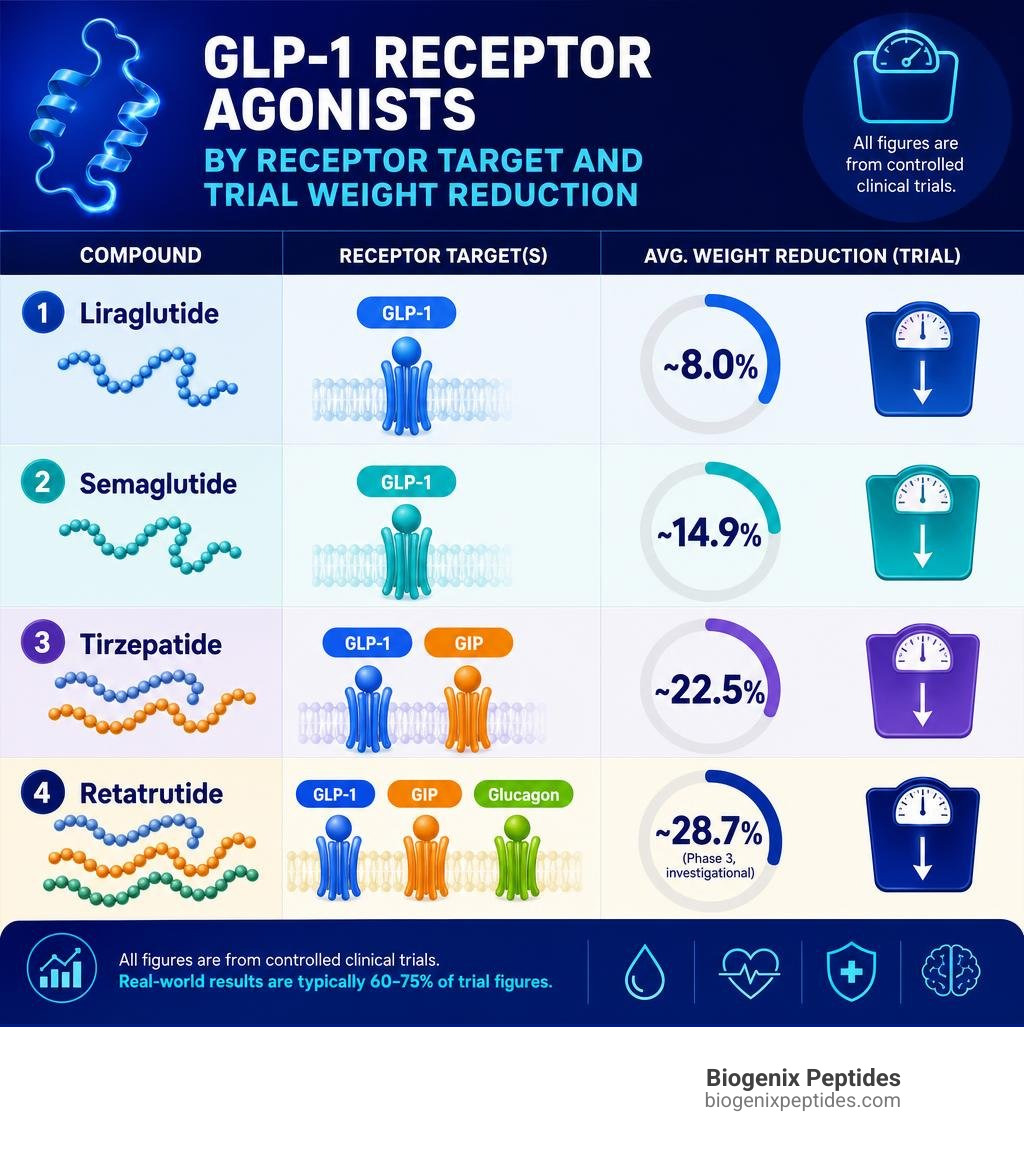
| Compound | Receptor Target(s) | Avg. Weight Reduction (Trial) |
|---|---|---|
| Liraglutide | GLP-1 | ~8.0% |
| Semaglutide | GLP-1 | ~14.9% |
| Tirzepatide | GLP-1 + GIP | ~22.5% |
| Retatrutide | GLP-1 + GIP + Glucagon | ~28.7% (Phase 3, investigational) |
All figures are from controlled clinical trials. Real-world results are typically 60–75% of trial figures.
These are not small numbers. A compound that reduces body weight by 20%+ in a controlled research setting represents a meaningful shift in how scientists understand metabolic regulation.
But weight is only part of the story. Researchers are also studying how these peptides affect blood sugar, cardiovascular markers, inflammation, and even brain function.
This guide breaks down how GLP-1 peptides work at a mechanistic level, how the major compounds compare, and what the latest research signals for the future of metabolic science.
I’m Jay Daniel, Founder and CEO of Biogenix Peptides, with years of hands-on experience in peptide research, quality validation, and the science of GLP-1 peptides for weight loss and metabolic health. In this guide, I’ll walk you through the research landscape clearly and without the hype.
Easy glp 1 peptides for weight loss word list:
Understanding GLP 1 Peptides for Weight Loss
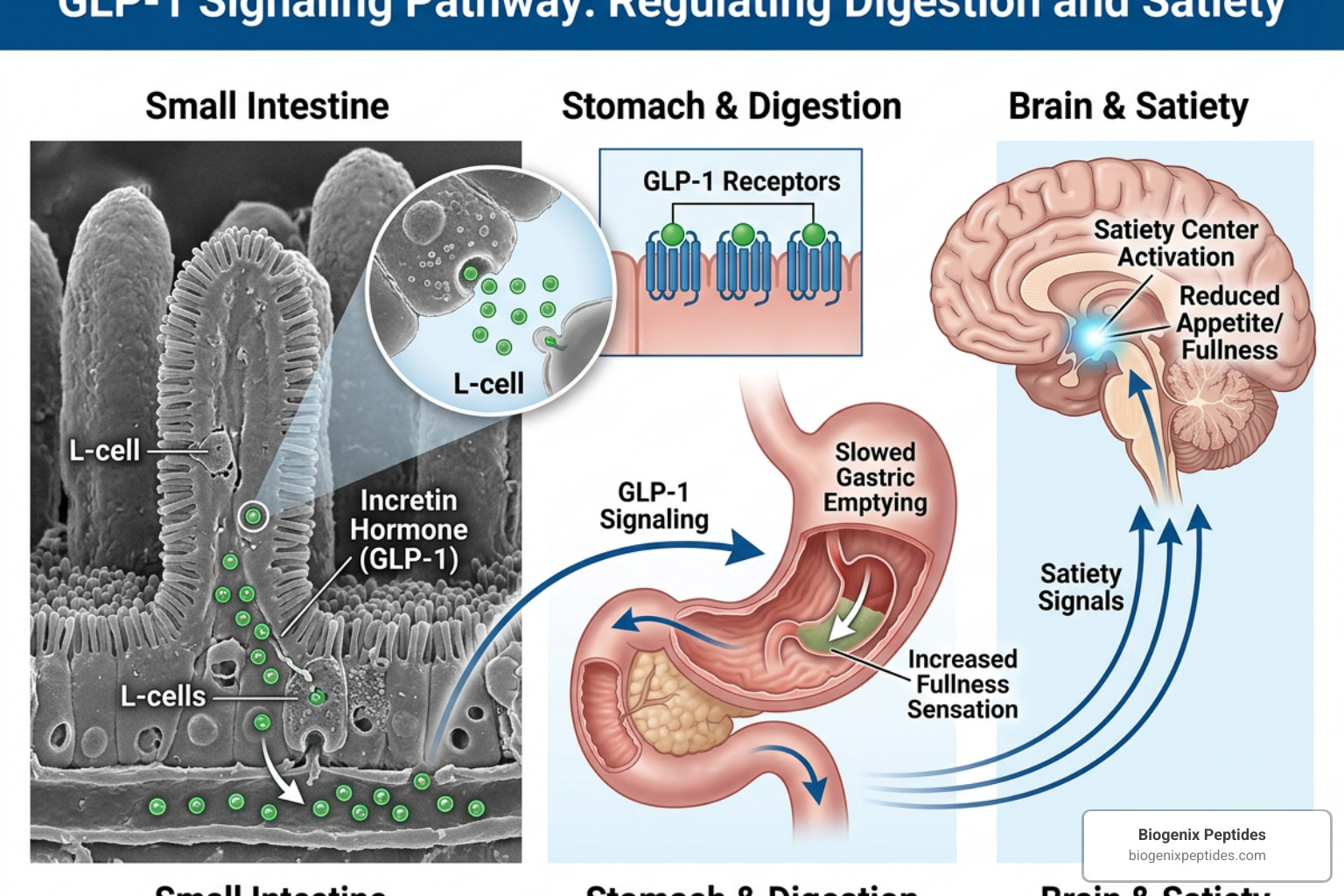
To understand how glp 1 peptides for weight loss perform their metabolic magic in laboratory models, we have to look closely at the endocrine system. Glucagon-like peptide-1 (GLP-1) is a naturally occurring incretin hormone. Under normal physiological conditions, our digestive tract releases these incretins in response to food intake. They signal the pancreas to release insulin, tell the liver to downregulate glucose production, and prompt the brain to register fullness.
However, native GLP-1 has a major design limitation in research settings: it has an incredibly short half-life of roughly two minutes before the enzyme dipeptidyl peptidase-4 (DPP-4) breaks it down. To bypass this rapid degradation, researchers developed synthetic analogs—or GLP-1 Agonists – Cleveland Clinic —that resist enzymatic breakdown.
By modifying the amino acid sequence, scientists created long-acting compounds that mimic native incretins. These modified glucagon like peptide analogs bind to receptors throughout the body, delaying gastric emptying and altering neural satiety pathways. When research models exhibit delayed gastric clearing, food remains in the stomach longer, sending continuous physical fullness signals to the brain. Combined with central nervous system signaling, this pathway dramatically decreases “food noise” or obsessive food-seeking behaviors.
Comparing Approved GLP 1 Peptides for Weight Loss
When analyzing the landscape of metabolic research in June 2026, we see a clear evolution in the structural complexity and efficacy of these compounds. The transition from single-receptor targets to multi-receptor agonists has fundamentally changed the metabolic research paradigm.
Let’s look at the three primary approved compounds studied in metabolic research:
- Liraglutide: As an early-generation single GLP-1 receptor agonist, liraglutide requires daily administration due to its shorter 13-hour half-life. In clinical evaluations, such as the SCALE trials, model subjects achieved an average body weight reduction of approximately 8.0%.
- Semaglutide: A highly potent, weekly single-receptor agonist with a half-life of roughly 7 days. By modifying the peptide backbone to bind albumin, semaglutide avoids rapid renal clearance. In the STEP trials, research models demonstrated an average weight loss of 14.9%.
- Tirzepatide: A dual-agonist peptide targeting both GLP-1 and glucose-dependent insulinotropic polypeptide (GIP) receptors. This dual-action pathway creates synergistic metabolic effects. In the SURMOUNT-1 clinical studies, models achieved up to 22.5% weight loss over 72 weeks.
For a deeper dive into these biological pathways, we highly recommend reading our breakdown of GLP-1 Incretin Pathways Explained. To explore the broader clinical context of these findings, researchers can refer to the comprehensive review on Weight Reduction with GLP-1 Agonists and Paths for … – PMC .
Future Directions of GLP 1 Peptides for Weight Loss
The horizon of peptide science is expanding beyond dual-receptor targeting. The current cutting edge of metabolic research lies in triple-receptor agonists, most notably Retatrutide (frequently referred to in research circles as GLP-3).
Retatrutide targets three distinct metabolic pathways simultaneously: GLP-1, GIP, and glucagon receptors. While GLP-1 and GIP optimize insulin secretion and suppress appetite, the addition of glucagon receptor activation increases energy expenditure and directly targets hepatic lipid accumulation. In Phase 3 clinical trials, models administered the highest concentrations of retatrutide achieved an unprecedented 28.7% average body weight reduction over 68 weeks.
Additionally, researchers are investigating small-molecule, non-peptide oral alternatives like Orforglipron (Foundayo). Unlike traditional oral peptides that require strict fasting protocols to avoid gastric degradation, small-molecule options do not carry rigid food or water restrictions. In Phase 2 trials, the highest concentration of this oral compound yielded an average of 11% weight loss over 72 weeks.
To understand how these multi-receptor dynamics are reshaping metabolic science, you can read our detailed analysis of GLP-1 Dual and Triple Agonist Peptides: Semaglutide, Tirzepatide, and Retatrutide in Research.
Mechanisms of Action and Physiological Effects
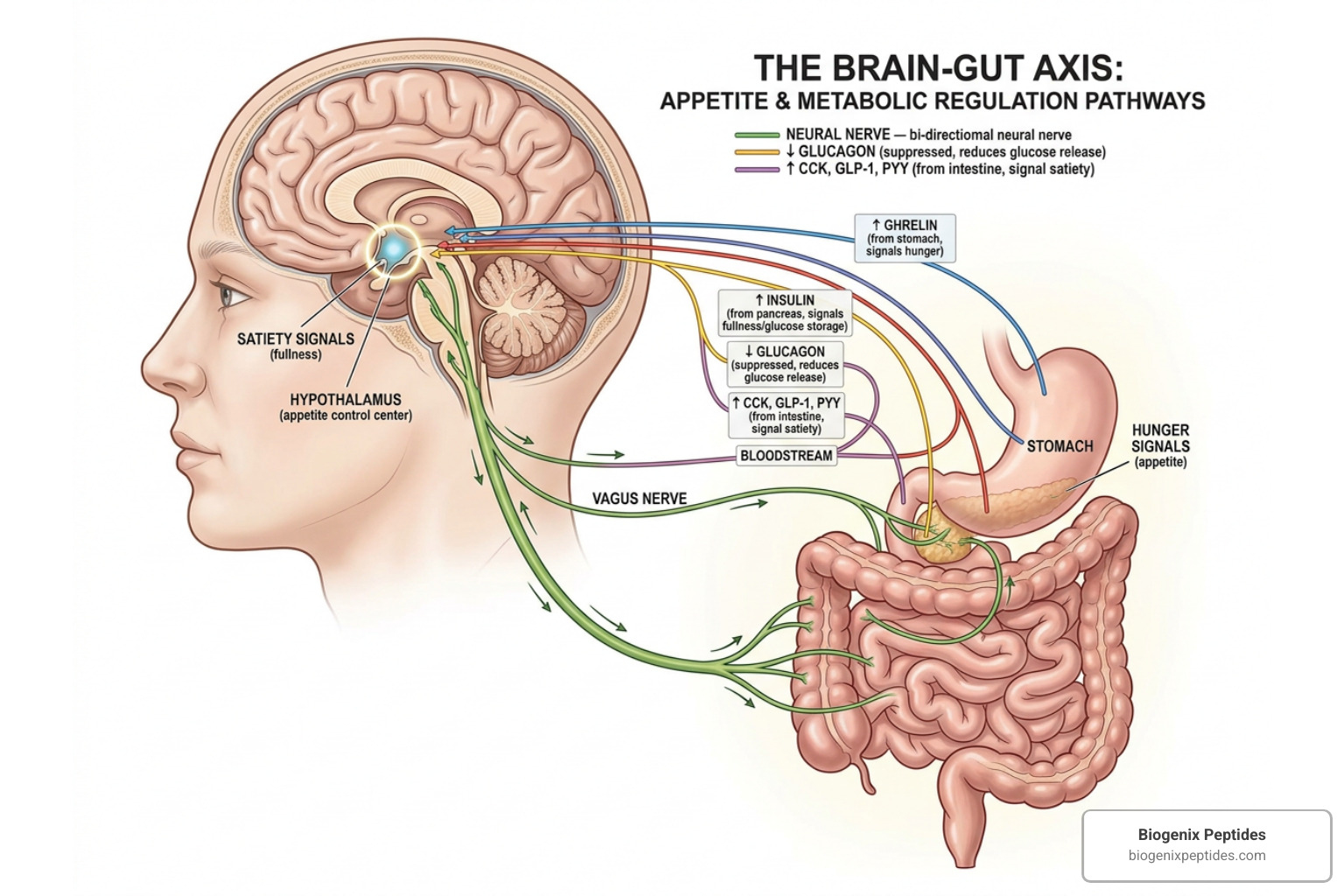
How do these compounds produce such profound metabolic shifts? The answer lies in their multi-organ physiological mechanisms.
When we introduce a GLP-1 receptor agonist into a research model, it initiates a cascade of cellular events:
- Pancreatic Regulation: The peptide binds to beta-cells, stimulating glucose-dependent insulin secretion. Simultaneously, it acts on alpha-cells to suppress inappropriate glucagon release, preventing the liver from dumping excess glucose into the bloodstream.
- Gastric Motility: By slowing down the rate at which the stomach empties its contents into the duodenum, the compound physically prolongs gastric distension.
- Hypothalamic Signaling: The peptide crosses the blood-brain barrier to interact directly with the arcuate nucleus in the hypothalamus, suppressing appetite signals and enhancing satiety pathways.
Researchers looking to understand the core biochemical properties of these molecules can explore Peptides for Weight Loss: What They Are and How They Work . To understand why this class of compounds has taken the scientific community by storm, read Why Your Doctor Is Obsessed With GLP-1 Receptor Agonists.
Cardiovascular and Metabolic Benefits in Research
The metabolic impacts of GLP-1 receptor agonists extend far beyond simple weight reduction. Clinical trials have revealed significant improvements in cardiovascular risk profiles. For example, research models evaluating semaglutide demonstrated a 20% reduction in major adverse cardiovascular events (MACE), including non-fatal myocardial infarction and stroke.
Physiologically, these peptides reduce systemic inflammation, improve endothelial function, and help stabilize arterial plaques. They also promote beneficial shifts in lipid profiles, lowering total cholesterol, LDL, and triglycerides while enhancing insulin sensitivity across peripheral tissues. For a thorough exploration of these cardioprotective mechanisms, we encourage researchers to review Why GLP-1 Agonists Are a Change of Heart for Cardiac Care.
Muscle Preservation and Body Composition
One of the primary challenges in rapid weight loss studies is the risk of muscle wasting. When a research model experiences a severe caloric deficit, the body naturally mobilizes both adipose tissue and skeletal muscle for energy. Losing significant lean muscle mass can compromise long-term metabolic rate and physical function.
To mitigate this, modern research protocols emphasize several strategies:
- High Protein Targets: Ensuring the model diet contains adequate amino acid profiles to support muscle protein synthesis.
- Resistance Training Simulation: Incorporating physical activity protocols to stimulate muscle retention.
- Glycine Compounding: Some research models utilize compounded formulations containing glycine or other amino acids to help protect skeletal muscle during rapid mass reduction.
For practical strategies on maintaining body composition during metabolic studies, read our comprehensive guide on The GLP-1 Guide to Not Melting Away Your Muscle.
Safety Profiles, Tolerability, and Research Protocols
When conducting research with GLP-1 receptor agonists, understanding the tolerability profile and proper handling protocols is vital for study integrity.
Because these peptides slow gastric motility and alter metabolic signaling, the most common side effects observed in laboratory models are gastrointestinal. These symptoms are typically transient and occur most frequently during the initial phases of the study or when stepping up the concentration of the compound.
To ensure research safety and compound stability, we recommend:
- Aseptic Technique: Always reconstitute lyophilized peptide vials using sterile bacteriostatic water in a clean environment.
- Temperature Control: Store unreconstituted vials in a controlled refrigerated environment (2–8°C) protected from direct light.
- Site Rotation: When administering subcutaneous liquid applications in research models, rotate the site systematically to minimize localized tissue irritation.
For an in-depth look at research safety parameters and titration structures for advanced triple-agonists, see The Ultimate Guide to Retatrutide Protocols and Safety.
Managing Common Side Effects in Research Models
In research settings, managing gastrointestinal side effects is key to preventing dropouts and maintaining steady data collection. The most common observations include mild-to-moderate nausea, vomiting, diarrhea, and constipation.
The most effective method to mitigate these effects is a “low-and-slow” titration protocol. Researchers typically begin the study at the lowest baseline concentration and maintain that level for at least four weeks. This allows the model’s gastrointestinal tract and central nervous system to adapt to the delayed gastric emptying before the concentration is incrementally increased. Ensuring proper hydration and monitoring electrolyte balance in the research subjects can also significantly reduce adverse events.
For a comprehensive overview of managing tolerability issues, consult our GLP-1 Peptides Complete Guide 2026.
Long-Term Considerations and Safety Signals
While GLP-1 peptides have a well-characterized safety profile, researchers must remain vigilant regarding rare but serious safety signals:
- Pancreatitis: Acute pancreatitis has been observed in a small percentage of subjects. Any sign of severe abdominal distress warrants immediate cessation of the compound.
- Thyroid C-cell Tumors: In rodent models, GLP-1 agonists have been associated with thyroid C-cell hyperplasia. While a direct causal link in humans has not been confirmed, these compounds are contraindicated in models with a history of Medullary Thyroid Carcinoma (MTC) or Multiple Endocrine Neoplasia syndrome type 2 (MEN 2).
- Dysesthesia: Investigational triple-agonists like retatrutide have introduced minor, novel safety signals, such as localized skin sensitivity or mild dysesthesia, which was reported in 20.9% of subjects at high concentrations in recent trials.
To review the latest safety data and clinical trial insights, read our analysis: What Did We Learn From the TRIUMPH-4 Phase 3 Study on Retatrutide?.
Frequently Asked Questions about GLP-1 Research
What is the difference between single, dual, and triple agonist peptides?
The primary difference lies in receptor coverage and the resulting synergistic metabolic pathways. Single agonists (like semaglutide) target only the GLP-1 receptor, focusing on insulin secretion and basic appetite suppression. Dual agonists (like tirzepatide) target both GLP-1 and GIP receptors, which enhances lipid clearance and further stabilizes blood sugar. Triple agonists (like retatrutide) add glucagon receptor activation to the mix, which directly stimulates hepatic fat metabolism and increases baseline energy expenditure.
For a detailed breakdown of these multi-target compounds, read Retatrutide GLP-3: The Triple Agonist Peptide Transforming Metabolic Research, Energy Regulation, and Body Composition Science.
How do researchers maintain lean muscle mass during peptide studies?
Skeletal muscle preservation is achieved by combining adequate protein nutrition with physical resistance protocols. In animal and clinical research models, ensuring that amino acid intake remains high prevents the body from catabolizing lean muscle tissue for fuel. Additionally, compounding research peptides with protective amino acids like glycine has shown promise in preserving metabolic rate and muscle structure during rapid mass reduction.
To explore the relationship between physical exercise and peptide therapy in research, read Why Exercise and GLP-1s Are a Match Made in Metabolic Heaven.
What are the cost and access considerations for these research compounds?
In the commercial landscape, brand-name GLP-1 medications can be incredibly expensive, with US list prices often exceeding $1,000 to $1,300 per month. Insurance coverage is frequently restrictive, leaving many programs seeking alternative pathways. For laboratory settings, sourcing high-purity, research-grade peptide vials from trusted suppliers is the standard method to conduct cost-effective, precise scientific evaluations.
To learn more about navigating the economics of peptide research, check out How to Get GLP-1 Results on a Generic Budget.
Conclusion
The scientific exploration of glp 1 peptides for weight loss has revolutionized our understanding of metabolic health, obesity, and endocrine signaling. From early single-receptor analogs to the latest triple-agonist compounds, these molecules offer unprecedented pathways for studying weight regulation, glycemic control, and cardiovascular protection.
At Biogenix Peptides, we are committed to supporting the scientific community by providing premium, research-grade compounds that meet the highest standards of purity and analytical verification. If you are ready to advance your laboratory’s metabolic research, we invite you to Explore GLP-1 Research Peptides and discover our range of high-quality research formulations.