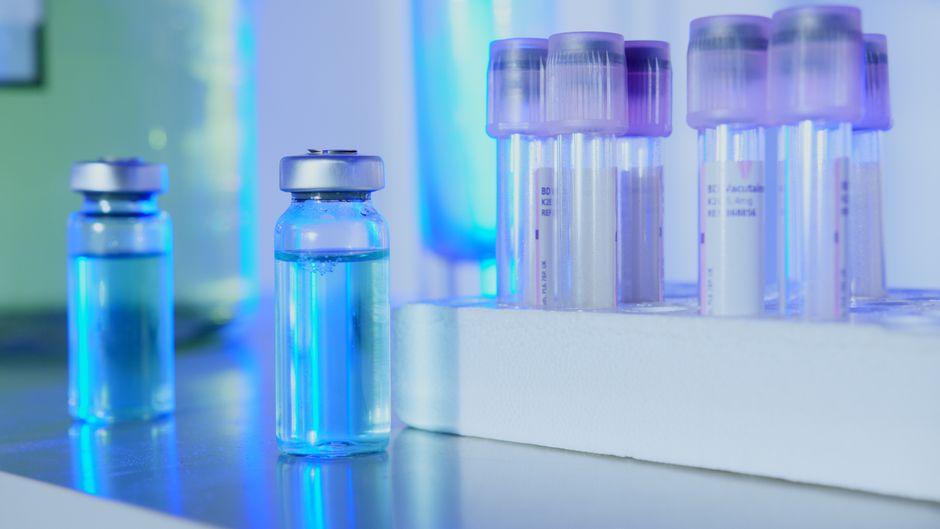
Top Rated Peptide Vials and Cases for Secure Storage
Disclaimer: The information provided in this article is for educational and informational purposes only. It is not intended as medical advice, diagnosis, or treatment. Products and compounds referenced are for research use only and are not approved for human or veterinary consumption. Always consult a qualified professional regarding health or medical decisions.
Why the Right Peptide Vial Setup Matters for Research Integrity

A peptide vial is a small, sealed container — typically glass — used to store lyophilized (freeze-dried) research peptides in a stable, uncontaminated form until they are ready for reconstitution and study.
Quick answers for researchers:
- What is it? A sealed vial containing freeze-dried peptide powder for laboratory research
- Common sizes: 2mg, 5mg, and 10mg vials are most widely available
- Best storage: Lyophilized — at -20°C; reconstituted — at 2°C to 8°C, never frozen
- Reconstitution solvent: Bacteriostatic water (not distilled water)
- Key handling rule: Swirl gently — never shake, never drop
Getting the most out of peptide research starts before any experiment does. How a vial is stored, handled, and organized directly affects the integrity of the compound inside. Research shows that even a drop from as low as 10 inches can trigger cavitation — a process that creates damaging free radicals and increases particle formation in sensitive protein formulations.
That’s a serious concern for any researcher who wants reliable, reproducible results.
I’m Jay Daniel, Founder and CEO of BioGenix Peptides, and I’ve spent years working hands-on with peptide vial sourcing, quality control, and laboratory handling protocols. In this guide, I’ll walk you through the top-rated vials and storage cases to keep your research compounds secure and stable.
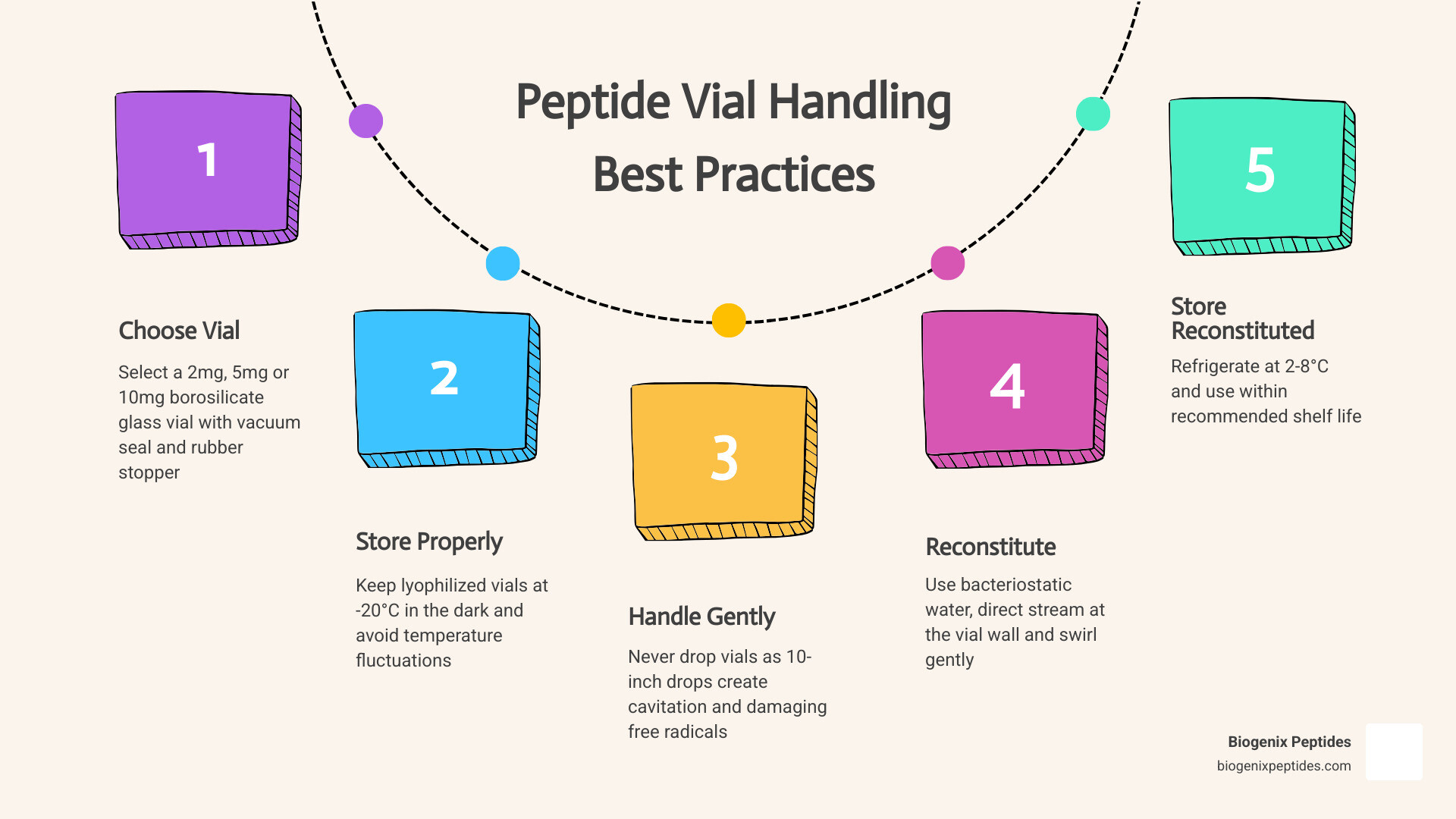
Quick peptide vial terms:
Understanding the Peptide Vial in Research Contexts
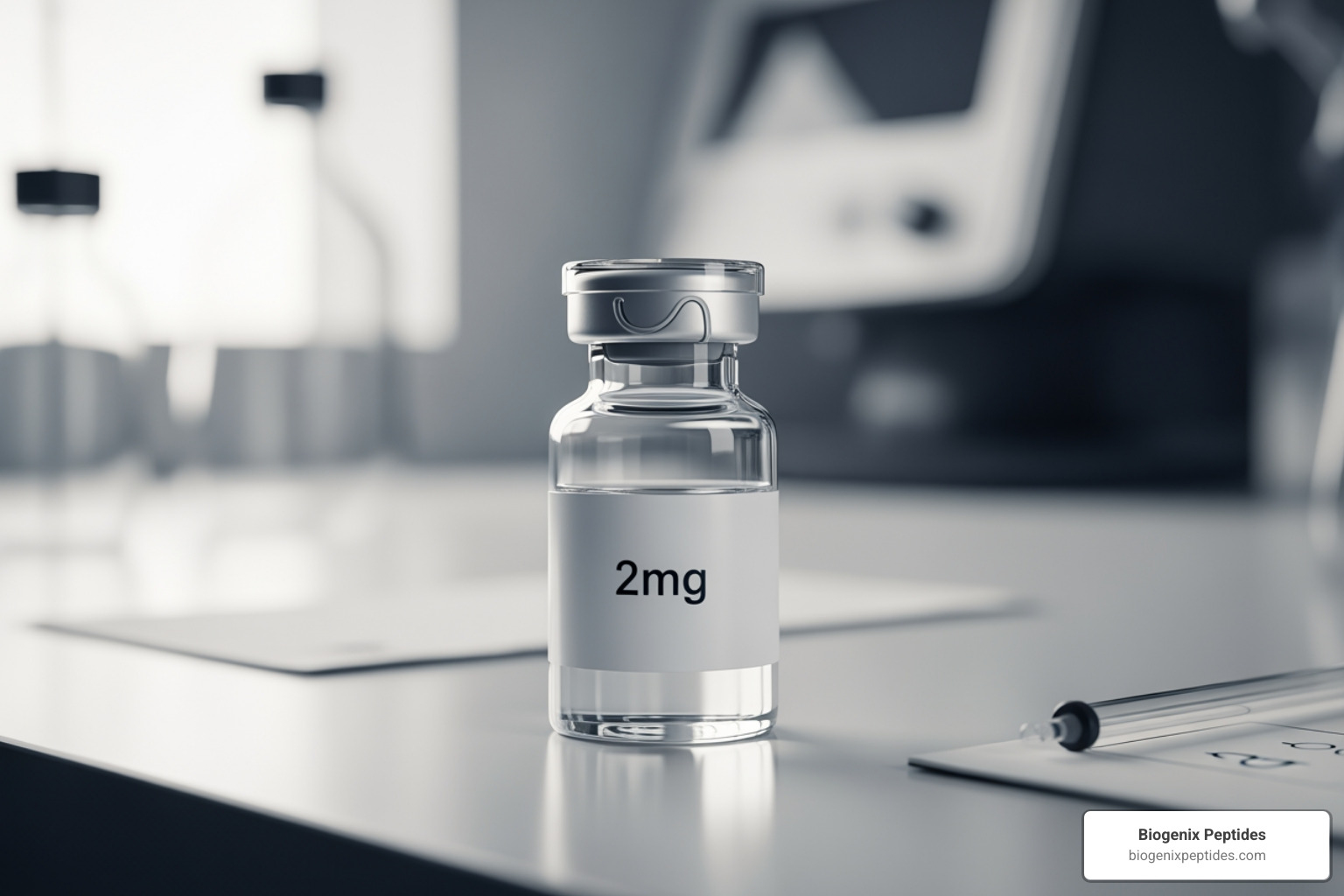
In research settings, a peptide vial is more than “just a tiny bottle.” It is part of the stability system for the compound inside. Most peptide vials are made from borosilicate glass because it tolerates low temperatures well, resists chemical interaction, and helps protect delicate lyophilized material.
A typical vial setup includes:
- Borosilicate glass body
- Butyl or similar rubber stopper
- Crimped aluminum seal
- Flip-top cap
- Vacuum or low-moisture internal environment
Most research peptides are shipped in lyophilized form because dry powder generally offers better stability than liquid. That is why storage, handling, and reconstitution procedures matter so much. Once moisture is introduced, the compound often becomes more vulnerable to degradation, contamination, and temperature stress.
Common vial sizes in the U.S. research market include:
- 2mg vials for smaller-scale projects
- 5mg vials for common bench research workflows
- 10mg vials for studies needing larger quantities
- Larger specialty vials for certain compounds such as NAD+-related research materials
The “right” size is not just about quantity. It also affects:
- Headspace
- ease of reconstitution
- storage footprint
- labeling clarity
- compatibility with storage racks and freezer boxes
If you are building a more complete setup, our guide to Essential Lab Equipment from Professional to Home Research Setups pairs well with this article, especially for organizing cold storage, sterile tools, and work surfaces.
For background on why lyophilized form is standard in research storage, see Lyophilization and Everything You Need to Know About Lyophilized Peptides.
Mechanical Shock and Cavitation Risks in Fragile Proteins

Here is the part many researchers underestimate: a vial can look perfectly fine after a drop and still have internal damage risks.
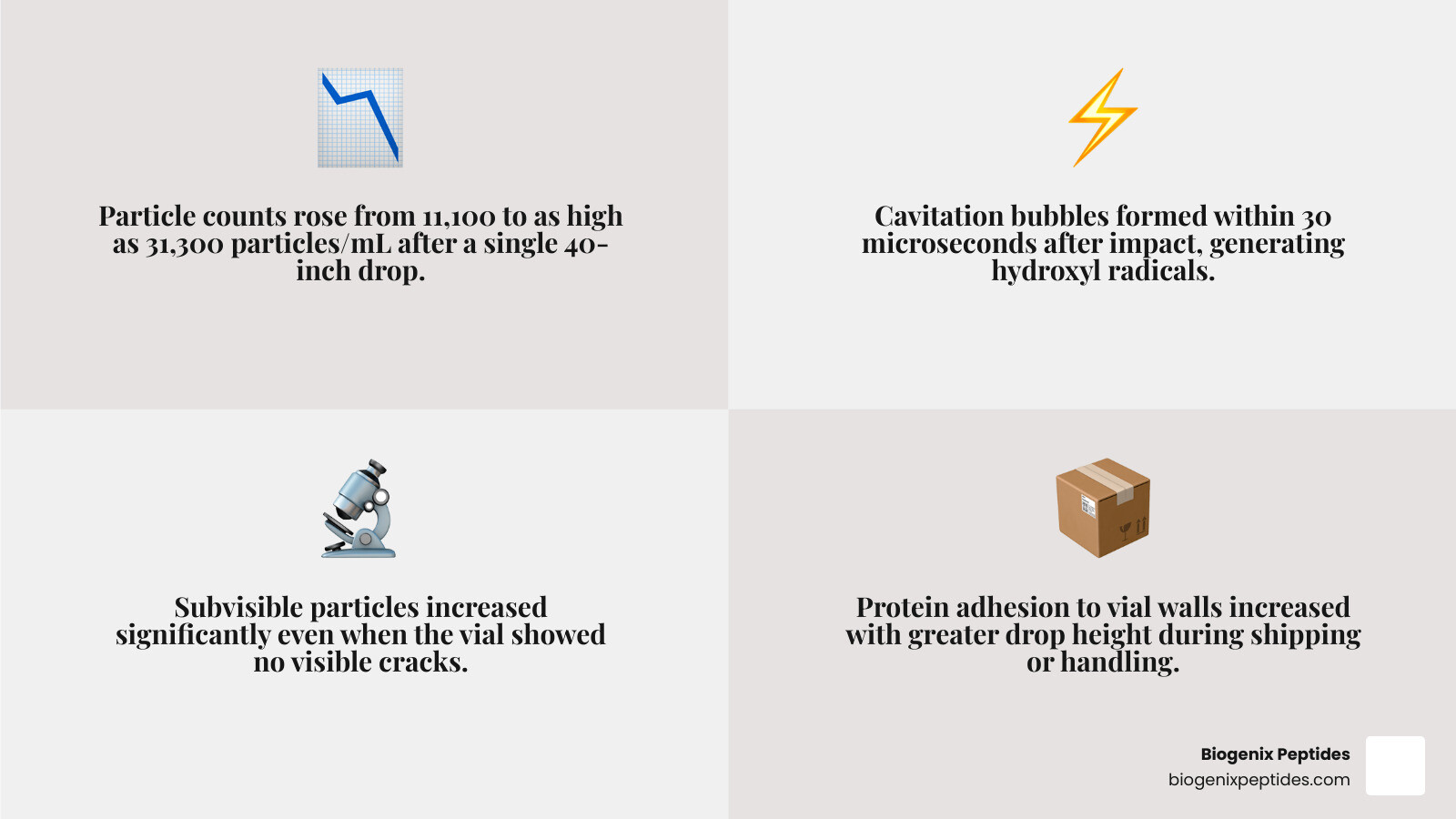
Scientific research on therapeutic protein formulations found that dropping vials from heights as low as 10 inches can create cavitation inside the liquid. Cavitation happens when rapid pressure changes form microscopic bubbles that collapse violently. In sensitive formulations, that collapse can generate reactive species, promote aggregation, and increase particle formation.
Key findings from the research include:
- Cavitation bubbles formed within 30 microseconds after impact
- Hydroxyl radical activity was detected after shock exposure
- A single 40-inch drop increased subvisible particle counts substantially
- Particle counts at 2 micrometers and larger rose from about 11,100 particles/mL before impact to roughly 16,800 to 31,300 particles/mL after impact, depending on fill volume
- Protein adhesion to vial walls increased with greater drop height
Why this matters for a peptide vial setup:
- Mechanical shock can alter the sample even when the vial does not crack
- Visible inspection alone may not catch subvisible particles
- Repeated handling mistakes can undermine study consistency
- Shipping, countertop drops, and freezer-to-bench mishandling all add risk
Simple comparison of shock-related risk
| Condition | Observed risk |
|---|---|
| No drop | Lower particle burden baseline |
| 10-inch drop | Cavitation can occur |
| 40-inch drop | Marked increase in subvisible particles |
| Repeated rough handling | Higher risk of aggregation and adhesion |
Our practical takeaway is simple: treat every vial like it contains something fragile, because it does. That means:
- avoid tossing vials into drawers
- do not carry loose vials in pockets or bags
- use padded or compartmented storage
- inspect any vial involved in an accidental impact
- if the contents look cloudy, discolored, or particulate, do not continue research with that sample
A peptide vial should never be treated like a mint tin. Tiny container, big consequences.
Storage and Stability Guidelines for Research Compounds
Storage is where reliable research either gets protected or quietly sabotaged.
For lyophilized peptides, the usual best practice is cold, dry, dark storage. For many research compounds, long-term storage at -20°C is preferred. After reconstitution, many compounds are better kept refrigerated at 2°C to 8°C and should not be frozen unless a compound-specific protocol clearly supports it.
Core storage principles:
- Keep lyophilized material at -20°C for longer-term stability
- Store reconstituted material at 2°C to 8°C
- Protect from light
- Minimize moisture exposure
- Avoid repeated temperature swings
- Avoid repeated freeze-thaw cycles
Why these rules matter:
- Heat can accelerate degradation
- Moisture can shorten stability of dry material
- Light can damage certain peptides
- Temperature fluctuation stresses the compound and container
- Repeated freezing and thawing can increase instability
Research-oriented sources commonly note that dry peptide material may remain stable much longer than reconstituted material when stored properly. Some guides place lyophilized shelf life at up to two years under cold storage, while reconstituted material is often far shorter and more variable depending on the specific compound and diluent.
That is why freezer organization matters almost as much as freezer temperature. The longer researchers spend digging through loose vials, the more temperature exposure they create.
Helpful references:
- Don’t Let Your Peptides Perish: The Powder Storage Handbook
- Peptide Storage Stability Guidelines
- Best Practices for Peptide Storage Handling
- Cold Storage Secrets for Keeping Reconstituted Peptides Fresh
If you need a dedicated storage solution, a purpose-built storage box can help reduce clutter, improve identification, and limit accidental impacts.
Best Practices for Reconstitution and Handling
For research work, reconstitution is one of the highest-risk steps for contamination and compound stress. The goal is to introduce the diluent gently, maintain sterility, and avoid unnecessary agitation.
General best practices include:
- start with a clean workspace
- wash hands and sanitize surfaces
- wipe vial tops and tools with alcohol and let them dry
- use sterile supplies
- choose an appropriate diluent for the specific research protocol
- add liquid slowly
- swirl gently rather than shaking
- label the vial immediately after preparation
In many peptide research workflows, bacteriostatic water is commonly preferred because it contains benzyl alcohol, which helps reduce microbial growth in multi-entry contexts. That said, whether bacteriostatic water or another sterile diluent is appropriate depends on the compound and protocol.
For a deeper dive, see:
- BPC-157 Reconstitution Complete Guide
- The Science of the Bacteriostatic Water Peptide Ratio
- Don’t Dilute Your Success: A Guide to Buying Bacteriostatic Water
- Bacteriostatic Water for Research: Don’t Let Your Research Go Down the Drain
- Sterile Water and Bacteriostatic Water Differences You Must Know
A few research compounds, such as VIP, are commonly discussed in lyophilized vial form and often appear in 5mg or 10mg presentations in supplier literature. In research discussions, VIP is described as a 28-amino-acid neuropeptide of interest for gastrointestinal, inflammatory, and neurobiological study. Regardless of compound, the handling principles stay the same: cold storage, gentle reconstitution, and minimal agitation.
Reconstituting a Peptide Vial Correctly
The safest general method is slow and boring. In the lab, boring is good.
A careful process usually looks like this:
- Let the vial and diluent reach an appropriate handling temperature if required by your protocol.
- Sanitize the stopper and let it dry fully.
- Draw the planned amount of diluent with a sterile syringe.
- Insert the needle at a slight angle through the stopper.
- Direct the stream toward the inside wall of the vial, not straight onto the powder.
- Allow the liquid to run gently down the glass.
- Swirl softly until dissolved.
- Do not shake.
Why wall-directed flow matters:
- it reduces foaming
- it lowers mechanical stress
- it helps protect fragile molecular structures
- it prevents the powder cake from being blasted apart
Why shaking is a bad idea:
- it can create bubbles
- it can stress sensitive compounds
- it can increase the chance of aggregation
- it makes you feel productive while doing the wrong thing
For detailed walkthroughs, visit:
- Reconstituting Lyophilized Peptides Step-by-Step
- Mixing Peptides at Home Like a Pro
- The Secret to Reconstituting Peptides 5mg Correctly
- BPC-157 Reconstitution Ratios Made Easy for Research
Organizing Your Laboratory for Maximum Efficiency
A great peptide vial setup is not just about the vial itself. It is about the whole system around it: box, rack, label, freezer placement, and retrieval routine.
Good organization improves:
- sample identification
- stability during storage
- speed of retrieval
- contamination control
- protection from drops and collisions
Here is what we recommend for a practical peptide vial organization system:
- one box size per vial format where possible
- waterproof, legible labels
- clear lot and compound identification
- date tracking
- research-use-only labeling where applicable
- physical separation of lyophilized and reconstituted materials
- separate compartments for active, archived, and discard-pending items
This is also where labeling matters. Label quality may sound like a small detail, but in 2026 there is clearly substantial demand for vial labeling support, with more than 550 peptide vial label design services visible on Fiverr. That tells us the market cares about organization and presentation, but in research practice, clarity matters more than fancy graphics.
At minimum, a label should identify:
- compound name
- amount in vial
- lot or batch identifier
- preparation date if reconstituted
- storage requirement
- research-use-only status if relevant
If you are setting up physical storage, examples of commonly used box styles include simple 3mL storage cases and compartmented vial organizers.
These kinds of cases are useful because they:
- reduce vial-to-vial contact
- make sorting easier
- limit rolling and tipping
- improve cold storage efficiency
- help protect samples during transport inside the lab
For sterile handling workflow, pair storage improvements with Creating a Sterile Research Environment.
Selecting a Peptide Vial Storage Case
Not all storage cases are equally useful. A good case should match both the vial size and the environment where you use it.
When comparing storage cases, look for:
- compatibility with 3mL or other relevant vial dimensions
- rigid outer walls
- compartmented interior
- secure lid closure
- easy label visibility
- freezer-safe construction
- some degree of impact protection or padding
For freezer use, we like systems that let us retrieve one sample without warming the whole collection. Dedicated organizers and holders can make that much easier.
Useful guides:
- The Ultimate Peptide Organizer for Your Freezer
- Vial Holder Options to Organize Your Medicine Cabinet
In short, the best case is the one that prevents chaos. Lab chaos is expensive.
Frequently Asked Questions about Peptide Vial Handling
How should a peptide vial be stored long-term?
For long-term research storage, lyophilized material is generally best kept at -20°C in a dry, dark environment. Moisture prevention is critical, so keep the vial tightly sealed and minimize time outside cold storage. Light shielding also helps protect sensitive compounds.
Once reconstituted, many research compounds are typically kept at 2°C to 8°C and should not be frozen unless the compound-specific documentation says otherwise. For more detailed storage strategy, see Peptide Storage Stability Guidelines.
What happens if a peptide vial is dropped?
A dropped vial may face more than breakage risk. Research on protein formulations shows that impact can trigger cavitation, where microscopic bubbles form and collapse rapidly. This can lead to free radical formation, aggregation, and increased subvisible particles, even if the vial looks intact.
If a vial is dropped:
- inspect the container carefully
- look for cracks, chips, cloudiness, or visible particles
- consider the sample compromised if appearance has changed
- avoid further research use if integrity is uncertain
The key point is that invisible damage can still matter.
Why is bacteriostatic water preferred for reconstitution?
In research settings, bacteriostatic water is often preferred because it contains benzyl alcohol, which provides antimicrobial support in multi-entry handling situations. It is widely used for reconstituting lyophilized peptides when the protocol allows it.
It is generally favored over distilled water in these contexts because distilled water is not the standard sterile antimicrobial diluent for this purpose. If you want a closer comparison, read Sterile Water and Bacteriostatic Water Differences You Must Know.
Conclusion
Choosing the right peptide vial and storage case is really about protecting research integrity from avoidable problems: moisture, light, rough handling, poor labeling, clutter, and temperature swings.
Our bottom-line recommendations are simple:
- choose high-quality glass vials with secure seals
- store lyophilized compounds at -20°C
- keep reconstituted materials at 2°C to 8°C
- never shake
- never handle loosely
- use compartmented cases or freezer organizers
- inspect carefully after any accidental drop
- label everything clearly and consistently
When we treat storage as part of the experiment rather than an afterthought, we give our research the best chance of producing clean, reproducible results.
If you are ready to upgrade your setup, explore Shop High-Quality Research Supplies.