The Secret to Reconstituting Peptides Correctly
The Secret to Reconstituting Peptides Correctly
What Reconstituting Peptides Actually Means (And Why It Matters)
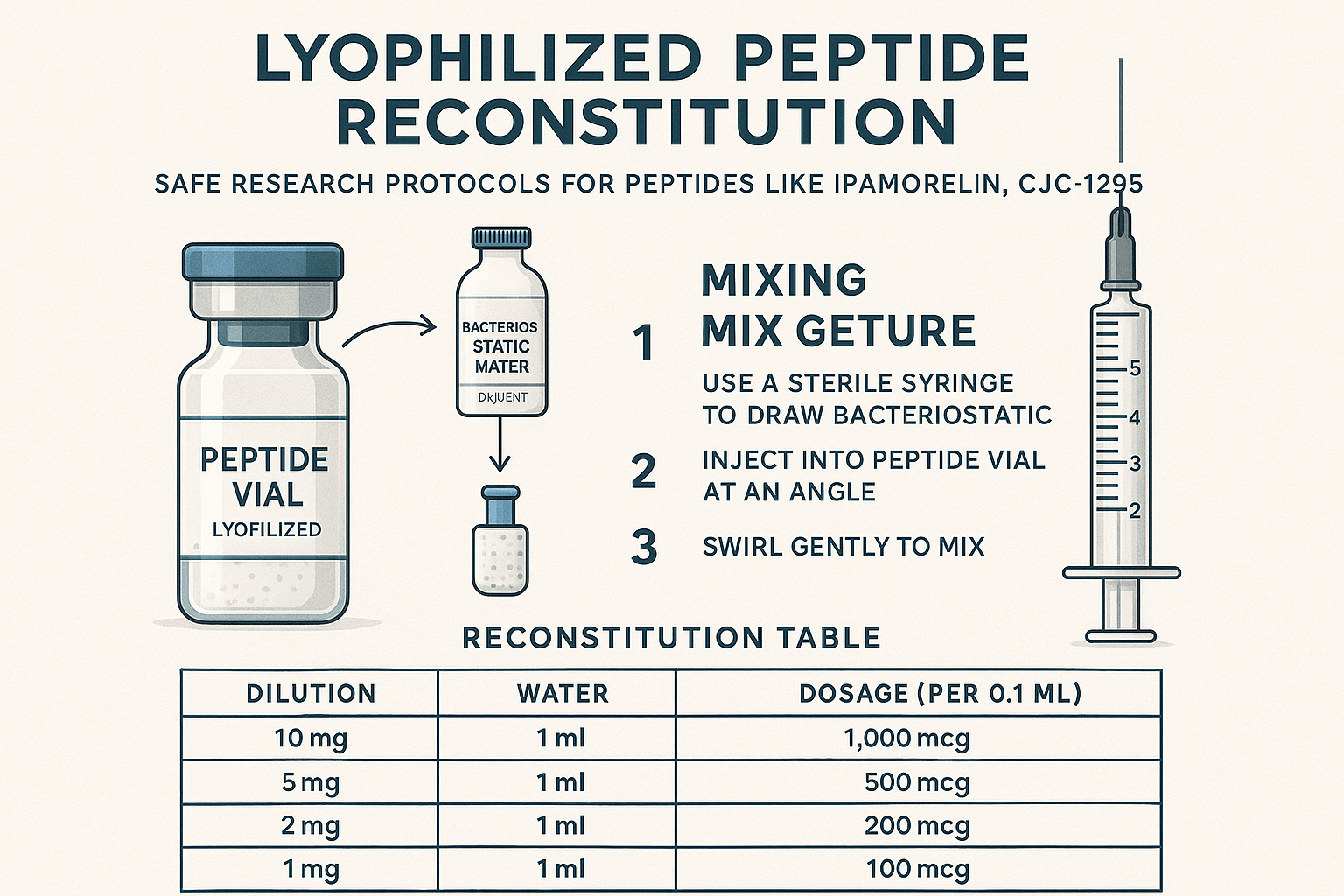
Reconstituting peptides is the process of dissolving a freeze-dried (lyophilized) peptide powder into a liquid solvent — most commonly bacteriostatic water — to create a solution ready for research use.
Here’s the quick version if you need it fast:
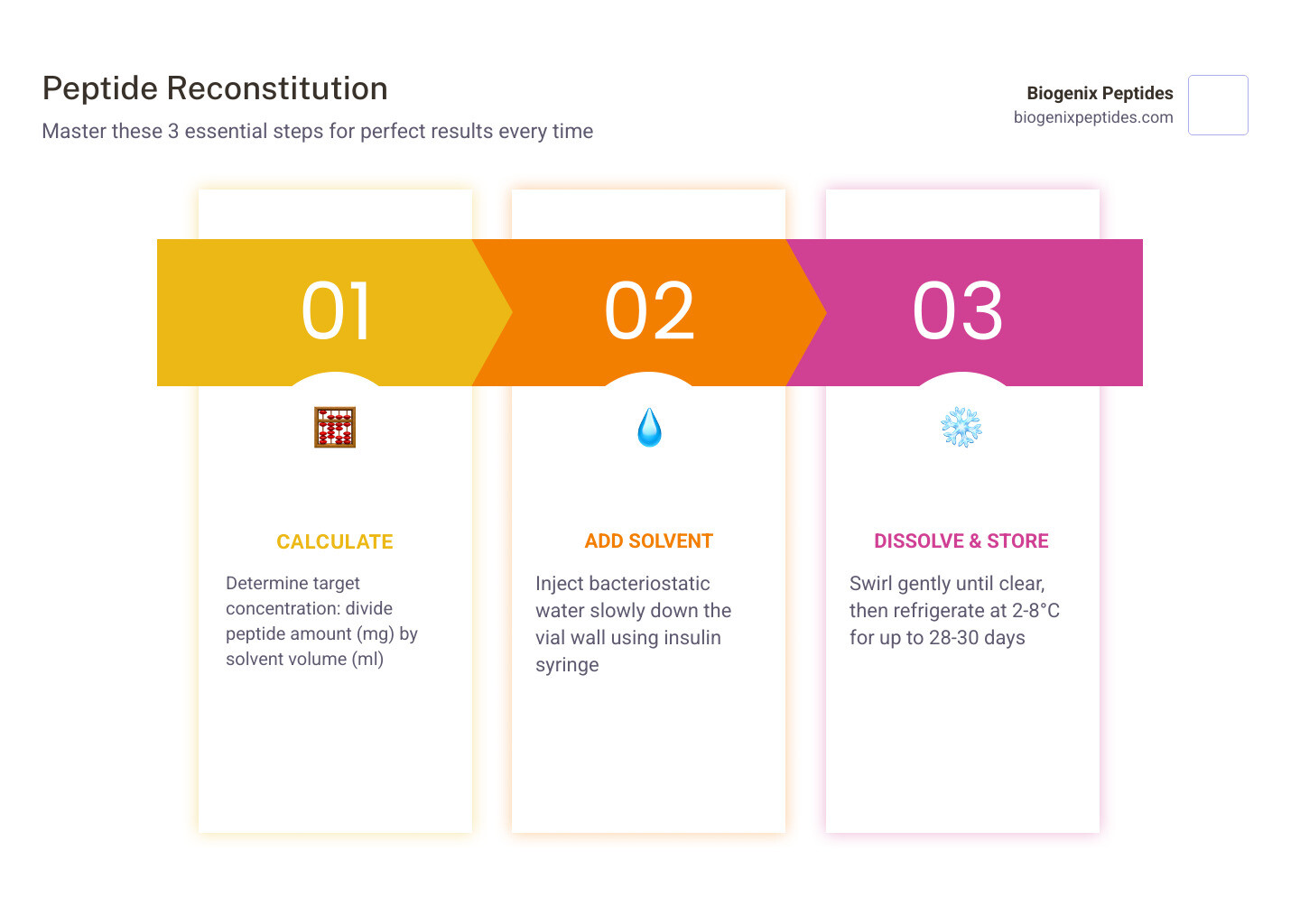
- Calculate your target concentration (vial size ÷ solvent volume)
- Add bacteriostatic water slowly along the vial wall using an insulin syringe
- Swirl gently until fully dissolved — never shake
- Refrigerate at 2–8°C and use within 28–30 days
Peptides are shipped as dry, lyophilized powders because that form is far more stable for storage and transport. But to actually use them in research, you need to bring them back to liquid form. Get this step wrong — wrong solvent, wrong technique, wrong volume — and you risk damaging the peptide structure, miscalculating your dose, or introducing contamination.
The difference between a clean, accurate result and a wasted vial often comes down to a few simple steps done correctly.
I’m Jay Daniel, Founder and CEO of BioGenix Peptides, and I’ve spent years working hands-on with peptide sourcing, quality control, and laboratory protocols — including developing best practices for reconstituting peptides at both research and production scale. In this guide, I’ll walk you through everything you need to get it right the first time.
Essential Equipment for Reconstituting Peptides
Before we even touch a vial, we need to ensure we have the right tools for the job. Attempting to reconstitute peptides without the proper gear is like trying to bake a soufflé with a campfire—it’s technically possible, but you’re probably going to ruin it.
To start, you will need a clean, well-lit workspace. We recommend creating a sterile research environment by wiping down your surface with 70% isopropyl alcohol. Here is your essential checklist:
- Lyophilized Peptide Vial: The “cake” or powder that needs dissolving.
- Bacteriostatic Water: The gold standard solvent for multi-dose research.
- Insulin Syringes: Typically 1ml (100 units) with a fine gauge needle (29G to 31G).
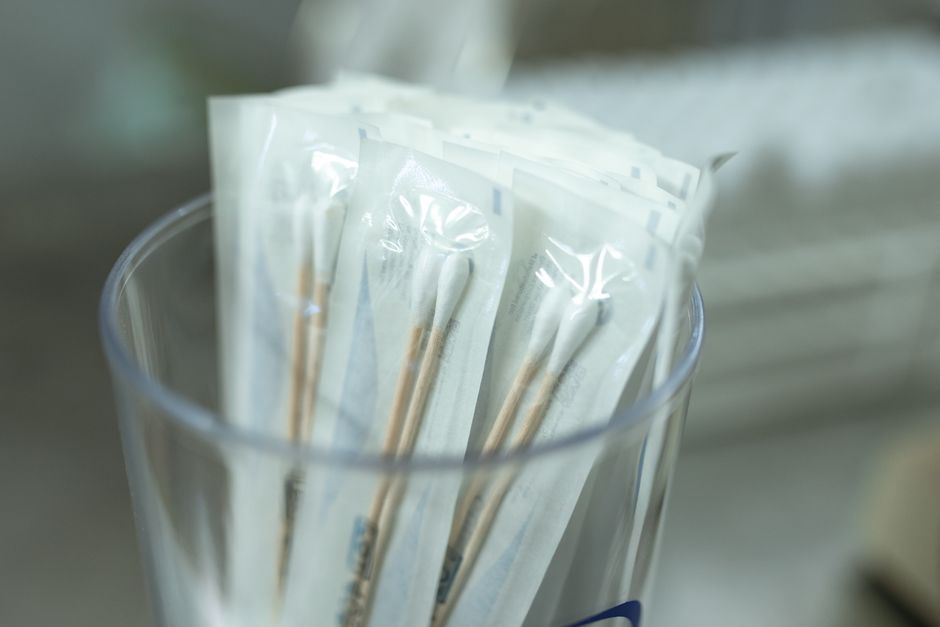
- Alcohol Prep Pads: For sterilizing the rubber stoppers of both the water and peptide vials.
- Sharps Container: For safe disposal of used needles.
If you are setting up a new lab space, check out our guide on essential lab equipment: from professional to home research setups to ensure you aren’t missing any critical components.
Why Bacteriostatic Water is the Preferred Solvent
You might wonder why we don’t just use regular water. The “secret sauce” in Bacteriostatic Water Reconstitution Solution 10ml is a 0.9% concentration of benzyl alcohol.
This alcohol acts as a preservative that inhibits the growth of bacteria. When we are reconstituting peptides for multi-dose use, we are repeatedly piercing the rubber stopper. Each puncture is an opportunity for contaminants to enter. Bacteriostatic water keeps the solution sterile and stable for approximately 28 to 30 days once refrigerated.
Sterile Water vs. Bacteriostatic Water
Can you use sterile water? Yes, but there is a massive catch. Sterile water contains no preservative. Once you open the vial or inject it into your peptide, the “clock” starts ticking much faster.
Research indicates that peptides reconstituted with sterile water should be used within 3 to 5 days, as the risk of bacterial colonization increases significantly after that. For most research protocols lasting several weeks, bacteriostatic water is the only logical choice. To understand why we start with a powder in the first place, you can read about why research peptides are typically lyophilized.
Step-by-Step Guide to Reconstituting Peptides 5mg
Now, let’s get into the actual process. We will use a 5mg vial as our primary example, as it is one of the most common sizes in the industry.
- Equilibrate: Take your peptide vial and solvent out of the fridge and let them reach room temperature (about 15-20 minutes). This prevents condensation from forming inside the vial, which can cause clumping.
- Sanitize: Pop the plastic caps off. Use a fresh alcohol prep pad to vigorously wipe the rubber stoppers of both vials.
- Draw Solvent: Using an insulin syringe, draw up your calculated amount of bacteriostatic water (usually 1ml or 2ml).
- Equalize Pressure: This is a pro tip. Before injecting the water, pull a bit of air into the syringe. Inject the air into the peptide vial first. This prevents a vacuum from “sucking” the water in too fast.
- The Slow Drip: Insert the needle and aim it at the glass wall of the vial, not directly at the powder. Slowly depress the plunger, letting the water trickle down the side.
For a more detailed visual breakdown, see our reconstituting lyophilized peptides step-by-step guide.
Mastering the Technique of Reconstituting Peptides Without Damage
Peptides are fragile chains of amino acids held together by delicate bonds. If you treat them roughly, you can cause “mechanical denaturation.” This is a fancy way of saying you’ve physically broken the peptide.
- Avoid the “Blast”: Never spray water directly onto the lyophilized powder. The force can shear the peptide bonds.
- The No-Shake Zone: You might be tempted to shake the vial like a polaroid picture to get it to dissolve. Don’t. Shaking creates foam and bubbles, which increases the air-liquid interface and can lead to oxidation and structural damage.
- The Wine Swirl: Instead of shaking, gently swirl the vial between your thumb and forefinger—much like you would swirl a glass of expensive Cabernet.
Handling Pressure Equalization and Stubborn Powders
Many vials are vacuum-sealed during the lyophilization process. When you insert a needle, the pressure difference can cause the plunger to move on its own. To maintain “neutral buoyancy,” you may need to draw a bit of air out of the vial after adding the liquid to equalize the pressure.
If the powder doesn’t dissolve instantly, don’t panic. Some peptide basics teach us that larger molecules take longer to hydrate. Simply place the vial in the refrigerator for 20 minutes and check again; usually, the remaining particles will have dissolved on their own.
Calculating Doses and Syringe Measurements
The most confusing part for many researchers isn’t the mixing—it’s the math. The most important thing to remember is that the total amount of peptide in the vial never changes, regardless of how much water you add. If there is 5mg of powder, there is 5mg of powder. Adding more water just makes the solution more dilute.
Common Math Examples for Reconstituting Peptides
Let’s look at a 5mg vial.
- If you add 1ml (100 units) of water: Your concentration is 5mg/ml.
- If you add 2ml (200 units) of water: Your concentration is 2.5mg/ml.
If your research protocol calls for a 250mcg (microgram) dose from a 5mg vial reconstituted with 2ml of water:
- 5mg = 5,000mcg.
- 5,000mcg / 2ml = 2,500mcg per ml.
- To get 250mcg, you need 1/10th of a ml.
- On a standard insulin syringe, 0.1ml = 10 units.
Peptide-Specific Considerations for BPC-157 and Semaglutide
Different peptides have different “personalities” when it comes to stability:
- BPC-157: Generally very robust, but still benefits from the “swirl, don’t shake” rule.
- Semaglutide: Known for better-than-average stability; it can remain potent for up to 56 days if kept refrigerated.
- Tirzepatide: Typically stays stable for about 42 days post-reconstitution.
- TB-500: Often comes in larger 10mg vials, so researchers frequently use 2ml or 2.5ml of water to make measuring small doses easier.
Storage, Stability, and Safety Protocols
Once you have successfully finished reconstituting peptides, the environment becomes their biggest enemy. Heat, light, and kinetic energy (shaking) will all accelerate degradation.
We always recommend storing your vials in the center of the refrigerator (2-8°C). Avoid the door shelves, as the temperature fluctuates every time you open the fridge for a snack. For a deep dive into longevity, read our peptide storage & stability guidelines.
Signs of Degradation and When to Discard
How do you know if your peptide has “gone bad”? While you can’t see potency loss with the naked eye, you can see structural failure. You should discard your vial if you notice:
- Cloudiness: The solution should be “water-clear.”
- Floating Particles: If it doesn’t dissolve after 24 hours in the fridge, the peptide may have aggregated.
- Discoloration: Any yellowing or tinting is a sign of oxidation or contamination.
Following best practices for peptide storage & handling is the best way to avoid wasting your research materials.
Why You Should Never Freeze Reconstituted Peptides
This is a common mistake. While you can store unmixed, lyophilized powder in the freezer (-20°C) for up to 24-48 months, you should never freeze a peptide once it has been mixed with water.
Freezing creates ice crystals. These crystals act like tiny jagged knives that can physically shred the peptide’s structure—a process called cryodenaturation. Once mixed, the fridge is the only home your peptide should know.
Frequently Asked Questions about Reconstitution
What should I do if the peptide doesn’t fully dissolve?
First, give it time. Some hydrophobic peptides are “stubborn.” Put the vial in the refrigerator for 30 minutes. The cold temperature and time often allow the molecules to hydrate fully. If it still hasn’t dissolved after 24 hours, the peptide may be damaged or of low purity.
How do I avoid common mistakes like foaming?
Foaming is usually caused by two things: spraying the water directly onto the powder or shaking the vial. If you do get foam, let the vial sit in the fridge until the bubbles settle. Do not draw your dose from the foam, as the concentration of the peptide in the bubbles is inconsistent.
Can I mix multiple peptides in one syringe?
In the research world, this is known as “back-loading” or sequential drawing. While it is possible to draw two different reconstituted peptides into the same syringe for a single injection, you must be careful not to cross-contaminate the vials. Always use a fresh needle if you are touching the rubber stopper of a second vial, or ensure your technique prevents any backflow. For more on maintaining a clean environment during this process, see creating a sterile research environment 2.
Conclusion
Mastering the art of reconstituting peptides is a fundamental skill for any serious researcher. By following these steps—using bacteriostatic water, employing the “slow drip” technique, and respecting the “no-shake” rule—you ensure that your 5mg vial remains potent and effective for the duration of your study.
At Biogenix Peptides, we pride ourselves on providing the highest quality lyophilized compounds to ensure your research starts on the right foot. Precision in the lab leads to precision in results. When you’re ready to restock your lab with premium materials, you can shop Biogenix Peptides for all your research needs. Happy researching!