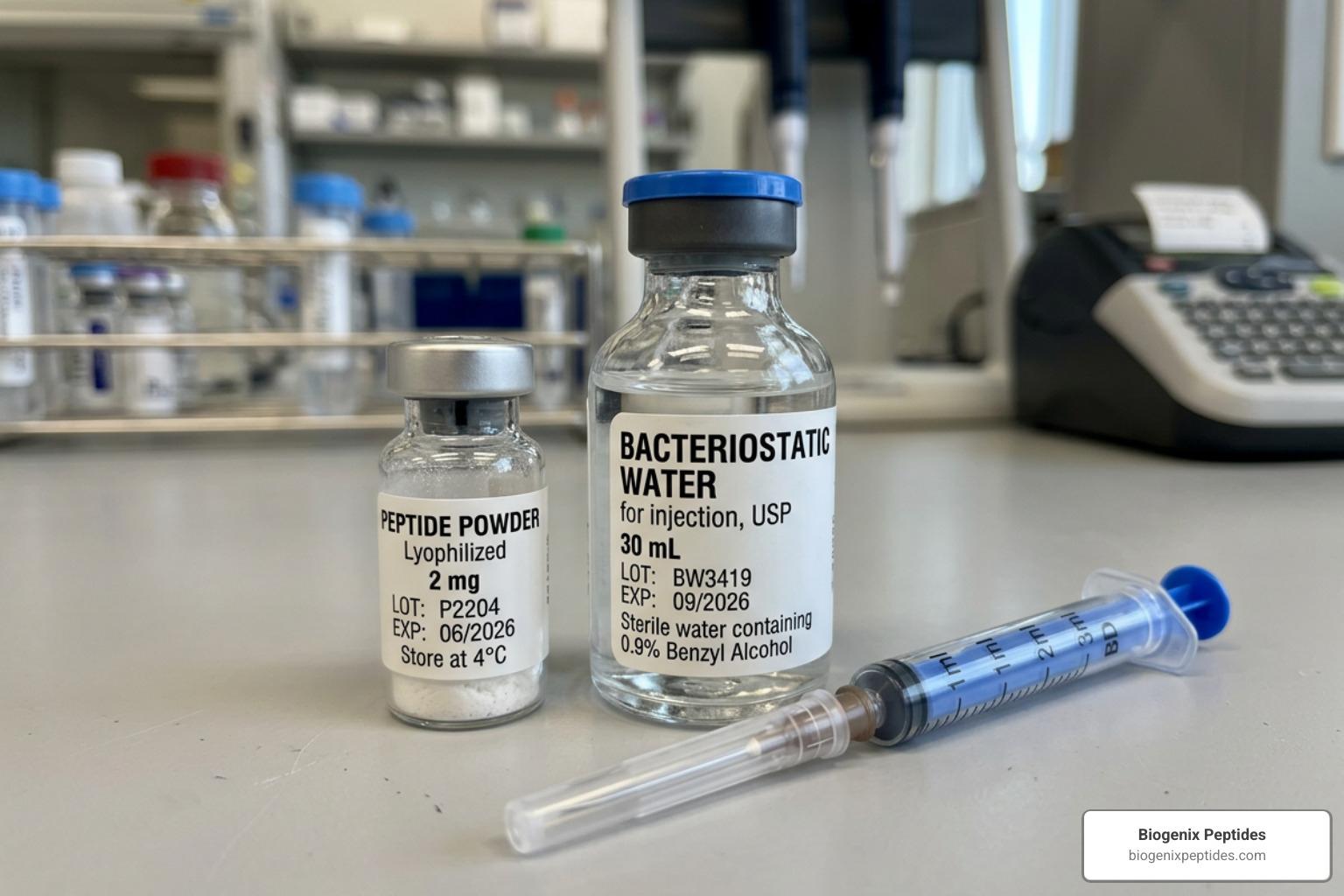
Don’t Dilute Your Success: A Guide to Buying Bacteriostatic Water
Why Choosing the Right Solvent Can Make or Break Your Peptide Research
Disclaimer: The information provided in this article is for educational and informational purposes only. It is not intended as medical advice, diagnosis, or treatment. Products and compounds referenced are for research use only and are not approved for human or veterinary consumption. Always consult a qualified professional regarding health or medical decisions.
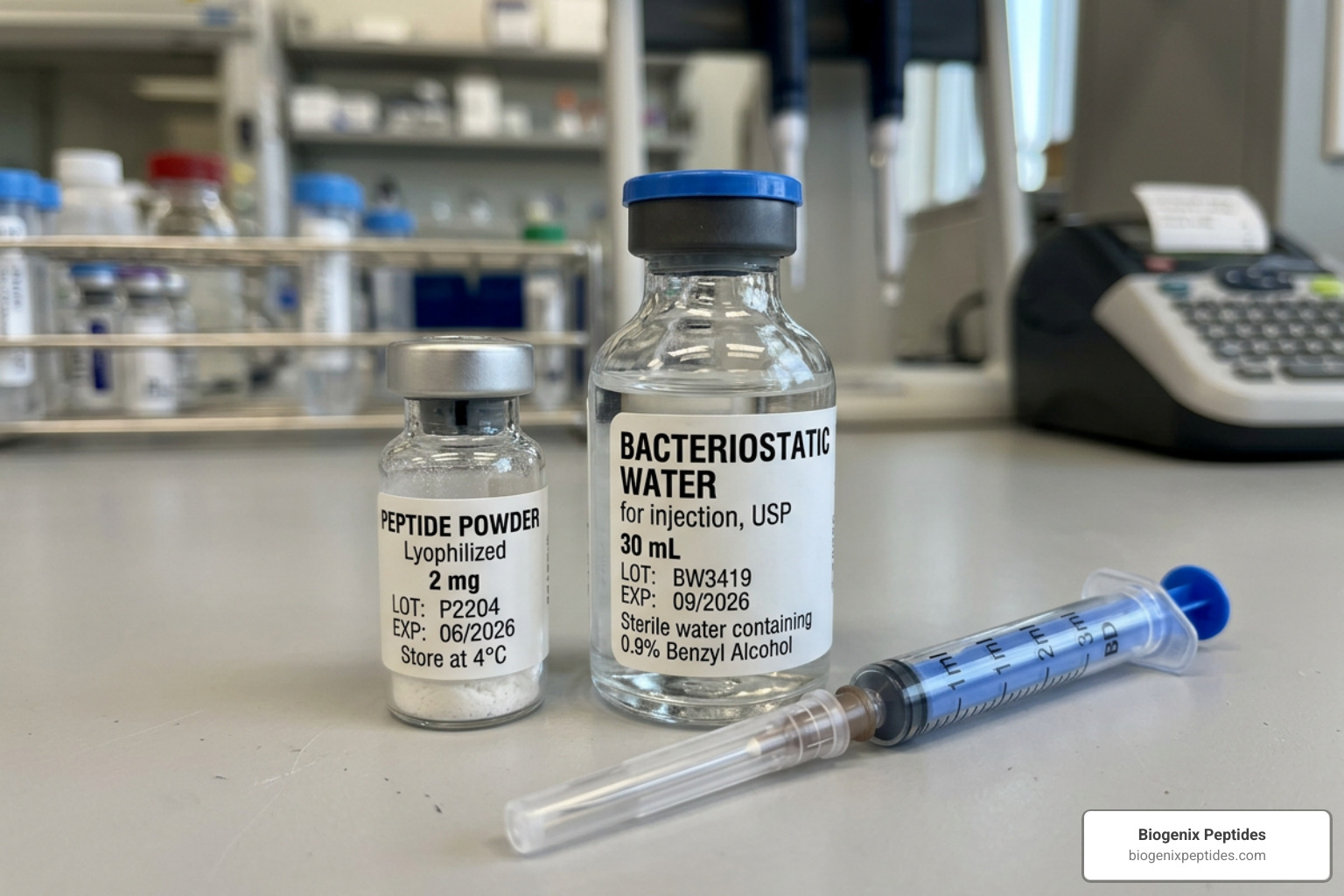
If you need a quick answer: bacteriostatic water for peptides is the go-to solvent for reconstituting lyophilized (freeze-dried) peptides in a research setting. Here’s why researchers choose it:
- Multi-use: Can be accessed multiple times within a 28-day window after first opening
- Contamination control: Contains 0.9% benzyl alcohol, which inhibits bacterial growth between applications
- Stability: Helps preserve peptide integrity throughout a research cycle
- Sterile and non-pyrogenic: Safe for utility as a diluent in controlled lab environments
- Practical format: Typically available in 10ml and 30ml vials for flexible research needs
Precision and sterility are non-negotiable in peptide research. Use the wrong solvent — or mishandle the right one — and weeks of work can be compromised in seconds.
That’s why selecting the correct reconstitution solution matters before you ever touch a peptide vial.
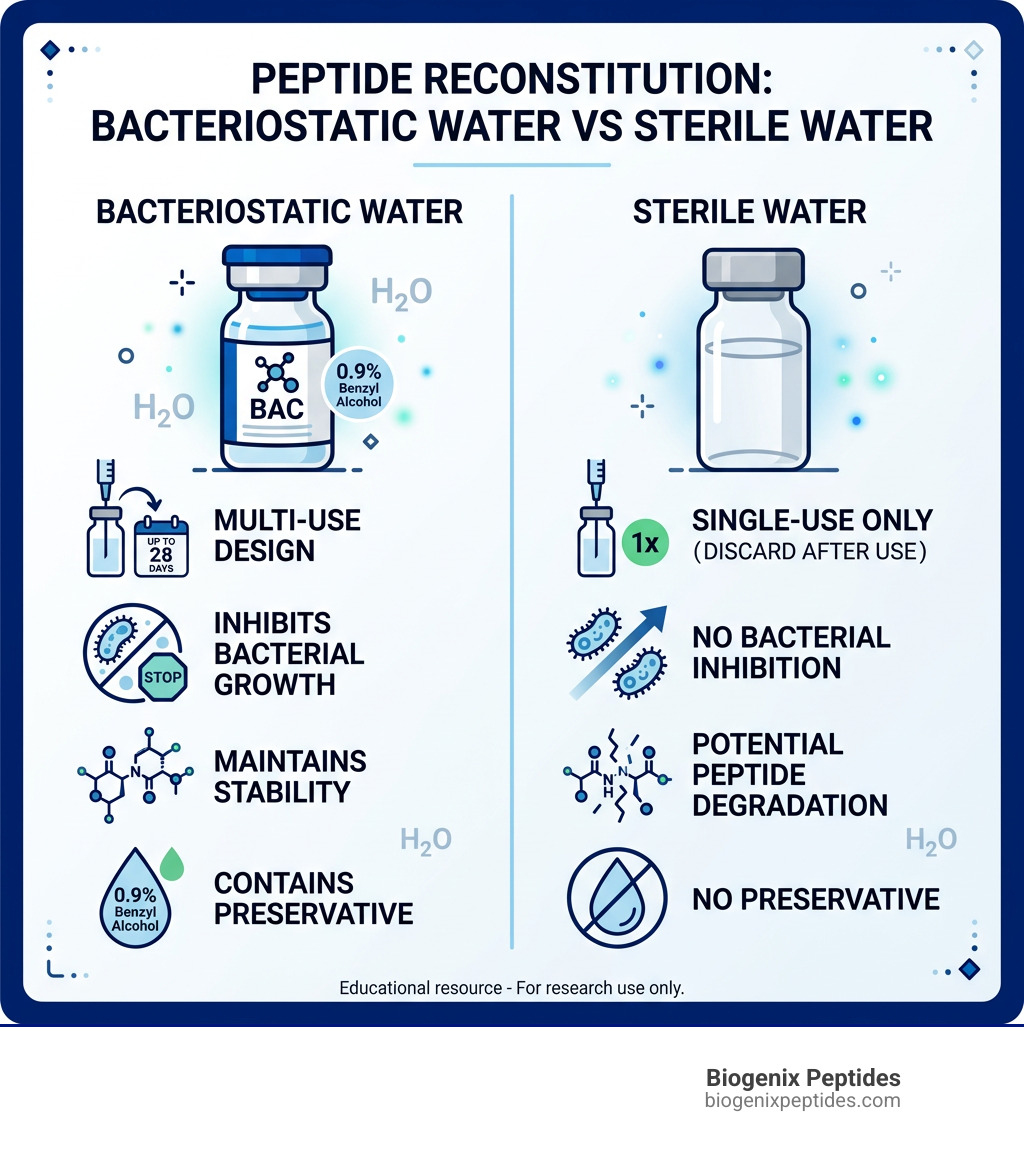
Unlike regular sterile water, which must be discarded after a single application, bacteriostatic water is formulated to support repeated vial access. Its 0.9% benzyl alcohol preservative actively slows bacterial growth, keeping your solution safer between research sessions.
The difference sounds small. In practice, it’s significant.
I’m Jay Daniel, Founder and CEO of BioGenix Peptides, and I’ve spent years working directly with peptide reconstitution protocols, sourcing standards, and quality control processes — including hands-on evaluation of bacteriostatic water for peptides across a wide range of research applications. In this guide, I’ll walk you through everything you need to make a confident, informed purchase decision.
Understanding Bacteriostatic Water for Peptides
In laboratory science, bacteriostatic water for peptides is more than just “water.” It is a highly purified, sterile, non-pyrogenic preparation of water for research that contains a specific concentration of benzyl alcohol. Specifically, it contains 0.9% (9 mg/mL) benzyl alcohol, which serves as a bacteriostatic agent.
But what does “bacteriostatic” actually mean? While “bactericidal” agents kill bacteria outright, a “bacteriostatic” agent inhibits the growth and reproduction of bacteria. This distinction is vital for multi-use vials. When we puncture a vial multiple times to withdraw a specific amount for an experiment, we introduce the risk of microscopic contaminants. The benzyl alcohol in BAC water ensures that any bacteria introduced during this process cannot flourish, preserving the integrity of the solution for up to 28 days.

This solution is designed as a diluent or solvent for substances that require dilution before they can be utilized in an experiment. Because it is non-pyrogenic, it does not contain fever-inducing substances (pyrogens), which is a baseline requirement for high-level research integrity. If you want to dive deeper into why this matters, check out our article on Bacteriostatic water for research.
Comparing the Essentials: A Research Perspective
| Feature | Bacteriostatic Water | Sterile Water |
|---|---|---|
| Preservative | 0.9% Benzyl Alcohol | None |
| Utility | Multi-application (up to 28 days) | Single-application only |
| Bacterial Inhibition | Yes | No |
| Shelf Life (Opened) | 28 Days | Immediate Discard |
| Best For | Repeated access research | One-time experiments |
Benefits of Using Bacteriostatic Water for Peptides in Research
Why is bacteriostatic water for peptides the gold standard in the lab? It comes down to three pillars: integrity, economy, and reliability.
- Multi-application Capability: In many research protocols, a single vial of peptide contains more material than is needed for a single day. BAC water allows researchers to reconstitute the entire vial and withdraw smaller amounts over several weeks without the solution becoming a breeding ground for microbes.
- 28-Day Stability: Once the seal is punctured, the clock starts. Thanks to the preservative properties of benzyl alcohol, the solution remains stable and inhibited against bacterial growth for nearly a month when stored correctly.
- Research Integrity: Peptides are delicate chains of amino acids. Any bacterial contamination can lead to enzymatic degradation, effectively destroying the peptide and rendering research results invalid. BAC water provides a protective environment.
- Cost-Effectiveness: Using single-use sterile water for a multi-day experiment would require discarding expensive peptides every single day. BAC water allows for the full utilization of the peptide over its stable lifespan.
We aren’t the only ones who think so. Many researchers highlight the reliability of these solutions in their workflows. You can see how others are utilizing these tools by checking out the Open Okendo Reviews, where products often receive high marks (averaging 4.7 out of 5 stars) for their role in successful research outcomes.
Sterile Water vs. BAC Water
It is a common mistake for new researchers to assume all “sterile water” is created equal. It isn’t.
Sterile Water for Research is exactly what it says: water that has been sterilized. However, it contains no bacteriostatic agents. The moment you puncture the stopper of a sterile water vial, it is no longer considered sterile for future applications. Any bacteria in the air or on the needle can enter the vial. Without a preservative like benzyl alcohol, those bacteria can multiply rapidly.
Following strict reconstituting-lyophilized-peptides-step-by-step protocols is essential. If your research requires multiple samplings from the same vial over several days, sterile water is a liability. It creates a high risk of contamination that can lead to skewed data or failed experiments.
Essential Supplies and Reconstitution Protocol
Before you begin the reconstitution process, you must have a clean, organized workspace. Think of it as setting the stage for a successful performance.
The Research Toolkit
To properly handle bacteriostatic water for peptides, we recommend gathering the following supplies:
- Lyophilized Peptide Vial: The freeze-dried research compound.
- Bacteriostatic Water: Typically a bacteriostatic-water-reconstitution-solution-10ml or 30ml vial.
- Alcohol Prep Pads: For disinfecting the vial stoppers.
- Sterile Syringes: For precise measurement and transfer.
- Sharps Container: For safe disposal of tools.
Maintaining an aseptic technique is the most critical part of this process. This means preventing the transfer of microorganisms to the research materials. You can find a complete list of necessary gear in our guide on essential-lab-equipment.
Calculating Volume with Bacteriostatic Water for Peptides
Precision is the soul of science. You need to know exactly how much liquid to add to your peptide to reach the desired concentration. This isn’t just about “filling the vial”; it’s about math.
The standard calculation is: Total Milligrams of Peptide / Desired Concentration (mg/mL) = Required Volume of BAC Water
For example, if you have a 5mg vial of a research peptide and you want a concentration of 2mg/mL: 5mg / 2mg per mL = 2.5mL of BAC water.
If you find the math a bit daunting, we have a detailed breakdown in our article: the-secret-to-reconstituting-peptides-5mg-correctly. Always double-check your calculations before proceeding, as the volume required will dictate the accuracy of your entire study.
Step-by-Step Reconstitution Method
Once your math is done and your supplies are ready, follow these steps to ensure a sterile and stable solution:
- Disinfect: Use a fresh alcohol swab to wipe the top of both the BAC water vial and the peptide vial. Let them air dry for a few seconds.
- Pressure Equalization: Draw air into your syringe equal to the amount of liquid you plan to withdraw. Inject the air into the BAC water vial to make it easier to draw the fluid out.
- Withdraw Liquid: Carefully draw the calculated volume of bacteriostatic water for peptides into the syringe.
- The “Wall-Side” Addition: This is crucial. When adding the water to the peptide vial, do not aim directly at the powder. Aim the needle at the side of the glass vial so the liquid drips down slowly. This prevents the peptide from “crashing” or foaming.
- Slow Air Release: If the peptide vial is under vacuum, it may pull the liquid in quickly. Hold the plunger to control the speed.
- Gentle Swirling: Never shake the vial. Shaking can shear the delicate peptide chains, rendering them useless. Instead, gently swirl the vial between your fingers until the powder is completely dissolved.
- Dissolution Check: Hold the vial up to the light. The solution should be clear and free of particles.
For more tips on setting up your workspace, see our guide on creating-a-sterile-research-environment.
Storage, Handling, and Stability Guidelines
Your work isn’t finished once the peptide is dissolved. How you store the reconstituted solution will determine how long it remains viable for your research.
The Golden Rules of Stability
Peptides are sensitive to heat, light, and motion. To prevent degradation, we follow these industry-standard guidelines:
- Temperature Control: Once reconstituted with bacteriostatic water for peptides, the vial should be stored in a refrigerator at 2-8°C (36-46°F). Freezing reconstituted peptides is generally discouraged as the formation of ice crystals can damage the peptide structure.
- Light Protection: Many research compounds are light-sensitive. Store vials in their original boxes or a dark container within the fridge.
- The 28-Day Rule: Even with benzyl alcohol, bacteriostatic water is only rated for 28 days after the first puncture. We mark every vial with the date of first access to ensure we stay within this window.
- Aseptic Access: Every time you withdraw a sample for measurement, use a new sterile syringe and a fresh alcohol swab on the stopper.
Detailed protocols can be found in our peptide-storage-stability-guidelines.
Maintaining Solution Integrity
How do you know if your solution is still good? Before every research session, perform a visual inspection. The solution should be crystal clear.
If you notice any of the following, the integrity may be compromised:
- Cloudiness or Turbidity: This often indicates bacterial contamination or that the peptide has begun to precipitate out of the solution.
- Color Changes: Unless specifically noted for a particular compound, a change in color usually signals chemical degradation.
- Floating Particles: This could be undissolved peptide or, worse, fungal growth.
If any of these signs appear, the solution should be discarded. You can find more about preventing these issues in peptide-storage-stability-guidelines-2.
Common Mistakes and Research Alternatives
Even experienced researchers can fall into bad habits. Recognizing these common errors can save your project from unnecessary setbacks.
- Vigorous Shaking: We’ve mentioned it before, but it bears repeating. Shaking creates bubbles and mechanical stress that can break the fragile bonds in a peptide. If you see foam, you’ve likely damaged the sample.
- Cross-Contamination: Never use the same syringe to draw from two different vials. Even a microscopic amount of one peptide introduced into another vial can ruin your data.
- Using Expired Solvents: Benzyl alcohol eventually loses its effectiveness. Check the expiration date on your bacteriostatic water for peptides before starting.
- Improper Refrigeration: Leaving a reconstituted vial on a warm lab bench for an hour can drastically reduce its shelf life.
For a deeper dive into what to avoid, read the-10-most-common-mistakes.
When to Use Alternatives
While BAC water is the preferred choice for most research, there are specific instances where alternatives might be necessary.
- Sterile Saline (0.9% Sodium Chloride): Some peptides are sensitive to the pH or the alcohol content of bacteriostatic water. In these rare cases, sterile saline is used. However, saline usually lacks a preservative, making it a single-application solution.
- Single-Application Research: If the entire vial of peptide is to be utilized in one single experiment immediately upon reconstitution, sterile water for research is perfectly acceptable.
- pH Sensitivity: Certain extremely delicate proteins may require a specific buffer to maintain stability.
Always check the specific requirements of the peptide you are researching. For help setting up these specialized protocols, see creating-a-sterile-research-environment-2.
Frequently Asked Questions about BAC Water
How long is bacteriostatic water stable after the first puncture?
Per standard laboratory protocols and manufacturer recommendations (such as those from Hospira), bacteriostatic water should be discarded 28 days after the first puncture. The benzyl alcohol is effective at inhibiting growth for this period, but beyond that, the risk of contamination increases significantly.
Can sterile water be used for multi-sample research?
No. Sterile water lacks a bacteriostatic agent. Once the vial is opened or punctured, any bacteria introduced can grow unchecked. For any experiment requiring multiple withdrawals from the same vial over time, bacteriostatic water for peptides is required to maintain safety and integrity.
Why does the solution need to be swirled instead of shaken?
Peptides are complex, three-dimensional structures. Shaking introduces air bubbles and physical “shear” force. This mechanical stress can cause the peptide to denature (unfold), which destroys its biological activity. Swirling is a much gentler method that allows the molecules to hydrate and dissolve without breaking.
Conclusion
At Biogenix Peptides, we understand that your research is only as good as the tools you use to conduct it. Choosing high-quality bacteriostatic water for peptides is a foundational step in ensuring that your experiments are accurate, repeatable, and successful.
By following the aseptic techniques and storage guidelines outlined in this guide, you protect your investment and maintain the highest standards of research excellence. Whether you need a bacteriostatic-water-reconstitution-solution-10ml or a larger 30ml vial for extensive studies, we are here to provide the quality assurance you need.
Don’t let poor supplies dilute your success. Stick to the protocols, respect the science, and let your research reach its full potential.