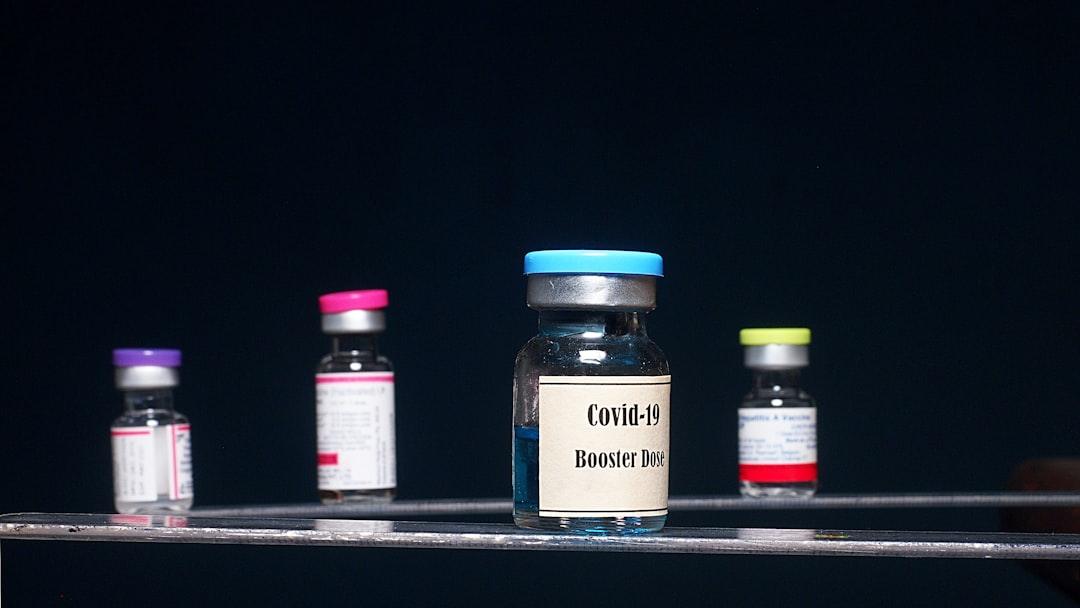
Vial Holder Options to Organize Your Medicine Cabinet
Vial Holder Options to Organize Your Medicine Cabinet
Disclaimer: The information provided in this article is for educational and informational purposes only. It is not intended as medical advice, diagnosis, or treatment. Products and compounds referenced are for research use only and are not approved for human or veterinary consumption. Always consult a qualified professional regarding health or medical decisions.
Why a Vial Holder Belongs in Every Research Setup

A vial holder is a rack, stand, or organizer designed to keep research vials upright, sorted, and easy to access — whether in a lab, cold storage, or during transport.
Quick answer — the most common vial holder types:
| Type | Best For |
|---|---|
| Polypropylene rack | Lab benchtop and autoclave use |
| Foam storage rack | Transport and cold storage |
| Acrylic multi-slot stand | Laboratory and compounding organization |
| Hands-free research stand | Laboratory draws |
| Insulated portable case | Travel and temperature-sensitive samples |
Keeping vials organized isn’t just about tidiness. Disorganized vials can lead to mix-ups, contamination, and damaged samples — all costly problems in a research setting. The right holder protects your work and your time.
I’m Jay Daniel, Founder and CEO of BioGenix Peptides, and through years of hands-on peptide research I’ve seen how the wrong vial holder can compromise sample integrity. In the sections below, I’ll walk you through exactly what to look for.
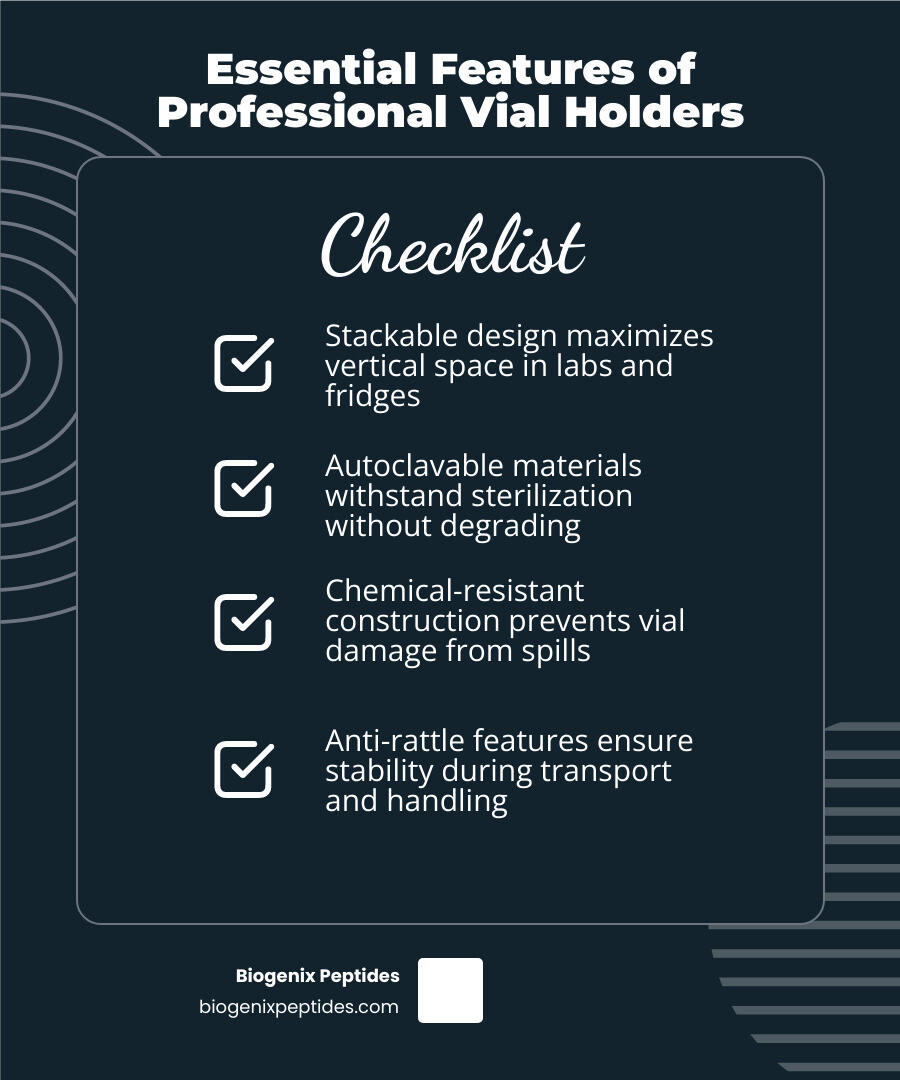
Essential Features of a Professional Vial Holder
When we evaluate a vial holder for a research environment, we aren’t just looking for something that “holds a bottle.” We are looking for a tool that maintains the stability of the research material. A professional-grade holder should offer a combination of durability, spatial efficiency, and environmental resistance.
One of the most critical features is whether the rack is stackable. In a busy lab or a crowded research refrigerator, vertical space is a premium. High-quality racks, such as those made from polypropylene, often feature interlocking designs that allow you to stack multiple units even when they are filled with vials. This keeps your workspace clear and your samples organized by project or date.
Another non-negotiable feature for many is autoclavability. If your research involves sterile environments, you need a vial holder that can withstand the high heat and pressure of an autoclave without warping or leaching chemicals. Beyond sterilization, consider the portability of the unit. Does it have a secure lid? A lid is essential for preventing vials from falling out during transport between rooms or during a move to long-term storage.
For those managing sensitive compounds, following Best Practices for Peptide Storage & Handling is vital. A holder that offers “hands-free” access—meaning it stays weighted and balanced on the benchtop while you interact with the vial—can significantly reduce the risk of spills or accidental contamination.
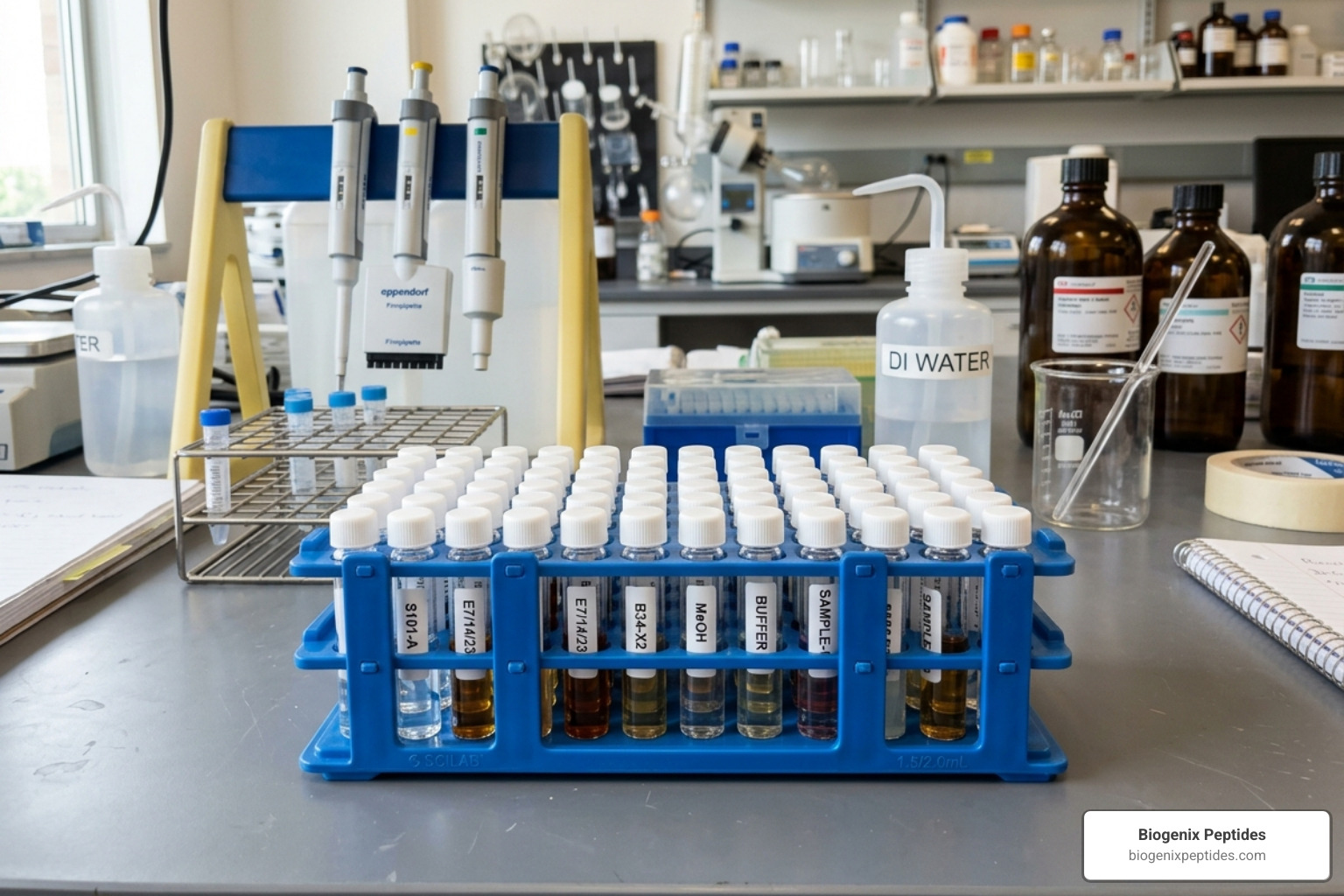
Standard Sizes for a Research Vial Holder
Not all vials are created equal, and neither are their holders. Most research settings utilize a few standard sizes, and your holder must match these dimensions precisely to prevent rattling or tipping.
- 10ml Vials: These are perhaps the most common in general research. A standard 10ml U-100 vial typically requires a hole diameter of approximately 24mm to 25mm.
- 16mm Vials: Often used for smaller samples or specific diagnostic tests, these require tighter arrays (like 5×10 or 10×10) to maximize space.
- Chromatography Vials: These are much smaller (often 2ml or 4ml) and require specialized racks with 50 to 96 positions.
- Large Capacity Vials: Some laboratory-grade stands are designed to accommodate a range of sizes from 1ml all the way up to 100ml by utilizing tiered slots or adjustable clamps.
When planning your storage, refer to Peptide Storage Stability Guidelines to ensure that your chosen vial size and holder configuration support the longevity of your samples.
Selecting a Vial Holder for Cold Storage
Temperature resistance is the “make or break” factor for research storage. If you are keeping samples in a freezer or an ultra-low temperature (ULT) environment, a standard plastic rack might become brittle and crack.
This is where foam storage racks shine. Made from high-density, waterproof foam, these holders are naturally insulated and remain flexible even in extreme cold. They are also “anti-rattle,” which is a fancy way of saying they snuggle the vials tightly so they don’t clink together during transport. This is a game-changer for protecting delicate glass vials from micro-fractures.
If you are looking for the best way to manage your cold-chain samples, check out our guide on The Ultimate Peptide Organizer for Your Freezer.
Common Materials and Their Durability
The material of your vial holder dictates where it can live and how long it will last. In our research, we’ve found that three materials dominate the market:
| Material | Durability | Chemical Resistance | Best Use Case |
|---|---|---|---|
| Polypropylene | High; Autoclavable | Excellent | General lab work, heat sterilization |
| Acrylic | Moderate; Shatter-resistant | Good | Pharmacy displays, “hands-free” stands |
| Aluminum | Extreme; Heavy-duty | Superior | High-heat applications, long-term durability |
| High-Density Foam | Moderate; Lightweight | Variable | Transport, cold storage, noise reduction |
Polypropylene is the industry workhorse. It is resistant to most common lab chemicals and can handle the temperature swings of a refrigerator. Acrylic, on the other hand, is favored for its transparency. Being able to see the label through the side of the holder is a massive advantage for preventing mix-ups. However, acrylic can be sensitive to certain harsh solvents like benzene or chlorinated hydrocarbons, so always check the chemical compatibility before use.
For those who need maximum protection, we often recommend looking into Peptide Storage Containers That Won’t Let You Down, as the container and the holder work together to maintain a controlled environment.
Comparing Lab-Grade vs. Consumer Storage Solutions
When you search for a vial holder, you’ll find a massive price gap between specialized laboratory equipment and general consumer organizers.
Lab-Grade Holders: These are engineered for precision. They often come in specific array configurations (like 3×12 or 5×10) designed to fit into standardized lab equipment. They are usually made from certified high-grade plastics that are guaranteed to be autoclavable. While more expensive — sometimes ranging from $40 to over $200 for specialized stands — they offer a level of reliability that professional researchers require.
Consumer Solutions: Online marketplaces offer numerous results for “vial holder,” and many of these are excellent for home research or basic organization. You can find 30-slot research vial holders or portable travel cases for under $20. These are often made from acrylic or foam and are perfect for keeping 10ml vials upright in a domestic refrigerator.
The trade-off is usually in the “extras.” A lab-grade stand might include an adjustable clamp for a stand, allowing for hands-free access during a procedure. A consumer case might focus more on portability and include specialized ice packs. To decide which is right for you, consider your environment: if you’re in a high-stakes lab, go with professional-grade; if you’re organizing a small research fridge, a consumer multi-slot stand is likely sufficient. Don’t forget to ensure your Peptides Don’t Lose Their Cool by choosing a holder that fits your specific cooling setup.
Maintaining Integrity in Research Environments
Organization is the first line of defense against research failure. A vial holder does more than just hold glass; it prevents cross-contamination and protects against light degradation.
Many research compounds are light-sensitive. Using a holder with a lid or choosing an opaque foam rack can provide an extra layer of protection. For a deep dive into protecting your samples, read our Powder Storage Handbook.
Key benefits of a dedicated vial holder:
- Label Visibility: Transparent acrylic holders or tiered stands allow you to see the label side up. This prevents “improper dispensation” — a fancy way of saying you grabbed the wrong vial because you couldn’t see the name.
- Stability: Using a holder allows for “two-handed draws,” which is safer and more precise than trying to hold a vial in one hand while manipulating a syringe with the other.
- Cross-Contamination Prevention: By giving every vial a designated “home,” you reduce the chance of vials touching or being placed on contaminated surfaces.
Whether you are working with reconstituted samples or dry powder, keeping them organized in the fridge is a must. Check out our Cold Storage Secrets and tips on how to Prevent Peptides from Going Bad in the Fridge for more expert advice.
Frequently Asked Questions about Vial Organization
What are the advantages of using a vial holder in a lab?
A vial holder improves safety by preventing needle-stick injuries through hands-free access. It also maximizes storage space, prevents vials from tipping over (which can lead to waste), and ensures that labels are clearly visible to prevent research errors.
How do I choose between plastic and aluminum racks?
Choose polypropylene (plastic) if you need a lightweight, cost-effective, and autoclavable solution for everyday lab work. Choose aluminum if you require extreme durability, high heat resistance, or a rack that will last for decades in a heavy-duty environment.
Are most vial holders compatible with standard 10ml vials?
Yes, the majority of consumer-facing vial holders (especially those marketed for research compounds or essential oils) are designed specifically for the standard 10ml U-100 vial size. However, always check the hole diameter; you generally want a hole between 24mm and 28mm for a secure fit for 10ml vials.
Conclusion
At BioGenix Peptides, we know that the success of your research depends on the details. A high-quality vial holder is a small investment that pays off in the form of better organization, increased safety, and protected samples. Whether you need a 72-position foam rack for transport or a sleek acrylic stand for your benchtop, choosing the right tool ensures your research stays on track.
Ready to upgrade your setup? Shop Research Solutions today and give your research the professional home it deserves.