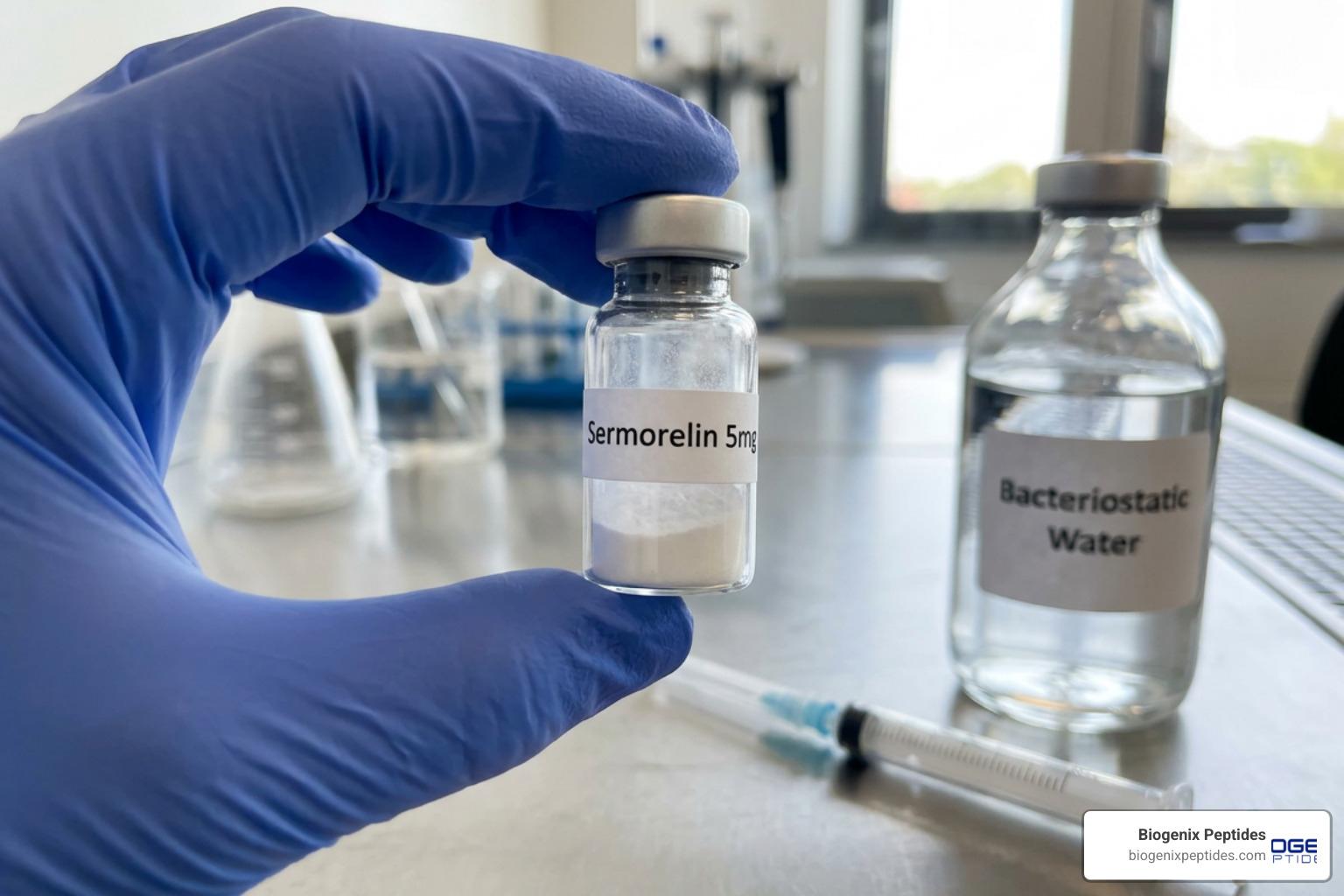
Sermorelin 5mg Reconstitution: A Clear and Simple Guide
What Researchers Need to Know About Sermorelin 5mg Reconstitution
Disclaimer: The information provided in this article is for educational and informational purposes only. It is not intended as medical advice, diagnosis, or treatment. Products and compounds referenced are for research use only and are not approved for human or veterinary consumption. Always consult a qualified professional regarding health or medical decisions.
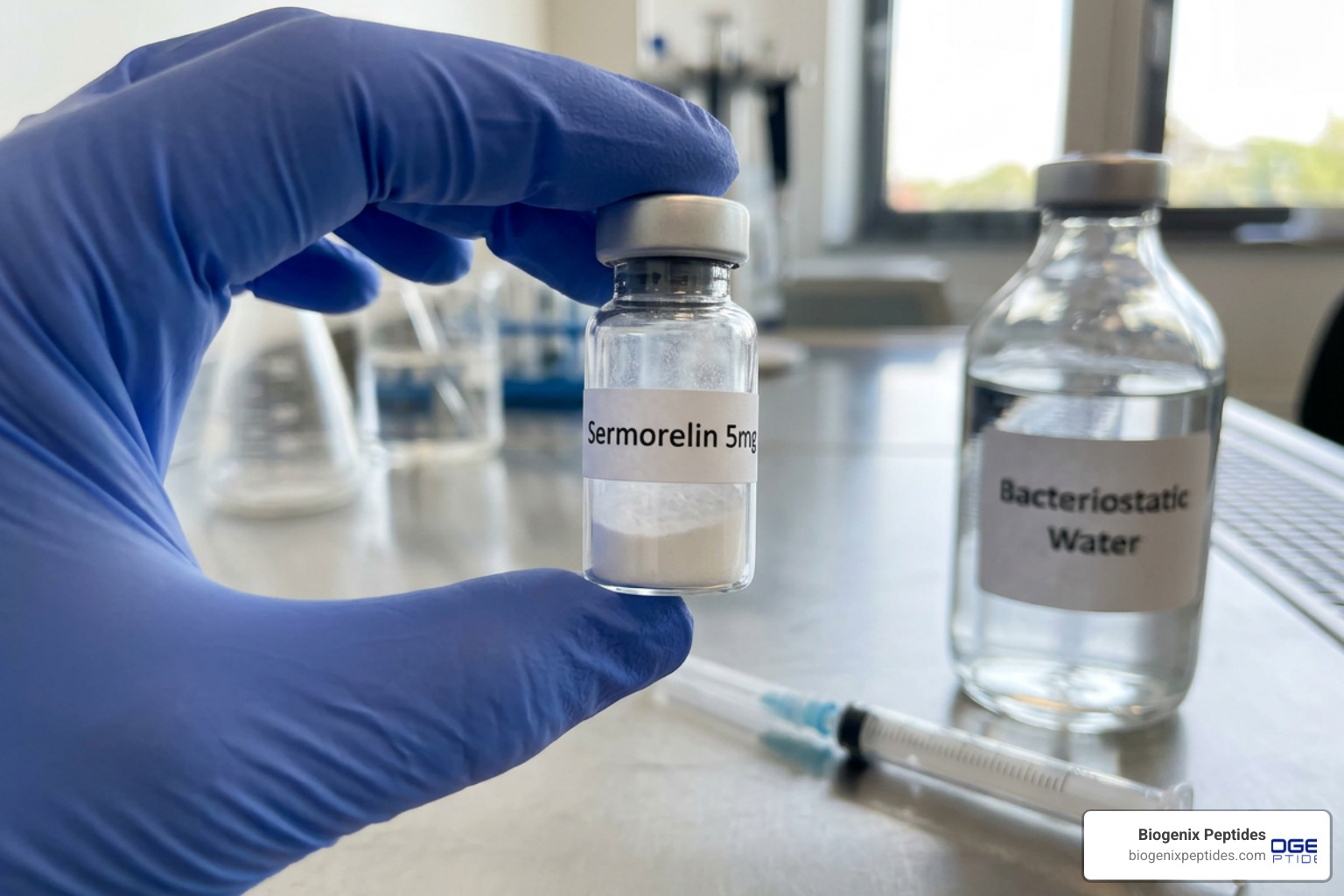
Sermorelin 5mg reconstitution is the process of adding bacteriostatic water to a lyophilized (freeze-dried) sermorelin powder vial to prepare it as a liquid solution for research. Here is a quick reference to address the most common questions:
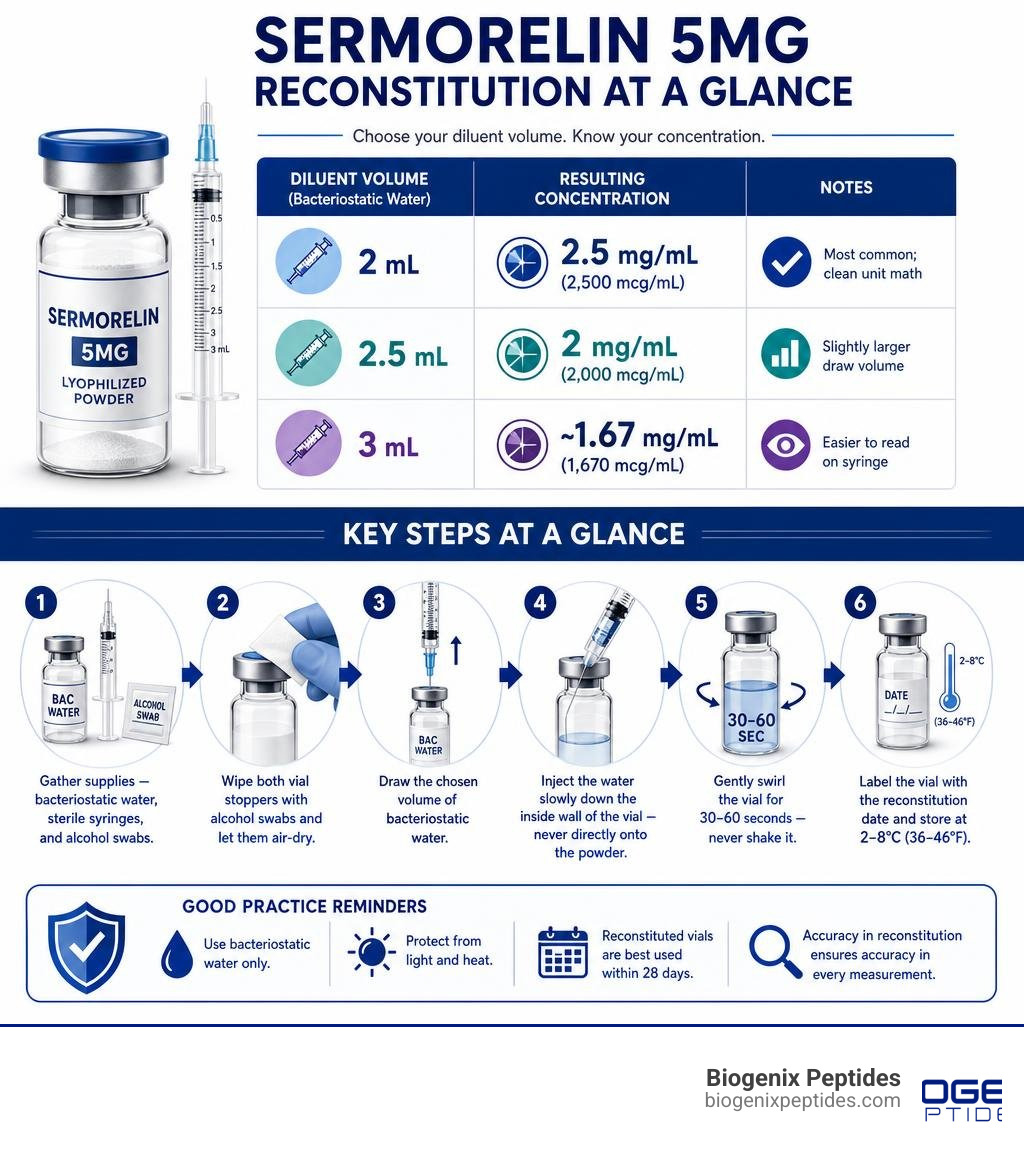
Quick Reference: Sermorelin 5mg Reconstitution
| Diluent Volume | Resulting Concentration | Notes |
|---|---|---|
| 2 mL bacteriostatic water | 2.5 mg/mL (2,500 mcg/mL) | Most common; clean unit math |
| 2.5 mL bacteriostatic water | 2 mg/mL (2,000 mcg/mL) | Slightly larger draw volume |
| 3 mL bacteriostatic water | ~1.67 mg/mL (1,670 mcg/mL) | Easier to read on syringe |
Key steps at a glance:
- Gather supplies — bacteriostatic water, sterile syringes, and alcohol swabs
- Wipe both vial stoppers with alcohol swabs and let them air-dry
- Draw the chosen volume of bacteriostatic water
- Inject the water slowly down the inside wall of the vial — never directly onto the powder
- Gently swirl the vial for 30–60 seconds — never shake it
- Label the vial with the reconstitution date and store at 2–8°C (36–46°F)
Sermorelin is a synthetic 29-amino acid peptide analog of growth hormone-releasing hormone (GHRH). In research settings, it is studied for its ability to stimulate the pituitary gland’s natural growth hormone secretion. The compound is supplied as a lyophilized powder because peptides in liquid form degrade rapidly — the freeze-dried format keeps the compound stable at room temperature for 12–18 months when protected from light and moisture.
Getting the reconstitution step right matters more than most researchers expect. According to available data, roughly 68% of cases where sermorelin “stopped working” in research models trace back to reconstitution and measuring errors — primarily using the wrong volume of diluent. A small mistake at the mixing stage changes the concentration of the entire vial, which means every subsequent measurement will be off.
This guide walks through the full process clearly and simply, so your research starts on solid ground.
I’m Jay Daniel, Founder and CEO of BioGenix Peptides, with years of hands-on experience in peptide science, quality control, and laboratory protocols — including the precise techniques involved in sermorelin 5mg reconstitution. From that background, the sections below break down every step of the process so researchers can work with confidence and accuracy.
Basic sermorelin 5mg reconstitution vocab:
Essential Supplies for Reconstituting Lyophilized Peptides
Before we begin mixing our research compounds, we must assemble a clean, complete toolkit. Preparing the workspace properly is the foundation of successful laboratory research. When dealing with highly sensitive biomolecules like GHRH analogs, contamination or improper tools can ruin an entire study before it even starts.
To maintain a pristine environment, we need to establish a dedicated, sanitized workspace. For a detailed guide on setting up your benchtop, you can review our recommendations on creating a sterile research environment.
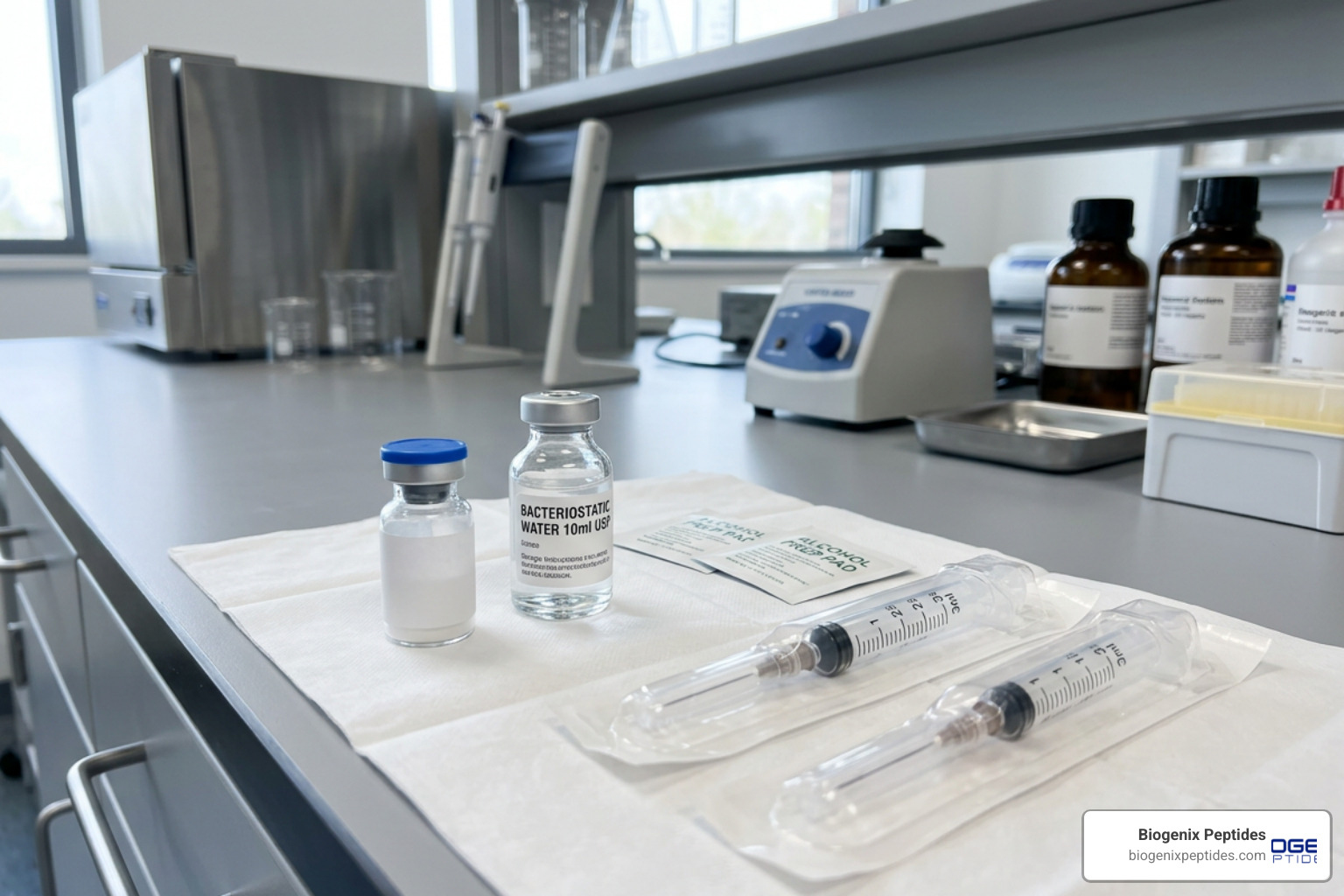
Here are the essential supplies you must gather before reconstituting a 5mg vial of sermorelin:
- The Lyophilized Peptide Vial: In this guide, we are working with a high-purity vial of Sermorelin 5mg. Ensure the vial glass is intact and the freeze-dried powder cake is solid or slightly pelletized.
- Bacteriostatic Water: This is sterile water containing 0.9% benzyl alcohol, which acts as a preservative to inhibit microbial growth. We offer several convenient sizes, including our standard 10ml bacteriostatic water option, a smaller 3ml bacteriostatic water option, or a larger 30ml bacteriostatic water option.
- Reconstitution Syringes: Typically, a standard 3 mL syringe with a 21-gauge to 25-gauge needle is ideal for drawing the bacteriostatic water from its container and transferring it to the peptide vial.
- Measurement Syringes: For drawing highly precise, micro-volume aliquots for study, standard U-100 insulin syringes (where 100 units equal 1 mL) are the laboratory standard.
- Alcohol Prep Pads: 70% isopropyl alcohol swabs are mandatory for sterilizing the rubber stoppers of both vials before puncture.
- Sharps Disposal Container: For safe disposal of all needles and syringes immediately after use.
Using the correct diluent is non-negotiable. To understand why standard water cannot be used for multi-draw research vials, you can read our guide on buying bacteriostatic water.
Step-by-Step Guide to Sermorelin 5mg Reconstitution
Once your workspace is sanitized and your supplies are laid out, you are ready to begin the physical mixing process. Peptides are delicate chains of amino acids held together by fragile bonds. Rough handling can tear these structures apart, rendering the compound inactive.
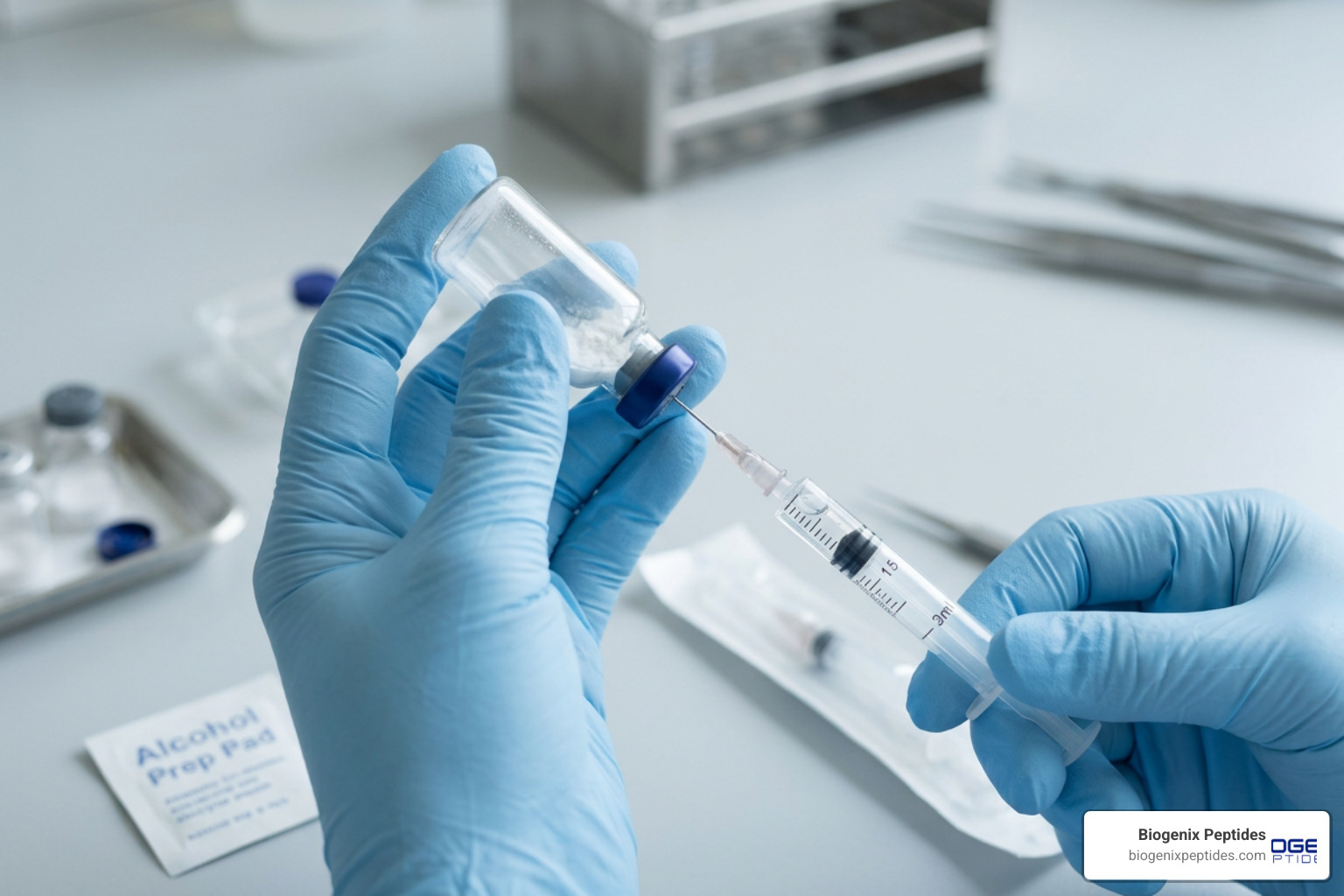
Follow our step-by-step reconstitution guide to ensure a flawless liquid transfer:
- Wash and Sanitize: Wash your hands thoroughly with soap and warm water for at least 20 seconds. Wipe down your work surface with 70% isopropyl alcohol and let it dry.
- Prep the Vials: Pop the plastic flip-caps off your sermorelin 5mg vial and your bacteriostatic water vial. Thoroughly swipe the rubber stoppers of both vials with a fresh alcohol pad. Allow the alcohol to air-dry completely for 30 seconds — do not blow on them to speed it up, as this introduces airborne bacteria.
- Draw the Diluent: Using your larger 3 mL reconstitution syringe, draw the exact amount of bacteriostatic water your protocol requires (e.g., 2 mL or 2.5 mL). Ensure there are no large air bubbles in the syringe.
- Equalize and Introduce: Insert the needle through the center of the sermorelin vial’s rubber stopper. Crucial Tip: Many peptide vials are vacuum-sealed during manufacturing. If you do not control the plunger, the vacuum will pull the water in rapidly, slamming it directly into the powder and damaging the peptide. Hold the plunger firmly to resist the vacuum.
- Aim for the Glass Wall: Tilt the vial at a 45-degree angle. Direct the needle tip toward the inside glass wall of the vial. Slowly depress the plunger, letting the bacteriostatic water trickle down the side of the glass.
- Dissolve Gently: Once all the diluent is inside, withdraw the needle. Do not shake the vial. Instead, gently roll the vial between your palms or swirl it in slow, circular motions on your desk. Let it sit for 2 to 5 minutes to allow the lyophilized powder to dissolve passively.
For a deeper dive into the physics of mixing, you can check out our article on a foolproof peptide reconstitution method.
Standard Diluent Volumes for Sermorelin 5mg Reconstitution
The volume of bacteriostatic water you choose to add determines the final concentration of the liquid. There is no single “correct” volume, but different ratios yield different math profiles when measuring aliquots.
Let’s look at how the math breaks down using standard U-100 syringes, where 100 units equal 1 mL (meaning 1 unit = 0.01 mL). To make calculations easy, we can reference external resources like the Sermorelin Reconstitution Calculator or the Sermorelin Concentration Calculator.
The formula to find your concentration is: $$\text{Concentration (mg/mL)} = \frac{\text{Vial Size (mg)}}{\text{Diluent Volume (mL)}}$$
To convert this to micrograms per unit on a standard U-100 syringe: $$\text{mcg per Unit} = \frac{\text{Vial Size in mcg (5,000 mcg)}}{\text{Diluent Volume in mL} \times 100}$$

Here is a comparison table of the three most common reconstitution volumes for a 5mg vial:
| Diluent Added | Resulting Concentration | Amount in 10 Syringe Units (0.10 mL) | Recommended Application |
|---|---|---|---|
| 2.0 mL | 2.5 mg/mL (2,500 mcg/mL) | 250 mcg | Standard research protocol. Clean math where each syringe unit equals exactly 25 mcg of active peptide. Excellent for space-saving draws. |
| 2.5 mL | 2.0 mg/mL (2,000 mcg/mL) | 200 mcg | Highly popular ratio recommended by compounding pharmacies. Each syringe unit represents exactly 20 mcg, making calculations incredibly straightforward. |
| 3.0 mL | ~1.67 mg/mL (1,670 mcg/mL) | ~167 mcg | Used when researchers prefer a larger fluid volume to ensure measuring accuracy on standard syringe markings. Each unit is roughly 16.7 mcg. |
If you are following a specific protocol, such as the Sermorelin 5mg Vial Protocol or the Sermorelin Reconstitution and Protocol Guide, you will want to choose the diluent volume that aligns best with your target values. For instance, if your target measurement is 300 mcg:
- With a 2.0 mL mix (2.5 mg/mL), you would draw exactly 12 units (0.12 mL).
- With a 2.5 mL mix (2.0 mg/mL), you would draw exactly 15 units (0.15 mL).
- With a 3.0 mL mix (1.67 mg/mL), you would draw approximately 18 units (0.18 mL).
For more details on managing these ratios, you can explore the science of the bacteriostatic water peptide ratio.
Common Mistakes in Sermorelin 5mg Reconstitution
Even experienced researchers can fall into bad habits. Understanding the physical vulnerabilities of peptides helps prevent simple mistakes from ruining your research.
We have compiled a list of the common peptide research mistakes that frequently compromise study integrity. For sermorelin specifically, the three main failure modes are:
- Vigorous Shaking: Shaking a reconstituted GHRH analog causes mechanical shear stress. Studies show that mechanical agitation increases peptide aggregate formation by up to 300%. When peptides clump together, they lose their bioactivity and can become immunogenic in animal models. Always swirl or roll; never shake.
- Using the Wrong Diluent: Reconstituting a multi-draw vial with preservative-free sterile water is a major hazard. Sterile water lacks benzyl alcohol, meaning bacteria introduced during the first needle puncture will multiply rapidly in the liquid. Sterile water mixes must be discarded within 24 hours, whereas bacteriostatic water preserves the solution for multi-draw use.
- Direct-Stream Puncture: Allowing the vacuum to pull diluent directly onto the delicate powder cake can degrade the peptide immediately. This rapid force can reduce overall peptide recovery by 12% to 18% over the life of the vial compared to a gentle wall-trickle method.
Storage and Stability Guidelines for Reconstituted Peptides
Once reconstituted, sermorelin is highly sensitive to temperature fluctuations and light exposure. In its powder state, the peptide is quite resilient, but once it transitions to an aqueous solution, the clock starts ticking.
For a complete overview of handling both powder and liquid forms, refer to our peptide storage stability guidelines and our peptide powder storage handbook.
To maintain maximum potency, keep the following storage rules in mind:
- Refrigerate Immediately: Reconstituted sermorelin must be kept in a cold environment between 2°C and 8°C (36°F to 46°F). Never allow the liquid to sit at room temperature for extended periods. If you are traveling, use an insulated container with a gel cold pack.
- Do Not Freeze: While freezing is excellent for long-term powder storage, never freeze reconstituted peptide solutions. The formation of sharp ice crystals will shear and rupture the delicate peptide chains, instantly degrading the compound.
- Protect From Light: Store the vial in its original box or wrap it in a dark sleeve to protect it from direct sunlight and harsh UV laboratory lighting, which accelerate degradation pathways.
- Track the Timeline: Reconstituted sermorelin retains high stability (around 96.1% potency) up to day 14. After day 21, degradation begins to accelerate, dropping to roughly 89.7% by day 30. For high-precision research, we recommend using the vial within 14 to 28 days of mixing.
For practical answers to common storage questions, read our peptide refrigeration FAQ and discover our cold storage secrets.
Frequently Asked Questions about Peptide Reconstitution
Researching peptides involves a lot of precise chemistry. To help clear up any remaining confusion, we have compiled answers to the most common questions researchers ask during the preparation phase. You can also brush up on your terminology with our guide to research peptide terms demystified.
What is the difference between bacteriostatic water and sterile water?
The presence of a preservative is the defining difference. Bacteriostatic water contains 0.9% benzyl alcohol, which acts as a bacteriostatic agent. This means it prevents any introduced bacteria from reproducing, making it safe for multi-draw research vials over a 28-day period.
Sterile water is completely preservative-free. While it is sterile at the moment of opening, it has no defense mechanism against bacteria introduced by a needle puncture. It is strictly designed for single-draw applications; any leftover liquid must be discarded immediately.
For a complete breakdown of these differences, read our guide on sterile water vs bacteriostatic water.
How long is the reconstituted solution stable in the refrigerator?
When stored under proper refrigeration at 2–8°C (36–46°F) and mixed with quality bacteriostatic water, sermorelin remains highly stable and potent for up to 14 days.
While it can still be utilized up to 28 or 30 days in less sensitive research models, studies show that chemical degradation accelerates after the third week. For the most consistent, reproducible scientific results, plan your research timeline around a 14-day window per vial. Always check the physical integrity of the liquid before drawing a sample.
For more details on handling and preserving your research materials, check out our peptide storage best practices.
What should I do if the lyophilized powder does not dissolve completely?
If you notice tiny particles or a cloudy appearance after mixing, do not panic, and absolutely do not shake the vial.
First, allow the vial to sit undisturbed in the refrigerator for 10 to 15 minutes. Often, passive dissolution takes a little longer depending on the ambient temperature of the diluent. If particles remain, gently roll the vial between your warm palms for 30 seconds. The slight warmth and gentle motion will usually coax the remaining lyophilized powder into solution.
If the liquid remains cloudy, exhibits a yellow tint, or contains visible floating debris after 30 minutes, this indicates potential contamination or a compromised peptide structure. In these rare cases, the vial should be discarded, and a new one should be prepared.
Conclusion
Mastering sermorelin 5mg reconstitution is a fundamental skill for any peptide researcher. By utilizing the correct tools, maintaining a sterile workspace, and applying gentle liquid transfer techniques, you protect the structural integrity of your compounds and ensure highly accurate, reproducible research outcomes.
At BioGenix Peptides, we are committed to supporting your laboratory endeavors with high-purity, American-manufactured research peptides and premium reconstitution supplies. Whether you are just starting out and need our Biogenix Peptides Beginner Guide or want to dive deep into GHRH pathways with our HGH Secretagogues Overview, we have the resources you need.
Ready to secure high-quality materials for your next study? You can purchase sermorelin safely online or browse our complete inventory of research-grade compounds at the Biogenix Peptides Shop.
For further reading on related peptide protocols and research applications, explore our guides on: