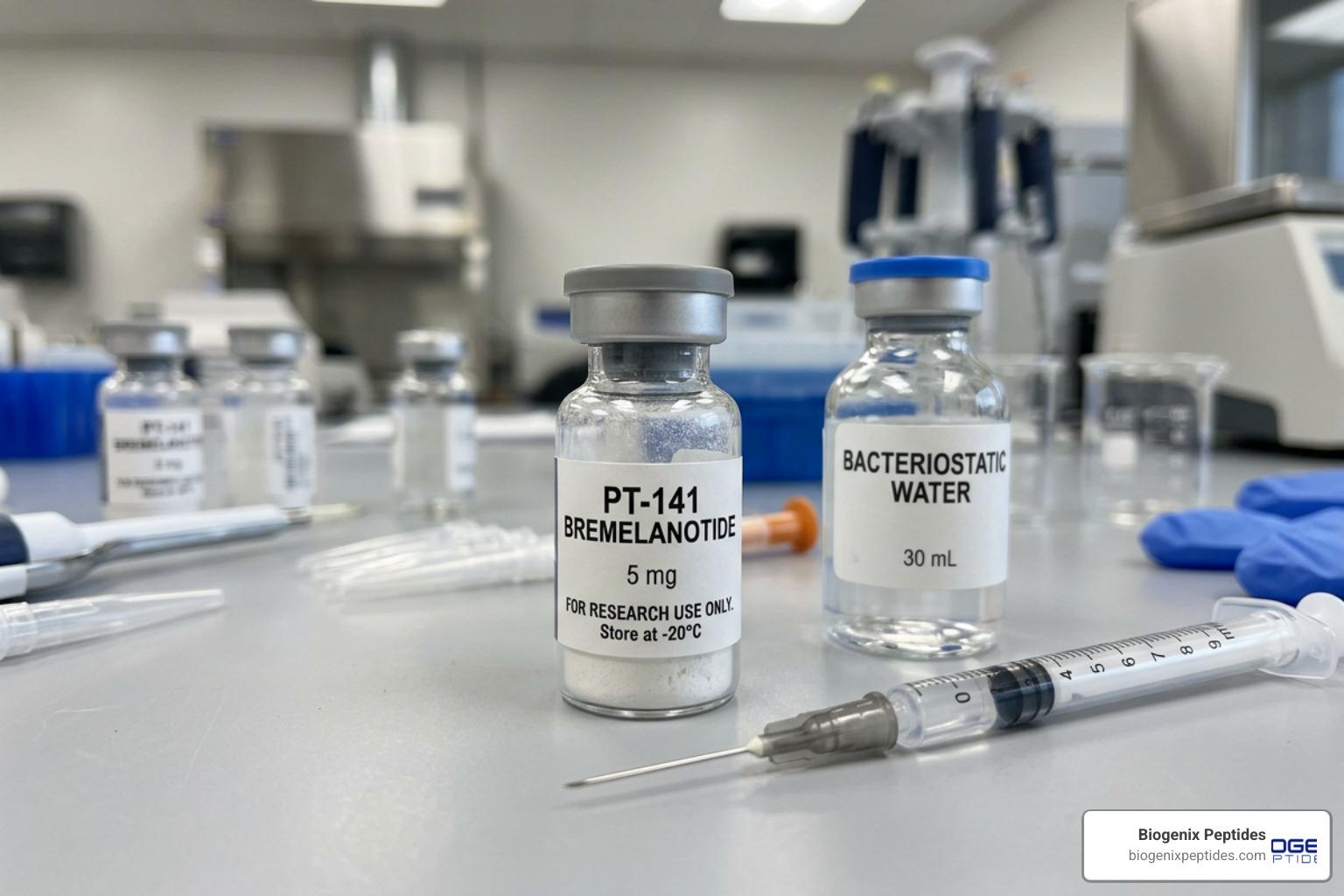
Mixing PT-141: Get the Chemistry Right Every Time
Why Getting PT-141 Reconstitution Right Matters for Your Research
Disclaimer: The information provided in this article is for educational and informational purposes only. It is not intended as medical advice, diagnosis, or treatment. Products and compounds referenced are for research use only and are not approved for human or veterinary consumption. Always consult a qualified professional regarding health or medical decisions.
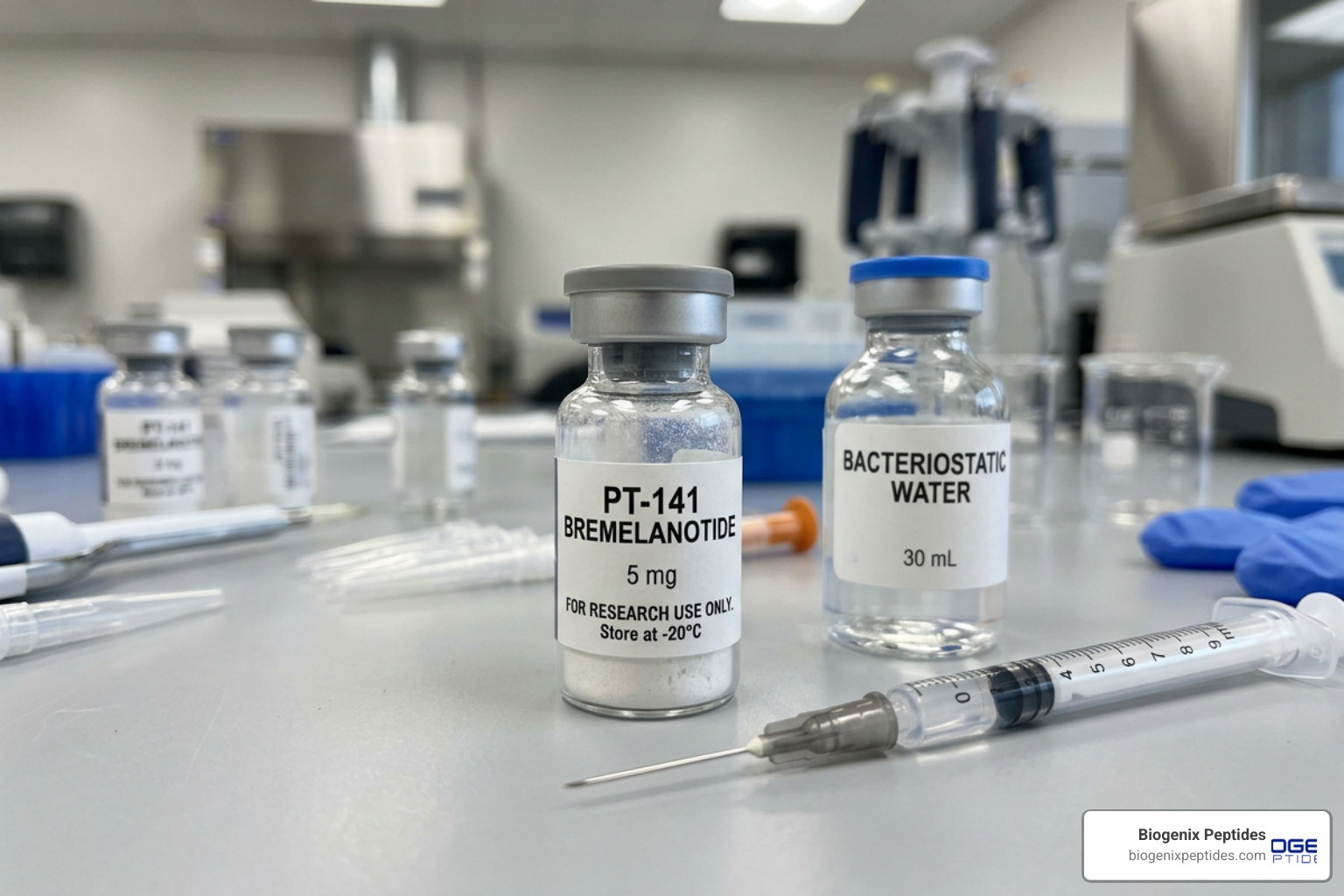
To reconstitute PT-141, follow these core steps:
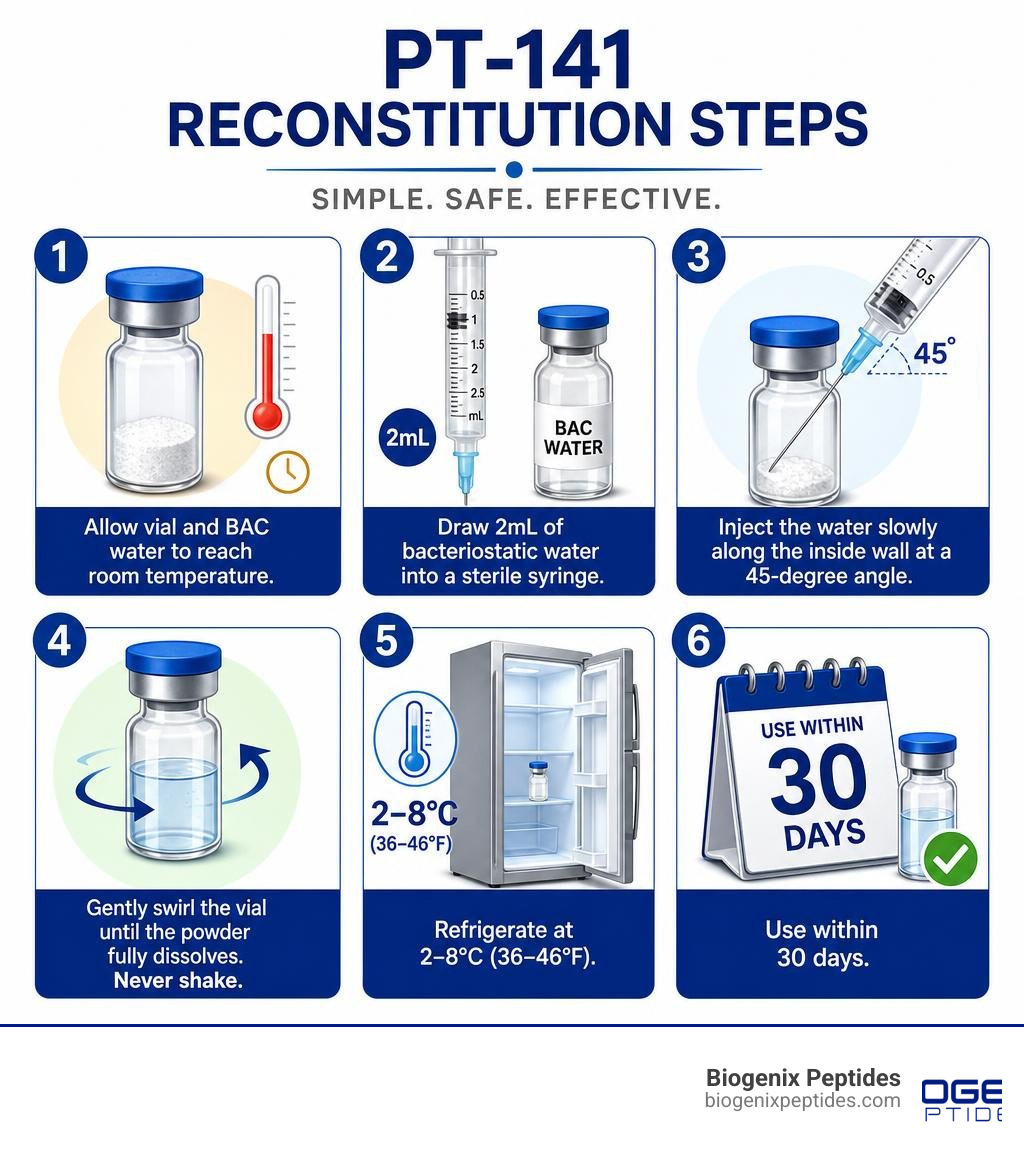
- Allow the PT-141 vial and bacteriostatic water to reach room temperature
- Swab both vial stoppers with an alcohol swab and let them air dry
- Draw 2mL of bacteriostatic water into a sterile syringe
- Introduce the water slowly along the inside wall of the PT-141 vial at a 45-degree angle
- Gently swirl the vial until the powder fully dissolves — never shake
- Label the vial with the date and concentration, then refrigerate at 2–8°C
This produces a 5mg/mL concentration from a standard 10mg vial, which is the most widely used ratio for research work.
Getting this process wrong can degrade the peptide before your research even begins. PT-141 (also known as Bremelanotide) is a delicate cyclic heptapeptide that arrives as a lyophilized — or freeze-dried — powder. That format keeps it stable during shipping and storage, but it also means the compound cannot be used in research until it is properly dissolved. The reconstitution step is where many researchers make avoidable mistakes: shaking the vial, using the wrong solvent, or skipping sterile technique entirely. Each of these errors can compromise the integrity of the compound and the reliability of your results.
I’m Jay Daniel, Founder and CEO of BioGenix Peptides, and my hands-on experience in peptide sourcing, quality control, and laboratory protocols — including how to reconstitute PT-141 correctly — directly informs everything covered in this guide. Let’s walk through the full process so your research starts on solid ground.
Key reconstitute pt 141 vocabulary:
What is PT-141 and Why Must You Reconstitute PT-141?
PT-141, chemically known as Bremelanotide, is a synthetic peptide that functions as a non-selective melanocortin receptor agonist. Unlike traditional research compounds that target peripheral vascular systems, PT-141 acts directly on the central nervous system by binding to and activating melanocortin receptors, specifically MC3R and MC4R. This mechanism of action makes it a subject of intense focus in studies exploring neurochemical pathways, energy homeostasis, and central pathways mediating sexual motivation.
To read more about the clinical trials and pharmacological parameters of this peptide, you can review the Professional Monograph PT-141 (Bremelanotide). In laboratory environments, obtaining high-purity research materials is critical for reproducible science. Researchers often utilize our specialized Pt 141 compound to ensure they are working with verified, high-grade material.
But why does this peptide arrive as a dry, compact powder instead of a ready-to-use liquid? The answer lies in peptide stability.
In their liquid states, peptides are highly vulnerable to hydrolytic degradation. Water molecules constantly interact with the delicate peptide bonds that hold the amino acid chain together. Over time, these interactions cause the bonds to break, rendering the compound inactive. To prevent this, manufacturers use a process called lyophilization (freeze-drying).
During lyophilization, the peptide solution is frozen, and the surrounding pressure is reduced. This allows the frozen water in the material to transition directly from a solid state to a gas state through sublimation. What remains is a highly stable, dry cake of peptide molecules.
To conduct experimental assays or laboratory studies, researchers must perform reconstitution — the precise introduction of a sterile liquid solvent back into the lyophilized powder. Reconstitution returns the peptide to a bioavailable state, enabling accurate measurements and consistent test conditions.
Essential Laboratory Supplies and Reconstitution Steps
Before initiating any laboratory work, we must assemble all necessary tools and maintain a strictly aseptic environment. Having the correct sterile supplies on hand ensures that the reconstituted compound remains uncontaminated and stable throughout the duration of your study.
To perform this protocol, you will need the following materials:
- One vial of lyophilized PT-141 (10mg)
- One vial of high-purity bacteriostatic water (containing 0.9% benzyl alcohol as a preservative)
- Sterile transfer syringes (typically 3mL syringes for transferring the solvent)
- Sterile 1mL syringes (calibrated in standard units for fine measurement of the final solution)
- 70% isopropyl alcohol prep pads
- Disposable nitrile gloves
- A clean, disinfected flat workspace
Selecting the correct solvent is vital. For multi-use research vials, bacteriostatic water is the standard. The 0.9% benzyl alcohol content acts as a mild preservative, inhibiting the growth of any microscopic organisms that might be introduced during repeated needle punctures. For more information on why this specific solvent is required for research integrity, read our guide on Bacteriostatic Water for Research.
Pre-Reconstitution Preparation and Sterilization
Sterilization and temperature management are the foundation of successful peptide preparation. We always begin by cleaning our hands and donning a fresh pair of nitrile gloves. The workspace should be thoroughly wiped down with 70% isopropyl alcohol and allowed to dry completely.
Next, remove the PT-141 vial and the bacteriostatic water from storage. It is critical to let both vials sit at room temperature for approximately 10 to 15 minutes before mixing. If cold solvent is introduced to a cold peptide powder, it can cause rapid temperature shifts within the glass vial, leading to condensation, poor solubility, and potential structural damage to the peptide chains.
Once the vials have equilibrated to room temperature, pop off the plastic flip caps. Use a fresh isopropyl alcohol swab to clean the rubber stopper of the PT-141 vial, wiping in a single direction. Use a second, separate alcohol swab to clean the rubber stopper of the bacteriostatic water vial. Allow both stoppers to air-dry completely for 10 to 15 seconds. Do not blow on them, as this introduces airborne contaminants.
Because lyophilized vials are sealed under a partial vacuum, inserting a needle directly can cause a sudden rush of pressure. To manage this, we practice pressure equalization. Draw approximately 0.5mL of air into your transfer syringe, insert the needle into the bacteriostatic water vial, transfer the air, and then draw your desired volume of water. This simple step makes withdrawing the liquid smoother and prevents sudden pressure shifts.
How to Reconstitute PT-141 10mg with Bacteriostatic Water
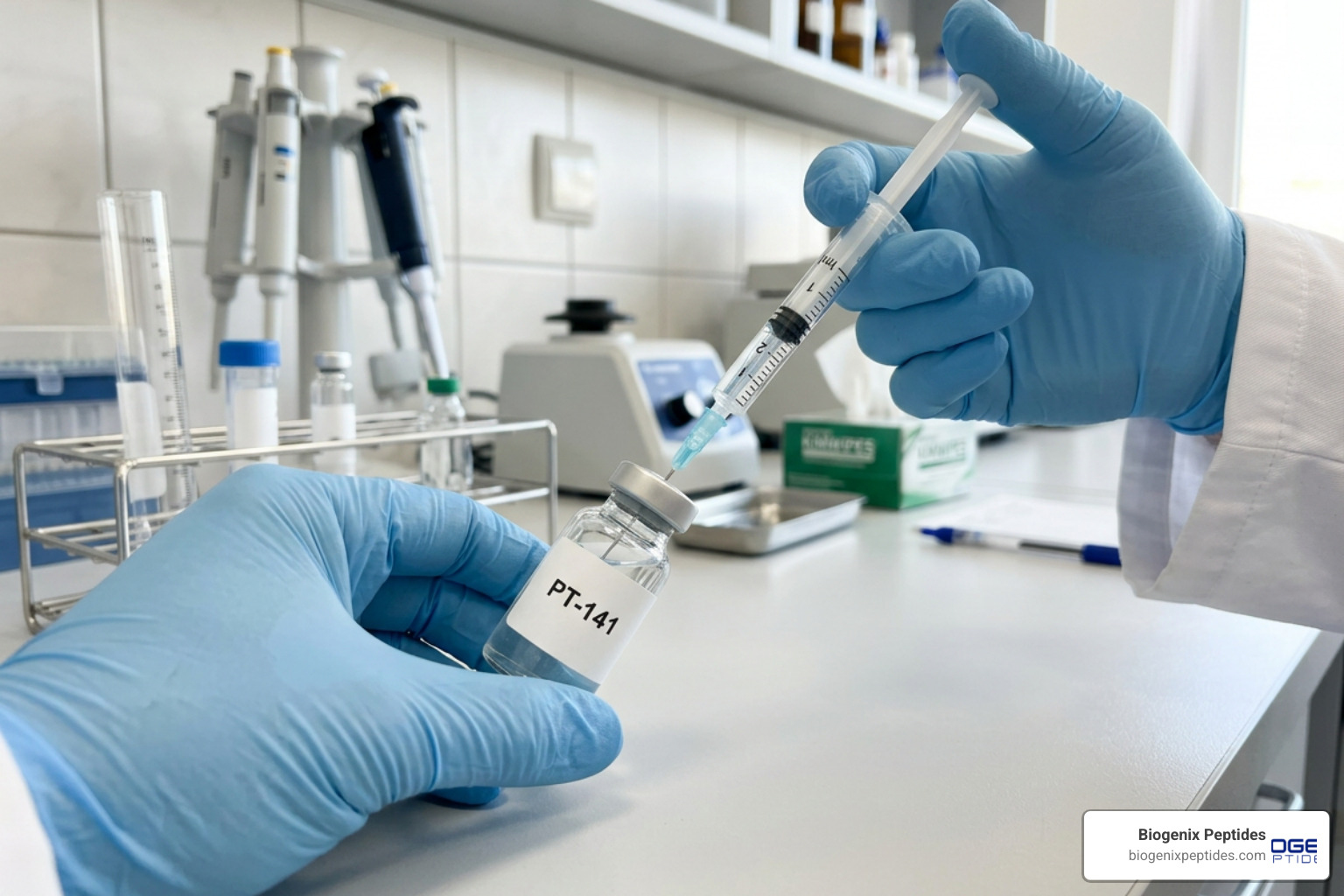
Now, we perform the actual fluid transfer. For a standard 10mg vial of PT-141, adding 2mL of bacteriostatic water is highly recommended because it produces a clean, easy-to-calculate concentration of 5mg/mL.
Using your sterile transfer syringe, carefully draw exactly 2.0mL of bacteriostatic water from the solvent vial. Double-check the syringe barrel to ensure there are no large air bubbles, adjusting the plunger as needed.
To introduce the solvent into the PT-141 vial:
- Hold the PT-141 vial firmly on your flat, sterilized workspace.
- Insert the needle of the transfer syringe through the center of the clean rubber stopper.
- Angle the needle at a 45-degree angle toward the inside glass wall of the vial.
- Depress the plunger slowly and steadily, taking about 15 to 20 seconds to deliver the full 2mL of solvent.
Crucial Tip: Never spray the bacteriostatic water directly onto the lyophilized powder cake. The physical force of a direct liquid stream can shear the delicate peptide chains, leading to structural degradation. Instead, let the water trickle gently down the inside glass wall, absorbing into the powder from the bottom up. For a broader look at this procedure across different peptide types, consult our resource on Reconstituting Lyophilized Peptides Step-by-Step.
Gentle Mixing Techniques to Reconstitute PT-141 Without Damage
Once the 2mL of bacteriostatic water has been completely introduced, you will notice the powder beginning to dissolve. At this stage, your patience is required.
Never shake, drop, or vortex the vial. Vigorous shaking causes physical agitation that can break the delicate covalent bonds of the cyclic heptapeptide, a process known as denaturation. Denatured peptides lose their structural shape, meaning they will no longer bind correctly to the MC3R and MC4R receptors during your studies, rendering your research ineffective.
Instead, gently swirl the vial in slow, circular motions while keeping the bottom of the vial on your flat workspace. Alternatively, you can pick up the vial and gently roll it back and forth between the palms of your hands.
Continue this gentle motion for 30 to 60 seconds, then set the vial down and let it rest. Within a few minutes, the solution should transition into a perfectly clear, colorless liquid. If any undissolved particles remain, let the vial sit in a dark place at room temperature for another 5 minutes, then repeat the gentle swirling. For more advanced tips on handling different peptide masses, check out The Secret to Reconstituting Peptides 5mg Correctly.
Concentration Calculations and Storage Protocols
To run precise laboratory experiments, you must understand the mathematical relationship between the volume of solvent added and the resulting concentration of the peptide.
A standard vial of research-grade PT-141 contains 10mg of active peptide, which is equivalent to 10,000 micrograms (mcg). The concentration of your final liquid solution depends entirely on how much bacteriostatic water you choose to add.
| Peptide Mass (mg) | Solvent Volume (mL) | Resulting Concentration (mg/mL) | Resulting Concentration (mcg/mL) | Standard 10-Unit Volume (on U-100 Syringe) |
|---|---|---|---|---|
| 10 mg | 1.0 mL | 10.0 mg/mL | 10,000 mcg/mL | 1,000 mcg (1.0 mg) |
| 10 mg | 2.0 mL | 5.0 mg/mL | 5,000 mcg/mL | 500 mcg (0.5 mg) |
| 10 mg | 3.0 mL | 3.33 mg/mL | 3,330 mcg/mL | 333 mcg (0.33 mg) |
| 10 mg | 4.0 mL | 2.5 mg/mL | 2,500 mcg/mL | 250 mcg (0.25 mg) |
When using a standard U-100 insulin syringe (where 100 units equals 1.0mL of liquid), each individual unit mark on the syringe represents a specific volume. If you reconstituted your 10mg vial with 2mL of bacteriostatic water, you have a concentration of 5mg/mL.
- To extract a 1.0mg test amount, you would draw the solution up to the 20-unit mark (0.2mL).
- To extract a 1.5mg test amount, you would draw the solution up to the 30-unit mark (0.3mL).
- To extract a 2.0mg test amount, you would draw the solution up to the 40-unit mark (0.4mL).
For alternative dilutions and comparative guidelines, you can cross-reference the PT-141 Protocols and Administration | Peptide Protocol Wiki or read the detailed PT-141 Measurement Chart – 10 mg Vial Protocol | PeptideDosages.com. For an overall strategic guide on handling, refer to the PT-141 Protocol Guide — Reconstitution & Administration.
Storage and Stability Best Practices
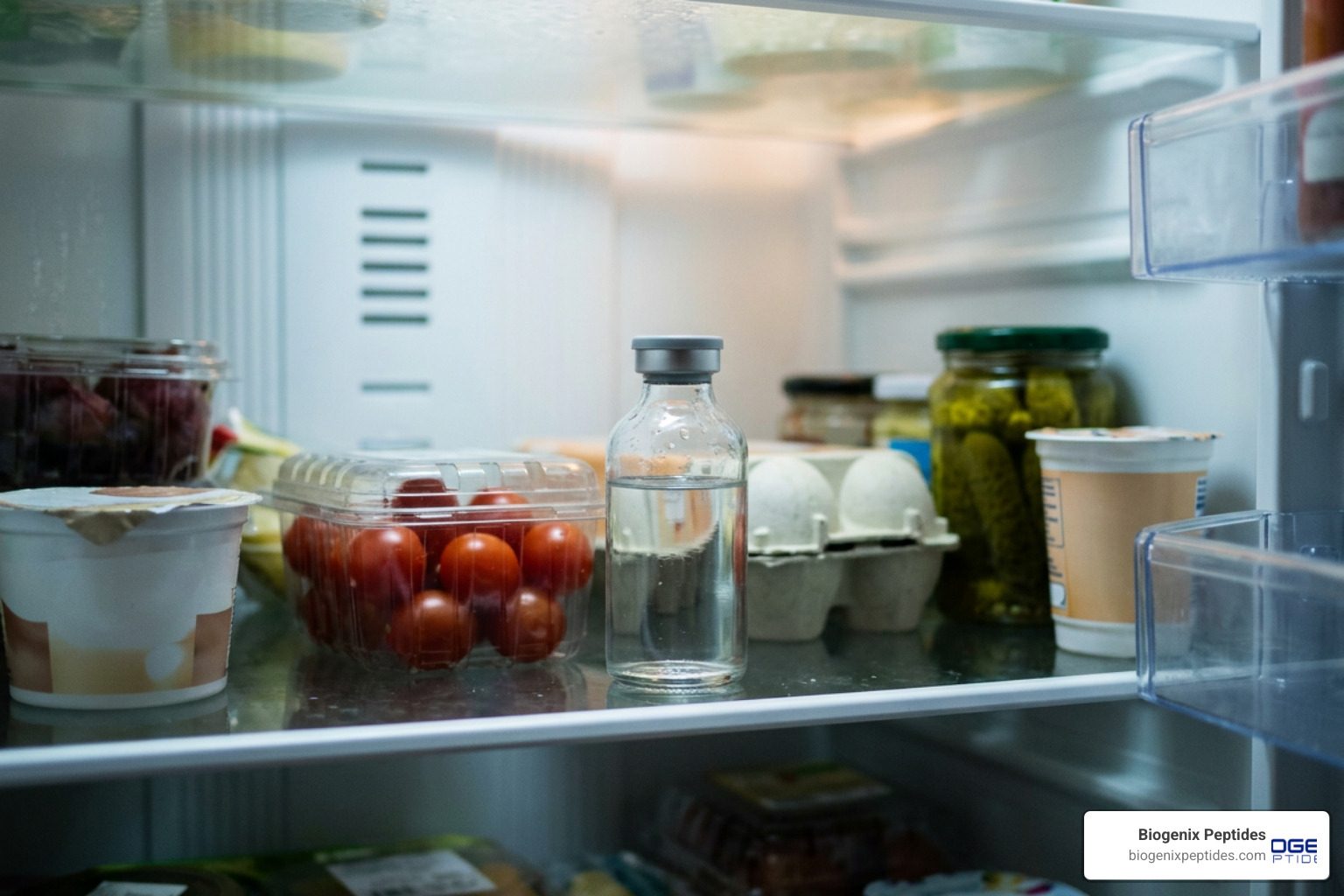
Once reconstituted, the stability window of the peptide changes dramatically. While lyophilized powder can remain stable at room temperature for several weeks during transit, the liquid solution is highly sensitive to heat and light.
We must store the reconstituted PT-141 vial in a refrigerator maintained strictly between 2°C and 8°C (36°F to 46°F). Keep the vial in the main body of the refrigerator rather than the door, as door shelves experience frequent temperature fluctuations when opened. To protect the compound from light degradation, keep the vial inside its original cardboard box or wrap it in a small piece of foil.
Reconstituted PT-141 prepared with bacteriostatic water remains stable for approximately 30 days under proper refrigeration. Beyond this 30-day window, the peptide bonds slowly begin to degrade, reducing the concentration and potency of your research material.
Side Effects and Research Observations
During laboratory evaluations of melanocortin receptor agonists, certain side effects are commonly observed in test subjects. The most frequent side effect is transient nausea, which occurs in approximately 40% of observations. This is typically mild to moderate and tends to peak within the first hour of administration. Other documented observations include temporary facial flushing, mild headaches, and localized site irritation at the point of subcutaneous administration.
To explore the underlying biological pathways of these reactions and understand how melanocortin agonists influence systemic responses, you can read our detailed review on Peptides, Sexual Function, and the Research Behind Libido, Blood Flow, and Performance.
Frequently Asked Questions About PT-141 Reconstitution
Can sterile water be used instead of bacteriostatic water?
Sterile water (preservative-free water) should only be used if the entire vial of PT-141 is going to be utilized immediately in a single research session. Because sterile water lacks benzyl alcohol, it has no defense against bacterial growth once the rubber stopper is punctured. For any study that requires withdrawing multiple liquid samples from the same vial over several days or weeks, bacteriostatic water is mandatory to maintain sterility and protect your research integrity.
What should I do if the reconstituted solution is cloudy?
A properly reconstituted PT-141 solution must be completely clear and colorless. If the liquid appears cloudy, milky, or contains visible suspended particles after swirling and resting, do not proceed with your research. Cloudiness typically indicates either microbial contamination, the presence of impurities, or severe peptide denaturation where the proteins have clumped together. Discard the vial and prepare a fresh one.
Can reconstituted PT-141 be frozen for long-term storage?
We strongly advise against freezing PT-141 once it has been mixed with bacteriostatic water. The process of freezing and thawing creates microscopic ice crystals within the liquid. These sharp crystals can physically sever the delicate cyclic structure of the peptide, leading to significant compound degradation. If you need to store PT-141 for several months, keep it in its dry, lyophilized powder form in a laboratory freezer at -20°C, and only reconstitute it when you are ready to begin your active research window.
Conclusion
Mastering the chemistry of PT-141 reconstitution is a vital skill for any laboratory researcher. By ensuring proper sterilization, using high-purity bacteriostatic water, employing gentle mixing techniques, and maintaining strict refrigerated storage, you protect the molecular integrity of this unique melanocortin receptor agonist. Precise preparation directly translates to clean, reproducible, and reliable scientific data.
At Biogenix Peptides, we are committed to supporting your scientific endeavors with the highest-purity compounds and rigorous quality control standards. When your work demands absolute precision, explore our full inventory of research-grade materials at the Biogenix Peptides Shop.