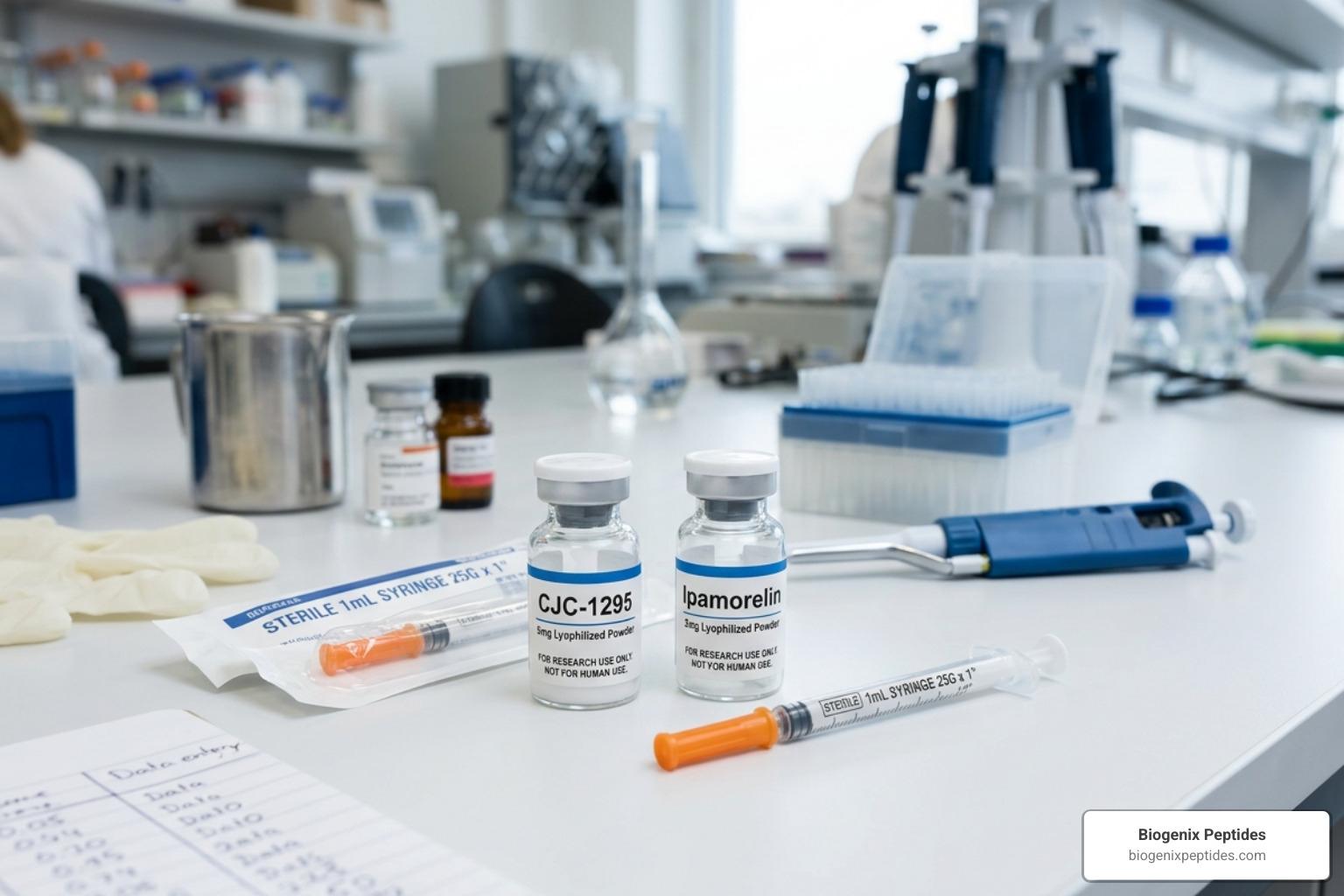
How to dose CJC-1295 and Ipamorelin for maximum gains
How to dose CJC-1295 and Ipamorelin for maximum gains
Disclaimer: The information provided in this article is for educational and informational purposes only. It is not intended as medical advice, diagnosis, or treatment. Products and compounds referenced are for research use only and are not approved for human or veterinary consumption. Always consult a qualified professional regarding health or medical decisions.
What Researchers Need to Know About CJC-1295 Ipamorelin Protocols
The standard cjc-1295 ipamorelin protocol used in research settings typically falls within the following ranges:
| Research Level | CJC-1295 (per application) | Ipamorelin (per application) | Frequency |
|---|---|---|---|
| Beginner | 100-150 mcg | 100-150 mcg | Once daily |
| Intermediate | 200 mcg | 200 mcg | Once to twice daily |
| Advanced | 200-300 mcg | 200-300 mcg | Twice to three times daily |
- Timing: 30-60 minutes before sleep, on an empty stomach (at least 1-2 hours after eating)
- Schedule: Many protocols follow a 5-days-on, 2-days-off structure
- Cycle length: Typically 8-12 weeks, followed by a 4-week break
- Route: Subcutaneous delivery is standard in research settings
Note: These figures reflect observed research protocols only and are not recommendations for human application.
Getting the cjc-1295 ipamorelin protocol question wrong doesn’t just mean weaker results in a research context — it can mean receptor desensitization, disrupted GH rhythms, or observations that are simply impossible to replicate. Yet most available information either oversimplifies the numbers or skips the why entirely.
This guide breaks down what the research actually shows — from beginner to advanced protocols, timing considerations, cycle structures, and what happens at the molecular level when these two compounds are combined.
I’m Jay Daniel, Founder and CEO of BioGenix Peptides, and my work in peptide science and quality research has given me a deep understanding of how precise cjc-1295 ipamorelin application protocols affect outcomes in GH secretagogue research. In the sections below, I’ll walk you through everything the current research supports — clearly and without the fluff.
Understanding the Synergy of GHRH and GHRP Research
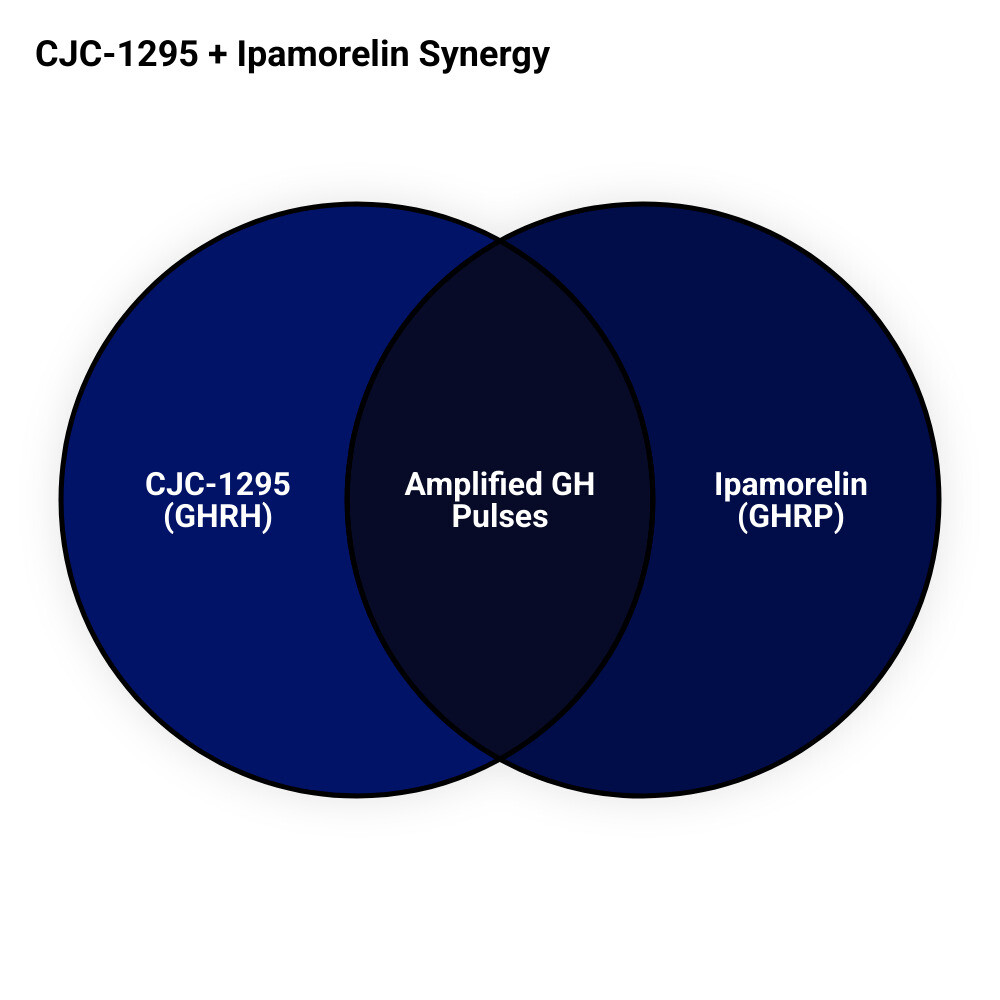
When we look at growth hormone (GH) optimization in a research setting, we aren’t just looking at one pathway. We are looking at a biological “one-two punch.” CJC-1295 and Ipamorelin belong to two different classes of peptides that work together to amplify the body’s natural GH production.
CJC-1295 is a Growth Hormone Releasing Hormone (GHRH) mimetic. In research, it acts like a volume knob, increasing the total amount of GH released during a pulse. Ipamorelin, on the other hand, is a Growth Hormone Releasing Peptide (GHRP) and a ghrelin receptor agonist. It acts like the “play button,” initiating the pulse itself.
As we discuss in our guide on hgh secretagogues the most misunderstood pathway to growth hormone optimization, using these together can result in a GH output that is 2 to 5 times greater than using either peptide alone. This happens because they activate the somatotrophs in the pituitary gland through distinct cellular pathways (cAMP/PKA for GHRH and PLC/IP3 for GHRP), creating a powerful synergistic effect.
Why Researching CJC-1295 Ipamorelin Administration Protocols Matters
Precision is everything in peptide research. If the amount of peptide is too low, the receptors aren’t sufficiently stimulated to produce a measurable change in IGF-1 levels. However, if the amount is too high or applied too frequently, researchers often observe “downregulation.”
We have highlighted that receptors matter more than amount downregulation desensitization and under stimulation. When receptors are constantly bombarded with signals, they stop responding. This is why many research protocols utilize a 5-days-on, 2-days-off schedule—to allow the pituitary gland to rest and maintain its endogenous rhythm. Monitoring IGF-1 levels throughout the research period is the “gold standard” for determining if the protocol is effective or if the receptors are becoming desensitized.
Distinguishing Between DAC and No DAC Versions
One of the most common points of confusion in research is the “DAC” (Drug Affinity Complex) modifier.
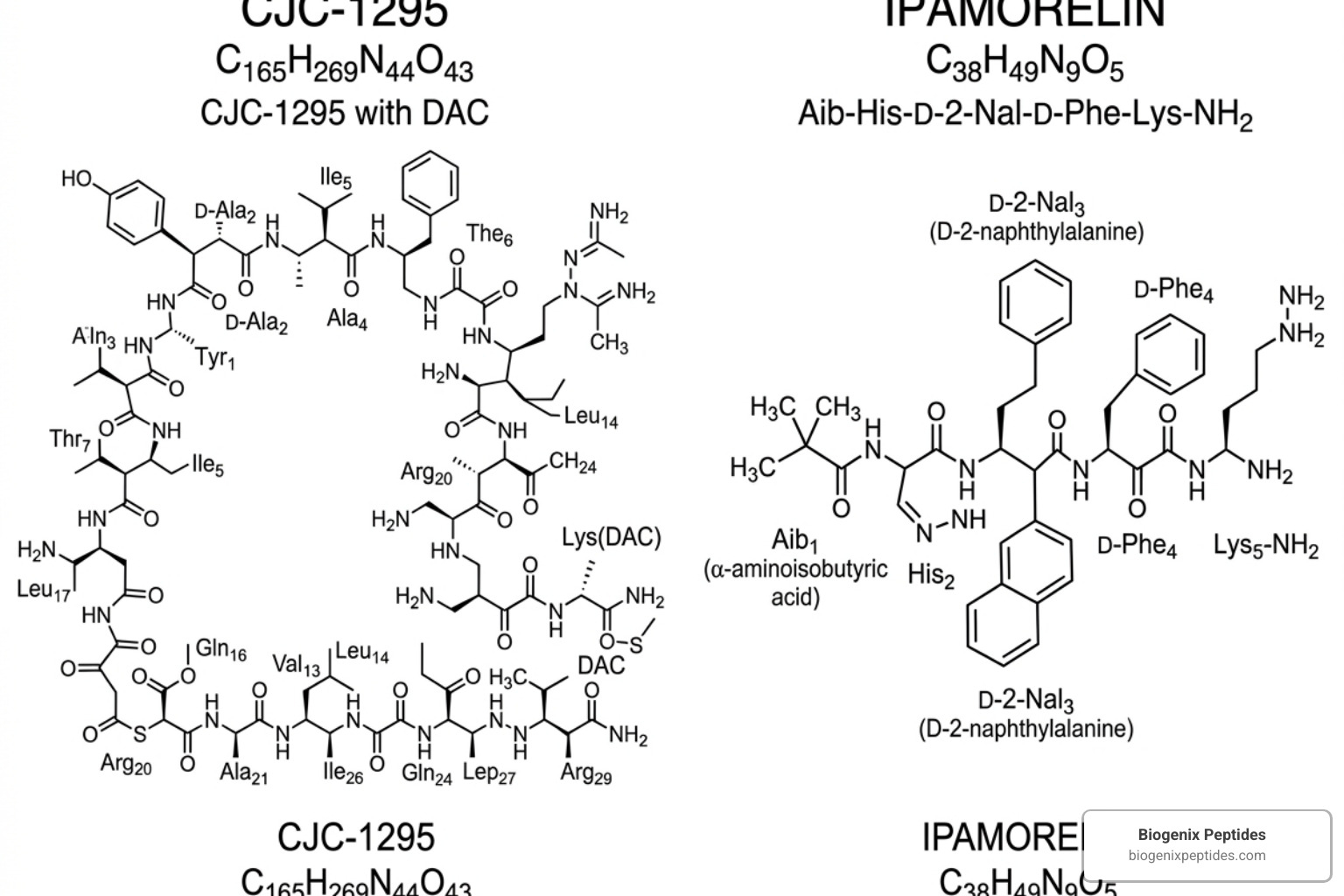
- CJC-1295 with DAC: This version has a half-life of roughly 6 to 8 days. It provides a sustained, “bleeding” release of growth hormone. While this can lead to high IGF-1 levels, some researchers argue it lacks the natural pulsatile rhythm of the body.
- CJC-1295 No DAC (Mod GRF 1-29): This is the version most commonly stacked with Ipamorelin. It has a short half-life (about 30 minutes), which allows researchers to mimic the body’s natural GH spikes.
For those focusing on recovery and physiological patterns, cjc-1295 no dac is often the preferred choice for combined protocols.
Standard Research Protocols for CJC-1295 Ipamorelin Administration
In the research community, protocols are generally categorized by the experience level of the researcher and the specific goals of the study. Most researchers begin with a “saturation” amount, which is typically 100 mcg of each peptide.
| Protocol Type | CJC-1295 No DAC | Ipamorelin | Frequency |
|---|---|---|---|
| Standard Research | 100 mcg | 100-200 mcg | 1x daily (Pre-bed) |
| Intermediate Research | 100-200 mcg | 200 mcg | 2x daily (AM/PM) |
| Advanced Research | 200-300 mcg | 300 mcg | 2-3x daily |
Many researchers find that a pre-blended cjc-1295 no dac ipamorelin solution simplifies the process and ensures the synergistic ratio is maintained in every application.
Timing and Frequency of Administration
The timing of application is just as important as the amount used. Growth hormone is naturally released in its largest pulse during the first 90 minutes of deep sleep. Therefore, the most common research protocol involves application 30 to 60 minutes before bedtime.
To maximize the pulse, the research subject must be in a fasted state. Insulin is a known inhibitor of growth hormone release. Research suggests waiting at least 2 hours after the last meal before application and waiting at least 30 minutes after application before consuming any food. This “fasting window” ensures that blood glucose and insulin levels are low, allowing the pituitary gland to respond fully to the secretagogues.
Optimizing CJC-1295 Ipamorelin Administration for Specific Goals
Different research objectives require different approaches.
- Fat Metabolism: Research into adipose tissue reduction often focuses on the morning fasted state, where GH can help mobilize fatty acids for energy throughout the day.
- Muscle Tissue Research: For studies involving muscle growth performance peptides, applications are often timed around resistance training or split into twice-daily protocols to keep GH levels elevated more consistently.
- Recovery and Anti-Aging: These studies almost exclusively use the nighttime protocol to enhance the body’s natural repair mechanisms during sleep.
Reconstitution and Application Techniques in Research
Peptides like CJC-1295 and Ipamorelin arrive as “lyophilized” (freeze-dried) powder. They are extremely fragile and must be handled with care to maintain their structural integrity.
The Reconstitution Process
- Preparation: Allow the vial to reach room temperature.
- Solvent: Use Bacteriostatic Water (0.9% benzyl alcohol) to inhibit bacterial growth.
- Introduction: Slowly drip the water down the side of the glass vial. Never spray it directly onto the powder.
- Mixing: Gently swirl the vial. Do not shake it, as this can denature the delicate peptide chains.
For a detailed walkthrough, we recommend our guide on reconstituting lyophilized peptides step by step. Once reconstituted, these compounds must be stored in a refrigerator between 2°C and 8°C. Following peptide storage stability guidelines is vital, as heat and light will quickly degrade the product.
Selecting Appropriate Administration Sites
Subcutaneous delivery (into the fatty tissue just under the skin) is the standard in research due to its high bioavailability (estimated at 85-95%).
Common research sites include:
- Abdomen: At least two inches away from the navel.
- Outer Thigh: A common alternative for rotation.
- Upper Arm: Often used in clinical trial settings.
Researchers must rotate sites daily to prevent “lipohypertrophy” (the thickening of fat tissue) and to ensure consistent absorption. Sterile technique, including the use of alcohol swabs on both the vial stopper and the skin, is mandatory to prevent contamination.
Stacking with Complementary Research Compounds
In advanced research, CJC-1295 and Ipamorelin are often the “base” of a larger stack. For instance, ipamorelin 5mg may be paired with BPC-157 to study accelerated tendon and ligament repair.
However, one must be cautious. We have noted that when stacking peptides works against you why less could be more. Adding too many secretagogues simultaneously can lead to pituitary exhaustion or excessive water retention, which can skew research data.
Research Considerations, Observations, and Cycle Management
While Ipamorelin is known as one of the “cleanest” GHRPs because it does not significantly increase cortisol or prolactin, researchers still observe specific physiological responses.
Commonly reported observations in research include:
- Water Retention: Often described as “puffiness” in the face or joints, usually occurring in weeks 3-6.
- Tingling Sensations: Mild “pins and needles” in the hands and feet (paresthesia) can occur as GH levels rise.
- Increased Hunger: Though less common with Ipamorelin than GHRP-6, some subjects still show increased ghrelin signaling.
To avoid the pitfalls of improper research, it is helpful to review the 10 most common mistakes people make when theyre new to peptide research.
Optimal Cycle Lengths and Breaks
To prevent desensitization and maintain the health of the GH axis, research cycles typically last 8 to 12 weeks. This is followed by a “washout” period of at least 4 weeks. This break allows the pituitary gland to reset its sensitivity to GHRH and GHRP signals. Long-term research without breaks is generally discouraged as it can lead to elevated fasting glucose levels, as GH naturally antagonizes insulin.
Managing Common Research Observations
If a research subject experiences headaches, it is often due to a rapid drop in blood sugar or a change in blood pressure. Incremental titration—starting with a lower amount (e.g., 50 mcg) and slowly increasing to the target—can mitigate these initial responses. Furthermore, monitoring glucose and HbA1c levels ensures the research remains within a safe metabolic window.
Frequently Asked Questions
When will results be visible in a research setting?
Observations usually follow a specific timeline:
- Weeks 1-2: Improved sleep quality and more vivid dreams are typically the first signs of increased GH pulses.
- Weeks 4-6: Improved recovery from stressors and subtle changes in skin elasticity.
- Weeks 8-12: Measurable changes in body composition, including fat loss and lean tissue preservation, become evident.
How does body weight affect the required amount?
While some clinical trials used weight-based protocols (e.g., 30 mcg/kg), most modern research uses fixed amounts. The pituitary gland has a “saturation limit”—a point where adding more peptide does not result in more GH release. For most subjects, this saturation point is around 100-150 mcg of each peptide per application.
Is a specific diet required during the research period?
While no specific diet is “required” for the peptide to work, the presence of insulin significantly blunts the effectiveness. High-carbohydrate meals before application will likely negate the GH pulse. Research suggests a high-protein diet supports the muscle-preserving effects of the increased IGF-1 levels.
Conclusion
The combination of CJC-1295 and Ipamorelin remains one of the most effective and well-studied protocols in GH secretagogues. By understanding the synergy between GHRH and GHRP pathways, researchers can maximize GH output while minimizing the side effects associated with synthetic growth hormone.
Success in this field requires more than just the right compounds; it requires an obsession with precision, timing, and receptor health. Whether you are investigating anti-aging markers or metabolic efficiency, staying within the established research protocols is the only way to ensure reliable data.
Ready to advance your research? Explore CJC-1295 No DAC Ipamorelin Solutions at BioGenix Peptides and ensure your study is backed by the highest quality compounds available.