The Ultimate CJC No DAC Stack: Synergizing Your Peptides
Disclaimer: The information provided in this article is for educational and informational purposes only. It is not intended as medical advice, diagnosis, or treatment. Products and compounds referenced are for research use only and are not approved for human or veterinary consumption. Always consult a qualified professional regarding health or medical decisions.
CJC-1295 No DAC Pharmacokinetics vs. Continuous Elevation
To understand why a CJC no DAC stack is so widely favored in scientific research, we first have to look at the molecule itself. CJC-1295 without DAC is technically known as Modified GRF 1-29 (tetrasubstituted Mod GRF 1-29). It is a synthetic 29-amino acid peptide analog of natural Growth Hormone-Releasing Hormone (GHRH).
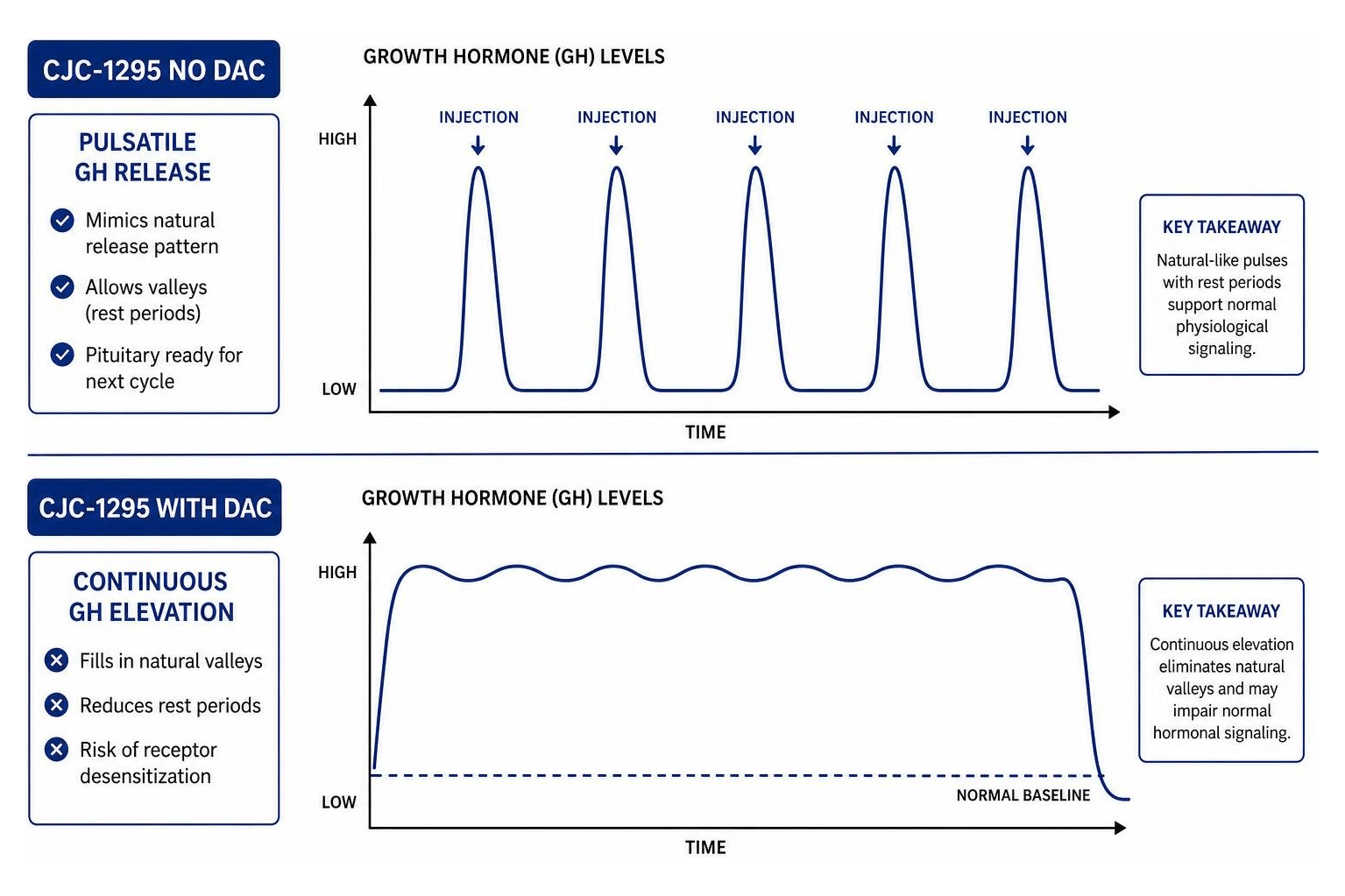
The primary difference between the two main variations of CJC-1295 comes down to the Drug Affinity Complex (DAC). The DAC moiety binds covalently to circulating albumin, which stretches the peptide’s half-life from approximately 30 minutes to an incredible 7 days. While a 7-day half-life sounds convenient on paper, it produces a constant, uninterrupted baseline elevation of growth hormone—roughly 7.5 times above normal resting levels.
This continuous elevation effectively fills in the natural physiological “valleys” between GH pulses. However, human cellular biology relies heavily on periodic resting states. Continuous GH exposure can lead to rapid receptor desensitization, pituitary suppression, and altered insulin sensitivity. In contrast, CJC-1295 No DAC mimics the body’s natural, rapid-burst signaling mechanism, clearing from circulation quickly and leaving the pituitary gland ready for its next natural cycle. For a deeper look into these mechanisms, check out The Ultimate Guide to CJC-1295 Without DAC and our detailed breakdown in The Quick Fading Peptide CJC-1295 No DAC Half-Life Explained.
CJC No DAC Stack Science: Pulsatile vs Continuous GH Release
Why does natural pulsatility matter so much in clinical research? It comes down to how human somatotrophs (the GH-producing cells in the anterior pituitary) and target tissues process chemical signals.
When growth hormone is released in discrete, sharp peaks:
- Lipolysis (Fat Breakdown): Clinical studies show that pulsatile GH exposure nearly doubles fat breakdown in human tissue compared to control environments. Continuous GH exposure, surprisingly, performs no better than doing nothing at all because target tissue receptors quickly downregulate and stop responding to the fat-mobilizing signal.
- Receptor Sensitivity: Pulsatile pulses give receptors time to reset between surges, preventing desensitization over longer research timelines.
- Side Effect Control: By allowing blood levels to drop back to baseline, researchers avoid the persistent fluid retention, joint stiffness, and severe insulin resistance commonly seen with continuous baseline elevation.
By combining CJC-1295 No DAC with a complementary growth hormone secretagogue, researchers can trigger a massive surge in GH pulse amplitude while maintaining the essential post-pulse refractory period. You can read more about these release mechanisms in our HGH Secretagogues pathway guide.
Comparing GHRH Analogs: CJC No DAC, Sermorelin, and Tesamorelin
CJC-1295 No DAC isn’t the only GHRH analog used in laboratory settings. To select the right compound for a research project, it helps to see how it compares against Sermorelin and Tesamorelin:
- Sermorelin (GRF 1-29): Sermorelin is the exact 29-amino acid N-terminal sequence of native GHRH. While effective, it has a very short half-life of only 8 to 12 minutes because human serum enzymes rapidly degrade it. CJC-1295 No DAC modifies four specific amino acids within that same 29-amino acid chain, dramatically increasing its chemical stability and extending the active window to ~30 minutes. You can review the baseline profile on our Sermorelin 5mg overview.
- Tesamorelin: Tesamorelin is a trans-3-hexenoic acid modified GHRH analog specifically developed and FDA-approved for reducing visceral adiposity in HIV-associated lipodystrophy. It possesses strong affinity and stability, but it is substantially more expensive to synthesize and harder to source for broad laboratory exploration compared to Mod GRF 1-29.
- CJC-1295 No DAC: Offers the optimal balance of synthetic stability, affordability, high binding affinity, and short duration—making it the ideal anchor for custom secretagogue stacks.
Designing the Optimal CJC No DAC Stack Protocol
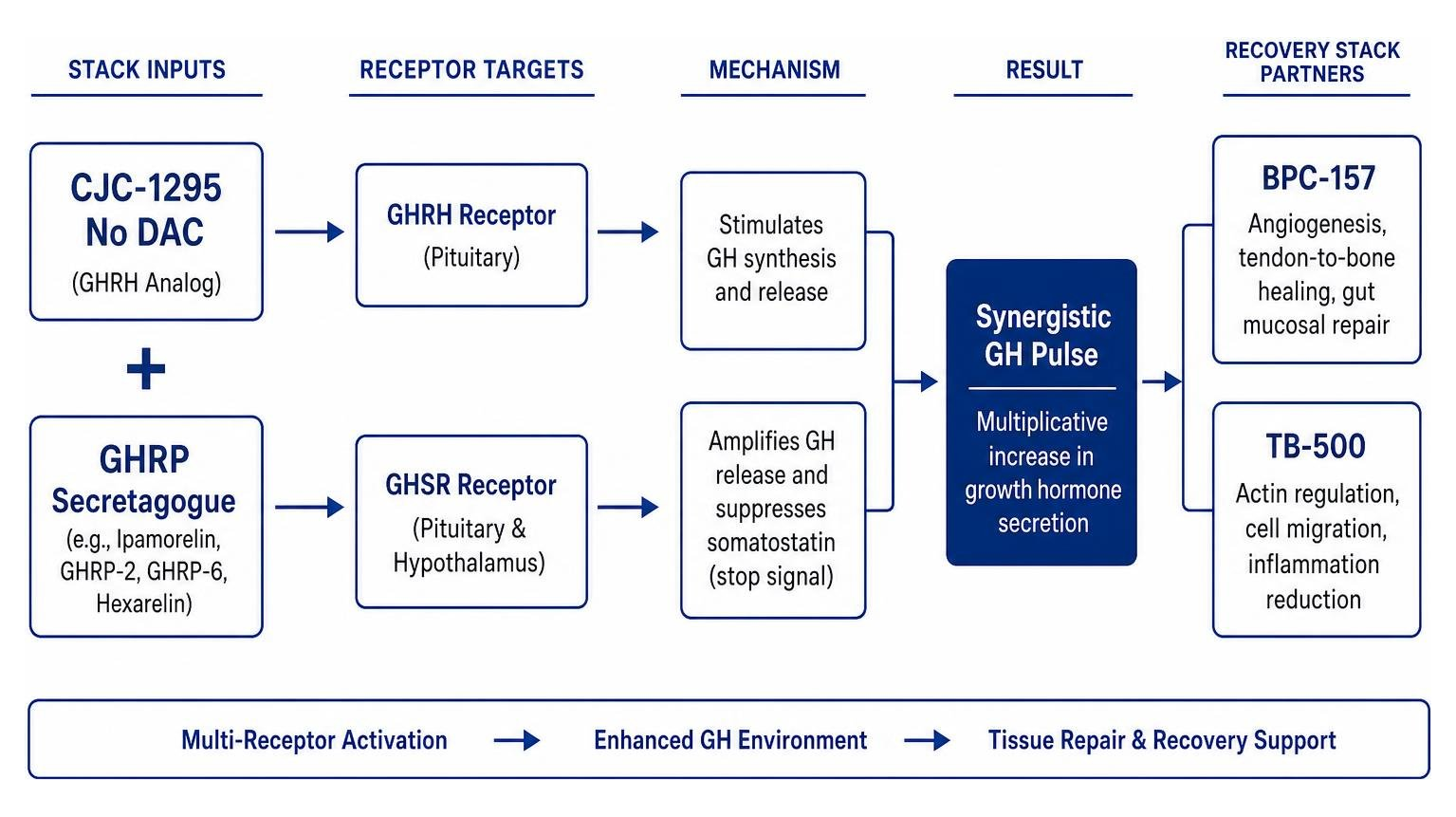
When designing a cjc no dac stack, combining a GHRH analog with a Growth Hormone Secretagogue Receptor (GHSR) agonist creates a powerful multi-receptor response.
GHRH analogs act on GHRH receptors to signal the production and release of GH. GHRPs (Growth Hormone Releasing Peptides) act on the ghrelin/growth hormone secretagogue receptor, which amplifies the signal and suppresses somatostatin (the body’s “stop signal” for GH release). When both receptor classes are triggered simultaneously, the resulting release of growth hormone is multiplicative rather than additive.
| Secretagogue Partner | Receptor Target | GH Spike Magnitude | Cortisol/Prolactin Impact | Primary Research Focus |
|---|---|---|---|---|
| Ipamorelin | GHSR (Selective) | Moderate–High | Extremely Low / None | Fat loss, lean muscle retainment, anti-aging |
| GHRP-2 | GHSR (Non-Selective) | High | Mild to Moderate | Rapid recovery, muscle mass research, high potency |
| GHRP-6 | GHSR (Non-Selective) | Moderate–High | Moderate | Appetite stimulation, cachexia, tissue recovery |
| Hexarelin | GHSR (Potent) | Very High | Moderate to High | Cardiac health, maximum GH pulse, acute injury |
Synergistic Stacking with Ipamorelin and GHRP Secretagogues
The most popular combination in modern peptide research is without question the CJC No DAC + Ipamorelin blend. Ipamorelin is a pentapeptide that exhibits remarkable selectivity. Unlike older GHRPs, it triggers GH release without stimulating cortisol, ACTH, or prolactin production. This makes it an extraordinarily clean compound for long-term studies. Check out our premixed CJC-1295 No DAC Ipamorelin blend or view individual profiles like Ipamorelin 10mg.
For research requiring a stronger pulse or specific secondary effects:
- GHRP-2: Offers a significantly stronger GH pulse than Ipamorelin, but with a slight, concentration-dependent rise in cortisol and prolactin. Explore the details in our GHRP-2 10mg profile.
- GHRP-6: Triggers strong ghrelin-mediated hunger responses, making it useful in research models focused on wasting conditions or appetite stimulation. Review our GHRP-6 10mg profile.
- Hexarelin: Known as one of the most potent secretagogues available. However, it carries a higher rate of receptor desensitization and requires careful cycling protocols. See Hexarelin Acetate 2mg.
Multi-Peptide Stacks for Recovery, Atrophy, and Immune Support
Research frequently extends beyond pure metabolic and anabolic metrics to address structural tissue repair, muscle atrophy, and systemic recovery.
In cellular damage models—such as severe muscle atrophy or systemic recovery following chronic illness (like Lyme disease protocols)—pairing a GHRH/GHRP stack with tissue-repair peptides yields impressive synergy:
- BPC-157 (Body Protection Compound 157): Promotes rapid angiogenesis (new blood vessel formation), tendon-to-bone healing, and gut mucosal repair.
- TB-500 (Thymosin Beta-4 fragment): Regulates actin polymerisation, accelerates cell migration to injury sites, and reduces systemic inflammation.
Combining a secretagogue pulse (which increases localized IGF-1 and systemic GH) with structural reconditioning peptides like BPC-157 and TB-500 offers a comprehensive framework for musculoskeletal research. To learn more about multi-peptide synergy, review our BPC-157 TB-500 10mg Blend and read How to Outrun Your Limits with Peptide Blends.
Reconstitution, Storage, and Administration Guidelines
Proper handling and laboratory hygiene are essential to maintain the structural integrity of fragile peptide chains. Lyophilized (freeze-dried) peptides must be reconstituted correctly to avoid shearing the delicate molecular bonds.
Step-by-Step Reconstitution Guidelines for a CJC No DAC Stack
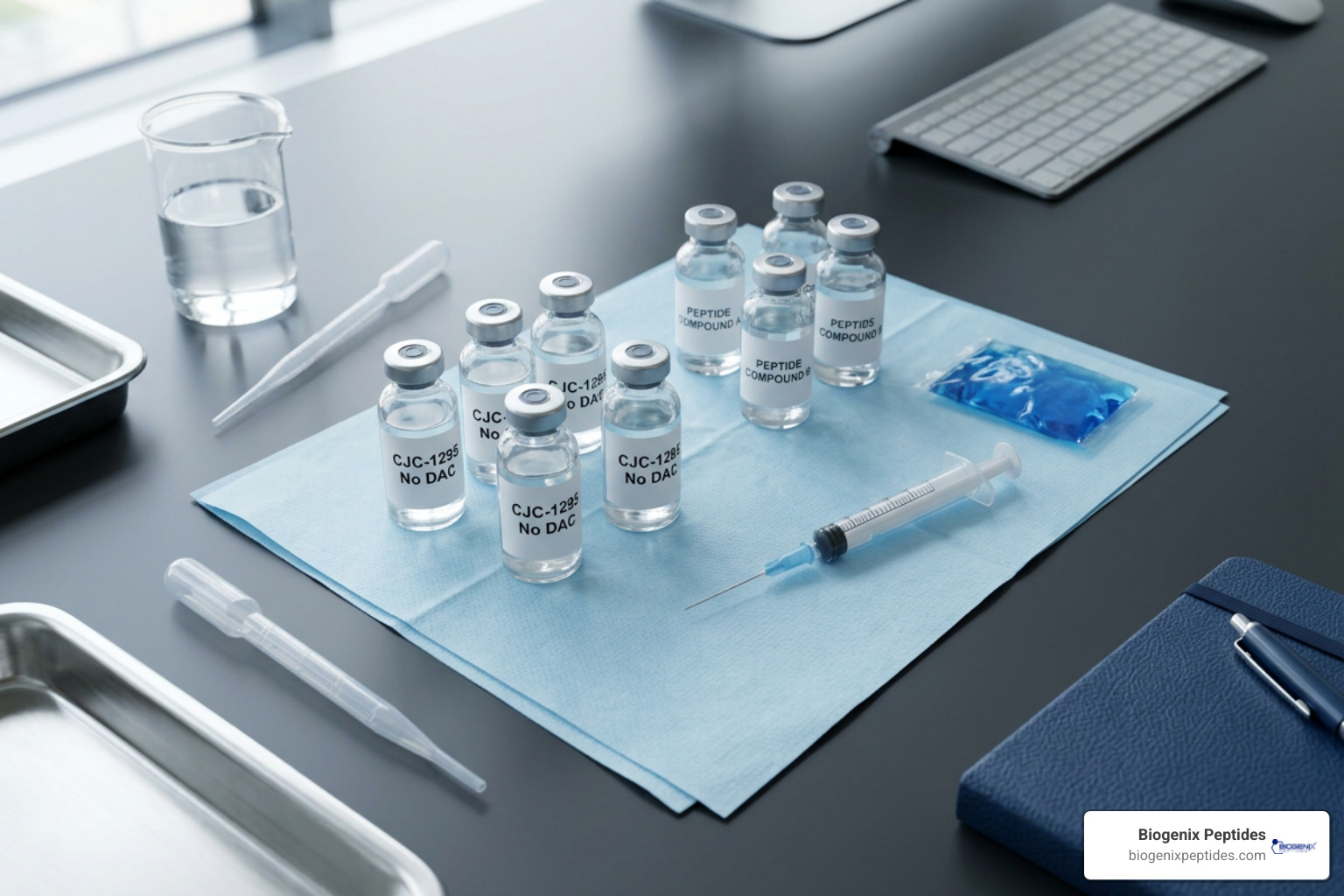
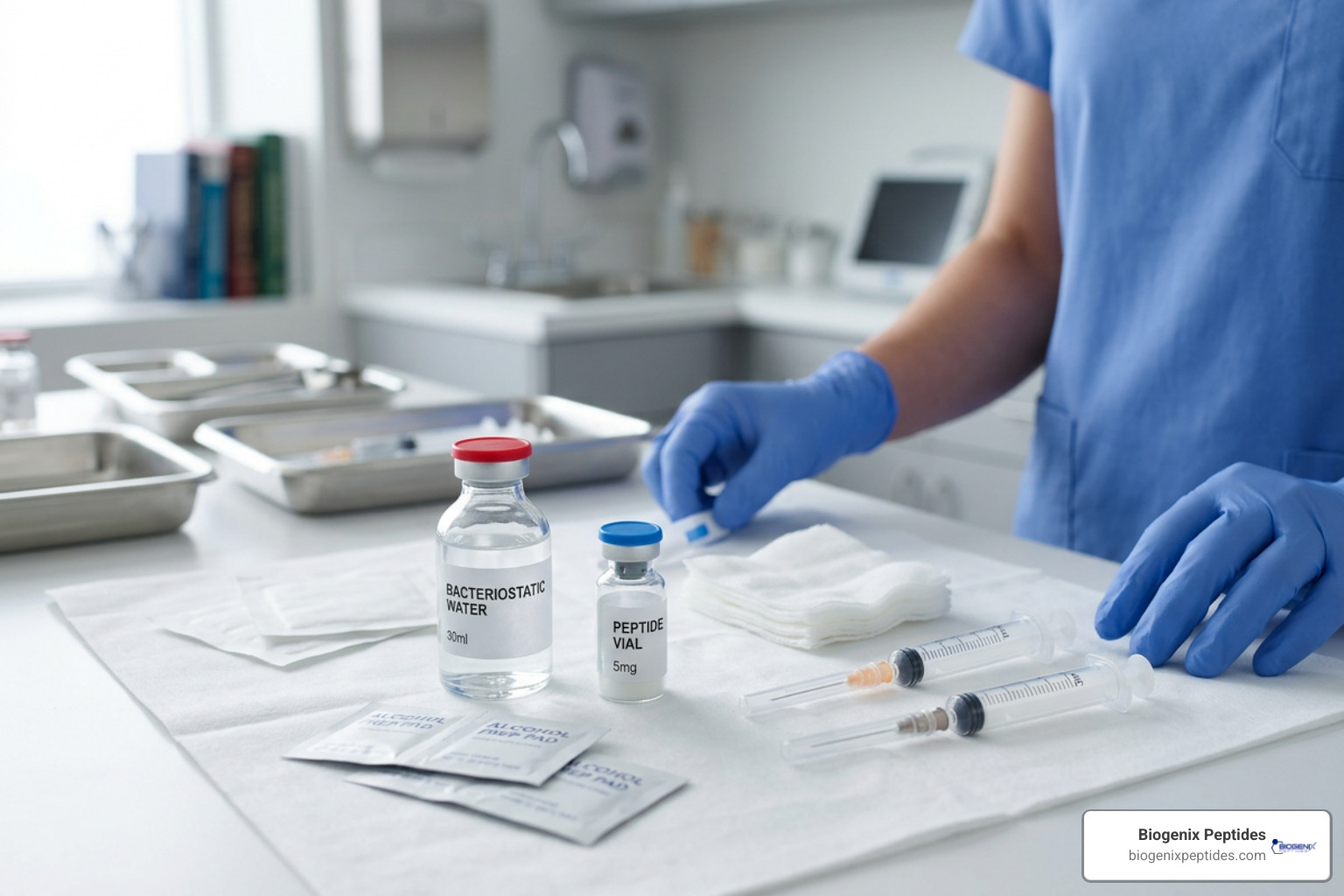
To reconstitute your research compounds safely, follow these standard laboratory steps:
- Clean the Workstation: Sanitize your prep area and wipe down the rubber stoppers of both the bacteriostatic water vial and the lyophilized peptide vial using 70% isopropyl alcohol swabs.
- Draw the Diluent: Using a sterile syringe, draw up your calculated volume of bacteriostatic water (typically 1.0 mL to 2.0 mL per vial, depending on desired concentration calculations).
- Equalize and Direct Flow: Insert the needle through the stopper of the peptide vial at a 45-degree angle. Aim the needle tip against the glass wall of the vial so the water trickles gently down the side. Do not splash diluent directly onto the lyophilized powder.
- Dissolve Gently: Allow the liquid to saturate the cake naturally. Gently swirl the vial between your fingers until fully dissolved. Never shake the vial, as agitation can denature fragile peptide bonds.
- Refrigerate Immediately: Once reconstituted, store liquid peptides at 2°C to 8°C (36°F to 46°F).
For step-by-step guides and proper ratio calculations, reference our resources on Reconstituting Lyophilized Peptides Step by Step, The Science of the Bacteriostatic Water Peptide Ratio, and Don’t Let Your Peptides Go Bad in the Fridge.
Timing and Frequency Design for CJC No DAC Protocols
Because CJC-1295 No DAC has a 30-minute half-life, scheduling administration times is critical for replicating natural GH pulses:
- Fasted State Application: High circulating blood glucose and elevated insulin levels trigger somatostatin release, which suppresses growth hormone output. Fasting for at least 2 hours prior to administration—and avoiding carbohydrates/fats for 30 minutes after—ensures an uninhibited pulse.
- Nocturnal GH Pulses: The largest natural daily surge of growth hormone occurs shortly after entering deep (slow-wave) sleep. Applying a cjc no dac stack immediately before bedtime aligns perfectly with normal circadian physiology.
- Post-Workout Windows: A secondary administration window occurs immediately post-workout, when natural metabolic demands and localized IGF-1 upregulation are at their peak.
- Frequency: Typical research protocols involve 1 to 3 applications daily, spaced at least 3 to 4 hours apart to allow somatotroph somatostatin levels to reset. Detailed schedule designs can be reviewed in Don’t Mess Up Your CJC-1295 No DAC Protocol.
Safety Profile, Side Effects, and Regulatory Considerations
While CJC-1295 No DAC is widely studied, researchers must monitor for potential side effects and observe proper desensitization guidelines.
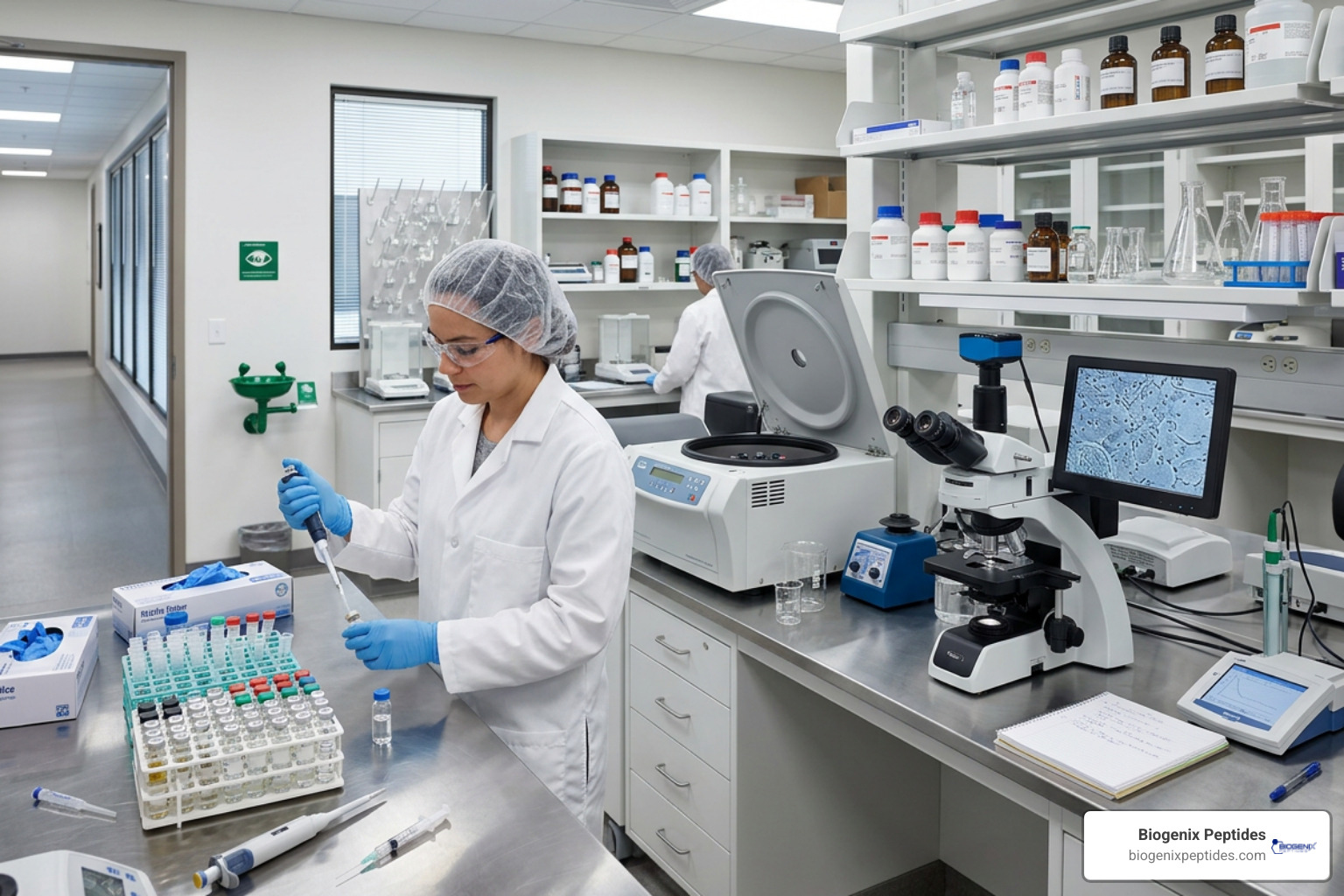
Side Effect Profile and Receptor Management
- Transient Flushing: A mild warmth or head-rush sensation occurring 2 to 10 minutes post-application is common. This is caused by temporary vasodilation and typically resolves quickly.
- Water Retention & Carpal Tunnel Symptoms: Continuous elevated GH can lead to sodium and water retention. However, because CJC No DAC clears rapidly, these side effects are far less frequent than with CJC with DAC.
- Cortisol and Prolactin Elevations: While CJC No DAC itself does not elevate cortisol or prolactin, pairing it with older secretagogues like GHRP-2 or GHRP-6 can cause mild elevations. Using Ipamorelin mitigates this risk entirely.
- Desensitization: To prevent pituitary somatotroph fatigue, long-term protocols typically run 8 to 12-week cycles followed by a 4-week break. For comprehensive safety analysis, review The No-Nonsense Guide to CJC-1295 No DAC Side Effects and Receptors Matter More Than Downregulation.
Regulatory Status
In the United States, CJC-1295 (both with and without DAC) has been placed on the FDA’s Category 2 compounding list for bulk drug substances, meaning traditional compounding pharmacies cannot legally prepare it for human prescription use. These compounds are sold strictly as research chemicals intended for in vitro and laboratory experimentation, and are explicitly not approved for human or veterinary consumption.
Frequently Asked Questions About CJC-1295 No DAC Stacks
What makes CJC No DAC preferred over CJC with DAC for fat loss research?
CJC No DAC preserves natural pulsatile GH release, whereas CJC with DAC causes continuous baseline elevation. Clinical research shows that discrete GH pulses nearly double lipolysis (fat breakdown) in humans, whereas continuous exposure leads to rapid receptor desensitization and minimal fat breakdown.
How do GHRH and GHRP peptides work together in a stack?
GHRH analogs (like CJC No DAC) and GHRPs (like Ipamorelin) target two distinct biological pathways. GHRH activates the pituitary to produce GH, while the GHRP suppresses somatostatin (the GH inhibitor) and stimulates release via the ghrelin receptor. Triggering both pathways simultaneously results in a synergistic GH pulse far greater than using either compound alone.
What is the FDA status of CJC-1295 No DAC?
CJC-1295 No DAC is classified as a Category 2 bulk drug substance by the FDA, meaning it cannot be legally compounded by pharmacies for human medical treatment. It is available legally strictly as a laboratory research chemical for scientific study.
Conclusion
Combining CJC-1295 Without DAC with complementary secretagogues like Ipamorelin represents one of the most effective ways to study growth hormone signaling. By mimicking the body’s natural 30-minute biological pulse rather than forcing continuous GH elevation, researchers can evaluate maximized fat loss, improved cellular recovery, and enhanced tissue repair without sacrificing receptor sensitivity.
When sourcing peptides for laboratory settings, bio-availability, purity, and analytical verification are what truly matter. Always ensure your research materials are verified by independent HPLC testing and mass spectrometry. Browse our high-purity CJC-1295 No DAC products to support your ongoing peptide research protocols.