The Ultimate Guide to CJC-1295 Without DAC
What Is CJC-1295 No DAC and Why Does It Matter for Research?
Disclaimer: The information provided in this article is for educational and informational purposes only. It is not intended as medical advice, diagnosis, or treatment. Products and compounds referenced are for research use only and are not approved for human or veterinary consumption. Always consult a qualified professional regarding health or medical decisions.
CJC-1295 no DAC is a synthetic growth hormone-releasing hormone (GHRH) analog that stimulates the pituitary gland to release growth hormone (GH) in short, natural pulses — closely mimicking the body’s own rhythms.
Here’s a quick snapshot of what the research shows:
| Key Feature | Detail |
|---|---|
| Also known as | Modified GRF 1-29, Mod GRF 1-29 |
| Molecular formula | C152H252N44O42 |
| Molecular weight | 3367.9 g/mol |
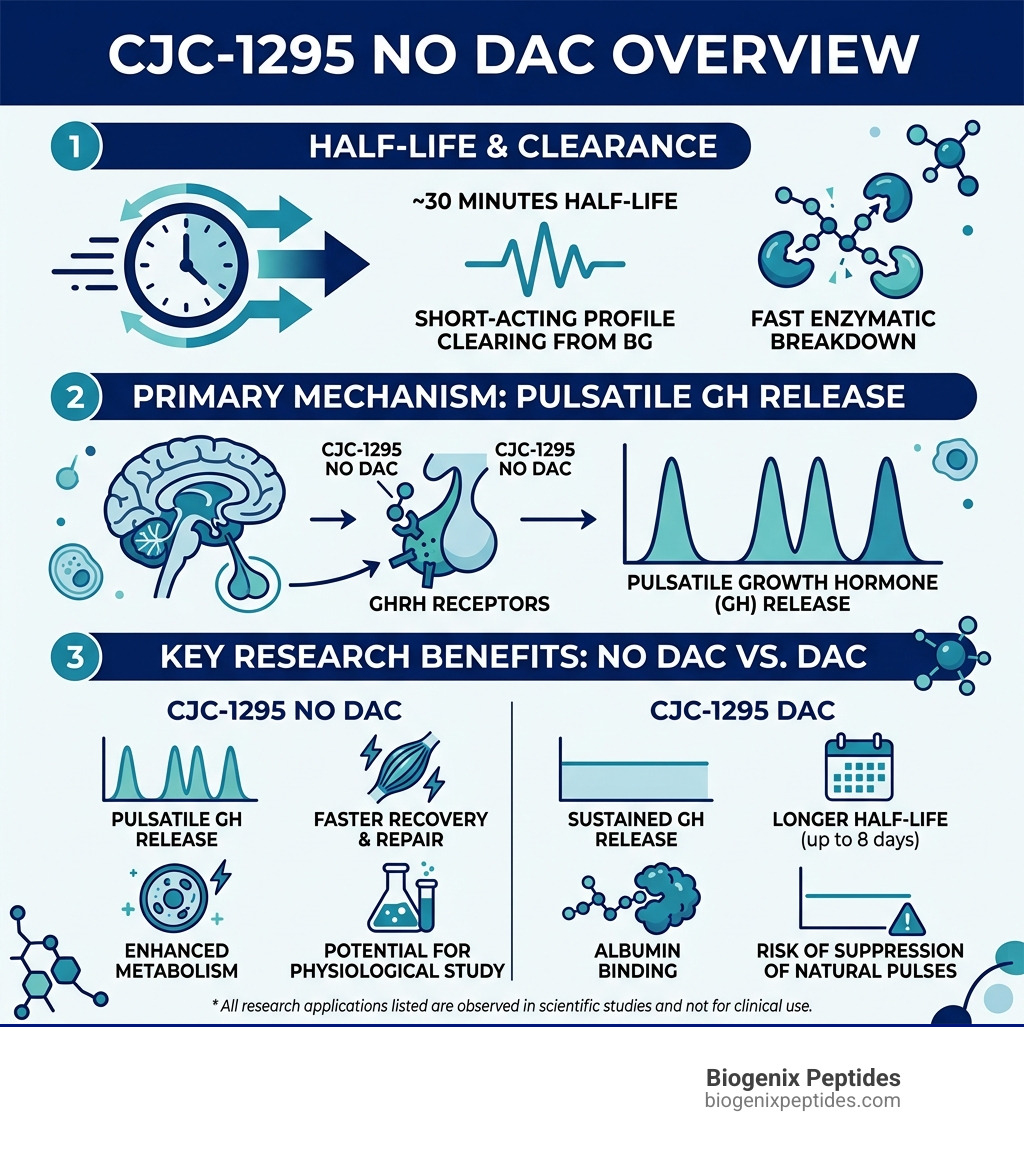
| Half-life | ~30 minutes |
| Primary mechanism | Binds GHRH receptors → triggers pulsatile GH release |
| Research applications | Muscle growth, fat metabolism, recovery, anti-aging |
| Key distinction from DAC version | No albumin-binding moiety → shorter half-life → pulsatile, not sustained, GH release |
| Research status | Not FDA-approved for human use; classified as a research chemical |
Unlike the DAC version — which binds to albumin and remains active for up to 8 days — the no-DAC form clears the body quickly. This short-acting profile is what makes it so interesting to researchers studying physiological GH release patterns.
After age 30, natural GH levels decline by up to 15% per decade. That backdrop has driven growing scientific interest in peptides like cjc-1295 no dac that work with the body’s endocrine signaling rather than overriding it.
I’m Jay Daniel, Founder and CEO of BioGenix Peptides, and my work in peptide sourcing, quality control, and research innovation has given me an in-depth understanding of how compounds like CJC-1295 no DAC fit into the broader landscape of GH secretagogue research. In this guide, I’ll walk you through everything the current science tells us — from molecular structure to research protocols — so you can approach this topic with clarity and confidence.
Understanding the Science of CJC-1295 No DAC
To understand cjc-1295 no dac, we first have to look at its predecessor: Growth Hormone Releasing Hormone (GHRH). In its natural form, GHRH is a peptide produced in the hypothalamus that tells the pituitary gland to get to work and release growth hormone. However, natural GHRH has a massive flaw in a research setting—it is destroyed by enzymes in the blood within minutes.
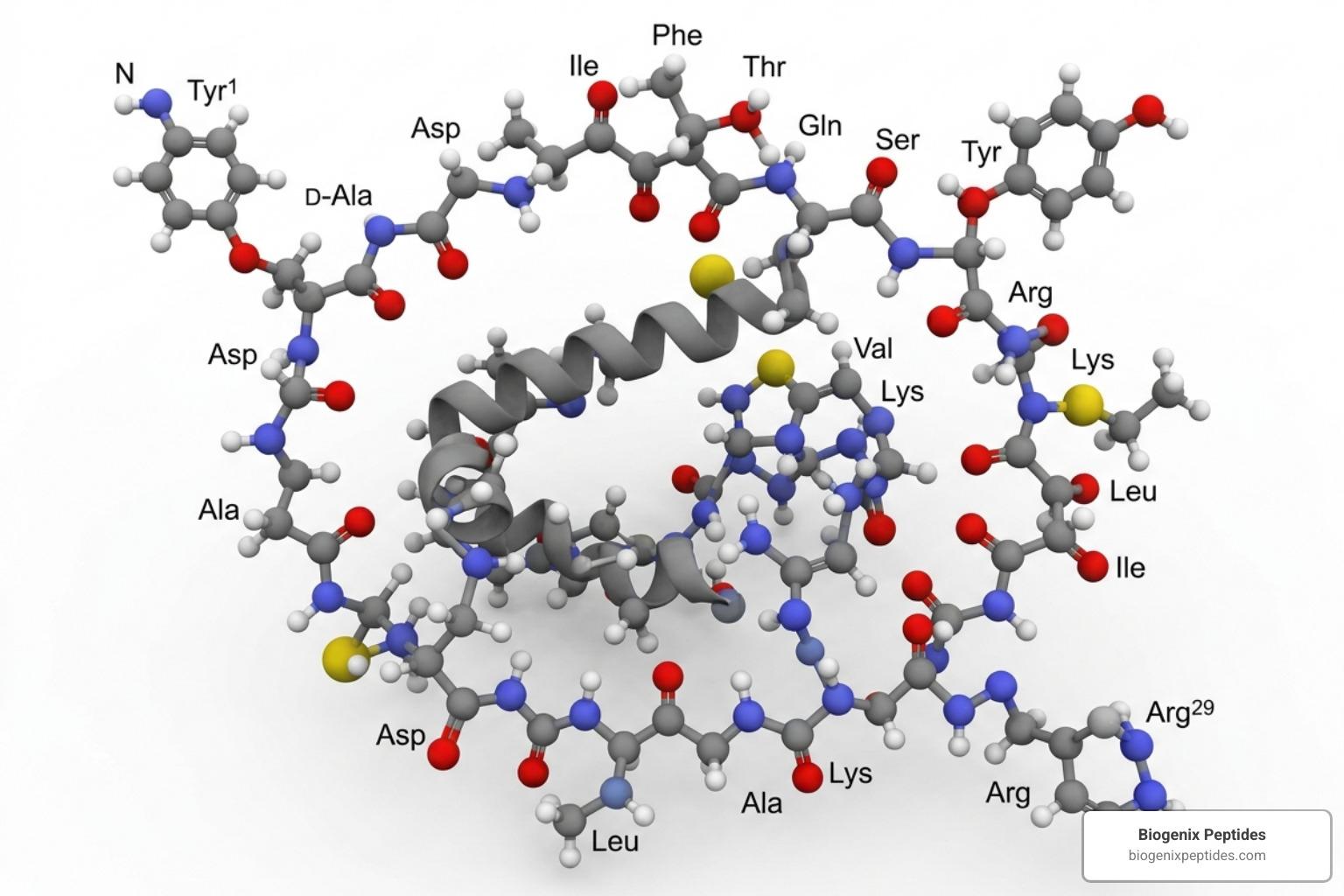
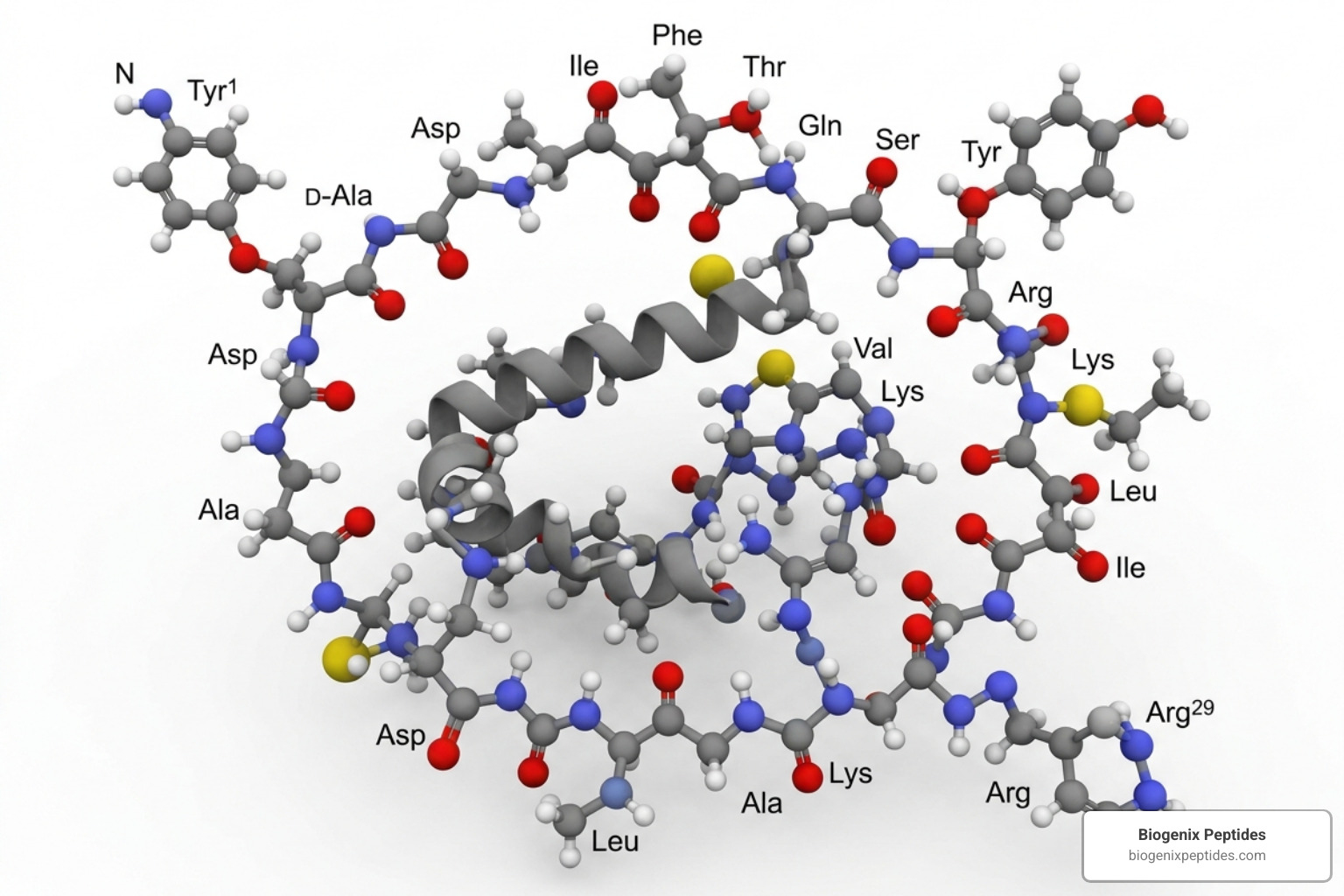
Researchers developed cjc-1295 no dac as a synthetic analog of somatocrinin (the 44-amino acid version of GHRH). Specifically, it is a modified version of the first 29 amino acids, known as GRF 1-29. By making strategic changes to the amino acid sequence, scientists created a version that is much more stable than the natural hormone while retaining all the biological “keys” needed to unlock the pituitary’s potential.
According to technical resources like What is CJC1295 without DAC? – BOC Sciences, this peptide is engineered to resist enzymatic breakdown, allowing it to stay active long enough to produce a significant biological effect without staying in the system so long that it causes hormonal “noise.”
Chemical Structure of CJC-1295 No DAC
The precision of cjc-1295 no dac comes down to its molecular blueprint. It carries the molecular formula C152H252N44O42 and a molecular weight of 3367.9 g/mol. If you were to look it up in a chemical database, you would find it under PubChem CID 91976842.
The “magic” happens at specific positions in the peptide chain. Scientists substituted four specific L-amino acids with D-amino acids (at positions 2, 8, 15, and 27). These substitutions act like biological armor, specifically protecting the peptide from DPP-IV (Dipeptidyl peptidase-4), the primary enzyme responsible for shredding GHRH in the bloodstream. This modification is why cjc-1295 no dac is frequently referred to as “Modified GRF 1-29.”
Pharmacokinetics and Half-Life
The defining characteristic of this peptide is its absence of the Drug Affinity Complex (DAC). In the “with DAC” version, a chemical moiety is added that allows the peptide to bind to albumin (a protein in the blood), extending its life for days.
In contrast, cjc-1295 no dac has a half-life of approximately 30 minutes. While 30 minutes might sound short, it is significantly longer than the few minutes offered by natural GHRH. This short-acting profile allows for rapid clearance from the system. As noted in the CJC-1295 DAC vs No DAC – LIVV Natural comparison, the lack of DAC means the peptide does not cause a continuous, “bleeding” release of GH, but rather a sharp, controlled spike that mimics how the human body naturally operates.
Mechanism of Action and Pulsatile Release
When cjc-1295 no dac enters the system in a research model, it heads straight for the GHRH receptors on the somatotropic cells of the anterior pituitary gland.
Once it binds to these receptors, it triggers a cascade of intracellular events:
- Adenylate Cyclase Activation: The binding “turns on” this enzyme.
- cAMP Signaling: Adenylate cyclase increases levels of cyclic adenosine monophosphate (cAMP).
- GH Release: High cAMP levels signal the cell to release stored growth hormone into the bloodstream.
This pathway is often misunderstood. Unlike synthetic HGH, which adds external hormone to the body, cjc-1295 no dac encourages the body to produce its own. You can explore this further in our deep dive on Hgh Secretagogues The Most Misunderstood Pathway To Growth Hormone Optimization/.
Mimicking Physiological GH Spikes
In a healthy organism, growth hormone isn’t released in a steady stream. Instead, it comes in “pulses,” with the largest surges occurring during deep sleep (nocturnal surges).
Because cjc-1295 no dac has a short half-life, it preserves this pulsatile secretion pattern. This is critical for research because constant elevation of GH (as seen with the DAC version) can lead to receptor desensitization or “pituitary fatigue.” By allowing the levels to return to baseline between applications, the pituitary remains responsive, and the body’s natural circadian rhythms are respected.
Synergistic Research with CJC-1295 No DAC and Ipamorelin
One of the most common sights in modern research is the combination of cjc-1295 no dac and Ipamorelin. While cjc-1295 no dac acts as the GHRH (the “accelerator”), Ipamorelin acts as a GHRP (Growth Hormone Releasing Peptide), which mimics ghrelin (the “trigger”).
When used together, they create a synergistic effect that is much more powerful than either peptide alone. The GHRH analog increases the number of GH-releasing cells that are “ready,” and the GHRP triggers the actual dump of the hormone. This dual-pathway stimulation is a major focus for metabolic research. You can find more about this specific blend here: Shop/Recovery/Cjc 1295 No Dac Ipamorelin.
Research Benefits: Muscle, Fat, and Recovery
The primary reason cjc-1295 no dac is studied is its ability to raise levels of IGF-1 (Insulin-like Growth Factor 1). When the pituitary releases GH, the liver responds by producing IGF-1, which is the actual “worker” hormone responsible for most of the growth and repair effects.
Research into this pathway suggests several key areas of interest:
- Protein Synthesis: Increased IGF-1 supports the creation of new proteins, essential for tissue repair.
- Myoblast Proliferation: GH and IGF-1 encourage the division of muscle precursor cells.
- Lipolysis: GH is a potent fat-mobilizer, encouraging the body to use stored adipose tissue for energy.
To understand how this compares to other analogs, see our analysis on Tesamorelin Beyond Growth Hormone What The Research Really Shows/.
Impact on Body Composition and Sarcopenia
Sarcopenia, or age-related muscle loss, affects 10-16% of the global population. Most adults lose 3-8% of their muscle mass per decade after age 30. Research models using cjc-1295 no dac look at how restoring GH pulses can combat this decline.
In clinical studies, GHRH analogs have shown the potential to increase GH levels by 2-10x and IGF-1 levels by 1.5-3x. This shift in the hormonal environment is studied for its ability to improve lean body mass and bone density while simultaneously reducing visceral fat.
Recovery and Anti-Aging Effects
Recovery isn’t just for athletes; it’s a fundamental biological process. Cjc-1295 no dac is investigated for its role in repairing exercise-induced microtrauma and supporting collagen synthesis, which is vital for joint and skin health.
Because it supports deep sleep—the time when the body does its best repair work—researchers often look at “vitality markers” such as skin elasticity, sleep quality, and overall energy levels in aging models.
Protocols for Reconstitution and Storage
In a laboratory setting, cjc-1295 no dac usually arrives as a “lyophilized” (freeze-dried) powder in a vacuum-sealed vial. This state keeps the delicate peptide stable during shipping.
Handling and Preparation
To prepare the peptide for research, it must be reconstituted with bacteriostatic water. This process requires a gentle touch:
- Temperature: Ensure the water is at room temperature.
- Technique: Aim the water down the side of the glass vial rather than directly onto the powder.
- Agitation: Never shake the vial. Shaking can “denature” or break the delicate peptide bonds. Instead, gently swirl the vial until the solution is clear.
Once reconstituted, the peptide becomes much more fragile. It should be stored in a refrigerator at approximately 4°C (39°F) and protected from light. Most research suggests a shelf life of about 30 days post-reconstitution before the peptide begins to lose potency. For comparison on other GHRH options, you can view Sermorelin 5Mg/.
Research Application Framework
In preclinical models, the application of cjc-1295 no dac is typically handled with precision:
- Method: Subcutaneous application (just under the skin).
- Frequency: Often 1-3 times daily, reflecting the short half-life.
- Timing: To maximize the GH pulse, research is often conducted in a fasted state (e.g., before bed or first thing in the morning) because high insulin or blood sugar can blunt the release of growth hormone.
- Cycling: A common research framework involves 12-16 week cycles followed by a “washout period” of 4-6 weeks to ensure the pituitary gland maintains its natural sensitivity.
Similar research protocols are often applied to Ipamorelin 5Mg/.
Safety Profile and Research Considerations
While cjc-1295 no dac is generally considered to have a milder side-effect profile than the long-acting DAC version, it is not without its research considerations.
Potential Side Effects in Preclinical Models
Researchers have documented several transient effects during studies, including:
- Flushing: A “warm” sensation or redness shortly after application.
- Headache and Nausea: Usually mild and temporary.
- Water Retention: Mild edema in the extremities.
- Application Site Reactions: Redness or itching (erythema) at the point of application.
- Transient Hypotension: A brief drop in blood pressure.
Crucially, cjc-1295 no dac is generally “cortisol neutral,” meaning it does not spike stress hormones or prolactin, which is a significant advantage over older-generation peptides like Ghrp 2 10Mg/.
Legal Status and Quality Assurance
It is vital to reiterate that cjc-1295 no dac is currently classified as a research chemical. It is not approved for human consumption. Furthermore, it is on the WADA (World Anti-Doping Agency) prohibited list, making it a banned substance for competitive athletes.
For those conducting legitimate research, quality is the only metric that matters. At BioGenix Peptides, we emphasize:
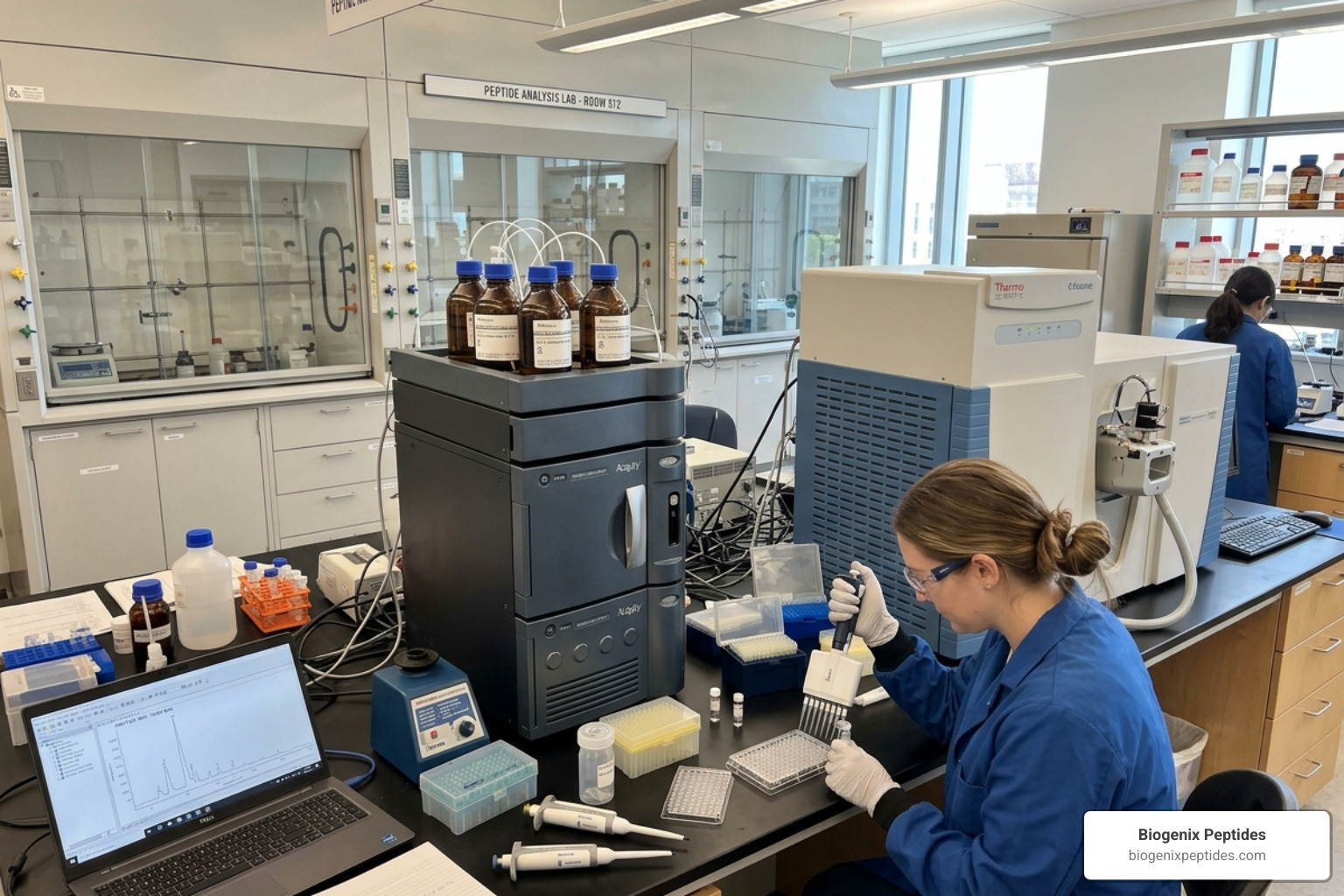
- HPLC Purity: Each batch should be verified at >95% purity (and often >99%).
- COA Verification: A Certificate of Analysis should be available to confirm the identity and purity of the peptide.
- MS Data: Mass Spectrometry ensures the molecular weight matches the target compound perfectly.
You can see examples of high-purity research standards with compounds like Ghrp 6 10Mg/.
Frequently Asked Questions about CJC-1295 No DAC
How does the absence of DAC affect the half-life?
The DAC (Drug Affinity Complex) is like a biological “anchor” that keeps the peptide in the blood for days. Without it, cjc-1295 no dac has a half-life of only 30 minutes. This sounds like a disadvantage, but for research, it’s actually a benefit because it allows for pulsatile release that mimics natural human physiology and reduces the risk of receptor desensitization.
Why is this peptide often paired with Ipamorelin in studies?
They work on two different “buttons” in the pituitary gland. Cjc-1295 no dac mimics GHRH, while Ipamorelin mimics ghrelin. When you press both buttons at once, the resulting GH pulse is significantly larger than if you just used one. It’s the difference between a whisper and a shout.
What is the difference between this and synthetic HGH?
Synthetic HGH is the actual hormone. When you introduce it, your body’s own production usually shuts down (negative feedback). Cjc-1295 no dac is a secretagogue—it tells your body to make its own hormone. This keeps the natural feedback loops intact and is generally considered a more “physiologic” approach in research.
Conclusion
The study of cjc-1295 no dac represents a fascinating frontier in endocrine research. By focusing on the body’s natural pulsatile rhythms rather than overwhelming the system with exogenous hormones, researchers are finding new ways to explore muscle preservation, fat metabolism, and cellular repair.
At BioGenix Peptides, we are committed to providing the highest quality research-grade peptides to facilitate this discovery. Whether you are looking into the recovery potential of CJC-1295 No DAC or exploring the synergistic effects of peptide blends, our focus remains on purity, transparency, and scientific integrity.
As we look toward the future of peptide therapy, compounds like cjc-1295 no dac will undoubtedly remain at the center of the conversation on how to optimize the human endocrine system through precise, targeted signaling.