Stop the Swell: The Best Peptides for Anti Inflammatory Therapy
Disclaimer: The information provided in this article is for educational and informational purposes only. It is not intended as medical advice, diagnosis, or treatment. Products and compounds referenced are for research use only and are not approved for human or veterinary consumption. Always consult a qualified professional regarding health or medical decisions.
Why Peptides for Anti Inflammatory Research Are Gaining Serious Scientific Attention
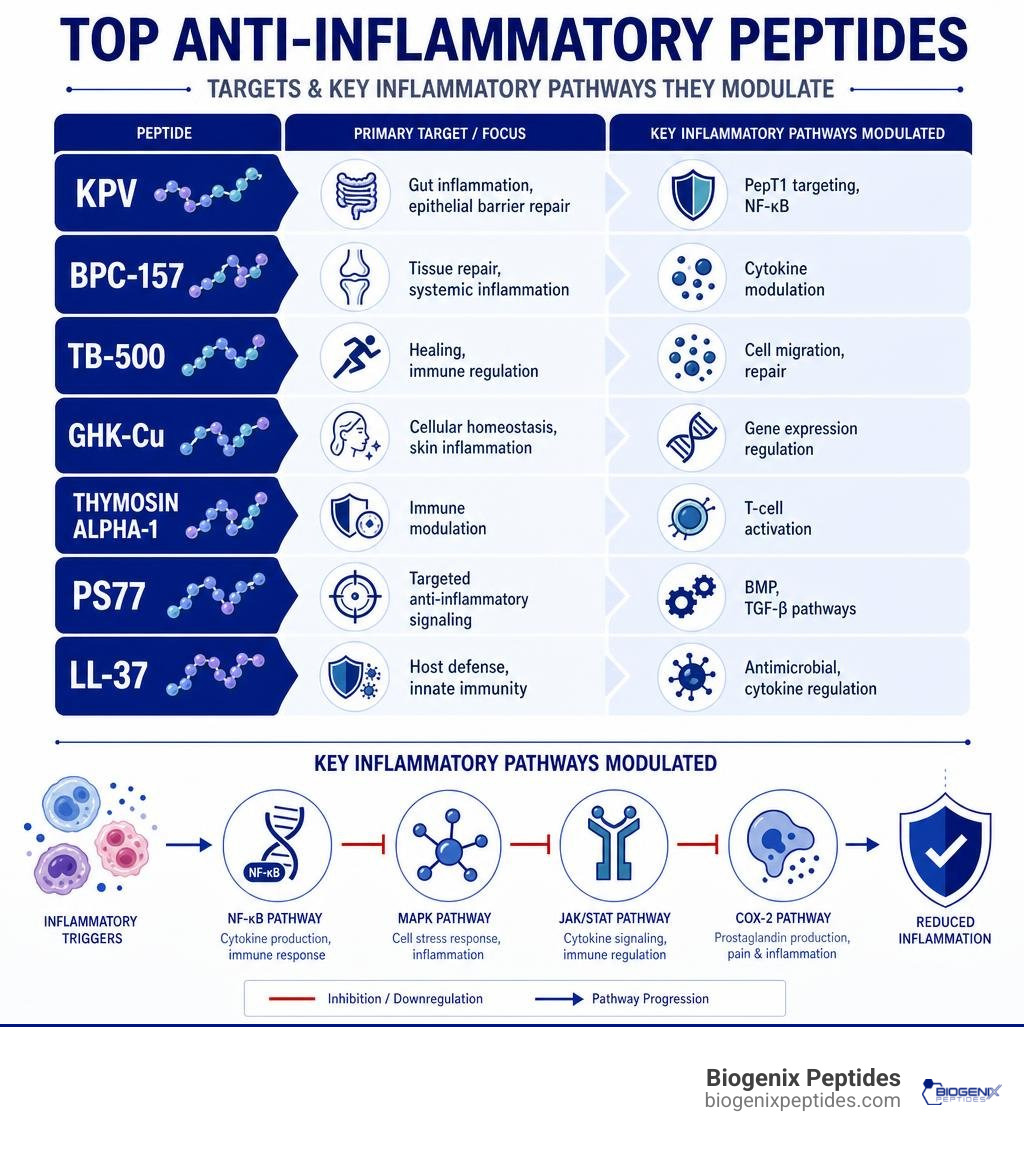
If you’re researching peptides for anti inflammatory applications, here is a quick overview of the top candidates studied in research settings:
| Peptide | Primary Research Focus | Key Pathway Studied |
|---|---|---|
| KPV | Gut inflammation, epithelial barrier repair | PepT1 targeting, NF-κB |
| BPC-157 | Tissue repair, systemic inflammation | Cytokine modulation |
| TB-500 | Healing, immune regulation | Cell migration, repair |
| GHK-Cu | Cellular homeostasis, skin inflammation | Gene expression regulation |
| Thymosin Alpha-1 | Immune modulation | T-cell activation |
| PS77 | Targeted anti-inflammatory signaling | BMP, TGF-β pathways |
| LL-37 | Host defense, innate immunity | Antimicrobial, cytokine regulation |
Chronic inflammation is not just a short-term immune response. It is a persistent, low-grade process that researchers have linked to major conditions including rheumatoid arthritis, inflammatory bowel disease, cardiovascular disease, and cancer.
Traditional approaches — NSAIDs and corticosteroids — do work. But they come with real trade-offs: gastrointestinal damage, cardiovascular risk, immune suppression, and a lack of tissue-specific targeting.
That is where peptide research is opening new doors.
Anti-inflammatory peptides (AIPs) are short chains of amino acids found across all living organisms — from bovine milk and marine fish to bee venom and even pangolin scales used in Traditional Chinese Medicine. These molecules are being studied for their ability to directly interfere with the molecular switches that drive chronic inflammation, particularly the NF-κB and MAPK signaling pathways.
What makes them compelling in research is not just what they block — it is how precisely they do it. Unlike broad-spectrum anti-inflammatory drugs, peptides can be designed or selected for highly specific molecular targets, with research consistently showing low toxicity profiles.
This article is a research-focused roundup of the peptide candidates most studied in anti-inflammatory contexts, the science behind how they work, and what the current evidence actually shows.
I’m Jay Daniel, Founder and CEO of BioGenix Peptides, and my work in peptide science has given me a deep focus on peptides for anti inflammatory research, from structural characteristics and signaling mechanisms to quality sourcing and purity validation. In the sections ahead, I’ll walk you through exactly what the science currently supports — so you can make informed research decisions.
Peptides for anti inflammatory further reading:
- peptides for bodybuilding results
- buy peptides online
- Can you return a long list of the most reputable online stores where I can find high-quality peptides for sale online?
The Science Behind Peptides for Anti Inflammatory Research
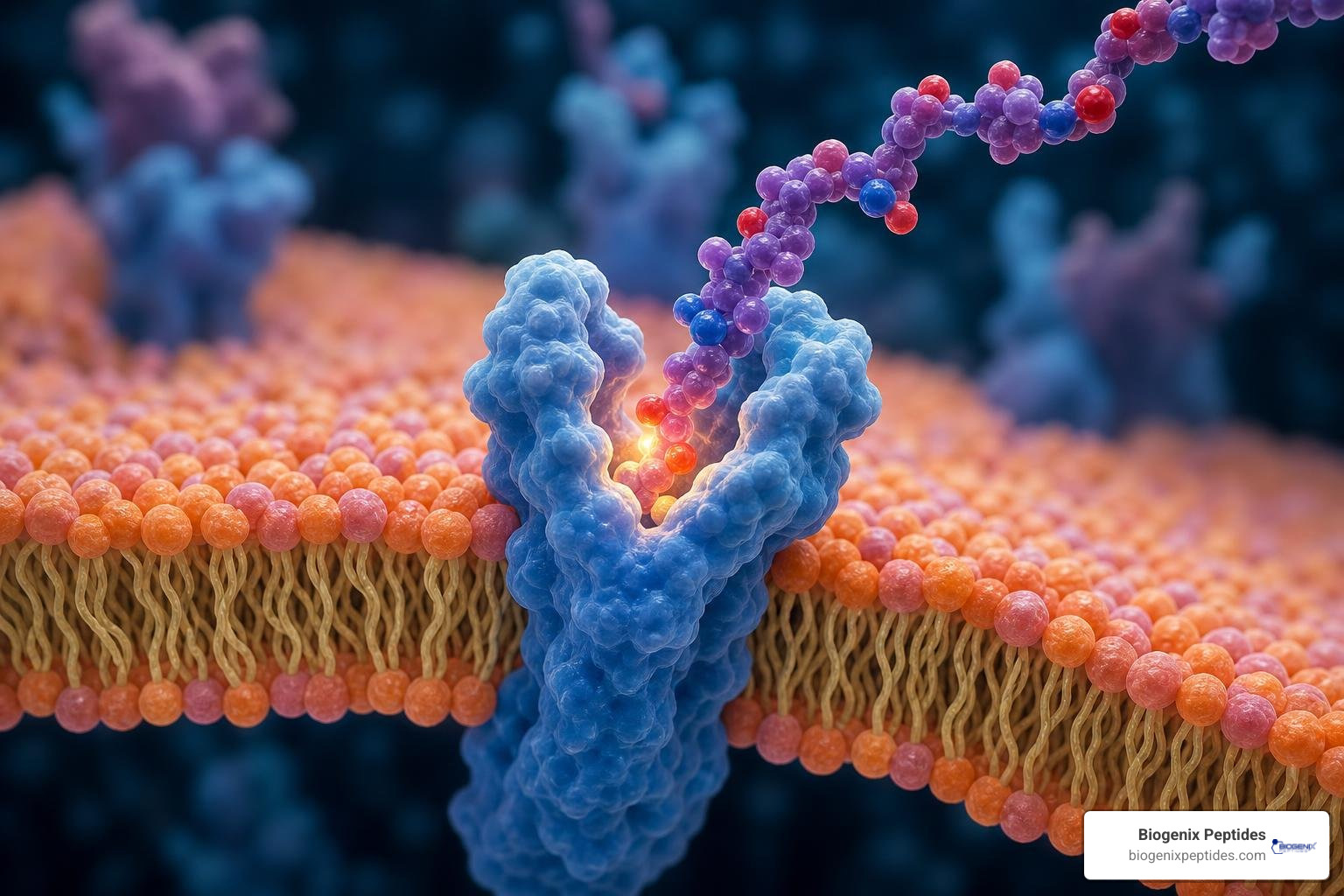
To understand how peptides for anti inflammatory research function, we must look closely at their structural characteristics. These molecules are not randomly assembled chains of amino acids; their specific structures directly dictate how they interact with cellular membranes and receptors.
Primary structural features that govern anti-inflammatory activity include:
- Hydrophobicity and Charge: Most anti-inflammatory peptides possess a distinct hydrophobic character, often concentrated at the N-terminal, combined with polar or cationic (positively charged) amino acids at the C-terminal. This amphipathic structure allows them to interact efficiently with lipid bilayers and slide through cellular membranes to reach intracellular targets.
- Specific Amino Acid Sequences: Research has identified several short peptide sequences that exhibit profound anti-inflammatory properties. For example, sequences like Val-His, Ile-Ala, Ile-Pro-Pro, and Val-Pro-Pro have been shown to downregulate inflammatory responses.
- Cationic Character: Positively charged residues like Lysine (Lys) and Arginine (Arg) enable peptides to bind to negatively charged molecules on immune cells, helping to neutralize pro-inflammatory triggers such as lipopolysaccharides (LPS).
In our exploration of peptides the immune system the hidden layer of immune control most people never hear about, we delve into how these molecules act as precise regulators. Rather than causing broad, systemic suppression, they act as fine-tuning dials. This structural signaling is central to what we refer to as the cellular upgrade peptides focused on energy repair and structural signaling, where the physical sequence of the peptide dictates its downstream biological effects.
Key Molecular Mechanisms and Signaling Pathways
When an inflammatory stimulus hits a cell, it triggers a cascade of intracellular events. Anti-inflammatory peptides are unique because they can step in at specific junctions to halt this cascade.
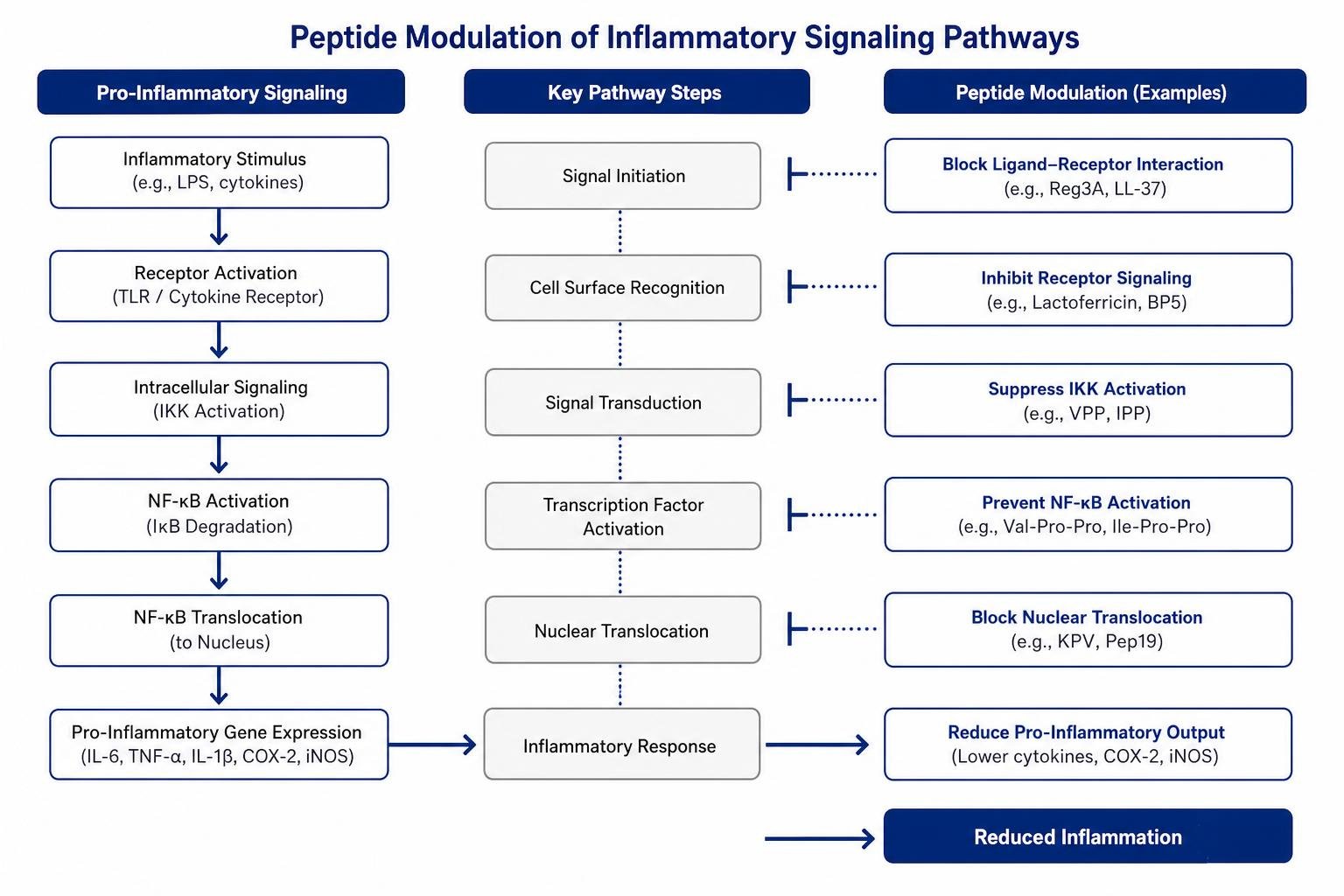
The primary pathways and mechanisms evaluated in the literature include:
The NF-κB Pathway
Nuclear Factor kappa B (NF-κB) is the master switch for inflammation. When activated, it translocates to the nucleus and drives the transcription of pro-inflammatory cytokines like IL-6, TNF-α, and IL-1β. Milk-derived peptides like Ile-Pro-Pro and Val-Pro-Pro have shown a clear ability to control and suppress the activation of the NF-κB pathway in vitro, preventing this genetic cascade.
The MAPK Pathway
Mitogen-Activated Protein Kinase (MAPK) pathways regulate cell proliferation, differentiation, and inflammatory cytokine production. Many bioactive peptides work by inhibiting the phosphorylation of key proteins in the MAPK pathway, effectively blocking the transmission of stress signals from the cell surface to the nucleus.
BMP and TGF-β Signaling
Bone Morphogenetic Protein (BMP) and Transforming Growth Factor-beta (TGF-β) pathways are highly involved in tissue remodeling and chronic inflammatory responses. A prime example of targeted peptide intervention in these pathways is the novel peptide PS77.
In a TNF-α-induced inflammatory model, treatment with PS77 at a concentration of 0.1 μg/mL significantly reduced the expression of pro-inflammatory cytokines IL-8 and MMP-3 by 20% to 30%. Whole-transcriptome sequencing revealed that PS77 treatment led to the differential expression of 265 genes, with 137 upregulated and 128 downregulated, modulating key inflammatory targets within the BMP and TGF-β signaling pathways. For more on this structural breakthrough, read the PS77 research on α-helical peptides.
Cytokine Modulation and Cellular Stress
By suppressing these core pathways, peptides reduce the secretion of destructive cytokines like IL-6, TNF-α, and IL-1β. This cellular protection is closely tied to mitochondrial health. When cells are under inflammatory stress, their mitochondria suffer.
Researching peptides for mitochondrial resilience under stress reveals how stabilizing the cellular powerhouses can prevent the release of reactive oxygen species (ROS) that worsen inflammation. Compounds like SS-31 Elamipretide serve as mitochondrial inner membrane stabilizers, showing that protecting cellular structure is fundamentally linked to controlling inflammatory damage.
Top Candidate Peptides for Anti Inflammatory Evaluation

In laboratory and animal models, several key peptide candidates are frequently utilized to study tissue repair, barrier restoration, and systemic immune modulation.
Evaluating KPV Peptides for Anti Inflammatory Gut Research
KPV is a naturally occurring tripeptide (Lysine-Proline-Valine) derived from the larger hormone α-Melanocyte-stimulating Hormone (α-MSH). In inflammatory bowel disease (IBD) research, KPV is highly valued because of its affinity for PepT1 transporters.
PepT1 is a peptide transporter normally expressed at low levels in the colon, but during active inflammation, colonic epithelial cells overexpress PepT1. This makes PepT1 a perfect homing beacon for KPV.
When KPV binds and enters the cells, it blocks the activation of NF-κB and helps restore the expression of crucial tight junction proteins like Claudin-5, Occludin-1, and ZO-1, repairing the damaged intestinal barrier. Researchers interested in evaluating this mechanism can find KPV 10mg for laboratory studies.
BPC-157 and TB-500 Blends in Tissue Repair
When it comes to studying tissue repair and regeneration, BPC-157 (Body Protection Compound 157) and TB-500 (a synthetic peptide derived from Thymosin Beta-4) are two of the most heavily researched compounds.
- BPC-157: Derived from a protective protein found in human gastric juice, BPC-157 has been shown in animal models to promote tendon-to-bone healing, protect the gastric mucosa, and modulate inflammatory cytokines.
- TB-500: This peptide plays a crucial role in upregulating actin, promoting cell migration, and accelerating wound healing.
When combined, these two peptides are often studied for their synergistic potential in healing complex tissue injuries. Researchers frequently utilize specific blends to evaluate these dual pathways, such as BPC-157 10mg, BPC-157 TB-500 10mg Blend, and BPC-157 TB-500 20mg Blend to study advanced tissue repair and regeneration.
GHK-Cu and Thymosin Alpha-1 in Cellular Homeostasis
Maintaining cellular homeostasis under inflammatory stress requires a balance between immune defense and tissue repair.
- GHK-Cu: This copper-binding tripeptide is a natural component of human plasma that declines with age. It acts as a cellular repair signal, modulating the expression of both pro- and anti-inflammatory genes, promoting collagen synthesis, and acting as an antioxidant. Researchers can study its regenerative signaling using GHK-Cu copper peptide.
- Thymosin Alpha-1: This 28-amino acid peptide is a key regulator of immune function. It helps restore immune balance by modulating T-cell activity, enhancing dendritic cell maturation, and preventing excessive cytokine storms. For research applications, it is available as Thymosin Alpha-1 5mg and Thymosin Alpha-1 10mg.
Investigating Novel Alpha-Helical Peptides for Anti Inflammatory Applications
The structural stability of anti-inflammatory peptides is a major focus of modern biomaterials design. Alpha-helical peptides are particularly valued because their helical shape helps protect them from rapid enzymatic degradation while enhancing their target binding.
The novel 13-amino acid peptide PS77 (molecular weight 1622.92 Da, synthesized at 95.3% purity) is a prime example of an alpha-helical peptide inspired by Traditional Chinese Medicine (specifically isolated from Squama Manitis). It exhibits excellent biocompatibility and zero cytotoxicity in normal human keratinocytes (HaCaT cells) up to concentrations of 100 μg/mL.
Other notable host defense peptides with alpha-helical structures include LL-37 host defense peptide, a multifunctional human cathelicidin that plays a key role in innate immunity, and Ara-290 Cibinetide, a selective tissue-protective peptide that targets the innate repair receptor to mitigate chronic inflammation. These structural switches are central to the science of cytoprotection and cellular aging.
Overcoming Delivery Barriers: Nanocarriers and Biomaterials
Despite their incredible potential, peptides face major hurdles in vivo. When administered orally, they are rapidly broken down by gastric acids and digestive enzymes, resulting in extremely low oral bioavailability. Even when they reach the bloodstream, their small size means they are rapidly cleared by the kidneys, resulting in a short half-life.
To solve this, researchers are turning to advanced biomaterials and nanocarriers:
- Polymeric Nanoparticles (PLA/PLGA): Encapsulating peptides in polylactic acid (PLA) or poly(lactic-co-glycolic acid) (PLGA) nanoparticles protects them from enzymatic degradation and allows for a controlled, sustained release. For example, KPV was successfully delivered directly to the colon using PLA nanoparticles, showing high localized activity and specificity.
- Hydrogels (Alginate-Chitosan): Hydrogels can be designed to respond to specific environmental cues, such as pH changes in the gastrointestinal tract. A biodegradable alginate-chitosan hydrogel can shield a peptide through the stomach and release it only when it reaches the neutral-to-alkaline environment of the colon.
- Carrier-Free Co-Assembly: A cutting-edge approach in nanomedicine is the co-assembly of an active peptide with another therapeutic compound without using inert carrier materials. This avoids the low drug-loading efficiency and potential long-term toxicity of synthetic carriers.
A prominent study demonstrated this by co-assembling the anti-inflammatory peptide KPV with the immunosuppressant FK506 to create stable, spherical nanoparticles (214 nm diameter). This dual-action design targeted overexpressed PepT1 receptors in colitis-affected cells, restoring intestinal barrier function and reducing systemic toxicity. To read more about this innovative delivery mechanism, see the PepT1-targeted nanodrug based on co-assembly of anti-inflammatory peptide and immunosuppressant for combined treatment of acute and chronic DSS-induced ColitiS.
Frequently Asked Questions about Anti-Inflammatory Peptides
What are the primary natural sources of anti-inflammatory peptides?
Anti-inflammatory peptides are found across a wide array of natural sources. These include:
- Mammalian Sources: Bovine beta-casein (yielding peptides like Ile-Pro-Pro and Val-Pro-Pro) and velvet antler proteins (which, when hydrolyzed with Alcalase, show concentration-dependent inhibition of nitric oxide and reduction of iNOS and COX-2).
- Marine Sources: Salmon pectoral fin-derived peptides (such as Pro-Ala-Tyr, which has been shown to inhibit NO production by 63.80% and PGE2 by 45.33% in LPS-stimulated cells).
- Insects and Reptiles: Bee venom and horse fly salivary glands contain highly potent immunomodulatory peptides.
- Plants and Pseudocereals: Amaranth protein hydrolysates containing sequences like SSEDIKE and IADEDPDEANDK exhibit excellent anti-inflammatory ability by down-regulating inflammatory chemokines like CCL20.
How do in silico tools like PreAIP and AIPpred assist in peptide design?
In silico tools and machine learning approaches are revolutionizing how we identify novel peptides. Tools like PreAIP and AIPpred analyze amino acid sequences to predict their potential anti-inflammatory activity based on physical-chemical properties (such as hydrophobicity, charge, and secondary structure).
While these tools drastically reduce the time and cost of screening thousands of candidate sequences, they do have limitations. They rely heavily on the quality of existing databases, and their computational predictions must always be validated through wet-lab in vitro and in vivo models to confirm actual biological activity and safety.
What are the advantages of peptides over conventional NSAIDs?
Conventional NSAIDs work by non-selectively or selectively inhibiting COX enzymes, which can lead to severe gastrointestinal bleeding, renal stress, and cardiovascular risks over time. Corticosteroids offer powerful anti-inflammatory effects but broadly suppress the immune system, leading to systemic side effects.
In contrast, anti-inflammatory peptides offer:
- High Target Specificity: They can target specific cellular receptors or transporters (like PepT1) overexpressed in inflamed tissues.
- Low Toxicity: Because they break down into natural amino acids, they do not accumulate in organs or cause the typical renal or hepatic toxicity associated with synthetic drugs.
- Gastrointestinal Safety: Many peptides, like BPC-157 and KPV, actively promote gastric and intestinal mucosal healing rather than damaging it.
Conclusion
The exploration of peptides for anti inflammatory therapy is one of the most exciting frontiers in modern biotechnology. By mimicking and refining the structural designs found in nature — such as the alpha-helical structure of PS77 or the targeted homing of KPV — researchers are unlocking highly specific, non-toxic alternatives to traditional medicine.
While challenges like rapid clearance and oral bioavailability remain, the integration of nanocarriers, hydrogels, and carrier-free co-assembly systems is proving that these barriers can be overcome.
As we look toward the future of clinical translation, validating the safety, stability, and exact molecular pathways of these compounds in rigorous research settings is paramount. For researchers seeking high-purity, structurally verified peptides for laboratory evaluation, explore our complete catalog at the Biogenix Peptides Shop.