
The Cellular Upgrade: Peptides Focused on Energy, Repair, and Structural Signaling
Disclaimer: This article is for educational and informational purposes only. BioGenix Peptides is not a licensed medical provider, and this content does not constitute medical advice, diagnosis, treatment guidance, or a recommendation for human use. All compounds discussed are intended for qualified research purposes only and are not for human consumption.
Peptide research has become one of the most interesting areas in modern biochemical science because it allows researchers to study biological communication at a highly specific level. Instead of looking only at broad outcomes, researchers are increasingly examining how peptides interact with cellular energy systems, structural proteins, mitochondrial signaling, extracellular matrix activity, and tissue-level communication pathways.
That is where the concept of the cellular upgrade comes in. This is not about hype, shortcuts, or exaggerated claims. It is about understanding how research peptides are studied at the cellular level, where energy production, repair signaling, oxidative balance, and structural maintenance all begin.
For researchers, this category includes some of the most discussed peptide research areas today: mitochondrial peptides, cellular energy peptides, structural signaling peptides, copper peptides, tissue research peptides, and targeted peptide fragments.
About the Author
I’m Jay D Daniel, Founder and CEO of BioGenix Peptides. Over the years, I’ve focused on understanding how peptide science is evolving — not just at the surface level, but deep within cellular systems. From sourcing and quality control to studying emerging research, my goal has always been to translate complex peptide science into something clear, practical, and grounded in real data.
Why Cellular-Level Peptide Research Matters
Every biological process begins at the cellular level. Energy production, protein turnover, oxidative stress response, collagen signaling, mitochondrial communication, and extracellular matrix remodeling all depend on tightly regulated cellular systems.
This is why researchers continue to study peptides that may interact with:
- Mitochondrial function
- Cellular energy signaling
- Oxidative stress pathways
- Extracellular matrix activity
- Collagen and elastin signaling
- Tissue repair models
- Lipid metabolism pathways
- Cellular resilience and adaptation
In simple terms, cellular peptide research is about studying how cells communicate, adapt, protect themselves, and maintain function under different biological conditions.
Mitochondria: The Energy System Behind Cellular Function
Mitochondria are often described as the powerhouses of the cell, but that phrase only scratches the surface. Mitochondria are involved in energy production, stress response, cellular signaling, metabolic regulation, and programmed cell activity.

Because mitochondria sit so close to the center of cellular performance, mitochondrial peptide research has become a major area of interest. Researchers are studying how certain peptides interact with mitochondrial membranes, energy regulation, oxidative balance, and cellular adaptation.
Two of the most discussed peptides in this category are MOTS-C and SS-31, also known as Elamipretide.
MOTS-C: A Mitochondrial-Derived Peptide Studied for Cellular Energy Signaling
MOTS-C is a mitochondrial-derived peptide that has been studied for its relationship to metabolic signaling, cellular stress response, and energy regulation. Unlike many peptides that are produced from nuclear DNA, MOTS-C is encoded within mitochondrial DNA, making it especially interesting to researchers studying mitochondria-to-nucleus communication.
In research settings, MOTS-C is often discussed in relation to:
- Mitochondrial communication
- Cellular energy regulation
- Stress-response pathways
- Metabolic signaling
- AMPK-related research pathways
- Cellular adaptation models
In simple terms, MOTS-C is being studied because it appears to be part of the way mitochondria communicate with the rest of the cell. That makes it highly relevant in research involving cellular energy, metabolic flexibility, and mitochondrial biology.
SS-31 / Elamipretide: Studied for Mitochondrial Membrane Interaction
SS-31, also known as Elamipretide, is another peptide frequently discussed in mitochondrial research. It has been studied for its interaction with cardiolipin, a phospholipid found in the inner mitochondrial membrane.
Cardiolipin plays an important role in mitochondrial structure and energy production. Because SS-31 has been studied in relation to mitochondrial membrane stability, researchers often examine it in models involving cellular efficiency, oxidative stress, and mitochondrial structure.
Research areas commonly associated with SS-31 include:
- Mitochondrial membrane research
- Cardiolipin interaction
- Oxidative stress models
- Cellular energy efficiency
- Mitochondrial structure and signaling
In simple terms, SS-31 is studied for how it may interact with the architecture of the mitochondria itself. That makes it different from peptides studied only for receptor signaling or broad pathway activation.

Structural Signaling Peptides: Research Beyond Energy
Not all peptide research is centered on mitochondrial energy. Some peptides are studied for their relationship to tissue structure, extracellular matrix signaling, collagen activity, elastin pathways, and repair models.
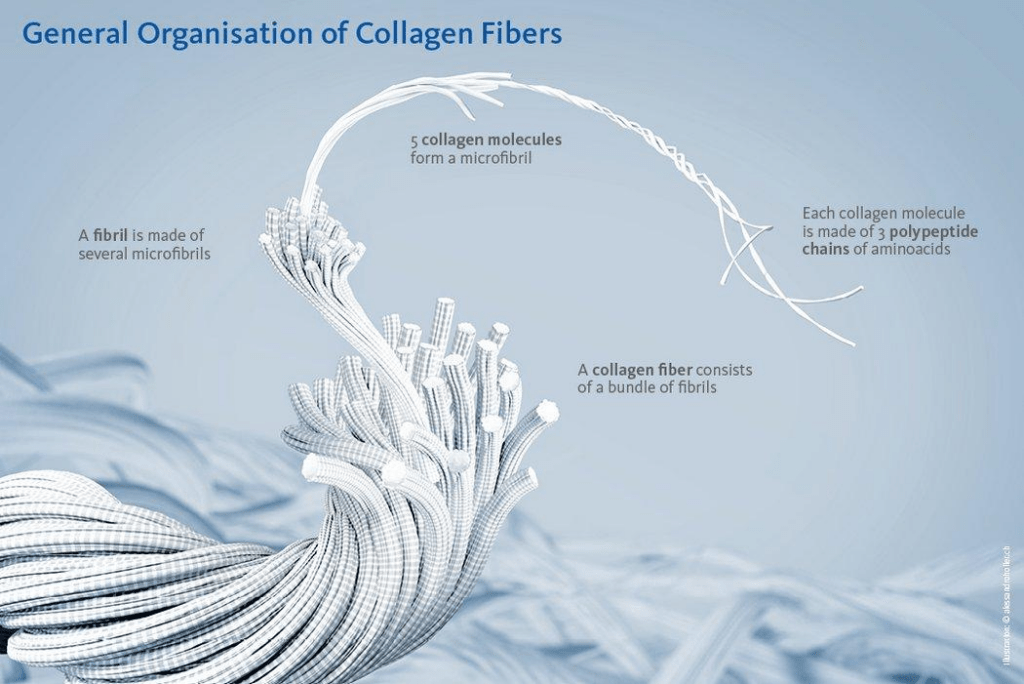
The extracellular matrix is the structural environment surrounding cells. It helps organize tissues, supports communication between cells, and plays a role in how tissues respond to stress or damage in research models.
This is where peptides such as GHK-Cu and BPC-157 are often discussed.
GHK-Cu: A Copper Peptide Studied for Matrix and Structural Signaling
GHK-Cu is one of the most recognized copper peptides in research literature. It is a naturally occurring copper-binding peptide that has been studied for its relationship to extracellular matrix signaling, collagen activity, skin research models, gene expression, and tissue remodeling pathways.
Common research areas involving GHK-Cu include:
- Extracellular matrix signaling
- Collagen-related research
- Elastin-related research
- Copper peptide activity
- Skin and tissue models
- Cellular repair signaling
In simple terms, GHK-Cu is studied because copper plays an important role in many biological processes, and this peptide may help researchers better understand how copper-binding peptides interact with tissue structure and cellular signaling.

BPC-157: Frequently Studied in Preclinical Tissue Models
BPC-157 is another peptide that appears frequently in preclinical research discussions. It has been studied in laboratory and animal models involving tissue signaling, gastrointestinal models, tendon-related research, and cellular repair environments.
For compliance and clarity, it is important to understand that BPC-157 research is still largely preclinical. That means much of the discussion comes from laboratory models rather than approved medical use.
Research areas commonly associated with BPC-157 include:
- Preclinical tissue models
- Cellular repair signaling
- Gastrointestinal research models
- Tendon and connective tissue models
- Angiogenesis-related research
In simple terms, BPC-157 is studied as part of tissue-signaling research, but it should be discussed carefully, accurately, and without overstated claims.

AOD-9604: A Targeted Peptide Fragment Studied for Lipid Pathway Research
AOD-9604 is a peptide fragment derived from a region of human growth hormone. Unlike full growth hormone, AOD-9604 has been studied as a fragment with a more targeted research focus.
Researchers have examined AOD-9604 in relation to lipid metabolism pathways, adipose tissue models, and peptide-fragment signaling. It is often discussed as an example of how smaller peptide fragments may be studied separately from the larger parent molecule.
Common research areas involving AOD-9604 include:
- Peptide fragment research
- Lipid metabolism models
- Adipose tissue research
- Growth hormone fragment studies
- Targeted pathway research
In simple terms, AOD-9604 is studied because it represents a more focused peptide-fragment approach, allowing researchers to examine specific pathway activity without discussing it as full growth hormone.
The Bigger Picture: Energy, Structure, and Cellular Communication
When researchers look at peptides through a cellular lens, three major categories begin to stand out:
1. Cellular Energy Peptides
These peptides are studied for their relationship to mitochondrial activity, energy signaling, metabolic communication, and cellular adaptation. MOTS-C and SS-31 are two of the most discussed examples in this category.
2. Structural Signaling Peptides
These peptides are studied for their relationship to extracellular matrix activity, collagen signaling, tissue models, and structural communication. GHK-Cu is one of the most recognized examples.
3. Targeted Peptide Fragments
These peptides are studied as specific fragments of larger molecules. AOD-9604 is often discussed in this category because it is a fragment studied separately from full growth hormone.
Simple Breakdown: What These Peptides Are Commonly Studied For
| Peptide Category | Examples | Common Research Focus |
|---|---|---|
| Mitochondrial Peptides | MOTS-C, SS-31 | Cellular energy, mitochondrial signaling, oxidative balance |
| Structural Signaling Peptides | GHK-Cu | Extracellular matrix, collagen signaling, tissue models |
| Preclinical Tissue Peptides | BPC-157 | Tissue signaling, repair models, cellular response research |
| Targeted Peptide Fragments | AOD-9604 | Lipid pathway research, adipose tissue models, fragment signaling |
Why Researchers Are Paying Attention to Cellular Peptide Categories
One reason this area continues to attract attention is that cellular systems are deeply connected. Mitochondrial function affects energy availability. Energy availability affects repair processes. Structural signaling affects tissue organization. Oxidative balance affects cellular resilience.
In other words, these systems do not operate in isolation. They communicate constantly.
That is why peptides studied for cellular energy, mitochondrial function, structural signaling, and tissue models are often discussed together. They represent different angles of the same larger question: how do cells maintain function, respond to stress, and coordinate repair?
Quality Matters in Research Peptide Sourcing
As interest in peptide research continues to grow, sourcing becomes increasingly important. Researchers need access to compounds that are clearly labeled, properly handled, and supported by transparent quality documentation.
At BioGenix Peptides, our focus is on research-grade peptide sourcing with attention to:
- Product identity
- Purity documentation
- Lot-specific information
- Clear labeling
- Protective packaging
- Research-focused education
- COA access where available
For researchers, transparency matters. A peptide is only useful in a research setting if the sourcing, handling, labeling, and documentation support confidence in the material being studied.
BioGenix Peptides: Driven by Science. Defined by Purity.
BioGenix Peptides was built around a simple idea: peptide research should be supported by clear education, transparent sourcing, and a serious commitment to quality.
Our goal is not to chase trends or make exaggerated claims. Our goal is to provide researchers with access to carefully sourced research peptides and educational content that explains the science clearly.
Whether the focus is mitochondrial peptide research, copper peptide research, structural signaling, cellular repair models, or peptide-fragment studies, the foundation is the same: science first.

Final Thoughts: The Cellular Lens Changes the Conversation
Peptide research becomes much more interesting when viewed at the cellular level. Instead of focusing only on surface-level categories, researchers can examine how peptides are studied in relation to energy production, mitochondrial communication, extracellular matrix signaling, tissue models, and targeted pathway research.
This cellular lens gives researchers a more complete way to understand peptides — not as isolated compounds, but as tools for studying biological communication.
As the field continues to develop, peptides focused on energy, repair, and structural signaling will likely remain important areas of scientific interest. For researchers, the value is in understanding the pathways, the mechanisms, and the quality of the materials being studied.
BioGenix Peptides — Driven by science. Defined by purity
References
- Zheng Y, et al. MOTS-c: A promising mitochondrial-derived peptide for disease research. PubMed.
- Tung C, et al. Elamipretide: A Review of Its Structure, Mechanism of Action, and Mitochondrial Research. PMC.
- Chavez JD, et al. Mitochondrial protein interaction landscape of SS-31. PubMed.
- Pickart L, et al. Regenerative and Protective Actions of the GHK-Cu Peptide. PMC.
- Ng FM, et al. Metabolic studies of a synthetic lipolytic domain of human growth hormone. PubMed.

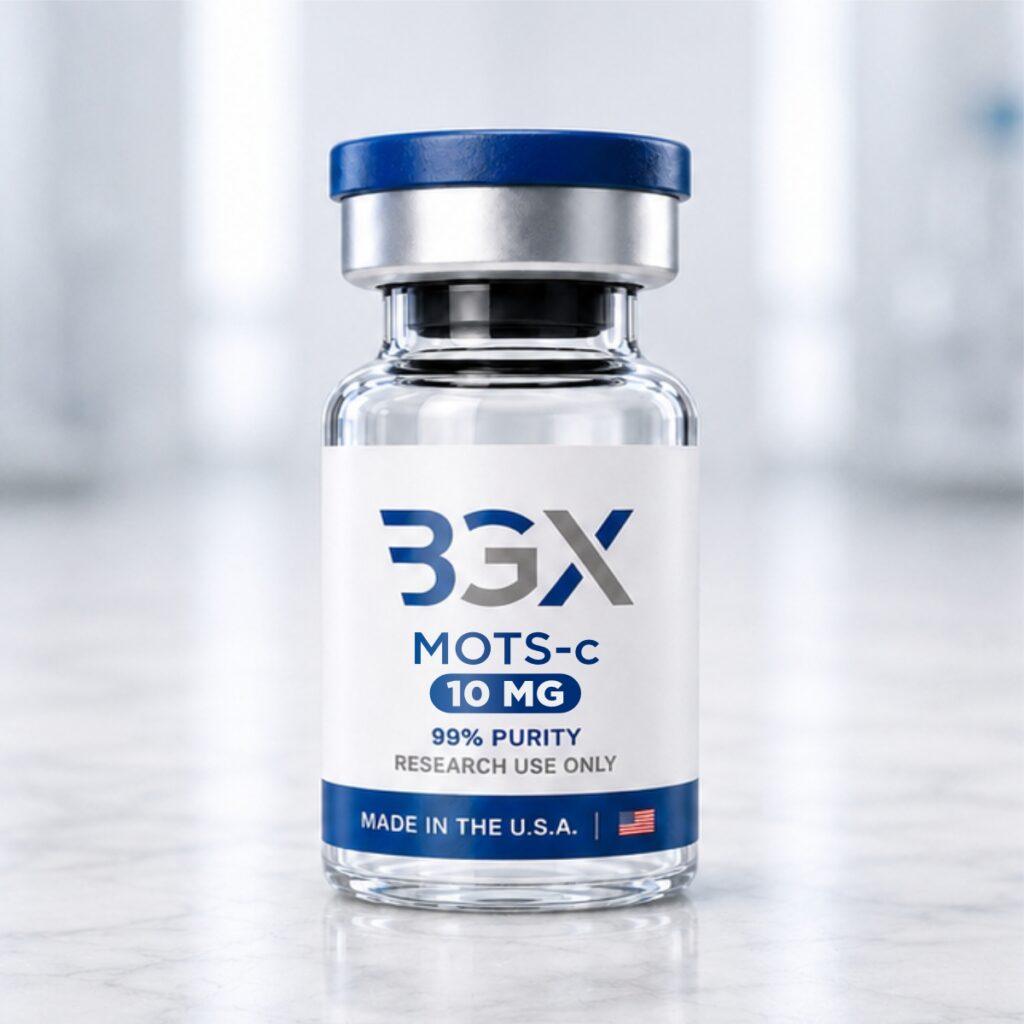
MOTS-c 10mg
MOTS-c (Mitochondrial Open Reading Frame of the 12S rRNA-c) is a 16–amino-acid peptide encoded within the mitochondrial 12S rRNA gene region. It belongs to the family of mitochondrial-derived peptides (MDPs) that function as retrograde signals, coordinating communication between mitochondria and the nucleus to influence metabolic and stress-response pathways. Under metabolic stress—such as glucose restriction or elevated oxidative load—MOTS-c has been observed to translocate to the nucleus, where it can modulate gene expression and support adaptive metabolic regulation.
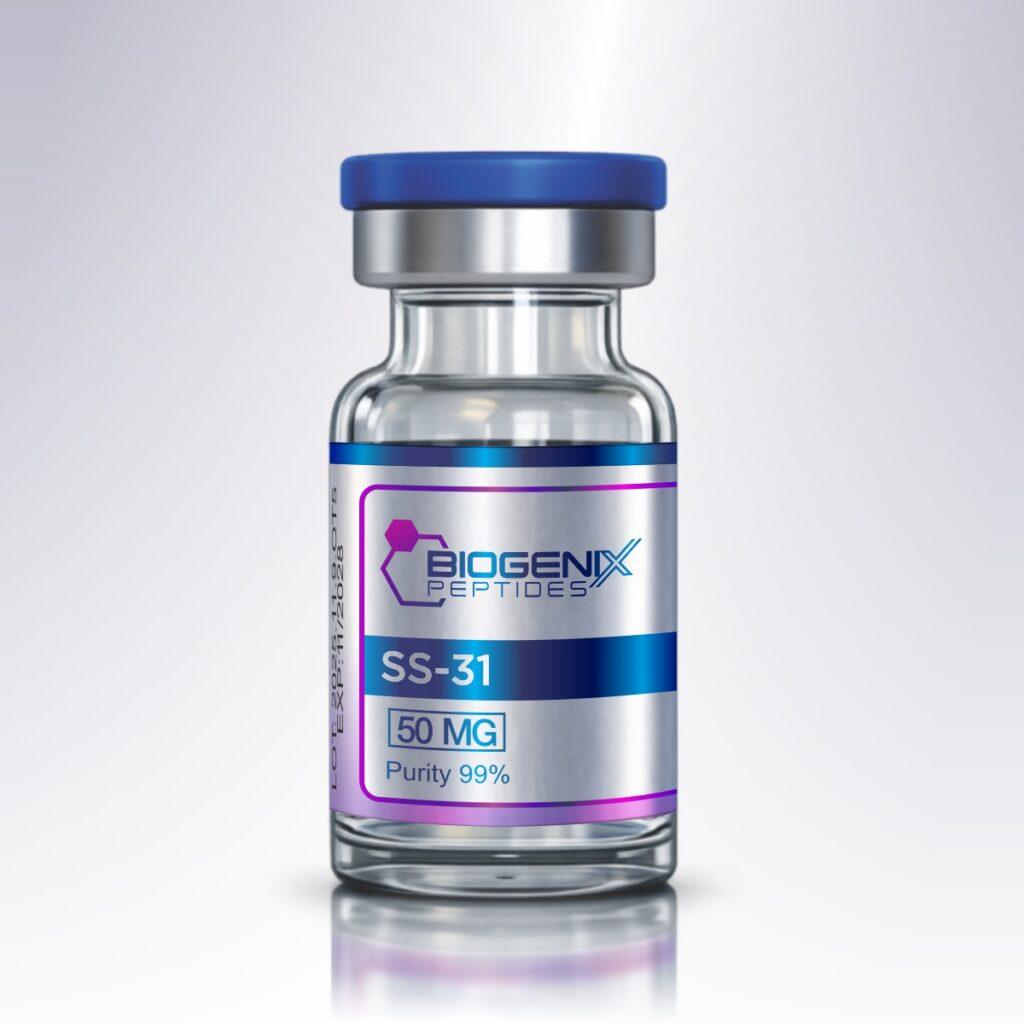
SS-31 50mg
SS-31 (Elamipretide) is a small synthetic peptide designed to target and protect the mitochondria—the “energy centers” of the cell. It binds to a mitochondrial lipid called cardiolipin, helping support healthier energy production, reduce oxidative stress, and maintain mitochondrial stability, especially in high-demand or aging tissues.Because SS-31 works inside the mitochondria rather than on surface receptors, it stands out from most traditional peptides. Research has explored its potential in areas such as energy metabolism, cardiovascular function, neuroprotection, and muscle performance, where…
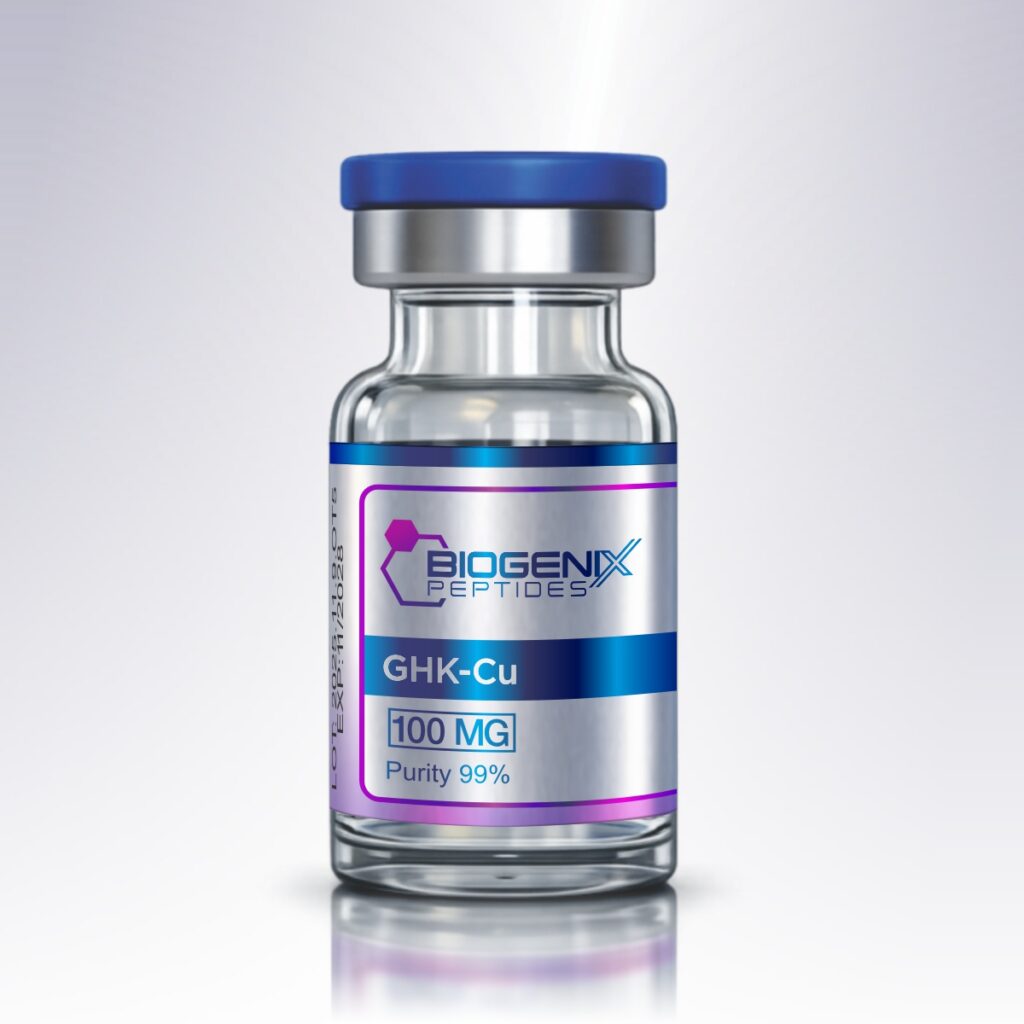
GHK-Cu 100mg
GHK-Cu is a naturally occurring copper-binding tripeptide composed of glycyl-L-histidyl-L-lysine chelated to copper (II). It is present in plasma and is released at injury sites, where it is proposed to influence extracellular matrix synthesis and tissue repair. Reported circulating concentrations decline with age (e.g., ~200 ng/mL at ~20 years to ~80 ng/mL by ~60 years). In vitro and in vivo studies have explored GHK (with and without copper) for roles spanning collagen dynamics, antioxidant defenses, wound healing, gene expression modulation,…
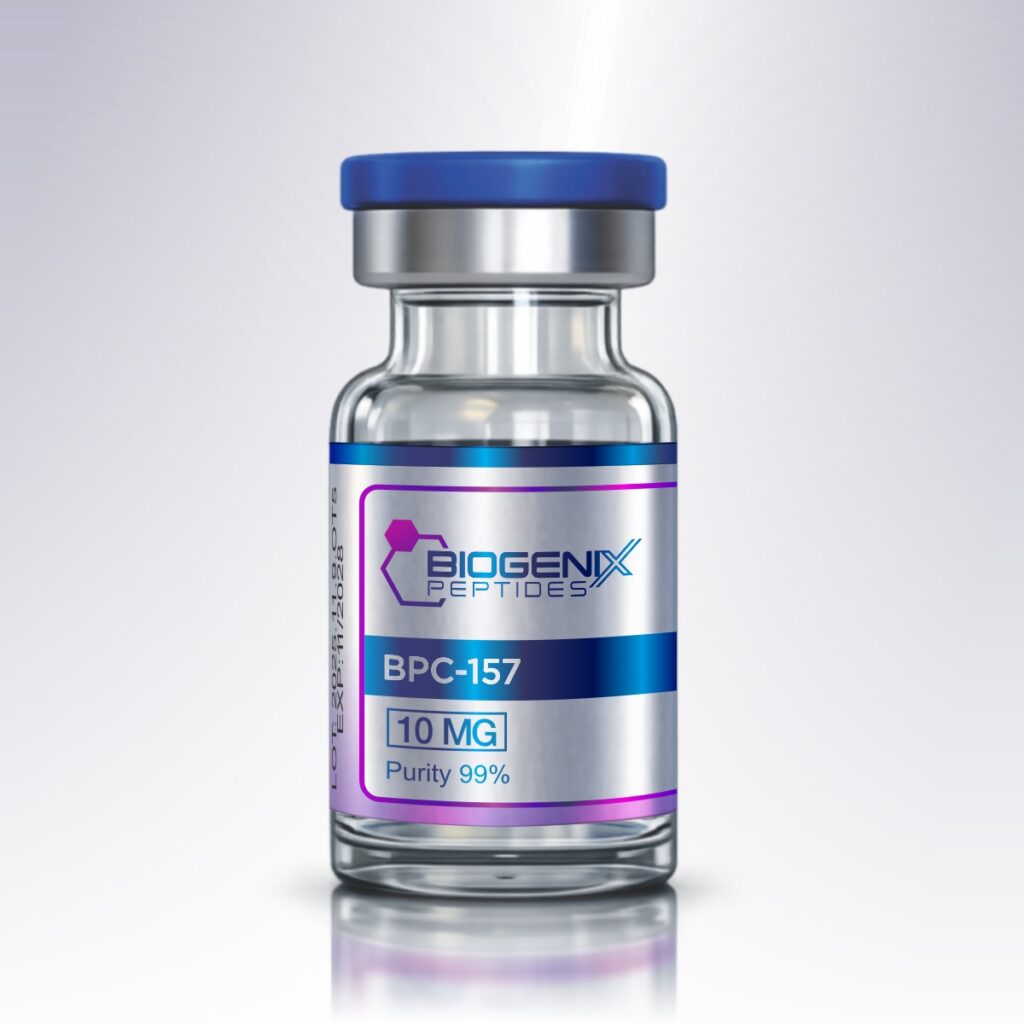
BPC-157 10mg
BPC-157, or Body Protection Compound-157, is a synthetic pentadecapeptide derived from a protective protein found in gastric juice. Originally isolated from gastric secretions, this 15-amino acid sequence has been extensively studied in preclinical research for its potential effects on tissue repair, angiogenesis, and cellular protection mechanisms. Research interest centers on its interaction with growth factor pathways and its reported influence on wound healing processes at the molecular level.