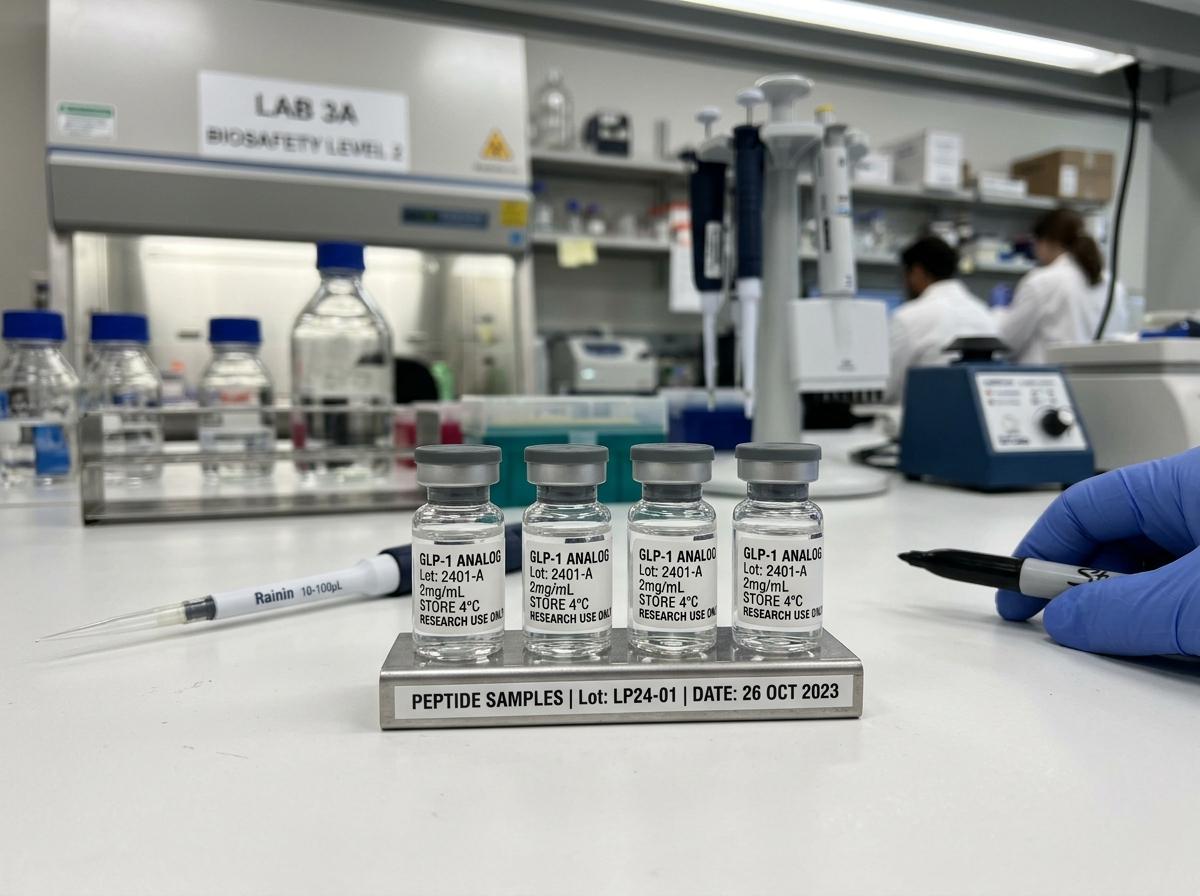
Beginner’s Guide to Buy Peptides Online
Disclaimer: The information provided in this article is for educational and informational purposes only. It is not intended as medical advice, diagnosis, or treatment. Products and compounds referenced are for research use only and are not approved for human or veterinary consumption. Always consult a qualified professional regarding health or medical decisions.
What You Need to Know Before You Buy Peptides Online
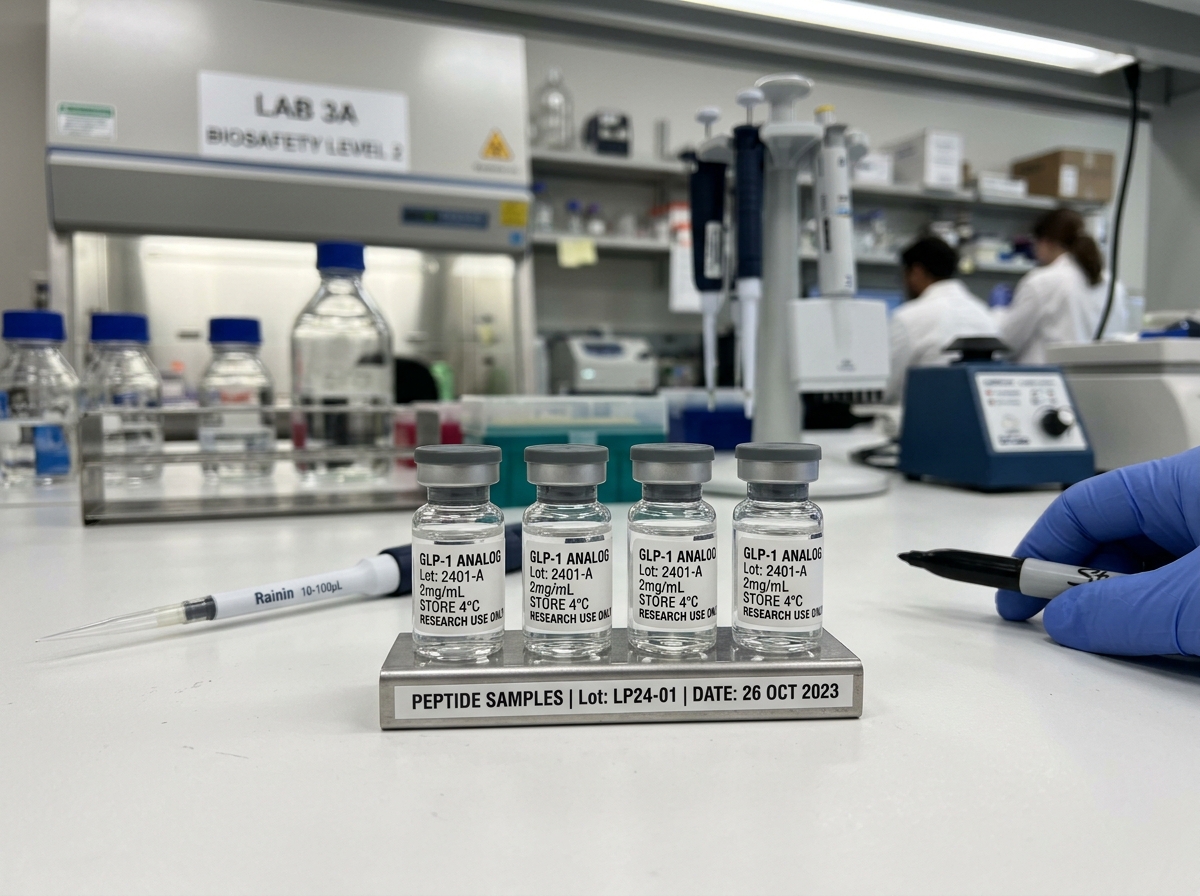
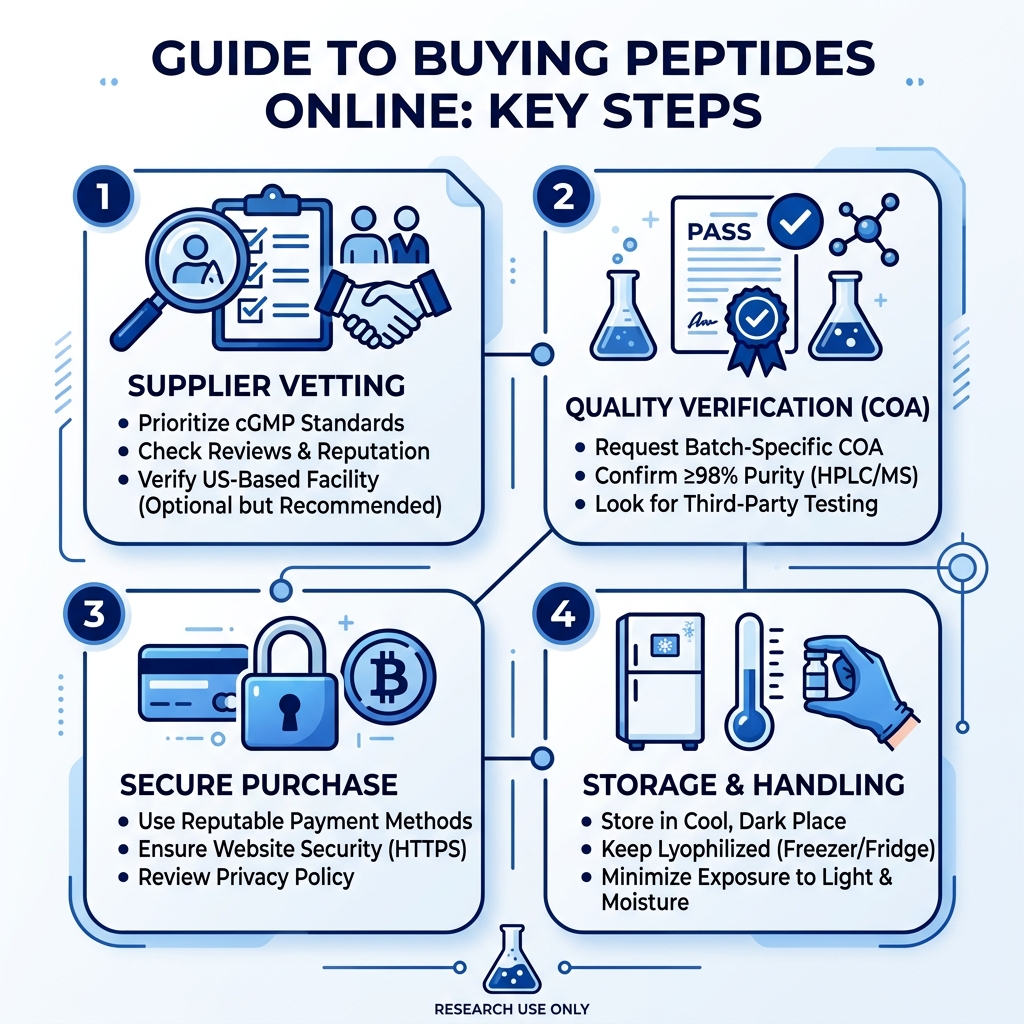
If you want to buy peptides online for laboratory research, here is a quick overview of what matters most:
- Purity: Look for suppliers offering ≥98% or ≥99% purity, verified by third-party testing
- Certificates of Analysis (COAs): Always confirm that batch-specific COAs are available before purchasing
- Manufacturing standards: Prioritize cGMP-certified, US-based facilities
- Legal status: Research peptides are legal to purchase in the USA when intended strictly for laboratory research — not for human or veterinary use
- Shipping: Domestic US suppliers offer faster, more reliable delivery and fewer customs risks
- Payment options: Reputable vendors accept credit cards, bank transfers, and cryptocurrency
The global demand for research peptides has grown significantly. Scientists, institutions, and independent researchers are sourcing peptides online for studies spanning tissue repair, metabolic function, cognitive signaling, and longevity research. But the online peptide market is crowded — and not every supplier meets the quality standards that serious research demands.
Finding a trustworthy source takes more than a quick search. Purity claims vary widely. Some vendors publish third-party test results; others do not. And for researchers who value privacy, navigating supplier websites loaded with tracking tools and aggressive data collection adds another layer of concern.
This guide cuts through the noise. It covers everything a researcher needs to evaluate suppliers, verify quality, understand legal requirements, and handle peptides correctly once they arrive.
I’m Jay Daniel, Founder and CEO of BioGenix Peptides, and my work in peptide sourcing, quality control, and research supply has given me a front-row seat to what separates reliable vendors from risky ones when you buy peptides online. In the sections ahead, I’ll share what I’ve learned so you can make confident, well-informed sourcing decisions.
Understanding Research Peptides and Their Scientific Applications

When we talk about research peptides, we are referring to short chains of amino acids linked by peptide bonds. These are essentially fragments of proteins that act as signaling molecules within biological systems. In a laboratory setting, these compounds are indispensable tools for exploring cellular pathways, hormone signaling, and protein interactions.
According to The Complete Guide to Peptides in Scientific Research, peptides are categorized based on their biological function and the specific research area they serve. For instance, some researchers focus on antimicrobial properties, while others investigate neurodegenerative diseases like Alzheimer’s using recombinant peptides such as Beta-Amyloid variants.
The synthesis of these compounds is a highly technical process. Most research-grade peptides are produced using Solid Phase Peptide Synthesis (SPPS). This method involves building the peptide chain from the C-terminus to the N-terminus on a solid resin support. Advanced techniques, such as microwave-assisted synthesis, have allowed for faster production times and higher yields, with some facilities able to produce custom sequences in as little as five business days.
In scientific studies, peptides are typically used in:
- In-vitro studies: Testing cellular responses in a controlled environment like a petri dish.
- Animal models: Observing systemic effects in vivo to understand metabolic or regenerative processes.
- Biochemical assays: Using peptides as substrates or inhibitors to measure enzyme activity.
Because these molecules are so specific in their action, even a minor variation in the amino acid sequence can completely alter the research outcome. This is why researchers must be incredibly diligent when they choose to buy peptides online.
How to Safely Buy Peptides Online for Laboratory Use
The digital marketplace for research chemicals can be a “Wild West.” To navigate it safely, we recommend a systematic approach to vetting suppliers. The goal is to ensure that the material you receive is exactly what is labeled on the vial, without contaminants or degraded sequences.
A primary consideration is the supplier’s location and infrastructure. Domestic USA-based suppliers are generally preferred because they must adhere to stricter business regulations and offer more reliable shipping timelines. When you source from overseas, you risk long transit times that can expose heat-sensitive peptides to degradation, not to mention the potential for customs seizures.
According to our Buying Guide, there are several key factors to evaluate:
- Domestic Shipping: Look for vendors who ship from within the U.S. to avoid international legal hurdles.
- Secure Payment Methods: Reputable sites offer secure gateways. While many use cryptocurrency due to the nature of the industry, the best vendors also provide options for bank transfers or “Credit Card to Crypto” services to make the process accessible.
- Customer Support: A vendor that responds quickly to technical questions about their products is far more likely to be legitimate than one with a broken contact form.
Identifying Trustworthy Sources to Buy Peptides Online
Trust is built on transparency. We believe that a supplier should never ask a researcher to “take their word for it.” Instead, they should provide evidence of their quality control.
- cGMP Manufacturing: The “Gold Standard” is sourcing from facilities that follow Current Good Manufacturing Practices. This ensures that the production process is consistent and documented.
- FDA-Registered Facilities: While the peptides themselves are for research use only, the facilities producing them should ideally be registered with relevant authorities to ensure basic laboratory safety and hygiene standards.
- Customer Reviews and Testimonials: Look for feedback from other scientists. With over 50,000+ 5-star reviews across the top tier of the industry, there is plenty of data to help you identify who delivers on their promises.
- Institutional Supply Capability: If a vendor is trusted by universities and biotech companies, it’s a strong indicator of their reliability.
Verifying Quality: Purity, COAs, and HPLC Testing
Quality verification is the most critical step in the procurement process. When you buy peptides online, the label on the vial is just a piece of paper; the true identity of the substance is found in the lab reports.
The industry standard for high-quality research is a purity level of at least 98%, though many premium suppliers now guarantee ≥99%. This is verified through two primary methods:
- HPLC (High-Performance Liquid Chromatography): This process separates the components of the peptide mixture to determine the percentage of the target peptide relative to impurities.
- Mass Spectrometry (MS): This verifies the molecular weight of the peptide, ensuring that the amino acid sequence is correct.
Understanding how to interpret these documents is vital. As explained in our guide on How to Read a Peptide COA, a Certificate of Analysis should be batch-specific. This means the report matches the exact lot number on your vial.
| Feature | Research-Grade Peptides | Standard/Crude Peptides |
|---|---|---|
| Purity Level | ≥98% to 99%+ | <70% to 85% |
| Testing | HPLC & Mass Spec provided | Often untested or self-graded |
| Contaminants | Screened for heavy metals/endotoxins | High risk of residual solvents |
| Consistency | Batch-to-batch reliability | Highly variable |
| Application | Sensitive biological assays | Preliminary screening only |
Why Purity Matters When You Buy Peptides Online
Inaccurate purity levels can lead to “noise” in your data. If a peptide is only 80% pure, the remaining 20% consists of truncated sequences, residual solvents, or salts like TFA (Trifluoroacetic acid).
- TFA Salts: Most peptides are synthesized using TFA, which can remain as a counterion. For certain biological assays, TFA can be toxic to cells, so researchers may need to request “TFA exchange” to replace it with acetate or hydrochloride.
- Net Peptide Content: It is important to distinguish between the total weight of the powder and the actual peptide content. Typically, net peptide content is 50-80% of the total weight due to retained water and counterions.
- Solubility Testing: High-quality vendors often provide solubility data, which helps researchers determine the best buffer or solvent for reconstitution without wasting material.
Popular Peptides in Modern Scientific Research
The landscape of peptide research is vast, but several compounds have emerged as “staples” in modern laboratories. These are often the first items researchers look for when they decide to buy peptides online.
- BPC-157 & TB-500: These are frequently studied in the context of regenerative medicine. BPC-157 (Body Protection Compound) is a pentadecapeptide investigated for its potential in tissue engineering and inflammation response. TB-500 (a synthetic version of Thymosin Beta-4) is often researched alongside it for its role in angiogenesis and cellular migration.
- CJC-1295 & Ipamorelin: These are popular in endocrinology and somatotropic signaling research. They are often studied as a blend to observe their synergistic effects on growth hormone secretagogue receptors. You can find these in our Best Sellers section.
- GLP-1 Analogs: This is currently one of the most active areas of Metabolic Research. Compounds like Semaglutide and Tirzepatide are being extensively studied for their effects on insulin secretion, gastric emptying, and appetite regulation.
- Neurocognitive Research Peptides: Peptides like Semax and Selank are at the forefront of neuropharmacology. Researchers use these to study neuroprotection, memory retention, and anxiety-response models in cellular environments.
For those interested in the latest trends, the GLP-1 Category continues to expand with newer analogs like Retatrutide, which targets multiple receptors (GLP-1, GIP, and Glucagon) for more complex metabolic studies.
Best Practices for Storage, Handling, and Reconstitution
Once you have successfully navigated the process to buy peptides online, the responsibility shifts to proper laboratory stewardship. Peptides are fragile molecules that can easily denature if handled incorrectly.
Storage and Stability
Peptides are typically shipped in a lyophilized (freeze-dried) powder form. In this state, they are relatively stable at ambient temperatures for short periods (during shipping), but long-term storage requires more stable environments.
- Up to two years: Refrigerate at 2-8°C.
- Light Sensitivity: Many peptides are sensitive to UV light and should be stored in amber vials or dark boxes.
For detailed parameters, refer to our Peptide Storage & Stability Guidelines.
Reconstitution Procedures
Reconstitution is the process of adding a liquid solvent (diluent) to the lyophilized powder to create a solution for research. This must be done with extreme care.
- Choose the Right Diluent: Most researchers use bacteriostatic water or sterile saline.
- Temperature Equilibrium: Allow the vial to reach room temperature before adding the diluent to prevent condensation inside the vial.
- Gentle Mixing: Never shake the vial. Instead, gently swirl it until the powder is fully dissolved. Shaking can create shear forces that break the delicate peptide bonds.
Our Reconstituting Lyophilized Peptides Step-by-Step guide provides a comprehensive walkthrough for laboratory staff to ensure consistency across experiments.
Legal Considerations and Compliance in the USA
In the United States, the legal framework for buying peptides is clear but strict. These compounds are sold under the classification of Research Use Only (RUO).
This means that while it is legal for a researcher or laboratory to buy peptides online, the products are not intended for human or veterinary consumption. They are not approved by the FDA for medical use, and any marketing that suggests otherwise is a significant red flag when choosing a vendor.
Key compliance points include:
- Non-Human Consumption: Reputable suppliers will always include disclaimers stating that the products are for laboratory research only.
- Institutional Procurement: Many suppliers, including us, facilitate orders for universities, private biotech firms, and independent research institutions.
- Customs and Regulations: By using a domestic US supplier, you ensure that your research materials comply with local laws and avoid the complexities of international “grey market” imports.
If you have specific questions about the administrative side of sourcing, our FAQ section covers topics like bulk discounts for institutions and our 60-day risk-free guarantee.
Frequently Asked Questions about Peptide Sourcing
What is the difference between 98% and 99% purity?
While it may seem like a small margin, in scientific research, that 1% can represent a significant reduction in unknown impurities. A 99% pure peptide has half the impurities of a 98% pure one. For highly sensitive assays or longitudinal animal studies, the higher the purity, the less likely you are to encounter confounding variables or unexpected toxicity from synthesis byproducts.
How should I store peptides upon arrival?
Upon arrival, we recommend storing lyophilized (freeze-dried) vials in a cool, dry environment away from direct light and heat. For longer-term storage, refrigeration at 2–8°C is generally recommended to help maintain stability. If you plan to use the product within a short period, maintaining consistent storage conditions is important. Once a peptide is reconstituted into liquid form, its stability window becomes significantly shorter and it should be kept refrigerated and used within approximately 30 days.
Are research peptides legal to purchase in the United States?
Yes, it is legal to buy peptides online in the USA for laboratory research purposes. The buyer is responsible for ensuring the compounds are used in a compliant manner within a research framework and are not administered to humans or animals outside of approved research protocols.
Conclusion
The ability to buy peptides online has revolutionized the speed of scientific discovery, giving researchers instant access to a vast library of signaling molecules. However, this convenience comes with the responsibility of rigorous vetting.
At Biogenix Peptides, we are committed to supporting the scientific community by providing pharmaceutical-grade compounds that meet the highest standards of purity and transparency. Whether you are conducting metabolic studies, exploring neuropharmacology, or investigating tissue repair, your results are only as good as the materials you use.
By prioritizing third-party testing, domestic shipping, and proper laboratory handling, we can ensure that the future of peptide research remains grounded in integrity and precision.
Ready to advance your research with compounds you can trust? Shop High-Purity Research Peptides at Biogenix Peptides today.