The Peptide Prescription: Do These Compounds Actually Build Muscle?
Disclaimer: The information provided in this article is for educational and informational purposes only. It is not intended as medical advice, diagnosis, or treatment. Products and compounds referenced are for research use only and are not approved for human or veterinary consumption. Always consult a qualified professional regarding health or medical decisions.
Do Peptides Actually Deliver Bodybuilding Results? Here’s What Research Shows
Research into peptides for bodybuilding results has grown significantly — but the gap between marketing claims and published science is wide.
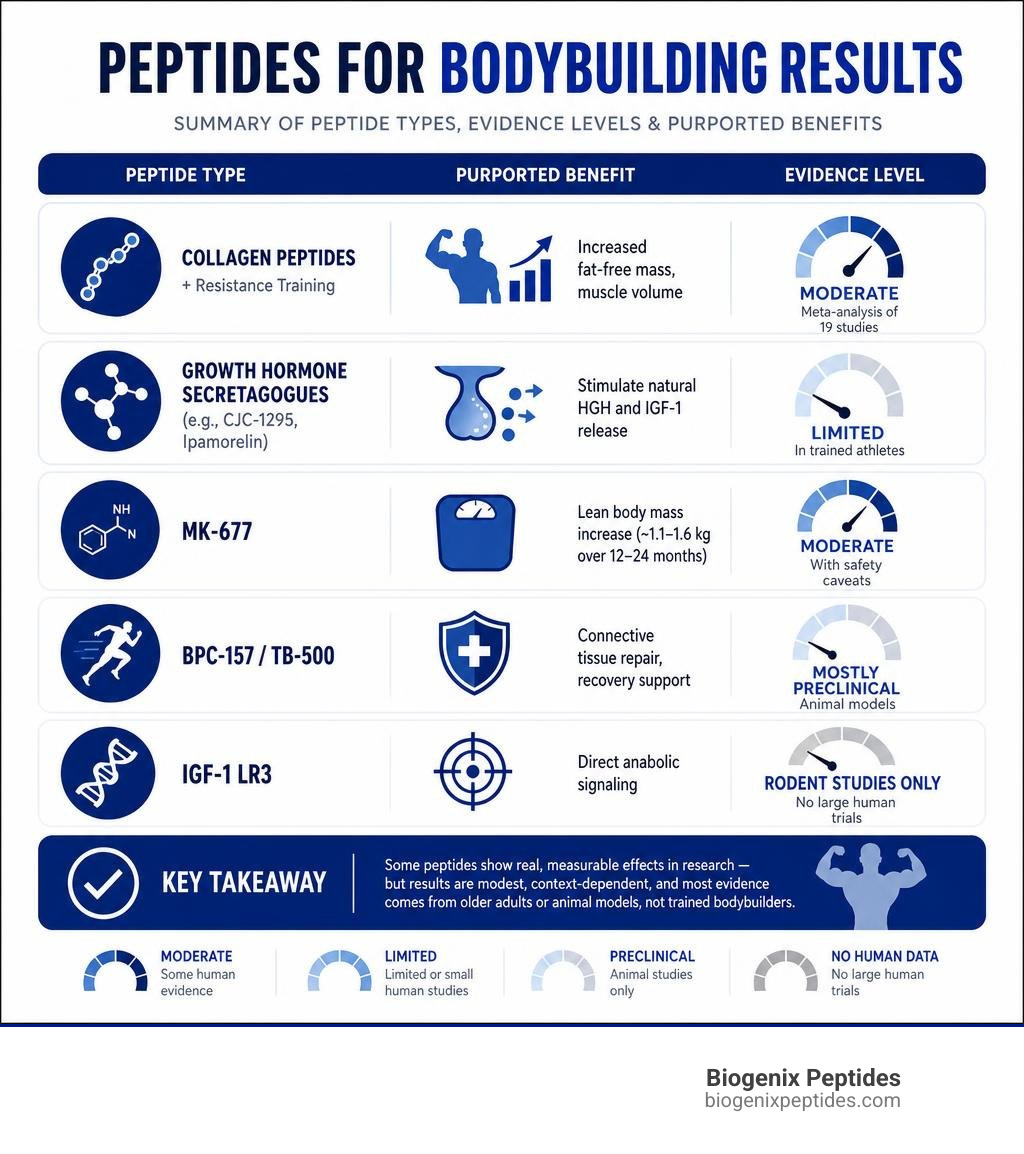
Here is a quick summary of what the current evidence actually supports:
| Peptide Type | Purported Benefit | Evidence Level |
|---|---|---|
| Collagen peptides + resistance training | Increased fat-free mass, muscle volume | Moderate (meta-analysis of 19 studies) |
| Growth hormone secretagogues (e.g., CJC-1295, Ipamorelin) | Stimulate natural HGH and IGF-1 release | Limited in trained athletes |
| MK-677 | Lean body mass increase (~1.1–1.6 kg over 12–24 months) | Moderate, with safety caveats |
| BPC-157 / TB-500 | Connective tissue repair, recovery support | Mostly preclinical (animal models) |
| IGF-1 LR3 | Direct anabolic signaling | Rodent studies only; no large human trials |
Key takeaway: Some peptides show real, measurable effects in research — but results are modest, context-dependent, and most evidence comes from older adults or animal models, not trained bodybuilders.
Peptides are short chains of amino acids. Unlike anabolic steroids, they do not introduce synthetic hormones directly into the body. Instead, they act as signaling molecules, prompting the body to produce or regulate its own hormones and biological processes.
The interest in peptides for athletic performance is not new. Growth hormone was banned for off-label use by the International Olympic Committee as far back as 1989. Today, growth hormone secretagogue peptides remain on the World Anti-Doping Agency’s (WADA) prohibited list — a signal that governing bodies take their potential effects seriously, even as clinical data in healthy, trained populations remains thin.
The honest picture is this: some compounds show genuine promise in research settings, others are almost entirely supported by animal studies, and a few are backed mainly by anecdote and marketing copy. Knowing the difference matters.
I’m Jay Daniel, Founder and CEO of BioGenix Peptides, with years of hands-on experience in peptide research, quality control, and laboratory science focused on compounds relevant to peptides for bodybuilding results. In this guide, I’ll walk you through what the research actually shows — separating evidence-backed findings from hype.
Simple guide to peptides for bodybuilding results terms:
What Are Peptides and How Do They Differ From Anabolic Steroids?
To understand how researchers evaluate peptides for bodybuilding results, we must first clarify what these compounds are. Peptides are short chains of amino acids, typically containing between 2 and 50 amino acids linked by peptide bonds. They exist naturally in every living organism and act as highly specific biological messengers.
When a peptide is introduced into a research model, it binds to specific receptors on the surface of cells, initiating a cascade of natural cellular signals. For example, some peptides can penetrate tissues deeply and influence complex systems, ranging from immune support to cholesterol reduction.
This mechanism of action is fundamentally different from that of anabolic-androgenic steroids (AAS). While steroids are synthetic derivatives of testosterone that enter the cell nucleus to directly alter gene transcription, peptides work via receptor-mediated signaling.
Let us break down the key differences in how these two categories function in laboratory settings:
| Feature | Peptides (Research Compounds) | Anabolic Steroids (Synthetic Hormones) |
|---|---|---|
| Mechanism | Binds to cell-surface receptors to trigger natural hormone release or cellular signaling pathways | Directly mimics testosterone, entering the cell nucleus to alter protein transcription |
| Hormonal Impact | Encourages natural, pulsatile secretion of hormones (like HGH) without shutting down the endocrine system | Introduces synthetic hormones, leading to severe suppression of natural testosterone production |
| Selectivity | Highly targeted to specific pathways (e.g., GH release, tissue repair) | Broad systemic androgenic and anabolic effects across multiple organ systems |
| Side Effect Profile | Generally milder; can include water retention, mild fatigue, or altered glucose tolerance | High risk of cardiovascular strain, liver toxicity, severe hormonal imbalances, and mood changes |
| Regulatory Status | Prohibited by WADA for competitive athletes; research-use only | Controlled substances; highly regulated and banned in professional sports |
Many researchers prefer studying peptides over steroids because they offer a gentler, more targeted approach to cellular optimization. Instead of forcing the body into an extreme, artificial hormonal state, peptides encourage the system to optimize its existing biological pathways. This makes them a fascinating area of study for cellular longevity, metabolic health, and tissue repair. For a deeper dive into these differences, you can read more on the scientific comparison of peptides and steroids.
Growth Hormone Secretagogues and Peptides for Bodybuilding Results
One of the most heavily researched areas of peptide science is the class of compounds known as Growth Hormone Secretagogues (GHS). These peptides are designed to stimulate the pituitary gland to secrete endogenous human growth hormone (HGH).
Unlike administering synthetic growth hormone directly—which can suppress the body’s natural production and cause severe side effects—GHS compounds work by mimicking the body’s natural signaling hormones. They trigger a pulsatile release of HGH, which subsequently stimulates the liver to produce Insulin-like Growth Factor 1 (IGF-1). The IGF-1 pathway is a primary driver of protein synthesis, cellular repair, and metabolic regulation.
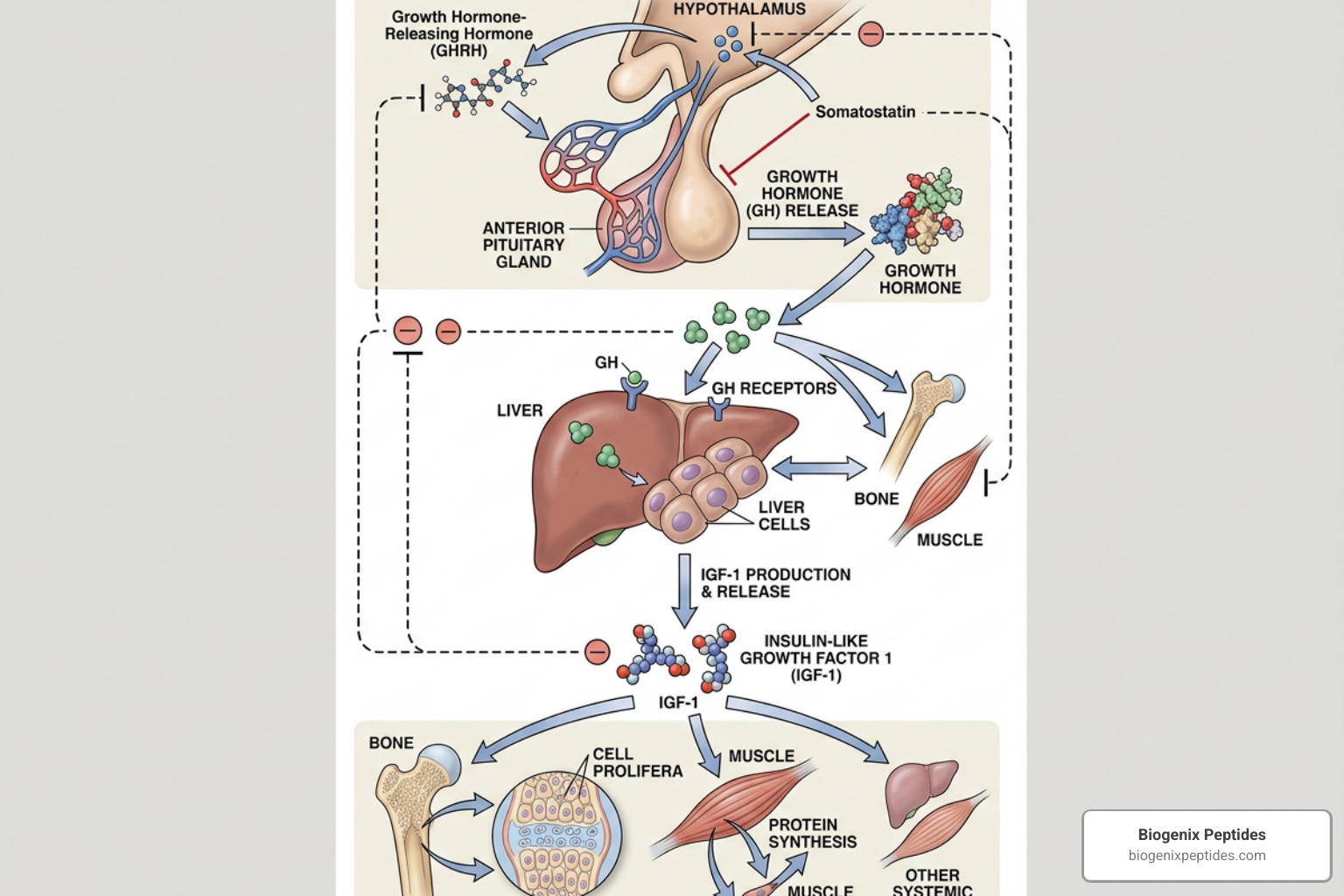
In metabolic research, maintaining optimal growth hormone levels is associated with reduced fat mass, improved recovery times, and the preservation of lean muscle tissue. For an exhaustive breakdown of how these mechanisms operate, check out our guide on research on growth hormone secretagogues.
CJC-1295 and Ipamorelin Protocols for Bodybuilding Results
In laboratory models, combining different classes of secretagogues often yields a synergistic effect. The most common combination studied is a Growth Hormone-Releasing Hormone (GHRH) analog paired with a Growth Hormone Releasing Peptide (GHRP).
- CJC-1295 (GHRH Analog): This compound mimics natural GHRH, signaling the pituitary gland to produce more growth hormone. Researchers often study CJC-1295 No DAC, which has a shorter half-life that aligns closely with natural growth hormone pulses. Understanding the distinction between versions is critical, as detailed in our analysis of CJC-1295 No DAC benefits.
- Ipamorelin (GHRP / Ghrelin Mimetic): Ipamorelin mimics ghrelin, binding to the growth hormone secretagogue receptor. It is highly selective, meaning it stimulates HGH release without significantly increasing appetite, cortisol, or prolactin.
When these two compounds are administered together in research models, they create a double-trigger effect. The GHRH increases the total pool of growth hormone, while the GHRP triggers the release of that pool. This cooperative action can result in a significantly larger pulse of growth hormone than either compound could achieve alone.
To explore how these protocols are structured in laboratory environments, researchers often reference the CJC-1295 advanced protocol to understand the precise timing and synergy required for optimal scientific observations.
Tesamorelin and Sermorelin in Metabolic Research
Other GHRH analogs frequently appearing in the literature include Tesamorelin and Sermorelin. Each has distinct properties that make them valuable for specific research applications:
- Tesamorelin: This peptide is highly regarded for its potent impact on body composition. In clinical trials, it has been shown to significantly reduce visceral adipose tissue (stubborn belly fat) while simultaneously supporting lean mass preservation. For a deep dive into the clinical data, read our review of Tesamorelin research findings.
- Sermorelin: As one of the earliest developed GHRH analogs, Sermorelin 5mg has a long history of clinical use. It is highly effective at promoting natural growth hormone pulses, making it a staple in research focused on anti-aging, metabolic health, and general vitality.
Cellular Growth Factors, Recovery Peptides, and Scientific Evidence
While growth hormone secretagogues focus on systemic hormone elevation, other peptides act directly on local tissues to promote cellular growth, proliferation, and structural repair. These compounds are of immense interest to researchers studying how to accelerate healing from strenuous training or injury.
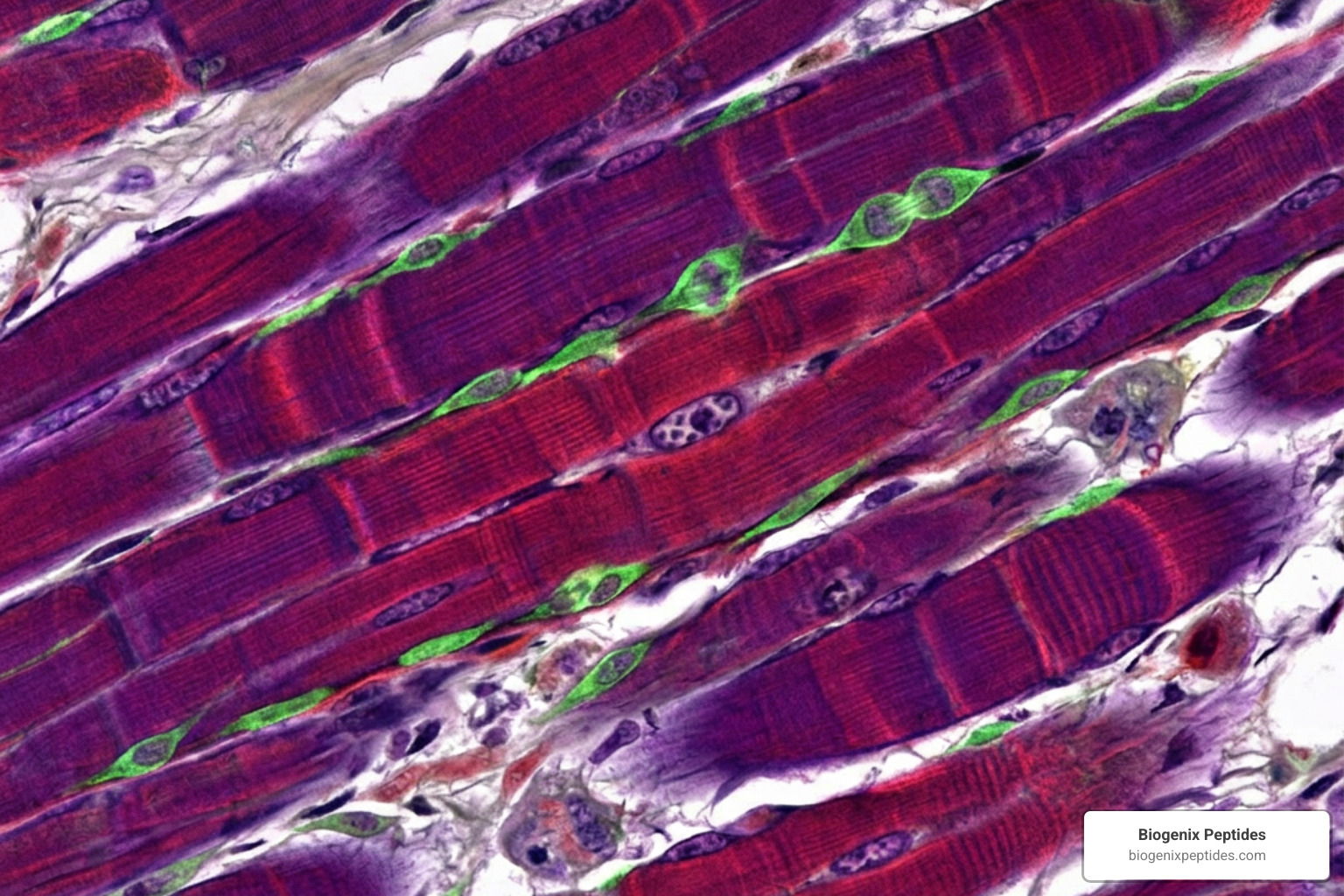
Understanding how these local growth factors operate is key to unlocking the true potential of peptide-based recovery. You can read more about these mechanisms in our muscle growth and performance research section.
IGF-1 LR3 and PEG-MGF in Muscle Tissue Research
Two of the most powerful local tissue regulators studied in laboratory settings are IGF-1 LR3 and PEG-MGF:
- IGF-1 LR3 (Insulin-like Growth Factor 1 Long Arg3): This is a highly potent synthetic analog of natural IGF-1. It has been structurally modified to prevent it from binding to binding proteins in the bloodstream, extending its half-life to approximately 20–30 hours (compared to just minutes for native IGF-1). In rodent models, IGF-1 LR3 1mg has been shown to be roughly 2.5 times more anabolic than native IGF-1, directly driving hyperplasia (the creation of new muscle cells) and satellite cell activation.
- PEG-MGF (Pegylated Mechano-Growth Factor): Mechano-Growth Factor is a splice variant of IGF-1 that is released locally in response to mechanical stress or tissue damage (such as resistance training). By adding a polyethylene glycol (PEG) molecule, researchers have created PEG-MGF 5mg, which survives much longer in local tissues. It works by signaling local stem cells to divide and fuse with damaged muscle fibers, accelerating repair and structural adaptation.
BPC-157 and TB-500 for Connective Tissue Repair
Perhaps the most exciting frontier in recovery science belongs to BPC-157 and TB-500. These peptides do not directly stimulate muscle hypertrophy, but they are highly valued for their potential to repair the structural “machinery” of the body—tendons, ligaments, and joints.
- BPC-157 (Body Protection Compound 157): Derived from a protein found naturally in human gastric juice, BPC-157 is a powerhouse of healing. Preclinical animal models show that it dramatically accelerates the repair of transected tendons, ligaments, and damaged muscles. It does this by promoting angiogenesis (the formation of new blood vessels) and increasing growth hormone receptor expression up to sevenfold in tendon fibroblasts. For a comprehensive look at why this peptide has captured the attention of the athletic community, read our article on BPC-157 research insights.
- TB-500 (Thymosin Beta-4 Fragment): This peptide plays a vital role in cellular migration, tissue repair, and reducing localized inflammation. It works in tandem with BPC-157 to rebuild damaged extracellular matrix molecules.
Because of their complementary mechanisms, researchers frequently study these two compounds together. Using a pre-formulated BPC-157 + TB-500 10mg Blend allows for the simultaneous observation of angiogenesis and cellular migration in tissue repair models.
Clinical Trials on Peptides for Bodybuilding Results
What does the hard, peer-reviewed science say about these compounds? When we look closely at clinical trials, the results are promising but require careful, objective interpretation.
For example, bioactive peptides derived from dietary sources (like whey hydrolysates or collagen) have shown robust, repeatable benefits in human trials. A comprehensive review of the bioactive peptides in sports nutrition highlights that certain dipeptides can activate the mTOR pathway and promote muscle protein synthesis more effectively than intact proteins or free amino acids alone.
Furthermore, a well-known meta-analysis of 19 clinical studies concluded that combining oral collagen peptide supplementation with structured resistance training significantly increased fat-free mass and quadriceps muscle volume compared to a placebo.
When it comes to peptide secretagogues, the human data is more nuanced:
- In a randomized, double-blind trial of 395 older adults, the secretagogue capromorelin significantly increased lean body mass over 6 months and improved physical performance markers like stair climbing.
- In a 12-week study of 300 patients, the fat-selective growth hormone fragment AOD-9604 led to an average weight loss of 2.8 kg (more than three times the placebo group), demonstrating its role in lipid metabolism.
However, researchers must note a major limitation in the current literature: almost all high-quality human clinical trials on GHS peptides have been conducted on elderly, obese, or growth-hormone-deficient populations. There is a distinct lack of large-scale, double-blind clinical trials examining these research compounds in young, highly trained, healthy athletes. To review the existing medical literature and its limitations, you can access this PubMed study on peptide efficacy.
Frequently Asked Questions about Peptides in Muscle Research
Are peptides considered anabolic steroids?
No. Peptides are short chains of amino acids that act as signaling molecules, binding to cell-surface receptors to encourage natural biological processes (such as hormone secretion or tissue repair). Anabolic steroids are synthetic derivatives of testosterone that enter the cell nucleus to directly alter gene transcription. Peptides do not shut down natural hormone production in the manner that anabolic steroids do.
How do growth hormone secretagogues affect natural hormone production?
Growth hormone secretagogues (like CJC-1295 and Ipamorelin) stimulate the pituitary gland to release its own stored growth hormone in natural, pulsatile waves. Because they work with the body’s feedback loops rather than bypassing them, they do not cause the severe endocrine suppression associated with direct synthetic hormone administration. However, prolonged or excessive research protocols can still temporarily desensitize pituitary receptors.
What does the research say about BPC-157 for tendon recovery?
Preclinical animal studies on BPC-157 show highly encouraging results, demonstrating accelerated healing of torn tendons, ligaments, and muscle tissue, largely due to enhanced blood vessel growth and fibroblast activity. However, large-scale, controlled human clinical trials are currently lacking. It remains classified as a research-only compound.
Conclusion
The scientific exploration of peptides for bodybuilding results reveals a fascinating landscape of cellular signaling, tissue repair, and metabolic optimization. While they do not produce the rapid, extreme muscle gains associated with anabolic steroids, they offer researchers a highly targeted, physiological approach to supporting recovery, fat loss, and tissue integrity.
As we look toward the future of sports science in June 2026, the demand for high-purity, laboratory-grade compounds for research purposes continues to rise. For researchers seeking to study these cellular pathways with the highest quality materials, we invite you to explore the extensive selection available at the Biogenix Peptides Shop.