
Retatrutide (GLP-3): The Triple Agonist Peptide Transforming Metabolic Research, Energy Regulation, and Body Composition Science
The information provided in this article is for educational and informational purposes only. BioGenix Peptides is not a licensed medical provider, and nothing contained herein should be interpreted as medical advice, diagnosis, or treatment. All products referenced are intended for research purposes only.
The Most Advanced Multi-Receptor Metabolic Peptide Currently Under Investigation
Retatrutide—frequently referred to as GLP-3—is rapidly becoming one of the most searched and discussed compounds in modern peptide research. As a triple agonist peptide, it represents a major evolution beyond traditional GLP-1 receptor agonists and even dual agonist compounds.
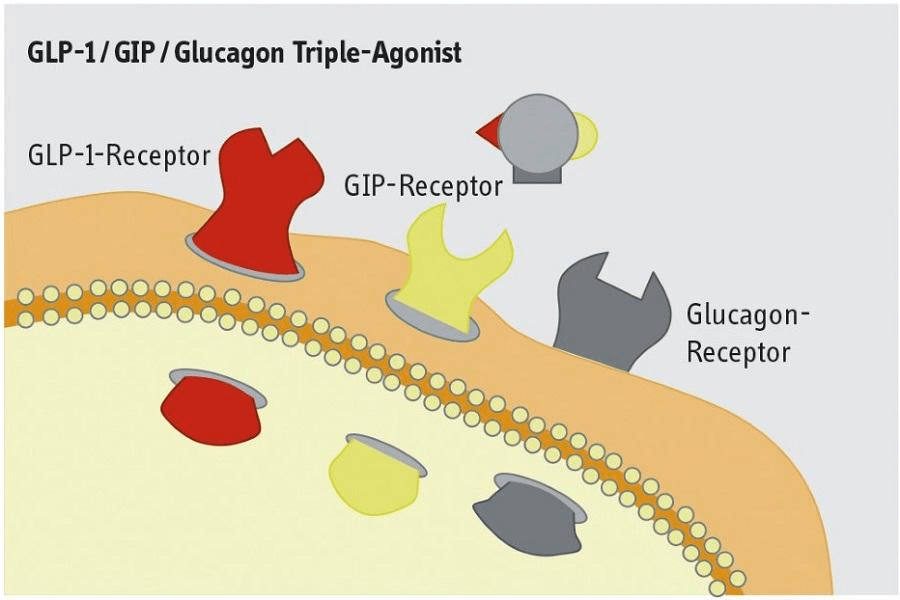
What makes retatrutide unique is its ability to simultaneously activate:
- GLP-1 receptors (appetite and glucose signaling)
- GIP receptors (metabolic efficiency and insulin signaling)
- Glucagon receptors (energy expenditure and metabolic output)
This three-pathway interaction places retatrutide in an entirely new category of next-generation metabolic peptides, often described as a “full-spectrum metabolic modulator.”
About the Author
I’m Jay D Daniel, Founder and CEO of BioGenix Peptides and a peptide research specialist with years of experience studying metabolic signaling, peptide sourcing, and quality control. My focus has always been on translating complex biochemical interactions into clear, usable insight—cutting through hype and focusing on what the science actually shows.
What Is Retatrutide? A True Triple Agonist Explained
Retatrutide is a synthetic peptide engineered to mimic and amplify naturally occurring metabolic hormones. Unlike earlier compounds that targeted a single receptor, retatrutide was designed to engage multiple metabolic control systems simultaneously.
This multi-receptor approach reflects a broader shift in metabolic research: moving away from isolated pathways and toward integrated system-wide signaling.
In Simple Terms
Imagine metabolism as a control panel with multiple switches. Older compounds flip one switch. Retatrutide flips several at once—potentially creating a more coordinated response.

The Science Behind Retatrutide: Multi-Receptor Pharmacology
GLP-1 Receptor Activity
GLP-1 is one of the most well-studied metabolic hormones. It plays a role in appetite signaling, gastric processes, and glucose regulation. Activation of GLP-1 receptors has been central to many metabolic research compounds.
GIP Receptor Activity
GIP works alongside GLP-1 and is believed to enhance metabolic signaling when both are activated together. Research suggests this combination may produce a more robust response than either pathway alone.
Glucagon Receptor Activity
Glucagon signaling is associated with energy mobilization and metabolic output. This pathway introduces a dynamic element not present in traditional GLP-1-only compounds.
Why the Combination Matters
The real significance of retatrutide lies in how these pathways interact. Instead of acting independently, they create a coordinated metabolic signaling network.
Energy Balance and Metabolic Efficiency
One of the most important areas of research surrounding retatrutide is its potential influence on energy balance.
Energy balance is governed by two primary factors:
- Energy intake (what goes in)
- Energy expenditure (what gets used)
Traditional compounds tend to focus on one side of this equation. Retatrutide’s triple agonist mechanism suggests it may influence both sides simultaneously.
In Simple Terms
Most approaches try to reduce input or increase output. Retatrutide is being studied because it may affect both at the same time.
Retatrutide vs GLP-1 vs Dual Agonists: A Structural Comparison
| Type | Receptors | Primary Focus | Complexity |
|---|---|---|---|
| GLP-1 Agonists | GLP-1 | Single pathway | Low |
| Dual Agonists | GLP-1 + GIP | Enhanced signaling | Moderate |
| Retatrutide | GLP-1 + GIP + Glucagon | System-wide modulation | High |
Why Triple Agonists Represent the Next Evolution
The move toward triple agonists reflects a broader understanding of metabolism as a network of interdependent systems.
Rather than isolating one pathway, newer research focuses on:
- Hormonal interplay
- Signal amplification
- System-wide metabolic coordination
Retatrutide is one of the first compounds to fully embody this approach.
Current Research Directions on Retatrutide
Ongoing research is exploring how retatrutide interacts with:
- Metabolic signaling pathways
- Energy regulation systems
- Hormonal balance networks
- Body composition dynamics
The complexity of these interactions is what makes retatrutide such a focal point in modern peptide science.
What Makes Retatrutide Different From Everything Before It
Retatrutide isn’t just an incremental improvement—it represents a shift in how peptide compounds are designed.
- Multi-receptor targeting instead of single focus
- Integrated metabolic signaling
- Broader research applications
- Higher systemic complexity
This positions it as a flagship compound in next-generation peptide research.
Common Questions About Retatrutide
Is Retatrutide the Same as GLP-1?
No. While it includes GLP-1 receptor activity, it also targets GIP and glucagon receptors, making it significantly more complex.
Why Is It Called GLP-3?
This is an informal term used to describe its triple agonist nature, not an official classification.
Why Is It Getting So Much Attention?
Because it represents a new direction in metabolic research—moving beyond single-pathway compounds.
Key Takeaways
- Retatrutide is a triple agonist peptide targeting GLP-1, GIP, and glucagon receptors
- It represents a major advancement in metabolic research design
- Its mechanism focuses on system-wide metabolic signaling
- It is one of the most rapidly emerging compounds in peptide science
Final Thoughts: The Future of Multi-Pathway Peptide Science
Retatrutide signals a shift toward integrated metabolic modulation—a direction that is likely to define the next era of peptide research.
As science continues to evolve, understanding how multiple pathways interact will be essential for interpreting the future of metabolic compounds.
At BioGenix Peptides, we remain committed to delivering clarity, quality, and science-driven insight in an increasingly complex field.

RT (GLP-3 RT) 10mg
GLP-3 RT is an investigational multi-agonist peptide engineered to activate three metabolic hormone receptors—GLP-1, GIP, and glucagon—positioning it as a next-generation “triple agonist.” In research settings, it has been examined for its potential influence on appetite regulation, energy utilization, and body-weight–related endpoints. Chemically, GLP-3 RT is a long-acting incretin-mimetic designed to co-activate GLP-1R, GIPR, and GCGR, enabling coordinated engagement of complementary metabolic pathways. Studies have explored its combined effects on glucose homeostasis, gastric emptying, insulin dynamics, lipolysis, and energy expenditure within controlled experimental models.
In Stock

RT (GLP-3 RT) 20mg
GLP-3 RT is an investigational multi-agonist peptide engineered to activate three metabolic hormone receptors—GLP-1, GIP, and glucagon—positioning it as a next-generation “triple agonist.” In research settings, it has been examined for its potential influence on appetite regulation, energy utilization, and body-weight–related endpoints. Chemically, GLP-3 RT is a long-acting incretin-mimetic designed to co-activate GLP-1R, GIPR, and GCGR, enabling coordinated engagement of complementary metabolic pathways. Studies have explored its combined effects on glucose homeostasis, gastric emptying, insulin dynamics, lipolysis, and energy expenditure within controlled experimental models.
In Stock

RT (GLP-3 RT) 30mg
GLP-3 RT is an investigational multi-agonist peptide engineered to activate three metabolic hormone receptors—GLP-1, GIP, and glucagon—positioning it as a next-generation “triple agonist.” In research settings, it has been examined for its potential influence on appetite regulation, energy utilization, and body-weight–related endpoints. Chemically, GLP-3 RT is a long-acting incretin-mimetic designed to co-activate GLP-1R, GIPR, and GCGR, enabling coordinated engagement of complementary metabolic pathways. Studies have explored its combined effects on glucose homeostasis, gastric emptying, insulin dynamics, lipolysis, and energy expenditure within controlled experimental models.
In Stock