
How to Safely Buy Larazotide Acetate Online
Disclaimer: The information provided in this article is for educational and informational purposes only. It is not intended as medical advice, diagnosis, or treatment. Products and compounds referenced are for research use only and are not approved for human or veterinary consumption. Always consult a qualified professional regarding health or medical decisions.
What Is Larazotide Acetate (AT-1001)?
To buy larazotide acetate for research, start by checking the supplier’s batch-specific certificate of analysis. Confirm the compound’s CAS number, 881851-50-9, its stated purity, and its storage and shipping requirements. Before checkout, review the seller’s privacy policy if you want to limit how your personal data is collected. Larazotide acetate, also called AT-1001, is an investigational peptide studied strictly for research purposes, not a product for personal use.
I’m Jay Daniel, founder and CEO of BioGenix Peptides. My experience in peptide sourcing and quality control informs this larazotide acetate buy guide and the checks that follow.
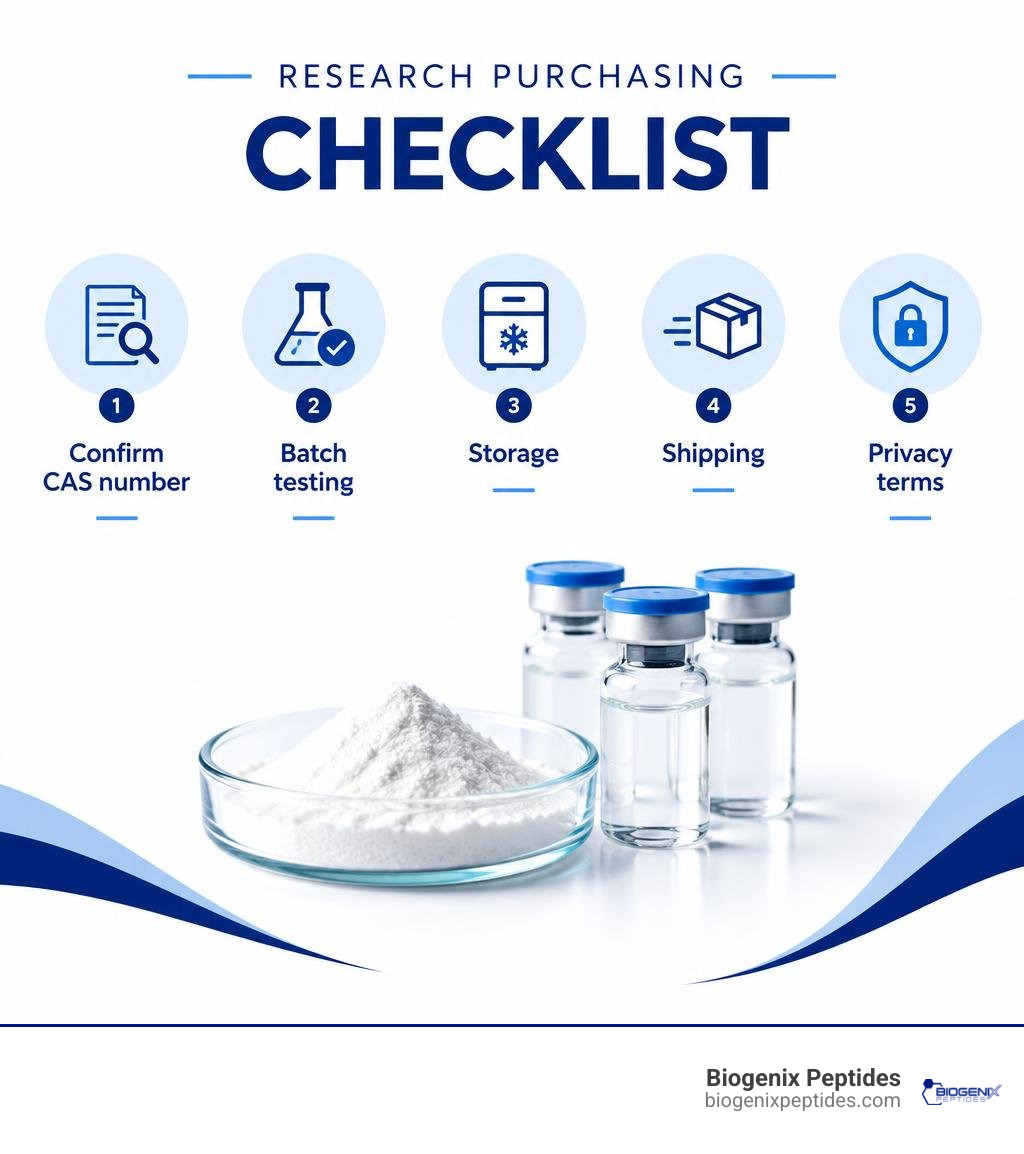
Simple guide to larazotide acetate buy:
Larazotide acetate, known in the scientific literature as AT-1001, is a synthetic octapeptide that functions primarily as a zonulin receptor antagonist and a selective tight junction modulator. In mucosal biology, the intestinal epithelial barrier relies on dynamic protein networks to permit the selective absorption of essential nutrients while blocking the paracellular transit of harmful luminal macromolecules, dietary antigens, and pathogens.

When gut homeostasis is perturbed, excessive zonulin secretion triggers intracellular signaling cascades that dislodge junctional proteins, widening the paracellular pathway. Larazotide acetate was engineered specifically to competitively bind zonulin receptors, preventing the disassembly of these mucosal junctions. In research models, this molecular mechanism reinforces intestinal epithelial integrity and mitigates pathological hyperpermeability.
Chemical Profile and Structural Properties
Understanding the analytical constants of this compound is fundamental for laboratory inventory and quality assurance. As a synthetic research reagent, larazotide acetate exhibits the following physical and chemical characteristics:
- CAS Registry Number: 881851-50-9
- Molecular Formula: C34H59N9O12 (free base)
- Molecular Weight: 785.89 g/mol (acetate salt) / 725.83 g/mol (free base)
- Chemical Synonyms: AT-1001, Larazotide, F-1001
- Physical Appearance: White to off-white lyophilized solid powder
- Purity Specifications: Available from research vendors at 95% (HPLC) purity up to 99%+ analytical grades.
Mechanism of Action in Intestinal Permeability
The biological mechanism of larazotide acetate centers on preventing tight junction breakdown. Under inflammatory or gluten-induced stress, endogenous zonulin activates epidermal growth factor receptor (EGFR) and proteinase-activated receptor 2 (PAR2) signaling pathways, resulting in actin cytoskeletal rearrangement and the internalization of zonula occludens-1 (ZO-1) and occludin.

Larazotide acetate binds competitively to the target mucosal surface receptors. By preventing zonulin interaction, it blocks the downstream phosphorylation cascade. This preserves actin microfilament architecture and keeps ZO-1 localized at the apical intercellular junction, preventing paracellular leakage across epithelial cell sheets.
Clinical and Preclinical Research Applications
Scientific interest in larazotide acetate spans gastroenterology, immunology, and virology. Researchers investigating autoimmune pathogenesis, inflammatory bowel disorders, and mucosal barrier dysfunction utilize the peptide to model epithelial barrier restoration.
Clinical Trial Findings: Phase IIb Celiac Disease Studies
The most extensive clinical evaluation of AT-1001 focused on its potential as an adjunct to a strict gluten-free diet in patients with persistent gastrointestinal symptoms (Leffler et al., 2015). In a multicenter, randomized, double-blind, placebo-controlled Phase IIb clinical trial, investigators assessed the peptide’s ability to reduce ongoing symptoms using the Celiac Disease Patient Reported Outcome (CeD-PRO) and Gastrointestinal Symptom Rating Scale (CeD-GSRS).
The trial demonstrated several noteworthy findings:
- The 0.5 mg intervention given three times daily prior to meals successfully met the primary endpoint (ANCOVA p=0.022, MMRM p=0.005).
- Researchers noted a 26% reduction in CeD-PRO gastrointestinal symptomatic days (p=0.017) and a 31% increase in improved symptom days (p=0.034).
- The trial recorded an inverted or non-linear concentration-response curve: higher amounts (1 mg and 2 mg) did not demonstrate statistically significant improvements over placebo.
- Non-gastrointestinal manifestations, including fatigue and headache, showed parallel reductions, underscoring the systemic relationship between gut permeability and extra-intestinal symptoms.
In Vitro and In Vivo Barrier Permeability Findings
Beyond clinical trial data, laboratory investigations have detailed how AT-1001 performs across diverse experimental models:
- Caco-2 Monolayer Cultures: When intestinal cell cultures are challenged with pro-inflammatory cytokines such as tumor necrosis factor-alpha (TNF-alpha) and interferon-gamma (IFN-gamma), larazotide acetate mitigates transepithelial electrical resistance (TEER) decline and limits macromolecular flux.
- IEC6 Intestinal Cells: The peptide blocks pepsin-trypsin-digested gliadin (PTG)-induced redistribution of structural actin and ZO-1.
- Transgenic Mouse Models: In gluten-sensitive mouse studies, oral administration preserves barrier integrity, reduces mucosal inflammation, and prevents systemic antigen translocation.
- Antiviral Assays: In vitro screening identified antiviral activity against varicella-zoster virus (VZV), demonstrating half-maximal effective concentrations (EC50) of 44.14 µM for the OKA strain and 59.06 µM for the 07-1 strain.
Where and How to Buy Larazotide Acetate for Research
Procuring research-grade peptides requires a structured evaluation of chemical suppliers to ensure scientific reproducibility. Navigating the online landscape means choosing a verified provider who provides complete transparency, proper cold-chain logistics, and comprehensive documentation rather than unverified commercial storefronts.
| Pack Size Tier | Typical Purity Standard | Primary Research Use Case | Approximate Industry Price Range |
|---|---|---|---|
| 1 mg | ≥95.0% – 98.0% | Analytical assay validation & microplate screening | $30.00 – $60.00 |
| 5 mg | ≥98.0% – 99.0% | In vitro cell culture & TEER permeability assays | $110.00 – $180.00 |
| 25 mg | ≥98.0% – 99.5% | Small animal cohort studies & serial dilutions | $420.00 – $550.00 |
| 100 mg (Bulk) | ≥98.0% – 99.5%+ | Extended preclinical models & multi-phase pipelines | $550.00 – $850.00+ |
When establishing your supply line, consult our broader Buying Guide or learn more from The Complete Guide to Finding a Reliable Peptide Shop to streamline experimental workflows across all targeted compounds.
What to Verify Before You Buy Larazotide Acetate Online
Analytical verification protects research budgets and ensures experimental integrity. Before placing an order:
- Review High-Performance Liquid Chromatography (HPLC): The chromatogram should show a distinct, sharp peak representing the primary compound, verifying that overall purity meets or exceeds your assay requirements. Read our guide on how to test peptide purity for deeper insight into chromatography analysis.
- Confirm Mass Spectrometry (MS): Electrospray ionization mass spectrometry (ESI-MS) or MALDI-TOF must display a clear molecular ion peak corresponding to the theoretical mass of 785.89 g/mol.
- Inspect the Certificate of Analysis (COA): Verify that the COA is specific to the current manufacturing lot rather than a generic or reused document. For a thorough walkthrough, review reading a peptide COA.
Key Considerations for a Larazotide Acetate Buy Order
When selecting peptide batches for tight junction research, also consider formulation and chemical stability. For related investigations into systemic cellular repair, researchers often cross-reference literature regarding A Researchers Guide to Buying High Purity ARA 290 or The Ultimate Guide to Buying High Purity Thymosin Alpha 1.
Ensure that your supplier ships lyophilized vials with temperature monitors or cold-pack packaging to prevent peptide degradation during transit. Taking time to verify vendor reputation across the Ultimate Guide to Reputable Peptide Stores Online helps you navigate options for Where to Buy Peptides Without Losing Your Gains or Your Shirt.
Laboratory Handling, Solubility, and Storage Protocols
Maintaining the chemical stability of synthetic peptides requires strict adherence to laboratory protocols from the moment of receipt through reconstitution and experimental application.

Reconstitution and Stock Solution Preparation
Larazotide acetate is supplied as a lyophilized powder. Because peptides can adhere to glass or degrade in suboptimal conditions, handling procedures should follow these standard guidelines:
- Centrifugation: Always centrifuge the vial briefly at low speed prior to opening to consolidate all lyophilized material at the bottom of the container.
- Solvent Selection: Reconstitute using sterile deionized water or cell-culture grade phosphate-buffered saline (PBS). If your experimental protocol demands higher stock concentrations, dimethyl sulfoxide (DMSO) may be used as a primary co-solvent before aqueous dilution.
- Filtration: Pass the reconstituted stock through a sterile 0.22 µm low-protein-binding filter (such as PVDF or PES) to ensure sterility without significant peptide loss.
- Aliquoting: Immediately divide the primary stock solution into single-experiment aliquots using sterile polypropylene microcentrifuge tubes to prevent repeated freeze-thaw degradation.
Storage Conditions and Shelf-Life Guidelines
- Lyophilized Powder: Store sealed vials in a desiccated environment at −20°C for up to 12 months, or at −80°C for extended archival storage up to 24–36 months.
- Reconstituted Solution: Liquid aliquots stored at −20°C should be utilized within 3 to 4 weeks. For storage extending beyond one month, keep solutions at −80°C and avoid repeated thermal cycling.
- Transport and Receiving: Research shipments should arrive on wet ice or chilled gel packs. Immediately transfer all vials to designated sub-zero storage upon arrival.
Frequently Asked Questions About Larazotide Acetate
Can larazotide acetate be purchased for human clinical use?
No. Larazotide acetate (AT-1001) is strictly a research chemical designated for in vitro, ex vivo, and non-human animal research. It is not approved by regulatory bodies as a finished pharmaceutical for consumer use or self-administration.
What is the recommended solvent for reconstituting larazotide acetate?
The peptide demonstrates reliable solubility in sterile deionized water and aqueous physiological buffers. For complex assay systems, DMSO can be used to generate concentrated stock solutions prior to serial dilution in cell culture media.
Why did clinical trials observe an inverted concentration-response curve?
In Phase IIb clinical evaluations, the lowest evaluated amount (0.5 mg) demonstrated the greatest relative symptom improvement, whereas higher amounts showed diminishing efficacy. Researchers hypothesize this may stem from tight junction receptor saturation kinetics, peptide-induced receptor desensitization, or localized negative feedback mechanisms along the intestinal brush border.
Conclusion
Procuring larazotide acetate for barrier permeability and tight junction research requires rigorous attention to chemical purity, analytical verification, and standardized handling. By confirming third-party HPLC and mass spectrometry testing, checking CAS number 881851-50-9, and maintaining strict cold-chain handling, research teams can safeguard their data integrity.
When your laboratory is ready to source high-purity, fully verified research compounds, choose reputable suppliers committed to rigorous analytical validation and proper cold-chain logistics.
References
Leffler DA, Kelly CP, Green PH, Fedorak RN, DiMarino A, Perrow W, Rasmussen H, Wang C, Bercik P, Bachir NM, Murray JA. “Larazotide acetate for persistent symptoms of celiac disease despite a gluten-free diet: a randomized controlled trial..” Gastroenterology, 2015. PMCID PMC4446229.