The Complete Guide to Finding a Reliable Peptide Shop
Disclaimer: The information provided in this article is for educational and informational purposes only. It is not intended as medical advice, diagnosis, or treatment. Products and compounds referenced are for research use only and are not approved for human or veterinary consumption. Always consult a qualified professional regarding health or medical decisions.
Why Choosing the Right Peptide Shop Matters for Your Research
Finding a reliable peptide shop is one of the most important decisions a researcher can make. The quality of your compounds directly affects the integrity of your results.
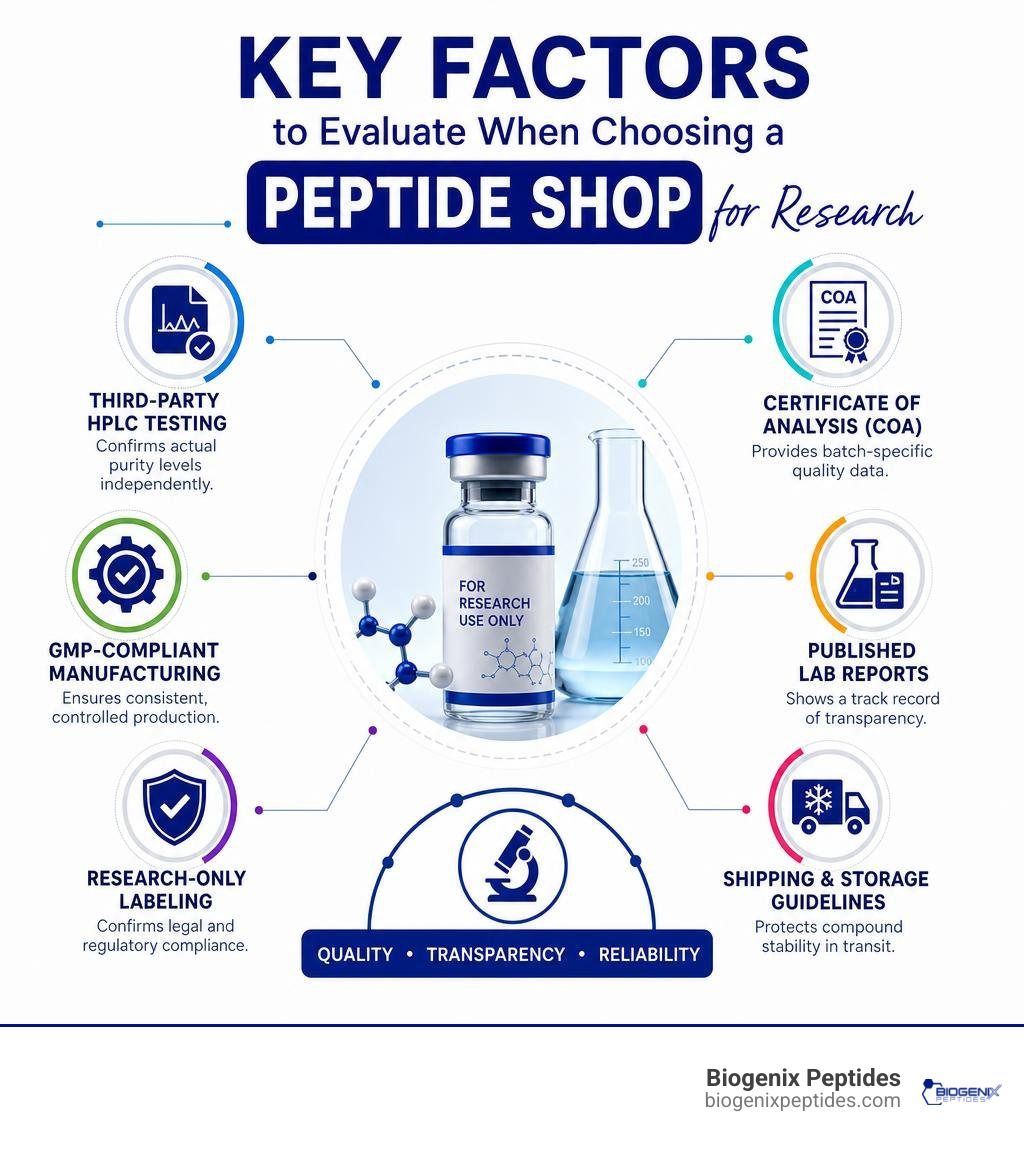
Here is a quick overview of what to look for:
| What to Check | Why It Matters |
|---|---|
| Third-party HPLC testing | Confirms actual purity levels independently |
| Certificate of Analysis (COA) | Provides batch-specific quality data |
| GMP-compliant manufacturing | Ensures consistent, controlled production |
| Published lab reports | Shows a track record of transparency |
| Research-only labeling | Confirms legal and regulatory compliance |
| Shipping and storage guidelines | Protects compound stability in transit |
The peptide research market has grown significantly. There are now dozens of suppliers offering everything from growth hormone secretagogues like Ipamorelin and CJC-1295, to cosmetic peptides like GHK-Cu, to complex blends and recombinant compounds. Some suppliers have decades of experience. Others are far less established.
Not all peptide shops are equal. And with so many options, it can be hard to know who to trust.
This guide breaks down exactly what separates a reliable supplier from a risky one — covering quality standards, peptide grades, storage, shipping, pricing, and more.
I’m Jay Daniel, Founder and CEO of Biogenix Peptides, and my hands-on experience building a research-grade peptide shop around rigorous quality control and scientific integrity gives me a front-row view of what good sourcing actually looks like. In the sections below, I’ll walk you through everything you need to make a confident, informed decision.
What to Look For in a Reliable Peptide Shop
When we set out to source compounds for laboratory settings, the sheer volume of online storefronts can be overwhelming. To separate the established operations from fly-by-night setups, we must focus heavily on the quality control protocols they implement. A premier peptide shop does not ask you to take their word on quality; they provide verifiable proof.
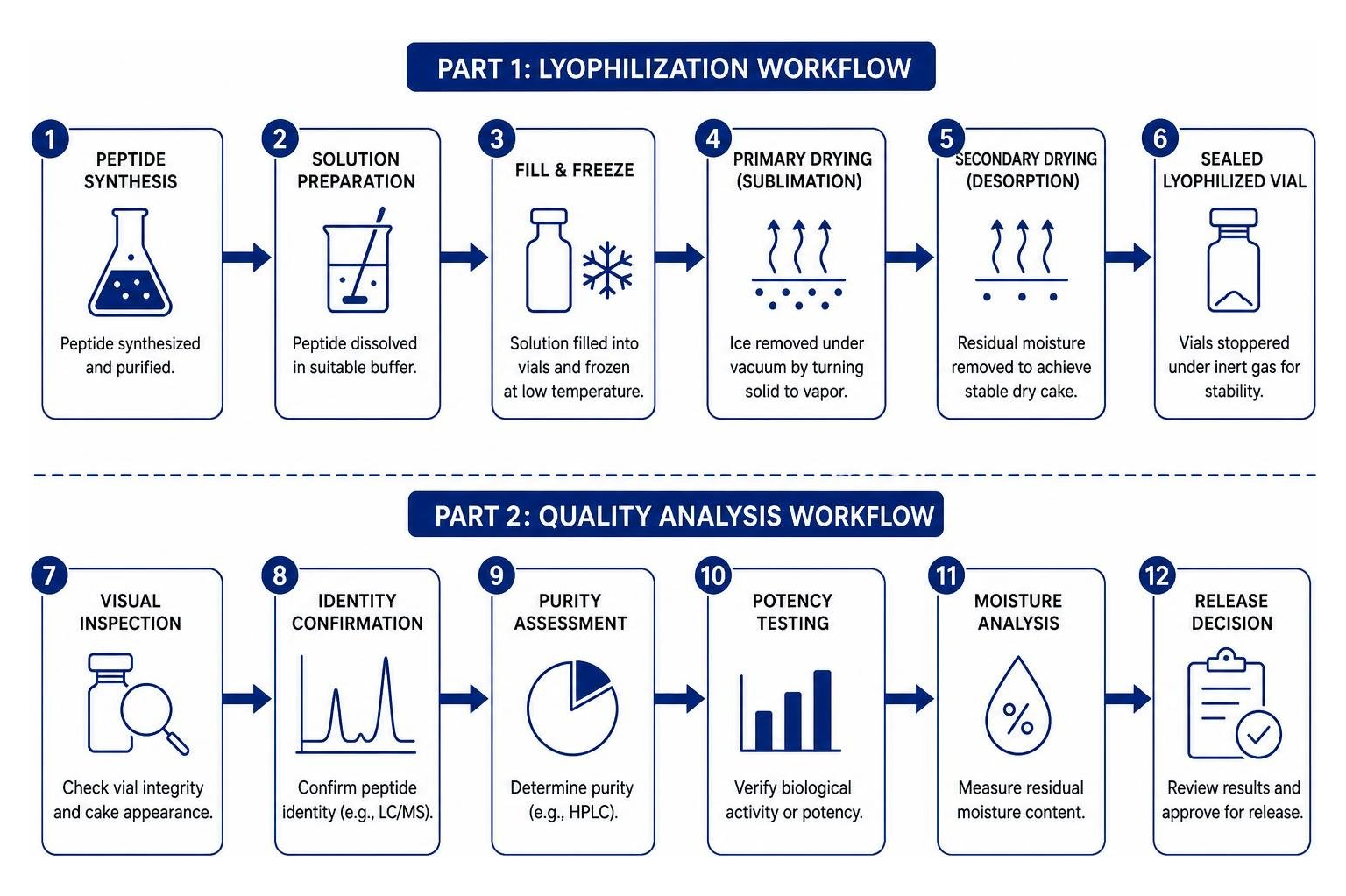
The gold standard for quality assurance in this industry is independent, third-party testing. Any reputable supplier should partner with domestic analytical laboratories to conduct High-Performance Liquid Chromatography (HPLC) and Mass Spectrometry (MS) on every single batch. HPLC determines the exact purity of the compound, while Mass Spectrometry verifies its precise molecular identity. We always advise checking for a minimum purity standard of 99%. Anything less can introduce unwanted artifacts or impurities into your assays, compromising your scientific data.
For a detailed walkthrough on navigating these safety measures, you can consult our Beginners Guide to Buy Peptides Online.
Furthermore, transparency is key. A trusted supplier will host an easily accessible library of published lab reports. For instance, top-tier shops often showcase over 500+ published lab reports and have conducted over 60+ distinct types of laboratory tests to demonstrate consistent quality assurance. When you are looking at where to buy these materials, you should also read our guide on Where to Buy Peptides Without Losing Your Gains or Your Shirt to understand the balance between pricing and verified purity.
Another critical element is the manufacturing origin. Reputable shops typically partner with facilities that are WHO/GMP and ISO 9001:2025 (or similar updated standards) certified. This ensures that the synthesis processes are tightly controlled, sterile, and free from cross-contamination. If you want a structured checklist to evaluate potential vendors, refer to our comprehensive Buying Guide to streamline your procurement workflow.
When evaluating a new peptide online store, look for clear documentation, responsive customer support, and domestic manufacturing origins that prioritize high-purity standards.
Understanding Peptide Grades and Research Applications
Peptides are synthesized and distributed in different grades depending on their intended application. Understanding these differences is crucial for selecting the right material for your laboratory protocols.
The two primary categories are research-grade and GMP-grade (Good Manufacturing Practices) peptides.
- Research-Grade Peptides: These are intended strictly for in vitro laboratory studies, animal model testing, and general scientific exploration. They are manufactured to high purity standards (often 99% or higher) but do not require the incredibly costly clinical-grade documentation and validation processes mandated for human administration.
- GMP-Grade Peptides: These are synthesized under highly regulated clinical conditions. They undergo exhaustive validation, identity testing, sterility assurance, and endotoxin monitoring. They are designed for clinical trials and therapeutic applications, making them significantly more expensive than research-grade compounds.
Below is a direct comparison of the two grades:
| Feature | Research-Grade Peptides | GMP-Grade Peptides |
|---|---|---|
| Primary Application | Laboratory research, in vitro assays, animal studies | Clinical trials, therapeutic formulations |
| Purity Target | Typically 98% to 99%+ | 99%+ with strict impurity profiling |
| Sterility Testing | Standard batch sterile filtration | Rigorous, multi-stage clinical sterility validation |
| Endotoxin Limits | Low, but not clinically certified | Extremely strict, certified limits |
| Cost Profile | Highly cost-effective for academic/R&D labs | Extremely expensive due to regulatory overhead |
To maintain the absolute stability of these compounds from the manufacturing floor to your laboratory, freeze-drying (lyophilization) is utilized. Lyophilization removes moisture from the peptide while preserving its structural integrity, transforming it into a stable, dry powder. This process is so effective that lyophilized peptides can easily withstand temporary temperature fluctuations during shipping without degrading.
Once they arrive at your facility, proper storage is vital. For long-term preservation (often 1 to 2+ years), unreconstituted lyophilized vials should be kept in a freezer at temperatures between 17°F and -4°F (-8°C to -20°C).
To understand how to read analytical data sheets and properly manage research materials, you can read our Ultimate Guide to Reputable Peptide Stores Online. For those looking to understand the technical calculations and guidelines behind preparing these research solutions, check out our resource on 5 Research Chemical Suppliers with Peptide Reconstitution Charts.
Popular Categories Available in a Modern Peptide Shop
A fully stocked peptide shop serves as a specialized directory for a wide variety of scientific fields. Depending on the focus of your laboratory, you might require growth hormone secretagogues, tissue repair agents, metabolic regulators, or cosmetic compounds.
If you are looking to map out the current marketplace and find out who offers what, take a look at our curated list of A Massive List of Peptide Suppliers USA. This resource highlights various sourcing options for highly specific recombinant proteins and neurodegenerative research tools.
Growth Hormone Secretagogues in a Peptide Shop
Growth hormone secretagogues (GHS) are a class of peptides that stimulate the secretion of endogenous growth hormone. In research settings, these compounds are widely used to study cellular regeneration, muscle tissue preservation, and endocrine feedback loops.
The most sought-after secretagogues include:
- Sermorelin: A synthetic analogue of growth hormone-releasing hormone (GHRH) consisting of the first 29 amino acids. It is frequently utilized in studies evaluating pituitary function and age-related endocrine decline.
- Ipamorelin: A highly selective growth hormone secretagogue that mimics ghrelin. It is favored in research because it stimulates growth hormone release without significantly impacting cortisol or prolactin levels.
- CJC-1295 (No DAC / DAC): Often paired with Ipamorelin, this GHRH analogue is researched for its ability to extend the half-life of growth hormone release, allowing for prolonged cellular observation.
For a detailed analysis of how to source these specific secretagogues safely and legally for your lab, read our dedicated guide on How to Purchase Sermorelin Online Safely and Legally.
Metabolic and Cosmetic Compounds in a Peptide Shop
Metabolic research has experienced a massive surge in recent years, largely driven by the study of GLP-1 (glucagon-like peptide-1) receptor agonists. Compounds such as Semaglutide, Tirzepatide, and Retatrutide are actively researched for their profound effects on insulin sensitivity, glycemic control, and lipid metabolism in animal models.
Additionally, researchers heavily focus on tissue-repairing and cosmetic peptides:
- BPC-157 & TB-500: These are often studied individually or as a blend to observe their synergistic effects on wound healing, tendon repair, and angiogenesis (the formation of new blood vessels).
- GHK-Cu (Copper Peptide): This compound is widely researched in dermatological science for its ability to stimulate collagen synthesis, reduce micro-inflammation, and promote tissue remodeling.
When sourcing high-demand metabolic compounds, finding authentic batches is critical. We recommend reading our guide on Tirzepatide Peptides for Sale and How to Spot the Real Deal to learn how to identify genuine research materials. If you are looking to study insulin-like growth factors, you should also read our guide on Ready to Buy LR3 IGF-1? Here Is What to Look For to ensure you obtain high-purity compounds.
For those just starting out and looking for introductory promotions or cost-effective ways to buy, check out The Best Coupon Codes for Beginners to optimize your initial research budget. This can help you secure high-quality research peptides, antibodies, and assay kits while managing laboratory expenses.
Frequently Asked Questions about Peptide Sourcing
Navigating the e-commerce landscape of research chemicals can raise several operational and technical questions. Below are the most common inquiries we receive from researchers.
How do you verify the purity of research peptides?
Purity verification must always be backed by independent, third-party analytical testing. A reputable supplier will provide a batch-specific Certificate of Analysis (COA) containing HPLC (High-Performance Liquid Chromatography) and Mass Spectrometry data.
The HPLC chromatogram displays peak areas that indicate the percentage of the target peptide relative to any impurities. Always look for a purity level of 99% or greater to ensure your laboratory assays are not skewed by synthetic byproducts or heavy metals.
What is the correct way to store lyophilized peptides?
Lyophilized (freeze-dried) peptides are highly stable but still sensitive to heat, light, and moisture over extended periods.
- Long-Term Storage (Unreconstituted): Keep the dry vials in a freezer at 17 0F to -4 0F (-8 0C to -20 0C). This preserves their stability for 1 to 2+ years.
- Short-Term Storage (Reconstituted): Once you introduce a sterile bacteriostatic water or saline solution, the peptide becomes far more fragile. Reconstituted solutions must be stored in a refrigerator at 36 0F to 42 0F (2 0C to 6 0C) and typically utilized within 30 days. Avoid exposing reconstituted vials to direct light or vigorous shaking, as physical agitation can degrade the delicate peptide chains.
Why are research peptides labeled not for human consumption?
This labeling is a strict regulatory requirement. In the United States, research peptides are classified as research chemicals. They have not undergone the exhaustive FDA approval process required for clinical human use, which includes multi-phase clinical trials, safety profiling, and strict clinical manufacturing oversight. For general background on how drugs are evaluated before approval, the FDA provides an overview of the drug development and approval process.
To comply with federal laws, suppliers must market these compounds exclusively for laboratory, analytical, and in vitro research purposes. Selling these compounds with directions for human use or therapeutic applications violates federal regulations.
Conclusion
Finding a reliable peptide shop in 2026 requires diligence, but focusing on transparency, verified purity, and robust quality control makes the process straightforward. By prioritizing suppliers that offer third-party HPLC testing, clear storage guidelines, and GMP-aligned manufacturing, you ensure that your research is backed by stable, high-purity compounds.
At Biogenix Peptides, we are committed to providing researchers with the highest quality materials, backed by rigorous quality assurance and dependable customer support. When you are ready to source high-purity, laboratory-grade compounds for your next project, explore our complete catalog at the Biogenix Peptides Shop.