The Ultimate Guide to Buying High-Purity Thymosin Alpha 1
Disclaimer: The information provided in this article is for educational and informational purposes only. It is not intended as medical advice, diagnosis, or treatment. Products and compounds referenced are for research use only and are not approved for human or veterinary consumption. Always consult a qualified professional regarding health or medical decisions.
How to Buy High-Purity Thymosin Alpha 1 for Research
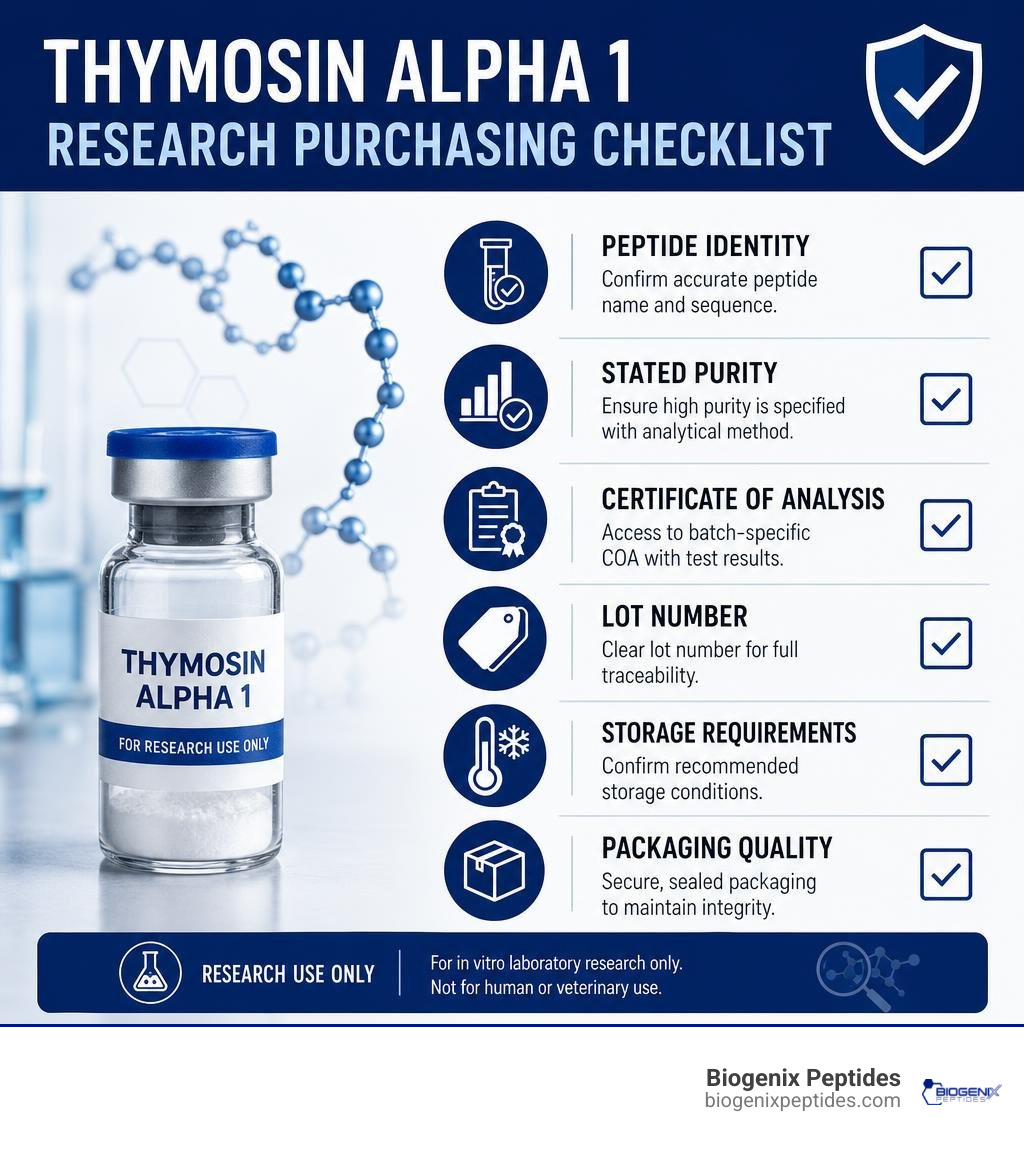
To buy thymosin alpha 1 for legitimate in vitro research, choose a supplier that clearly labels the material as research use only and provides batch-specific analytical documentation. Before ordering, confirm the peptide identity, stated purity, lot number, storage requirements, packaging quality, and access to a certificate of analysis.
Thymosin alpha 1 is a synthetic 28-amino-acid peptide modeled on a naturally occurring thymic peptide. In laboratory research, it is studied for its effects on immune-signaling pathways, including toll-like receptor activity, T-cell signaling, and cytokine expression. It is not an approved consumer treatment product in the United States, so responsible purchasing starts with research-only sourcing and compliance with applicable rules.
I’m Jay Daniel, Founder and CEO of BioGenix Peptides, with experience in peptide sourcing, quality-control review, and research documentation for teams looking to thymosin alpha 1 buy options responsibly. This guide explains what researchers should evaluate before selecting high-purity material for laboratory work.
Quick thymosin alpha 1 buy terms:
Molecular Structure and Biological Mechanism of Action

Thymosin alpha 1 (Tα1) is an acidic 28-amino-acid peptide originally isolated from bovine thymus tissue (specifically Thymosin Fraction 5) in 1977. Its synthetic counterpart, thymalfasin, mirrors the exact chemical sequence of the endogenous peptide, featuring an N-terminal acetylation that contributes to its chemical stability. In modern biochemical production, solid-phase peptide synthesis (SPPS) serves as the primary method for producing research-grade material, ensuring precise chain elongation and sequence fidelity.
At the cellular level, the biological activity of Tα1 involves interaction with the innate and adaptive immune branches. Researchers studying peptides & the immune system: the hidden layer of immune control frequently evaluate how Tα1 functions as a dual Toll-Like Receptor (TLR) agonist. Specifically, it targets TLR-9 and TLR-2 on myeloid and plasmacytoid dendritic cells (DCs).
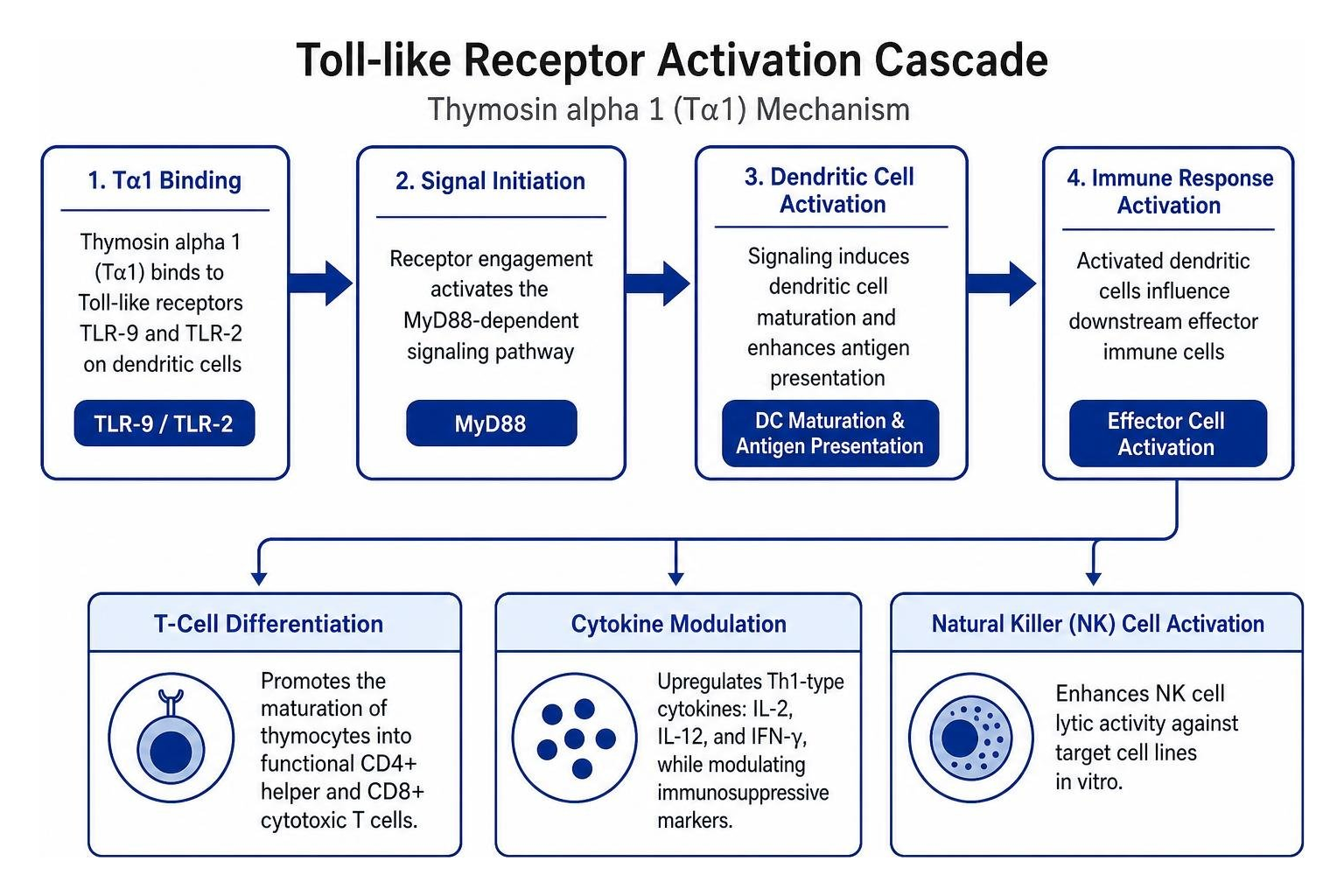
Upon binding to these pattern recognition receptors, Tα1 initiates an intracellular cascade via the MyD88-dependent signaling pathway. This event stimulates dendritic cell maturation and enhances antigen presentation capacity. Consequently, the peptide influences downstream effector cell populations:
- T-Cell Differentiation: Promotes the maturation of immature thymocytes into functional CD4+ helper and CD8+ cytotoxic T cells.
- Cytokine Modulation: Upregulates the transcription and secretion of Th1-type cytokines, including interleukin-2 (IL-2), interleukin-12 (IL-12), and interferon-gamma (IFN-γ), while modulating immunosuppressive markers.
- Natural Killer (NK) Cell Activation: Enhances NK cell lytic activity against target cell lines in vitro.
- Treg Homeostasis: Influences regulatory T-cell (Treg) populations via indoleamine 2,3-dioxygenase (IDO) pathways, preventing runaway inflammatory responses in cellular culture models.
Comparative Analysis: Thymosin Alpha 1 vs Thymosin Beta 4
Although both peptides originate from thymic tissue extracts, Thymosin Alpha 1 and Thymosin Beta 4 (Tβ4) possess entirely distinct biochemical structures, cellular targets, and experimental endpoints.
| Feature / Metric | Thymosin Alpha 1 (Tα1) | Thymosin Beta 4 (Tβ4) |
|---|---|---|
| Primary Sequence Length | 28 amino acids | 43 amino acids |
| Primary Biochemical Role | TLR-2 / TLR-9 agonist; immune signaling | G-actin sequestering peptide |
| Major Molecular Pathway | MyD88 / NF-κB / Th1 cytokine axis | Actin polymerization / Cell migration |
| Primary Cellular Targets | Dendritic cells, CD4+/CD8+ T cells, NK cells | Endothelial cells, fibroblasts, myocytes |
| Core In Vitro Endpoints | Cytokine quantification, T-cell maturation | Cytoskeletal remodeling, wound closure assays |
| Main Research Domain | Immunomodulation, virology, oncology models | Angiogenesis, tissue regeneration, repair |
Thymosin Beta 4 primarily regulates actin dynamics, sequestering actin monomers to control cellular motility, tissue remodeling, and angiogenesis. In contrast, Thymosin Alpha 1 operates almost exclusively within immune-receptor pathways, serving as a molecular regulator of lymphocyte activity and cytokine release.
Clinical Literature and Scientific Research Applications
Scientific interest in Tα1 spans several decades, with published literature evaluating its immunomodulatory properties across various disease models. Academic investigations have examined how synthetic thymalfasin interacts with biological systems facing chronic immune suppression, pathogen evasion, or uncontrolled hyperinflammation.
Studies examining immune function longevity peptides frequently cite Tα1 as a cornerstone of experimental immunology. Key research areas include:
- Severe Sepsis Models: In a multicenter randomized clinical trial involving intensive care units across six tertiary teaching hospitals, Tα1 therapy reduced 28-day mortality by 9.0% compared to control cohorts. Mechanistic analyses showed that the peptide prevented massive lymphocytic apoptosis and restored human leukocyte antigen-DR (HLA-DR) expression on monocytes.
- Chronic Viral Infections: Historical clinical trials involving chronic hepatitis B demonstrated that bi-weekly administration of 1.6 mg of synthetic Tα1 achieved a complete virological response rate of 40.6%, suppressing viral replication through enhanced T-cell cytotoxicity. Similar trials have investigated its role in hepatitis C and HIV co-infections.
- Oncological Research: Tα1 has been evaluated as an adjuvant in non-small cell lung cancer (NSCLC)—which represents 85% of all lung cancer cases—and hepatocellular carcinoma. In experimental protocols, it demonstrated an ability to mitigate chemotherapy-induced lymphopenia and stimulate antitumor immune surveillance.
- Acute Viral Respiratory Infections: During pandemic research between 2020 and 2026, researchers investigated Tα1 in severe viral respiratory distress. Published data indicated that supplementation helped reverse lymphopenia, restored depleted CD4+ and CD8+ counts, and decreased cellular markers of T-cell exhaustion.
Investigational Models and Cellular Assays
In cell culture environments, researchers employ Tα1 to study direct cellular responses without systemic confounders. In vitro assays using estrogen-receptor-positive (MCF-7) and estrogen-receptor-negative (ZR-75-1) breast cancer cell lines have demonstrated that Tα1 can exert antiproliferative effects and induce apoptosis in a concentration-dependent manner.
Furthermore, laboratory models assess Tα1’s role in mitigating oxidative stress. By upregulating intracellular glutathione synthesis and catalase activity, the peptide protects cellular cultures from reactive oxygen species (ROS) damage induced by heavy metals, mycotoxins, or chemotherapeutic agents.
Where to Thymosin Alpha 1 Buy for In Vitro Research
Securing reliable, research-grade peptides requires a strict evaluation of chemical synthesis providers. When laboratories seek how to buy thymosin alpha-1 for research, the emphasis must remain on structural purity, verified molecular mass, and freedom from manufacturing contaminants.
When evaluating vendors through a beginner’s guide to buy peptides online, verified compliance with domestic manufacturing standards should be prioritized over lowest-cost alternatives. Research integrity depends entirely on material consistency; substandard batches introduce variables that invalidate assay results and compromise reproducible science.
Purity Testing Protocols Before You Thymosin Alpha 1 Buy
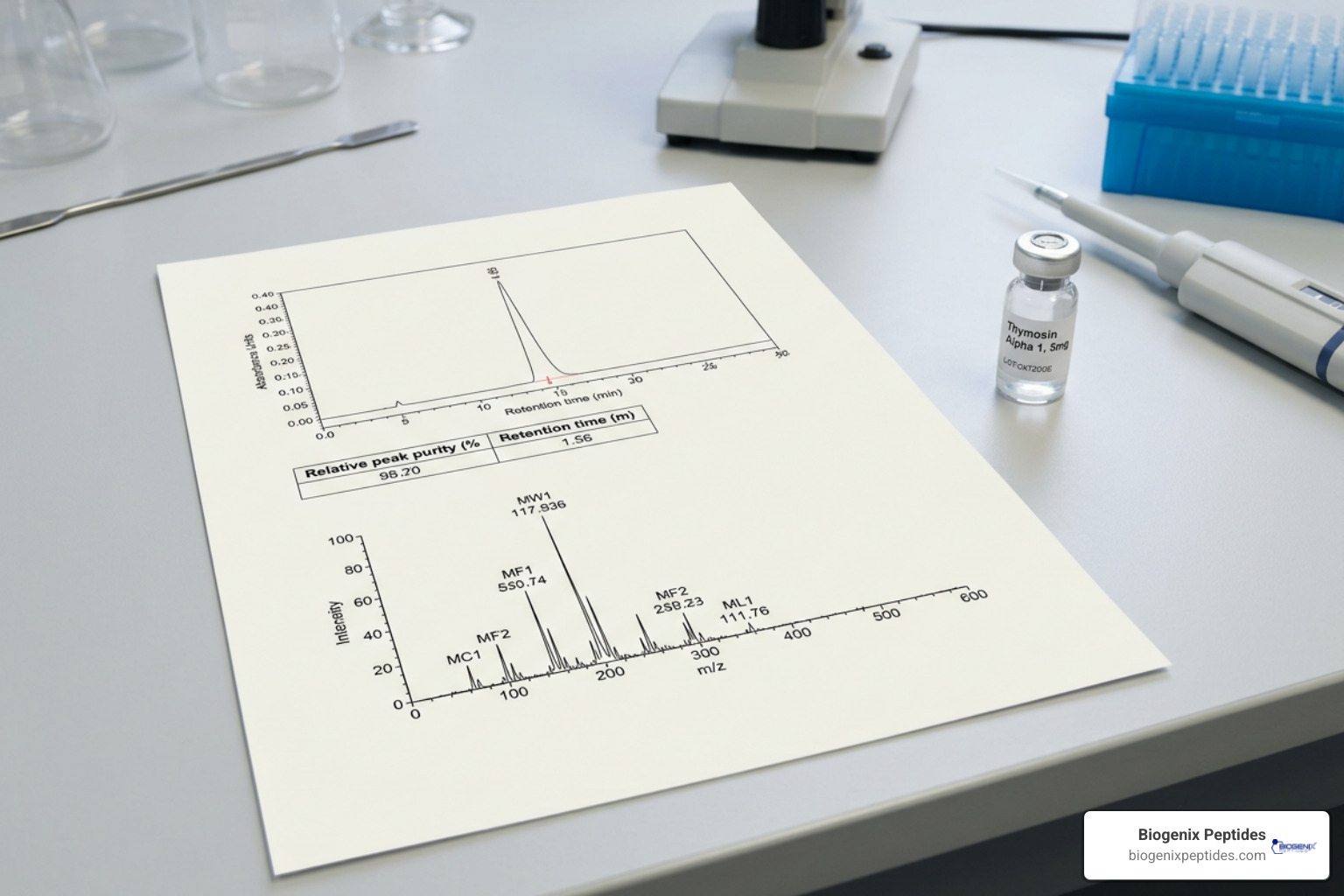
Before integrating any synthetic peptide into an experimental pipeline, laboratories must review third-party analytical documentation. Reputable suppliers provide a comprehensive Certificate of Analysis (CoA) containing two essential analytical tests:
- High-Performance Liquid Chromatography (HPLC): HPLC confirms the chromatographic purity of the peptide. Research standards require a single, distinct peak demonstrating purity levels of ≥98%. This analysis confirms the absence of truncated sequences, deletion peptides, and residual synthesis reagents.
- Mass Spectrometry (MS): Electrospray Ionization (ESI-MS) or Matrix-Assisted Laser Desorption/Ionization (MALDI-TOF) verifies the exact molecular weight of Thymosin Alpha 1 (3,108.3 Da). Mass confirmation ensures that the correct 28-amino-acid sequence was synthesized.
Additionally, critical assays require confirmation that residual salts, such as trifluoroacetic acid (TFA), have been minimized or exchanged for acetate salts, and that endotoxin levels are documented below critical research thresholds (typically <0.05 EU/mg).
Sourcing Checklist: Key Criteria When You Thymosin Alpha 1 Buy
To streamline the vendor validation process, laboratories can reference this core quality checklist:
- Third-Party Analytical Verification: Independent laboratory HPLC and Mass Spectrometry reports available for the exact batch number.
- Standardized Synthesis Methodology: Solid-phase peptide synthesis (SPPS) utilized to ensure sequence fidelity.
- Lyophilized Form with Nitrogen Purge: Sealed glass vials containing desiccated powder under inert gas to prevent oxidation.
- Documented Storage Protocols: Clear temperature specifications provided for both long-term storage and short-term handling.
- Transparent Vendor Accountability: U.S.-based suppliers with verifiable contact channels and batch-tracking capabilities.
Laboratory Storage, Reconstitution, and Handling
Proper storage and preparation protocols maintain the tertiary structure and bioactivity of synthetic peptides. Thymosin Alpha 1 is typically supplied in lyophilized format, commonly in thymosin alpha-1 5mg or thymosin alpha-1 10mg vials within our immune peptides product category.

To preserve peptide stability across experimental runs, follow standard laboratory handling protocols:
- Lyophilized Powder Storage: Store unopened, desiccated vials at -20°C for up to 24 months. For ultra-long-term archiving, storage at -80°C or below -180°C in liquid nitrogen vapor is recommended.
- Reconstitution Technique: Allow the vial to equilibrate to room temperature before introducing diluent to avoid moisture condensation. Reconstitute using sterile bacteriostatic water or sterile phosphate-buffered saline (PBS), introducing the liquid gently along the inner glass wall.
- Agitation Guidelines: Never vortex or vigorously shake reconstituted peptide solutions. Gently swirl the vial until the lyophilized cake fully dissolves into a clear solution.
- Post-Reconstitution Storage: Store reconstituted solutions at 2°C to 8°C and use within 2 to 7 days. If extended experimental protocols require longer preservation, divide the solution into single-use aliquots and store at -20°C to prevent degradation caused by repeated freeze-thaw cycles.
- Carrier Protein Addition: For low-concentration cellular culture work, adding a carrier protein such as 0.1% bovine serum albumin (BSA) or human serum albumin (HSA) can prevent peptide adsorption to plastic tube walls.
Frequently Asked Questions About Thymosin Alpha 1
What is the primary biochemical role of thymosin alpha 1 in laboratory models?
In research models, Thymosin Alpha 1 acts primarily as an innate immune modulator. It binds to Toll-Like Receptors (TLR-2 and TLR-9) on dendritic cells, triggering intracellular signaling cascades that upregulate Th1 cytokines (such as IL-2 and IFN-γ), stimulate T-cell differentiation, and enhance natural killer cell cytotoxicity.
How should reconstituted thymosin alpha 1 be preserved for research?
Once reconstituted with sterile bacteriostatic water or laboratory buffer, the liquid solution should be maintained at 2°C to 8°C and utilized within 2 to 7 days. For longer storage windows, solutions should be divided into single-run aliquots and frozen at -20°C to avoid repeated freeze-thaw cycles that break peptide bonds.
What is the distinction between thymosin alpha 1 and thymalfasin?
Thymosin Alpha 1 refers to the native 28-amino-acid peptide sequence originally extracted from thymus tissue. Thymalfasin is the standardized chemical and non-proprietary name for the chemically synthesized version of this exact sequence, manufactured using solid-phase peptide synthesis for precise experimental and analytical consistency.
Conclusion
Thymosin Alpha 1 remains one of the most widely researched immune-signaling peptides in cellular biology, molecular immunology, and experimental medicine. Its distinct ability to engage TLR-2 and TLR-9 pathways, stimulate T-cell maturation, and balance cytokine expression makes it an invaluable analytical tool for studying immune dynamics in vitro.
When sourcing research peptides, maintaining strict quality standards is paramount. Laboratories must verify chemical identity, sequence fidelity, and high purity through independent analytical testing like HPLC and Mass Spectrometry. Explore our complete selection of analytical-grade compounds in the Biogenix Peptides research catalog to support your ongoing laboratory investigations.