Growing Up Scientific: The Real Clinical Truth Behind CJC-1295
What the Science Actually Says About CJC-1295 Clinical Studies
Disclaimer: The information provided in this article is for educational and informational purposes only. It is not intended as medical advice, diagnosis, or treatment. Products and compounds referenced are for research use only and are not approved for human or veterinary consumption. Always consult a qualified professional regarding health or medical decisions.

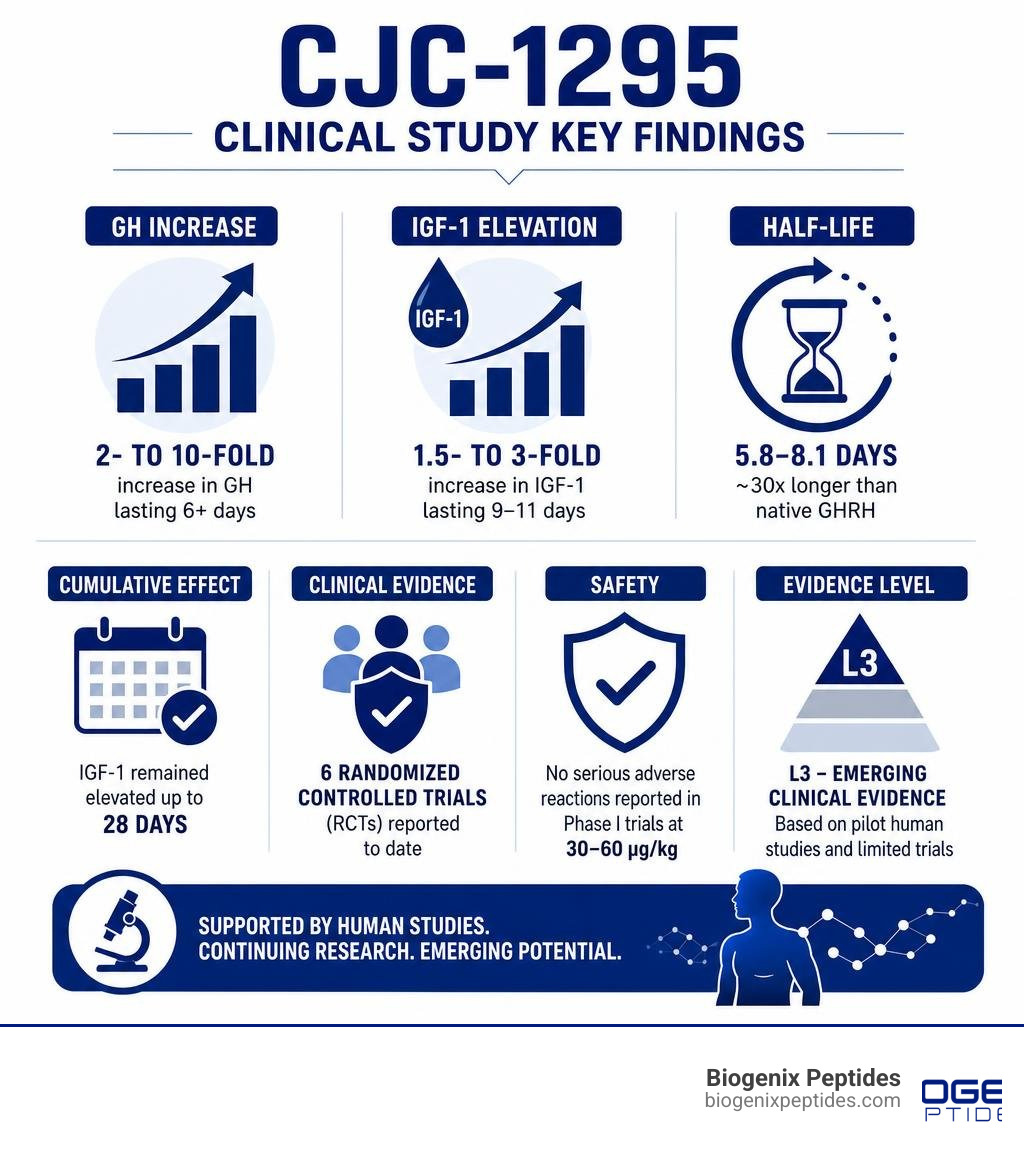
CJC-1295 clinical studies have produced some of the most compelling pharmacokinetic data in the growth hormone secretagogue research space. Here is a quick summary of what the published evidence shows:
Key findings at a glance:
- The landmark 2006 Teichman et al. study found a single administration produced 2- to 10-fold increases in GH lasting 6 or more days
- IGF-1 levels rose 1.5- to 3-fold and remained elevated for 9-11 days after a single administration
- CJC-1295 (with DAC) has an estimated half-life of 5.8-8.1 days — roughly 30x longer than native GHRH
- Multiple administrations showed a cumulative effect, with IGF-1 remaining elevated up to 28 days
- Six randomized controlled trials (RCTs) have been reported to date
- No serious adverse reactions were reported in Phase I trials at lower research quantities (30-60 µg/kg)
- Evidence is currently classified as L3 — Emerging Clinical Evidence, based on pilot human studies and limited trials
Growth hormone secretion naturally declines with age — a process researchers call somatopause. By the time most adults reach middle age, peak GH output has dropped substantially from youthful levels. That biological reality is what drives scientific interest in compounds like CJC-1295, a synthetic analog of the body’s own growth hormone-releasing hormone (GHRH).
Unlike native GHRH, which clears from plasma in roughly 7 minutes, CJC-1295 was engineered to bind covalently to serum albumin — dramatically extending its activity window. That single structural difference is what makes the clinical data so interesting to researchers studying the GH/IGF-1 axis.
I’m Jay Daniel, Founder and CEO of BioGenix Peptides, and my hands-on experience in peptide development, sourcing, and quality control has given me a close working knowledge of the CJC-1295 clinical studies literature. In the sections below, we’ll break down exactly what those studies measured, what they found, and where the evidence gaps remain.
Learn more about cjc 1295 clinical studies:
Structural Chemistry: How CJC-1295 Differs from Native GHRH
To understand why this compound captured the attention of the scientific community in the early 2000s, we have to look closely at its molecular architecture. Native GHRH is a 44-amino-acid peptide synthesized in the hypothalamus. While highly effective at signaling the anterior pituitary gland to release growth hormone, its therapeutic utility is severely limited by rapid enzymatic degradation. Dipeptidyl peptidase-IV (DPP-IV) quickly cleaves native GHRH, rendering it inactive within minutes of entering circulation.
CJC-1295 was specifically designed to bypass this rapid clearance. It is a tetrasubstituted GHRH analog, meaning four key amino acids in its sequence have been modified to resist enzymatic cleavage. Specifically, these substitutions occur at positions 2, 8, 15, and 27 of the native GHRH(1-29) sequence (sermorelin).
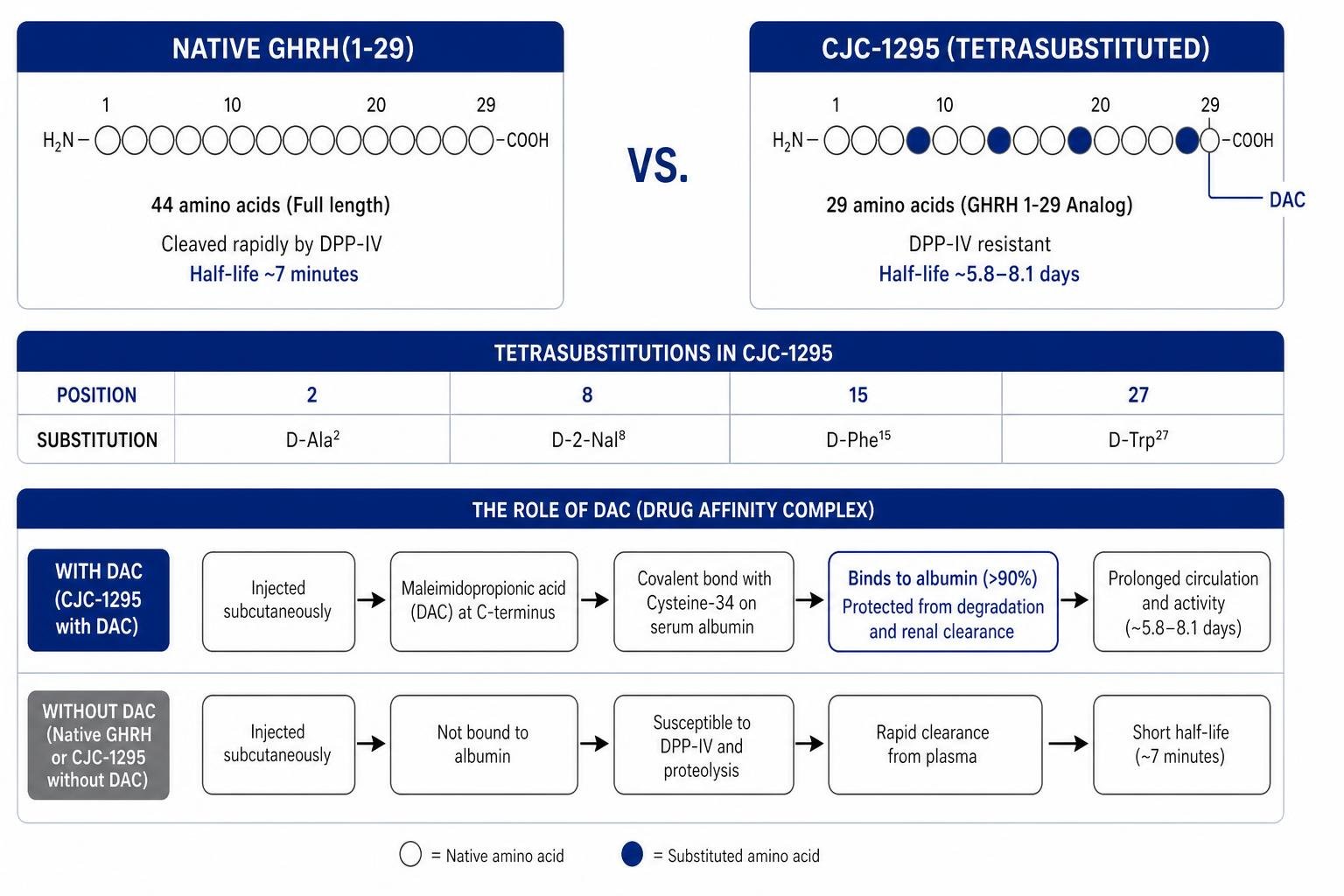
The true scientific breakthrough, however, was the addition of a Drug Affinity Complex (DAC) to the peptide. DAC technology incorporates a reactive chemical linker—specifically maleimidopropionic acid—at the C-terminus of the modified peptide. This linker forms a highly stable, covalent bond with the free thiol group on Cysteine-34 of endogenous serum albumin.
Because albumin is the most abundant protein in human plasma and has a naturally long circulation time, any peptide bound to it is shielded from both enzymatic degradation and rapid renal clearance. Research published in the Prolonged Stimulation of Growth Hormone (GH) and Insulin-Like Growth Factor I Secretion by CJC-1295, a Long-Acting Analog of GH-Releasing Hormone, in Healthy Adults study demonstrated that over 90% of the administered compound binds covalently to endogenous albumin almost immediately following subcutaneous delivery.
CJC-1295 With DAC vs. Without DAC
In laboratory research, you will frequently encounter two distinct forms: CJC-1295 with DAC and CJC-1295 without DAC (often referred to simply as Modified GRF 1-29).
The primary differences boil down to chemical stability, formulation, and clearance rate:
- CJC-1295 with DAC: This version contains the maleimidopropionic acid linker. It binds covalently to albumin, extending the half-life to several days (typically 5.8 to 8.1 days in human trials). It is often synthesized as a trifluoroacetate salt or free base for research applications.
- CJC-1295 without DAC (Modified GRF 1-29): This version contains the same four protective amino acid substitutions but lacks the DAC linker. Without the ability to bind to albumin, it is rapidly cleared by the kidneys and has a half-life of approximately 30 minutes in plasma.
While the DAC version provides a continuous, sustained stimulation of pituitary somatotrophs, the version without DAC produces a rapid, transient peak that closely mimics the natural pulsatile spikes of native GHRH. Researchers can explore a deeper breakdown of this non-DAC variant in the ultimate guide to CJC-1295 without DAC.
Pharmacokinetics and Pharmacodynamics in cjc 1295 clinical studies
The primary goal of early clinical trials was to map out how the human body processes this modified peptide and how effectively it triggers growth hormone release. The pharmacokinetic parameters observed in healthy volunteers revealed a stark contrast between the two primary formulations.
| Parameter | CJC-1295 with DAC | CJC-1295 without DAC (Mod GRF 1-29) |
|---|---|---|
| Estimated Half-Life | 5.8 – 8.1 days (single application) / 5.4 – 9.2 days (multiple) | ~30 minutes |
| Peak Concentration (Tmax) | 1 – 4 hours post-administration | 15 – 30 minutes post-administration |
| Primary Clearance Pathway | Slow cellular internalization and degradation | Rapid renal filtration and enzymatic clearance |
| Volume of Distribution (Vd) | Small (largely restricted to vascular space due to albumin binding) | Moderate (distributes into extracellular fluids) |
| Accumulation Index | High (cumulative elevations in IGF-1 observed over weekly regimens) | Very Low (no accumulation between successive administrations) |
Early clinical investigations utilized ascending, single-administration escalation protocols followed by multiple-administration regimens to evaluate safety and determine the threshold of efficacy. The landmark findings published in the paper titled Prolonged stimulation of growth hormone confirmed that the compound’s clearance is exceptionally low, allowing the peptide to remain active in the bloodstream for weeks.
Growth Hormone and IGF-1 Elevation Patterns
The pharmacodynamic response to CJC-1295 is highly dose-dependent. In the seminal Teichman et al. study (2006), healthy adult subjects received single subcutaneous administrations ranging from 30 to 250 µg/kg.
The results were highly consistent:
- Growth Hormone (GH) Elevation: Mean plasma GH concentrations experienced a 2- to 10-fold increase. Crucially, this elevation was not a brief spike; GH levels remained significantly elevated above baseline for 6 days or more following a single administration.
- Insulin-Like Growth Factor 1 (IGF-1) Elevation: Because IGF-1 synthesis in the liver is directly driven by GH, researchers observed a parallel rise in serum IGF-1. Mean concentrations increased 1.5- to 3-fold, with the peak occurring 2 to 4 days post-administration. This elevated state persisted for 9 to 11 days.
When multiple-administration regimens were tested (e.g., weekly administrations over several weeks), researchers documented a clear cumulative effect. The pituitary gland appeared to undergo a priming effect, where subsequent exposures maintained a sustained, elevated baseline of circulating IGF-1 for up to 28 days post-treatment. To understand how these sustained elevations translate to physical tissue changes in research models, see our review on CJC-1295 no DAC benefits.
Biomarkers and Serum Protein Profile Changes
Beyond tracking standard GH and IGF-1 levels, scientists have sought more precise biomarkers to map the systemic effects of long-term GH axis activation. A 2009 study investigated these exact changes by performing a comprehensive proteomic analysis on serum samples from healthy young men.
The research, published as Activation of the GH/IGF-1 axis by CJC-1295, identified several significant serum protein alterations one week after a single administration:
- Upregulated Proteins: The study observed a significant increase in beta-hemoglobin and specific C-terminal fragments of albumin. Additionally, a complex protein spot containing a mix of immunoglobulin fragments and C-terminal albumin fragments showed a direct, linear relationship with rising IGF-1 levels.
- Downregulated Proteins: Conversely, there was a marked decrease in the intensity of specific isoforms of apolipoprotein A1 (Apo-A1) and transthyretin (a thyroid hormone transport protein).
These protein alterations provide researchers with a potential “molecular fingerprint” of GH activity, offering a more reliable way to track the biological influence of GHRH analogs than measuring highly volatile GH spikes alone.
Physiological Pulsatility and Pituitary Priming
One of the most critical questions in cjc 1295 clinical studies was whether a continuous, long-acting GHRH analog would obliterate the pituitary gland’s natural, pulsatile pattern of growth hormone release. In nature, GH is not secreted in a flat line; it is released in distinct, rhythmic pulses, primarily during deep, slow-wave sleep. Continuous exposure to direct growth hormone therapy can override this natural rhythm, leading to receptor downregulation and metabolic side effects.
Remarkably, clinical data shows that CJC-1295 preserves natural physiological pulsatility.

Even though the peptide continuously stimulates the GHRH receptors on pituitary somatotropes due to its long-lasting albumin bond, the pituitary still responds to the natural inhibitory signals of somatostatin. When somatostatin levels drop, the pituitary releases a pulse of GH. When somatostatin rises, secretion is temporarily held in check.
Instead of flattening the curve, CJC-1295 elevates the trough levels (the lowest points between pulses) while preserving the natural peaks. It is this sustained rise in baseline GH levels, rather than an increase in pulse amplitude, that drives the steady, cumulative rise in circulating IGF-1.
Furthermore, animal models suggest that long-term exposure to GHRH analogs can induce somatotroph cell proliferation—essentially expanding the pituitary’s capacity to synthesize and store growth hormone. In GHRH knockout mice, once-daily administration of CJC-1295 for five weeks successfully normalized body weight, body length, and femur growth.
The treated animals exhibited marked somatotroph proliferation and increased total pituitary RNA, proving that GHRH receptor stimulation can actively reverse genetic GH deficiency in vivo. For researchers looking to structure laboratory studies around these cellular pathways, we have compiled detailed parameters in the CJC-1295 advanced protocol.
Safety, Tolerability, and Regulatory Status of CJC-1295
Across early Phase I clinical trials, CJC-1295 was generally well tolerated, especially at lower, conservative research concentrations (such as 30 to 60 µg/kg). However, like any compound that alters endocrine function, it is associated with a distinct profile of transient side effects and potential safety risks.
The most common adverse events documented in healthy adult studies include:
- Administration-site reactions: Approximately 70% of active subjects experienced mild, transient erythema, warmth, or induration at the site of subcutaneous delivery.
- Headache: Reported by roughly 63% of subjects, typically resolving spontaneously within a few hours.
- Vasodilation (Flushing): Roughly 30% of subjects reported temporary flushing or a sensation of warmth, particularly at higher administration levels.
- Gastrointestinal distress: Diarrhea or mild abdominal cramping was reported by approximately 43% of participants in ascending-concentration cohorts.
A key concern with any modified peptide is immunogenicity—the risk that the body will recognize the synthetic sequence as foreign and develop antibodies against it. In multi-week studies, a small percentage of subjects did develop low-titer, non-neutralizing antibodies to CJC-1295. While these antibodies did not appear to reduce the compound’s clinical effectiveness in short-term trials, the long-term immunological consequences remain unstudied. A thorough analysis of these risks is available in CJC-1295 no DAC side effects.
Clinical Trials in Specific Populations
While early trials focused on healthy volunteers, researchers eventually transitioned to investigating the compound’s therapeutic potential for specific clinical conditions. One major area of interest was HIV-associated visceral obesity (lipodystrophy), a condition characterized by abnormal fat accumulation around abdominal organs, often linked to decreased growth hormone secretion.
A multicenter, randomized, double-blind Phase II clinical trial was initiated to evaluate the efficacy and safety of CJC-1295 in this patient population. The protocol, registered under EudraCT number 2005-003797-25, planned to enroll 150 subjects for a 12-week treatment period to measure changes in visceral adipose tissue and total IGF-1 levels. Details on the trial design can be reviewed via the official Clinical Trials Register and the A Study to Evaluate CJC 1295 in HIV Patients registry.
However, the Phase II program was prematurely terminated. During the trial, which involved 192 HIV patients, one death was reported due to a myocardial infarction (heart attack). Although the trial’s safety monitoring board and sponsors ultimately deemed the event unrelated to the study compound—noting the patient had multiple pre-existing cardiovascular risk factors common in advanced HIV populations—the premature termination of the trial halted further clinical development of CJC-1295 DAC for commercial therapeutic use.
Regulatory and Compounding Status
Because of its incomplete clinical development pipeline, CJC-1295 has never received FDA approval for human use. Its regulatory status has shifted dramatically in recent years:
- FDA Category 2 Designation: In October 2023, the FDA placed CJC-1295 on the Bulk Drug Substances Category 2 list. This designation indicates that the compound has been identified as presenting significant safety concerns or lacks sufficient evidence of safety and efficacy.
- Compounding Restrictions: Under Section 503A of the Federal Food, Drug, and Cosmetic Act, licensed compounding pharmacies in the United States are prohibited from compounding medications using Category 2 bulk substances. This has effectively removed CJC-1295 from the legal compounding market for human prescription.
- Research-Grade vs. Pharmaceutical-Grade: Today, CJC-1295 is legally available exclusively as a research chemical. It is sold strictly for in vitro laboratory evaluation and animal research. Research-grade materials lack the strict clinical-use clearances of approved pharmaceuticals and must never be administered to humans. To understand how researchers evaluate different peptide mixtures and chemical salts in laboratory settings, see our comprehensive guide to CJC-1295 blends.
Frequently Asked Questions about cjc 1295 clinical studies
What do cjc 1295 clinical studies show regarding half-life?
Clinical studies demonstrate that the half-life of CJC-1295 is entirely dependent on the presence of the Drug Affinity Complex (DAC). When the DAC linker is present, the peptide binds covalently to endogenous albumin, resulting in an exceptionally long half-life of 5.8 to 8.1 days after a single subcutaneous administration. In multiple-administration studies, this range slightly expanded to 5.4 to 9.2 days.
Conversely, the version without DAC (Modified GRF 1-29) lacks this albumin-binding capability. It is rapidly cleared by renal filtration and enzymatic degradation, exhibiting a transient half-life of only 30 minutes. Researchers studying the rapid-clearance model can find precise handling and reconstitution details in the CJC-1295 no DAC protocol.
Are there any serious risks identified in cjc 1295 clinical studies?
While Phase I safety trials in healthy adults reported no serious adverse events, a Phase II trial evaluating the compound in HIV patients with visceral obesity was ended early following one patient death from myocardial infarction. Although investigators concluded the heart attack was likely unrelated to the peptide due to the subject’s baseline cardiovascular risks, the trial’s termination left long-term safety questions unanswered.
Additionally, because the peptide causes sustained elevations in GH and IGF-1, theoretical risks of prolonged exposure include reduced insulin sensitivity, fluid retention, joint pain, and potential stimulation of pre-existing subclinical malignancies.
How does CJC-1295 compare to other GHRH analogs in research?
In comparative laboratory models, CJC-1295 is frequently evaluated against earlier GHRH analogs like sermorelin. Sermorelin is the native GHRH(1-29) fragment without any amino acid substitutions. Because it is highly vulnerable to DPP-IV degradation, sermorelin has an extremely short half-life of only 11 to 12 minutes in plasma, requiring frequent, daily research protocols to achieve measurable GH release.
By substituting four key amino acids, CJC-1295 without DAC extends this half-life to 30 minutes, while the DAC version extends it to over a week. Rather than replacing direct growth hormone therapy, GHRH analogs are favored in research because they stimulate the pituitary to release its own stored GH, preserving the natural somatostatinergic feedback loops. To see how researchers compare these dynamics to other peptide categories, refer to the CJC-1295 and Ipamorelin protocol guide.
Conclusion
The clinical evidence base for CJC-1295 highlights a highly successful exercise in peptide engineering. By modifying the primary structure of GHRH and adding a Drug Affinity Complex, scientists successfully solved the “short half-life” problem that had limited GHRH therapy for decades. The resulting compound demonstrated a remarkable ability to sustain elevated GH and IGF-1 levels for over a week from a single administration while preserving the pituitary gland’s natural, pulsatile rhythm of hormone release.
However, significant gaps in the scientific literature remain. We still lack long-term human safety data beyond six months, and the premature termination of the Phase II visceral obesity trial halted the formal clinical development pipeline. Today, the compound remains restricted to laboratory research and is not approved for human consumption.
At BioGenix Peptides, we are committed to providing the scientific community with the highest-purity, laboratory-tested research chemicals to support ongoing in vitro and in vivo investigation. If your laboratory is conducting authorized research into the GH/IGF-1 axis, you can source high-quality, verified CJC-1295 No DAC directly from our secure portal.