Master Your Gains with the CJC-1295 Advanced Protocol
Why the CJC-1295 Advanced Protocol Is the Gold Standard for GH Research
Disclaimer: The information provided in this article is for educational and informational purposes only. It is not intended as medical advice, diagnosis, or treatment. Products and compounds referenced are for research use only and are not approved for human or veterinary consumption. Always consult a qualified professional regarding health or medical decisions.
The CJC-1295 advanced protocol is a research-oriented peptide stack that combines CJC-1295 (no DAC) with Ipamorelin to produce synergistic growth hormone (GH) pulses far stronger than either compound alone. Here is a quick overview of what this protocol involves in a research context:
| Element | Research Standard |
|---|---|
| Primary compounds | CJC-1295 (no DAC) + Ipamorelin |
| Typical research schedule | 5 days on, 2 days off |
| Administration timing | Fasted state, pre-sleep window |
| Cycle structure | 12-16 weeks on, 4-6 weeks off |
| Key monitoring markers | IGF-1, GH, fasting glucose |
| Research goal | Synergistic pulsatile GH release |
Growth hormone optimization through peptide research has come a long way. Over 20 years of published data on GH secretagogues now supports what researchers observe in the lab: combining a GHRH analog like CJC-1295 with a ghrelin receptor agonist like Ipamorelin doesn’t just add their effects together — it multiplies them.
Studies suggest the combination can produce GH pulses 5-7 times stronger than either peptide researched in isolation. That’s not a minor upgrade. That’s a fundamentally different physiological signal.
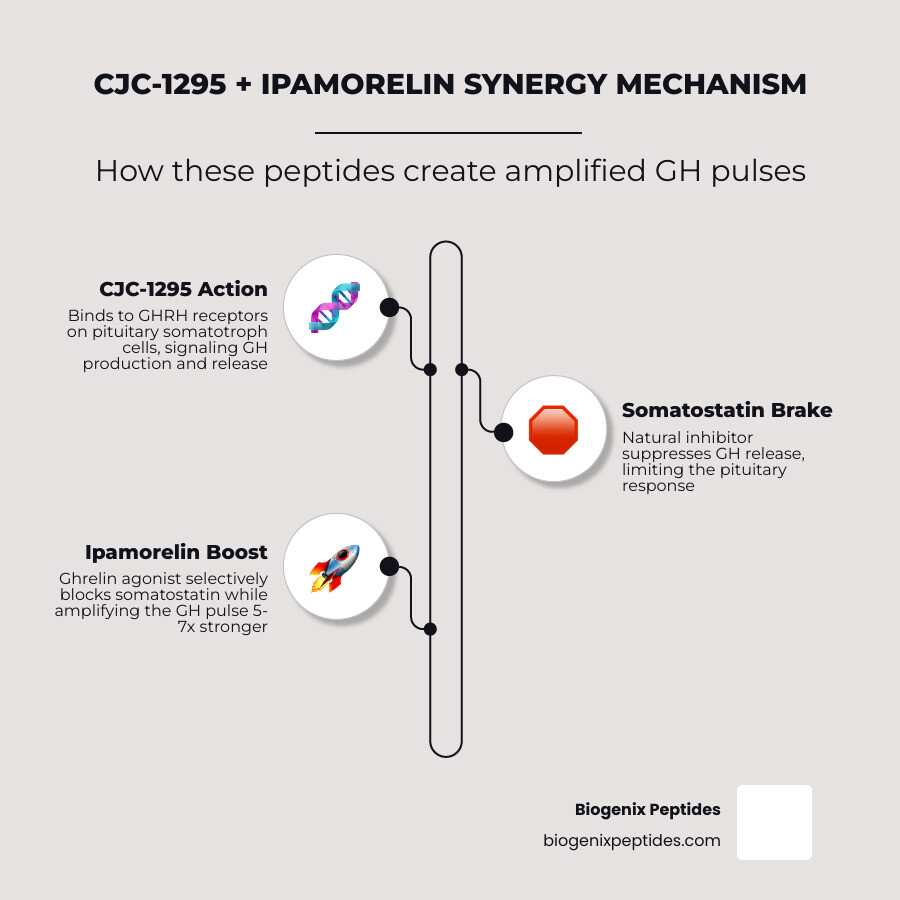
What makes this particularly compelling from a research standpoint is the mechanism. CJC-1295 acts on the GHRH receptor — essentially telling the pituitary to prepare and release GH. Ipamorelin then hits the ghrelin receptor, amplifying the pulse. One researcher described it as “pressing the gas pedal while releasing the brake” — a useful analogy for understanding why the stack is so widely studied.
This guide covers everything a serious researcher needs to know: the science behind the synergy, DAC vs. no-DAC variant selection, advanced timing strategies, reconstitution precision, lab monitoring, and responsible cycling protocols.
I’m Jay Daniel, Founder and CEO of BioGenix Peptides, with years of hands-on experience in peptide science, quality control, and research protocol development — including deep familiarity with the CJC-1295 advanced protocol covered in this guide. Let’s break down exactly how this research stack works and how to implement it with precision.
Understanding the Science of CJC-1295 and Ipamorelin Synergy
To master the CJC-1295 advanced protocol, we must first understand the biological “handshake” occurring within the pituitary gland. Research indicates that CJC-1295 is a synthetic analog of Growth Hormone-Releasing Hormone (GHRH). Its primary role in a lab setting is to bind to GHRH receptors on somatotroph cells, signaling the production and release of natural growth hormone.
However, the body has a “brake” system—somatostatin—which inhibits GH release. This is where Ipamorelin enters the research. Ipamorelin is a selective ghrelin receptor agonist. Unlike older GHRPs (Growth Hormone Releasing Peptides), research shows Ipamorelin is incredibly “clean,” meaning it stimulates GH without significantly increasing cortisol or prolactin. According to CJC-1295 Peptide Therapy for Advanced Growth Hormone … , this selectivity is what makes it a staple in advanced research.
When we look at Hgh Secretagogues The Most Misunderstood Pathway To Growth Hormone Optimization/, we see that this dual-pathway activation is the secret to the stack’s power. CJC-1295 increases the amount of GH per pulse, while Ipamorelin increases the frequency and intensity of those pulses. By hitting both the GHRH receptor and the ghrelin receptor simultaneously, researchers observe a massive synergistic surge in endogenous GH production that mimics youthful physiological patterns.
Comparing Variants: CJC-1295 With DAC vs. No DAC
In advanced research circles, the choice between “With DAC” and “No DAC” is a frequent point of debate. DAC stands for Drug Affinity Complex, a modification that allows the peptide to bind to serum albumin, extending its life in the bloodstream from minutes to several days.
| Feature | CJC-1295 No DAC (Mod GRF 1-29) | CJC-1295 With DAC |
|---|---|---|
| Half-Life | ~30 minutes | 6–8 days |
| Release Pattern | Pulsatile (Natural) | Sustained (Bleed) |
| Research Frequency | 1–3 times daily | 1–2 times weekly |
| Best For | Shop/Recovery/Cjc 1295 No Dac/ | Convenience / Stable Levels |
| Desensitization Risk | Low | Moderate |
For the CJC-1295 advanced protocol, researchers overwhelmingly prefer the “No DAC” version (also known as Modified GRF 1-29). Why? Because the goal of advanced research is usually to mimic the body’s natural, pulsatile rhythm. CJC-1295 With DAC provides a “GH bleed”—a constant elevation that, while effective for raising IGF-1, can potentially lead to pituitary desensitization or reduced receptor sensitivity over long periods.
By using Shop/Recovery/Cjc 1295 No Dac/, researchers can time the GH pulses to coincide with training or sleep, providing a more controlled and “physiological” environment for the test subject.
Implementing the CJC-1295 Advanced Protocol for Research
Transitioning from basic to advanced research requires moving beyond a simple “once-a-day” mindset. The CJC-1295 advanced protocol typically utilizes a 5-on-2-off schedule. This means the compounds are administered for five consecutive days followed by a two-day “washout” period.
This 48-hour break is essential for maintaining receptor sensitivity. Research suggests that constant stimulation of the pituitary can lead to a diminished return; the two-day break allows the somatotrophs to “re-sensitize,” ensuring that the next cycle is just as effective as the first. According to CJC-1295 + Ipamorelin , this cycling is the cornerstone of long-term research viability. Many advanced researchers find that using a pre-blended vial like Shop/Recovery/Cjc 1295 No Dac Ipamorelin ensures the exact 1:1 ratio needed for optimal synergy.
Advanced Timing and Frequency for CJC-1295 Advanced Protocol
Timing is everything in peptide research. For the CJC-1295 advanced protocol, the most critical window is the pre-sleep period. Growth hormone naturally peaks during the first 90 minutes of deep sleep. By administering the research peptides 30–60 minutes before bed, researchers can amplify this natural nocturnal surge.
However, there is a strict rule in advanced research: the fasted state. Insulin is a potent inhibitor of GH release. If the research subject has elevated blood glucose or insulin levels (from a recent meal), the GH pulse will be significantly blunted. For maximum efficacy, the administration should occur at least 2 hours after the last meal.
Advanced researchers may also explore split-timing—one administration in the morning (fasted) and one before bed. This “double-pulse” method is often used when the research goal involves accelerated recovery or significant body composition changes.
Adjusting the CJC-1295 Advanced Protocol Based on Research Goals
Not every research project has the same objectives. The CJC-1295 advanced protocol can be tailored:
- For Lean Mass Optimization: Research often focuses on the twice-daily administration (morning and night) to maintain higher mean GH levels throughout the day.
- For Recovery Acceleration: Stacking with other repair peptides (discussed later) while maintaining the 5-on-2-off cycle.
- Age-Related Variables: As subjects age, natural GHRH production drops. Research in older subjects may require a longer “on” cycle (up to 16 weeks) to observe significant shifts in IGF-1 levels.
Reconstitution and Precision in Advanced Research

Precision is the hallmark of the advanced researcher. Peptides like CJC-1295 and Ipamorelin arrive as lyophilized (freeze-dried) powder. This powder is extremely fragile; the molecular bonds can be broken by heat, light, or even vigorous shaking.
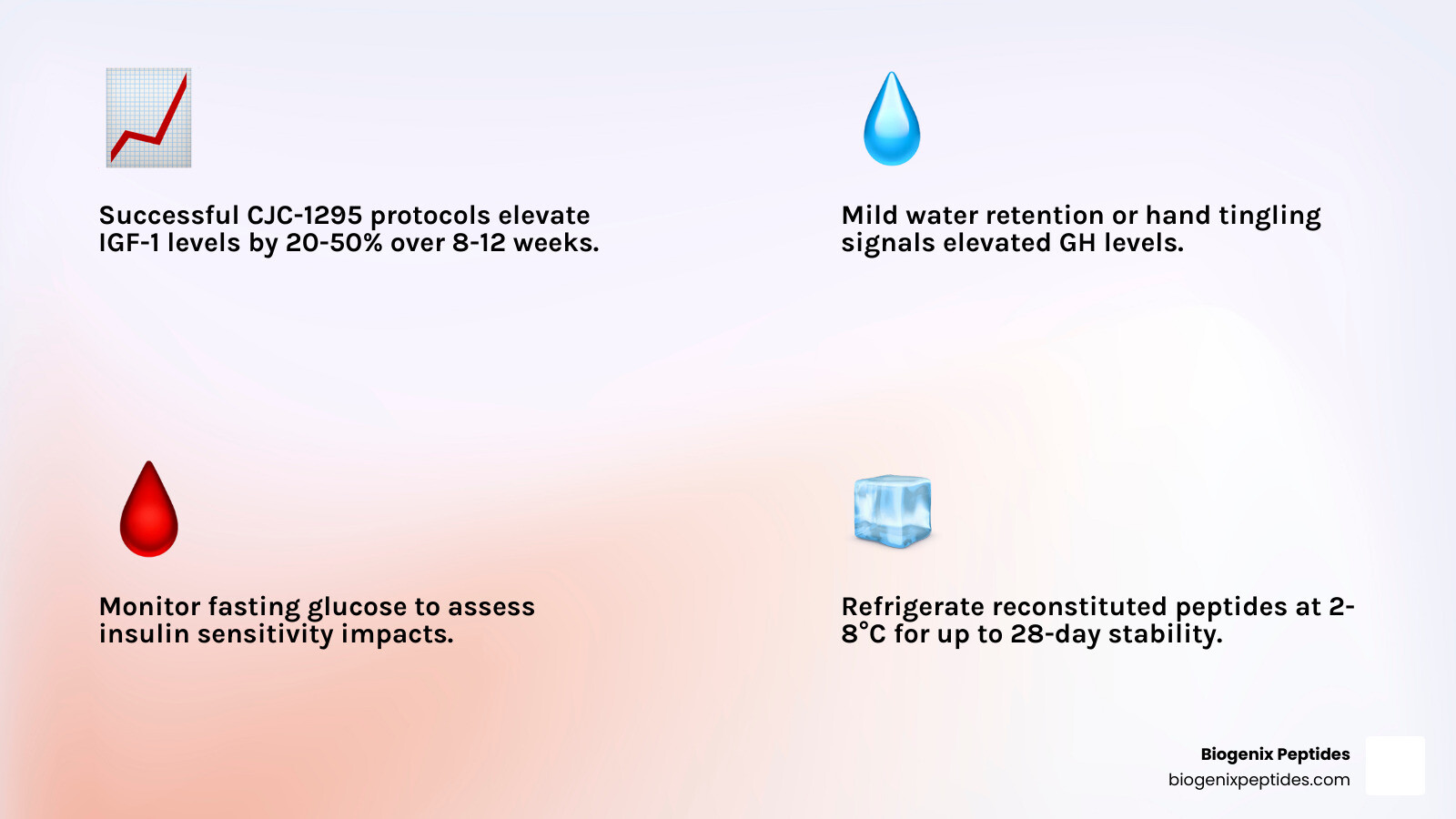
The choice of solvent is critical. We always recommend Shop/Uncategorized/Bacteriostatic Water Reconstitution Solution 10Ml/ because it contains 0.9% benzyl alcohol, which prevents bacterial growth and extends the stability of the peptide for up to 28 days when refrigerated.
Understanding The Science Of The Bacteriostatic Water Peptide Ratio/ is vital for calculating the exact concentration. For example, adding 2mL of water to a 5mg vial creates a concentration where 0.1mL equals 250mcg. If you’re looking for The Secret To Reconstituting Peptides 5Mg Correctly/, the answer lies in the “slow drip” method.
Advanced Reconstitution Techniques
To maintain the integrity of the CJC-1295 advanced protocol, follow these steps based on Reconstituting Lyophilized Peptides Step By Step/:
- Temperature Equilibrium: Allow the vial to reach room temperature before adding the solvent.
- The Gentle Tilt: Angle the vial so the bacteriostatic water runs down the glass wall rather than hitting the powder directly.
- No Shaking: Gently swirl the vial. Shaking can “denature” the peptide, rendering it useless.
- Storage: Immediately return the vial to the refrigerator (2-8°C). According to Mixing Peptides At Home Like A Pro/, peptides should be shielded from light at all times.
Monitoring Results and Safety in Advanced Peptide Stacks
Advanced research isn’t about “guessing”—it’s about “testing.” To truly master the CJC-1295 advanced protocol, researchers must monitor biological markers.
The most important marker is IGF-1 (Insulin-like Growth Factor 1). Since GH has a very short half-life in the blood, measuring it directly is difficult. IGF-1 is the stable byproduct produced by the liver in response to GH. A successful protocol should see a 20-50% increase in IGF-1 levels over an 8-12 week period.
According to the CJC-1295/Ipamorelin Guide: Benefits, Dosage & Results … , researchers should also keep an eye on:
- Fasting Glucose: While Ipamorelin is much safer than synthetic HGH, GH optimization can occasionally impact insulin sensitivity.
- Water Retention: Mild edema or “tingling” in the hands (carpal tunnel symptoms) are common signs that GH levels are elevated. In advanced research, if these symptoms become bothersome, the frequency of administration is usually reduced.
- Storage Integrity: Refer to Peptide Storage Stability Guidelines/ to ensure the compounds haven’t degraded, which is a common cause of “stalled” results.
Advanced Stacking Synergy
Many advanced researchers don’t stop at CJC-1295 and Ipamorelin. For subjects requiring tissue repair or systemic recovery, adding BPC-157 or TB-500 creates a powerhouse stack. While CJC-1295 handles the systemic GH environment, BPC-157 works locally to upregulate growth factor receptors, making the GH pulse even more effective at the site of injury.
Frequently Asked Questions about Advanced Peptide Research
How does the CJC-1295 + Ipamorelin stack compare to synthetic GH?
In research, synthetic HGH provides a massive, non-pulsatile “blast” of growth hormone that can shut down the body’s natural production (negative feedback). The CJC-1295 advanced protocol is often preferred because it preserves the natural pulsatile release, keeps the pituitary gland active, and carries a much lower risk of side effects like acromegaly or severe insulin resistance. It’s a “gentler” but highly effective way to optimize GH.
What is the significance of the 5-on-2-off cycle?
The 5-on-2-off cycle is designed to prevent “tachyphylaxis”—a medical term for the rapid decrease in response to a drug after repeated administration. By giving the pituitary gland two days of rest each week, researchers ensure that the somatotroph cells remain sensitive to the GHRH and Ghrelin signals, allowing for longer research durations (up to 6 months) without a loss in efficacy.
Can this protocol be implemented with other recovery peptides?
Absolutely. The synergy between the CJC-1295 advanced protocol and recovery peptides like BPC-157 or TB-500 is well-documented in sports science research. While CJC/Ipamorelin optimizes the systemic environment for growth and repair, BPC-157 accelerates angiogenic (blood vessel) repair, and TB-500 promotes cellular migration to injury sites. Together, they represent the pinnacle of advanced recovery research.
Conclusion
Mastering the CJC-1295 advanced protocol requires a commitment to precision, timing, and biological monitoring. By April 2026, the data is clearer than ever: the combination of CJC-1295 (no DAC) and Ipamorelin remains the gold standard for researchers looking to maximize endogenous growth hormone pulses safely and effectively.
At BioGenix Peptides, we provide the high-purity compounds necessary for this level of advanced research. Whether you are looking for CJC-1295 No DAC or the synergistic CJC-1295 + Ipamorelin blend, ensuring your research starts with 99%+ purity is the first step toward significant findings.
The road to “mastering your gains” in a research environment is paved with consistent protocols and quality science. By following the 5-on-2-off cycle, respecting the fasted state, and utilizing precise reconstitution techniques, you can unlock the full potential of these powerful secretagogues.