Step-by-Step Guide to CJC-1295 Blends
Disclaimer: The information provided in this article is for educational and informational purposes only. It is not intended as medical advice, diagnosis, or treatment. Products and compounds referenced are for research use only and are not approved for human or veterinary consumption. Always consult a qualified professional regarding health or medical decisions.
Introduction
In laboratory settings, researchers study growth hormone secretagogues using high-purity peptide vials. Understanding the synergy between Growth Hormone-Releasing Hormone (GHRH) and Growth Hormone-Releasing Peptide (GHRP) is fundamental to this research, as these compounds work together to optimize growth hormone secretion pathways.
What Are CJC-1295 Blends and Why Do Researchers Study Them?
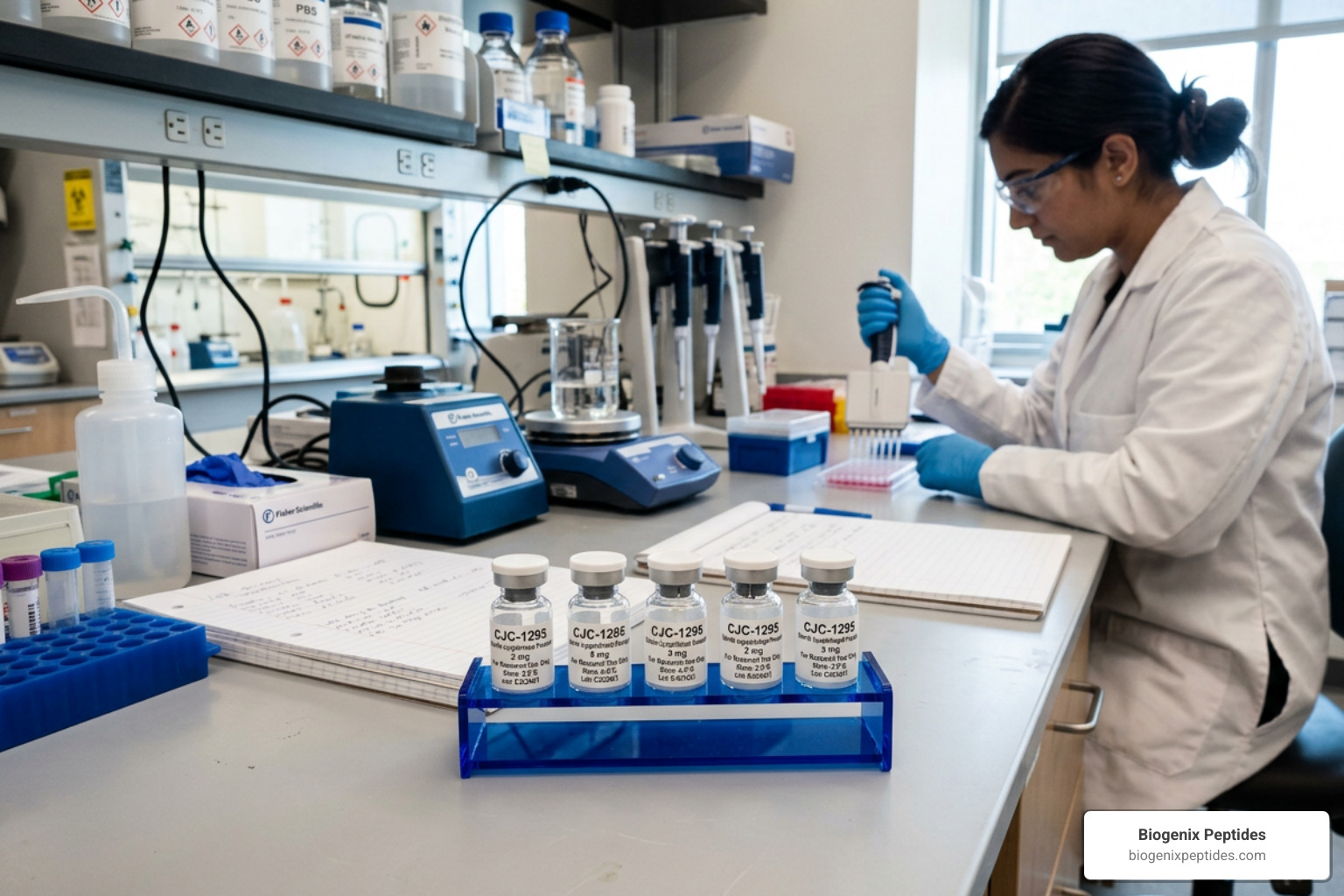
CJC-1295 blends are pre-formulated peptide combinations — most commonly pairing CJC-1295 with Ipamorelin — studied for their synergistic effects on growth hormone secretion in research models. Here is a quick overview of what the research shows:
What researchers need to know at a glance:
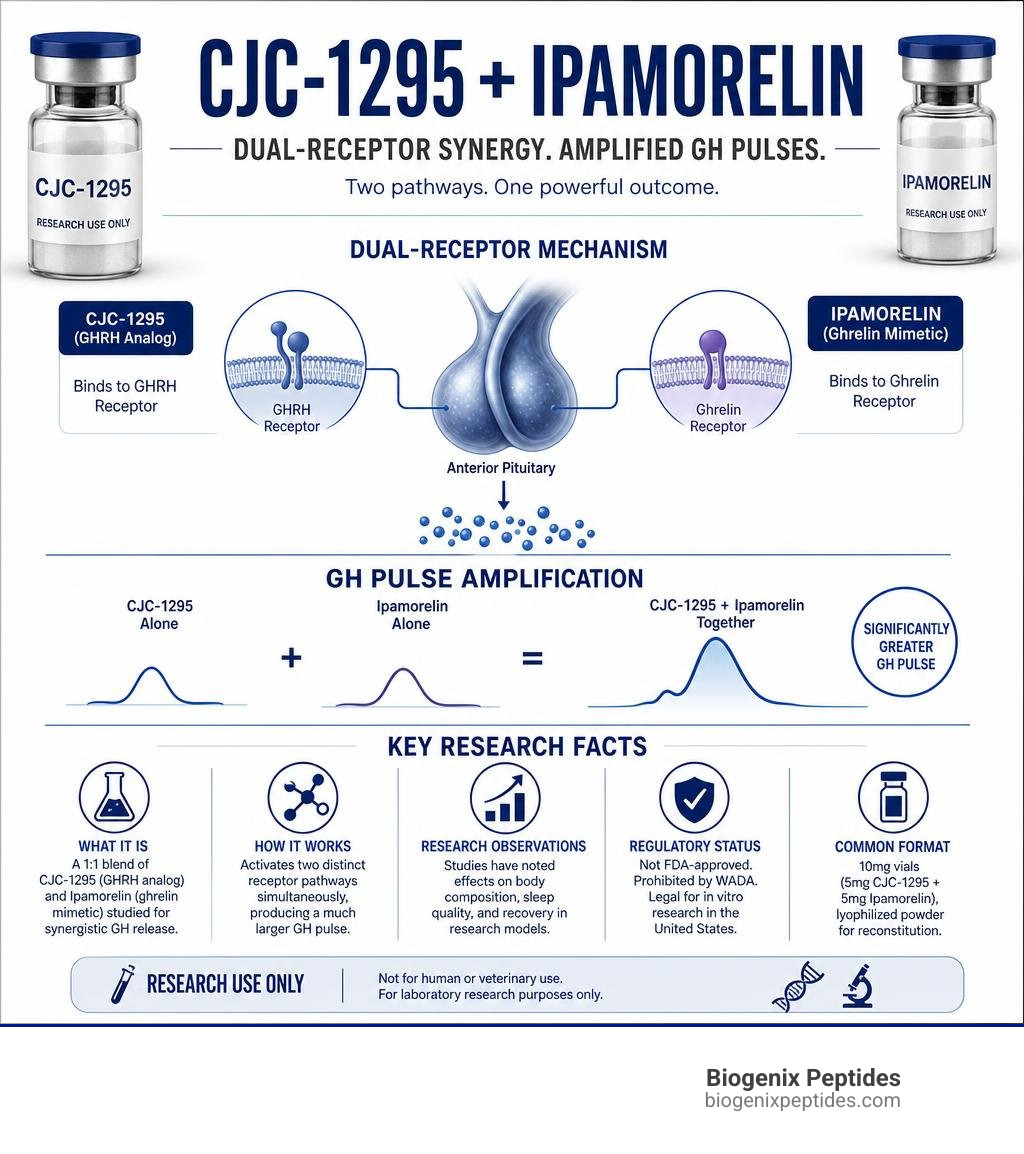
- What it is: A combination of CJC-1295 (a GHRH analog) and Ipamorelin (a selective growth hormone secretagogue), typically formulated as a 1:1 blend
- How it works: The two peptides activate separate receptor pathways simultaneously, producing a GH pulse estimated to be 3–5 times greater than either compound alone
- Key research observations: Studies have noted effects on body composition, sleep quality, and recovery in research models
- Regulatory status: Neither compound is FDA-approved for human use; both are explicitly prohibited by WADA; legal for in vitro research in the United States
- Common format: 10mg vials (5mg CJC-1295 + 5mg Ipamorelin), lyophilized powder requiring reconstitution with bacteriostatic water
Growth hormone (GH) plays a central role in how the body manages muscle tissue, fat metabolism, bone density, and cellular repair. After age 30, natural GH secretion declines by roughly 14–15% per decade. This biological shift has made GH secretagogue research one of the more active areas of peptide science.
What makes CJC-1295 blends particularly interesting to researchers is the dual-pathway mechanism. CJC-1295 works through the GHRH receptor. Ipamorelin works through the ghrelin receptor. When both fire together, the resulting GH pulse is significantly larger than what either peptide produces on its own — a relationship researchers describe as genuinely synergistic rather than simply additive.
This guide walks through the science behind these blends, how they are studied, and what laboratory protocols currently look like.
I’m Jay Daniel, Founder and CEO of BioGenix Peptides, and my background in peptide sourcing, quality control, and research protocols has given me an in-depth understanding of how CJC-1295 blends are formulated, tested, and applied in research settings. In the sections ahead, I’ll break down the mechanisms, research findings, and handling protocols in straightforward terms.
Understanding the Science of CJC-1295 Blends
To understand why cjc-1295 blends are so highly regarded in laboratory research, we first have to look at how the anterior pituitary gland regulates growth hormone. The body does not release growth hormone in a steady, continuous stream. Instead, it secretes GH in pulsatile bursts, with the largest pulses naturally occurring during deep slow-wave sleep.
This pulsatile rhythm is tightly controlled by two opposing signals: Growth Hormone-Releasing Hormone (GHRH), which stimulates release, and somatostatin, which inhibits it. By studying how synthetic compounds mimic these natural triggers, researchers have uncovered fascinating pathways to optimize this system.
The combination of CJC-1295 and Ipamorelin is often highlighted in peptide science because it targets this regulatory loop from two completely different angles. According to CJC-1295 and Ipamorelin Peptide Blend – Scientific Observations, this specific pairing acts as a highly coordinated tag-team. One peptide commands the pituitary gland to produce and release more growth hormone, while the other prevents the inhibitory hormone, somatostatin, from shutting the gate.
How CJC-1295 Functions as a GHRH Analog
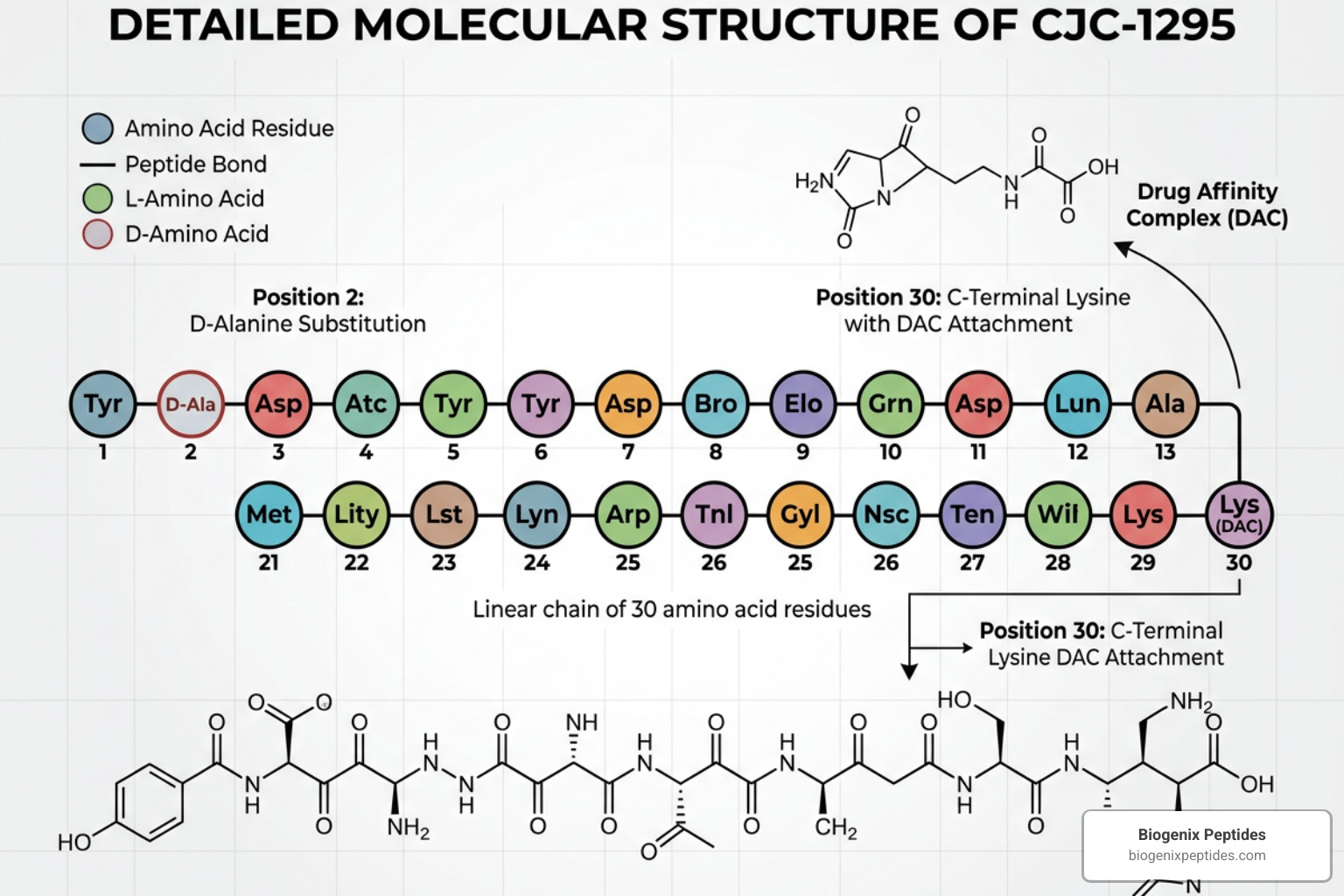
CJC-1295 is a synthetic peptide consisting of 30 amino acids. It was originally developed by ConjuChem Biotechnologies as an analog of endogenous Growth Hormone-Releasing Hormone (specifically targeting the active GHRH 1-29 fragment).
Natural GHRH has an incredibly short half-life in the bloodstream—often less than ten minutes—because it is rapidly broken down by an enzyme called dipeptidyl peptidase-IV (DPP-IV). To overcome this limitation, scientists modified the molecular structure of the peptide. By substituting four key amino acids in the chain, they created a compound highly resistant to enzymatic degradation.
In research literature, you will find two primary versions of this peptide: CJC-1295 with DAC (Drug Affinity Complex) and CJC-1295 without DAC (also known as Modified GRF 1-29). For a comprehensive breakdown of the unmodified version, researchers can consult The Ultimate Guide to CJC-1295 Without DAC.
Without the Drug Affinity Complex, the peptide has a functional half-life of approximately 30 minutes to a few hours. This shorter window is highly desirable for researchers who want to mimic the body’s natural, physiological pulsatile release of growth hormone rather than forcing a state of constant, unnatural GH elevation.
Ipamorelin as a Selective Growth Hormone Secretagogue
On the other side of the blend is Ipamorelin, a synthetic pentapeptide (composed of five amino acids) that acts as a selective growth hormone secretagogue. Ipamorelin is classified as a ghrelin receptor agonist, meaning it mimics the action of the hunger hormone ghrelin by binding to the growth hormone secretagogue receptor (GHS-R1a) in the brain and pituitary gland.
What makes Ipamorelin stand out from older growth hormone-releasing peptides (like GHRP-2 or GHRP-6) is its remarkable selectivity. Many early-generation secretagogues caused unwanted side effects in research models, such as spikes in cortisol (the stress hormone) and prolactin (which can cause fluid retention and other issues).
Ipamorelin, however, stimulates growth hormone release with almost perfect precision. Even when administered in concentrations far exceeding its active threshold, studies show it does not cause meaningful increases in cortisol, prolactin, or aldosterone.
Furthermore, unlike ghrelin itself, it does not trigger intense hunger responses in test subjects. To explore the broader performance and clinical research landscapes surrounding this compound, see CJC-1295 & Ipamorelin Peptide Therapy | Performance Blend.
Synergistic Mechanisms of Peptide Combinations
When we look at how these two compounds interact, we find a classic case of biological synergy. In pharmacology, synergy occurs when the combined effect of two substances is significantly greater than the sum of their individual parts.
If you administer CJC-1295 alone to a laboratory model, you will observe a moderate, steady rise in growth hormone. If you administer Ipamorelin alone, you will see a clean, rapid spike in GH that quickly subsides. But when they are blended together, they produce a massive, amplified GH pulse—often 3 to 5 times greater than what either compound can achieve on its own.
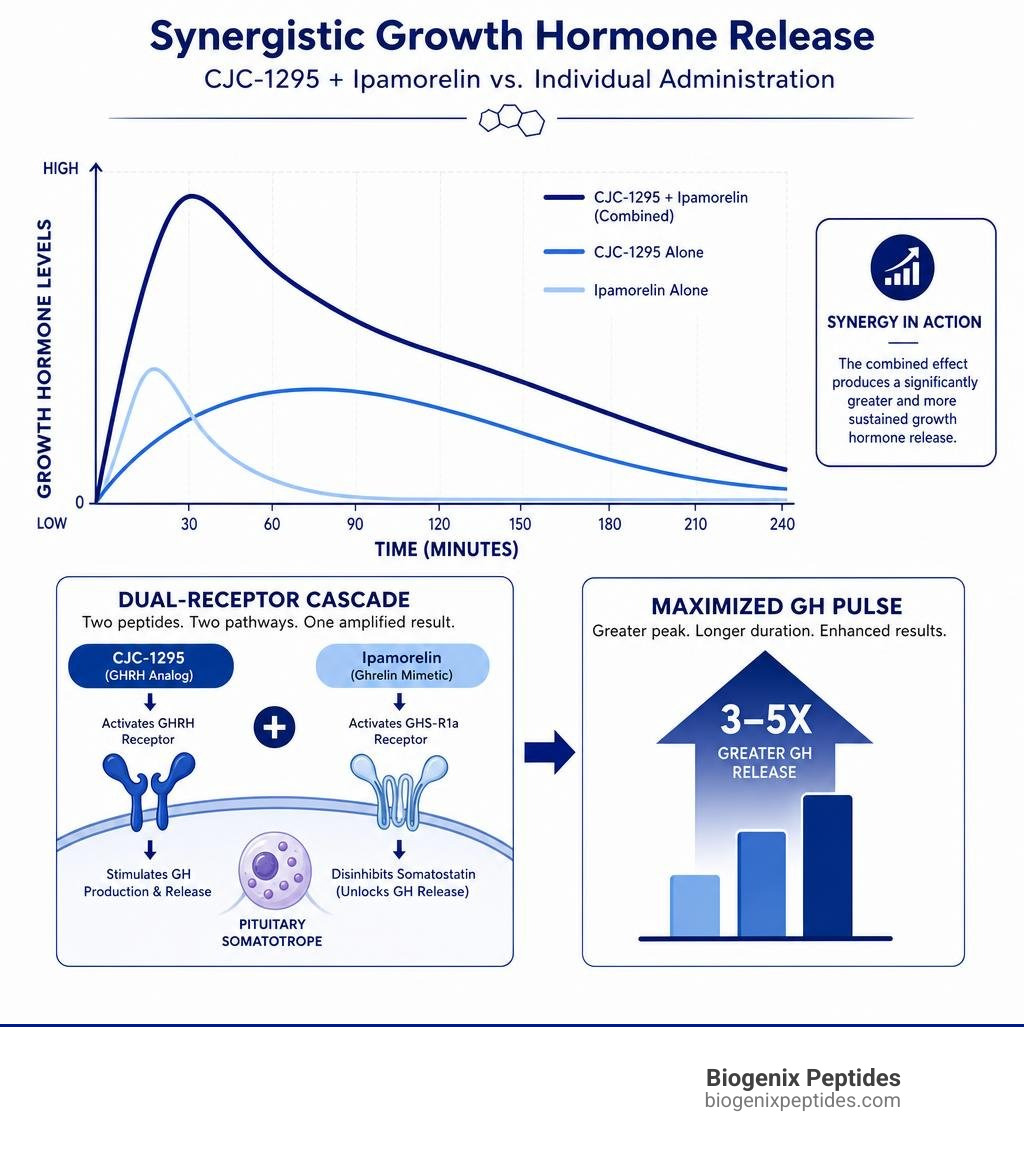
This dramatic boost is explained by the dual-receptor cascade. Because the two peptides target entirely different receptor families, they do not compete with each other for binding sites. Instead, they work in harmony to maximize the pituitary’s output. For researchers looking to understand the broader landscape of combined peptide formulations, our resource on The Complete Guide to Peptide Blends offers an excellent foundation.
The Dual-Receptor Cascade in CJC-1295 Blends
To understand the cellular magic of cjc-1295 blends, we have to zoom in on the pituitary cells (somatotropes).
- The GHRH Pathway (CJC-1295): When CJC-1295 binds to the GHRH receptor on the somatotrope, it activates an enzyme called adenylate cyclase. This triggers a cascade that increases cyclic adenosine monophosphate (cAMP) and activates protein kinase A (PKA). This pathway essentially turns on the machinery that synthesizes and prepares growth hormone for release.
- The Ghrelin Pathway (Ipamorelin): Simultaneously, Ipamorelin binds to the GHS-R1a receptor. This activates phospholipase C (PLC), which leads to the generation of inositol triphosphate (IP3) and diacylglycerol (DAG). This pathway triggers the release of intracellular calcium stores and allows extracellular calcium to rush into the cell.
When both pathways are activated at the same time, the sudden influx of calcium (triggered by Ipamorelin) meets the newly synthesized GH stores (stimulated by CJC-1295). Additionally, Ipamorelin actively suppresses the release of somatostatin, the body’s natural “stop sign” for growth hormone.
The result is a highly coordinated, powerful release of growth hormone that mimics a natural biological pulse, but at a significantly magnified volume.
Comparing CJC-1295 Blends to Other Peptide Stacks
In regenerative science and tissue repair research, scientists often compare GHRH/GHRP blends to other popular peptide stacks. A common point of comparison is the famous “Wolverine Stack,” which typically combines BPC-157 and TB-500.
While both combinations are studied for their restorative properties, they operate through completely different physiological mechanisms:
- CJC-1295/Ipamorelin Blends focus on systemic hormone optimization. By elevating growth hormone and subsequent Insulin-like Growth Factor 1 (IGF-1) levels, they promote systemic cellular repair, fat metabolism, deep sleep, and overall metabolic health in research models.
- BPC-157/TB-500 Stacks target localized tissue healing directly. BPC-157 promotes angiogenesis (the formation of new blood vessels) and mucosal healing, while TB-500 (Thymosin Beta-4) excels at cellular migration and muscle/tendon repair.
For a deeper dive into how stacking strategies can sometimes backfire if not carefully designed, you can read When Stacking Peptides Works Against You Why Less Could Be More. If you want to explore how to align these research goals effectively, check out How to Outrun Your Limits with the Right Peptide Blends.
Here is a quick reference table comparing these research approaches:
| Feature / Goal | CJC-1295 / Ipamorelin Blend | Wolverine Stack (BPC-157 / TB-500) |
|---|---|---|
| Primary Mechanism | Pituitary gland stimulation (GHRH & Ghrelin pathways) | Angiogenesis, actin regulation, and localized tissue repair |
| Hormonal Impact | Elevates systemic HGH and IGF-1 levels | None (non-hormonal) |
| Primary Research Areas | Muscle preservation, fat loss, sleep, skin, anti-aging | Acute tendon, ligament, muscle, and gut tissue repair |
| Systemic vs. Local | Broad systemic metabolic effects | Highly targeted localized healing |
Reconstitution, Storage, and Safety Protocols for Researchers
Because peptides are delicate chains of amino acids held together by fragile peptide bonds, proper handling is absolutely vital. If a researcher handles a vial too aggressively or stores it incorrectly, the peptide can easily denature, rendering the entire sample useless for study.
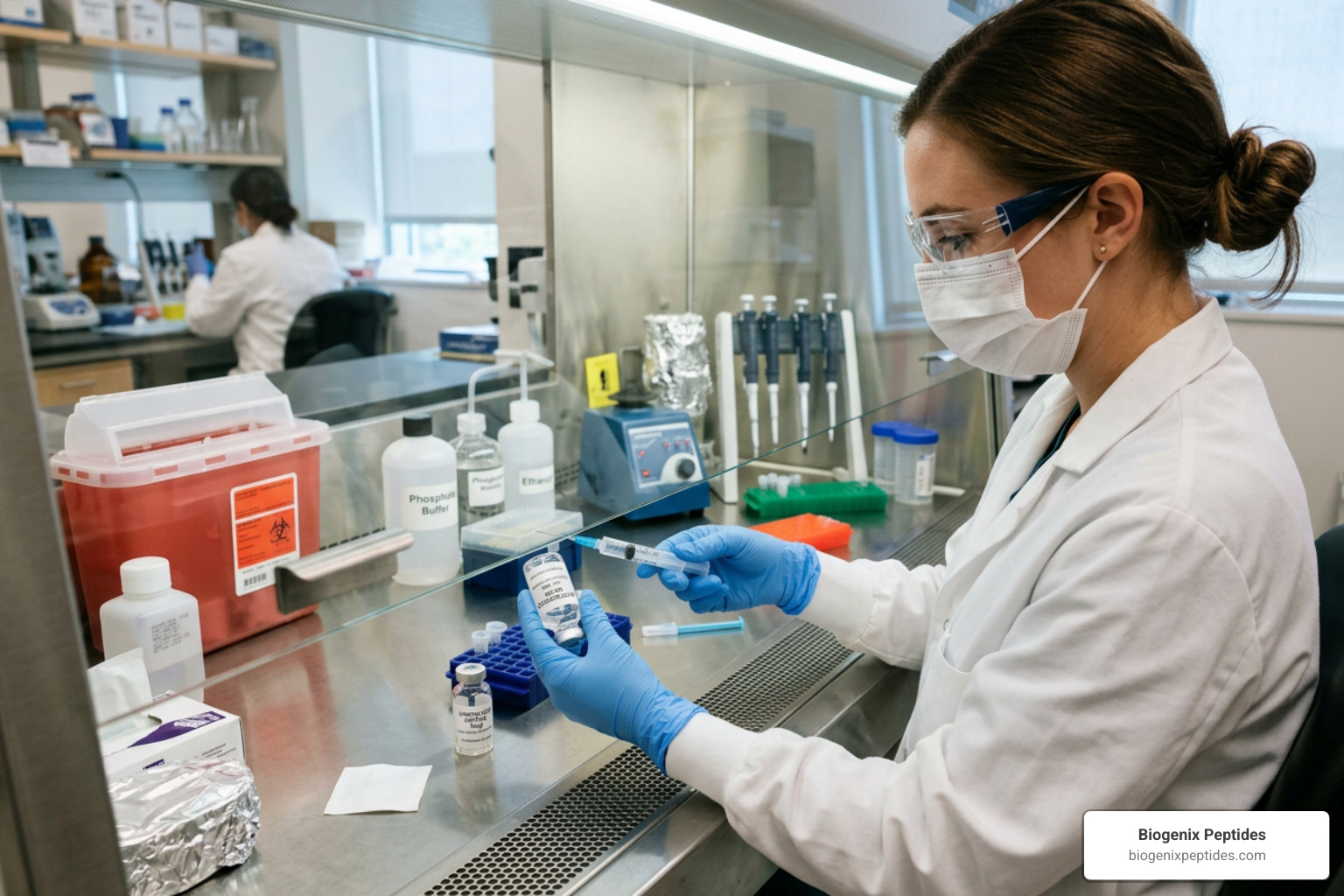
When working with cjc-1295 blends, establishing a precise, sterile laboratory protocol is the first step toward obtaining reliable research data. For advanced experimental design ideas, researchers can refer to the CJC-1295 advanced protocol guidelines.
Reconstitution Best Practices
Peptides are shipped as highly stable, freeze-dried (lyophilized) powders. To prepare them for laboratory study, they must be reconstituted using a sterile diluent—most commonly bacteriostatic water (which contains 0.9% benzyl alcohol to prevent bacterial growth).
Here is the standard laboratory procedure for reconstitution:
- Temperature Check: Allow the lyophilized vial to reach room temperature before attempting reconstitution to prevent thermal shock to the peptide structure.
- Sterilize: Wipe the rubber stopper of both the peptide vial and the bacteriostatic water vial with a fresh isopropyl alcohol swab.
- Introduce the Diluent: Draw up the required volume of bacteriostatic water (typically 2.0 mL for a standard 10mg blend vial). Gently insert the needle through the center of the rubber stopper.
- Control the Flow: Do not spray the water directly onto the lyophilized powder. Instead, aim the needle at the glass wall of the vial and slow down the plunger, letting the liquid slide gently down the side.
- Dissolve Gently: Once the diluent is fully introduced, do not shake the vial. Shaking will damage the peptide bonds and create excess foam. Instead, slowly roll the vial between your palms or tilt it back and forth until the powder is completely dissolved and the liquid is crystal clear.
Storage and Handling Requirements
Once reconstituted, the peptide blend becomes far more fragile and susceptible to degradation from heat, light, and physical movement.
- Refrigeration: Reconstituted vials must be stored in a laboratory refrigerator at approximately 2°C to 8°C (36°F to 46°F). Never freeze a reconstituted peptide, as the formation of ice crystals will shear the delicate molecules.
- Light Protection: Keep the vials in a dark environment or wrapped in foil, as ultraviolet light can rapidly degrade the amino acid sequence.
- Time Limits: Even under ideal refrigerated conditions, a reconstituted CJC-1295/Ipamorelin blend should be studied within 28 to 30 days. Beyond this window, the potency of the active compounds begins to drop significantly.
- Long-Term Storage: Unreconstituted (lyophilized) vials can be stored in a standard freezer at -20°C for up to 36 months, or at -80°C for indefinite preservation.
Potential Side Effects in Laboratory Models
In animal and in vitro research models, CJC-1295/Ipamorelin blends are generally noted for their favorable safety profile, especially compared to synthetic human growth hormone (which can cause severe joint pain, insulin resistance, and natural hormone shutdown). However, researchers should remain vigilant for documented physical responses.
Commonly observed reactions in research models include:
- Transient Flushing: A temporary warming or redness of the skin immediately following administration, caused by a brief drop in blood pressure as growth hormone is released.
- Headaches: Often mild and temporary, typically related to shifts in fluid balance.
- Water Retention: Some models show mild edema or joint stiffness due to increased sodium retention associated with elevated GH levels.
- Lethargy: Occasionally observed, particularly during the initial phases of a research schedule, as deep sleep cycles are altered.
To ensure your research models do not experience avoidable complications, it is helpful to review CJC-1295 and Ipamorelin protocol details to understand common procedural mistakes.
Safety Monitoring and Contraindications
When designing research protocols, certain exclusion criteria must be strictly observed. Because growth hormone and IGF-1 promote cellular division and tissue growth, these secretagogues must never be introduced to models with active malignancies or history of cancer.
Additionally, because growth hormone naturally alters insulin sensitivity, glucose levels in metabolic research models must be monitored closely to prevent hyperglycemia.
From a regulatory standpoint, it is important to emphasize that neither CJC-1295 nor Ipamorelin is approved by the FDA for human therapeutic use. Furthermore, both compounds are explicitly listed on the World Anti-Doping Agency (WADA) Prohibited List under Section S2 (Peptide Hormones, Growth Factors, Related Substances, and Mimetics). They are banned at all times for competitive athletes.
To hear a detailed breakdown of how these compounds are viewed in the broader sports medicine and anti-aging research communities, you can watch The Strongest Peptide for Building Muscle | CJC 1295 & Ipamorelin ….
Frequently Asked Questions About Peptide Combinations
What is the difference between CJC-1295 with DAC and without DAC?
The primary difference lies in the presence of the Drug Affinity Complex (DAC).
- CJC-1295 with DAC binds to a protein in the blood called albumin. This dramatically extends its half-life to about 6 to 8 days, leading to a constant, elevated release of growth hormone over a prolonged period.
- CJC-1295 without DAC (Modified GRF 1-29) does not bind to albumin and has a short half-life of roughly 30 minutes. This allows the pituitary gland to release growth hormone in natural, pulsatile bursts rather than a continuous “bleed,” which researchers generally prefer to avoid pituitary desensitization.
How should these peptide combinations be stored?
Before reconstitution, the lyophilized powder should be stored in a freezer at -20°C for long-term stability. Once reconstituted with bacteriostatic water, the liquid solution must be kept in a refrigerator at 2°C to 8°C and protected from light. It should be utilized within 30 days to ensure maximum peptide integrity and research accuracy.
Are these compounds approved for human use?
No. Neither CJC-1295 nor Ipamorelin is approved by the FDA for human consumption, medical treatment, or veterinary use. They are strictly classified as research chemicals intended for laboratory, in vitro, and animal study purposes only.
Conclusion
The study of cjc-1295 blends represents an exciting frontier in endocrine research and metabolic science. By pairing a GHRH analog with a highly selective ghrelin receptor agonist, researchers can unlock a powerful, natural growth hormone response that far exceeds the capabilities of either peptide on its own.
As we continue to explore the vast potential of regenerative medicine in 2026, maintaining strict adherence to proper reconstitution, storage, and handling protocols is essential for generating high-quality, reproducible scientific data.
For laboratories looking to acquire high-purity compounds for study, you can explore our premium options, such as the Shop Recovery CJC-1295 No DAC Ipamorelin blend, or view our individual options like Shop Recovery CJC-1295 No DAC. We also offer other metabolic formulations, which you can learn about by visiting Shop Metabolic Tesamorelin Ipamorelin 10mg Blend.
To secure your supply of high-purity research compounds, visit our primary portal at BioGenix Peptides Shop Recovery CJC-1295 No DAC and take the next step in optimizing your laboratory’s peptide research protocols.