The Ultimate Guide to Buying GLP-1 Research Peptides Online
Where to Buy GLP-1 Research Peptides: What Every Researcher Needs to Know
Disclaimer: The information provided in this article is for educational and informational purposes only. It is not intended as medical advice, diagnosis, or treatment. Products and compounds referenced are for research purposes only and are not approved for human or veterinary consumption. Always consult a qualified professional regarding health or medical decisions.
Quick Answer: Where to Buy GLP-1 Research Peptides
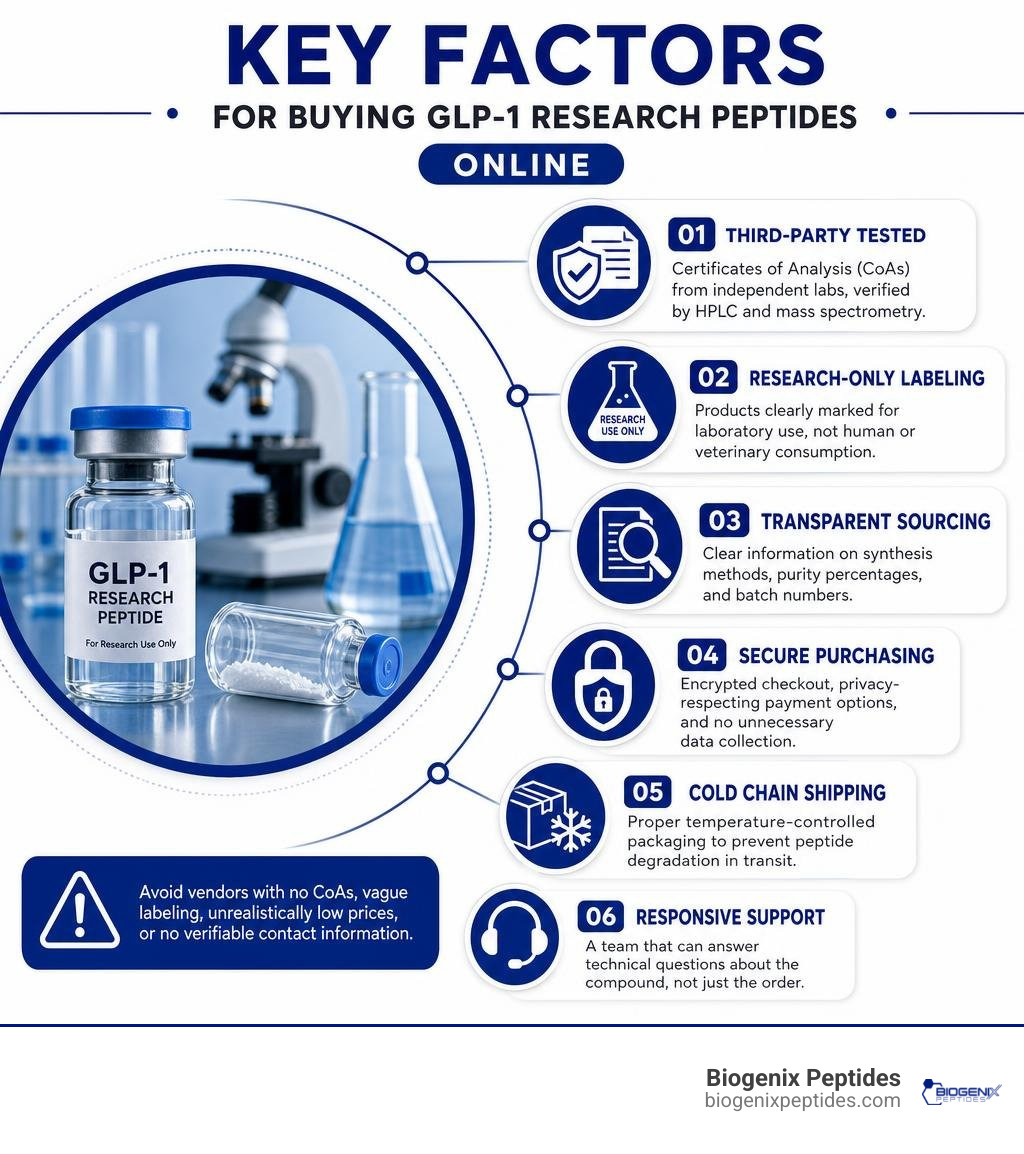
When searching for glp 1 research peptides where to buy, focus on vendors that meet these criteria:
- Third-party tested — Certificates of Analysis (CoAs) from independent labs, verified by HPLC and mass spectrometry
- Research-only labeling — Products clearly marked for laboratory research, not human or veterinary consumption
- Transparent sourcing — Clear information on synthesis methods, purity percentages, and batch numbers
- Secure purchasing — Encrypted checkout, privacy-respecting payment options, and no unnecessary data collection
- Cold chain shipping — Proper temperature-controlled packaging to prevent peptide degradation in transit
- Responsive support — A team that can answer technical questions about the compound, not just the order
Avoid vendors with no CoAs, vague labeling, unrealistically low prices, or no verifiable contact information.
The market for glp 1 research peptides where to buy reliably has never been more relevant — or more crowded. The global GLP-1 receptor agonist market was valued at approximately $20.1 billion in 2022 and is projected to reach $71.4 billion by 2032. That explosive growth has pulled in a wave of suppliers, ranging from rigorous, science-first labs to unregulated vendors selling poorly characterized compounds. With roughly 1 in 5 research peptide purchases coming from unvetted online sources, the risk of receiving adulterated or mislabeled material is real and significant.
For researchers, quality is not optional. A compromised peptide compound doesn’t just waste budget — it invalidates data.
This guide breaks down everything you need to evaluate suppliers, understand purity standards, navigate legal considerations, and handle GLP-1 research peptides correctly in a lab setting.
I’m Jay Daniel, Founder and CEO of BioGenix Peptides, and I’ve spent years working directly in peptide sourcing, quality control, and research development — including helping laboratories identify trustworthy sources for glp 1 research peptides where to buy with confidence. In the sections ahead, I’ll share what the science says, what the market looks like in 2026, and exactly what to look for before you place an order.
Discover more about glp 1 research peptides where to buy:
What Are GLP-1 Research Peptides and How Do They Work?
Glucagon-like peptide-1 (GLP-1) research peptides belong to a fascinating category known as incretin mimetics. In biological systems, incretins are metabolic hormones released after nutrient intake to stimulate insulin response and regulate glucose homeostasis. To understand how these compounds interact with cellular systems, researchers rely on detailed mapping of GLP-1 Incretin Pathways Explained.
According to Scientific research on GLP-1 receptor agonists, these compounds bind to and activate the GLP-1 receptor, triggering a cascade of intracellular events. In laboratory models, this signaling pathway is highly conserved, making GLP-1 agonists invaluable tools for studying metabolic syndrome, cardiovascular physiology, and neurodegenerative pathways.
Mechanisms of Incretin Mimetics in Laboratory Models
In laboratory models, the primary mechanism of GLP-1 research peptides involves the activation of adenylate cyclase, which increases intracellular cyclic adenosine monophosphate (cAMP) levels. This elevation of cAMP triggers downstream signaling molecules, leading to glucose-dependent insulin synthesis and secretion in pancreatic beta-cell models.
Simultaneously, these compounds suppress glucagon secretion from alpha-cells when glucose levels are elevated. For a comprehensive overview of why these biochemical mechanisms have captured the scientific community’s attention, researchers can consult What Are GLP-1 Peptides and Why Is Everyone Talking About Them?.
Key Differences Between Research Compounds and FDA-Approved Medications
It is critical to distinguish between clinical-grade, FDA-approved medications and research-only compounds. FDA-approved products are manufactured under strict Current Good Manufacturing Practice (cGMP) guidelines, formulated for patient administration, and prescribed by licensed healthcare providers.
In contrast, research-only (RUO) peptides are synthesized specifically for laboratory experimentation, such as in vitro cell assays or in vivo animal studies. They lack clinical-grade formulation, are not sterilized for human application, and do not carry clinical instructions. This distinction is vital for maintaining laboratory compliance and is detailed further in the GLP-1 Peptides Complete Guide 2026.
Evaluating Quality, Purity, and Legal Considerations
When sourcing research chemicals, quality control is the cornerstone of experimental validity. The gold standard for verifying the identity and purity of synthetic peptides is a combination of High-Performance Liquid Chromatography (HPLC) and Mass Spectrometry (MS).
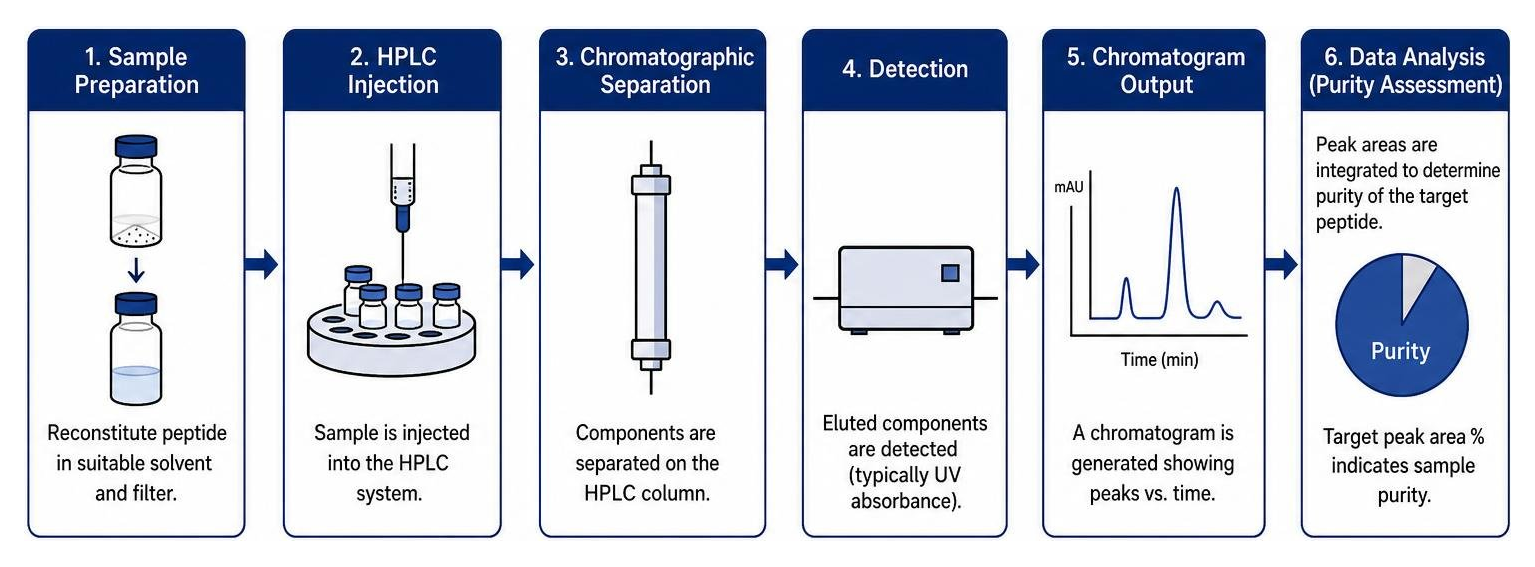
An HPLC chromatogram measures the purity of the sample by separating its chemical components, while mass spectrometry confirms the molecular weight of the target peptide. For a deeper look at verifying these chemical profiles, refer to Tirzepatide Peptides for Sale and How to Spot the Real Deal.
Verifying Authenticity and Storage Conditions
Synthetic peptides are highly sensitive to environmental factors. Most research peptides are supplied as lyophilized (freeze-dried) powders, which are significantly more stable than liquid solutions. However, even lyophilized peptides can degrade if exposed to moisture, heat, or light.
To prevent degradation, reputable suppliers utilize cold chain logistics, shipping compounds with cold packs and recommending immediate sub-zero storage upon arrival. Failing to maintain these storage conditions is one of The 10 Most Common Mistakes People Make When They’re New to Peptide Research.
Compliance and Research-Only Classifications
In the United States, the purchase of GLP-1 research peptides is legal when they are intended strictly for laboratory research. These compounds are classified as research-only (RUO) chemicals.
Under FDA regulations, marketing or distributing these substances for human or veterinary consumption is illegal. Buyers must ensure they operate within a legitimate laboratory framework and source from vendors who adhere strictly to these compliance standards, as outlined in the Ultimate Guide to Reputable Peptide Stores Online.
Typical Costs and Payment Methods for Laboratory Procurement
The cost of GLP-1 research peptides varies depending on the specific molecule (e.g., Semaglutide vs. newer multi-agonists like Retatrutide), the quantity, and the purity level. Because research budgets are often tight, laboratories must balance cost with quality.
While bulk purchasing can reduce the cost per milligram, unrealistically low prices often signal substandard purity or mislabeled products. For strategies on optimizing your laboratory budget without compromising chemical integrity, read How to Get GLP-1 Results on a Generic Budget.
GLP 1 Research Peptides Where to Buy: Key Factors in a Reputable Supplier
Finding a trustworthy vendor when searching for glp 1 research peptides where to buy requires rigorous vetting. A reputable supplier must provide transparent access to independent, third-party testing results for every batch.
Additionally, look for vendors with clear shipping policies, responsive technical support, and positive feedback from verified research institutions. For a comparative look at sourcing strategies, see Where to Buy Peptides Without Losing Your Gains or Your Shirt.
Best Practices for Sourcing GLP 1 Research Peptides Where to Buy Safely
To ensure the safety and validity of your laboratory studies, follow these sourcing best practices:
- Demand Batch-Specific CoAs: Never accept outdated or generic Certificates of Analysis.
- Verify Laboratory Credentials: Ensure the testing facility listed on the CoA is an independent, accredited laboratory.
- Check Security Protocols: Confirm the vendor’s website uses secure, encrypted checkout systems to protect your institution’s financial data.
For a structured approach to procurement, consult our comprehensive Buying Guide.
Red Flags to Avoid When Sourcing Online
With approximately 20% of online peptide purchases coming from unregulated or unvetted sources, researchers must watch for these red flags:
- Absence of CoAs: If a vendor cannot or will not provide verification of purity, do not buy.
- Vague Labeling: Avoid products that do not clearly specify the exact peptide content, molecular weight, or “Research Only” status.
- Unprofessional Communication: A lack of technical understanding from the customer support team often mirrors a lack of quality control in their supply chain.
For a broader perspective on the domestic supply landscape, review the A Massive List of Peptide Suppliers USA.
Handling, Reconstitution, and Storage Protocols in a Lab Setting
Proper laboratory handling is vital to preserve the structural integrity of GLP-1 research peptides. Upon receipt, lyophilized vials should be stored in a freezer at -20°C (or -80°C for long-term storage) to prevent hydrolytic degradation.

Reconstitution Liquids and Concentration Calculations
Reconstitution must be performed under sterile conditions using an appropriate solvent. The choice of liquid depends on the specific experimental design:
| Reconstitution Liquid | Ideal Storage Temperature | Best Suited For |
|---|---|---|
| Bacteriostatic Water (0.9% Benzyl Alcohol) | 2°C to 8°C (Refrigerated) | Multiple-entry vials, inhibits bacterial growth |
| Sterile Saline (0.9% NaCl) | 2°C to 8°C (Refrigerated) | Short-term studies, isotonic cellular assays |
| Sterile Water (Preservative-Free) | Utilize immediately | Single-test assays, no preservative interference |
When preparing solutions, calculate your concentration carefully based on the total milligram content of the vial and the volume of solvent added. For advanced protocols involving multi-agonist compounds, refer to GLP-1 Dual and Triple Agonist Peptides: Semaglutide, Tirzepatide, and Retatrutide in Research.
Guidelines for Sourcing GLP 1 Research Peptides Where to Buy for In Vitro Studies
For in vitro cell culture studies, researchers must ensure that any trace impurities or preservatives in the peptide formulation will not interfere with cellular viability or assay readouts. Sourcing high-purity, additive-free lyophilized peptides is crucial for these delicate experimental setups.
To explore our curated selection of metabolic research compounds, visit our Product Category: GLP-1 page.
Frequently Asked Questions about GLP-1 Research Peptides
What is the difference between Semaglutide and Tirzepatide in research?
In laboratory models, Semaglutide acts as a selective mono-agonist, targeting only the GLP-1 receptor. Tirzepatide, on the other hand, is a dual-agonist that targets both the GLP-1 and GIP (glucose-dependent insulinotropic polypeptide) receptors, showing different signaling dynamics in metabolic models. For a detailed breakdown of these differences, see Shedding Pounds with Science: A Guide to GLP-1 Peptides.
How should lyophilized GLP-1 peptides be stored?
Lyophilized GLP-1 peptides should be stored in a dry, dark location at -20°C for optimal stability. Once reconstituted, they should be kept refrigerated at 2°C to 8°C and utilized within a limited timeframe (typically 14 to 28 days, depending on the solvent utilized) to avoid peptide degradation. For more storage tips, visit our FAQ page.
Are GLP-1 research peptides legal to purchase?
Yes, in the United States, purchasing GLP-1 research peptides is legal for laboratory, scientific, and educational purposes. They are strictly classified as research chemicals and are not approved for human or veterinary application. For additional details on legal compliance, read our Frequently Asked Questions (FAQs).
Conclusion

Navigating the landscape of glp 1 research peptides where to buy requires diligence, scientific literacy, and an unwavering commitment to quality. By prioritizing verified third-party testing, proper storage, and strict regulatory compliance, researchers can ensure their studies yield reliable, reproducible data.
At BioGenix Peptides, we are dedicated to supporting the scientific community by providing ultra-pure, rigorously analyzed compounds for cutting-edge metabolic research.
Ready to advance your laboratory’s metabolic research? Explore GLP-1 Research Peptides today.