
10 GLP-1 Side Effects You Should Know About
What Researchers Need to Know About GLP-1 Peptides Side Effects
Disclaimer: The information provided in this article is for educational and informational purposes only. It is not intended as medical advice, diagnosis, or treatment. Products and compounds referenced are for research use only and are not approved for human or veterinary consumption. Always consult a qualified professional regarding health or medical decisions.

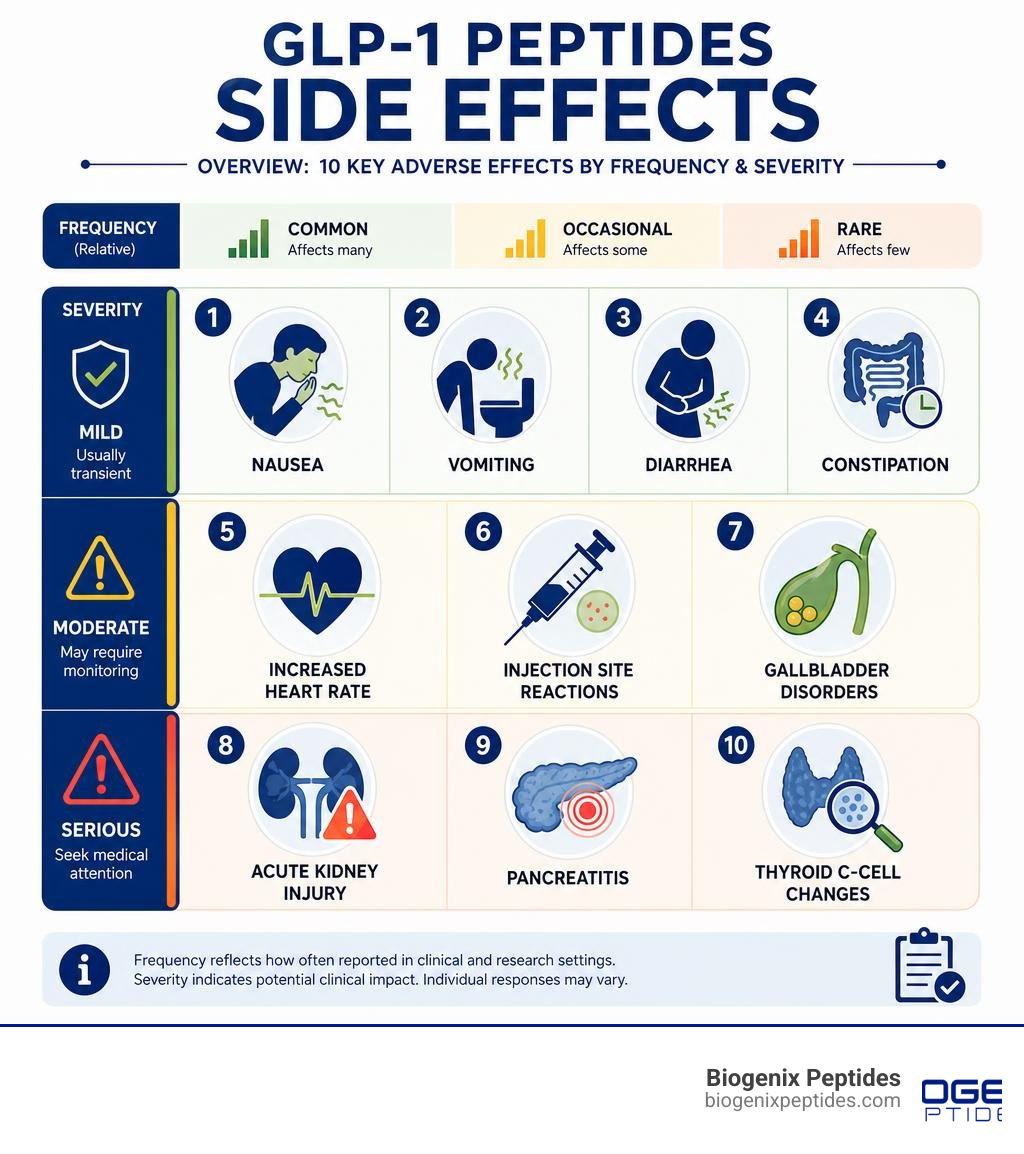
GLP-1 peptides side effects are a critical area of study for anyone tracking the latest in metabolic and incretin research. Before going deeper, here is a quick overview of the most documented adverse effects observed in clinical and research settings:
Most commonly reported GLP-1 peptide side effects:
- Nausea – affects up to 50% of subjects; concentration-dependent and typically diminishes over time
- Vomiting – closely linked to nausea; more frequent at higher concentrations
- Diarrhea – common during early exposure or escalation periods
- Constipation – reported alongside other GI disturbances
- Increased heart rate – average increase of roughly 2 to 3 beats per minute
- Administration site reactions – ranging from mild redness to localized nodules
- Gallbladder disorders – including gallstones, especially at higher concentrations and longer durations
- Acute kidney injury – primarily linked to volume contraction from GI fluid loss
- Pancreatitis – a labeled risk, though large meta-analyses show no significant increase vs. controls
- Thyroid C-cell changes – observed in rodent models; human relevance remains under investigation
GLP-1 receptor agonists have transformed metabolic disease research over the past two decades. Since exenatide became the first FDA-approved agent in 2005, the class has expanded rapidly — and so has scrutiny of its safety profile. Researchers and clinicians alike are now asking harder questions: Which effects are transient? Which are serious? And what does the evidence actually show?
This guide covers all ten of the most significant side effects documented across clinical trials, meta-analyses, and pharmacovigilance data — so you can evaluate the research with clarity.
I’m Jay Daniel, Founder and CEO of BioGenix Peptides, with years of hands-on experience in peptide science, quality control, and research-driven analysis of compounds like GLP-1 receptor agonists — including a close focus on GLP-1 peptides side effects as they emerge in both controlled trials and real-world data. The sections ahead break down each effect by mechanism, frequency, and research-grade evidence so you can draw well-informed conclusions.
Glp-1 peptides side effects helpful reading:
Understanding GLP-1 Receptor Agonists and How They Work
To understand how these compounds generate physiological changes and potential adverse reactions, we must first look at the underlying molecular biology. Glucagon-like peptide-1 (GLP-1) is an endogenous incretin hormone secreted by the L-cells of the small intestine in response to nutrient ingestion. In its natural state, endogenous GLP-1 has an incredibly short half-life of roughly two minutes because it is rapidly degraded by the enzyme dipeptidyl ppetidase-4 (DPP-4).
Synthetic analogs and mimetics are designed to resist this enzymatic degradation. By modifying the peptide sequence, researchers have created long-acting compounds that can sustain receptor activation for days or even weeks.
When these compounds activate the GLP-1 receptor, they initiate a cascade of downstream physiological events:
- Glucose-Dependent Insulin Secretion: They stimulate the pancreatic beta cells to release insulin, but notably only when circulating glucose levels are elevated. This minimizes the baseline risk of hypoglycemia when the compound is administered as a monotherapy.
- Glucagon Suppression: They inhibit the alpha cells of the pancreas from secreting glucagon, which reduces hepatic glucose output.
- Delayed Gastric Emptying: By slowing down the rate at which the stomach empties its contents into the duodenum, these peptides modulate postprandial glucose spikes.
- Central Satiety Regulation: They cross the blood-brain barrier or act via vagal afferents to target the hypothalamus and hindbrain, significantly reducing appetite and promoting a feeling of fullness.
Understanding these pathways is vital because the very same mechanisms that drive glycemic control and weight reduction also mediate the most common glp-1 peptides side effects. For a complete breakdown of these biological pathways, explore our guide on GLP-1 Incretin Pathways Explained or consult the comprehensive pharmacological overview on Glucagon-Like Peptide-1 Receptor Agonists – StatPearls.
Common Gastrointestinal GLP-1 Peptides Side Effects
Gastrointestinal (GI) symptoms represent the most frequent class of glp-1 peptides side effects observed in scientific literature. Across clinical trials, up to 50% to 60% of subjects experience some form of mild-to-moderate GI distress, particularly during the initiation phase or when escalating the administration concentration.
The primary driver behind these symptoms is the delay in gastric emptying. When food remains in the stomach for an extended period, it can lead to dyspepsia, bloating, and early satiety. Additionally, central nervous system activation of the pro-opiomelanocortin (POMC) neurons in the hypothalamus can trigger nausea and emesis.
According to meta-analyses, these effects are highly dependent on the specific chemical structure and the rate of titration. For instance, exenatide 10 µg administered twice daily has a significantly higher probability of producing nausea compared to exenatide 5 µg twice daily (OR: 2.28) and exenatide once-weekly formulations (OR: 2.78). Furthermore, a meta-analysis of 35 studies demonstrated that exenatide 10 µg twice daily had a significantly higher probability of causing nausea compared with liraglutide 1.2 mg/day (OR: 2.16) and 1.8 mg/day (OR: 3.19).
To better understand these compounds, we must look at how they are discussed in the scientific community. For more background on these dynamics, see What Are GLP-1 Peptides and Why Is Everyone Talking About Them? and read the detailed safety review in Exploring the Side Effects of GLP-1 Receptor Agonist.
| GLP-1 Receptor Agonist Formulation | Primary Gastric Emptying Effect | Nausea Probability | Typical Duration of GI Symptoms |
|---|---|---|---|
| Short-Acting (e.g., Exenatide twice-daily, Lixisenatide) | Pronounced, transient deceleration of gastric emptying | Higher initial spikes, especially post-administration | Intermittent, tied to administration timing |
| Long-Acting (e.g., Semaglutide weekly, Dulaglutide, Liraglutide daily) | Gradual, sustained deceleration; tachyphylaxis may occur over time | Moderate, more evenly distributed across the week | Persistent but gradually diminishing over 4 to 8 weeks |
Mitigating Common GLP-1 Peptides Side Effects in Laboratory Models
In laboratory models and clinical research, mitigating these common GI symptoms is crucial for maintaining the integrity of long-term studies. The primary strategy utilized is the “Three E’s” protocol:
- Education: Preemptively analyzing the expected timeline of symptoms, emphasizing that nausea and bloating typically peak during the first few weeks and gradually decline.
- Escalation: Implementing a highly gradual titration schedule. Starting with a minimal concentration and waiting at least four weeks before stepping up to the next level allows the gastrointestinal tract and brainstem receptors to desensitize.
- Effective Management: Adjusting dietary parameters. In animal models and clinical subjects, reducing portion sizes, avoiding high-fat or greasy foods (which further delay gastric emptying), and maintaining high hydration levels significantly reduces the severity of symptoms.
For detailed clinical recommendations on managing these complications, refer to the gastroenterology guidelines outlined in GLP-1RA Essentials in Gastroenterology.
Comparing Long-Term GLP-1 Peptides Side Effects Across Formulations
When comparing long-acting and short-acting formulations, distinct safety and tolerability profiles emerge. Short-acting formulations, such as lixisenatide or twice-daily exenatide, exert a more dramatic, immediate effect on gastric emptying, which often correlates with acute, transient spikes of nausea.
In contrast, long-acting formulations like dulaglutide or weekly semaglutide maintain a more stable concentration in the bloodstream. While this leads to more consistent appetite suppression, it can result in prolonged, low-grade constipation or mild nausea that takes several weeks to fully resolve as the body adapts.
Furthermore, immunogenicity differs significantly across these formulations. The rate of antibody formation is quite high in some short-acting or non-human-homologous peptides:
- Lixisenatide: 69.8% antibody formation incidence
- Exenatide: 44% antibody formation incidence
- Liraglutide: 8.6% antibody formation incidence
- Albiglutide: 4% antibody formation incidence
- Dulaglutide: 1.6% antibody formation incidence
While these antibodies rarely neutralize the therapeutic efficacy of the compound, they can occasionally correlate with localized skin reactions. To explore these long-term tolerability differences in detail, see Safety and Tolerability of GLP-1 Receptor Agonists.
Serious and Rare Adverse Effects of Incretin Mimetics
While the vast majority of glp-1 peptides side effects are mild and gastrointestinal in nature, researchers must remain vigilant regarding rare but severe adverse events that have been flagged in pharmacovigilance databases and animal studies.

Among the most discussed serious concerns are:
- Pancreatitis: Acute pancreatitis is listed as a warning on all approved GLP-1 receptor agonists. The hypothesis suggests that chronic stimulation of pancreatic exocrine cells could lead to ductal hyperplasia and subsequent localized inflammation. However, large-scale data is reassuring. A meta-analysis of 55 randomized controlled trials (comprising 33,350 participants) showed no statistically significant increase in the risk of pancreatitis with GLP-1 agonists compared with controls (OR: 1.05, 95% CI: 0.37-2.94). Similarly, a massive meta-analysis of nine observational studies involving over 1.3 million patients and 5,195 cases of acute pancreatitis found no significant association (OR: 1.03, 95% CI: 0.87-1.20).
- Pancreatic Cancer: Concerns regarding long-term exocrine pancreatic changes led to investigations into malignant neoplasms. A meta-analysis of 25 studies indicated that the use of exenatide (OR: 0.86, 95% CI: 0.29-2.60) and liraglutide (OR: 1.35, 95% CI: 0.70-2.59) did not significantly elevate the risk of pancreatic cancer.
- Gallbladder and Biliary Disorders: There is a documented increase in the risk of cholelithiasis (gallstones) and cholecystitis (gallbladder inflammation), particularly at higher concentrations and during rapid weight loss phases. This is thought to be driven by reduced gallbladder motility and altered bile composition during periods of caloric restriction.
To read a deeper analysis of these risk factors and how they compare to the metabolic benefits of incretin therapy, read Weight Loss Wonders or Risk Factors: A Deep Dive into Incretin Therapy and the comprehensive paper on Adverse Effects of GLP-1 Receptor Agonists – PMC.
Thyroid C-Cell Tumors and Rodent Model Findings
One of the most prominent safety warnings associated with GLP-1 receptor agonists is the risk of thyroid C-cell tumors, including medullary thyroid carcinoma (MTC). This risk was first identified in long-term rodent carcinogenicity studies, where exposure to liraglutide and semaglutide led to dose-dependent C-cell hyperplasia and tumors.
However, subsequent research has highlighted profound species differences that make translating these findings to humans highly complex:
- Receptor Expression: Rodent thyroid C-cells express high levels of the GLP-1 receptor. Activation of these receptors directly stimulates calcitonin release and C-cell proliferation. In contrast, human thyroid C-cells express the GLP-1 receptor at extremely low, almost undetectable levels.
- Epidemiological Data: To date, human epidemiological studies and clinical trial follow-ups have not confirmed a clear, causal link between GLP-1 receptor agonist use and thyroid cancer in humans. A meta-analysis of 25 studies showed that liraglutide was not significantly associated with an increased risk of thyroid cancer (OR: 1.54, 95% CI: 0.40-6.02), and no thyroid malignancies were reported with exenatide.
Despite the species differences, the FDA maintains a boxed warning for these compounds. They are contraindicated in subjects with a personal or family history of medullary thyroid carcinoma or Multiple Endocrine Neoplasia syndrome type 2 (MEN2). For a detailed breakdown of the molecular mechanisms underlying these species differences, review The science of safety : Journal of Clinical Investigation.
Renal Function and Acute Kidney Injury Risks
Acute kidney injury (AKI) and renal impairment have been reported in patients receiving GLP-1 receptor agonists. The primary mechanism driving these renal adverse events is not direct nephrotoxicity, but rather severe volume contraction.
When subjects experience intense GI side effects — specifically persistent vomiting, severe diarrhea, or a complete lack of fluid intake due to profound nausea — they can quickly become dehydrated. This dehydration leads to pre-renal azotemia and acute kidney injury, particularly in subjects who are concurrently taking medications that alter renal hemodynamics, such as renin-angiotensin system inhibitors (ACE inhibitors or ARBs) or diuretics.
A pooled analysis of 5,594 participants from 19 randomized, controlled clinical trials of twice-daily exenatide showed that renal impairment-related adverse events, including acute renal failure, were exceptionally rare, occurring at a rate of just 1.6 per 100 person-years. To prevent these complications in research models, maintaining adequate hydration is paramount. To learn more about how to monitor and protect renal function during incretin research, read our GLP-1 Peptides Complete Guide 2026.
Cardiovascular, Dermatological, and Systemic Considerations
Beyond the gastrointestinal and endocrine systems, GLP-1 receptor agonists exert minor but noteworthy effects on several other physiological systems.

Cardiovascular Effects
GLP-1 receptors are expressed on the cells of the sinoatrial node. Consequently, activation of these receptors produces a small but consistent chronotropic effect. Meta-analyses show that GLP-1 receptor agonists overall result in a significant increase in heart rate, with a weighted mean difference of 1.86 beats per minute (bpm, 95% CI: 0.85-2.87) compared with placebo. Liraglutide specifically has been shown to increase heart rate by 2.71 bpm (95% CI: 1.45-3.97) compared with placebo and 2.49 bpm (95% CI: 1.77-3.21) compared with active controls. Despite this mild increase in heart rate, large-scale cardiovascular outcome trials have consistently demonstrated robust major adverse cardiovascular event (MACE) reductions, indicating that this mild tachycardia does not translate to increased cardiovascular risk for most subjects. For more on this, see Why GLP-1 Agonists Are a Change of Heart for Cardiac Care.
Dermatological and Administration Site Reactions
Localized reactions at the site of administration are relatively common, though they vary widely depending on the specific formulation and its immunogenicity. For instance:
- Exenatide once-weekly: 16% of subjects experienced reactions (often presenting as small, transient subcutaneous nodules).
- Albiglutide: 15% of subjects experienced reactions.
- Exenatide twice-daily: 5.1% of subjects experienced reactions.
- Lixisenatide: 3.9% of subjects experienced reactions.
These reactions are typically mild, consisting of localized erythema, pruritus, or minor swelling, and rarely require discontinuation of the compound.
Cosmetic and Structural Changes (“Ozempic Face” and Muscle Loss)
Rapid weight loss induced by these peptides can lead to noticeable changes in facial appearance, often colloquially referred to as “Ozempic face.” This is not a direct side effect of the drug itself, but rather a natural consequence of rapid subcutaneous fat loss in the face, which can lead to a hollowed, sagging, or prematurely aged appearance.
A more critical systemic concern is the loss of lean muscle mass. During periods of rapid weight loss and severe caloric deficit, the body naturally metabolizes both fat and muscle tissue. Studies show that a meaningful portion of the weight lost on GLP-1 receptor agonists can be lean mass if the research protocol does not include adequate protein intake and structured resistance training. To understand how to protect lean mass during research, consult The GLP-1 Guide to Not Melting Away Your Muscle.
For more information on cosmetic changes and other dermatological considerations, read the Harvard Health analysis on GLP-1 diabetes and weight-loss drug side effects: “Ozempic face” ….
Frequently Asked Questions about GLP-1 Receptor Agonists
Are GLP-1 receptor agonists safe during pregnancy?
No, GLP-1 receptor agonists are strictly contraindicated during pregnancy. Animal reproduction studies have shown that exposure to these compounds can lead to developmental abnormalities, skeletal variations, and reduced fetal growth. Because of these findings, it is widely recommended to discontinue any GLP-1 peptide research at least two months prior to a planned pregnancy to ensure the compound is completely cleared from the system.
Do GLP-1 receptor agonists cause hypoglycemia?
When used as a monotherapy, GLP-1 receptor agonists carry a very low risk of hypoglycemia. This is because their mechanism of action is glucose-dependent; they only stimulate insulin secretion when circulating blood glucose levels are high. However, if a GLP-1 peptide is combined with other diabetes medications — specifically insulin or sulfonylureas — the risk of hypoglycemia increases significantly. In these clinical scenarios, the amount of insulin or sulfonylurea must often be reduced to maintain safe glycemic patterns.
What is the risk of muscle loss during GLP-1 research?
During any rapid weight loss program, there is a risk of losing lean muscle mass alongside adipose tissue. In some clinical trials, up to 20% to 40% of the total weight lost was attributed to lean mass. To mitigate this in research models, it is essential to pair the peptide administration with a high-protein intake and a structured resistance training regimen. This helps preserve vital skeletal muscle and maintains a healthy metabolic rate.
Conclusion
The clinical and research data accumulated up to July 2026 confirms that GLP-1 receptor agonists possess a highly favorable safety and tolerability profile, especially when weighed against the profound metabolic and cardiovascular benefits they offer. While mild-to-moderate gastrointestinal side effects like nausea and constipation affect a significant portion of subjects initially, these symptoms are largely manageable through gradual titration and proper hydration. Serious risks, such as acute pancreatitis or thyroid C-cell tumors, remain exceptionally rare in human populations, though they warrant careful screening and adherence to contraindications.
For researchers looking to explore the cutting edge of metabolic science, understanding these side effects is key to designing safe, effective, and robust experimental protocols.
To source high-purity, fully verified compounds for your laboratory, Explore GLP-1 Research Peptides at BioGenix Peptides today.