
Is There a Natural GLP-1? How to Boost Your Appetite Hormones Naturally
Why the Best Natural GLP-1 for Weight Loss Is Getting So Much Attention Right Now
Disclaimer: The information provided in this article is for educational and informational purposes only. It is not intended as medical advice, diagnosis, or treatment. Products and compounds referenced are for research use only and are not approved for human or veterinary consumption. Always consult a qualified professional regarding health or medical decisions.

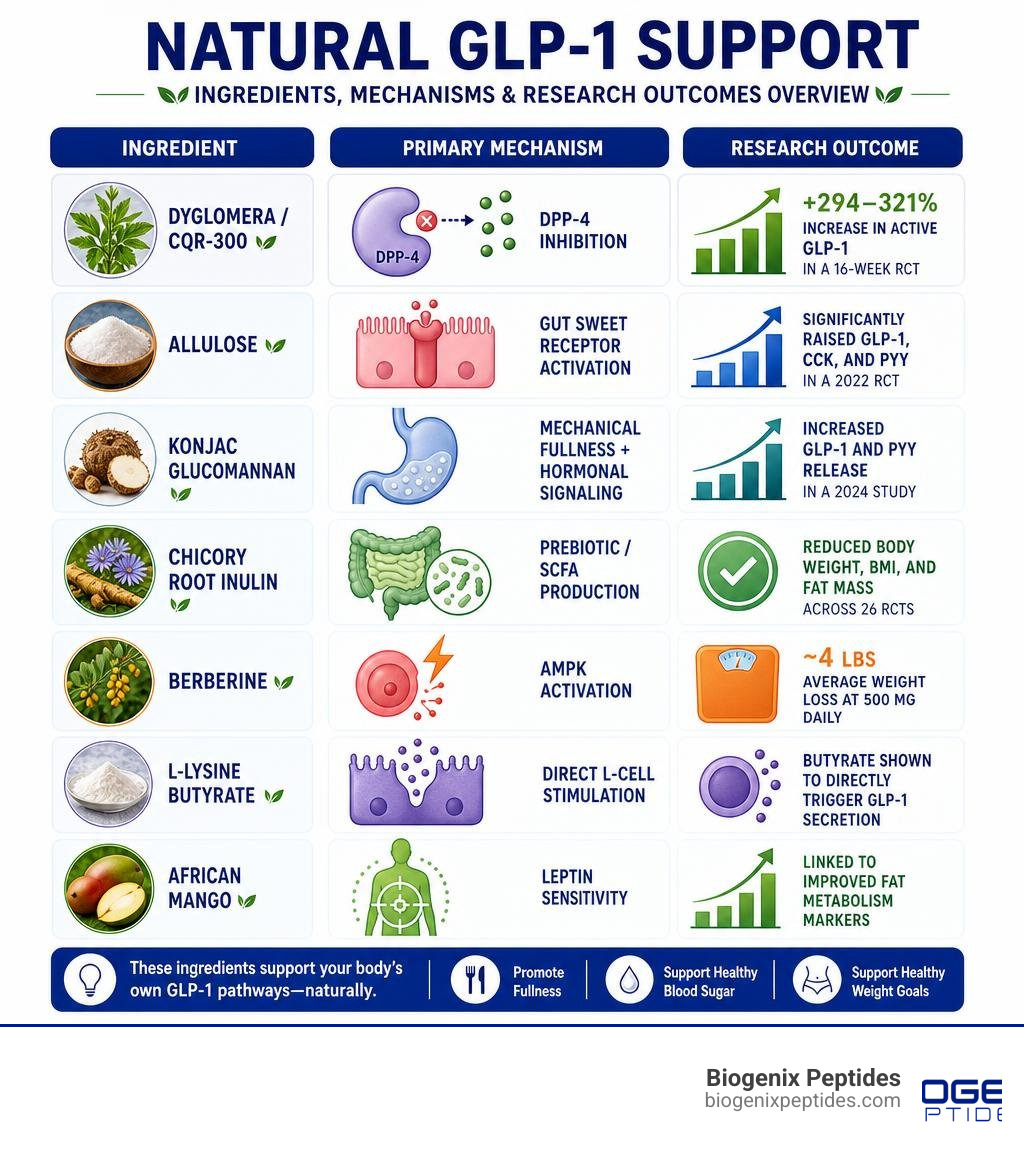
If you’re researching the best natural GLP-1 for weight loss, here is a quick snapshot of the top research-backed ingredients before we go deeper:
| Ingredient | Primary Mechanism | Key Research Finding |
|---|---|---|
| Dyglomera / CQR-300 | DPP-4 inhibition | +294–321% increase in active GLP-1 in a 16-week RCT |
| Allulose | Gut sweet receptor activation | Significantly raised GLP-1, CCK, and PYY in a 2022 RCT |
| Konjac Glucomannan | Mechanical fullness + hormonal signaling | Increased GLP-1 and PYY release in a 2024 study |
| Chicory Root Inulin | Prebiotic / SCFA production | Reduced body weight, BMI, and fat mass across 26 RCTs |
| Berberine | AMPK activation | ~4 lbs average weight loss at 500 mg daily |
| L-Lysine Butyrate | Direct L-cell stimulation | Butyrate shown to directly trigger GLP-1 secretion |
| African Mango | Leptin sensitivity | Linked to improved fat metabolism markers |
GLP-1 — glucagon-like peptide-1 — is a hormone your gut releases after you eat. It tells your brain you’re full, slows digestion, and helps regulate blood sugar. Prescription drugs like Ozempic and Wegovy work by mimicking this hormone at much higher potency than your body naturally produces.
But not everyone wants a prescription. And not everyone qualifies for one.
That’s where natural GLP-1 research comes in. Scientists have been studying whether specific plant compounds, fibers, and micronutrients can support the body’s own GLP-1 pathways — without a needle or a pharmacy.
The early data is more promising than most people realize. A 16-week randomized controlled trial of 248 overweight adults found that two botanical extracts — Dyglomera and CQR-300 — increased postprandial active GLP-1 by over 290% compared to a modest 36% in the placebo group. Daily calorie intake dropped by roughly 16–17% in those groups, without any prescribed dietary changes.
That is not the same as Ozempic. But it is not nothing, either.
It’s worth being clear: the research covered in this article is framed for educational and research purposes only. These compounds are not approved treatments, and nothing here constitutes medical advice.
I’m Jay Daniel, Founder and CEO of BioGenix Peptides and a researcher focused on peptide science and metabolic health — including the emerging science around compounds that may support natural GLP-1 pathways, which is exactly the territory we cover when researching the best natural GLP-1 for weight loss. In the sections ahead, we’ll break down what the clinical data actually shows, ingredient by ingredient.
Understanding GLP-1 and Comparing Prescription Peptides to Natural GLP-1 Pathways
To understand the search for the best natural GLP-1 for weight loss, we must first look at how this hormone behaves in research models. Endogenous GLP-1 is synthesized and secreted by enteroendocrine L-cells, which are specialized cells located primarily in the distal small intestine and colon.
When food enters the digestive tract, these L-cells release GLP-1 into the bloodstream. This release triggers a cascade of physiological responses:
- Satiety Signaling: It acts directly on the hypothalamus in the brain to reduce hunger and quiet “food noise.”
- Delayed Gastric Emptying: It slows down the rate at which the stomach empties, physically keeping food in the stomach longer to prolong fullness.
- Insulin Regulation: It stimulates glucose-dependent insulin secretion from the pancreas while suppressing glucagon, stabilizing blood sugar.
In clinical peptide research, synthetic compounds like semaglutide and tirzepatide have revolutionized metabolic study. As we explore in The Ultimate Guide to the Incretin Mimetic Drug Class, these synthetic peptides are designed to resist rapid enzymatic degradation.
Naturally produced GLP-1 has a half-life of only a few minutes because an enzyme called dipeptidyl peptidase-4 (DPP-4) rapidly breaks it down. Synthetic peptides are structurally modified to evade DPP-4, allowing them to circulate and activate receptors for days.
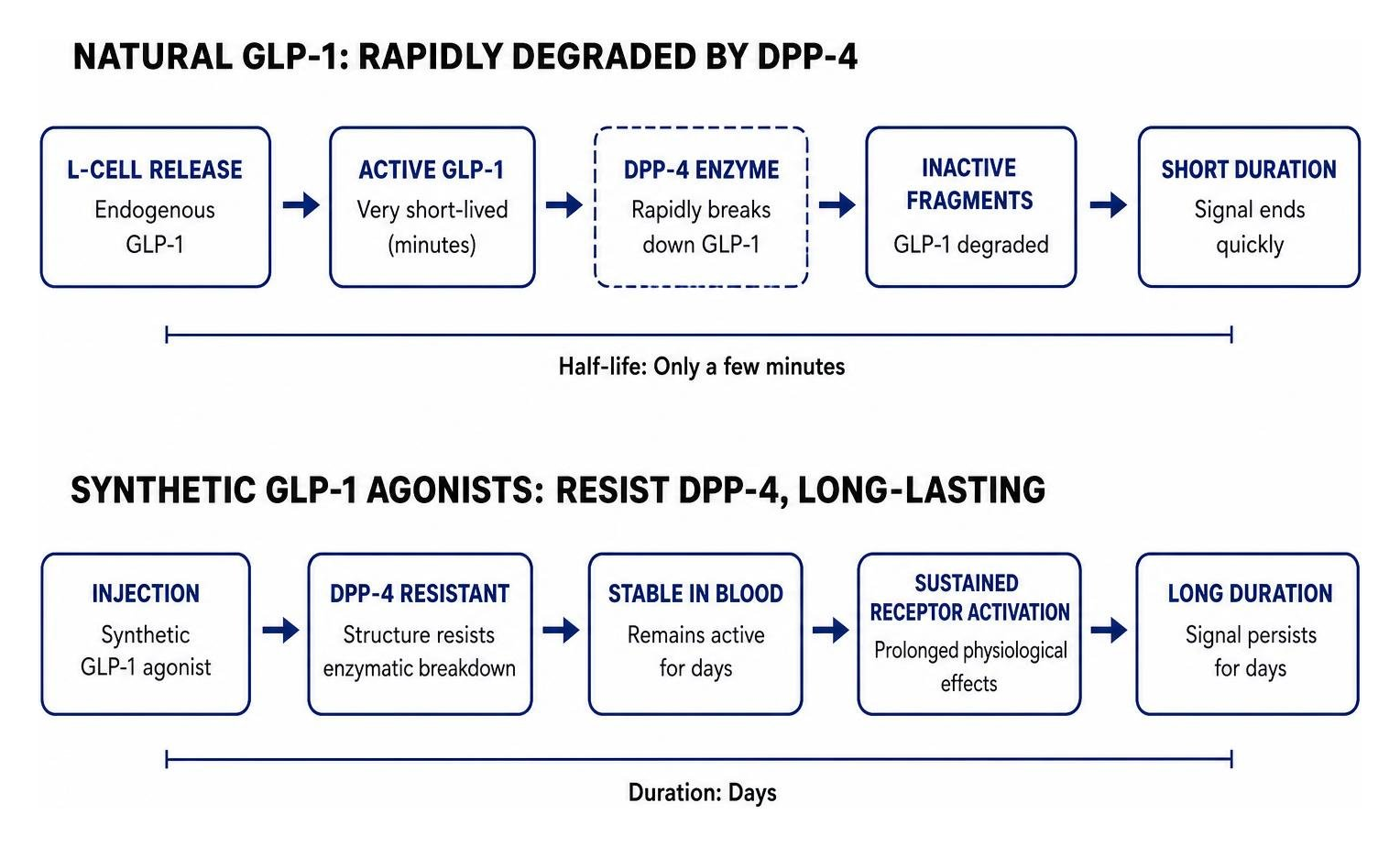
When comparing synthetic agonists to natural dietary compounds, the difference in potency is clear. As detailed in GLP-1 Incretin Pathways Explained, prescription therapies achieve supra-physiological levels of receptor activation.
In contrast, natural compounds work by supporting the body’s endogenous production pathways. They either encourage L-cells to secrete more of our own GLP-1 or inhibit the DPP-4 enzyme to keep our natural hormones active for longer.
For a deeper dive into this comparison, researchers often consult resources such as Is there such a thing as a natural GLP-1? – Baylor Scott & White Health and How to Increase GLP-1 Naturally With Supplements and Foods .
While natural alternatives do not match the sheer potency of synthetic peptides, they represent a highly compelling area of study for maintaining baseline metabolic health without pharmaceutical intervention. For more context on these mechanisms, you can read our GLP-1 Peptides Complete Guide 2026 and explore What Are GLP-1 Peptides and Why Is Everyone Talking About Them?.
Top Research-Backed Ingredients for Natural GLP-1 Support
When evaluating candidates for the best natural GLP-1 for weight loss, researchers focus on compounds backed by published human clinical data. Rather than relying on marketing hype, we look at measurable changes in hormone levels, satiety scores, and metabolic markers.
Dyglomera and CQR-300 (DPP-4 Inhibition)
Among the most exciting developments in botanical GLP-1 research are the standardized extracts Dyglomera (derived from Dichrostachys glomerata) and CQR-300 (derived from Cissus quadrangularis).
In a landmark 16-week randomized, double-blind, placebo-controlled trial involving 248 overweight and obese adults, these extracts demonstrated remarkable efficacy:
- Hormonal Boost: Postprandial active GLP-1 levels increased by 294.7% in the Dyglomera group and 321.4% in the CQR-300 group, compared to just a 36.1% increase in the placebo group.
- Appetite Suppression: Subjective satiety scores rose by 25.6% (Dyglomera) and 27.4% (CQR-300).
- Caloric Reduction: Without any prescribed dietary restrictions, daily energy intake naturally decreased by 16.2% with Dyglomera and 17.5% with CQR-300.
- Physical Outcomes: This voluntary reduction in food intake led to average body weight reductions of 5.2% and 5.8% respectively, alongside significant improvements in fasting blood glucose, lipids, and body fat percentage.
The primary mechanism behind these results is DPP-4 inhibition. By slowing down the enzyme that destroys GLP-1, these extracts allow the body’s natural satiety hormones to circulate longer.
To review the complete scientific breakdown of these findings, researchers can access the Expanded Clinical Study Confirms Natural GLP-1 Support from Dyglomera and CQR-300 , read the industry analysis at New human clinical data puts botanicals into the GLP-1 spotlight – AG Life Media , or explore the paper published via Expanded clinical study confirms natural GLP-1 support from Dyglomera® and CQR-300® – Innovations Food .
Berberine (AMPK Activation)
Often referred to in wellness circles as “nature’s Ozempic,” berberine is a bitter alkaloid found in several traditional plants. While it does not mimic GLP-1 directly, it acts on a foundational cellular level by activating adenosine monophosphate-activated protein kinase (AMPK).
AMPK is often called the body’s metabolic master switch. When activated, it:
- Improves insulin sensitivity and assists with glucose clearance.
- Encourages the development of brown adipose tissue, which burns calories to generate heat.
- Improves mitochondrial function and fat oxidation.
In human clinical literature, participants taking 1 gram of berberine daily for at least eight weeks experienced significant reductions in body weight, BMI, and waist circumference. Another extensive review indicated that individuals lost an average of 4 lbs when consistently taking 500 mg of berberine daily, with higher quantities exceeding 1,000 mg showing positive, though more variable, weight-loss outcomes.
Allulose and Soluble Fibers as Natural GLP-1 Support Candidates
Enteroendocrine L-cells can also be stimulated directly through nutritional signaling in the gut. Specialized sugars and soluble fibers are highly effective at triggering this response.
Allulose
Allulose is a naturally occurring rare sugar that behaves uniquely in the digestive tract. It is absorbed by the body but not metabolized, meaning it delivers virtually zero calories and does not raise blood glucose.
More importantly for hormone research, allulose binds to sweet taste receptors (T1R2/T1R3) located on L-cells in the gut. This binding tricks the cells into releasing satiety hormones as if a heavy load of carbohydrates has been consumed.
A 2022 randomized controlled trial confirmed that an intake of 25 g of allulose significantly raised circulating levels of GLP-1, cholecystokinin (CCK), and peptide YY (PYY) compared to a water control in healthy human subjects.
Konjac Glucomannan
Glucomannan is an exceptionally viscous soluble fiber extracted from the konjac root. It is famous for its ability to absorb up to 50 times its weight in water, expanding into a thick gel in the stomach.
This gel provides dual-action support:
- Mechanical Satiety: The physical expansion stretches the stomach walls, sending immediate mechanical fullness signals to the brain via the vagus nerve.
- Hormonal Signaling: A 2024 study demonstrated that konjac glucomannan supplementation physically delays nutrient absorption, ensuring that carbohydrates and proteins reach further down the intestinal tract to trigger prolonged GLP-1 and PYY release.
Chicory Root Inulin
Inulin is a prebiotic soluble fiber that passes undigested through the upper GI tract into the colon. Here, it becomes a feast for beneficial gut bacteria, particularly species like Akkermansia muciniphila.
As these bacteria ferment the inulin, they produce short-chain fatty acids (SCFAs) such as acetate, propionate, and butyrate. These SCFAs bind to free fatty acid receptors (FFAR2 and FFAR3) on distal L-cells, signaling a massive release of endogenous GLP-1.
A comprehensive 2024 systematic review and meta-analysis of 26 randomized controlled trials confirmed that chicory inulin intake significantly reduced body weight, BMI, fat mass, and waist circumference in human cohorts.
For those interested in commercial formulations utilizing these prebiotic pathways, research models often evaluate products like GLP-1 Natural – shop.skinnyfit.com or review consumer feedback on SkinnyFit – GLP-1 Natural Probiotic Supplement (30 Servings … .
Micronutrients and Plant Extracts in Natural GLP-1 Research Protocols
To build a comprehensive natural support protocol, researchers often look beyond fibers and primary botanicals to integrate specific micronutrients and targeted plant extracts.
- L-Lysine Butyrate: While prebiotic fibers help the gut manufacture butyrate, supplementing directly with L-Lysine butyrate bypasses the need for microbial fermentation. This compound delivers butyrate directly to the colon, where it immediately stimulates L-cells to secrete GLP-1.
- Chromium: This essential trace mineral is a critical cofactor for insulin function. By improving insulin receptor sensitivity, chromium helps stabilize blood sugar curves, reducing the rapid glucose drops that trigger intense cravings and “food noise.”
- Ursolic Acid: Found in high concentrations in apple peels and rosemary, ursolic acid has been shown in metabolic models to activate AMPK. It supports skeletal muscle preservation while encouraging brown fat activity, helping to maintain energy expenditure during caloric deficits.
- African Mango (Irvingia gabonensis): Standardized extracts of African mango seed are researched for their ability to support leptin sensitivity. Leptin is the hormone responsible for long-term energy balance; resolving leptin resistance helps the brain accurately perceive fat stores and regulate appetite accordingly.
Synergistic Stacking, Safety, and Lifestyle Factors in Research
In metabolic research, single-ingredient interventions often yield modest results because the human body utilizes multiple redundant pathways to control appetite and energy balance. To overcome this, researchers study “synergistic stacking” — combining multiple natural compounds to target different physiological mechanisms simultaneously.
By combining mechanical stretch (glucomannan), direct receptor activation (allulose), prebiotic fermentation (inulin), and enzymatic preservation (Dyglomera), a synergistic stack provides a continuous, multi-phase support system for endogenous GLP-1.
Safety and Tolerability Considerations
While natural GLP-1 support candidates are generally regarded as safe (GRAS), they are not entirely without side effects. The most common issues are gastrointestinal, particularly when introducing high-viscosity fibers or prebiotics.
Rapidly increasing the intake of inulin or glucomannan can cause temporary bloating, gas, and mild abdominal cramping as the gut microbiome adapts. Researchers recommend starting with smaller quantities and drinking ample water to mitigate these effects.
Furthermore, compounds like berberine can lower blood glucose and blood pressure; therefore, caution is warranted if a research subject is already taking glucose-lowering or cardiovascular medications.
The Role of Lifestyle Factors
No supplement or compound operates in a vacuum. To maximize the efficacy of natural GLP-1 support, research models emphasize several foundational lifestyle factors:
- Meal Sequencing: Studies show that consuming protein, healthy fats, and fiber before carbohydrates significantly enhances the natural postprandial GLP-1 response compared to eating carbohydrates first.
- Sleep Quality: Sleep deprivation alters appetite regulation by decreasing leptin and increasing ghrelin. Ensuring 7 to 9 hours of quality sleep preserves hormonal balance.
- Stress Management: Chronic stress elevates cortisol, which can blunt the brain’s sensitivity to satiety hormones like GLP-1.
- Physical Activity: Combining resistance training with aerobic exercise improves insulin sensitivity and has been shown to naturally increase baseline GLP-1 receptor expression.
For an in-depth exploration of how hormonal therapies and lifestyle factors interact, you can read our analysis: Weight Loss Wonders or Risk Factors: A Deep Dive into Incretin Therapy and learn Why GLP-1 Agonists Are a Change of Heart for Cardiac Care.
Frequently Asked Questions about Natural GLP-1 Alternatives
Can natural compounds replace prescription GLP-1 peptides?
No. In rigorous scientific evaluations, natural compounds cannot match the sheer weight-loss potency or receptor-binding affinity of pharmaceutical GLP-1 receptor agonists. Synthetic peptides are engineered to remain active in the body for an extended duration, whereas natural compounds work by subtly supporting the body’s own transient hormone production.
Natural alternatives are best viewed as tools for maintaining baseline metabolic health, supporting mild appetite control, or serving as research models for non-pharmacological interventions. For researchers studying these differences, our guide on GLP-1 Dual and Triple Agonist Peptides: Semaglutide, Tirzepatide and Retatrutide in Research provides excellent technical context, as does Shedding Pounds with Science: A Guide to GLP-1 Peptides.
How long does it take to observe changes in research models?
In research protocols, acute changes in appetite and gastric fullness are often observed within 30 to 60 minutes of taking viscous fibers like glucomannan or rare sugars like allulose. However, systemic metabolic shifts — such as improvements in insulin sensitivity, shifts in the gut microbiome, and measurable changes in body composition — typically require 8 to 12 weeks of consistent daily application to become statistically significant.
Can natural GLP-1 support be used during a step-down protocol?
This is a highly popular area of current metabolic research. When transitioning off prescription GLP-1 peptides, subjects often experience a rapid return of appetite and “food noise,” which can lead to weight regain.
Researchers are actively studying whether introducing a comprehensive natural GLP-1 support stack during this “step-down” phase can help ease the transition, support the body’s natural endocrine baseline, and help maintain satiety as synthetic levels decline. For more resources on managing GLP-1 research transitions, explore our Category: GLP-1 archive.
Conclusion
The search for the best natural GLP-1 for weight loss has revealed that nature provides a sophisticated toolkit for supporting metabolic health. While plant extracts like Dyglomera, prebiotic fibers like inulin, and compounds like berberine do not mimic the extreme potency of synthetic pharmaceuticals, the clinical data proves they can significantly enhance our body’s natural satiety pathways when combined correctly.
For researchers, practitioners, and health enthusiasts looking to understand the cutting edge of metabolic science, exploring these natural pathways offers invaluable insights into endocrine function and appetite regulation.
To expand your research into advanced metabolic pathways and high-purity research compounds, we invite you to Explore GLP-1 research compounds and browse our full selection at the BioGenix Peptides Product Category: GLP-1 portal.