CJC-1295 Dosage and Timing: Your Protocol for Peak Performance
Disclaimer: The information provided in this article is for educational and informational purposes only. It is not intended as medical advice, diagnosis, or treatment. Products and compounds referenced are for research use only and are not approved for human or veterinary consumption. Always consult a qualified professional regarding health or medical decisions.
What Researchers Need to Know About CJC 1295 DAC Protocols
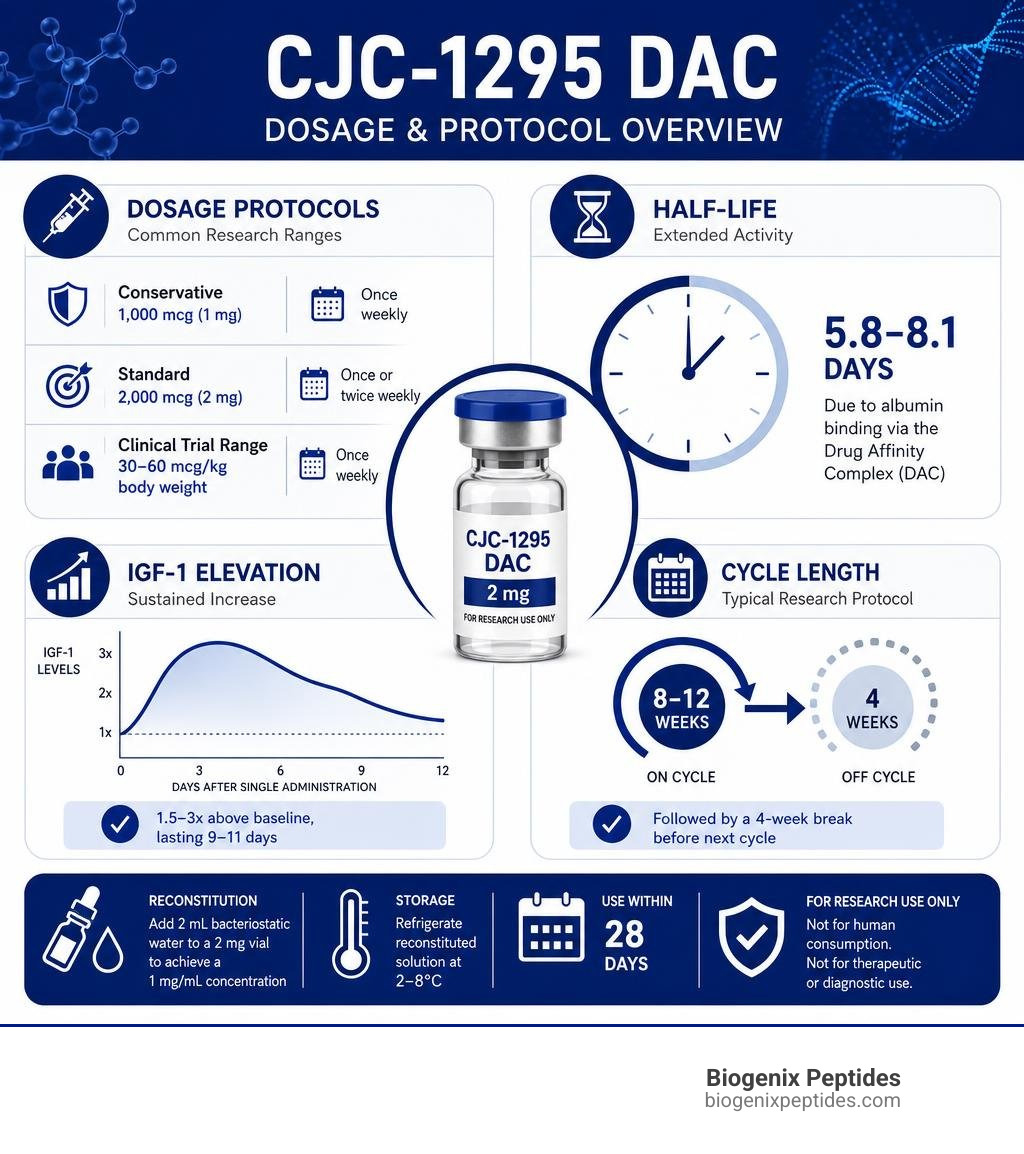
The cjc 1295 dac administration protocol most commonly referenced in research settings is 1,000–2,000 mcg (1–2 mg) administered once or twice weekly via subcutaneous application. Here is a quick reference based on published research and community protocols:
| Protocol Level | Amount per Administration | Frequency |
|---|---|---|
| Conservative | 1,000 mcg (1 mg) | Once weekly |
| Standard | 2,000 mcg (2 mg) | Once or twice weekly |
| Clinical trial range | 30–60 mcg/kg body weight | Once weekly |
Key facts at a glance:
- Half-life: approximately 5.8–8.1 days (due to albumin binding via the Drug Affinity Complex)
- Reconstitution: add 2 mL bacteriostatic water to a 2 mg vial to achieve a 1 mg/mL concentration
- IGF-1 elevation: documented at 1.5–3x above baseline, lasting 9–11 days after a single administration
- Cycle length: typically 8–12 weeks, followed by a 4-week break
- Storage: reconstituted solution refrigerated at 2–8°C, utilized within 28 days
Note: All figures above are drawn from published pharmacokinetic research and are presented for educational and research purposes only.
CJC-1295 with DAC is a long-acting synthetic analog of growth hormone-releasing hormone (GHRH). Unlike native GHRH, which is cleared from the body within minutes, the DAC modification allows the peptide to bind reversibly to serum albumin — extending its active window to nearly a week from a single administration. According to a landmark 2006 clinical study by Teichman et al., a single administration produced a 2- to 10-fold increase in mean plasma GH concentrations lasting six days or more, while IGF-1 levels remained elevated for 9–11 days.
That sustained elevation is what makes this compound a subject of ongoing interest in research contexts — but it also makes precise, evidence-based protocols critical. Getting the research parameters wrong can mean either insufficient GH stimulation or pushing IGF-1 into ranges that carry their own risks.
I’m Jay Daniel, Founder and CEO of BioGenix Peptides, and my years of hands-on experience in peptide development, quality control, and research protocol design have given me a close working knowledge of cjc 1295 dac administration parameters across a range of laboratory applications. In the sections below, I’ll walk through the science, the reconstitution math, comparative protocols, and safety monitoring considerations so you can approach this research area with clarity and confidence.
Understanding the Science Behind cjc 1295 dac administration protocols
To design effective research models, we must first understand the structural chemistry that separates this compound from shorter-acting GHRH analogs. At its core, CJC-1295 is a modified tetrasubstituted GHRH peptidomimetic. On its own, this modified peptide has a half-life of roughly 30 minutes. However, when synthesized with a Drug Affinity Complex (DAC), its pharmacokinetics shift dramatically.
The DAC portion contains a maleimidopropionic acid-lysine moiety. Once introduced into a fluid model, this complex forms a stable, covalent bond with serum albumin. Because albumin is a highly abundant, long-lived protein in circulation, the bound peptide escapes rapid enzymatic degradation and kidney filtration. This structural modification extends the biological half-life of the compound to between 5.8 and 8.1 days.
According to peer-reviewed Scientific research on GHRH analogs, this extended half-life allows for once-weekly or twice-weekly administration schedules while maintaining elevated baseline growth hormone levels. When the compound binds to GHRH receptors in the pituitary gland, it stimulates a sustained, elevated release of growth hormone. The liver responds to this continuous GH signal by producing a steady, elevated output of Insulin-like Growth Factor 1 (IGF-1).
In human clinical trials, researchers observed that a single administration yielded a 1.5- to 3-fold increase in mean plasma IGF-1 concentrations that persisted for up to 11 days. For laboratory models examining tissue repair, cellular regeneration, or long-term metabolic changes, this means the biological signal remains consistently active without requiring daily physical intervention.
Standard Guidelines for cjc 1295 dac administration in Laboratory Settings
When determining the optimal cjc 1295 dac administration protocol for a laboratory study, researchers must balance the target concentration with the risk of receptor desensitization. Because the DAC version provides continuous receptor stimulation, finding the correct concentration is a matter of precise mathematical calculation.
Most research protocols utilize a weekly volume plan of 1,000 mcg to 2,000 mcg (1 to 2 mg) of active peptide. In clinical trial settings, weight-based calculations often range from 30 mcg/kg to 60 mcg/kg of body weight. For a standard 70 kg test model, a 30 mcg/kg protocol equates to approximately 2.1 mg of the compound per week.
To prepare the compound for testing, the lyophilized powder must be reconstituted with bacteriostatic water. For a standard 2 mg vial, adding 2.0 mL of bacteriostatic water yields a clean concentration of 1,000 mcg per milliliter (or 100 mcg per 10 units on a standard U-100 syringe). For a larger 5 mg vial, adding 2.0 mL of bacteriostatic water creates a concentration of 2,500 mcg per milliliter. Researchers can explore alternative blending strategies and ratio calculations in our Step-by-step Guide to CJC 1295 Blends.
Comparing cjc 1295 dac protocols to Non-DAC Protocols
A frequent point of confusion in peptide literature is the distinction between the DAC and non-DAC forms of CJC-1295. The non-DAC version, structurally known as Mod GRF 1-29, is a short-acting GHRH analog with a half-life of only 30 minutes.
Because Mod GRF 1-29 lacks the Drug Affinity Complex, it does not bind to albumin. Consequently, it must be administered multiple times daily (typically 100 mcg, two to three times per day) to achieve meaningful biological effects. This short duration mimics the natural, pulsatile release of growth hormone that occurs in healthy organisms, particularly during deep sleep stages.
| Feature | CJC-1295 with DAC | CJC-1295 without DAC (Mod GRF 1-29) |
|---|---|---|
| Half-Life | 5.8 to 8.1 days | ~30 minutes |
| Administration Frequency | 1 to 2 times per week | 1 to 3 times per daily |
| Release Pattern | Sustained, continuous elevation | Sharp, pulsatile spikes |
| Receptor Saturation | Continuous stimulation | Brief, episodic stimulation |
| Fasting Requirement | Less critical due to long half-life | Strict (2 hours pre- and 30 mins post-delivery) |
Choosing between these two forms depends entirely on the goals of the study. The continuous elevation provided by the DAC version is highly convenient for long-term studies, but it can lead to a phenomenon known as “GH bleed,” where the natural valleys between growth hormone pulses are elevated. For researchers interested in preserving natural biological rhythms, the non-DAC variant is often preferred. You can read more about these differences in The Ultimate Guide to CJC 1295 Without DAC and discover the specific cellular pathways in Unlock Your Growth Potential with CJC 1295 No DAC Benefits.
Reconstitution, Storage, and Laboratory Administration Protocols

Reconstituting lyophilized peptides is a delicate process that requires a sterile environment and careful handling to prevent structural damage to the delicate amino acid chains. Any rough handling or exposure to contaminants can render the research compound inactive.
Before starting, ensure you have all necessary sterile supplies: alcohol swabs, bacteriostatic water, and sterile delivery syringes. To prevent common errors during this phase, we highly recommend reviewing Don’t Mess Up Your CJC 1295 No DAC Protocol, which covers essential handling techniques applicable to both peptide variants.
Reconstitution Calculations and Syringe Measurements
To achieve the precise concentration needed for your laboratory parameters, you must calculate the liquid-to-peptide ratio accurately. Let’s look at a practical example using a standard U-100 syringe, where 100 units equal 1.0 mL of volume.
If you have a 5 mg vial of CJC-1295 with DAC and you reconstitute it with 2.0 mL of bacteriostatic water, your mathematical breakdown is as follows:
- Total Peptide: 5,000 mcg (5 mg)
- Total Liquid Volume: 2.0 mL (200 units on a syringe)
- Concentration: 2,500 mcg per 1.0 mL (100 units)
- Unit Conversion: Each individual unit on the syringe represents exactly 25 mcg of the peptide.
To deliver a target quantity of 1,000 mcg for a test subject, you would draw exactly 40 units (0.4 mL) of the reconstituted solution. If you are using a standard 2 mg vial and add 2.0 mL of bacteriostatic water, the concentration becomes 1,000 mcg per 1.0 mL, meaning each individual unit on the syringe represents exactly 10 mcg of the active peptide.
Storage and Stability Guidelines
Lyophilized peptide powder is highly stable when stored correctly. For long-term preservation, unmixed vials should be kept frozen at -20°C (-4°F), where they can remain stable for 12 to 24 months.
Once reconstituted, the peptide becomes far more vulnerable to temperature fluctuations and physical degradation. The mixed solution must be stored in a refrigerator at 2°C to 8°C (36°F to 46°F). It should never be frozen after reconstitution, as the formation of ice crystals will break the delicate peptide bonds.
For optimal research integrity, reconstituted vials should be utilized within 28 days. After this window, the peptide’s potency begins to decline, and the risk of bacterial growth increases, even in the presence of bacteriostatic agents.
Comparative Analysis: GHRH Analogs and Synergistic Stacks
To understand where CJC-1295 with DAC fits in modern endocrinology research, it is helpful to compare it to other prominent GHRH analogs, such as Sermorelin and Tesamorelin.
| Peptide | Half-Life | Primary Research Target | FDA Approval Status |
|---|---|---|---|
| CJC-1295 with DAC | 5.8 to 8.1 days | Continuous GH/IGF-1 elevation; metabolic research | Research chemical only; not approved |
| Sermorelin | ~10 to 20 minutes | Pulsatile GH release; diagnostic testing | Approved for specific diagnostic applications |
| Tesamorelin | ~26 to 38 minutes | Visceral adipose tissue reduction | FDA-approved for HIV-associated lipodystrophy |
Sermorelin is a synthetic 29-amino acid peptide that represents the shortest-acting GHRH analog. It is excellent for mimicking natural nocturnal GH spikes but requires daily administration and has a very short therapeutic window.
Tesamorelin, on the other hand, is a modified GHRH analog that has been clinically approved in the United States for reducing deep abdominal fat in specific patient populations. It is highly effective but possesses a relatively short half-life compared to the DAC variant, requiring daily administration to maintain active signaling. For advanced protocols exploring these comparative dynamics, researchers can refer to the Master Your Gains with the CJC 1295 Advanced Protocol.
Synergistic Stacking with GHRPs
One of the most common methodologies in peptide research is the pairing of a GHRH analog with a Growth Hormone Releasing Peptide (GHRP). While GHRHs like CJC-1295 signal the pituitary gland to release growth hormone, GHRPs (such as Ipamorelin) act as ghrelin receptor agonists, amplifying the strength of that signal and inhibiting somatostatin (the hormone that turns off GH release).
When administered together, these two classes of compounds act synergistically, producing a far greater release of growth hormone than either compound could achieve on its own.
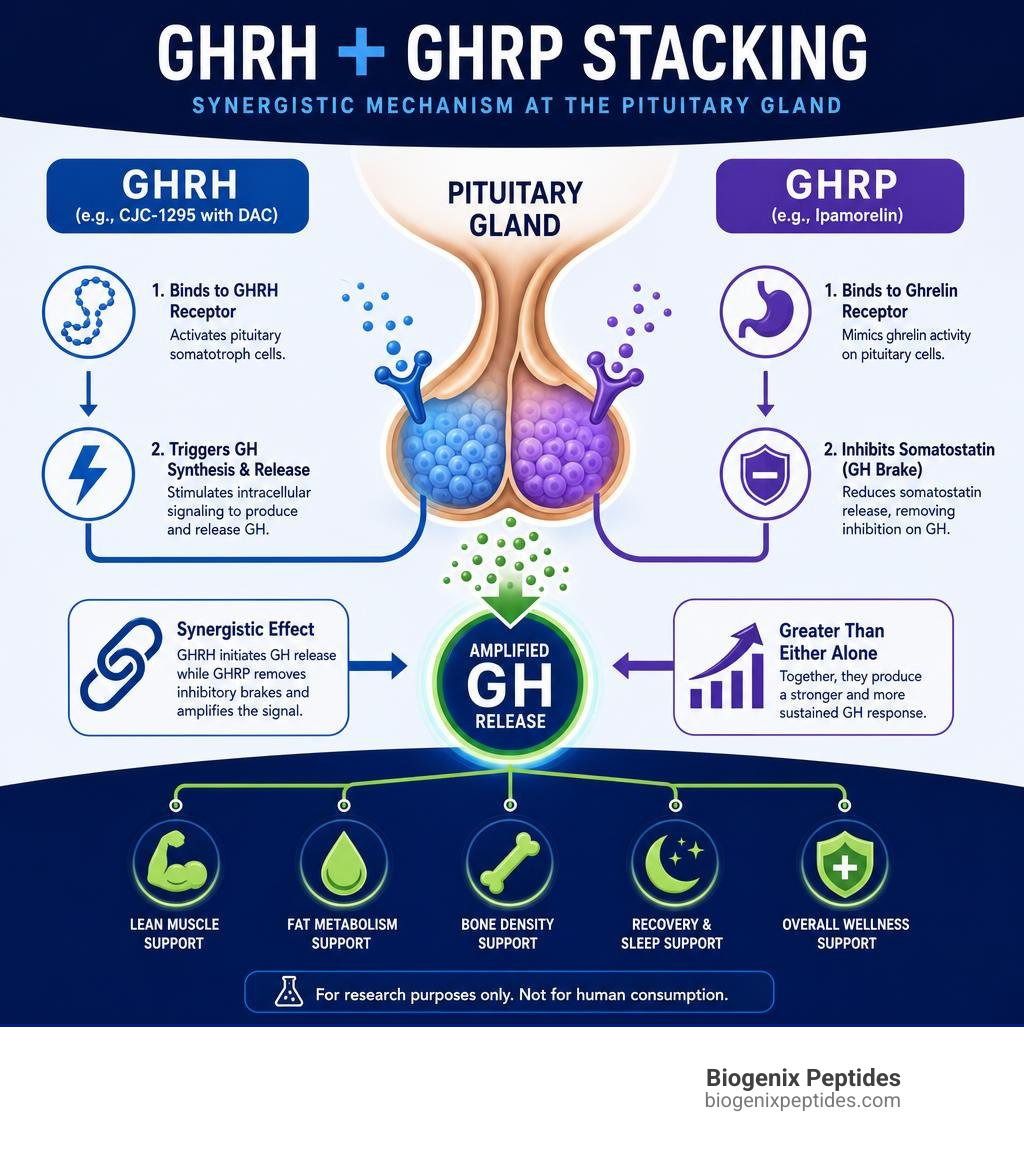
This combination is often referred to as the “gold standard” in growth hormone optimization studies. Because Ipamorelin does not significantly elevate cortisol or prolactin levels, it provides a clean, targeted signal that complements the sustained background elevation of CJC-1295 with DAC. To explore the precise scientific ratios and timing strategies for this combination, read our detailed guide on Maximizing Gains with CJC 1295 and Ipamorelin.
Safety, Side Effects, and Laboratory Monitoring Requirements
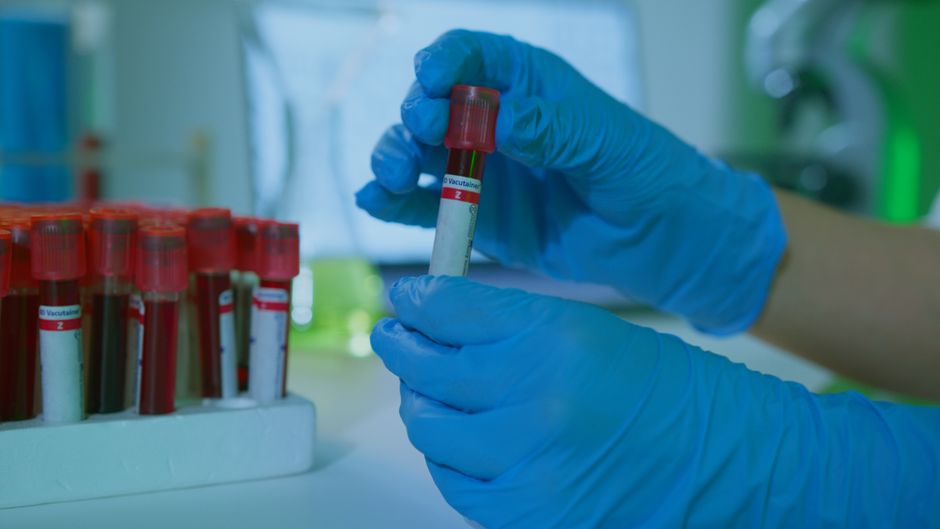
Because CJC-1295 with DAC causes a sustained elevation of growth hormone and IGF-1, robust laboratory monitoring is essential for maintaining research safety and data accuracy. Unlike shorter-acting peptides that clear the system rapidly, the continuous active presence of the DAC variant means that systemic changes can accumulate over time.
Key biomarkers that must be monitored throughout any research cycle include:
- Serum IGF-1: To ensure levels remain within target physiological parameters and do not reach supraphysiologic ranges associated with acromegaly.
- Fasting Blood Glucose: Growth hormone can reduce insulin sensitivity, making regular glucose tracking critical.
- HbA1c: To monitor long-term glycemic control over the course of an 8- to 12-week study.
- Thyroid Panel (Free T3, Free T4, TSH): Sustained GH elevation can alter peripheral thyroid hormone conversion, sometimes requiring adjustment of the research model.
Expected Side Effects and Risk Mitigation
In clinical and laboratory settings, several transient side effects are commonly observed. Immediately following subcutaneous administration, test subjects often experience localized skin reactions, including mild redness, itching, or a warm sensation at the application site. This is typically a benign histamine response that resolves within 30 minutes.
Systemically, the most common quantity-dependent side effect is water retention, which can manifest as mild joint stiffness or peripheral edema. This occurs because elevated growth hormone levels promote sodium and water preservation in the kidneys. If water retention becomes pronounced, reducing the weekly research volume usually resolves the issue.
Of greater concern is the potential for insulin resistance. Because growth hormone mobilizes fatty acids and inhibits glucose uptake in skeletal muscle, prolonged continuous exposure can lead to elevated fasting blood glucose. Researchers should implement planned breaks — such as an 8-week active phase followed by a 4-week washout period — to allow the pituitary-somatotropic axis and insulin sensitivity to return to baseline.
Contraindications and Regulatory Status
CJC-1295 with DAC is strictly classified as a research chemical in the United States and is not approved by the FDA for human or veterinary application. The FDA has expressed safety concerns regarding compounded versions of the peptide, noting risks such as transient heart rate increases and systemic vasodilatory reactions (flushing).
Furthermore, because it stimulates the production of growth factors, the compound is strictly contraindicated in any research models involving active malignancies or pre-cancerous lesions. IGF-1 is a potent mitogen, meaning it can promote the proliferation of existing abnormal cells.
For competitive athletic models, it is important to note that CJC-1295 (both with and without DAC) is listed on the World Anti-Doping Agency (WADA) Prohibited List under Class S2 (Peptide Hormones, Growth Factors, Related Substances, and Mimetics). Its application is banned at all times for competitive athletes.
Frequently Asked Questions about CJC-1295 DAC
What is the half-life of CJC-1295 with DAC?
The biological half-life of CJC-1295 with DAC is estimated to be between 5.8 and 8.1 days. This extended duration is due to the Drug Affinity Complex, which allows the peptide to bind to circulating serum albumin, preventing rapid enzymatic clearance.
How does CJC-1295 with DAC differ from Mod GRF 1-29?
The primary difference lies in their active duration and delivery frequency. CJC-1295 with DAC has a half-life of nearly a week and is administered once or twice weekly, creating a sustained, continuous elevation of growth hormone. Mod GRF 1-29 (CJC-1295 without DAC) has a half-life of 30 minutes, requires daily administrations, and mimics the natural, pulsatile spikes of growth hormone.
Can CJC-1295 DAC be combined with Ipamorelin in research?
Yes, they are frequently combined in research models. However, because the DAC version provides continuous GHRH receptor stimulation, combining it with a daily GHRP like Ipamorelin requires careful protocol design to avoid receptor downregulation. Many researchers prefer pairing Ipamorelin with the non-DAC version (Mod GRF 1-29) to maintain natural, pulsatile endocrine rhythms.
Conclusion
CJC-1295 with DAC represents a major milestone in peptide engineering, demonstrating how structural modifications like the Drug Affinity Complex can turn a short-lived signaling molecule into a long-acting research tool. By extending the half-life to nearly a week, it offers unparalleled convenience for laboratory models studying the long-term metabolic and regenerative effects of sustained growth hormone and IGF-1 elevation.
However, this sustained activity requires strict adherence to precise reconstitution math, structured cycling schedules, and regular biomarker monitoring to ensure safety and data integrity.
At Biogenix Peptides, we are committed to providing the highest-purity compounds to support your laboratory research. If your current research parameters favor a highly controllable, pulsatile approach to growth hormone optimization, we invite you to explore our premium research options and Shop Recovery CJC 1295 No DAC Ipamorelin to advance your scientific inquiries with confidence.