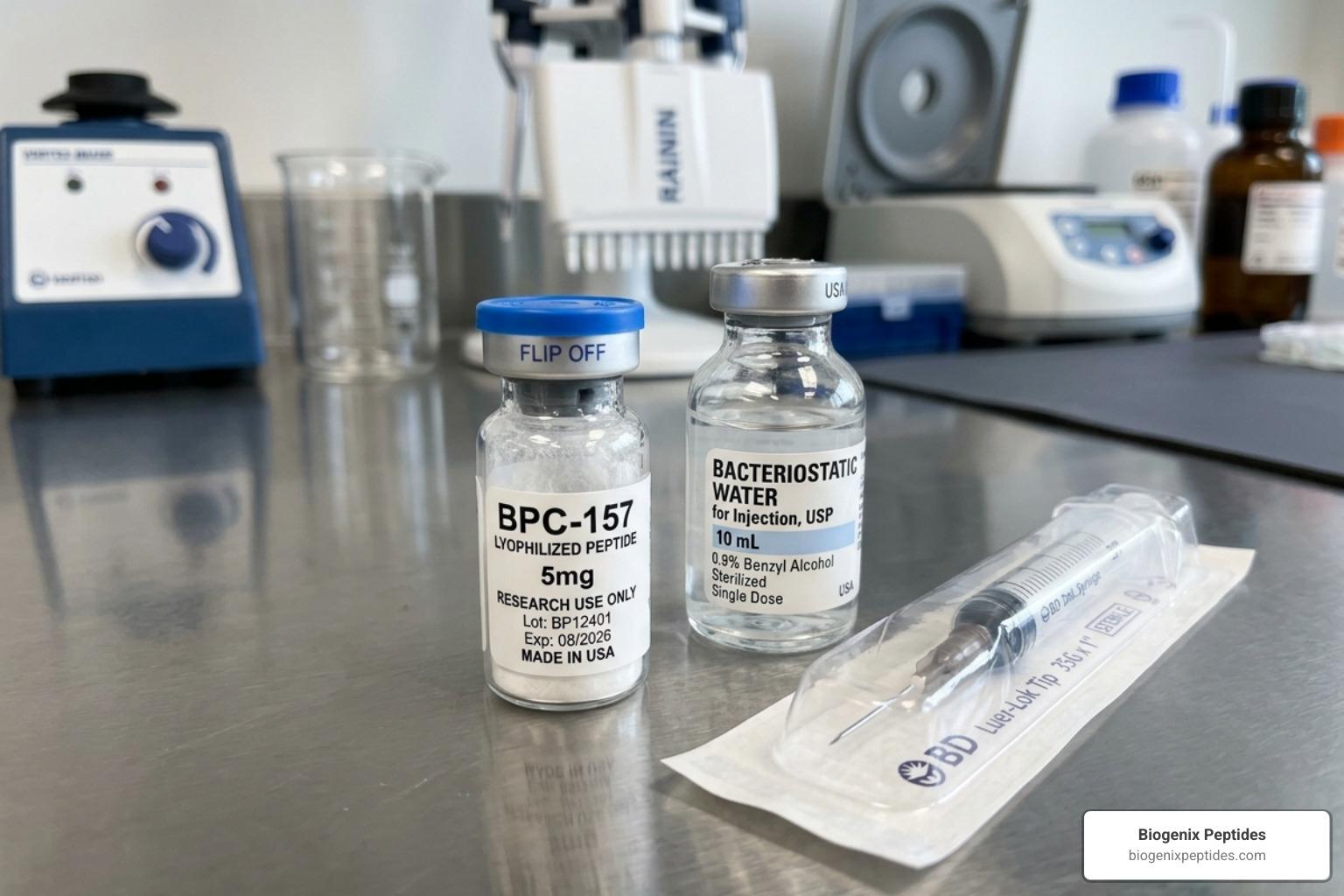
A Step-by-Step Guide to Preparing Your 5mg BPC-157 Vial
What Researchers Need to Know Before They Reconstitute 5mg BPC 157
Disclaimer: The information provided in this article is for educational and informational purposes only. It is not intended as medical advice, diagnosis, or treatment. Products and compounds referenced are for research use only and are not approved for human or veterinary consumption. Always consult a qualified professional regarding health or medical decisions.
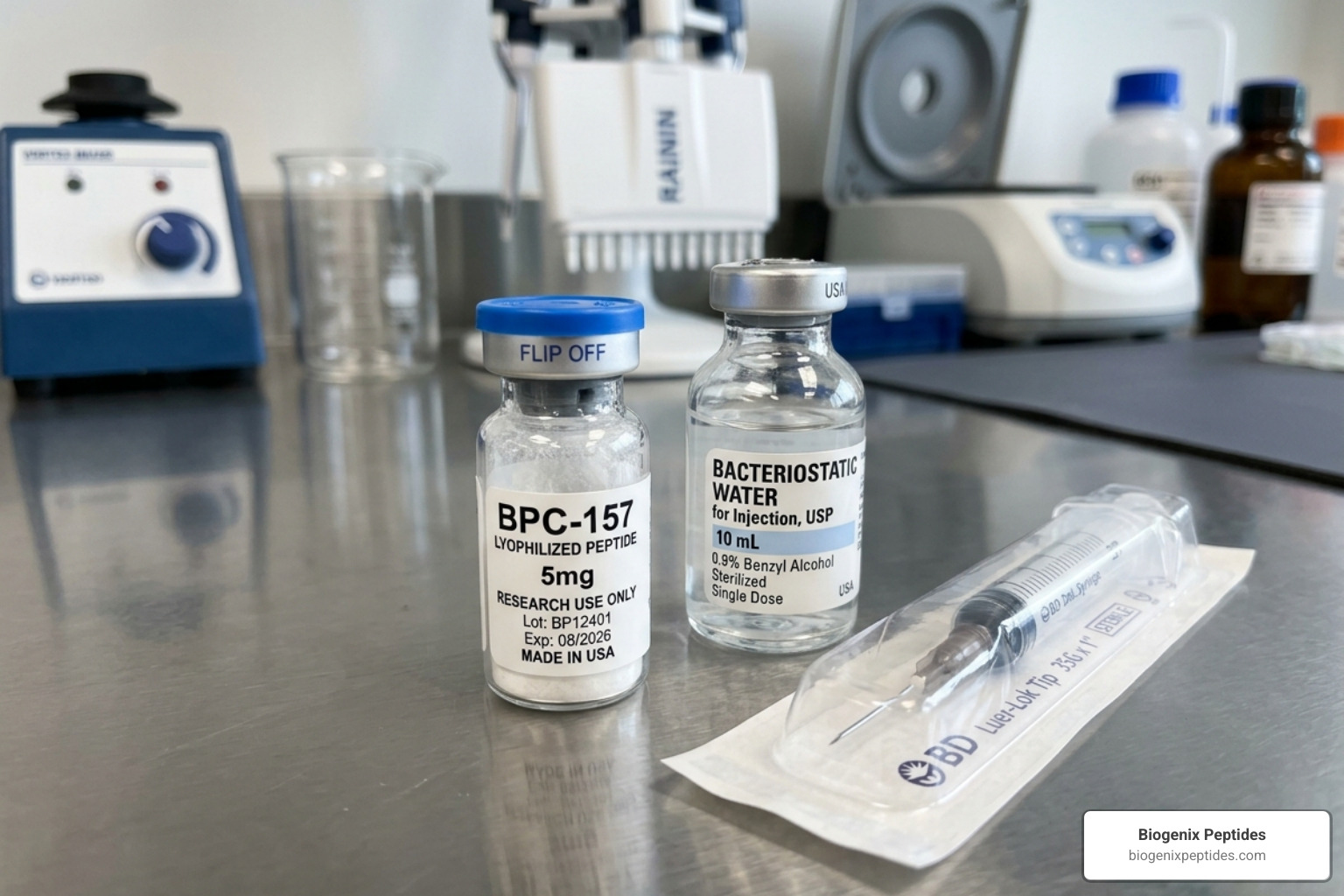
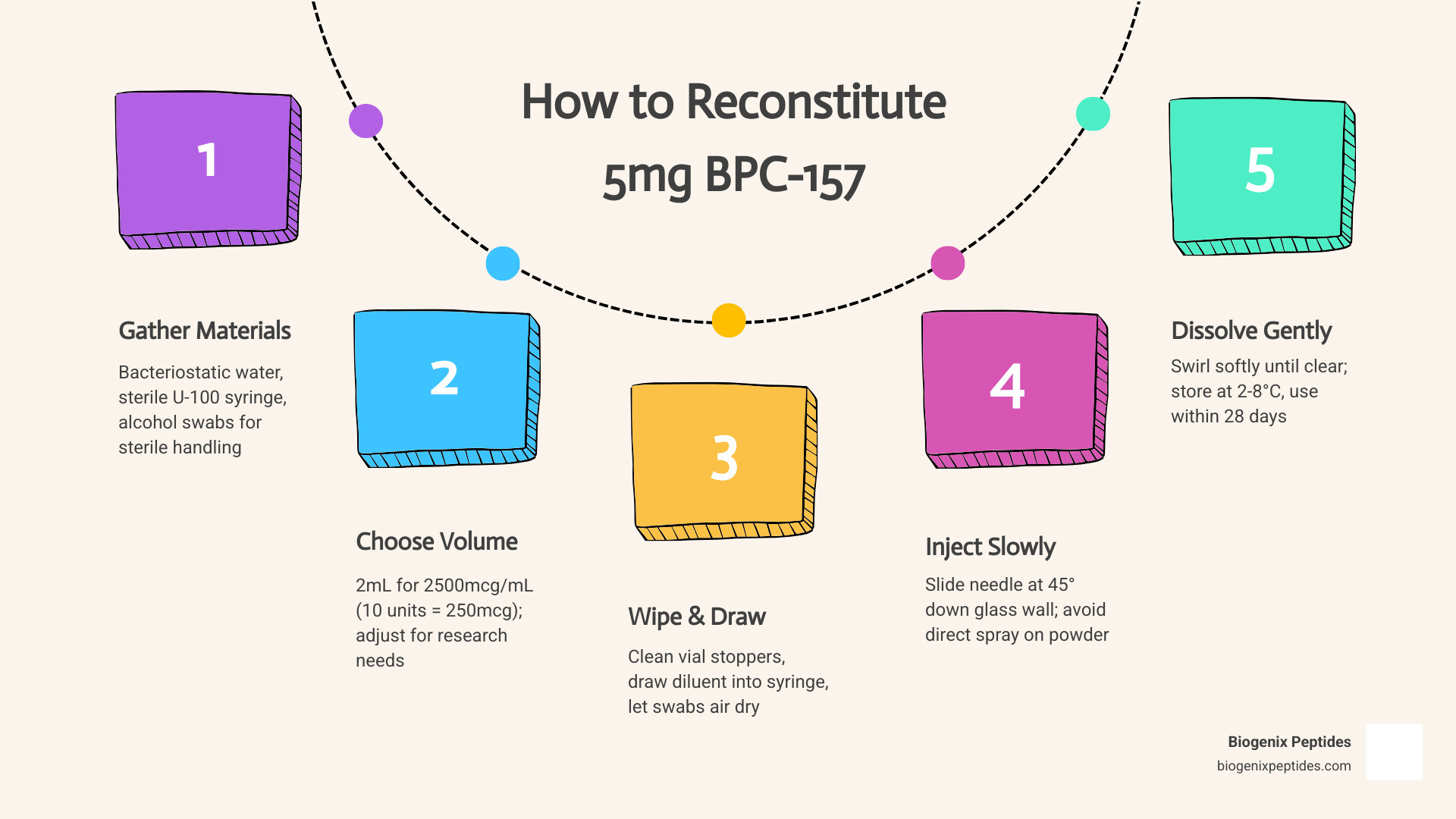
To reconstitute 5mg BPC 157, here is the quick answer:
- Gather your materials — bacteriostatic water, a sterile syringe, and alcohol swabs
- Choose your diluent volume — 2mL gives 2,500mcg/mL (10 units = 250mcg on a U-100 syringe)
- Wipe both vial stoppers with an alcohol swab and let them air dry
- Draw your bacteriostatic water into a sterile syringe
- Inject slowly down the glass wall of the vial — never directly onto the powder
- Gently swirl until dissolved — do not shake
- Label the vial with the date and store at 2–8°C
- Use within 28 days
Finding clear, reliable guidance on how to reconstitute 5mg BPC 157 can feel surprisingly difficult. BPC-157 is a synthetic 15-amino acid peptide derived from a protective protein found in human gastric juice. It arrives as a lyophilized — or freeze-dried — white powder, sealed under vacuum pressure to preserve its molecular integrity during storage and shipping. That powder must be carefully converted into a stable liquid solution before it can be used in a research setting. Get the process wrong, and you risk degrading the peptide before your research even begins.
This guide walks through every step of that process in plain language — from selecting the right diluent to calculating precise concentrations for your research protocol.
I’m Jay Daniel, Founder and CEO of Biogenix Peptides, and with years of hands-on experience in peptide sourcing, quality control, and laboratory preparation, I’ve helped researchers understand exactly how to reconstitute 5mg BPC 157 with precision and confidence. Let’s break down everything you need to know.
Explore more about reconstitute 5mg bpc 157:
Understanding the 5mg BPC-157 Research Compound
Before we pick up a syringe, we need to understand what is happening inside that tiny glass vial. BPC-157 is a pentadecapeptide, meaning it consists of a chain of 15 amino acids. In its raw form, this chain is quite delicate. To ensure it reaches your lab in peak condition, manufacturers use a process called lyophilization.
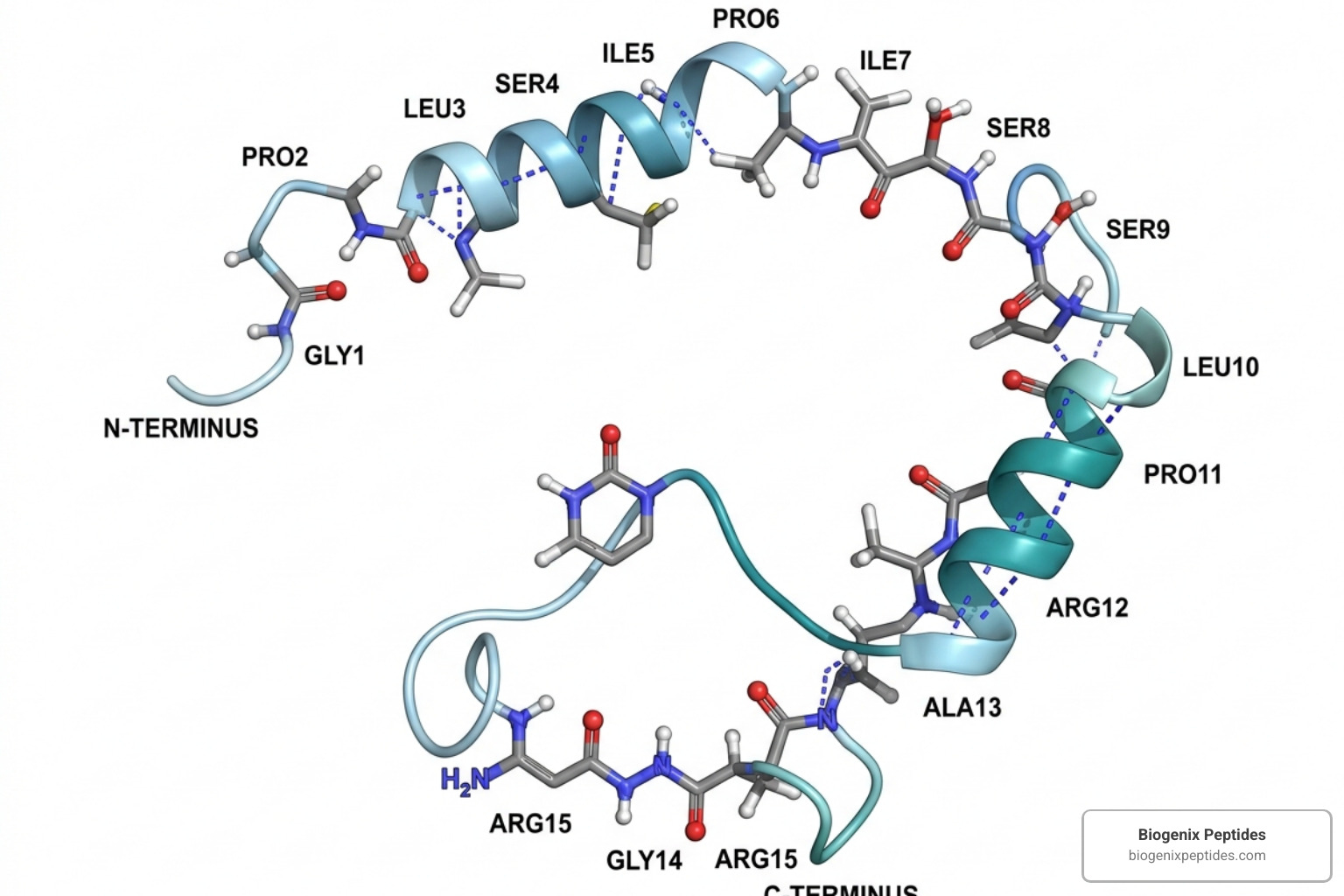
Lyophilization, or freeze-drying, removes water from the compound while it is frozen, leaving behind a stable “puck” or powder. This process is often paired with a nitrogen flush to remove oxygen and a vacuum seal to prevent degradation. This state allows the peptide to remain stable for 24 months or more when stored correctly. However, once we reconstitute 5mg bpc 157, the “clock” starts ticking on its stability. For a deep dive into this technology, check out our guide on Everything You Need to Know About Lyophilized Peptides.
Essential Materials to Reconstitute 5mg BPC 157
To maintain the integrity of your research, sterility is your best friend. You cannot simply use tap water or even standard bottled water; you need specific laboratory-grade supplies.
- Bacteriostatic Water (BAC Water): This is the gold standard for multi-use vials. It contains 0.9% benzyl alcohol, which acts as a preservative to inhibit the growth of bacteria. Without this, a reconstituted solution would only be viable for about 24 hours.
- Alcohol Swabs: Used to disinfect the rubber stoppers of both the BAC water and the peptide vial.
- Laboratory Syringes: Typically, a 3mL syringe is used to transfer the water, while U-100 insulin syringes are used for measuring small volumes during research.
- Sterile Workspace: A clean, draft-free area is essential to prevent airborne contaminants from entering your vials.
Understanding the difference between your diluent options is vital for long-term study. You can learn more about this in our articles on Bacteriostatic Water for Research and the Sterile Water and Bacteriostatic Water Differences.
Step-by-Step Guide to Reconstitute 5mg BPC 157
Now, let’s get into the actual physical process. We recommend allowing your vials to reach room temperature for about 5–10 minutes before starting. This prevents “temperature shock” and helps the powder dissolve more uniformly.
- Sanitize: Wash your hands thoroughly and wipe down your workspace. Remove the plastic flip-caps from your BPC-157 vial and your bacteriostatic water.
- Disinfect: Use a fresh alcohol swab to wipe the rubber stoppers of both vials. Let them air dry completely—don’t blow on them!
- Equalize Pressure: Because peptide vials are vacuum-sealed, they can “suck in” liquid too fast, which can damage the peptide. Draw a small amount of air into your syringe, insert it into the BPC-157 vial, and release the air to equalize the pressure.
- Draw Diluent: Using your transfer syringe, draw the desired amount of bacteriostatic water (we’ll discuss volumes in the next section).
- The Slow Trickle: This is the most critical step. Insert the needle into the BPC-157 vial at a 45-degree angle. Aim the needle so the water hits the glass wall of the vial rather than the powder directly. Push the plunger slowly, allowing the water to trickle down the side.
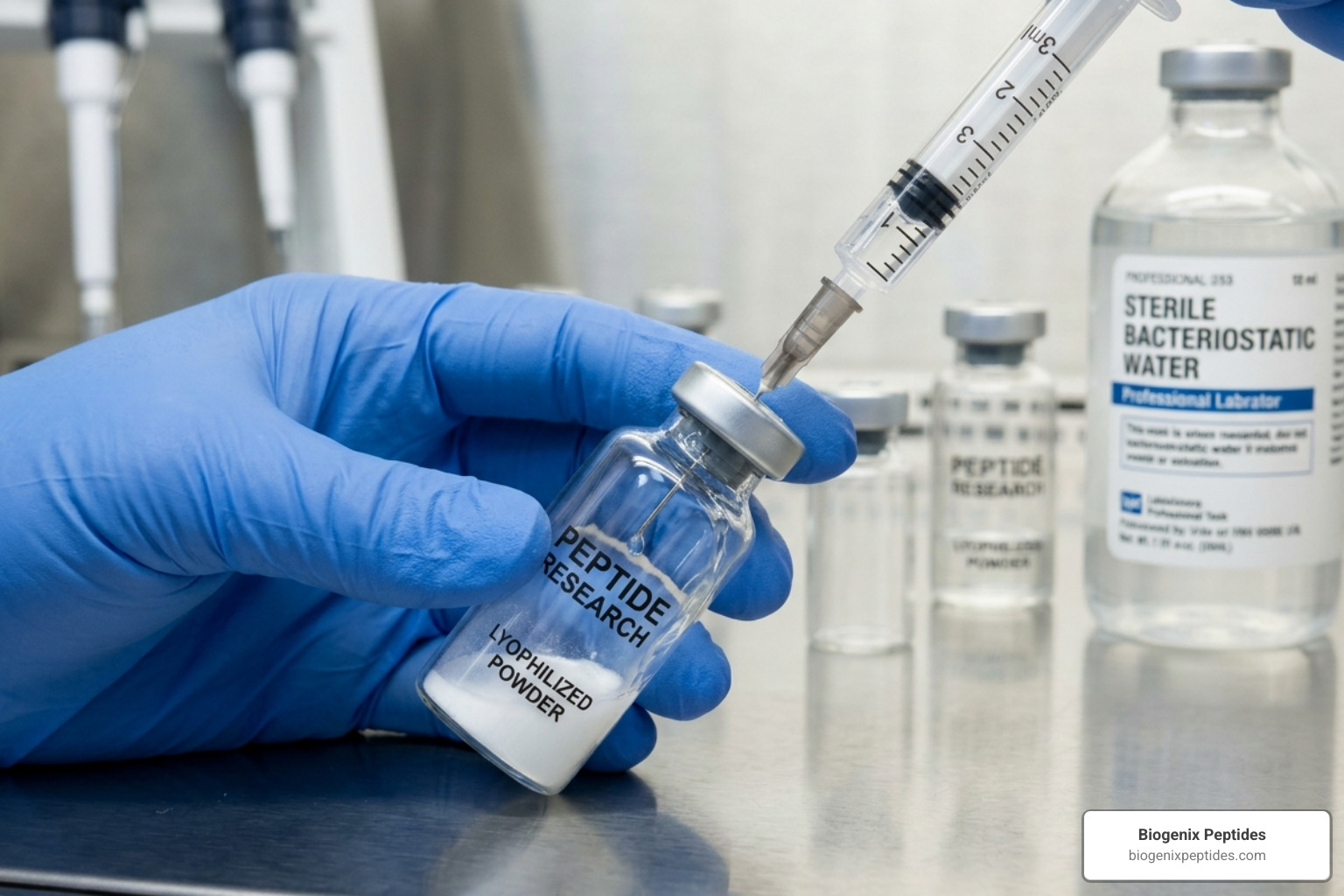
For more tips on perfecting this technique, see our guides on Mixing Peptides Like a Pro and A Foolproof Way to Reconstitute Your Lyophilized Peptides.
Avoiding Mechanical Agitation
Once the water is in the vial, you might be tempted to give it a good shake to mix it up. Don’t. Peptides are fragile chains of amino acids; vigorous shaking can cause “mechanical agitation,” which leads to denaturing. This means the peptide molecules clump together or break apart, rendering the solution useless for research.
Instead, gently swirl the vial or roll it between your palms. If the powder doesn’t dissolve immediately, let it sit in the refrigerator for 10–20 minutes. It will eventually clear up on its own.
Common Mistakes When You Reconstitute 5mg BPC 157
Even experienced researchers can make mistakes. Here are the “big four” to avoid:
- Direct Spraying: Shooting water directly onto the lyophilized puck can cause foaming and structural damage.
- Shaking: As mentioned, this is the fastest way to ruin a batch.
- Contamination: Reusing needles or failing to use alcohol swabs can introduce bacteria that the benzyl alcohol can’t keep up with.
- Using the Wrong Water: Using plain sterile water for a multi-use vial is a common error that limits the shelf life to just one day.
For a deeper look at these pitfalls, read The Secret to Reconstituting Peptides 5mg Correctly.
Concentration Calculations for 5mg Vials
Math is where many researchers get nervous, but when you reconstitute 5mg bpc 157, the numbers are actually quite friendly. 5mg is equal to 5,000 micrograms (mcg). The amount of water you add determines the concentration.
| Diluent Volume | Resulting Concentration | Measurement for 250mcg | Measurement for 500mcg |
|---|---|---|---|
| 1mL | 5,000 mcg/mL | 5 units (0.05mL) | 10 units (0.1mL) |
| 2mL | 2,500 mcg/mL | 10 units (0.1mL) | 20 units (0.2mL) |
| 3mL | 1,667 mcg/mL | 15 units (0.15mL) | 30 units (0.3mL) |
| 5mL | 1,000 mcg/mL | 25 units (0.25mL) | 50 units (0.5mL) |
We generally recommend the 2mL volume for 5mg vials. It provides a “sweet spot” where the liquid isn’t too concentrated to measure accurately, but isn’t so diluted that you have to use large volumes. You can find more detail in our article on BPC-157 Reconstitution Ratios Made Easy for Research.
Calculating 250mcg and 500mcg Concentrations
Using the 2mL ratio, the math becomes very simple for standard research increments. On a standard U-100 insulin syringe (where 100 units = 1mL):
- 10 units on the syringe equals 250mcg.
- 20 units on the syringe equals 500mcg.
This volumetric precision is essential for maintaining consistency across different stages of a research protocol. For more on the math behind these ratios, see The Science of the Bacteriostatic Water Peptide Ratio.
Storage and Stability of Reconstituted Peptides
Once you have successfully finished the process to reconstitute 5mg bpc 157, storage becomes your priority. Peptides in liquid form are susceptible to heat and light.
- Temperature: Store the vial in a refrigerator at 2–8°C (35.6–46.4°F).
- Light: Keep the vial in its box or a dark container to protect it from UV light.
- Shelf Life: When mixed with bacteriostatic water, BPC-157 remains stable for approximately 28 days. After this point, the peptide begins to degrade, and the preservative may lose its effectiveness.
- Orientation: Store vials upright to minimize the solution’s contact with the rubber stopper, which can occasionally lead to leaching over long periods.
For a complete breakdown of stability markers, refer to our BPC-157 Reconstitution Complete Guide.
Frequently Asked Questions about BPC-157 Preparation
Can I use sterile water instead of bacteriostatic water?
Technically, yes, but we don’t recommend it for multi-use vials. Sterile water lacks the benzyl alcohol needed to inhibit bacterial growth. If you use sterile water, the vial must be used immediately or discarded within 24 hours. For any research lasting longer than a day, bacteriostatic water is the only appropriate choice.
Why is my solution cloudy after I reconstitute 5mg BPC 157?
A clear solution is a sign of a successful mix. If the liquid is cloudy or has visible particles (“floaters”), it could indicate:
- Temperature Shock: The water was too cold or too hot.
- pH Imbalance: The diluent was not pure.
- Precipitation: The peptide has “crashed” out of the solution.
- Contamination: Bacterial growth has occurred. If the solution does not clear up after 20 minutes of resting in the fridge, it should be discarded.
Can I freeze the peptide after it has been mixed?
No. While you can freeze lyophilized (powder) peptides for long-term storage, you should never freeze them once they are reconstituted. Freezing creates ice crystals that act like tiny “knives,” shearing the delicate peptide bonds and destroying the compound’s structural integrity.
Conclusion
At Biogenix Peptides, we believe that the quality of your research depends on the quality of your preparation. Knowing how to reconstitute 5mg bpc 157 correctly ensures that the compound remains stable, sterile, and effective for the duration of your study. By following sterile techniques, avoiding mechanical agitation, and utilizing precise calculations, you can maintain the highest laboratory standards.
If you are looking for high-purity, third-party tested compounds for your next project, we invite you to Shop Research Peptides at Biogenix Peptides today. Your research integrity is our mission.