Don’t let your peptides lose their cool
Lyophilized vs. Reconstituted: The Fundamentals of Peptide Storage
Understanding the physical state of your research materials is the first step in mastering peptide storage. When you receive a vial from us, it typically arrives as a “lyophilized” powder. Lyophilization is a high-tech dehydration process where the peptide is frozen and then placed under a vacuum to allow the ice to change directly from solid to vapor (sublimation).
This process puts the peptide into a state of “suspended animation.” By removing water, we drastically slow down the chemical reactions that lead to degradation. However, this powder is highly hygroscopic—meaning it loves to soak up moisture from the air. If the powder becomes damp, it can undergo deliquescence, turning into a sticky or syrupy mess that degrades rapidly.
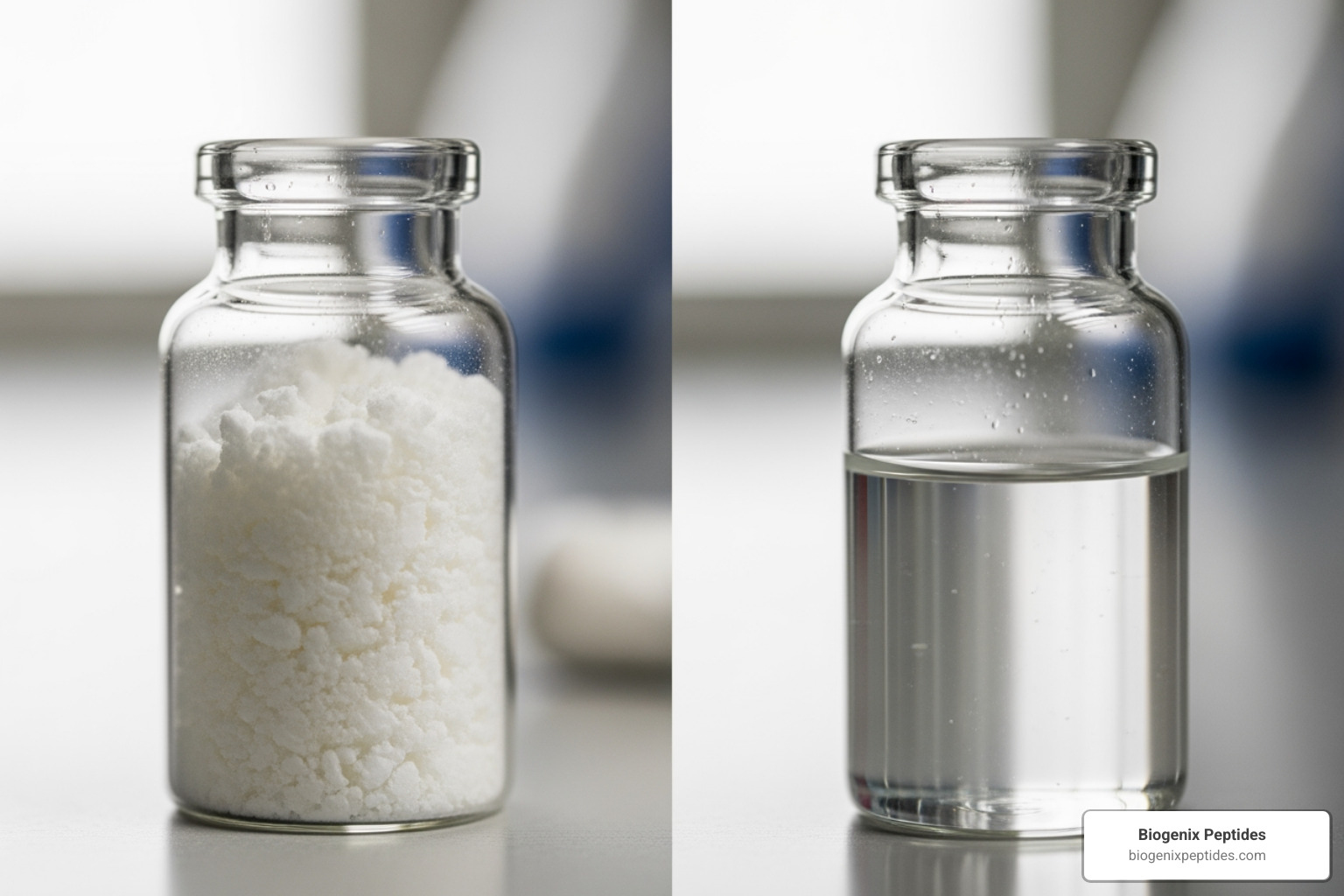
The stability difference between these two states is night and day. While a dry powder can survive on a shelf for weeks, a liquid solution is a ticking clock. To understand more about why we ship them this way, check out our guide on Why Research Peptides Are Typically Lyophilized.
| Feature | Lyophilized Powder | Reconstituted Solution |
|---|---|---|
| Stability at RT | 30–60 Days | Not Recommended (Hours) |
| Stability at 4°C | 1–2 Years | Up to 30 Days |
| Stability at -20°C | 2–3 Years | 6–12 Months (Aliquoted) |
| Risk of Bacteria | Very Low | High |
| Sensitivity | Moisture/Light | Heat/Light/pH/Oxygen |
Preventing Moisture and Oxidation
The two biggest enemies of the lyophilized state are atmospheric water and oxygen. When you take a cold vial out of the freezer and pop the cap immediately, moisture from the air condenses inside the vial—just like it does on a cold soda can on a summer day. This “micro-moisture” is enough to kickstart degradation.
To prevent this, we always recommend room temperature equilibration. Let the vial sit on your lab bench for at least 30 to 60 minutes before breaking the seal. For ultra-sensitive peptides, researchers often use desiccators or purge the vial with an inert gas like nitrogen or argon before resealing. You can find more specific environment tips in our Peptide Storage Guidelines.
Temperature Guidelines for Maximum Peptide Storage Stability
Temperature control is the backbone of peptide storage. Heat provides the energy needed for chemical bonds to break or for peptides to aggregate (clump together).
For short-term needs, a standard refrigerator (2-8°C) is excellent for lyophilized vials. They will remain stable here for a year or more. If you are actively using a reconstituted vial, the fridge is also its home, though the shelf life drops to about 30 days.
Long-Term Peptide Storage in the Freezer
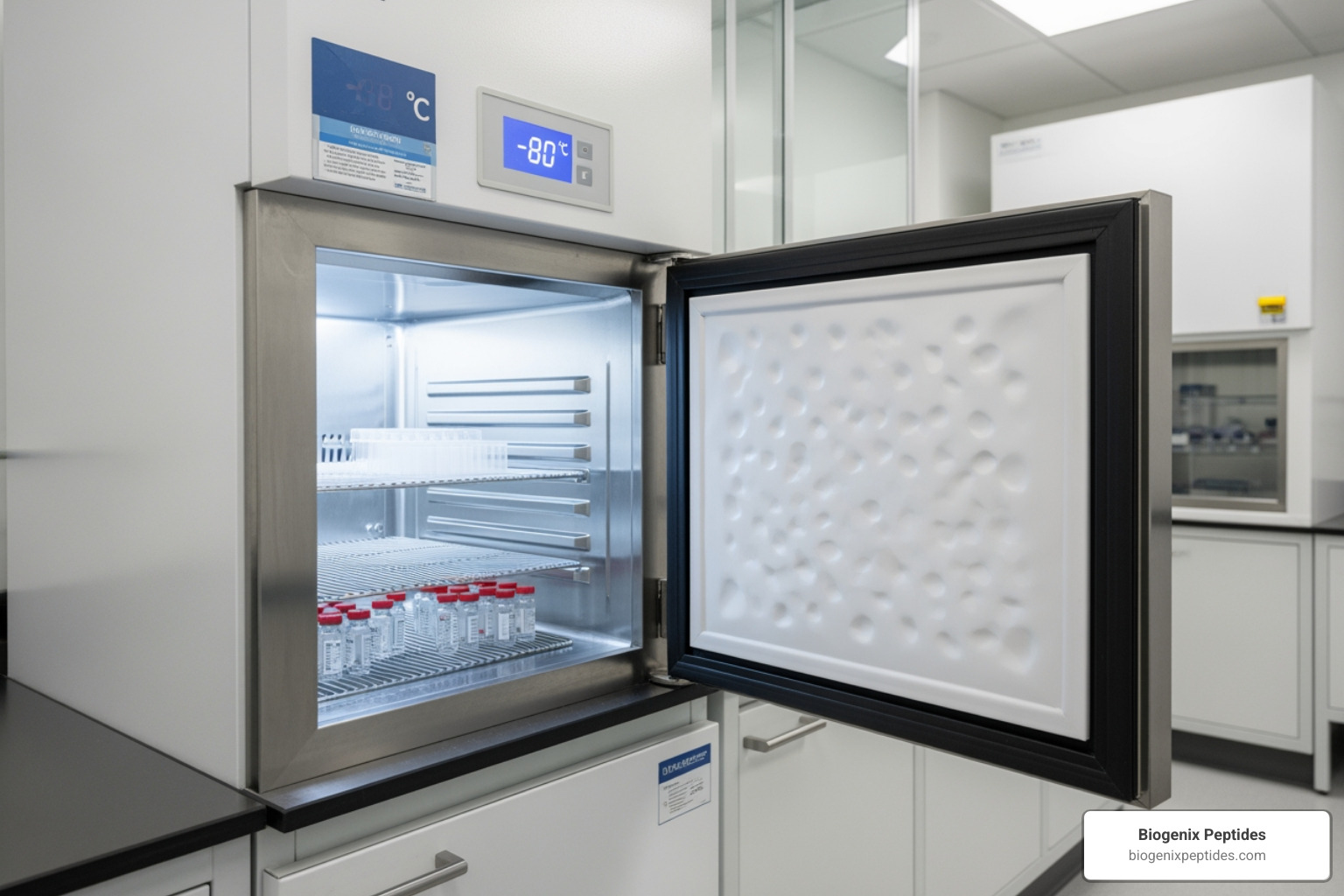
For research spanning several years, a deep freeze is mandatory. While -20°C (a standard deep freezer) is sufficient for most peptides for 24–36 months, -80°C is the “gold standard” for absolute molecular stability.
One critical warning: Avoid frost-free freezers. These units work by cycling the temperature up and down to prevent ice buildup. These constant temperature fluctuations are devastating to peptide integrity. If you must use a home freezer, place your vials in the very back, inside a secondary insulated container (like a styrofoam box) to buffer against temperature spikes. For more on freezer safety, see our Best Practices for Peptide Storage & Handling.
Short-Term Peptide Storage and Shipping
You might worry if your package sits in a mailbox for a day. Fortunately, lyophilized peptides are remarkably hardy. Most are stable at room temperature for 30 to 60 days without significant loss of purity. We use insulated mailers and, when necessary, cold chain logistics to ensure that even during transit, your peptides never face extreme heat that could compromise your results.
Best Practices for Handling and Reconstitution
The moment you add a solvent to that powder, the “stability clock” starts ticking faster. Reconstitution should be done with precision. We recommend using bacteriostatic water, which contains 0.9% benzyl alcohol. This additive acts as a preservative, inhibiting the growth of most bacteria that could otherwise eat your peptides for lunch.
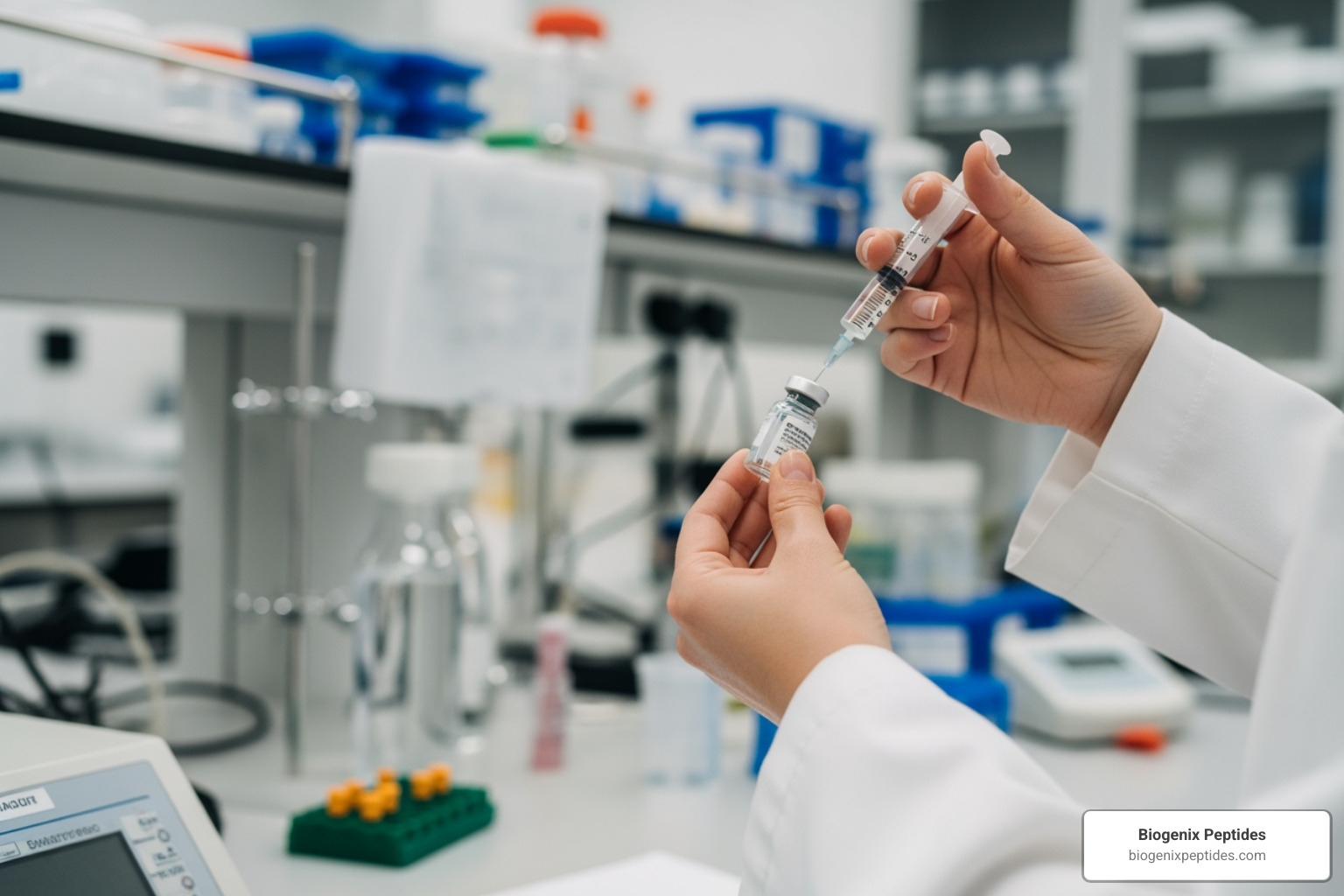
Maintaining a sterile research environment is non-negotiable. Any bacteria introduced during mixing will flourish in the nutrient-rich peptide solution. Furthermore, the pH of your solvent matters; most peptides prefer a slightly acidic environment (pH 5-6) for maximum stability. For a deeper dive into the “how-to,” follow our Reconstituting Lyophilized Peptides: Step-by-Step guide.
The Importance of Aliquoting
If you have a large vial of peptide but only need a small amount for each experiment, aliquoting is your best friend. Repeatedly freezing and thawing a single large bottle of liquid peptide creates “ice crystals” that can physically shear and break the delicate peptide chains.
Instead, divide the freshly mixed solution into several small “working aliquots.” Freeze them all, and then only thaw one at a time as needed. This ensures each molecule only ever faces one thaw cycle. To get started, you’ll need some essential lab equipment for handling.
Protecting Sensitive Sequences and Preventing Degradation
Not all peptides are created equal. Some sequences contain specific amino acids that are “divas”—they require much more attention.
- Cysteine (Cys): Prone to forming unwanted disulfide bridges.
- Methionine (Met) & Tryptophan (Trp): Highly susceptible to oxidation, which can turn the solution yellow or brown.
- Asparagine (Asn) & Glutamine (Gln): Can undergo deamidation, especially if the pH is too high.
Furthermore, hydrophobic (water-fearing) peptides have a habit of sticking to the walls of plastic containers. This is called adsorption. Research published in the Journal of Proteome Research suggests that using high-quality glass or specialized non-binding plastics is vital for these sequences to ensure you don’t lose half your sample to the side of the vial.
Recognizing Signs of Peptide Failure
How do you know if your peptide storage failed? Look for these red flags:
- Cloudiness/Opalescence: A clear solution that turns cloudy usually indicates bacterial growth or peptide aggregation.
- Discoloration: Yellowing or browning is a classic sign of oxidation (common in Met or Trp sequences).
- Particulate Matter: If you see “floaties” or “flakes” that won’t dissolve with gentle swirling, the peptide has likely denatured.
- Unusual Odor: A “spoiled” or sulfur-like smell is a clear sign to discard the vial.
If you see these signs, it’s safer to discard the sample than to risk compromised research data. Review our Peptide Storage & Stability Guidelines for a full checklist.
Logistics: Containers, Travel, and Common Pitfalls
The container you choose is your peptide’s first line of defense. We recommend borosilicate glass vials or medical-grade polypropylene. These materials are chemically inert and won’t leach “plasticizers” into your sample.
If you must travel with your research, plan ahead. Unreconstituted vials are easy—they can handle a flight in your carry-on just fine (check TSA regulations for liquids if they are reconstituted). For mixed peptides, use a dedicated cooling case with gel packs to maintain a steady 2-8°C temperature. Avoid placing vials directly against ice, as they might freeze and undergo an unplanned freeze-thaw cycle.
Common Storage Mistakes to Avoid
- Batch Reconstitution: Don’t mix all 10 vials in a kit at once. Only mix what you will use in the next 30 days.
- Expired Solvents: Using a bottle of bacteriostatic water that has been open for more than 28 days is asking for contamination.
- Light Exposure: UV rays can snap peptide bonds. Always store vials in a dark box or wrap them in foil if using clear containers.
- High Humidity: Never store lyophilized powder in a damp basement or near a steam-generating autoclave.
- Repeated Opening: Every time you open a dry vial, you let in fresh oxygen and moisture. Aliquot the powder if necessary.
Frequently Asked Questions about Peptide Storage
How long do peptides last after being mixed?
Generally, a reconstituted peptide is stable for up to 30 days when kept refrigerated at 4°C. Some fragile sequences may only last 14 days. If you need it to last longer, you must aliquot and freeze it at -20°C, where it can stay viable for 6–12 months.
Can I store peptides in a standard kitchen freezer?
You can, but it’s not ideal. Standard freezers have “frost-free” cycles that cause the internal temperature to swing by as much as 10 degrees several times a day. If you must use one, place your peptides in a “cold box” or a vacuum-sealed bag inside a styrofoam container in the very back of the freezer to minimize these spikes.
Why must I wait for a vial to reach room temperature before opening?
Condensation is the primary reason. If you open a freezing-cold vial in a room with any humidity, water vapor will instantly condense onto the lyophilized powder. This moisture triggers “deliquescence,” causing the powder to clump and begin the degradation process immediately. Patience is the best preservative!
Conclusion
At BioGenix Peptides, we go to great lengths to ensure our products reach you in peak condition. However, once that vial is in your lab, the responsibility shifts to you. By following these peptide storage protocols—maintaining the cold chain, preventing moisture uptake, and avoiding the dreaded freeze-thaw cycle—you protect the integrity of your research.
Proper storage isn’t just about saving money; it’s about ensuring that the data you collect is accurate and reproducible. If you’re ready to start your next project with the highest quality materials, explore our guide on usage and handling or browse our catalog today. Your research deserves the best environment possible—don’t let your peptides lose their cool.