Why Bodybuilders are Obsessed with BPC-157
Why Bodybuilders are Obsessed with BPC-157
Why Bodybuilders Are Obsessed With BPC-157 Peptide
BPC-157 peptide bodybuilding has exploded in popularity because this compound offers something most supplements can’t: real, research-backed support for tissue repair and recovery — the two things that limit how hard and how often you can train.
Here’s a quick overview of what BPC-157 does for bodybuilders:
| What BPC-157 Does | What It Doesn’t Do |
|---|---|
| Accelerates tendon and ligament healing | Directly build muscle |
| Reduces inflammation and joint pain | Replace anabolic hormones |
| Upregulates growth hormone receptor expression | Guarantee results without training |
| Promotes new blood vessel growth (angiogenesis) | Have regulatory approval for humans |
| Supports gut health and nutrient absorption | Qualify for a WADA Therapeutic Use Exemption |
| Improves training consistency over time | Eliminate the need for proper nutrition and sleep |
BPC-157 — short for Body Protection Compound 157 — is a synthetic 15-amino acid peptide originally derived from a protective protein found in human gastric juice. It’s been nicknamed the “Wolverine peptide” in fitness circles for its reputation as a near-superhuman recovery accelerator.
The buzz isn’t entirely hype. Preclinical animal research shows impressive results in healing ruptured tendons, torn ligaments, and damaged muscle tissue. A 2021 human pilot study of 12 patients with chronic knee pain found that 7 of them — 58% — reported relief lasting more than six months after BPC-157 injections. That’s a small sample, but it’s enough to keep serious athletes paying attention.
Still, the science is early. No large-scale human clinical trials exist yet, and regulatory agencies like the FDA and WADA have taken a firm stance against its use. This guide breaks down exactly what the research says, what bodybuilders are actually experiencing, and what you need to know before considering BPC-157 for your own recovery stack.
I’m Jay Daniel, Founder and CEO of BioGenix Peptides and a peptide research specialist with years of hands-on experience studying compounds like BPC-157 and their role in athletic recovery and tissue regeneration. My work in the BPC-157 peptide bodybuilding space has been focused on understanding the science behind these compounds and helping researchers and athletes navigate it responsibly. Let’s get into the details.
What is BPC-157 and How Does it Work?
At its core, BPC-157 is a pentadecapeptide, meaning it is a chain of 15 amino acids. Its chemical identifier is 137525-51-0. While many peptides are fragile and break down easily in the stomach, BPC-157 is remarkably stable in human gastric juice, remaining effective for over 24 hours. This unique stability is why it was originally investigated for inflammatory bowel disease (IBD) and gastric ulcers.
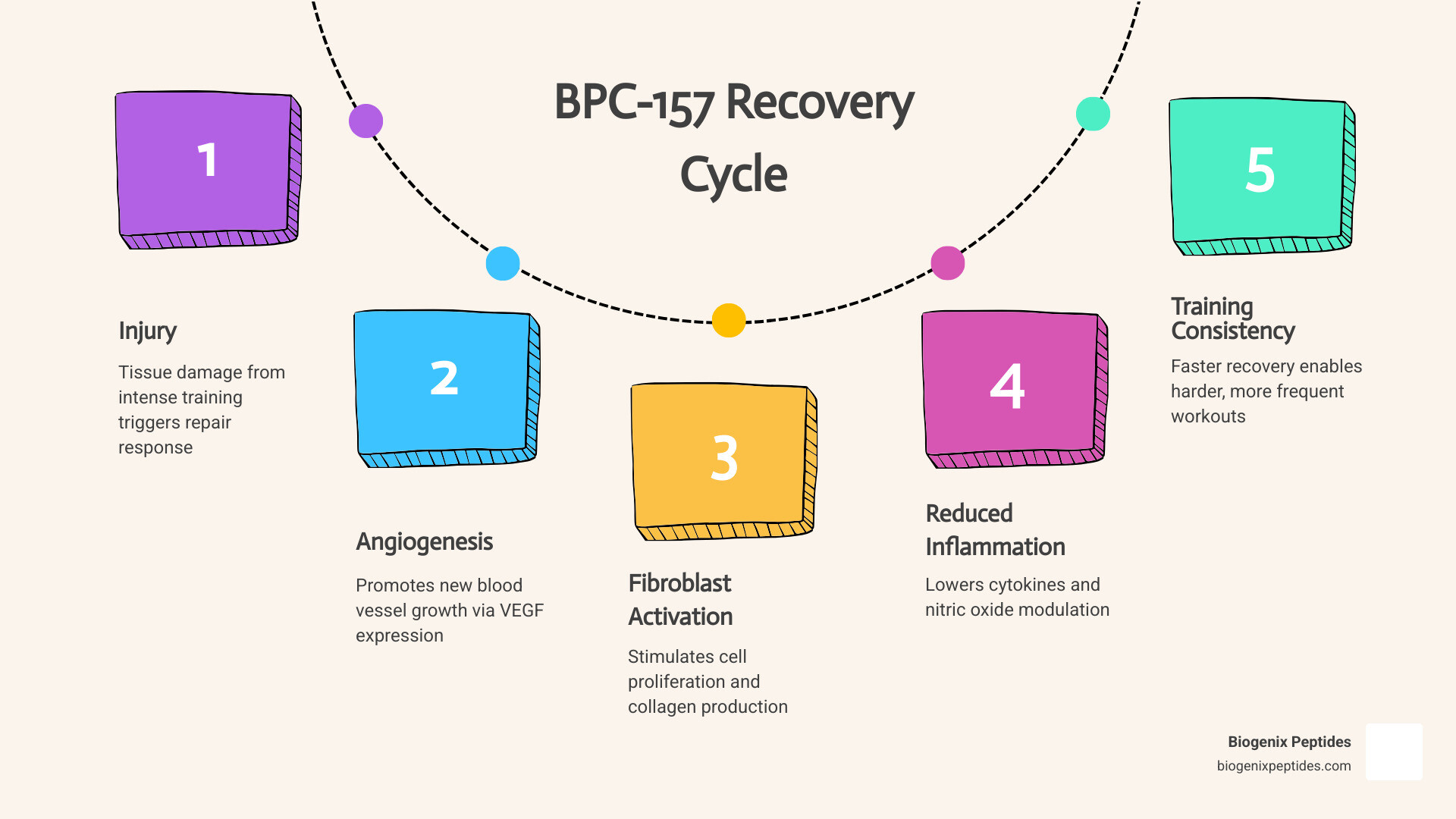
In bpc 157 peptide bodybuilding, the primary mechanism we care about is “cytoprotection.” This is a fancy way of saying it protects and repairs cells. It achieves this through several pathways:
- Angiogenesis: This is the formation of new blood vessels. BPC-157 triggers the expression of Vascular Endothelial Growth Factor (VEGF), which creates new capillary networks in damaged tissue. This is a game-changer for tendons and ligaments, which naturally have poor blood supply.
- Nitric Oxide (NO) System Modulation: BPC-157 interacts with the NO system to regulate blood flow and reduce oxidative stress. This helps manage the “fire” of inflammation that often stalls recovery after a heavy leg day.
- Fibroblast Activation: It stimulates the migration and proliferation of fibroblasts, the cells responsible for producing collagen. More collagen means stronger, more resilient connective tissues.
Scientific research on BPC-157 and blood vessels highlights how these vascular responses are central to its systemic healing effects. By improving the “infrastructure” of the body (the blood vessels and collagen), BPC-157 ensures that nutrients and repair signals actually reach the site of an injury.
The Connection Between BPC-157 Peptide Bodybuilding and Growth Hormone
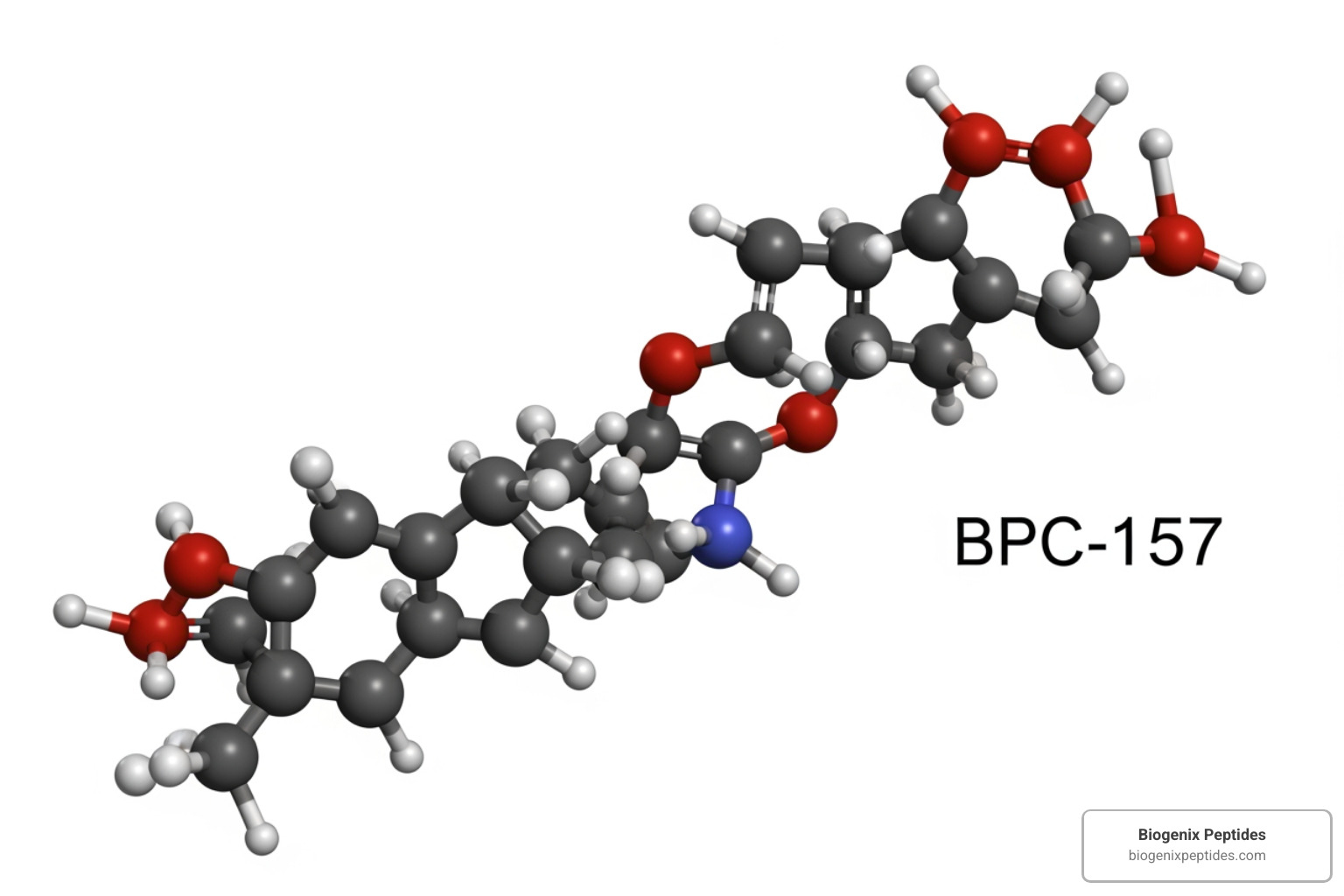
One of the most exciting discoveries in peptide science is how BPC-157 interacts with our body’s natural growth hormone (GH). Research shows that BPC-157 upregulates growth hormone receptor gene expression by 2.29 fold in tendon fibroblasts.
Essentially, BPC-157 doesn’t just “add” growth hormone; it makes the cells you already have much more sensitive to the GH your body produces. This happens through the activation of the JAK2 signaling pathway, which is critical for cell growth and survival. Research on GH receptor expression suggests that when you combine BPC-157 with growth hormone secretagogues, the results can be synergistic.
For anyone looking into Muscle Growth & Performance Peptides, this is why BPC-157 is often considered the “foundation” of a recovery stack. It prepares the “locks” (receptors) so that the “keys” (growth hormone) can work more effectively.
Animal Studies vs. Human Clinical Trials
We have to be honest: most of what we know about bpc 157 peptide bodybuilding comes from animal models. In rats, BPC-157 has successfully healed:
- Transected Achilles tendons.
- Completely detached muscles.
- Segmental bone defects.
- Spinal cord injuries.
In humans, the data is thinner but promising. Aside from the 2021 knee pain study where 58% of patients saw long-term relief, there have been pilot studies on IV safety. A 2025 pilot study found that IV infusions of 10mg and 20mg were well-tolerated in humans with no adverse effects on biomarkers.
While we wait for large-scale trials, the bodybuilding community has become a massive “living lab,” with thousands of anecdotal reports mirroring the rapid healing seen in preclinical rat studies.
Key Benefits of BPC-157 Peptide Bodybuilding for Athletes
Why do bodybuilders choose BPC-157 over other recovery aids? It often comes down to how it compares to its “cousin,” TB-500.
| Feature | BPC-157 | TB-500 |
|---|---|---|
| Primary Focus | Localized repair & gut health | Systemic flexibility & inflammation |
| Mechanism | GH receptor sensitivity/VEGF | Actin sequestration/Cell migration |
| Half-Life | Very short (<30 mins) | Longer (days) |
| Best For | Tendon-to-bone, ligaments, gut | Large muscle tears, overall mobility |
For athletes, the specific Study on Achilles tendon recovery is a standout. It showed that BPC-157 promotes “tendon outgrowth,” meaning the tendon cells actually migrate toward the injury site to bridge the gap. This leads to faster functional recovery, allowing you to get back under the bar sooner.
By enhancing Tissue Repair Regeneration Peptides protocols, bodybuilders find they can maintain a higher level of training intensity without the “wear and tear” that usually leads to a forced deload week.
Indirect Muscle Hypertrophy and Training Capacity
Let’s clear the air: BPC-157 is not a steroid. It will not directly cause your biceps to grow through protein synthesis. However, it supports indirect hypertrophy by:
- Reducing DOMS: Less soreness means you can train the same muscle group more frequently.
- Improving Nutrient Absorption: By repairing the gut lining (the gut-brain axis), you absorb more of the protein and micronutrients you’re eating.
- Lowering Systemic Inflammation: This allows your body to focus its energy on building muscle rather than just surviving the damage from your last workout.
If you’re interested in More info about recovery services, you’ll find that consistency is the “secret sauce” of bodybuilding. BPC-157 acts as a consistency multiplier. If you miss 5% fewer workouts due to nagging pains, those gains compound over a year into significant new muscle mass.
Support for Tendon, Ligament, and Muscle Tears
Common bodybuilding injuries like rotator cuff strains, meniscus tweaks, and the dreaded pec tear are where BPC-157 shines. By stimulating fibroblast proliferation and increasing blood flow to these “white tissue” areas (which normally have very little blood flow), it speeds up the structural rebuilding of the tissue. This is also why it’s a hot topic in Peptides Arthritis Research, as it may help protect joint cartilage from the heavy loading associated with powerbuilding.
Dosage, Administration, and Stacking Protocols
In the research community, BPC-157 is typically administered in one of three ways:
- Subcutaneous (SubQ) Injection: The most common method. It’s usually injected into the fat layer near the injury site using an insulin syringe.
- Intramuscular (IM) Injection: Some researchers prefer injecting directly into the muscle for localized tears.
- Oral: Because it is stable in gastric acid, oral capsules are effective, especially for gut health or systemic inflammation.
For those looking at the BPC-157 Body Protection Compound 157 10mg vials, reconstitution is required. This involves adding bacteriostatic water to the lyophilized (freeze-dried) powder. Once mixed, it must be kept refrigerated.
Typical Dosing Range:
- Conservative: 250 mcg per day.
- Standard: 500 mcg per day (often split into two 250 mcg doses).
- Aggressive (Acute Injury): Up to 1,000 mcg per day.
Most cycles last 6 to 12 weeks, followed by a break of at least 4 weeks. Because it is non-hormonal, it does not require a Post-Cycle Therapy (PCT).
Effective Stacks for BPC-157 Peptide Bodybuilding
BPC-157 is rarely used alone by advanced athletes. It is almost always part of a “stack” designed for synergistic healing.
- The Wolverine Stack: This is the most famous combo, pairing BPC-157 with TB-500. We offer a BPC-157 + TB-500 20mg Blend specifically for this purpose. TB-500 handles the “macro” inflammation and cell migration, while BPC-157 handles the “micro” structural repair and GH receptor sensitivity.
- The Growth Stack: Combining BPC-157 with GH secretagogues like Ipamorelin or CJC-1295. This takes advantage of the upregulated receptors we mentioned earlier.
- The Performance Stack: Using BPC-157 alongside traditional supplements like collagen and Vitamin C to provide the raw building blocks for the tissue repair BPC-157 is signaling.
Check out our Product Category Performance for more ideas on how to structure these protocols.
Realistic Expectations and Timelines
You won’t wake up the next morning with a healed ACL. Healing takes time, but BPC-157 speeds up the clock.
- 1-2 Weeks: Most users report a significant reduction in nagging joint pain and “morning stiffness.”
- 4-6 Weeks: This is when structural changes usually occur. This is the timeline for improved mobility and the ability to return to heavier loads.
- 8-12 Weeks: Maximum benefit for chronic injuries (like long-term tendonitis).
Safety, Legality, and WADA Regulations
We must address the elephant in the room. BPC-157 is currently in a regulatory gray area.
- FDA: The FDA has added BPC-157 to the “Category 2 Bulk Substance List,” which means it cannot be legally compounded by pharmacies for human use. There is no legal basis for compounding pharmacies to use BPC-157 in the U.S. at this time.
- WADA: As of 2022, the World Anti-Doping Agency (WADA) officially banned BPC-157 under the “S0 Unapproved Substances” category. This means it is prohibited at all times for tested athletes. You can find more USADA prohibited list info on their official site.
In terms of side effects, BPC-157 is generally well-tolerated in research. Reported issues are rare but can include:
- Mild nausea or stomach upset (especially with oral use).
- Dizziness or a temporary drop in blood pressure.
- Irritation or redness at the injection site.
- Potential worsening of existing gynecomastia (rare, likely due to GH pathway interactions).
Implications for Tested Athletes
If you compete in a tested federation, you need to be extremely careful. BPC-157 has a very short half-life — as little as 30 minutes. However, modern drug testing is incredibly sensitive and can detect its metabolites in urine for several days. Because it is an “unapproved substance,” you cannot get a Therapeutic Use Exemption (TUE) for it. For tested athletes, the risk of a ban is a serious consideration.
Conclusion
The obsession with bpc 157 peptide bodybuilding isn’t just a trend; it’s a response to the brutal demands of the sport. By supporting angiogenesis, upregulating growth hormone receptors, and protecting the gut, BPC-157 offers a unique toolkit for the “broken” bodybuilder.
While it remains an experimental compound and is strictly prohibited in competitive sports, the research into its cytoprotective properties continues to grow. At Biogenix Peptides, we are committed to providing the highest quality research materials for those looking to explore the frontiers of recovery science.
Ready to see why everyone is talking about the Wolverine peptide? Explore our full range of recovery tools at our shop.