Tesamorelin Reconstitution 5mg: A Step-by-Step Protocol
Disclaimer: The information provided in this article is for educational and informational purposes only. It is not intended as medical advice, diagnosis, or treatment. Products and compounds referenced are for research use only and are not approved for human or veterinary consumption. Always consult a qualified professional regarding health or medical decisions.
What You Need to Know About Tesamorelin Reconstitution 5mg
Tesamorelin reconstitution 5mg is a straightforward process when you know the right steps. Here is a quick reference before we go deeper:
Quick Answer:
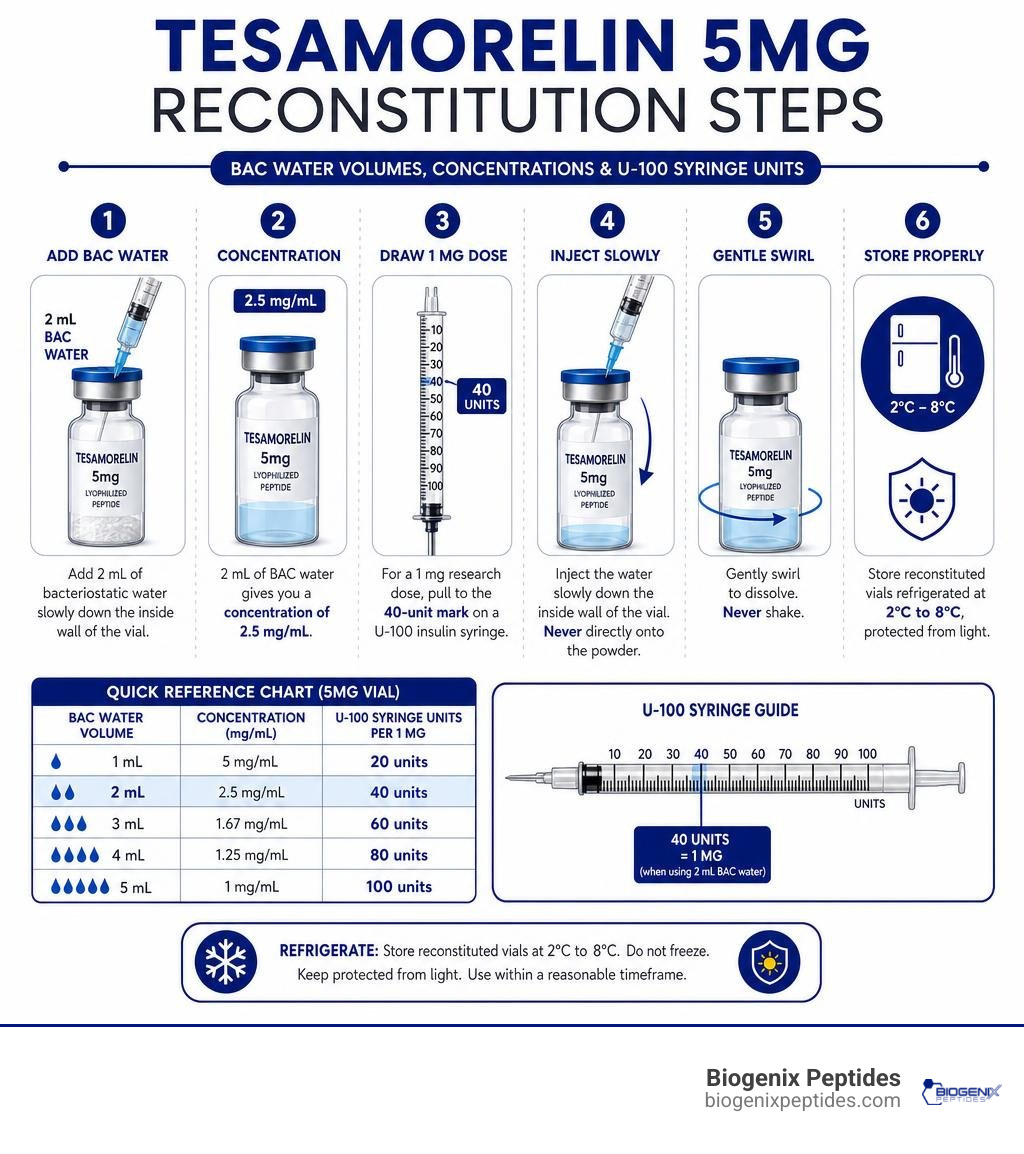
- Add 2 mL of bacteriostatic water to your 5 mg vial (most common choice)
- This gives you a concentration of 2.5 mg/mL
- For a 1 mg research draw, pull to the 40-unit mark on a U-100 insulin syringe
- Transfer the water slowly down the inside wall of the vial — never directly onto the powder
- Gently swirl to dissolve — never shake
- Store reconstituted vials refrigerated at 2°C to 8°C, protected from light
Getting the reconstitution protocol right matters. A small math error or a single misstep — like shaking the vial or using the wrong diluent — can compromise the integrity of the entire preparation. Tesamorelin is a synthetic analog of growth hormone-releasing hormone (GHRH), and its peptide structure is sensitive to mechanical stress and contamination.
This guide covers everything a researcher needs: diluent selection, step-by-step mixing protocol, concentration math, syringe unit conversions, and proper storage — all specific to the 5 mg vial format.
I’m Jay Daniel, Founder and CEO of BioGenix Peptides, with years of hands-on experience in peptide science, quality standards, and laboratory protocols — including the precise handling required for tesamorelin reconstitution 5mg in research settings. Let’s walk through the full protocol so you can work with confidence and accuracy.
Key terms for tesamorelin reconstitution 5mg:
Scientific Foundations of Tesamorelin in Research Settings
Understanding the biochemical framework of tesamorelin helps explain why strict preparation standards are required during laboratory handling. Tesamorelin is a synthetic peptide containing a 44-amino acid chain derived from natural growth hormone-releasing hormone (GHRH). It features a distinct hexenoyl group attached to its N-terminal amino acid, an engineering modification designed to increase metabolic stability and resistance to enzymatic degradation compared to native GHRH.
In pre-clinical and clinical models, tesamorelin binds selectively to GHRH receptors on anterior pituitary somatotroph cells. This interaction triggers the synthesis and pulsatile secretion of endogenous growth hormone (GH), which subsequently stimulates downstream systemic production of insulin-like growth factor 1 (IGF-1). To explore these physiological pathways in greater depth, review our comprehensive Tesamorelin research overview.
The primary clinical reference model for this compound is documented in official prescribing guidelines such as the FDA clinical prescribing reference. Clinically, the branded prescription counterpart is approved specifically for reducing excess visceral abdominal fat in adult HIV patients exhibiting lipodystrophy. Research indicates that the compound exhibits an absolute subcutaneous bioavailability of less than 4% and operates in a weight-neutral manner without altering general body fat distributions outside of visceral adipose tissue.
Pharmacokinetic evaluations reveal that tesamorelin possesses a relatively short plasma half-life of approximately 26 minutes following administration. Because the peptide degrades rapidly once exposed to enzymatic pathways or physical stressors, precise handling during the tesamorelin reconstitution 5mg sequence is essential to maintain structural integrity.
Diluent Selection and Bacteriostatic Water Properties
Choosing the appropriate liquid medium to reconstitute lyophilized peptide powder is critical for maintaining compound stability and sample sterility over time. For multi-entry research protocols, Bacteriostatic Water (often referred to as BAC water) serves as the primary industry standard.
Bacteriostatic water consists of sterile, non-pyrogenic water supplemented with 0.9% benzyl alcohol ($C7H8O$). The addition of benzyl alcohol acts as a bacteriostatic preservative, suppressing the proliferation of potential bacterial contaminants that could be introduced during repeated vial punctures.
To gain a clearer understanding of diluent selection, consider the key distinctions between common reconstituting liquids:
- Bacteriostatic Water (0.9% Benzyl Alcohol): Designed for multi-entry vials. Preserves chemical stability and prevents microbial contamination for up to 28 days when refrigerated.
- Sterile Water: Lacks antimicrobial agents. Highly suitable for immediate single-use applications, but fails to protect multi-entry vials against bacterial growth over prolonged periods.
Understanding these structural differences is vital for laboratory safety. For a deeper analysis of diluent characteristics, consult our guide on sterile water comparison. Utilizing unpreserved sterile water in a multi-entry 5 mg vial significantly raises the risk of microbial accumulation, which can degrade the active peptide and jeopardize experimental purity.
Syringe Calibration and Volume Math
Accurate volumetric delivery relies on choosing the correct syringe type and mastering unit conversions. In peptide research, standard U-100 insulin syringes are universally preferred due to their high volumetric precision and low dead-space design.
A U-100 syringe is calibrated so that 100 units equal exactly 1.0 milliliter (mL) of fluid. Therefore:
- 10 units = 0.10 mL
- 25 units = 0.25 mL
- 40 units = 0.40 mL
- 50 units = 0.50 mL
- 100 units = 1.00 mL
When executing tesamorelin reconstitution 5mg protocols, calculating the exact target measurement depends directly on the volume of diluent introduced. For example, if 2.0 mL of bacteriostatic water is added to a 5 mg vial of lyophilized powder, the resulting active concentration is 2.5 mg/mL ( calculated as $5\text{ mg} \div 2.0\text{ mL}$).
To draw a target research quantity of 1.0 mg from this concentration, we perform the following formula:
$$\text{Volume (mL)} = \frac{\text{Target Mass (mg)}}{\text{Concentration (mg/mL)}}$$
$$\text{Volume (mL)} = \frac{1.0\text{ mg}}{2.5\text{ mg/mL}} = 0.40\text{ mL}$$
Converting 0.40 mL into U-100 syringe units yields:
$$0.40\text{ mL} \times 100\text{ units/mL} = 40\text{ units}$$
Utilizing standardized ratios simplifies research workflows and eliminates measurement errors. To explore mathematical models for diluent ratios in detail, read our technical breakdown on bacteriostatic water peptide ratios.
Step-by-Step Guide to Tesamorelin Reconstitution 5mg
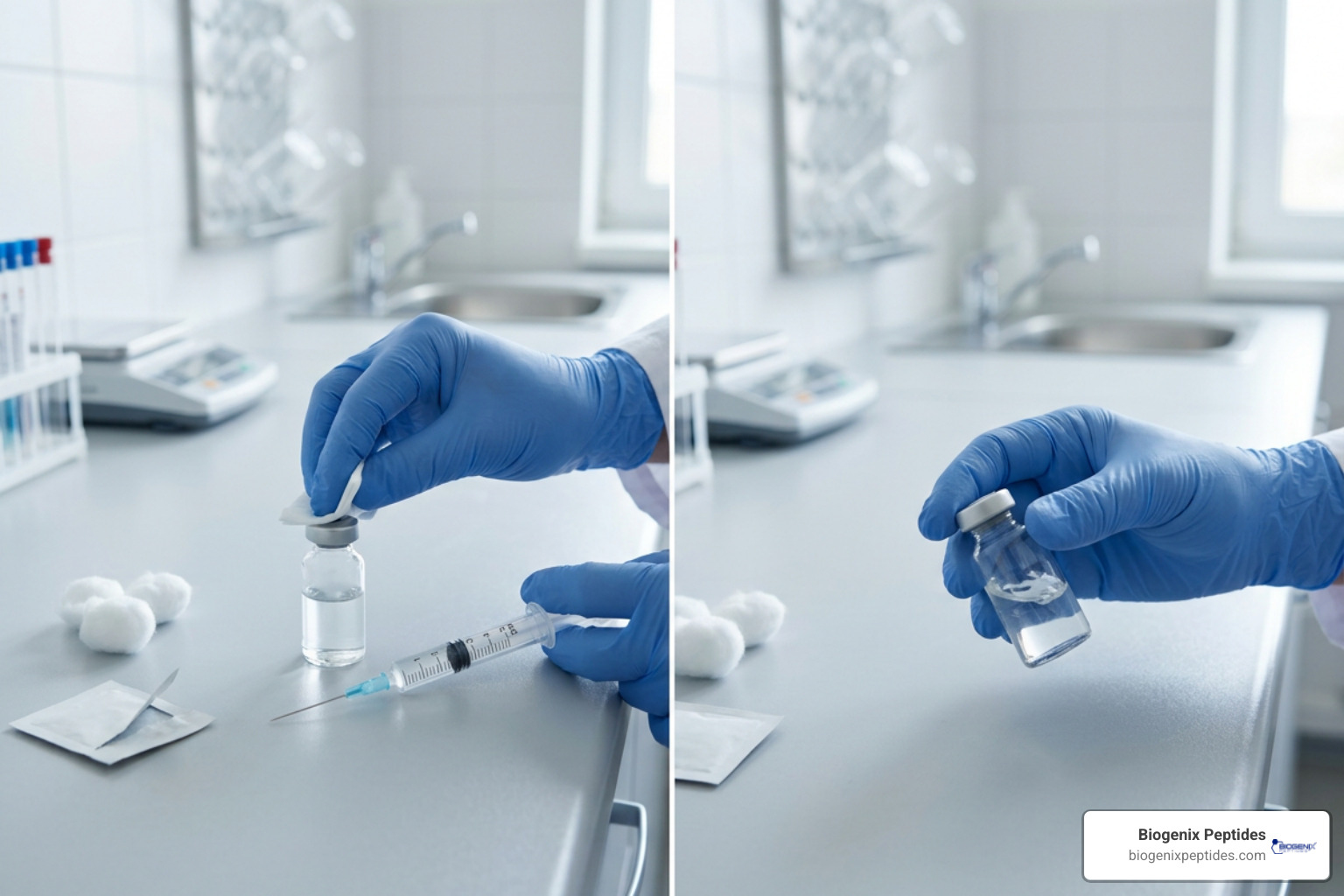
Executing a flawless tesamorelin reconstitution 5mg protocol requires strict adherence to aseptic handling techniques and gentle mixing motions. Lyophilized peptide cakes are inherently delicate; exposing the dry powder to high-pressure fluid streams or aggressive mechanical motion can fracture the peptide bonds and reduce compound activity.
Protocol Step 1: Preparation and Environmental Sanitation
Prior to opening any supplies, establish a sterile workplace to minimize airborne particulate exposure and cross-contamination risks.
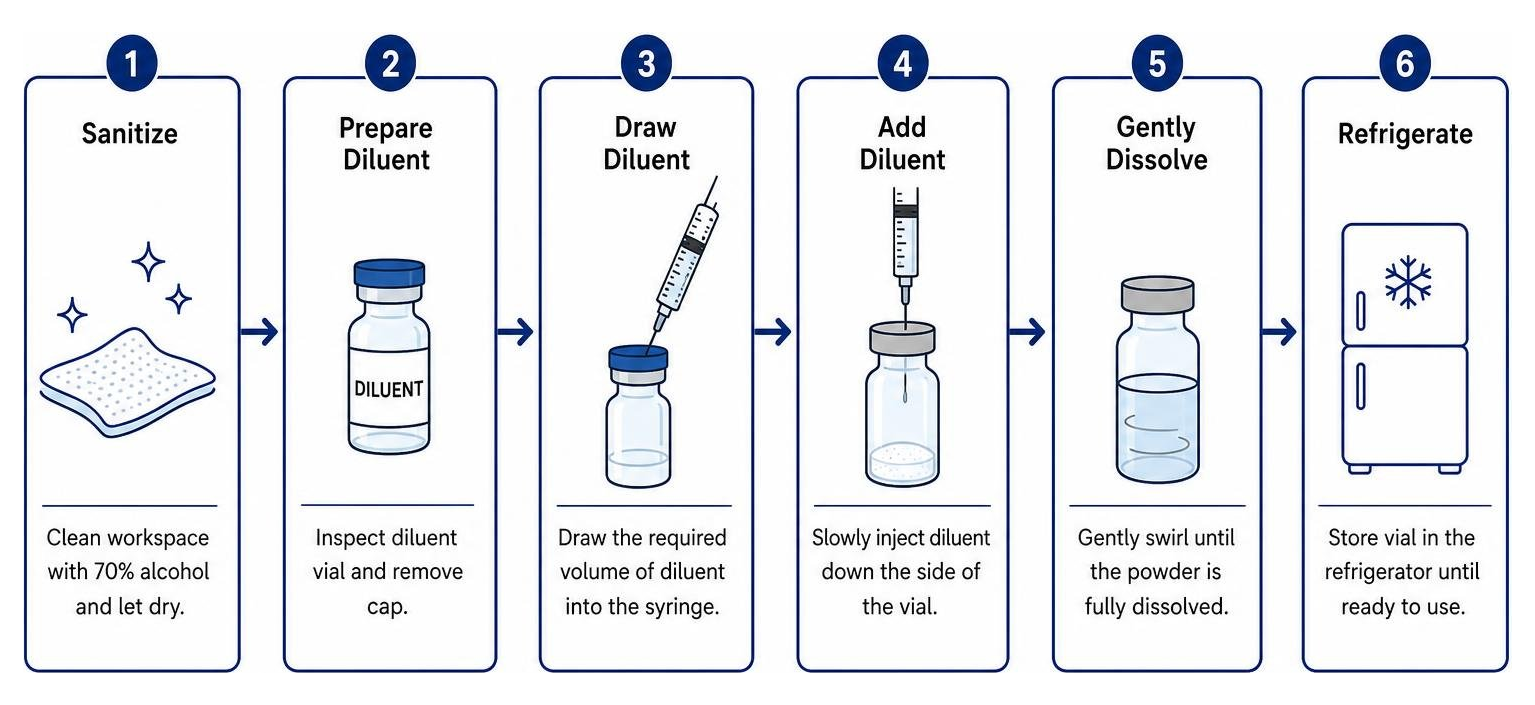
- Sanitize the Workspace: Wipe down all flat work surfaces using 70% isopropyl alcohol or an equivalent surface disinfectant. Allow the area to air dry completely.
- Gather Necessary Supplies:
- One 5 mg vial of lyophilized tesamorelin
- One vial of bacteriostatic water (0.9% benzyl alcohol)
- Sterile 70% isopropyl alcohol prep pads
- A standard mixing syringe (e.g., 3 mL syringe with a 21G–25G needle for diluent transfer)
- Standard U-100 insulin syringes for research measurement draws
- An approved puncture-resistant sharps container
- Disinfect Rubber Stoppers: Pop off the protective plastic flip-caps from both the tesamorelin vial and the bacteriostatic water vial. Thoroughly scrub the rubber stoppers using a fresh alcohol prep pad for 10 to 15 seconds. Allow stoppers to air dry. Do not blow on or touch the stoppers after wiping. For comprehensive guidelines on workspace setup, see our resource on sterile research environment.
Protocol Step 2: Diluent Addition and Gentle Dissolution
Once sanitation is complete, proceed with the liquid transfer process using controlled, deliberate movements.
- Draw the Diluent: Attach a sterile needle to your diluent transfer syringe. Pull back the plunger to draw air equal to your intended diluent volume (e.g., 2.0 mL). Insert the needle into the bacteriostatic water vial, push the air to equalize pressure, turn the vial upside down, and withdraw exactly 2.0 mL of BAC water.
- Equalize Vial Vacuum: Lyophilized peptide vials are often sealed under partial vacuum pressure. Insert the needle through the center of the tesamorelin vial’s rubber stopper. Allow the vacuum to gently pull the liquid inward, while maintaining firm thumb pressure on the plunger rod to control the flow rate.
- Direct the Stream Along Glass Walls: Angle the needle so that the diluent streams slowly down the internal glass wall of the vial. Never direct the liquid stream directly onto the lyophilized powder cake.
- Dissolve the Powder: Once the diluent is entirely introduced, withdraw the transfer syringe and discard it safely in your sharps container. Allow the vial to rest on a flat surface for 1 to 2 minutes so the powder begins absorbing the liquid naturally.
- Gently Mix: Roll the vial upright between the palms of your hands or gently swirl it in smooth circular movements. Do not shake the vial violently. Continue until all visible freeze-dried cake has dissolved into a crystal-clear, colorless liquid. Inspect visually for particulate matter or turbidity before proceeding.
Calculations for Tesamorelin Reconstitution 5mg
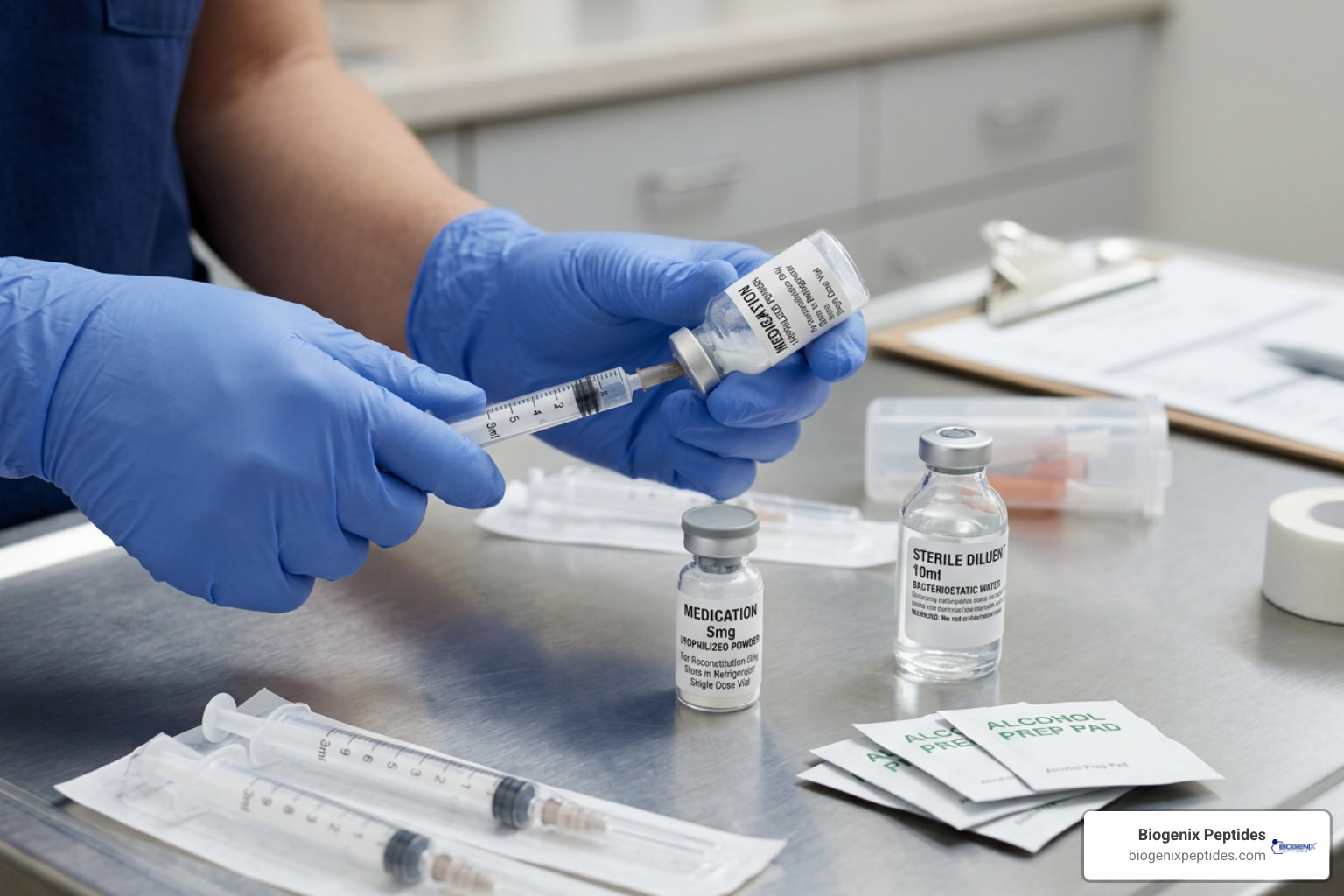
Selecting the right diluent volume allows researchers to customize liquid concentrations to match specific measurement requirements. Adding more bacteriostatic water increases total fluid volume while diluting concentration; adding less diluent creates a more concentrated solution.
To calculate concentration for any volume, use the fundamental equation:
$$\text{Concentration (mg/mL)} = \frac{\text{Total Peptide Mass (5 mg)}}{\text{Volume of BAC Water Added (mL)}}$$
For quick reference, review the conversion dynamics below across common diluent amounts for a 5 mg tesamorelin vial:
| BAC Water Added | Final Solution Concentration | Target Mass | Volume (mL) | U-100 Syringe Units |
|---|---|---|---|---|
| 1.0 mL | 5.0 mg/mL | 0.5 mg | 0.10 mL | 10 Units |
| 1.0 mL | 5.0 mg/mL | 1.0 mg | 0.20 mL | 20 Units |
| 1.0 mL | 5.0 mg/mL | 2.0 mg | 0.40 mL | 40 Units |
| 2.0 mL (Recommended) | 2.5 mg/mL | 0.5 mg | 0.20 mL | 20 Units |
| 2.0 mL (Recommended) | 2.5 mg/mL | 1.0 mg | 0.40 mL | 40 Units |
| 2.0 mL (Recommended) | 2.5 mg/mL | 2.0 mg | 0.80 mL | 80 Units |
| 2.5 mL | 2.0 mg/mL | 0.5 mg | 0.25 mL | 25 Units |
| 2.5 mL | 2.0 mg/mL | 1.0 mg | 0.50 mL | 50 Units |
| 2.5 mL | 2.0 mg/mL | 2.0 mg | 1.00 mL | 100 Units |
| 5.0 mL | 1.0 mg/mL | 0.5 mg | 0.50 mL | 50 Units |
| 5.0 mL | 1.0 mg/mL | 1.0 mg | 1.00 mL | 100 Units |
Researchers requiring customized volumetric calculations can utilize the interactive tools available at the Tesamorelin Calculator or reference the Tesamorelin 5 mg Protocol Guide.
Storage Guidelines After Tesamorelin Reconstitution 5mg
Once reconstituted, liquid tesamorelin is vastly more vulnerable to thermal degradation and structural breakdown than its lyophilized counterpart. Establishing strict storage conditions is vital for preserving compound stability throughout the experiment.
Key temperature standards for maintaining tesamorelin stability:
- Reconstitution Temperature: 2°C to 8°C (36°F to 46°F) standard refrigeration.
- Lyophilized Dry Powder Storage: Stable at room temperature for short durations, but long-term preservation is optimized under refrigeration or cold freezer storage (-20°C).
- Avoid Repeated Freeze-Thaw Cycles: Reconstituted liquid solutions containing bacteriostatic water should never be frozen, as ice crystal formation destroys delicate peptide tertiary structures and benzyl alcohol can separate.
To maximize shelf life, store reconstituted vials inside a designated sealable container away from refrigerator door shelves to prevent temperature swings and light exposure. For comprehensive storage protocols, consult our dedicated guides on peptide handling practices and storage stability guidelines.
Common Reconstitution Mistakes to Avoid
Avoiding operational mistakes ensures consistent research results and prevents wasted materials:
- Agitating or Shaking the Vial: Aggressive shaking introduces excess air, causing heavy foaming and shear stress that denatures fragile peptide chains. Always swirl gently.
- Utilizing Non-Sterile or Unpreserved Diluents: Mixing with plain tap water or unpreserved sterile water in multi-entry containers invites bacterial growth. Always use fresh bacteriostatic water.
- Directing Fluid Impact Directly onto Powder: High-velocity liquid streams blast fragile freeze-dried cakes, disrupting structural integrity. Always aim liquid down the container side wall.
- Neglecting Refrigeration Requirements: Leaving reconstituted liquids at warm room temperatures accelerates enzymatic breakdown. Refrigerate immediately after complete dissolution.
- Misinterpreting Syringe Calibrations: Confusing U-100 insulin syringes with U-40 syringes or standard milliliter syringes leads to severe measurement discrepancies. Always double-check conversions before drawing fluid.
Frequently Asked Questions About Tesamorelin Reconstitution
What is the final concentration when 2mL of BAC water is added to a 5mg vial?
When 2.0 mL of bacteriostatic water is added to a 5 mg vial of tesamorelin, the final concentration is exactly 2.5 mg/mL. This is calculated by dividing 5 mg by 2.0 mL. At this standard ratio, drawing a 1.0 mg research mass requires exactly 0.40 mL of fluid, which aligns with the 40-unit mark on a U-100 insulin syringe.
How does the 26-minute plasma half-life impact research administration timing?
Tesamorelin exhibits a rapid elimination profile with an estimated plasma half-life of roughly 26 minutes. In physiological research models, this rapid clearance produces a brief, natural burst of growth hormone release from pituitary somatotrophs rather than unnatural, prolonged baseline elevations. As a result, experimental protocols generally schedule evaluations at precise daily timeframes to accurately measure peak growth hormone dynamics.
What is the difference between research-grade tesamorelin and prescription formulations?
Prescription formulations (such as Egrifta or Egrifta SV) are regulated human pharmaceuticals packaged primarily as single-use 1 mg or 2 mg lyophilized vials. For example, Egrifta SV is supplied as a 2 mg vial requiring reconstitution with 0.5 mL of sterile water for immediate single-entry application. In contrast, research-grade tesamorelin is supplied in larger multi-entry formats—such as 5 mg or 10 mg lyophilized vials—intended for laboratory investigation only. Research preparations use bacteriostatic water to facilitate multi-entry preservation over several weeks under strict temperature controls.
Conclusion
Mastering tesamorelin reconstitution 5mg ensures consistent experimental measurements, compound stability, and analytical accuracy. By employing standard bacteriostatic water, executing gentle dissolution steps along the vial wall, accurate U-100 syringe conversions, and strict 2°C to 8°C refrigeration, researchers maintain complete control over sample purity.
At BioGenix Peptides, we provide high-purity, laboratory-tested compounds manufactured to rigorous chemical standards. Explore our catalog of research-grade products, including Tesamorelin 10mg and the specialized Tesamorelin Ipamorelin 10mg Blend.
To equip your laboratory with fully verified compounds, visit BioGenix Peptides today.