
Bulk Up Smart: Best Peptides for Muscle Growth and Recovery
Disclaimer: The information provided in this article is for educational and informational purposes only. It is not intended as medical advice, diagnosis, or treatment. Products and compounds referenced are for research use only and are not approved for human or veterinary consumption. Always consult a qualified professional regarding health or medical decisions.
What the Research Actually Says About Peptides for Muscle Growth
Interest in peptides for muscle growth has grown sharply among researchers, athletes, and fitness enthusiasts — and for good reason. Here is a quick overview of what the current science shows:
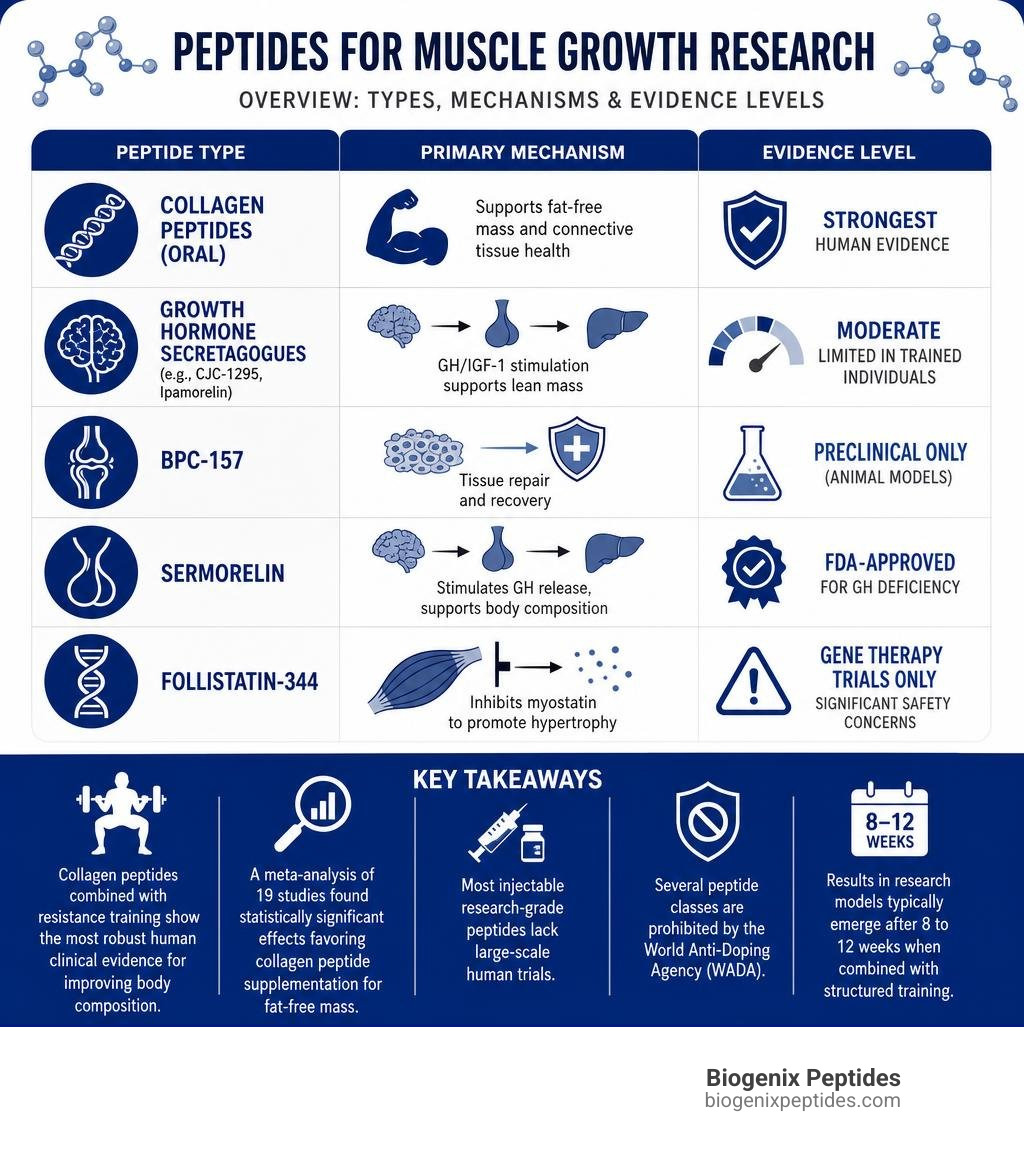
Quick Answer: Top Peptide Classes Studied for Muscle Growth
| Peptide Type | Research Focus | Evidence Level |
|---|---|---|
| Collagen peptides (oral) | Fat-free mass, connective tissue | Strongest human evidence |
| Growth hormone secretagogues (e.g., CJC-1295, Ipamorelin) | GH/IGF-1 stimulation, lean mass | Moderate; limited in trained individuals |
| BPC-157 | Tissue repair, recovery | Preclinical only (animal models) |
| Sermorelin | GH release, body composition | FDA-approved for GH deficiency |
| Follistatin-344 | Myostatin inhibition, hypertrophy | Gene therapy trials only; significant safety concerns |
Key takeaways at a glance:
- Collagen peptides combined with resistance training show the most robust human clinical evidence for improving body composition
- A meta-analysis of 19 studies found statistically significant effects favoring collagen peptide supplementation for fat-free mass
- Most research-grade peptides lack large-scale human trials
- Several peptide classes are prohibited by the World Anti-Doping Agency (WADA)
- Results in research models typically emerge after 8 to 12 weeks when combined with structured training
Peptides are short chains of amino acids — smaller than full proteins but far more targeted in how they interact with the body. Unlike anabolic steroids, which flood hormonal pathways with synthetic compounds, peptides work more like signaling molecules, nudging the body’s own systems toward specific responses. That distinction matters enormously when evaluating them for research purposes.
The science is genuinely interesting. But it is also uneven. Some peptide types have solid human trial data behind them. Others are backed almost entirely by animal studies and preclinical models. Knowing the difference is essential before drawing any conclusions.
This guide breaks down the research clearly and honestly — so you can understand what is actually known, what remains speculative, and where the evidence is still developing.
I’m Jay Daniel, Founder and CEO of BioGenix Peptides, and I’ve spent years in hands-on peptide research, quality control, and laboratory innovation studying compounds relevant to peptides for muscle growth and recovery signaling. In the sections that follow, I’ll walk you through the science in plain language so you can evaluate the research with confidence.
Basic peptides for muscle growth terms:
Evaluating the Science Behind Peptides for Muscle Growth
To understand how research-grade compounds influence tissue development, we must first look at the baseline cellular biology. Unlike whole proteins, which require extensive digestion to break down into individual amino acids, bioactive peptides are short chains (typically 2 to 50 amino acids) that can act as direct signaling keys.
In scientific research on bioactive peptides in sports, researchers have explored how these compounds interact with cellular receptors to stimulate muscle protein synthesis (MPS) and mitigate muscle protein breakdown (MPB). When we analyze research-grade muscle building peptides, we are looking at molecules that do not simply provide raw material for building muscle, but actually “talk” to specific receptors to accelerate cellular signaling pathways.
To clarify how these compounds differ from other popular substances in the fitness community, consider this comparative layout:
| Feature | Bioactive / Signaling Peptides | Traditional Proteins (Whey/Casein) | Anabolic Steroids |
|---|---|---|---|
| Primary Mechanism | Cellular signaling (e.g., mTOR activation, GH release) | Amino acid supply for protein building | Direct androgen receptor binding |
| Hormonal Disruption | Minimal to none (modulates natural pathways) | None | High (suppresses natural testosterone) |
| Legal Status (U.S.) | Research only (non-approved compounds) / OTC (collagen) | Over-the-counter dietary supplement | Schedule III Controlled Substance |
| WADA Status | Select classes banned (e.g., GHS) | Fully permitted | Strictly banned |
How Peptides for Muscle Growth Differ from Steroids
One of the most common points of confusion in bodybuilding circles is the comparison between peptides and anabolic steroids. They are fundamentally different chemical species.
Anabolic steroids are synthetic derivatives of testosterone. They pass directly through cell membranes, bind to androgen receptors, and force the cell’s nucleus to ramp up protein synthesis. While this leads to rapid muscle gain, it also overrides the body’s natural endocrine feedback loop, leading to severe side effects such as testicular atrophy, cardiovascular strain, and natural hormone suppression.
In contrast, signaling peptides do not override the endocrine system. Instead, they act as upstream messengers. For example, growth hormone secretagogues (GHS) bind to specific receptors in the pituitary gland, encouraging the natural, pulsatile release of endogenous Growth Hormone (GH). This process respects the body’s natural regulatory limits, which is why researchers studying HGH secretagogues and growth hormone optimization focus heavily on how these compounds preserve natural hormone rhythms rather than shutting them down.
Oral vs. Research-Grade Peptides for Muscle Growth
The delivery pathway plays a massive role in peptide bioavailability. When evaluating peptides for bodybuilding efficacy, we must distinguish between oral bioactive peptides and research-grade peptides that typically require parenteral administration in laboratory settings.
Oral peptides, such as hydrolyzed collagen, are highly bioavailable because they contain specific dipeptides and tripeptides (like hydroxyproline-glycine) that can survive the digestive tract. These molecules enter the bloodstream intact via specialized PepT1 transporters in the gut. Once absorbed, they can act as signaling cues for connective tissue repair.
On the flip side, most growth hormone-releasing peptides are rapidly degraded by stomach acids and enzymes if swallowed. In laboratory research models, these compounds are administered via subcutaneous or intramuscular routes to bypass first-pass hepatic metabolism. This ensures the intact peptide reaches its target receptor. This dynamic is closely tied to the peptide reserve theory, which suggests that maintaining a steady pool of specific signaling peptides in the system allows tissues to optimize cellular repair and adapt to physical stress more efficiently.
Key Peptide Classes in Muscle and Recovery Research
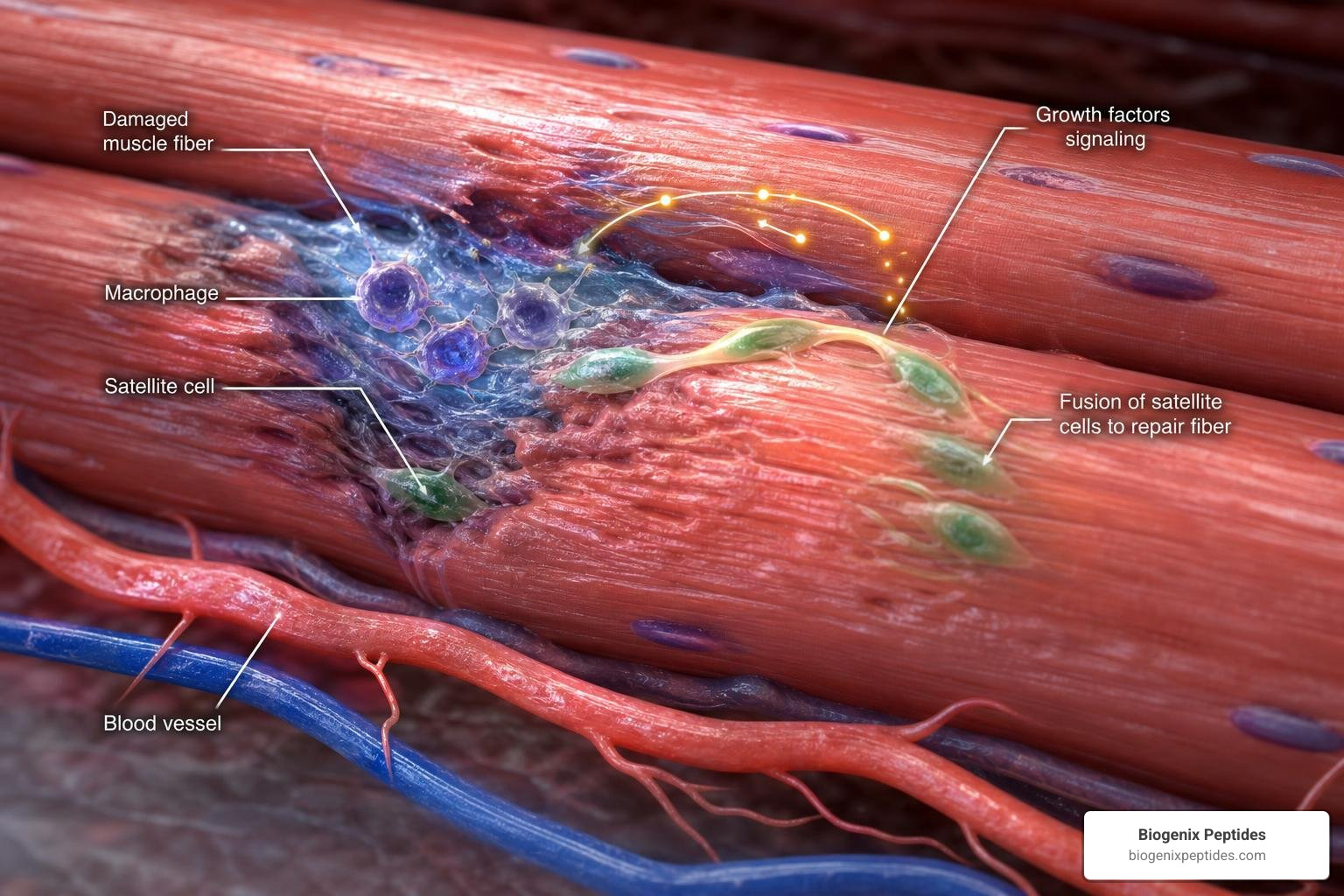
In laboratory research, several distinct families of peptides are studied for their potential to alter body composition, accelerate tissue healing, and optimize physical performance. Understanding how these classes operate requires looking at their unique receptor targets and cellular pathways. For a broader look at how different compounds can be combined in laboratory settings, researchers often consult the complete guide to peptide blends.
Growth Hormone-Releasing Peptides (GHRPs) and GHRH Analogs
Growth hormone secretagogues generally fall into two main categories: Growth Hormone-Releasing Hormone (GHRH) analogs and Growth Hormone-Releasing Peptides (GHRPs).
- GHRH Analogs (e.g., CJC-1295, Sermorelin): These mimic the body’s natural GHRH, binding to GHRH receptors in the pituitary gland to stimulate the production and secretion of endogenous growth hormone.
- GHRPs (e.g., Ipamorelin, GHRP-2, GHRP-6): These act as ghrelin mimetics, binding to the growth hormone secretagogue receptor (GHSR). This pathway triggers a separate, complementary pulse of growth hormone.
When these two classes are studied together in laboratory settings — such as the widely researched combination of CJC-1295 and Ipamorelin — they show a synergistic effect. Because they trigger growth hormone release through two distinct biological pathways, the combined response is significantly greater than using either compound alone. Researchers analyzing research on CJC-1295 and Ipamorelin protocols often study how this synergy can maximize pituitary output without desensitizing the target receptors.
Furthermore, timing is a critical factor in these research models. Because natural growth hormone release peaks during slow-wave sleep, researchers have investigated why some peptides work better during sleep, showing that aligning administration with circadian rhythms can yield more pronounced physiological markers.
Tesamorelin and Selective Fat-Loss Signaling
While many growth hormone secretagogues cause a generalized increase in GH and subsequent IGF-1 levels, Tesamorelin is highly specialized. Originally developed and FDA-approved to treat lipodystrophy (abnormal fat distribution) in HIV patients, Tesamorelin is a GHRH analog that has shown a unique ability to preferentially target visceral adipose tissue.
In clinical trials, Tesamorelin significantly reduced deep abdominal fat while simultaneously supporting lean body mass. Unlike some older secretagogues, it achieves this with a highly favorable safety profile, showing less disruption to glucose tolerance. For those analyzing the compound’s broader physiological impacts, Tesamorelin research and growth hormone optimization reveals how this peptide acts as an efficient modulator of body composition. By directly interacting with adipocytes, it serves as a prime example of peptides that talk to fat cells to encourage lipolysis while preserving skeletal muscle integrity.
BPC-157 and Tissue Recovery Agents
Bodybuilding is as much about recovery as it is about lifting heavy weights. If a research model cannot recover from microtrauma, muscle hypertrophy stalls. This is where BPC-157 (Body Protection Compound 157) has captured intense research interest.
Derived from a protein found naturally in human gastric juice, BPC-157 is a pentadecapeptide renowned for its regenerative properties. While it does not directly promote muscle hypertrophy via the GH pathway, it facilitates healing in a way that indirectly supports muscle growth. Preclinical animal models have shown that BPC-157 accelerates the healing of transected systemic tissues, including:
- Achilles tendons
- Medial collateral ligaments
- Damaged skeletal muscle tissue
Mechanistically, BPC-157 promotes angiogenesis (the formation of new blood vessels) and upregulates growth hormone receptors in tendon fibroblasts. By increasing the expression of these receptors up to sevenfold by day three of application, it allows localized tissues to respond much more effectively to natural circulating growth factors. This makes BPC-157 one of the most promising peptides for muscle building and joint recovery currently being explored in sports medicine research.
Comparative Analysis: Peptides vs. Traditional Protein Sources
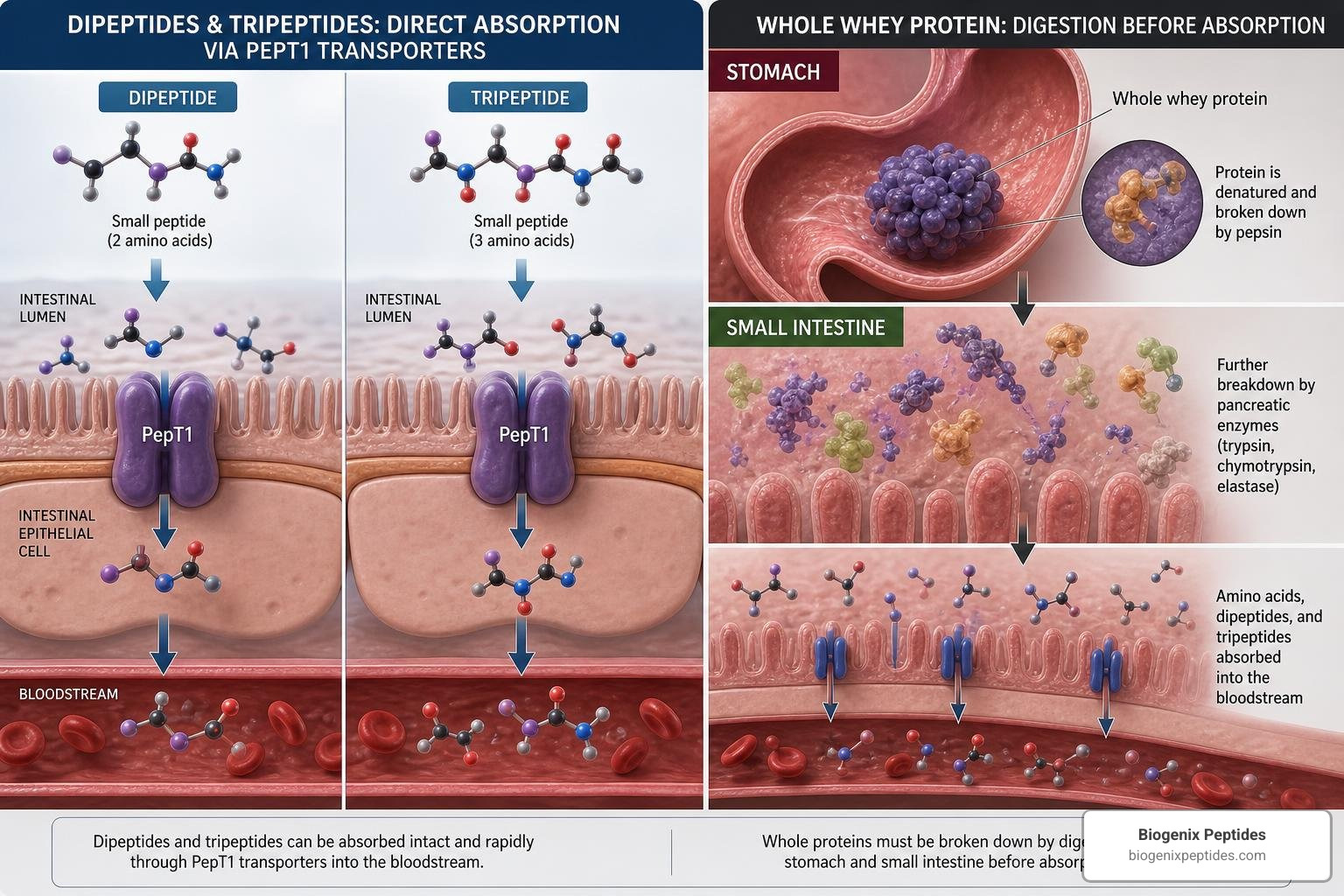
A common question in sports nutrition is whether specialized peptide supplements offer any real advantage over classic, cost-effective protein sources like whey or casein. The answer lies in the speed of absorption and the specific signaling pathways activated.
Whole dietary proteins must be broken down by pepsin, trypsin, and other proteolytic enzymes in the gastrointestinal tract into free amino acids, dipeptides, and tripeptides before they can be absorbed. This process takes time.
Bioactive peptide formulations, such as hydrolyzed whey or targeted dipeptides like dileucine (DL-185), bypass much of this digestive bottleneck. Because dipeptides and tripeptides utilize the highly efficient PepT1 transporter, they enter the bloodstream faster than free-form amino acids.
In clinical studies examining advanced peptide complexes:
- Dileucine (DL-185): Research on PEPTIDE-185 · MuscleTech shows that this specific dipeptide activates the mTORC1 pathway — the master switch for muscle protein synthesis — 159% more effectively than baseline and 60% more effectively than regular free-form L-leucine.
- PeptiStrong®: This plant-based peptide network derived from fava beans (featured in products like PeptiStrong® – Nuritas) has been shown to downregulate genes associated with muscle atrophy (such as Atrogin-1 and MuRF1) while promoting muscle synthesis. Clinical studies on this compound demonstrate a 144% increase in strength recovery after intense physical stress.
For researchers looking to maximize these synergistic pathways, multi-ingredient blends like Growth Peptides – NutraBio Brands (also available via NutraBio Growth Peptides | Muscle Accelerator with DiLeucine) combine these signaling elements into unified research protocols to study their combined effects on strength, muscle retention, and cellular energy.
Safety, Regulatory Status, and Research Risks
While the physiological potential of these compounds is fascinating, the regulatory and safety landscape is highly complex.
First and foremost, the World Anti-Doping Agency (WADA) maintains a strict ban on several categories of peptides. Growth hormone secretagogues (including CJC-1295, Ipamorelin, and Sermorelin), growth hormone releasing factors, and myostatin inhibitors (like Follistatin-344) are all classified as prohibited substances under section S2 of the WADA Prohibited List. For competitive athletes, utilizing these compounds carries a high risk of disqualification and athletic bans.
Furthermore, the Food and Drug Administration (FDA) has not approved the vast majority of these peptides for general human consumption or muscle-building purposes. Many are categorized strictly as research-grade chemicals. This status means they are not subject to the strict manufacturing regulations, batch testing, and quality control standards required for consumer pharmaceuticals or dietary supplements.
Using unregulated or research-grade compounds carries significant inherent risks, including:
- Contamination: Non-sterile manufacturing environments can introduce harmful bacteria or heavy metals.
- Labeling Errors: Independent chemical analyses of research peptides purchased online frequently reveal significant discrepancies between the labeled concentration and the actual active ingredient.
- Unintended Biological Synergy: Stacking multiple unverified compounds can lead to receptor desensitization or unexpected side effects. Understanding when stacking peptides works against you is a critical safety concept in laboratory design, as over-stimulating parallel pathways often yields diminishing returns and heightened systemic stress.
Frequently Asked Questions about Muscle Peptides
Here we address some of the most common questions raised by researchers and athletes exploring the landscape of peptide science.
Are peptides considered anabolic steroids?
No. Anabolic steroids are synthetic hormones that directly bind to intracellular androgen receptors to promote muscle growth, often shutting down the body’s natural hormone production. Peptides, on the other hand, are short chains of amino acids that act as upstream signaling molecules. They encourage the body’s own glands to release natural hormones or activate localized cellular repair mechanisms, avoiding direct receptor-mediated endocrine shutdown.
What are the primary risks of research-grade peptides?
The primary risks stem from their regulatory status. Because they are sold for laboratory research rather than human consumption, there is a lack of standardized oversight. This leads to risks of chemical impurity, bacterial contamination, and inaccurate active concentration labels. Additionally, many of these compounds lack long-term clinical safety data in healthy, well-trained human cohorts.
How do collagen peptides support athletic recovery?
Collagen is the primary structural protein in our connective tissues, including tendons, ligaments, and joint cartilage. While collagen peptides have a low concentration of branched-chain amino acids (like leucine) and are not optimal for direct muscle hypertrophy, they are rich in glycine, proline, and hydroxyproline. Clinical trials show that combining oral collagen peptides with resistance training significantly improves tendon stiffness, joint pain, and extracellular matrix remodeling, allowing athletes to recover faster from heavy training loads.
Conclusion
The science of peptides for muscle growth and physical recovery represents one of the most exciting frontiers in modern sports biology. From the rapid cellular signaling of plant-derived dipeptides to the tissue-regenerating potential of gastric pentadecapeptides like BPC-157, these compounds offer a highly targeted approach to modulating human physiology.
However, a clear distinction must always be maintained between robustly supported oral supplements (like collagen and specific patented plant peptides) and experimental, research-grade compounds that lack human safety profiles and are restricted by sports governing bodies.
As we move forward in 2026, research in this field continues to accelerate, promising even more refined ways to support tissue adaptation and cellular health. To explore high-quality, third-party verified compounds designed specifically for laboratory evaluation and advanced cellular studies, we invite you to explore the Biogenix Peptides catalog and review our extensive selection of research materials.