
Bacteriostatic Water Storage 101: Keep It Cool and Clean
Disclaimer: The information provided in this article is for educational and informational purposes only. It is not intended as medical advice, diagnosis, or treatment. Products and compounds referenced are for research use only and are not approved for human or veterinary consumption. Always consult a qualified professional regarding health or medical decisions.
Why Bacteriostatic Water Storage Determines Research Integrity

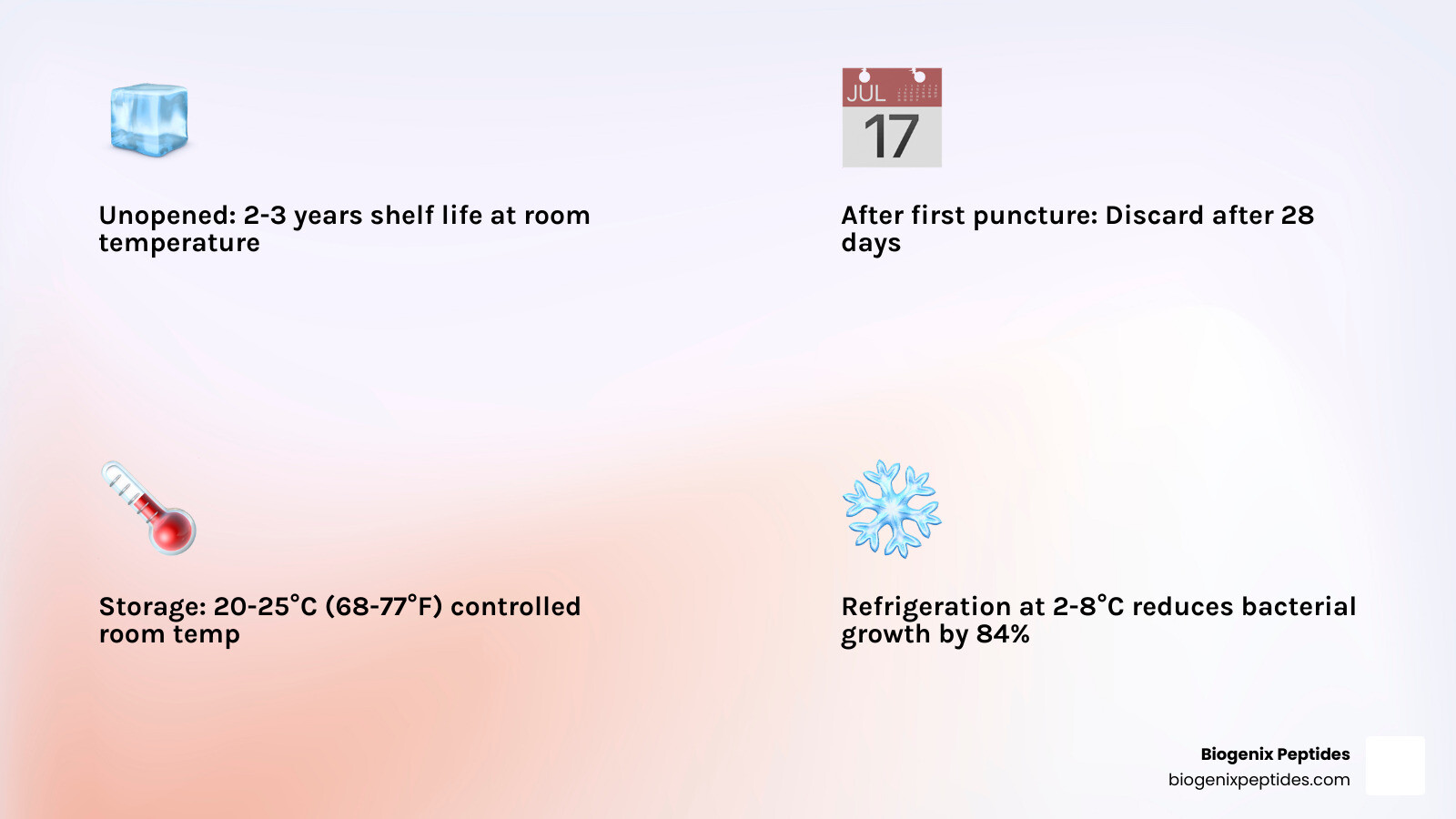
Bacteriostatic water storage done correctly helps keep a research solution sterile, stable, and suitable for the full 28-day window after first puncture. Here is what to know at a glance:
| Key Factor | Guideline |
|---|---|
| Unopened shelf life | 2-3 years from manufacture date |
| After first puncture | Discard after 28 days |
| Storage temperature | 20 C-25 C (68 F-77 F) controlled room temperature |
| Refrigeration | Acceptable (2-8 C); research suggests it may reduce bacterial growth by up to 84% vs. room temp |
| Freezing | Never – compromises benzyl alcohol and vial seal integrity |
| Discard immediately if | Cloudiness, particles, or discoloration appear |
Bacteriostatic water is a solvent commonly used in research labs to reconstitute lyophilized compounds for multi-draw applications. What makes it different from plain sterile water is a single ingredient: 0.9% benzyl alcohol. This preservative inhibits bacterial reproduction – but it is not a complete barrier against contamination.
That distinction matters. Research cited in this article suggests that at room temperature (37 C), bacterial colonies in opened vials can reach 38,000 colonies/mL within just 48 hours. Handle or store it incorrectly, and you risk compromising everything downstream in a research setting.
This guide breaks down exactly how to store bacteriostatic water for research purposes – from unopened vials to post-puncture protocols – based on USP standards, Pfizer prescribing information, and current research best practices as of May 2026.
In my opinion, based on years of experience in peptide science and laboratory research, bacteriostatic water storage protocols directly affect research consistency and sample integrity. The information presented here reflects our research-based perspective and should not be taken as medical advice. This article is strictly framed around research handling and storage, not human or veterinary use. In the sections below, I will walk through practical ways to keep vials clean, stable, and research-ready.
Simple bacteriostatic water storage word guide:
Understanding Composition and the 28-Day Rule
At its core, bacteriostatic water is sterilized water prepared with an antimicrobial preservative, usually 0.9% benzyl alcohol. That benzyl alcohol is what gives the solution its bacteriostatic property: it helps slow or inhibit bacterial growth after the vial has been punctured.
Important word there: slow. Not eliminate. Benzyl alcohol is not a magic force field.
That is why the standard 28-day rule exists for opened multi-use vials. Once the stopper has been punctured, a countdown starts. Even with preservative present, repeated access increases contamination risk over time. In research settings, that means opened vials should be clearly dated and discarded 28 days after first puncture, even if some liquid remains and even if it still looks fine.
If you want a broader primer on the difference between these solutions in research contexts, see Sterile Water and Bacteriostatic Water: Differences You Must Know and The Science of the Bacteriostatic Water Peptide Ratio.
Here is the practical comparison:
| Feature | Sterile Water | Bacteriostatic Water |
|---|---|---|
| Preservative | None | 0.9% benzyl alcohol |
| Multi-puncture support | No | Yes, for a limited period |
| Typical handling model | Single-use | Multi-use with strict aseptic handling |
| Open-vial limit | Immediate or manufacturer-specific | 28 days after first puncture |
| Best fit | Single-event reconstitution tasks | Repeated research withdrawals |
USP standards also shape how this product is defined. The pharmacopeial monograph describes bacteriostatic water as Water for research applications prepared with one or more suitable antimicrobial agents, packaged in small containers, and labeled appropriately. It also requires quality controls such as sterility, particulate limits, and pH range. You can review the standard here: Bacteriostatic Water.
One more critical warning from USP-style labeling requirements: bacteriostatic water is not for use in newborns because benzyl alcohol carries well-known toxicity concerns in that population. In a research-focused article like this one, that warning is mentioned only as part of the official labeling framework and not as medical guidance.
Official Guidelines for Bacteriostatic Water Storage
When people ask whether bacteriostatic water should be kept in the fridge, the most useful answer is: start with the label and official guidance.
Manufacturer information for U.S. products commonly states that bacteriostatic water should be stored at 20 C to 25 C (68 F to 77 F), which is USP controlled room temperature. Pfizer’s storage page reflects exactly that for its product information: Bacteriostatic Water USP Storage and Handling.
So what does proper storage actually look like?
- Keep vials at controlled room temperature unless your protocol requires colder storage
- Protect from excessive heat
- Avoid direct light
- Store in a dry place
- Keep the vial in its original container and label
- Store upright when possible to reduce leakage risk and stopper stress
- Separate opened vials from unopened stock to avoid mix-ups
USP controlled room temperature does not mean “wherever the thermostat feels inspired today.” It means a stable, monitored room-temperature environment. A hot car, sunny windowsill, bathroom shelf, or garage cabinet are all terrible ideas. Bacteriostatic water likes calm, boring storage conditions. Frankly, most research materials do.
For more on managing storage environments around research compounds generally, see Don’t Let Your Peptides Go Bad in the Fridge.
Refrigeration vs. Room Temperature for Bacteriostatic Water Storage
This is where confusion usually shows up.
Official product labeling often centers on 20 C to 25 C controlled room temperature. At the same time, refrigeration is often considered acceptable for opened vials in research settings, especially because colder temperatures can reduce bacterial growth.
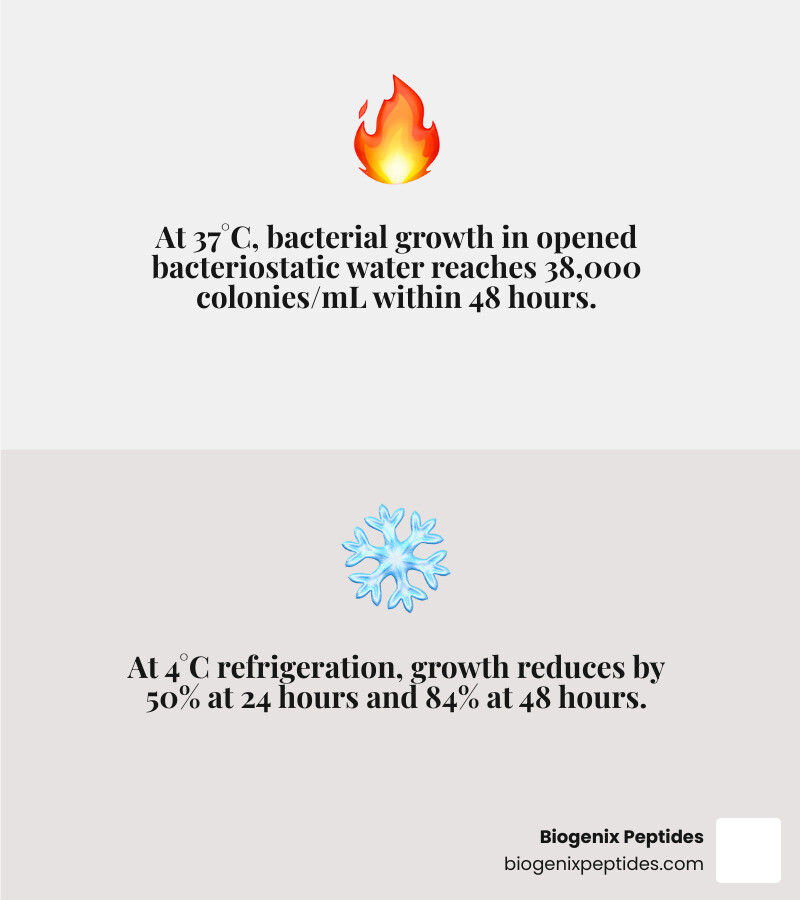
The research referenced here includes a striking example: at 37 C, bacterial growth in opened bacteriostatic water reached 38,000 colonies/mL within 48 hours. Refrigeration at 4 C reduced growth by about 50% at 24 hours and 84% at 48 hours compared with warm conditions.
That does not mean refrigeration erases contamination risk, and it does not replace the 28-day discard rule. What it does mean is:
- Refrigeration can help limit microbial growth in opened vials
- Room temperature remains the official labeled storage condition for many U.S. products
- Heat is the bigger enemy than cool storage
- If refrigerated, avoid freezing and large temperature swings
So, do you have to refrigerate after opening? Not necessarily, based on manufacturer room-temperature guidance. Can refrigeration be helpful in research environments? Yes, especially when trying to minimize microbial growth and maintain a more stable environment.
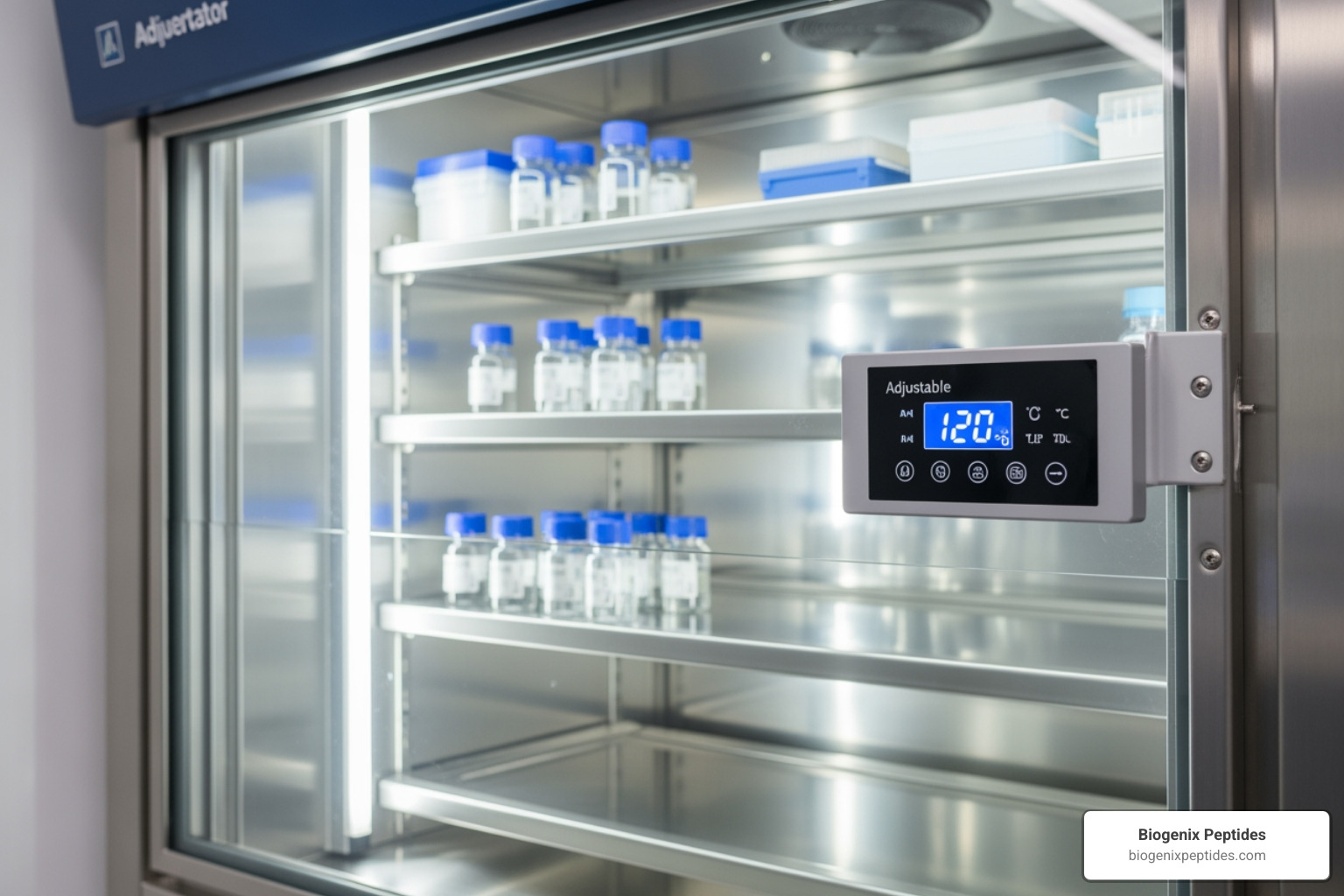
If you refrigerate, aim for 2 C to 8 C and keep the vial in the main body of the refrigerator, not in the door and not near the back wall where freezing risk is higher. For related cold-chain thinking, see Cold Storage Secrets for Keeping Reconstituted Peptides Fresh.
Best Practices for Long-Term Bacteriostatic Water Storage
For unopened vials, the typical shelf life is 2 to 3 years from manufacture date, assuming proper storage and an intact seal. The printed expiration date on the vial always wins over general rules of thumb.
Best practices for unopened storage include:
- Keep vials in original packaging
- Store at 20 C to 25 C unless the label states otherwise
- Avoid direct sunlight and UV exposure
- Protect from moisture and humidity
- Do not stack vials carelessly
- Rotate stock so older inventory is used first
- Check seals and labels before use
What about amber glass and light protection? While many commercial vials are already packaged appropriately, light protection is still helpful. The main point is not to repackage the solution into random secondary containers. Original packaging preserves traceability, labeling, and container integrity.
If you are building better environmental habits across your whole research workflow, To Fridge or Not to Fridge: Your Peptide Storage Questions Answered is worth a read.
Aseptic Handling and Sterile Technique for Research
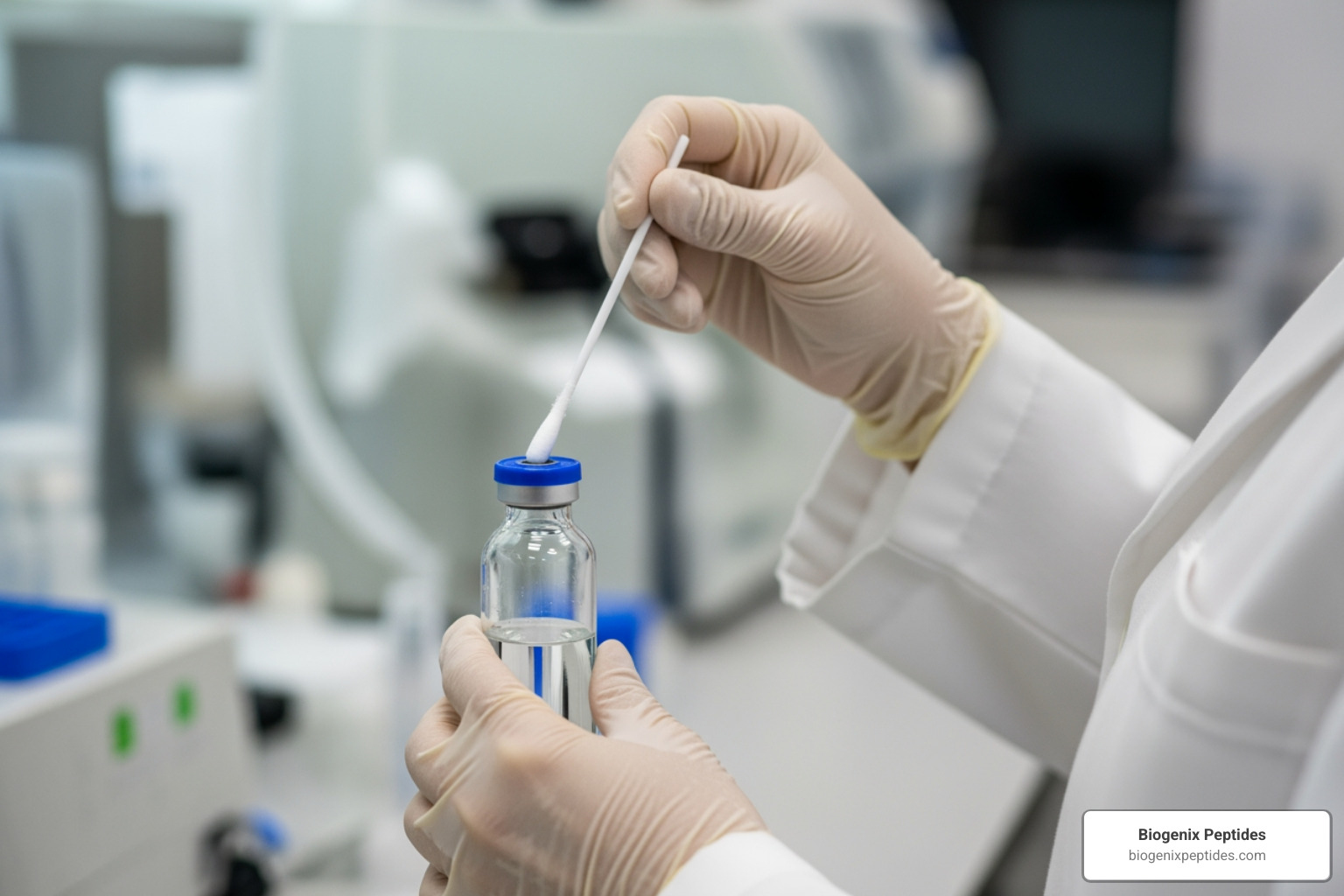
Good bacteriostatic water storage starts before storage. It starts the moment we touch the vial.
Because bacteriostatic water is often packaged for multiple withdrawals, aseptic handling matters just as much as temperature. A preservative can help suppress growth, but it cannot undo sloppy technique.
Our core handling checklist looks like this:
- Wash hands thoroughly before handling the vial.
- Clean the work surface.
- Use clean gloves if your protocol requires them.
- Inspect the vial before each access.
- Swab the rubber stopper with 70% isopropyl alcohol and allow it to dry.
- Use a new sterile needle and syringe for every puncture.
- Avoid touching the stopper after disinfection.
- Return the vial promptly to its storage location after withdrawal.
- Label the vial with the first puncture date and discard date.
If your lab handles sensitive materials, perform these steps in a laminar flow hood or similarly controlled clean workspace.
Needle selection matters too. Fine-gauge needles, often in the 29-31 gauge range, can help reduce stopper damage over repeated punctures. Repeatedly hitting the exact same spot can lead to coring or weaken the closure, increasing contamination risk. Small details matter here; the stopper is not invincible.
A few extra lab-friendly habits:
- Keep opened vials upright
- Do not leave the cap area wet after alcohol prep
- Do not pool multiple partially used vials together
- Do not transfer the solution into another container unless a validated protocol specifically requires it
- Limit unnecessary punctures
For broader workflow discipline, visit Best Practices for Peptide Storage & Handling. For the pharmacopeial foundation behind sterility and labeling standards, see Bacteriostatic Water Standards.
Identifying Contamination and Environmental Risks
Bacteriostatic water should be clear and colorless. If it is not, assume a problem until proven otherwise.
Common visual warning signs include:
- Cloudiness
- Visible particles
- Floating specks
- Discoloration
- Cracks in the vial
- Leaking stopper or damaged seal
- Missing or illegible label
If any of these appear, discard the vial. Do not try to “filter it later,” “use the clear part,” or run a little optimism experiment. This is one of those moments where throwing it out is cheaper than ruining a whole research sequence.
Environmental risks that can shorten viability or compromise sterility include:
- Excess heat
- Direct sunlight
- High humidity
- Repeated temperature swings
- Freezing
- Excessive stopper punctures
- Poor hand hygiene
- Reused needles or syringes
Freezing deserves special attention. Can bacteriostatic water be frozen? No. Freezing can damage the vial, affect stopper integrity, and may alter how uniformly the benzyl alcohol preservative remains distributed. Freeze-thaw cycles can also introduce particulates or micro-cracks. In short: your freezer is for many things, but not for solving bacteriostatic water shelf-life anxiety.
Oxidation and humidity are less dramatic but still relevant. High-humidity storage spaces can degrade labels, encourage exterior contamination, and generally create a bad storage environment. Bathrooms are especially poor choices because they combine humidity, warmth, and temperature fluctuation in one annoying package.
Another important official warning is labeling related to neonates. USP-based labeling standards require prominent warning language that the product is not for use in newborns, due to benzyl alcohol risk. That warning should stay intact and readable on the vial at all times.
For related stability habits with research compounds more broadly, see Peptide Storage Stability Guidelines.
Frequently Asked Questions about Bacteriostatic Water Storage
Can bacteriostatic water be frozen for long-term research?
No. Freezing is not recommended for bacteriostatic water storage. It can compromise vial integrity, stress the stopper seal, and potentially affect the preservative distribution. If a vial has been frozen or partially frozen, the safest move is to discard it.
How should I label a vial after the first puncture?
Write the following clearly on the vial or an attached lab label:
- Date opened
- 28-day discard date
- Initials of the person who opened it, if that fits your lab process
Tracking the opening date matters because the 28-day limit begins at first puncture, not when you remember opening it “sometime last month.” A label turns guesswork into compliance.
What are the visual signs of solution degradation?
Discard the vial if you notice:
- Cloudiness
- Particulate matter
- Discoloration
- Seal damage
- Cracks or leakage
- Any unusual change from its normal clear appearance
Also discard it if it is beyond the printed expiration date or past 28 days after first puncture, even if it still looks normal.
Conclusion
Good bacteriostatic water storage is not complicated, but it does require discipline. Store unopened vials at controlled room temperature, keep them protected from heat, light, and moisture, use strict aseptic technique after first puncture, and discard opened vials after 28 days. If contamination is suspected, discard it without hesitation.
That matters more than ever in 2026. The global market for bacteriostatic water has grown into a billion-dollar category, with North America holding roughly 41.7% of market share and multiple-draw vials accounting for about 57.2% of the market. In plain English: more labs are relying on these products, and storage discipline matters at scale.
All information in this article reflects our research-based opinions and is intended for educational purposes only. It is not medical advice and should not be applied to human or veterinary contexts.
If you are sourcing research-grade solvent products, you can explore Bacteriostatic Water Reconstitution Solution 10ml. For deeper reading, we also recommend:
- Don’t Dilute Your Success: A Guide to Buying Bacteriostatic Water
- Peptide Storage Containers That Won’t Let You Down
- Bacteriostatic Water for Research: Don’t Let Your Research Go Down the Drain
Keep it cool, keep it clean, and keep your labels honest. Your future research data will thank you.