What Will Retatrutide Cost When It Finally Hits the Market
What the Retatrutide Price Looks Like Right Now — and Where It’s Headed
Disclaimer: The information provided in this article is for educational and informational purposes only. It is not intended as medical advice, diagnosis, or treatment. Products and compounds referenced are for research use only and are not approved for human or veterinary consumption. Always consult a qualified professional regarding health or medical decisions.
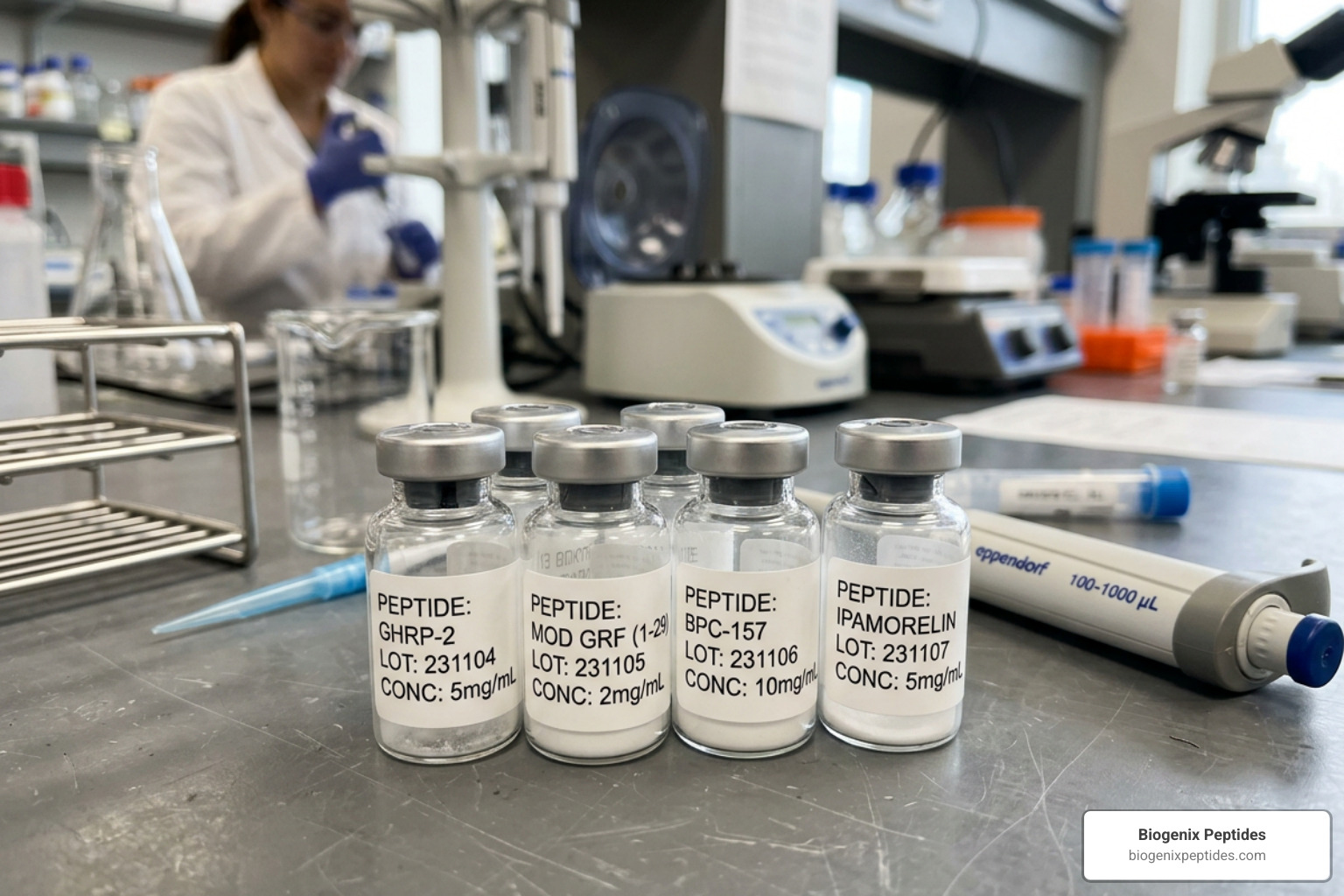
Retatrutide price is one of the most searched questions in peptide research right now — and for good reason. Here is a quick snapshot of what researchers and observers are currently seeing in June 2026:
| Source Type | Estimated Cost Range |
|---|---|
| Research-grade peptide (per mg) | $8 – $32/mg |
| 5 mg research vial | $40 – $120 |
| 10 mg research vial | $80 – $200 |
| Compounded / telehealth (per month) | $300 – $600 |
| Private weight-loss clinic programs | $800 – $2,400/month |
| Projected post-FDA retail (est. 2027–2028) | $1,000 – $1,500/month |
| Projected Medicare copay (post-approval) | ~$50/month |
All figures reflect research and investigational contexts. Retatrutide is not FDA-approved as of June 2026.
Retatrutide is generating enormous interest in the research community — and the pricing picture is far from simple. The compound (CAS 2381089-83-2) is a triple-receptor agonist targeting GLP-1, GIP, and glucagon pathways simultaneously. Phase 2 trial data published in the New England Journal of Medicine showed an average of 24.2% body weight reduction at the highest research quantities over 48 weeks. Phase 3 TRIUMPH trial data has pushed that figure even higher, with topline results showing approximately 28–30% mean weight loss at 80–104 weeks.
That level of efficacy has driven demand — and prices — well above what researchers saw with earlier GLP-1 compounds.
But what you pay depends almost entirely on where you look. Research-grade suppliers, compounding platforms, private clinics, and the eventual commercial market all operate in completely different pricing tiers. Understanding the difference is critical before committing to any sourcing decision.
I’m Jay Daniel, Founder and CEO of BioGenix Peptides, and my work in peptide sourcing, purity validation, and research-grade quality standards gives me a close-up view of how retatrutide price varies across the supply chain. In the sections below, I’ll break down every tier — from per-milligram research costs today to projected post-approval retail pricing — so you can make informed decisions for your research program.
Understanding the Current Retatrutide Price for Researchers
When evaluating the retatrutide price in the current scientific landscape, we must first look at the chemical specifications of this highly anticipated compound. Retatrutide (identified by its CAS number 2381089-83-2) has a molecular weight of approximately 4,731.33 g/mol. Unlike simpler single-receptor agonist peptides, retatrutide is a complex 39-amino-acid synthetic peptide.
Its synthesis requires advanced laboratory techniques because it must successfully bind to and activate three distinct metabolic pathways: GIP, GLP-1, and glucagon. This structural complexity is the primary driver behind its elevated market cost compared to older, less sophisticated research compounds. You can explore the technical chemical details via the Research-grade peptide specifications on PubChem.
For laboratories and independent researchers looking to acquire this compound, navigating the procurement landscape requires careful planning. Sourcing high-quality research peptides is not as straightforward as ordering traditional laboratory reagents. To help researchers avoid common pitfalls in the supply chain, we have put together a comprehensive Beginner’s guide to sourcing that covers vendor verification, batch testing, and shipping logistics.
Currently, research-grade retatrutide is sold in vacuum-sealed glass vials containing lyophilized (freeze-dried) powder. Because it remains an investigational chemical, there is no standardized retail pricing. Instead, the market is driven by specialized peptide synthesis laboratories catering exclusively to in vitro and animal research.
Factors Influencing the Retatrutide Price Per Milligram
The cost of retatrutide on a per-milligram basis is highly fluid and depends on several key variables:
- Synthesis and Purification Complexity: Producing a triple agonist is a delicate process. Retatrutide requires up to 17 separate purification steps during synthesis, compared to only 9 steps for basic semaglutide. This double-purification process significantly increases the raw manufacturing cost.
- Vial Size and Bulk Discounts: Sourcing larger quantities dramatically lowers the per-milligram rate. For example, while a single 5 mg vial might cost $84 ($16.80/mg), a bulk pack of 30 mg or 40 mg can bring the rate down to under $8.00/mg.
- Purity Verification Standards: Reputable suppliers invest heavily in independent, third-party testing. High-purity batches (typically 99% or greater) verified by High-Performance Liquid Chromatography (HPLC) and Mass Spectrometry (MS) command a premium over unverified batches. We emphasize these quality markers in our Purity and documentation standards analysis.
- Domestic vs. Overseas Sourcing: Domestic suppliers in the United States charge more to offset the costs of cold-chain compliance, faster shipping, and rigorous quality control. Buying from unverified overseas exporters may seem cheaper initially, but it introduces massive risks of receiving degraded, under-filled, or contaminated materials. Researchers can learn how to balance budget and safety in our guide on Where to source research materials.
Comparing the Retatrutide Price to Other Research Peptides
To put the cost of retatrutide into perspective, it helps to compare it to other metabolic research peptides on the market. Older-generation compounds have benefited from years of manufacturing optimization and increased competition, leading to much lower market prices.
Below is a comparative breakdown of average research-grade peptide costs in 2026:
| Research Peptide | Receptors Targeted | Average Cost Per Milligram | Typical 10 mg Vial Cost |
|---|---|---|---|
| Semaglutide | GLP-1 | $2 – $5 | $20 – $50 |
| Tirzepatide | GLP-1, GIP | $5 – $12 | $50 – $120 |
| Retatrutide | GLP-1, GIP, Glucagon | $8 – $32 | $80 – $200 |
As shown, retatrutide remains the most expensive metabolic peptide to study. This premium is directly tied to its status as a “triple agonist.” While semaglutide only mimics one hormone and tirzepatide mimics two, retatrutide’s addition of the glucagon pathway increases energy expenditure in research models, making it a highly valued—and therefore costly—asset. If your research budget is tight, you might want to explore our breakdown on Sourcing alternative metabolic peptides to see if other multi-receptor agonists can meet your experimental design needs.
Projected Commercial and Retail Costs Post-FDA Approval
While researchers currently source retatrutide as an unapproved chemical, the pharmaceutical industry is watching its clinical development closely. The brand-name developer, Eli Lilly, is currently running the Phase 3 TRIUMPH clinical trial program. These global trials are expected to conclude their primary collection phases in late 2026, with official FDA submissions projected for early 2027.
If the regulatory review proceeds smoothly, industry analysts project official FDA approval and commercial availability by late 2027 or early 2028.
Once approved, the commercial pricing of retatrutide will be structured very differently from the raw peptide market. Pharmaceutical companies establish a Wholesale Acquisition Cost (WAC), which serves as the official list price before insurance negotiations. Industry consensus suggests that the developer will position retatrutide as a premium, top-tier offering. For a detailed look at these commercial predictions, review the Predicted commercial pricing models published by Peptide News Digest.
Because retatrutide represents a major evolutionary leap over existing therapies, its commercial launch will likely disrupt the entire metabolic market. To understand where this compound fits in the broader history of these molecules, you can read our comprehensive GLP-1 class overview.
Expected Insurance Coverage and Savings Programs
When retatrutide commercially launches, the out-of-pocket cost for patients will depend heavily on insurance coverage and manufacturer assistance programs. We expect the commercial roll-out to follow a similar path to previous launches in this class:
- Commercial List Price (WAC): The retail cash price is expected to land between $1,000 and $1,500 per month. This aligns with the current list prices of brand-name tirzepatide ($1,059/month) and semaglutide ($1,349/month).
- Manufacturer Savings Cards: To encourage adoption, the manufacturer will almost certainly offer co-pay savings cards. For patients with commercial insurance that covers the medication, these cards could lower the monthly cost to $25 to $50. For those whose commercial insurance does not cover it, the cards may cap the out-of-pocket cost at around $349 to $499 per month.
- Direct-to-Consumer Channels: We anticipate the developer will utilize direct-to-consumer platforms (such as LillyDirect) from day one, allowing self-paying patients to bypass traditional pharmacy markups and access predictable, capped pricing.
- Insurance Coverage Restrictions: Prior authorizations will remain strict. Insurers will likely require documentation of specific metabolic markers or a body mass index (BMI) over a certain threshold, alongside evidence that the patient has tried lower-cost alternative therapies first.
- Medicare Exclusions: Under current U.S. federal guidelines, Medicare Part D is prohibited from covering medications prescribed solely for weight management. Unless legislative changes occur, Medicare patients paying out-of-pocket will face high costs, though some price-cap frameworks could limit specific Medicare copays to approximately $50 to $245 per month.
For a deeper dive into how manufacturing scale-up and market competition will shape these retail dynamics, check out the Expected retail cost breakdown.
Additional Expenses in Research and Clinical Settings

When budgeting for a research project involving retatrutide, looking solely at the price of the vial is a common mistake. There are several associated expenses that must be factored into the total cost of running a study:
- Reconstitution Supplies: Research-grade peptides are delivered as dry powders. To prepare them for laboratory application, researchers must purchase bacteriostatic water (sterile water with 0.9% benzyl alcohol) and specialized ultra-fine fluid transfer syringes (typically 29 to 31 gauge). These supplies generally add $20 to $50 per month to the budget.
- Laboratory Testing and Monitoring: In any rigorous scientific study, monitoring metabolic biomarkers is essential. Researchers must budget for regular blood chemistry panels to track liver enzymes, kidney function, lipid profiles, and glucose levels. Depending on the depth of the panel, these laboratory services cost between $100 and $300 per testing interval.
- Cold-Chain Storage and Shipping: Retatrutide is highly sensitive to temperature and light. Once reconstituted, the liquid compound must be kept refrigerated at 2°C to 8°C (36°F to 46°F). Proper storage equipment (such as dedicated laboratory refrigeration) and insulated shipping with cold packs add to the operational overhead.
- Waste Disposal: Safe disposal of biological waste and sharp instruments requires dedicated sharps containers and biohazard disposal services, adding a small but necessary cost to the research protocol.
To help scientific teams maximize their funding, we have compiled a guide on Budget-friendly research strategies that shows how to optimize laboratory resources without sacrificing the integrity or purity of your research materials.
Frequently Asked Questions About Retatrutide Costs
Why is retatrutide more expensive to synthesize than other peptides?
Retatrutide is a 39-amino-acid peptide that functions as a triple agonist. This means its structure must precisely target and activate three different receptors: GIP, GLP-1, and glucagon. Synthesizing a single molecule that can perform all three actions requires highly advanced solid-phase peptide synthesis (SPPS) techniques and double the purification steps of simpler peptides like semaglutide.
This complex manufacturing process results in a lower yield per batch and higher production costs, which are reflected in the final price. You can view the complete structural layout and Technical specifications on our product page.
When is FDA approval expected for this triple agonist?
The Phase 3 TRIUMPH clinical trials are scheduled to conclude their primary research phases in late 2026. Following the completion of these trials, the developer is expected to submit a New Drug Application (NDA) to the FDA in early 2027. Under standard regulatory review timelines, which typically take 6 to 10 months, official commercial approval and retail availability are projected for late 2027 or early 2028.
What are the risks of purchasing cheap gray-market alternatives?
Sourcing low-cost retatrutide from unverified overseas suppliers or discount online forums carries extreme risks for research programs. Cheap gray-market products frequently suffer from:
- Purity Issues: Batches are often contaminated with heavy metals, residual solvents, or bacterial endotoxins from substandard manufacturing facilities.
- Inaccurate Concentrations: Vials may be under-filled, meaning your research model receives far less active peptide than your protocol requires, ruining your experimental data.
- Counterfeit Compounds: Some dishonest vendors mislabel cheaper single-agonist peptides (like semaglutide) as retatrutide to increase their profit margins.
- Lack of Recourse: Unregulated sellers do not provide verifiable third-party Certificate of Analysis (COA) documentation, leaving researchers with no way to validate what they have purchased.
To see how these cheap gray-market risks compare to legitimate, medically supervised clinical programs and validated research channels, you can read this independent Cost analysis of clinical vs research options.
Conclusion

As we look toward the future of metabolic research in 2026 and beyond, retatrutide represents one of the most exciting scientific advancements in decades. However, its cutting-edge triple-agonist design comes with a clear financial reality: it is currently the most expensive metabolic compound to synthesize and study.
Whether you are budgeting for raw research-grade vials today or preparing for the eventual commercial retail launch in 2027–2028, understanding the factors that drive the retatrutide price is essential for planning a successful, cost-effective research program.
At BioGenix Peptides, we are committed to providing the scientific community with unmatched transparency, rigorous quality control, and verifiable third-party testing. If you are ready to secure premium-grade materials for your laboratory, we invite you to Explore high-purity research options and view our fully documented inventory today.