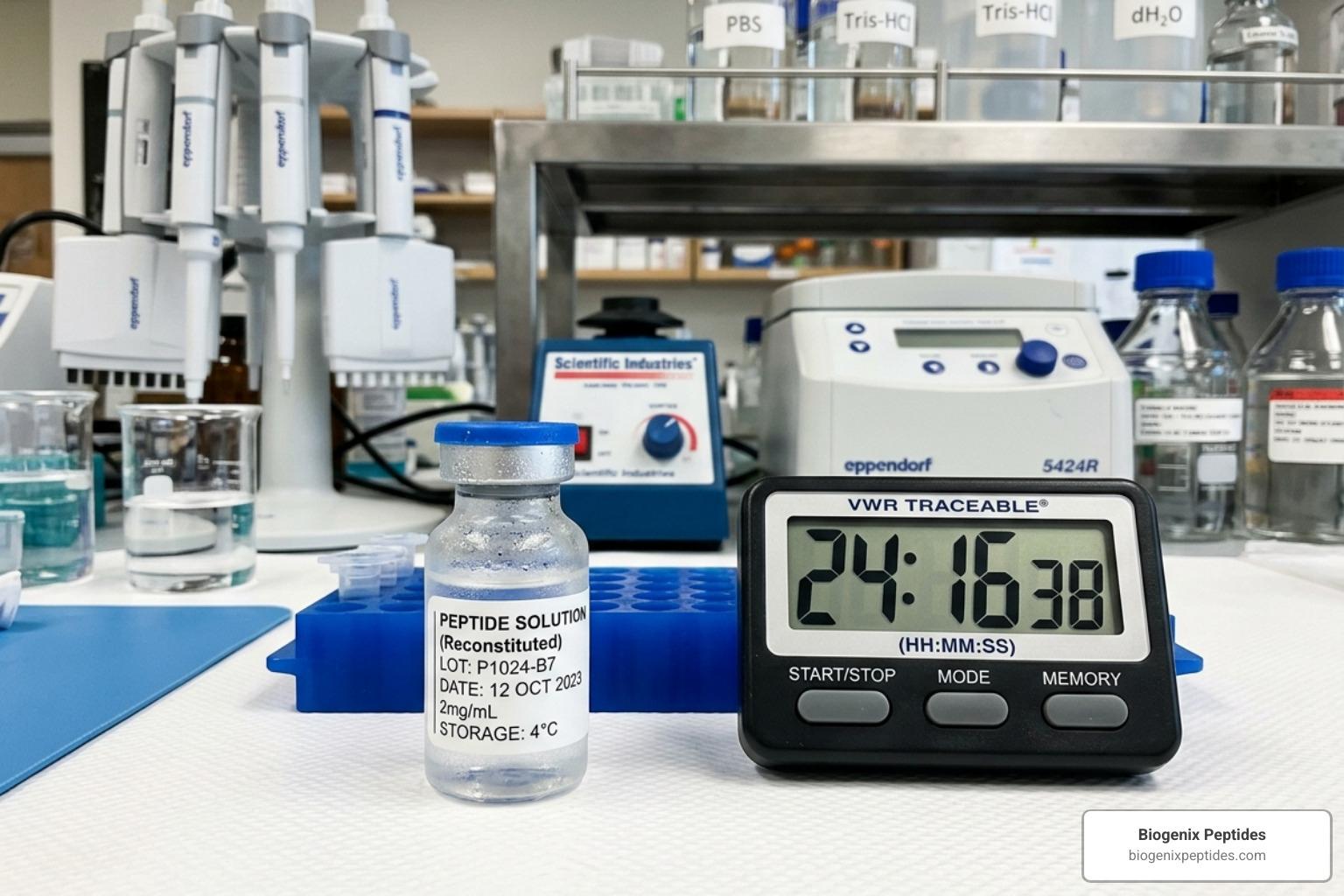
The Definitive Guide to How Long Reconstituted Peptides Last
How Long Do Reconstituted Peptides Typically Last Under Various Storage Conditions?
The lifespan of reconstituted peptides varies significantly depending on how they are stored. Our goal in research is always to maintain the peptide’s structural integrity and biological activity for as long as possible. Let’s explore the typical stability under different temperature conditions.
What is the typical refrigerated shelf life (2-8°C)?
When stored in a refrigerator at temperatures between 2-8°C, reconstituted peptides generally exhibit a respectable shelf life. Many sources suggest that reconstituted peptides can remain stable for 2-8 weeks under these conditions. If reconstituted with bacteriostatic water, which contains a preservative like 0.9% benzyl alcohol, this period often extends to up to 4 weeks, and sometimes even longer. Some compounding facilities suggest a shelf life of up to 6 weeks, and we’ve seen reports from researchers indicating successful use for up to 90 days with meticulous hygiene practices. However, even when sealed and shielded from light, some peptides might only retain optimal activity for about 1 week in the fridge.
For more detailed information on maintaining peptide integrity in cold storage, we recommend reviewing our Peptide Storage & Stability Guidelines and our guide on Don’t Let Your Peptides Go Bad in the Fridge.
How long can reconstituted peptides last at room temperature?
Storing reconstituted peptides at room temperature is generally not recommended for extended periods. While some peptide solutions might maintain stability for 2-3 days at room temperature, this is an exception rather than the rule. Peptides are fragile molecules, highly susceptible to degradation through processes like oxidation, hydrolysis, and microbial contamination when left at ambient temperatures.
For most research peptides, room temperature exposure should be limited to very short-term handling, perhaps a few minutes during preparation. If a reconstituted peptide has been left out for 4-8 hours or overnight, its potency is likely compromised, even if no visible changes are apparent. To ensure the integrity of your research, we advise discarding any reconstituted peptide that has been exposed to room temperature for longer than absolutely necessary.
What is the stability of reconstituted peptides when frozen (-20°C or -80°C)?
For longer-term storage, freezing reconstituted peptides at -20°C or -80°C can significantly extend their shelf life. Under these conditions, reconstituted peptide solutions can remain stable for weeks to months, with some reports suggesting viability for 1-12 months. At -20°C or -80°C, the chemical reactions that lead to degradation are slowed considerably.
However, it’s crucial to understand that freezing reconstituted peptides directly in their original vial without proper preparation can be detrimental. The formation of ice crystals can physically damage the peptide structure, leading to aggregation and a loss of bioactivity. Therefore, aliquoting the reconstituted solution into smaller, single-use portions before freezing is a critical best practice. This minimizes the number of freeze-thaw cycles any single portion undergoes, preserving its integrity.
To learn more about optimizing your freezer storage for peptides, explore The Ultimate Peptide Organizer for Your Freezer.
What Factors Critically Influence the Stability and Shelf Life of Reconstituted Peptides?
The stability of a reconstituted peptide is a complex interplay of its inherent chemical properties and environmental conditions. Understanding these factors is crucial for preventing degradation and ensuring reliable research outcomes.
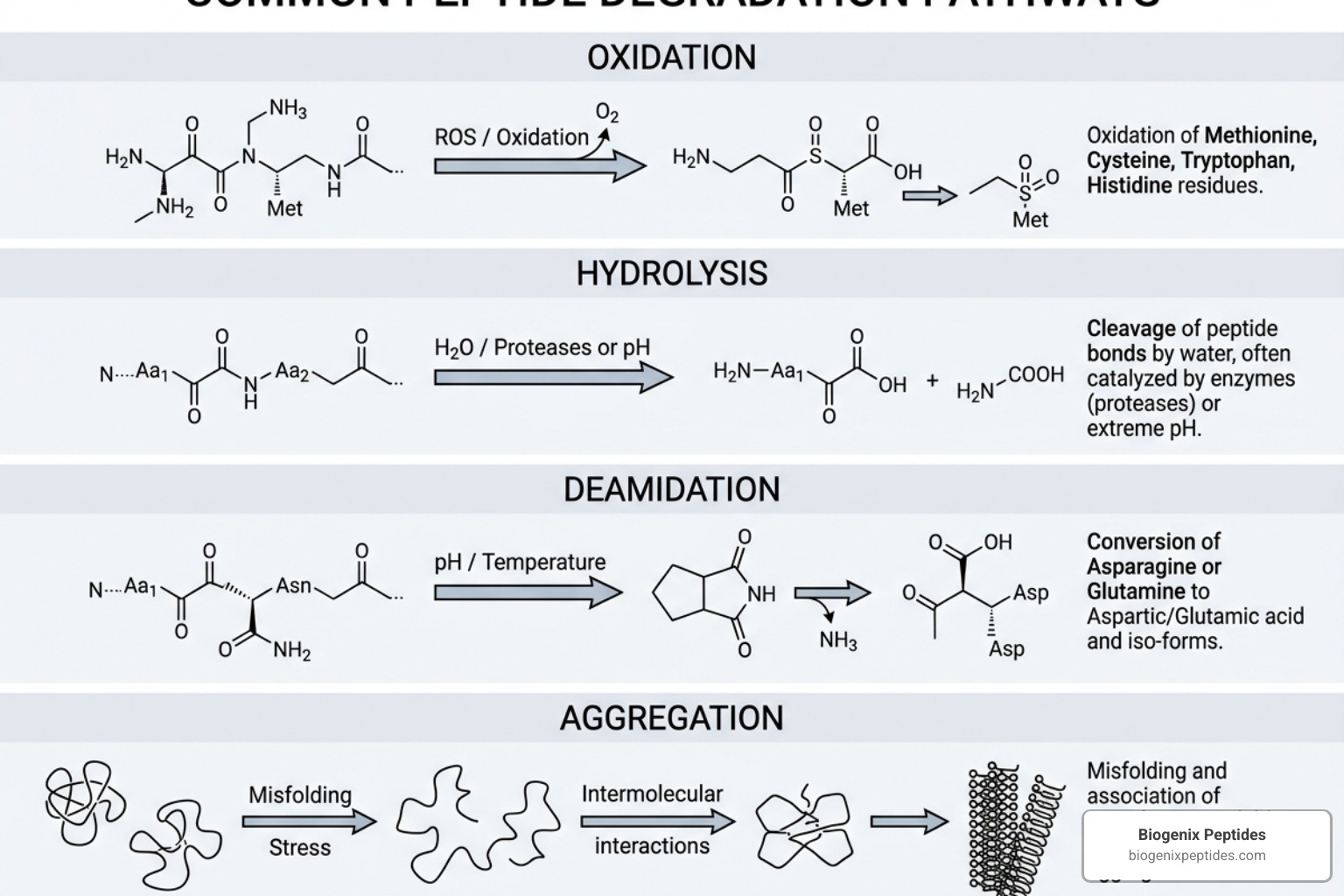
Several elements critically influence how long your reconstituted peptides remain viable:
- Peptide sequence and composition: The specific amino acids and their arrangement play a huge role.
- Presence of sensitive residues: Amino acids like Methionine (Met), Cysteine (Cys), and Tryptophan (Trp) are particularly prone to oxidation. Research published by the National Center for Biotechnology Information (NCBI) highlights how environmental factors accelerate their degradation.
- Formulation: Any excipients or buffers present can affect stability.
- Storage temperature: Temperature is a primary driver of degradation.
- Exposure to moisture, light, and oxygen: These factors can accelerate chemical breakdown.
- pH of the solution: The acidity or alkalinity of the solvent impacts peptide structure.
- Type of solvent used: The choice of reconstitution liquid is paramount.
- Microbial contamination: Bacteria can rapidly degrade peptides.
- Mechanical stress: Shaking or vigorous agitation can physically damage peptide chains.
For a deeper dive into preventing peptide degradation, our guide A Practical Guide to Stopping Peptide Denaturation in Its Tracks offers valuable insights.
How do different solvents affect peptide stability?
The solvent chosen for reconstitution is one of the most critical decisions affecting shelf life.
- Bacteriostatic Water (BAC Water): This is the gold standard for multi-use vials. BAC water is sterile water containing 0.9% benzyl alcohol, which acts as a bacteriostatic agent. Peptides reconstituted with BAC water typically last longer in the refrigerator (2-4 weeks or more) compared to those in sterile water. However, benzyl alcohol can degrade over time, reducing its effect after about 28 days post-opening.
- Sterile Water: This water lacks antimicrobial agents. If a multi-use vial is reconstituted with sterile water, it becomes highly susceptible to bacterial contamination once the stopper is punctured. These are generally only stable for 24-48 hours in the refrigerator.
- Normal Saline (0.9% Sodium Chloride): Similar to sterile water, normal saline is sterile but lacks preservatives. Its stability profile is comparable to sterile water, making it suitable for single-application or very short-term refrigeration.
- Acetic Acid: For some highly insoluble peptides, a dilute acetic acid solution (e.g., 0.1 M) may be necessary. However, the acidic environment can impact long-term stability. If used, the peptide may need to be diluted into a more neutral buffer for storage.
The choice of solvent depends on the specific peptide and its intended research application. For a comprehensive understanding, refer to The Science of the Bacteriostatic Water Peptide Ratio.
Why do some peptides degrade faster than others?
The inherent chemical structure dictates susceptibility to degradation:
- Amino Acid Vulnerabilities: Peptides containing Methionine (Met), Cysteine (Cys), and Tryptophan (Trp) are highly susceptible to oxidation. Asparagine (Asn) and Glutamine (Gln) can undergo deamidation, particularly at higher pH values.
- Peptide Length and Complexity: Generally, longer and more complex peptides with multiple reactive sites might be more prone to degradation.
- Cyclic Peptides: Peptides with a cyclic structure, such as PT-141 and Melanotan II, often exhibit enhanced stability. Their constrained conformation makes them more resistant to enzymatic cleavage and hydrolysis.
- Metal-Binding Peptides: Peptides like GHK-Cu can degrade faster. The copper ion can catalyze oxidation reactions, leading to a shorter shelf life.
How do temperature, light, and pH impact stability?
- Temperature: This is the most significant factor. The Arrhenius principle states that reaction rates roughly double for every 10°C increase. Temperature fluctuations, such as those in a refrigerator door, can also be detrimental.
- Light: Exposure to UV light can cause photodegradation, breaking chemical bonds within the peptide structure. Storing peptides in opaque vials or wrapped in foil is a critical best practice.
- pH: Most peptides are most stable within a narrow pH range, typically between 5 and 7. Extreme pH values can lead to hydrolysis or deamidation.
To further explore how we can protect peptides from thermal degradation, our article The Science of Making Peptides Heatproof provides additional insights.
What Are the Best Practices for Storing Reconstituted Peptides to Maximize Their Shelf Life?
Implementing stringent storage practices is paramount to ensuring the longevity of your research peptides. Our aim is to create an environment that minimizes degradation and contamination.
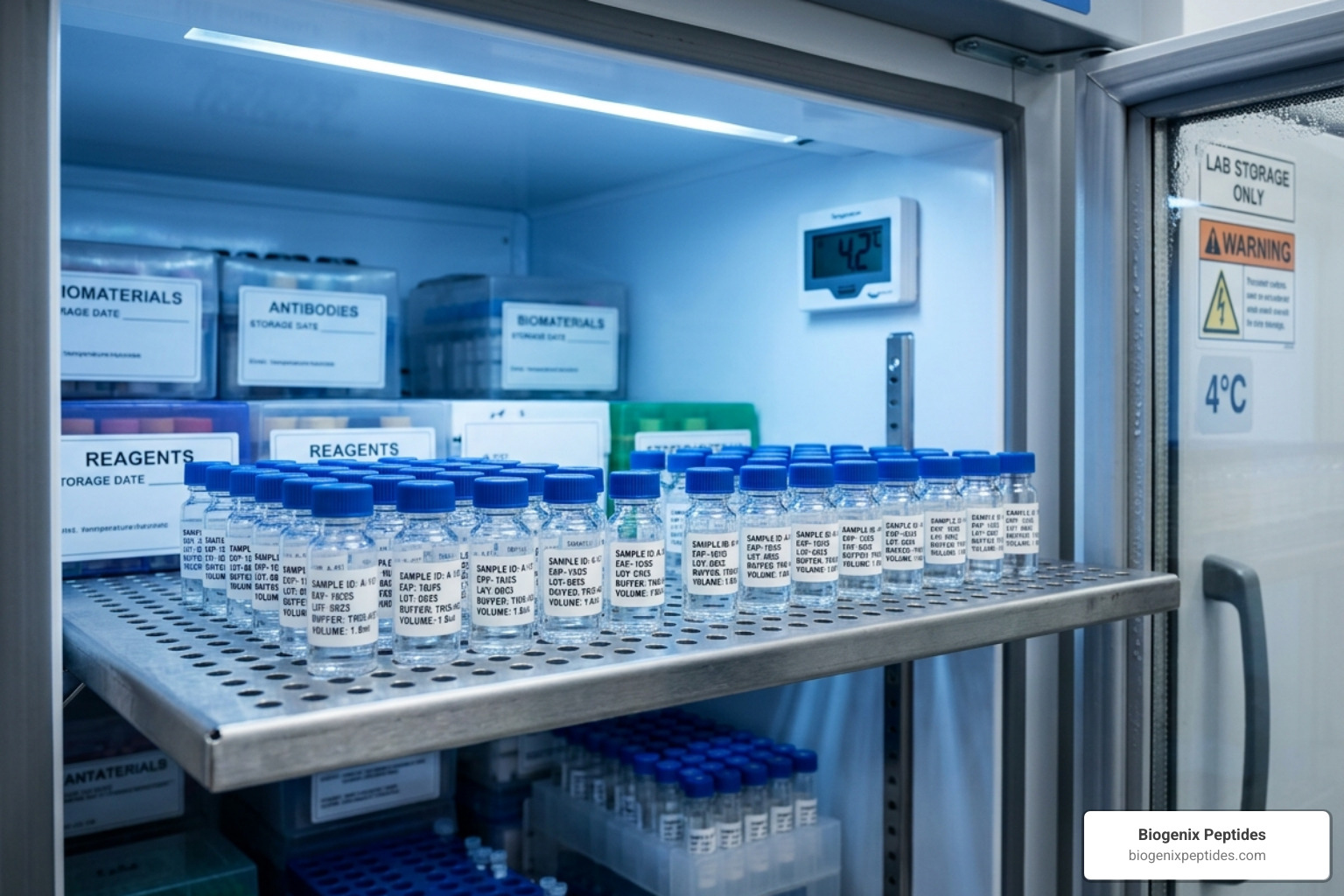
Key best practices include:
- Aseptic Technique: Always maintain a sterile environment during reconstitution.
- Aliquoting into Single-Application Portions: For long-term frozen storage, divide the solution into small aliquots to prevent repeated thawing and refreezing.
- Avoiding Repeated Freeze-Thaw Cycles: Each cycle can cause structural damage.
- Proper Vial Sealing: Ensure vial stoppers are clean and secure.
- Protection from Light: Store vials in opaque containers or wrapped in foil.
- Dedicated Refrigeration: Use a refrigerator specifically for research materials, avoiding the door where temperature fluctuations occur.
For a comprehensive guide, please see our Best Practices for Peptide Storage & Handling.
How can bacterial contamination be prevented in multi-use vials?
Bacterial contamination is a primary concern for multi-use vials. Here is how we prevent it:
- Aseptic Technique: Work in a clean, organized area.
- 70% Alcohol Wipes on Vial Stoppers: Before each access, thoroughly swab the rubber stopper and allow it to air dry.
- Using New Sterile Syringes for Each Draw: Never reuse syringes or needles.
- Hand Washing: Wash your hands thoroughly before handling supplies.
- Bacteriostatic Water as a Preservative: BAC water inhibits bacterial growth, extending safe viability.
- Discarding BAC Water After 28 Days Post-Opening: Mark the date of first access and discard after 28 days as preservative efficacy wanes.
For information on choosing appropriate containers, refer to Peptide Storage Containers That Won’t Let You Down.
What is the impact of repeated freeze-thaw cycles on potency?
Repeatedly freezing and thawing reconstituted peptides is highly detrimental. The primary mechanisms of damage include:
- Ice Crystal Damage: Crystals can physically shear the peptide structure, leading to aggregation.
- Concentration Effects: During freezing, water crystallizes out, leaving peptides in a more concentrated liquid phase that promotes aggregation.
- Reduced Bioactivity: Each cycle can lead to a measurable reduction in bioactivity. Research suggests a single cycle can reduce bioactivity by 5-15%.
To mitigate this, aliquoting before initial freezing is essential. Divide the solution into portions corresponding to the amount needed for a single research application. Thaw only the aliquot required for immediate use.
Why is proper reconstitution technique so important?
- Gentle Swirling (Never Shaking): Vigorous shaking creates shear forces that can damage the peptide’s structure. Always swirl the vial gently.
- Adding Diluent Slowly Down Vial Wall: Introduce the solvent slowly to prevent foaming and direct forceful contact with the powder.
- Avoiding Air Bubbles: Excessive bubbles increase the surface area for oxidation.
- Ensuring Complete Dissolution: Allow sufficient time for the peptide to fully dissolve before proceeding.
Mastering this step sets the foundation for stability. Our guide on Reconstituting Lyophilized Peptides Step-by-Step provides detailed instructions.
How Does the Stability of Reconstituted Peptides Differ from Lyophilized (Powder) Peptides?
The stability of a peptide changes dramatically once it moves from its lyophilized (powder) form to a reconstituted (liquid) solution. This transition is akin to waking a delicate organism from suspended animation.
What is the typical shelf life of lyophilized peptides?
Lyophilized peptides are significantly more stable than reconstituted ones. The absence of water reduces chemical degradation and microbial growth. When stored properly, they can maintain integrity for extended periods:
- Room Temperature: 2-3 weeks, provided they are kept dry and dark.
- Refrigerated (2-8°C): 3-6 months.
- Frozen (-20°C): Up to 2 years.
- Ultra-low Frozen (-80°C): 3 years or more.
These durations assume the peptide is stored in a tightly sealed container with a desiccant, protected from light and oxygen.
For comprehensive guidance on preserving powder form, consult Don’t Let Your Peptides Perish: The Powder Storage Handbook.
Why are lyophilized peptides so much more stable?
The stability of lyophilized peptides stems from the removal of water through sublimation. The key benefits are:
- Removal of Water: Water is a reactant in many degradation pathways, particularly hydrolysis.
- Reduced Hydrolysis: Without water, the breaking of peptide bonds cannot readily occur.
- Inhibited Microbial Growth: Microorganisms require water to thrive. A dry environment prevents bacterial and fungal growth.
- Suspended Animation State: Lyophilization preserves structure and activity by minimizing chemical and biological activity.
This dry, stable form is why peptides are typically shipped as lyophilized powders and are much more forgiving to store before reconstitution.
What Are the Signs That a Reconstituted Peptide Has Degraded or Become Contaminated?
Even with best practices, be vigilant for signs of degradation or contamination. Using compromised peptides can lead to unreliable research results.
Visual inspection
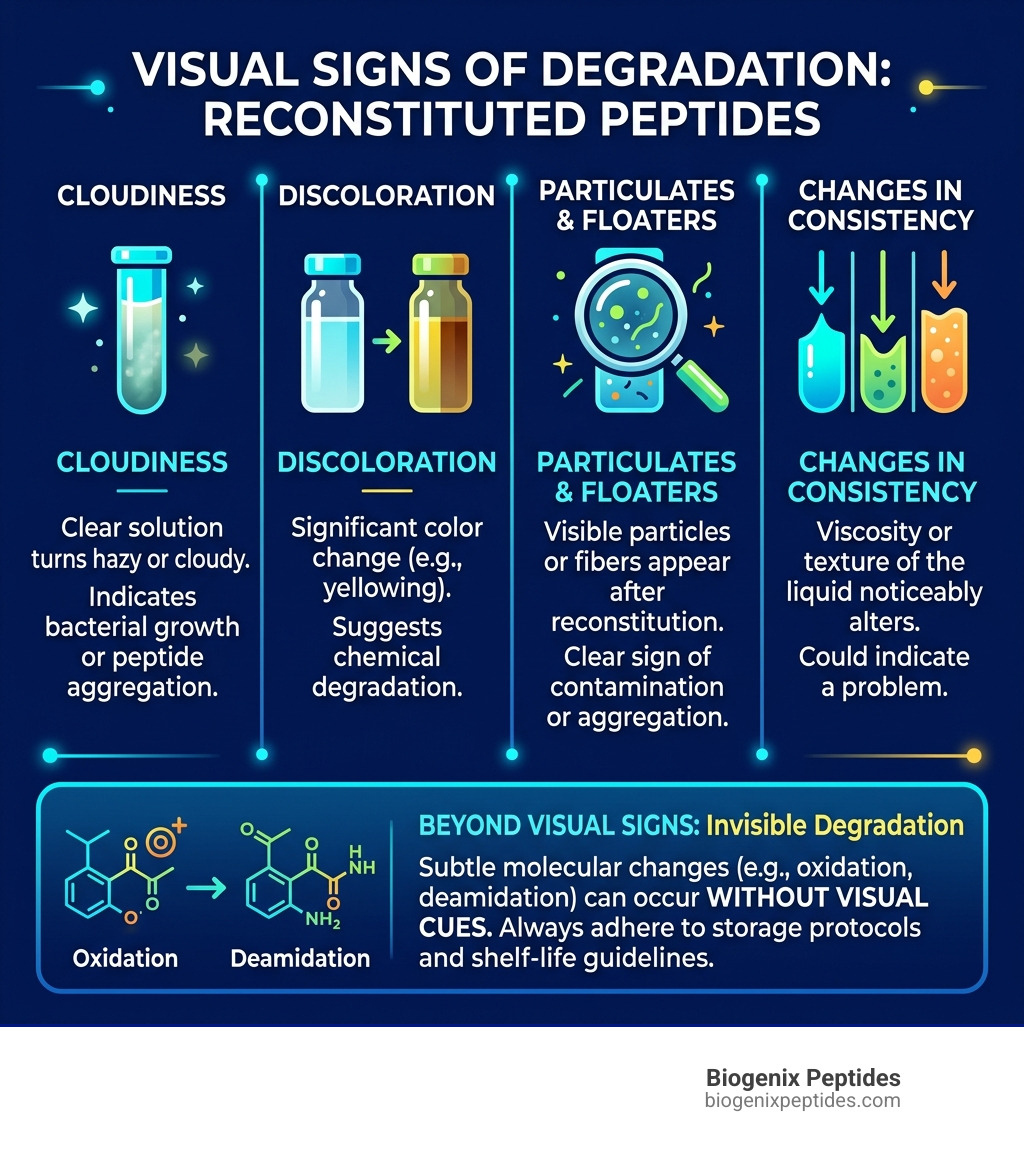
Before each use, carefully examine your reconstituted peptide solution for:
- Cloudiness: A clear solution becoming cloudy is a strong indicator of bacterial growth or aggregation.
- Discoloration: Any significant change in color, such as turning yellow or brown, suggests chemical degradation.
- Presence of Particulates or Floaters: Visible particles that were not present after reconstitution are a clear sign of contamination.
- Changes in Consistency: Any noticeable change in viscosity could be a red flag.
Can a peptide degrade without visible signs?
Yes. A peptide can undergo invisible degradation at a molecular level without obvious visual cues. Chemical processes like oxidation or deamidation might not produce cloudiness but can still lead to a substantial loss of biological activity. This is why adhering to strict storage protocols and shelf life guidelines is paramount. The “when in doubt, discard” principle is a wise one to follow in research.
What should be done if degradation or contamination is suspected?
If you suspect your peptide has been improperly stored or is past its recommended shelf life:
- Discard the Peptide: Do not use the suspected peptide in your research. The risks of inaccurate data far outweigh the cost of replacement.
- Avoid Use in Research: Using a degraded peptide can lead to false results, compromising the integrity of your study.
- Re-evaluate Storage and Handling Practices: Review your entire workflow to identify areas for improvement.
- Sourcing High-Quality Peptides: Ensure you are sourcing from reputable suppliers like Biogenix Peptides, who provide high-purity products less likely to degrade prematurely.
Frequently Asked Questions About Reconstituted Peptide Longevity
Why do some sources recommend using reconstituted peptides within a week while others suggest longer periods?
This discrepancy primarily stems from two factors:
- Chemical Stability vs. Sterility Risk: Conservative recommendations often prioritize minimizing bacterial contamination risk, especially if sterile water is used. Longer recommendations typically assume the use of bacteriostatic water and focus on inherent chemical stability.
- Official Guidelines vs. User Anecdotal Evidence: Official pharmaceutical guidelines are often very conservative due to sterility concerns. In the research community, anecdotal evidence might suggest longer periods, but these carry a higher inherent risk of contamination or subtle potency loss.
Is it safe to use a reconstituted peptide after 30 days if it still looks clear?
While a clear appearance is a good sign, it does not guarantee integrity after 30 days. The risk of microbial contamination and invisible chemical degradation significantly increases. For the sake of scientific rigor, we advocate for a conservative approach. If a reconstituted peptide is past its recommended refrigerated shelf life, it is best to discard it and reconstitute a fresh vial.
What happens if a reconstituted peptide is accidentally left out at room temperature for an extended period?
If left out for several hours or overnight, its potency is highly likely to be compromised. Room temperature significantly accelerates chemical degradation processes like oxidation and hydrolysis. It is also ideal for bacterial growth. If a reconstituted peptide has been left out for more than a very brief period, we strongly advise against its research application. Discard it and reconstitute a fresh vial, ensuring immediate refrigeration afterward.
Conclusion
The longevity of reconstituted peptides is a dynamic outcome influenced by inherent chemistry and meticulous storage practices. While general guidelines suggest a refrigerated shelf life of 2-8 weeks, and longer when frozen and aliquoted, vigilance against degradation is paramount. By adhering to best practices in reconstitution, solvent selection, and storage, researchers can significantly extend the viability of their valuable compounds, ensuring the integrity and reproducibility of their scientific endeavors. For high-quality lyophilized peptides and comprehensive storage guidelines, explore the offerings at Biogenix Peptides.