Step-by-Step Guide to GLP Peptides for Sale
Disclaimer: The information provided in this article is for educational and informational purposes only. It is not intended as medical advice, diagnosis, or treatment. Products and compounds referenced are for research use only and are not approved for human or veterinary consumption. Always consult a qualified professional regarding health or medical decisions.
Why Sourcing GLP Peptides for Sale the Right Way Matters
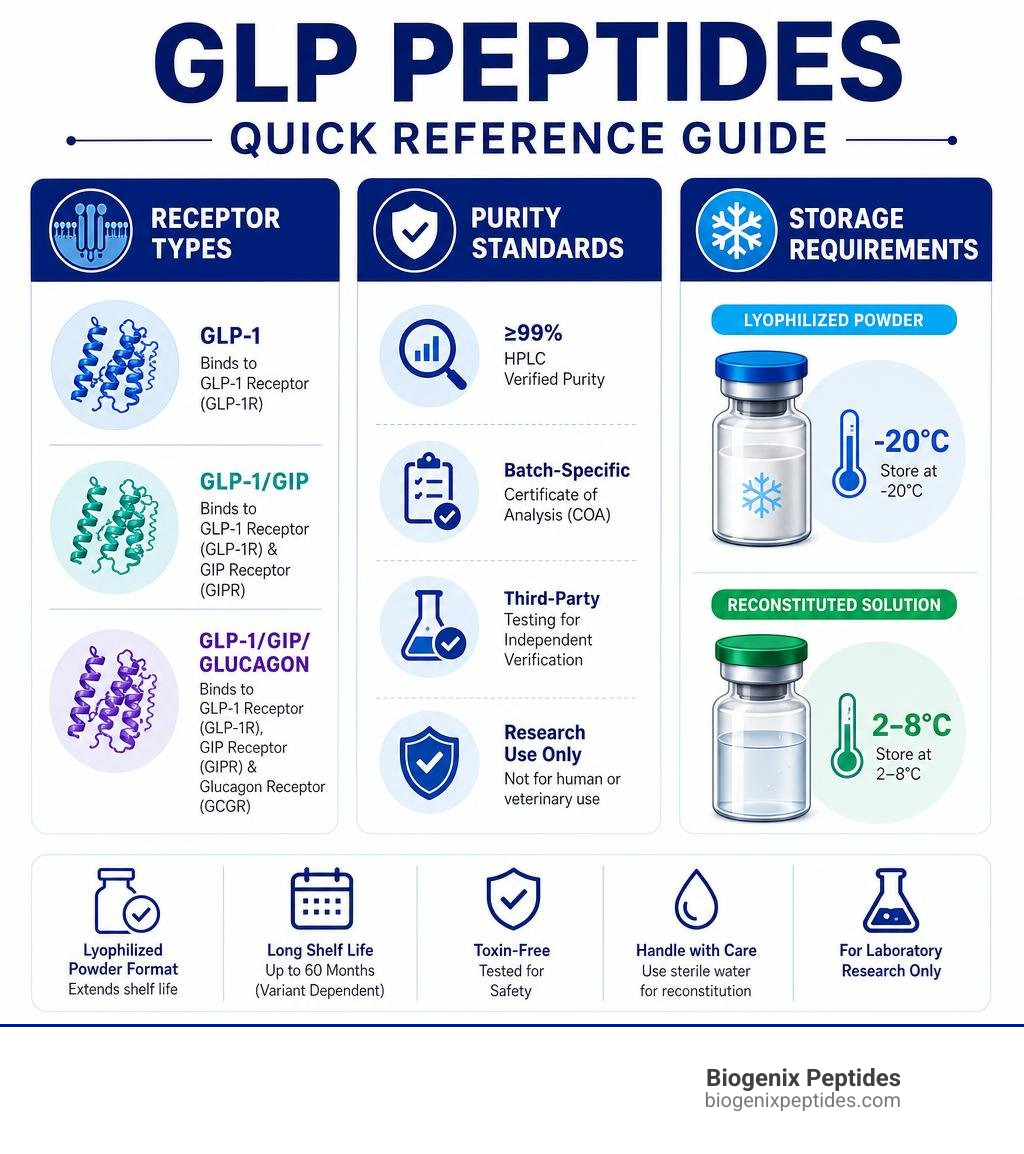
If you’re evaluating glp peptides for sale, here is a quick-reference overview of what to know before you buy:
| What to Check | Why It Matters |
|---|---|
| Purity level (>=99% HPLC verified) | Over 60% of online peptides were found mislabeled or impure in a 2023 study |
| Batch-specific Certificate of Analysis (COA) | Confirms actual purity, weight, and toxin-free status |
| Lyophilized powder format | Extends shelf life (up to 60 months for some variants) |
| Third-party testing | Independent verification beyond seller claims |
| Research use only labeling | Legal requirement – these compounds are not approved for human or veterinary use |
| Storage requirements | Lyophilized: -20 degrees C; Reconstituted: 2-8 degrees C |
Interest in GLP peptides has grown significantly within research and laboratory communities. These compounds – including single agonists like GLP-1, dual agonists like GLP-1/GIP, and triple agonists like GLP-1/GIP/Glucagon – are studied for their roles in metabolic signaling, receptor binding, and gastrointestinal physiology. But the market is crowded, and the quality gap between reputable and unreliable vendors is wide.
For broader U.S. regulatory context on how medicines are reviewed and approved, researchers can consult the FDA overview of the drug development and approval process. This article, however, focuses only on research-labeled compounds and laboratory sourcing considerations.
This guide breaks down everything a research professional needs to know – from peptide mechanisms and agonist comparisons to quality standards, handling protocols, and legal considerations.
I’m Jay Daniel, Founder and CEO of BioGenix Peptides, with years of hands-on experience in peptide development, quality control, and sourcing protocols – including direct work with glp peptides for sale across research and laboratory applications. This guide is built on that experience to help you make informed, responsible sourcing decisions.
What Are GLP Peptides and Their Research Applications?
Glucagon-like peptides (GLPs) are a family of essential incretin hormones. In biological systems, these naturally occurring hormones are secreted by the intestinal L-cells in response to nutrient intake. Their primary function revolves around receptor binding and activating complex cellular pathways that govern metabolic homeostasis.
When researchers look at What Are GLP-1 Peptides and Why Is Everyone Talking About Them?, they are focusing on how these compounds interact with specific G-protein coupled receptors. In laboratory settings, synthetic analogues of these peptides are utilized to map cell signaling, evaluate receptor affinity, and observe downstream metabolic effects.
Mechanisms of GLP-1, GLP-2, and GLP-3
Each class of GLP peptide targets distinct biological pathways:
- GLP-1: This peptide acts primarily via GLP-1 receptor agonism. In laboratory models, its activation triggers an insulinotropic effect, meaning it enhances glucose-dependent insulin secretion from pancreatic beta cells. It also plays a role in slowing gastric emptying and reducing gastrointestinal motility. To understand how these pathways function at a cellular level, researchers often study the GLP-1 Incretin Pathways Explained to map receptor-ligand interactions.
- GLP-2: Unlike GLP-1, GLP-2 is predominantly studied for its enteric physiology effects. It binds to receptors in the gastrointestinal tract, promoting intestinal growth, enterocyte turnover, and epithelial repair. It serves as a vital model for investigating mucosal barrier integrity and gut tissue regeneration.
- GLP-3: Often referred to in next-generation research as a triple agonist, GLP-3-related compounds are designed to simultaneously engage three pathways: GLP-1, GIP, and Glucagon receptors. This multi-receptor signaling is studied for its synergistic effects on energy expenditure and metabolic homeostasis.
Key Differences from Other Research Peptides
What makes GLP peptides stand out from typical research peptides is their structural engineering. Native GLP-1 is rapidly degraded in vivo by the enzyme dipeptidyl peptidase-4 (DPP-4), giving it a half-life of only a few minutes.
To bypass this hurdle, synthetic GLP analogues feature deliberate structural modifications, such as the substitution of specific amino acids (like alanine to alpha-aminoisobutyric acid) and fatty acid conjugation. These modifications provide high enzymatic degradation resistance and significant half-life extension. This allows researchers to conduct long-term longitudinal studies without the compound breaking down prematurely in the assay medium.
For a comprehensive overview of these structural designs, you can explore our GLP-1 Peptides Complete Guide 2026.
Comparing Single, Dual, and Triple Agonists in Laboratory Settings
Modern metabolic research has progressed from studying single receptor pathways to exploring receptor co-agonism. By engaging multiple receptor pathways simultaneously, scientists can observe how complementary biological systems coordinate to maintain metabolic balance.
To see how these compounds compare in metabolic assays, researchers look at GLP-1 Dual and Triple Agonist Peptides: Semaglutide, Tirzepatide, and Retatrutide in Research.
| Peptide Class | Primary Receptor Targets | Key Research Focus | Common Purity Standard |
|---|---|---|---|
| Single Agonists (e.g., GLP-1 S) | GLP-1R | Insulinotropic pathways, gastric emptying, appetite suppression pathways | ≥99% HPLC Verified |
| Dual Agonists (e.g., GLP-1 T, GLP/GIP) | GLP-1R, GIPR | Synergistic incretin signaling, glycemic control, lipid metabolism | ≥99% HPLC Verified |
| Triple Agonists (e.g., GLP-3 R) | GLP-1R, GIPR, GCGR | Bioenergetics, energy expenditure, multi-pathway metabolic homeostasis | 99.3% to 99.96% Verified |
Single GLP-1 Agonists in Research
Single GLP-1 receptor agonists remain the baseline for incretin research. A prime example is GLP-1 S, a highly stable synthetic analogue supplied with ≥99% purity (HPLC Certified). This compound is widely used to study basic insulinotropic pathways and appetite suppression signaling.
For laboratories conducting in vitro or in vivo experiments, these single agonists are available in various standardized quantities to ensure experimental consistency:
- Semaglutide GLP-1 10mg
- Semaglutide GLP-1 20mg
- Semaglutide GLP-1 30mg
To understand the foundational science behind these weight-related metabolic models, see Shedding Pounds with Science: A Guide to GLP-1 Peptides.
Dual-Agonist (GLP-1/GIP) Research Compounds
Dual-agonist peptides like GLP-1 T and GLP/GIP (TRZ) target both the GLP-1 and glucose-dependent insulinotropic polypeptide (GIP) receptors. Research indicates that GIP works synergistically with GLP-1 to enhance insulin secretion while mitigating some of the gastrointestinal transit delays associated with pure GLP-1 agonists.
In laboratory settings, these dual-agonist compounds are studied for their superior glycemic control and lipid-handling effects compared to single agonists. For instance, GLP-1 T is offered in diverse vial sizes including 8 mg, 10 mg, 30 mg, 40 mg, and 60 mg lyophilized powder to accommodate varying research scales. Similarly, GLP/GIP (TRZ) is typically sold in 5 mg, 10 mg, and 20 mg (tested at 28 mg) sizes with ≥99% purity.
For dual incretin receptor research, scientists often utilize:
Triple-Agonist (GLP-1/GIP/Glucagon) Research Compounds
The cutting edge of metabolic research involves triple-agonist peptides, such as GLP-3 (R). By adding glucagon receptor (GCGR) activation to the GLP-1/GIP dual pathway, these compounds introduce an energy expenditure element. Glucagon signaling stimulates lipolysis and increases energy expenditure, while the GLP-1 and GIP pathways protect against hyperglycemia.
In comparative metabolic signaling studies, triple agonists have shown remarkable bioenergetic results, with some models demonstrating up to 95.5% metabolic signaling efficiency compared to 68.0% for dual-agonist controls.
These advanced peptides are available in specialized research sizes:
Quality Standards and Sourcing GLP Peptides for Sale
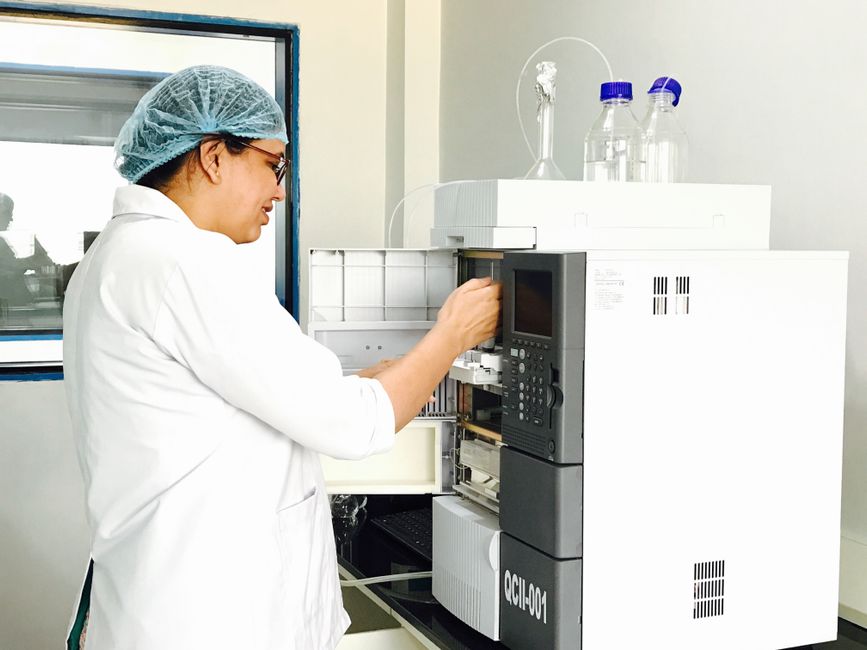
When looking for glp peptides for sale, quality assurance is not just a buzzword—it is the backbone of experimental reproducibility. A minor impurity can completely alter receptor binding kinetics, leading to skewed data and wasted laboratory resources.
To ensure your research is backed by high-purity compounds, always source from a dedicated Product Category: GLP-1 supplier that offers verified, batch-specific testing.
Evaluating Vendor Credibility for GLP Peptides for Sale
Evaluating a vendor requires looking past marketing claims. A alarming 2023 study revealed that over 60% of online peptides were mislabeled or impure. This means researchers buying from unverified gray-market websites run a high risk of receiving under-strength or entirely incorrect chemical sequences.
To protect your research, ensure your supplier meets these baseline criteria:
- Third-Party COAs: Every batch must have an independent Certificate of Analysis (COA) verifying purity (which should be ≥99%) and molecular weight via High-Performance Liquid Chromatography (HPLC) and Mass Spectrometry (MS).
- Know Your Customer (KYC): Reputable vendors often require buyers to verify their institutional or professional research credentials to ensure the compounds are handled in legitimate settings.
- Secure, Temperature-Controlled Shipping: Peptides are sensitive molecules. Reliable vendors package their products in insulated, vacuum-sealed vials to prevent thermal degradation during transit.
Pharmaceutical-Grade vs. Research-Grade Suppliers
There is a distinct difference between pharmaceutical-grade chemical manufacturers and standard research peptide vendors:
- Pharmaceutical-Grade Manufacturers: These entities supply highly regulated, extremely expensive reference standards primarily intended for diagnostic, clinical, or advanced analytical chemistry applications. They operate under strict GMP (Good Manufacturing Practices) guidelines but often charge premium prices that are prohibitive for early-stage screening or routine laboratory assays.
- Research-Grade Vendors: These suppliers specialize in producing high-purity, cost-effective compounds designed strictly for laboratory research and development. They provide the same high chemical purity (≥99%) but package them in practical vial sizes suited for experimental protocols.
To explore a reliable inventory of research-grade metabolic compounds, you can browse our Category: GLP-1 catalog.
Reconstitution, Handling, and Stability Best Practices

Once you have acquired high-quality compounds from a trusted Product Category: GLP-1 source, proper handling is crucial to maintain their chemical integrity. Peptides are fragile chains of amino acids held together by peptide bonds, which can denature if subjected to physical stress or improper temperatures.
Reconstitution and Diluent Selection
Lyophilized peptides must be reconstituted into a liquid state before they can be introduced to cell cultures or assay mediums.
- Diluent Choice: The standard diluent for most laboratory research is sterile bacteriostatic water (which contains 0.9% benzyl alcohol to inhibit bacterial growth) or sterile Phosphate-Buffered Saline (PBS) for pH-sensitive assays.
- The Technique: Always introduce the diluent slowly. Aim the syringe needle at the inner glass wall of the vial, allowing the liquid to trickle down gently. Never drop the liquid directly onto the lyophilized powder.
- No Shaking: To dissolve the powder, gently swirl the vial in a circular motion. Never shake the vial vigorously. Think of it as preparing a delicate chemical solution, not mixing a cocktail; excessive agitation can shear the peptide’s delicate secondary and tertiary structures, rendering it useless.
Storage and Stability Requirements
Peptides are highly sensitive to thermal degradation. To maximize their shelf life, adhere to these strict storage parameters:
- Lyophilized State (Powder): Store long-term at -20°C (or colder). In this freeze-dried state, GLP peptides are highly stable. For example, GLP-3 (R) has a 36-month shelf life, while GLP-2 (T) can remain stable for up to 60 months when kept lyophilized in a controlled freezer.
- Reconstituted State (Liquid): Once a diluent is added, the peptide’s stability window shrinks dramatically. Reconstituted peptides must be stored in a refrigerator at 2–8°C. It is recommended to utilize reconstituted GLP-1 or GLP-2 solutions within 28 to 30 days, while some stabilized GLP-3 variants may remain viable for 3 to 6 months under optimal refrigeration. Never re-freeze a peptide once it has been reconstituted, as the freeze-thaw cycle will shear the molecular structures.
Frequently Asked Questions about GLP Peptides
What is the legal status of GLP peptides for sale?
In the United States, GLP peptides purchased online are legal exclusively when labeled and utilized for laboratory research and development purposes only. They are not approved by the FDA for human or veterinary consumption, and purchasing them for personal use is a violation of regulatory guidelines. Reputable suppliers strictly sell to qualified researchers, universities, and laboratories.
To review metabolic compounds designated for laboratory study, visit our Category: Metabolic Weight Loss section.
Why is endotoxin-free status critical in peptide research?
During the synthesis of recombinant or synthetic peptides, bacterial cell walls can leave behind lipopolysaccharides (LPS), commonly known as endotoxins. If a research peptide contains high levels of endotoxins, it can trigger inflammatory responses in cell cultures or animal models, completely confounding the metabolic signaling data.
Reputable suppliers perform Limulus Amebocyte Lysate (LAL) assays to guarantee their compounds are LPS-free, ensuring high experimental reliability and clean data.
How do dual and triple agonists compare to single agonists?
Single agonists target a single receptor (GLP-1R), providing a focused look at specific incretin pathways. Dual (GLP-1/GIP) and triple (GLP-1/GIP/Glucagon) agonists engage multiple receptors simultaneously. This multi-receptor signaling mimics natural metabolic synergy, allowing researchers to study complex metabolic homeostasis, enhanced energy expenditure, and improved glycemic control pathways that single-receptor models cannot fully replicate.
Conclusion
Sourcing glp peptides for sale requires a strict commitment to quality, verified testing, and proper handling protocols. Whether your laboratory is studying the foundational pathways of single GLP-1 agonists, the synergistic potential of dual-agonists, or the cutting-edge bioenergetics of triple-agonists, the integrity of your research depends entirely on the chemical purity of your compounds.
At BioGenix Peptides, we prioritize scientific transparency, batch-specific HPLC/MS verification, and secure shipping to support researchers in achieving reproducible, groundbreaking results.
Ready to secure high-purity, third-party tested compounds for your next laboratory project? Explore our complete inventory at https://biogenixpeptides.com/product-category/glp-1/.