
Sourcing HCG Online Without Getting Scammed
Disclaimer: The information provided in this article is for educational and informational purposes only. It is not intended as medical advice, diagnosis, or treatment. Products and compounds referenced are for research use only and are not approved for human or veterinary consumption. Always consult a qualified professional regarding health or medical decisions.
How to Buy HCG Peptide Online for Legitimate Research
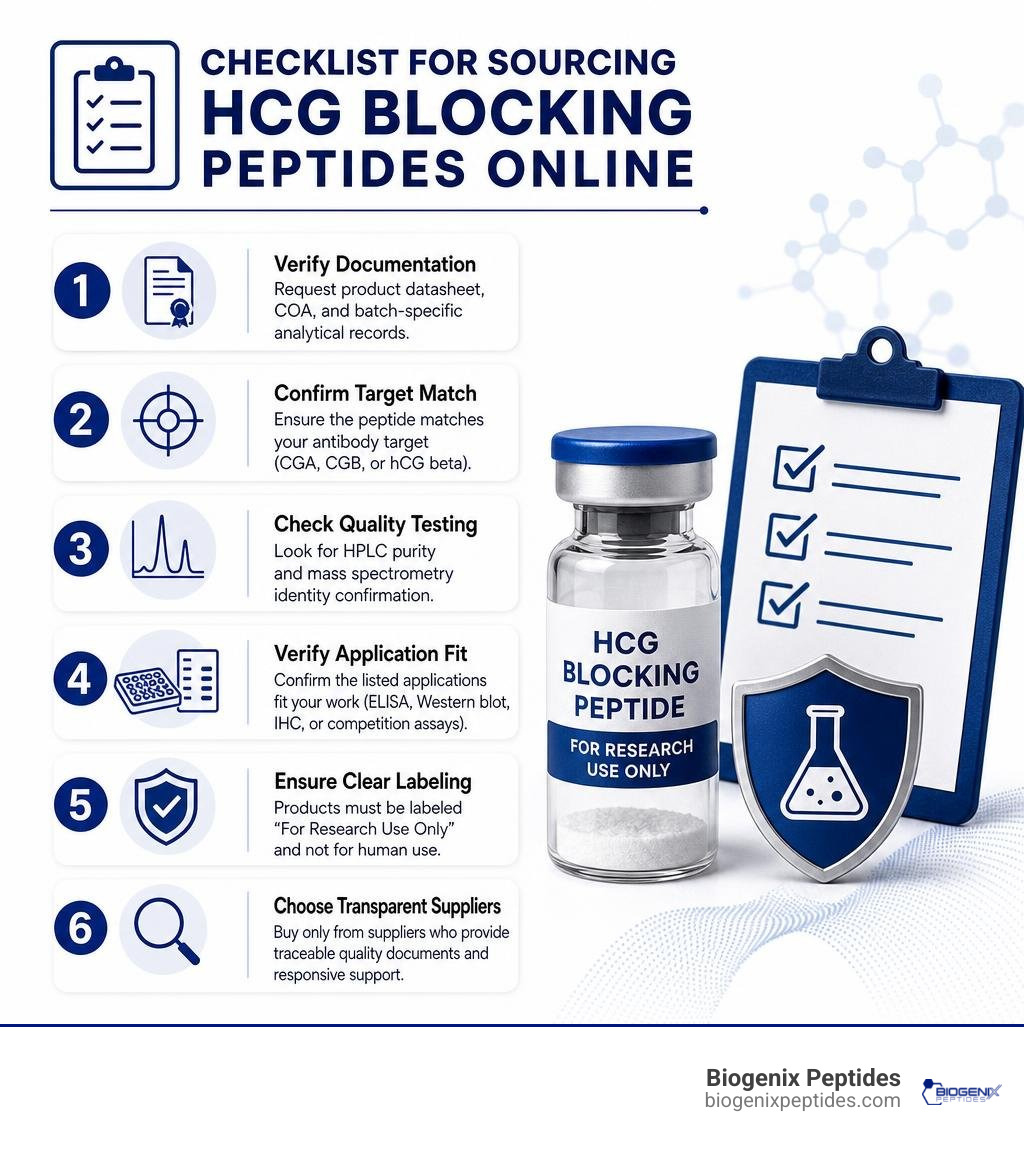
To buy HCG peptide online for research, first confirm whether your assay needs HCG itself or an HCG blocking peptide. Then buy only from suppliers that provide a product datasheet, batch-specific analytical records, and clear research-only labeling.
- Match the peptide to the antibody target, such as CGA, CGB, or hCG beta.
- Look for HPLC purity testing and mass spectrometry identity confirmation.
- Check that the listed application fits your work, such as ELISA, Western blot, immunohistochemistry, or competition assays.
- Avoid sellers that make human-health claims or cannot provide traceable quality documents.
A blocking peptide is not the hormone itself. It is a short peptide designed to bind an antibody’s target site, helping researchers test whether an assay signal is truly specific. Quality matters: research-grade products commonly report purity above 90% along with HPLC and MS results.
I’m Jay Daniel, founder of BioGenix Peptides, with years of hands-on experience in peptide sourcing, quality control, and research-focused product standards for laboratories looking to buy HCG peptide online. In the sections ahead, I will cover how to assess documentation, assay fit, and supplier transparency before placing an order.
Quick look at buy hcg peptide online:
- buy peptides online
- purchase sermorelin online
- The Ultimate Guide to Sourcing Wholesale Peptides Domestically
Introduction

In the field of investigational biochemistry and reproductive endocrinology research, sourcing genuine compounds can sometimes feel like walking through a minefield. As of September 2026, the marketplace for research reagents is teeming with suppliers, but unfortunately, market irregularities, mislabeled vials, and exaggerated claims are widespread. For laboratory investigators, procurement officers, and independent researchers, knowing how to navigate this ecosystem is crucial to preserving analytical validation and reproducible science.
All compounds, reagents, and peptides discussed throughout this guide are strictly for in vitro and laboratory research only, not for human use or consumption, and nothing presented here constitutes medical advice. Our opinion and insights are focused purely on laboratory integrity.
When exploring hormone signaling pathways or running immunoassay validations, investigators frequently search for reagents associated with Human Chorionic Gonadotropin (HCG). However, there is a common misunderstanding between full intact hormone proteins and specialized research tools like HCG blocking peptides. Blocking peptides serve as negative controls, confirming that your primary antibodies bind specifically to their designated targets rather than generating false-positive artifacts.
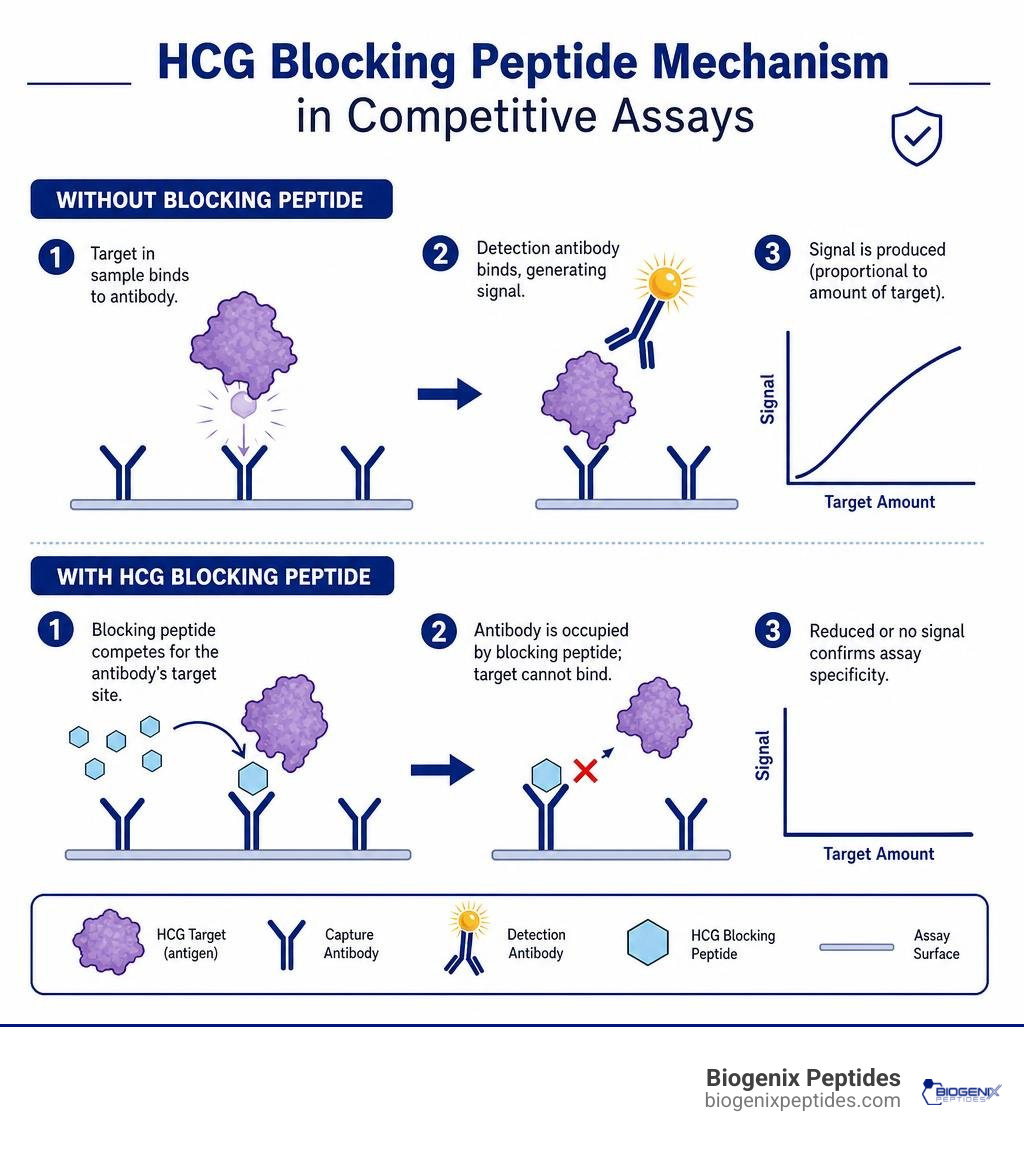
Understanding this mechanism helps ensure your experimental budget produces valid, publishable data rather than uninterpretable noise.
Understanding HCG and Blocking Peptides in Laboratory Research
To run precise bench experiments, it is vital to distinguish between full-length hormone molecules, primary antibodies, and blocking peptides. While full-length HCG is an intact heterodimeric glycoprotein, a blocking peptide represents a synthesized fragment corresponding directly to the epitope recognized by a specific antibody.
Here is a breakdown of how these components function across metabolic assays, immunodepletion studies, and competitive inhibition models:
| Reagent Type | Primary Biochemical Nature | Core Laboratory Function | Primary Research Application |
|---|---|---|---|
| Intact HCG Protein | Full heterodimeric glycoprotein | Ligand for receptor-binding and signaling assays | Cell culture signaling, receptor kinetics |
| HCG Primary Antibody | Immunoglobulin (polyclonal/monoclonal) | Detects and binds to specific HCG epitopes | Western blot, ELISA, IHC, Immunoprecipitation |
| HCG Blocking Peptide | Short synthetic amino acid sequence | Neutralizes primary antibody binding sites | Pre-absorption control, specificity verification |
For investigators just starting to establish laboratory protocols, our Beginners Guide to Biogenix Peptides provides a thorough foundation on synthetic peptide characteristics and biochemical evaluation.
Difference Between Target Hormones and Blocking Peptides
A native hormone interacts directly with cellular receptors to trigger intracellular cascades. In contrast, an HCG blocking peptide is engineered synthetically to match the exact immunogenic sequence used when generating an antibody.
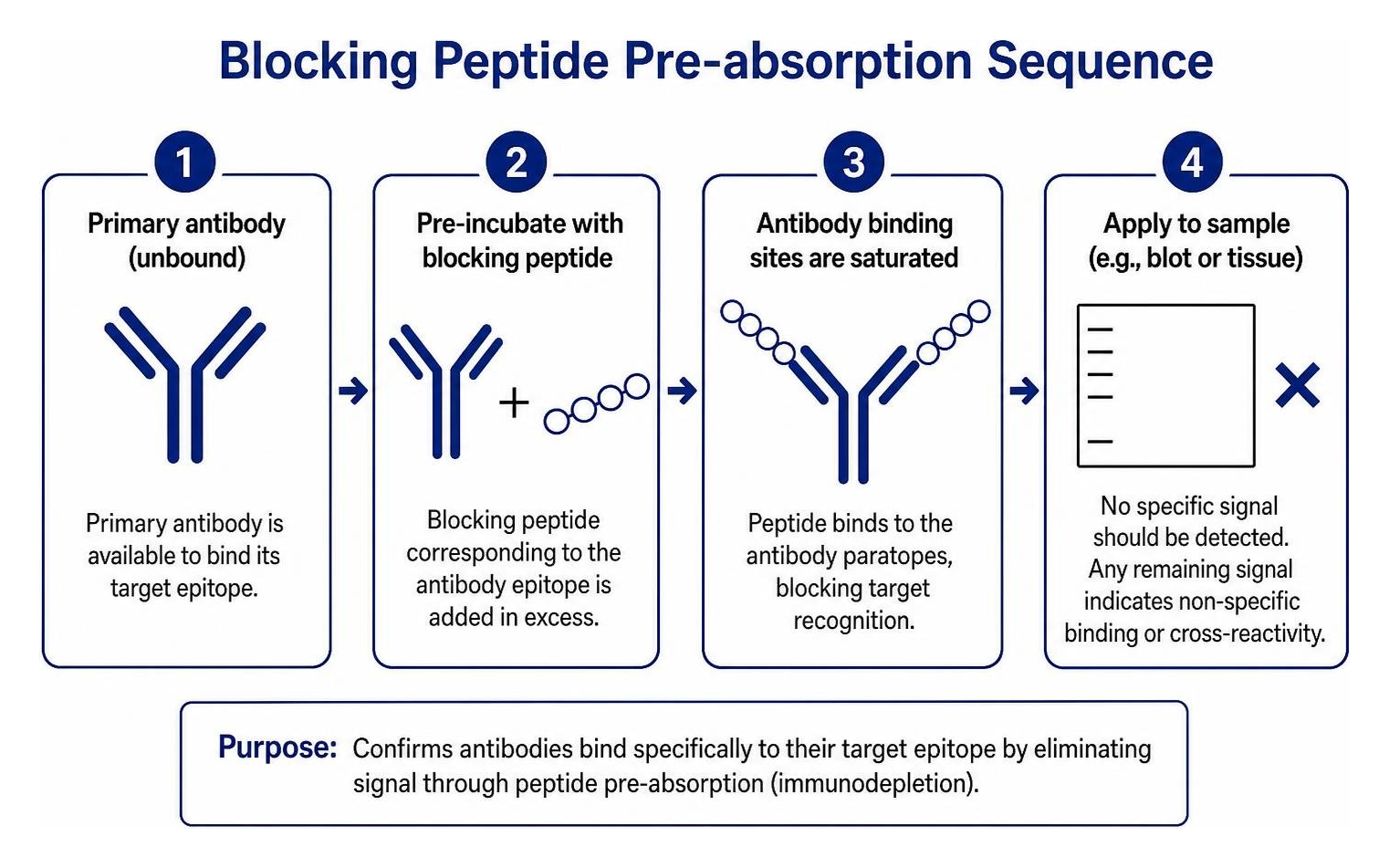
When researchers pre-incubate their primary antibody with an excess of the corresponding blocking peptide (an assay known as immunodepletion or antigen neutralization), the antibody’s paratopes become fully saturated. If the antibody is subsequently applied to a Western blot or tissue sample, it should no longer produce a signal. If bands or stains still appear, those signals represent non-specific binding or cross-reactivity with unrelated cellular proteins. This validation step is indispensable for non-clinical research requiring flawless rigor.
Key Variants: CGA, CGB, and hCG Beta Peptides
HCG consists of two distinct non-covalently linked subunits:
- Alpha Subunit (CGA): Encoded by the CGA gene, this 92-amino-acid chain is identical to the alpha subunit found in other glycoprotein hormones, including Luteinizing Hormone (LH), Follicle-Stimulating Hormone (FSH), and Thyroid-Stimulating Hormone (TSH).
- Beta Subunit (CGB / hCG beta): Encoded by several related CGB genes (such as CGB, CGB5, CGB7, and CGB8), this 145-amino-acid chain confers unique biological and immunological specificity to HCG.
- Associated Biomarkers (e.g., PPP1R11, Ubl3, RPL17): In specialized cellular and metabolic studies, peptides mapping to regulatory proteins like PPP1R11 are often co-analyzed alongside hCG beta variants to monitor broader molecular interactions.
Because the alpha subunit shares sequence homology with LH and TSH, antibodies targeting the CGA chain can cross-react across multiple hormone pathways. Consequently, researchers studying hormone-specific responses routinely select blocking peptides targeting specific CGB or hCG beta epitopes to confirm that their analytical detection is truly unique to HCG.
How to Buy HCG Peptide Online for Research Applications
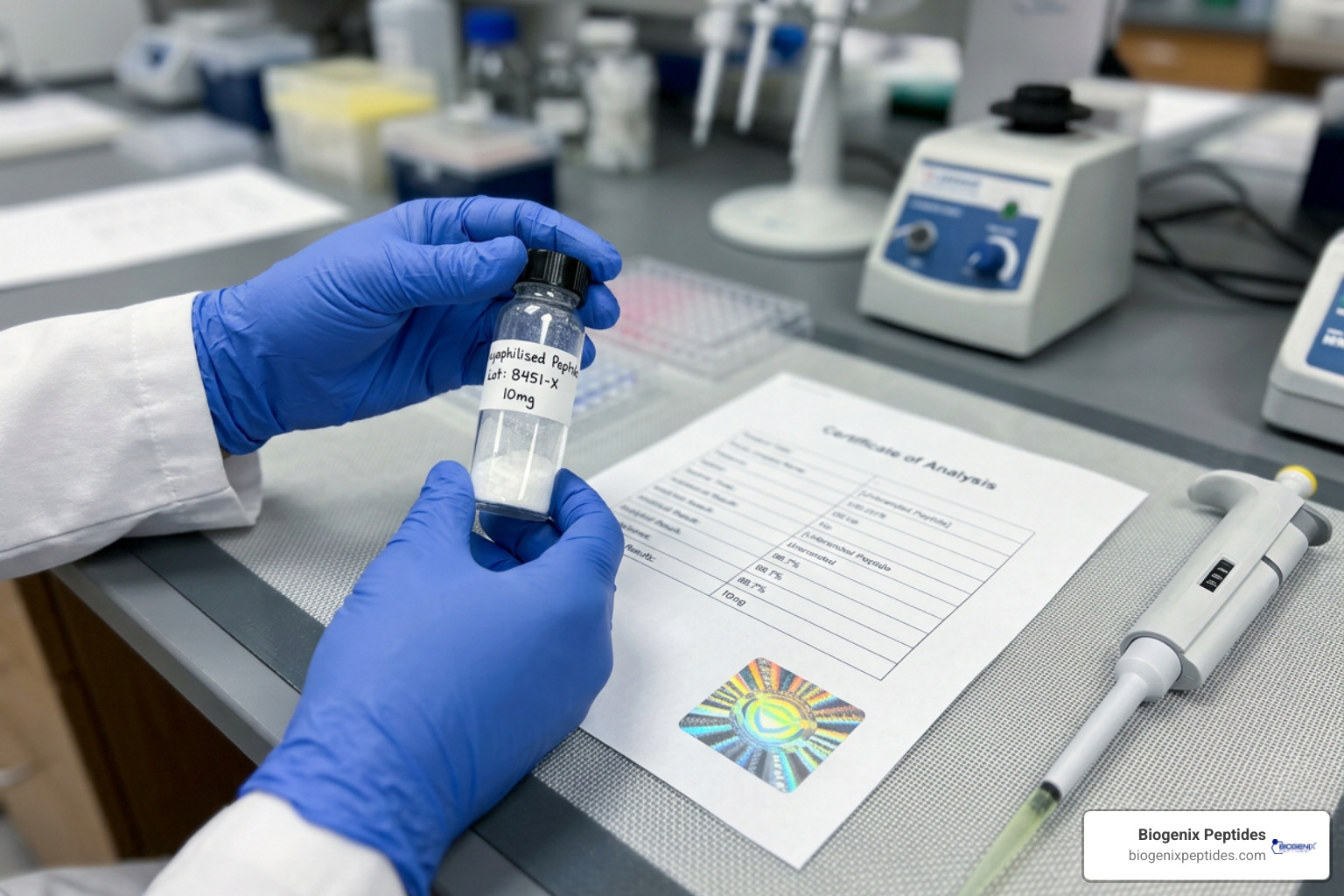
When procuring biochemicals, laboratory safety and financial protection go hand in hand. If you intend to buy hcg peptide online, knowing how to differentiate legitimate research chemical vendors from rogue websites is critical.
Unscrupulous sellers often market under-strength, degraded, or completely unverified substances under the guise of research chemicals. Reviewing The Complete Guide to Finding a Reliable Peptide Shop and consulting the Ultimate Guide to Reputable Peptide Stores Online will help you recognize legitimate analytical benchmarks before placing a purchase order.
Criteria to Safely Buy HCG Peptide Online
Legitimate research peptide vendors follow strict operational standards:
- Batch-Specific Documentation: Every batch must be linked to a verifiable Certificate of Analysis (COA).
- Transparent Chain of Custody: The supplier should disclose storage temperatures, synthesis methods, and clear quality assurance steps.
- Absence of Medical Claims: Reputable vendors never provide guidance on human administration or therapeutic efficacy; products are strictly designated for research and analytical use.
To protect your budget and experimental pipeline, check out our guide on Where to Buy Peptides Without Losing Your Gains or Your Shirt for an inside look at pricing benchmarks and vendor vetting.
Protocol Verification Before You Buy HCG Peptide Online
Before completing any procurement, cross-reference the supplier’s technical datasheet against your specific experimental parameters:
- Epitope Alignment: Ensure the blocking peptide sequence matches the exact immunogen sequence used to produce your primary antibody.
- Validated Applications: Check whether the vendor’s datasheet supports your intended methodology (e.g., ELISA, Western Blot, Immunohistochemistry, or Immunocompetition assays).
- Quantity and Concentration: Determine the optimal molar ratio (typically a 5-fold to 10-fold molar excess of peptide relative to antibody) required for your protocol.
For a condensed summary of vendor vetting criteria, reference our handy Cheat Sheet to Peptide Buy Online.
Critical Quality Control and Testing Standards for HCG Peptides
Quality control is the bedrock of valid scientific discovery. A research-grade peptide should never arrive without rigorous analytical validation confirming its identity, sequence accuracy, and purity.
When evaluating quality metrics in our Buying Guide, we advise looking for two gold-standard analytical methods:
Analytical Verification via HPLC and Mass Spectrometry
- High-Performance Liquid Chromatography (HPLC): HPLC separates the components of a synthesized batch to quantify purity. For dependable research-grade metabolic and immunoassay studies, purity should exceed 90% (and ideally reach 95% to 98%). The HPLC trace should show a sharp, single primary peak with minimal minor peaks representing truncated sequences or synthesis side-products.
- Mass Spectrometry (MS): While HPLC demonstrates how pure the compound is, Mass Spectrometry confirms the exact molecular weight and chemical composition. An MS readout matching the theoretical molecular weight of the target HCG blocking peptide proves that the synthesized sequence is correct.
Handling, Reconstitution, and Storage Requirements
Peptides are delicate biomolecules subject to oxidation, deamidation, and hydrolysis if mishandled. To maintain structural stability:
- Lyophilized Storage: Store dry, lyophilized peptide powders at -20°C or lower in a manual-defrost freezer to avoid temperature fluctuations.
- Desiccation: Allow the vial to reach room temperature in a desiccator before opening to prevent atmospheric moisture from condensing onto the powder.
- Reconstitution: Dissolve the peptide in sterile, bacteriostatic, or endotoxin-free laboratory-grade water or appropriate assay buffers as dictated by the technical datasheet.
- Aliquoting: Once reconstituted, aliquot the solution into single-use microcentrifuge tubes and store at -80°C. Avoid repeated freeze-thaw cycles, which rapidly degrade peptide integrity.
Laboratory Pitfalls and Assay Optimization Strategies
Even with high-purity peptides, poor experimental design can yield misleading results. If you run into unexpected data, exploring our FAQ section can provide rapid clarity on common technical inquiries.
Troubleshooting Western Blot and ELISA Protocols
When running Western blots or ELISA competition assays:
- Incomplete Blocking: If pre-incubating the antibody with the blocking peptide does not fully eliminate the primary target band, increase the molar excess of the peptide (e.g., from 5x to 20x) or lengthen pre-incubation time (e.g., 1–2 hours at room temperature or overnight at 4°C).
- Non-Specific Primary Antibodies: If multiple bands persist despite adequate peptide pre-incubation, the antibody itself may lack specificity and bind non-specifically to unrelated membrane proteins.
- ELISA Signal Saturation: In competitive ELISA assays, ensure standard curve dilutions are optimized so competitive inhibition curves fall within the linear detection range of your plate reader.
Antibody Specificity and Immunodepletion Controls
In Immunohistochemistry (IHC), blocking peptides serve as the ultimate negative control:
- Prepare two identical tissue sections.
- Stain Section A with the primary antibody alone.
- Stain Section B with the primary antibody that was pre-incubated with the HCG blocking peptide.
- If Section A displays clear cellular staining while Section B shows complete signal absence, the staining in Section A is confirmed to be specific to the HCG epitope.
Frequently Asked Questions About Sourcing HCG Peptides
What is the primary function of an HCG blocking peptide in research?
An HCG blocking peptide acts as a specific competitive antagonist against primary antibodies in immunoassays. By pre-incubating the antibody with the peptide, researchers neutralize the antibody’s antigen-binding sites. This provides a definitive negative control to verify whether assay signals (in Western blot, ELISA, or IHC) reflect true target binding rather than non-specific background noise.
How is peptide purity verified prior to experimental use?
Peptide purity is verified through High-Performance Liquid Chromatography (HPLC) to detect purity percentages (which should exceed 90% for research-grade work) and Mass Spectrometry (MS) to verify precise molecular weight and sequence identity. These results should be provided on a batch-specific Certificate of Analysis.
What storage protocols prevent HCG peptide degradation?
Lyophilized peptides should be stored sealed at -20°C in a dry, moisture-free environment. After reconstitution with sterile laboratory solvents, peptides should be divided into single-use aliquots and frozen at -80°C to eliminate repeated freeze-thaw cycles that cause peptide degradation.
Conclusion
Securing dependable research peptides requires analytical diligence, careful datasheet verification, and an unwavering commitment to quality standards. Whether you are validating antibody specificity in Western blots or mapping gonadotropin pathways in metabolic studies, working with verified compounds ensures your research remains robust and reproducible.
At Biogenix Peptides, we emphasize strict quality control, verified analytical profiles, and full transparency for the laboratory community. If you are preparing your next series of bench experiments, explore our research catalog in the Shop or reach out via our Contact Us page to discuss technical specifications with our support team. All products are strictly intended for laboratory research and analytical evaluation only.