Ready to Buy LR3 IGF 1? Here is What to Look For
Disclaimer: The information provided in this article is for educational and informational purposes only. It is not intended as medical advice, diagnosis, or treatment. Products and compounds referenced are for research use only and are not approved for human or veterinary consumption. Always consult a qualified professional regarding health or medical decisions.
Why Knowing What to Look For Before You Buy LR3 IGF-1 Matters
If you want to buy LR3 IGF-1 for laboratory research, here is a quick summary of what you need to know before purchasing:
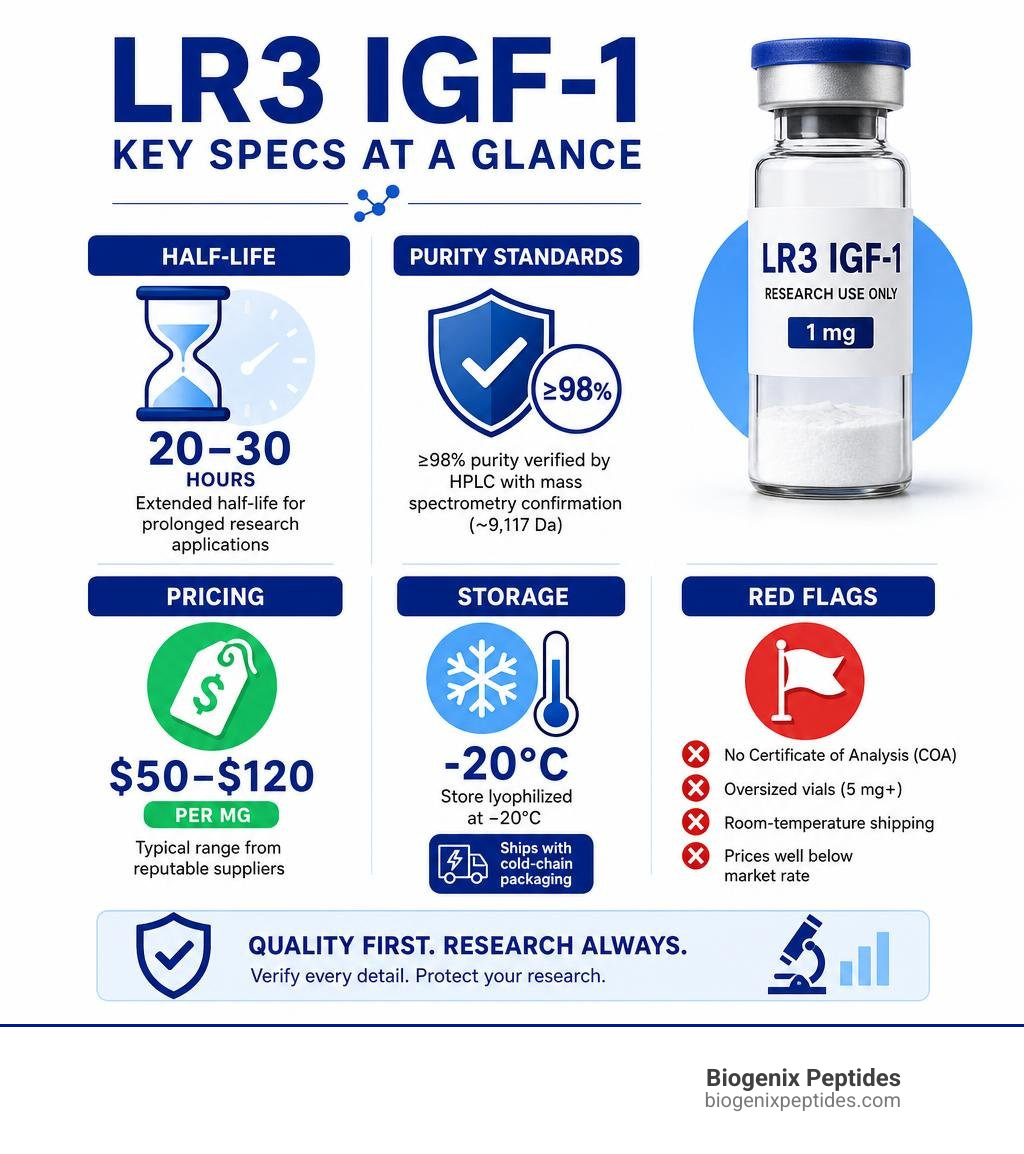
- Purity: Look for ≥98% purity verified by HPLC, with mass spectrometry confirming the correct molecular weight (~9,117 Da)
- Certificate of Analysis (COA): Must be third-party verified and batch-matched to your vial
- Vial size: 1 mg vials offer the best value for most research applications
- Pricing: Expect $50-$120 per mg from reputable suppliers
- Storage: Ships with cold-chain packaging; store lyophilized at -20°C
- Red flags: No COA, oversized vials (5 mg+), room-temperature shipping, or prices well below market rate
LR3 IGF-1 is one of the most studied synthetic analogs in peptide research today. It is a modified form of native Insulin-like Growth Factor-1, engineered with a 13-amino-acid N-terminal extension and an arginine substitution at position 3. These structural changes result in approximately three times the potency of standard IGF-1 and a dramatically extended half-life of 20-30 hours.
That makes it a valuable compound for research into cell proliferation, satellite cell activation, tissue regeneration, and metabolic signaling – but it also makes quality verification especially critical. LR3 IGF-1 is a folded protein, not a simple peptide chain. A product that looks fine on paper can still be inactive if it was handled, shipped, or reconstituted improperly.
The research-grade peptide market has grown fast, and not every supplier meets the bar. Knowing what separates a reliable source from a risky one can save your research – and your budget.
I’m Jay Daniel, Founder and CEO of BioGenix Peptides, with years of hands-on experience in peptide sourcing, quality control, and research applications – including helping laboratories make informed decisions when they buy LR3 IGF-1. In the sections below, I’ll walk you through exactly what to look for so your research starts on solid footing.
Common buy lr3 igf 1 vocab:
What is LR3 IGF-1 and How Does It Work?
To understand why this analog is so highly valued in laboratory research, we must look at the biochemistry of the native hormone. Insulin-like Growth Factor-1 (IGF-1) is a basic peptide secreted primarily by the liver in response to Growth Hormone (GH) stimulation. It plays a central role in regulating cell growth, development, and cellular differentiation.
However, native IGF-1 has a major practical limitation in experimental models: it binds incredibly tightly to a family of protective proteins known as Insulin-like Growth Factor-Binding Proteins (IGFBPs). In fact, over 99% of circulating native IGF-1 is bound to these proteins, which regulate its bioavailability and limit its active half-life to a mere few minutes when free.
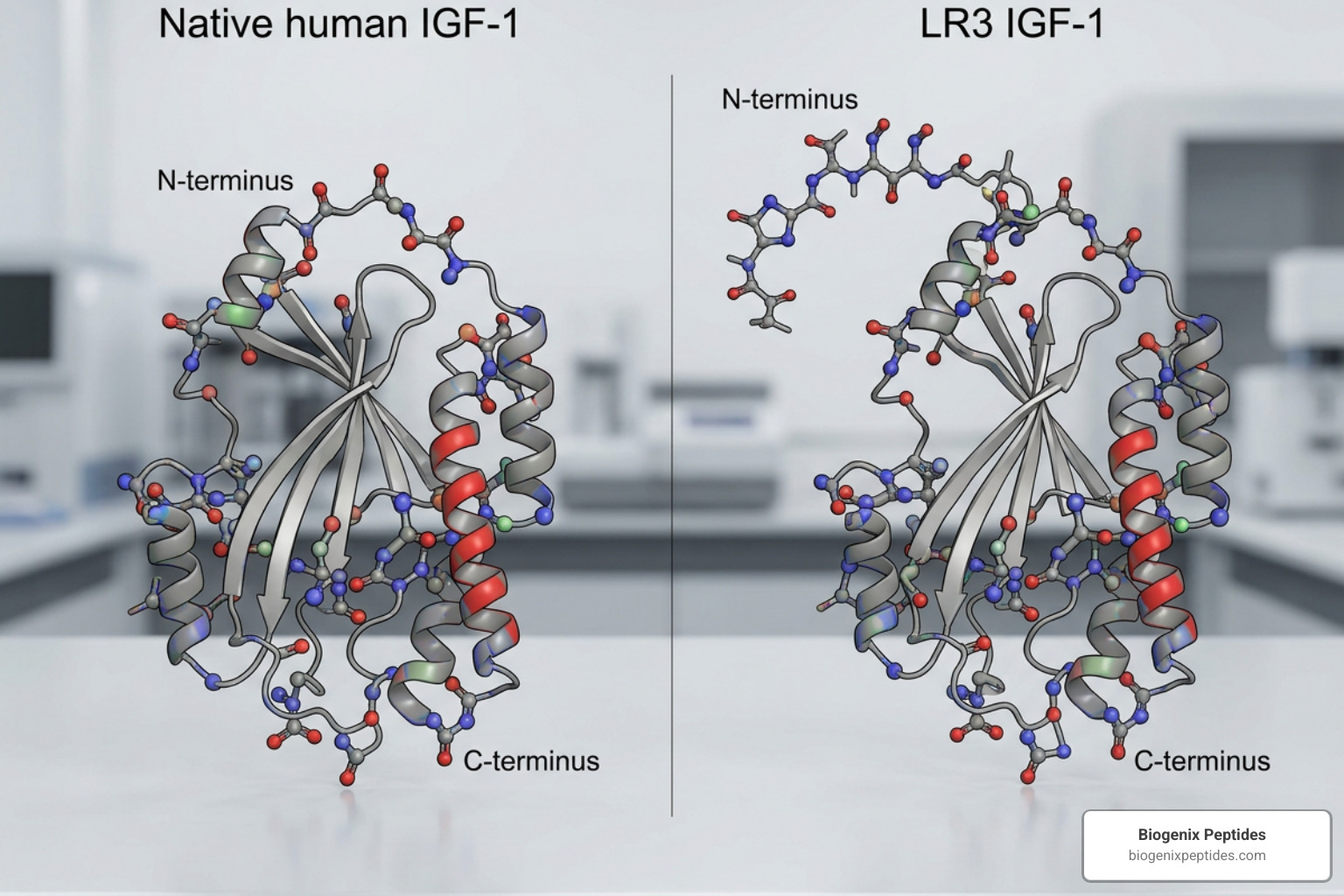
To bypass this biological bottleneck, researchers developed Recombinant Human Long R3 Insulin-like Growth Factor-1 (LR3 IGF-1). This synthetic analog features two critical structural modifications:
- An arginine (R) substitution at position 3, replacing the native glutamic acid (E3R modification).
- A 13-amino-acid N-terminal extension peptide.
These modifications do not diminish the peptide’s ability to bind to the actual IGF-1 receptor (IGF-1R). Instead, they create a massive 13-fold reduction in binding affinity for IGF-binding proteins. Because the protective binding proteins cannot latch onto LR3 IGF-1, the analog remains highly bioavailable in the experimental environment.
When we introduce Shop/Metabolic/Igf 1Lr3 1Mg/ into an in vitro system, it binds directly to the cell surface IGF-1R. This interaction triggers two primary intracellular signaling cascades:
- The PI3K/Akt/mTOR Pathway: This is the primary driver of protein synthesis, cellular survival, and metabolic regulation.
- The Ras/Raf/MEK/ERK (MAPK) Pathway: This cascade controls cell cycle progression, proliferation, and gene expression.
By activating these pathways without interference from binding proteins, LR3 IGF-1 delivers sustained, direct anabolic signaling to the target tissues.
Structural Differences: Native IGF-1 vs. LR3 IGF-1
The differences between native IGF-1 and its LR3 counterpart are not just subtle tweaks; they represent a fundamental shift in molecular weight, structure, and pharmacokinetics.
Native IGF-1 is a single-chain polypeptide containing 70 amino acids with a molecular weight of approximately 7.6 kDa. On the other hand, LR3 IGF-1 consists of 83 amino acids, resulting in an apparent molecular weight of approximately 9.1 kDa (specifically around 9,111 to 9,117 Da depending on the source organism and expression system).
Let’s look at how these structural variations translate into performance differences:
| Property | Native IGF-1 | LR3 IGF-1 |
|---|---|---|
| Amino Acid Count | 70 amino acids | 83 amino acids |
| Molecular Weight | ~7.6 kDa | ~9.1 kDa |
| IGFBP Binding Affinity | Extremely high (regulates and limits activity) | Extremely low (13-fold reduction) |
| Half-Life (Active) | 12–15 hours (when bound to IGFBPs); minutes when free | 20–30 hours (highly stable, independent of binding proteins) |
| Relative Potency | Standard baseline | Approximately 3 times more potent than native IGF-1 |
| Primary Expression Systems | Native mammalian tissues | Recombinant E. coli or HEK293 cell cultures |
This extended active half-life of 20 to 30 hours is why LR3 IGF-1 is highly favored in metabolic research. Instead of rapid clearance, it provides a steady, long-acting stimulus to the target cells.
Key Research Applications and Benefits
Because of its unique structural properties, LR3 IGF-1 is a staple in several major areas of biological and veterinary research. When looking to explore metabolic pathways or cellular growth, researchers utilize this peptide within the Product Category/Metabolic/ category to study several key physiological processes:
- Satellite Cell Activation and Hyperplasia: In skeletal muscle models, LR3 IGF-1 stimulates the proliferation and differentiation of satellite cells (muscle stem cells). Unlike other growth factors that merely increase the size of existing cells (hypertrophy), LR3 IGF-1 promotes the formation of brand-new muscle fibers (hyperplasia).
- Cell Culture Supplementation: Because it is highly stable and active at nanomolar concentrations, media-grade recombinant human LR3 IGF-1 is commonly used as a cost-effective supplement in industrial mammalian cell cultures (such as CHO or MCF-7 cell lines) to support large-scale manufacturing of biopharmaceuticals.
- Tissue Regeneration and Wound Healing: Researchers study how the peptide accelerates cellular migration and protein synthesis to repair damaged epithelial, connective, and bone tissues.
- Metabolic Disease Models: By interacting with both the IGF-1 and insulin receptors, LR3 IGF-1 suppresses lipolysis, promotes glucose uptake into peripheral tissues, and helps researchers study insulin resistance and type-2 diabetes pathways.
In specialized research, the expression system matters. For instance, some advanced studies utilize recombinant proteins expressed in human embryonic kidney cells (HEK293) to ensure mammalian-like post-translational modifications, while others rely on highly purified human sequence variants derived from E. coli expression systems.
How to Safely buy lr3 igf 1
Navigating the research chemical market requires a careful eye. Because peptides are not strictly regulated in the same manner as prescription medications, the responsibility of quality control falls squarely on the researcher. When you prepare to buy LR3 IGF-1, your primary objective is verifying that you are receiving a highly pure, biologically active, and stable folded protein.
We always recommend starting with a solid foundation. If you are new to sourcing these compounds, reading through our Beginners Guide To Buy Peptides Online/ is an excellent way to understand the baseline standards expected of reputable vendors.
Where to buy lr3 igf 1 for Research
To ensure your experimental results are reproducible, you must source from vendors who provide transparent, verifiable quality control data. A reputable vendor does not simply claim “99% purity” on a product page; they back it up with a batch-specific Certificate of Analysis (COA).
When evaluating a COA, look for the following three pillars of quality:
- High-Performance Liquid Chromatography (HPLC): This test measures chemical purity. For research-grade LR3 IGF-1, you should demand a purity level of ≥98% to 99%, represented by a single, clean dominant peak on the chromatogram.
- Mass Spectrometry (MS): This verifies identity. The mass spec must show a molecular weight matching the target mass of approximately 9,111 to 9,117 Da. If the mass spec shows a standard 7.6 kDa weight, you have been sent standard native IGF-1 instead of the long-acting LR3 analog.
- Endotoxin Testing: For cell culture and metabolic studies, endotoxin levels must be strictly controlled (typically ≤10 EU/mg or <0.01 EU/μg). High endotoxin levels can trigger inflammatory responses in cell cultures, completely ruining your experimental data.
To see what a fully verified product looks like, researchers should always look for clear, downloadable chromatograms and mass spectrometry reports. For a deeper dive into avoiding low-quality suppliers while protecting your lab budget, check out our guide on Where To Buy Peptides Without Losing Your Gains Or Your Shirt/.
Red Flags When You buy lr3 igf 1
Because LR3 IGF-1 is more complex to manufacture than simple, linear peptide chains (like BPC-157 or Melanotan II), it is a frequent target for low-quality counterfeiting. Here are the major red flags we warn researchers to watch out for:
- Oversized Vials (5 mg or 10 mg): Because of the high cost of recombinant protein synthesis, legitimate LR3 IGF-1 is almost exclusively sold in 100 mcg to 1 mg vial sizes. If a vendor is offering a 5 mg or 10 mg vial of “LR3 IGF-1” for a cheap price, it is highly likely to be a mislabeled, cheaper peptide (such as GHRP-6 or Ipamorelin) or heavily lacking the stated active content.
- Unverifiable COAs: Many shady vendors copy and paste old COAs or fabricate them entirely. Always check the COA for a unique task or report number and cross-reference it directly on the testing laboratory’s website (such as Janoshik or MZ Biolabs).
- Unrealistically Low Pricing: High-quality, HPLC-verified LR3 IGF-1 typically costs between $50 and $120 per 1 mg vial. If you see a vendor offering it for $15 or $20, they are cutting corners on purification, skipping endotoxin testing, or selling counterfeit material.
- Lack of Temperature Control in Summer: While lyophilized peptides are relatively stable, folded proteins are sensitive to prolonged heat. If a vendor ships during peak summer heat without cold packs or insulated packaging, the protein may arrive denatured and inactive.
To protect your research assets, always consult a comprehensive Buying Guide/ before making a transaction.
Reconstitution, Handling, and Storage Protocols

Once you have purchased your peptide from our shop/, proper laboratory handling is paramount to preserve its structural integrity. Because LR3 IGF-1 is a complex, folded protein containing three critical disulfide bonds, it is far more delicate than standard linear peptides. Rough handling or the wrong solvent can easily denature the protein, rendering it useless.
Follow these strict laboratory protocols for reconstitution and storage:
- Solvent Selection: Do not reconstitute LR3 IGF-1 using standard bacteriostatic water or sterile water alone. At neutral pH, the peptide tends to adhere to the glass walls of the vial (adsorption) and degrade rapidly. Instead, reconstitute using an acidic buffer such as 10 mM Hydrochloric Acid (HCl) or 0.6% acetic acid. This maintains an acidic environment that keeps the protein stable and in solution.
- Reconstitution Technique: Gently run the acidic solvent down the inside wall of the vial. Do not spray it directly onto the lyophilized powder. Never shake the vial; instead, gently swirl it in a circular motion until the powder is completely dissolved.
- Storage Temperatures:
- Lyophilized Powder: Stable for up to 24 to 36 months when stored in a manual defrost freezer at -20°C to -80°C (protected from light).
- Reconstituted Solution: Once dissolved in an acidic medium, the solution is stable at 2°C to 8°C (refrigerated) for up to 7 to 10 days. For longer-term storage (up to 3 months), aliquot the reconstituted solution into sterile, low-protein-binding tubes, add a carrier protein (such as 0.1% Bovine Serum Albumin) to prevent glass adhesion, and freeze at -20°C. Avoid repeated freeze-thaw cycles.
Comparing LR3 IGF-1 to Other Research Peptides
In metabolic and growth-factor research, scientists often compare LR3 IGF-1 to other upstream or downstream compounds. It is important to distinguish between a direct growth factor (like LR3 IGF-1) and growth hormone secretagogues (like CJC-1295, Ipamorelin, or MK-677).
Growth hormone secretagogues act upstream. They stimulate the pituitary gland to release endogenous Growth Hormone, which then travels to the liver to signal the production of native IGF-1. This is a highly regulated, natural cascade.
In contrast, LR3 IGF-1 bypasses this entire axis. It acts directly as a highly potent, long-acting agonist at the target tissue’s IGF-1 receptors. This direct activation is why LR3 IGF-1 is studied for rapid, targeted cellular responses, whereas secretagogues are studied for broader, systemic, and highly regulated metabolic support. For researchers working within a tight budget, understanding these differences is key; you can read more about managing research costs in our guide on How To Get Glp 1 Results On A Generic Budget/.
LR3 IGF-1 vs. IGF-1 DES
Another common point of comparison is between LR3 IGF-1 and IGF-1 DES. While both are modified analogs of native IGF-1, they are engineered for entirely different experimental designs.
IGF-1 DES (Des-1-3-IGF-1) is a truncated version of native IGF-1 that lacks the first three amino acids at the N-terminus. Like LR3, this modification prevents it from binding to protective IGF-binding proteins, making it highly active.
However, their pharmacokinetics differ wildly:
- LR3 IGF-1 has a long half-life of 20–30 hours, making it ideal for systemic, long-term cellular studies.
- IGF-1 DES has a incredibly short half-life of roughly 20–30 minutes. It is highly active but cleared rapidly, making it perfect for studying localized, rapid, and site-specific cellular proliferation without causing long-term systemic changes.
If your research requires localized, rapid-acting models, you may want to explore our Shop/Metabolic/Igf Des 2Mg/ to compare its properties directly.
Frequently Asked Questions about LR3 IGF-1
Is LR3 IGF-1 legal for laboratory research?
Yes. In the United States, LR3 IGF-1 is legal to purchase, possess, and distribute strictly as a research chemical intended for laboratory research and in vitro or animal studies. It is not approved by the FDA for human or veterinary use.
Additionally, because of its highly potent anabolic properties, LR3 IGF-1 is listed as a prohibited substance by the World Anti-Doping Agency (WADA) and is strictly banned in all competitive sports. Researchers can review WADA’s current prohibited substance resources directly through the official WADA Prohibited List.
What is the typical market pricing for a 1mg vial?
For a high-quality, HPLC-verified 1 mg vial of LR3 IGF-1, the standard market price in 2026 ranges between $50 and $120.
While some vendors offer smaller 100 mcg vial sizes, they typically carry a much higher cost-per-milligram ratio (often equivalent to $250-$450/mg) and are generally only practical for small-scale pilot studies or initial tolerance testing in cell cultures. For the best value and experimental consistency, the 1 mg vial remains the industry standard. You can view our current pricing and bulk options directly at Shop/Metabolic/Igf 1Lr3 1Mg/.
What are the potential side effects observed in animal models?
When evaluated in animal models, the highly potent and long-acting nature of LR3 IGF-1 can lead to several distinct physiological shifts:
- Hypoglycemia: Because IGF-1 shares structural similarities with insulin and binds to insulin receptors at high concentrations, it can cause rapid drops in blood glucose levels.
- Water Retention and Joint Discomfort: Sustained activation of growth pathways can lead to extracellular fluid retention.
- Organ Growth (Organomegaly): Prolonged exposure to high concentrations of systemic growth factors can stimulate growth in non-targeted visceral organs.
- Altered Insulin Sensitivity: Chronic receptor overstimulation can temporarily disrupt normal glucose-insulin homeostatic pathways.
Conclusion
When you prepare to buy LR3 IGF-1 for your laboratory, keeping your standards high is the single best way to protect your research. This highly potent, long-acting analog of insulin-like growth factor-1 is an incredibly powerful tool for studying cell culture development, tissue regeneration, satellite cell activation, and metabolic pathways. However, because of its complex folded structure, purchasing from an unverified source is a recipe for inactive results and wasted resources.
At Biogenix Peptides, we are committed to supporting your scientific endeavors with the highest tier of quality control. Every batch of our peptides undergoes rigorous third-party testing, including HPLC purity verification and mass spectrometry, ensuring you receive exactly what you need to drive your research forward.
Ready to advance your laboratory studies with fully verified, high-purity research peptides? Explore our complete selection of metabolic and regenerative compounds at the shop/ today.