How to Dose Your Way to a Leaner You with Ipamorelin
Disclaimer: The information provided in this article is for educational and informational purposes only. It is not intended as medical advice, diagnosis, or treatment. Products and compounds referenced are for research use only and are not approved for human or veterinary consumption. Always consult a qualified professional regarding health or medical decisions.
Mechanism of Action: How Ipamorelin Triggers Selective Fat Loss
To understand why this pentapeptide garners significant attention in metabolic research, we must explore how it interacts with the endocrine system. Ipamorelin functions as a selective growth hormone secretagogue receptor (GHSR) agonist, often referred to as a ghrelin mimetic. When introduced into a research model, it binds selectively to ghrelin receptors on the anterior pituitary gland.
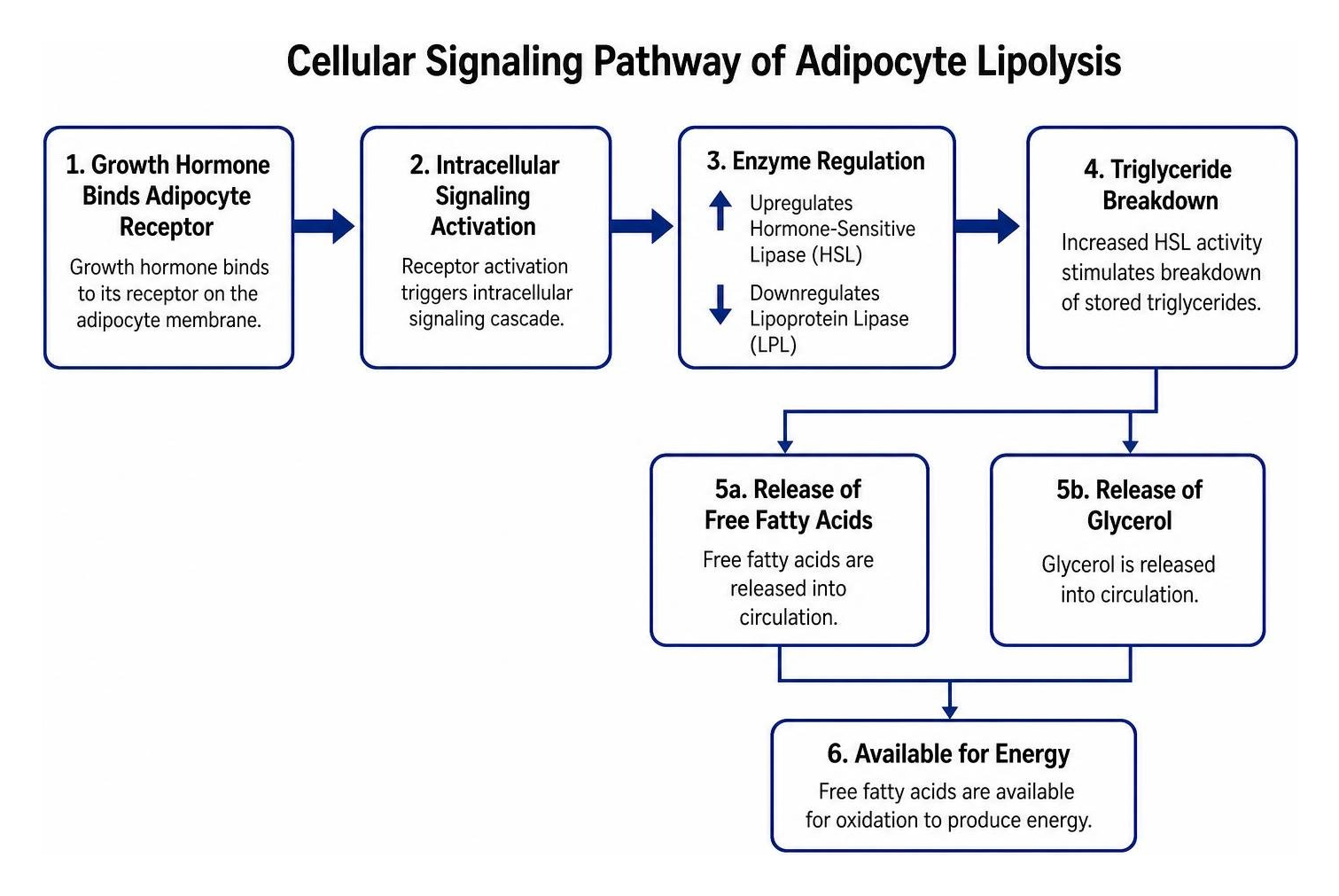
This selective binding triggers an intracellular signaling cascade that stimulates the pulsatile release of endogenous growth hormone. Simultaneously, it works to suppress somatostatin—the inhibitory hormone that halts growth hormone secretion. This dynamic dual action produces a clean, sharp pulse of growth hormone that reaches peak concentration within approximately one hour of administration, mirroring natural physiological rhythms.
As growth hormone circulates through the bloodstream, it initiates two primary metabolic cascades crucial for fat metabolism:
- Direct Adipocyte Lipolysis: Growth hormone interacts directly with adipocyte (fat cell) receptors, upregulating hormone-sensitive lipase (HSL) and downregulating lipoprotein lipase (LPL). This enzymatic shift stimulates the breakdown of stored triglycerides into free fatty acids and glycerol, releasing them into circulation to be oxidized for energy.
- IGF-1 Upregulation and Lean Mass Retention: In the liver, elevated growth hormone drives the synthesis and secretion of Insulin-like Growth Factor 1 (IGF-1). IGF-1 supports nitrogen retention, enhanced protein synthesis, and cellular repair, which helps preserve metabolically active lean tissue even during caloric deficits.
Unlike first-generation HGH secretagogues, ipamorelin is celebrated for its extraordinary selectivity. Early secretagogues such as GHRP-6 frequently triggered unwanted systemic responses, notably dramatic elevations in serum cortisol (a catabolic stress hormone) and prolactin (which can cause fluid retention and endocrine disruption). Ipamorelin provides the lipolytic and regenerative benefits of elevated growth hormone while sparing research subjects from cortisol and prolactin spikes.
The Comprehensive Ipamorelin Fat Loss Research Guide and Administration Protocols
Investigational protocols surrounding ipamorelin emphasize precision and biological thresholds. In cellular and clinical literature, the concept of receptor saturation plays a central role. In a landmark 1999 human study involving 40 volunteers, ipamorelin demonstrated clear, biologically effective growth hormone secretion without disrupting other pituitary axes.
Subsequent data revealed that ipamorelin reaches a distinct receptor saturation threshold at approximately 1 mcg per kilogram of body weight. For an average research subject, a single administration of 100 mcg to 200 mcg achieves near-complete saturation of pituitary ghrelin receptors. Exceeding roughly 300 mcg in a single application yields sharp diminishing returns, placing excess burden on metabolic clearance pathways rather than producing additional growth hormone output.
When establishing an experimental protocol based on a comprehensive peptide protocol guide, researchers generally categorize application amounts into distinct investigational tiers:
- Baseline Research Protocol: 100 mcg administered once daily, typically applied prior to nocturnal sleep cycles to evaluate subject tolerance and baseline biological response.
- Moderate Research Protocol: 200 mcg daily, either provided as a single evening application or divided into two 100 mcg applications (morning and night).
- Advanced Multi-Pulse Protocol: 200 mcg to 300 mcg daily, divided into two or three equal administrations spaced throughout the day during fasted metabolic windows.
Rather than escalating single-shot amounts to excessive volumes, experienced investigators achieve greater cumulative growth hormone exposure by increasing administration frequency throughout the 24-hour cycle.
Reconstitution Math for the Ipamorelin Fat Loss Protocol Guide
Lyophilized peptide stability requires careful liquid preparation and precise volumetric calculations using standard U-100 insulin syringes (where 100 units = 1.0 mL). Using bacteriostatic water containing 0.9% benzyl alcohol ensures compound integrity across multi-week studies.
To prepare high-purity Ipamorelin 10mg or standard 5 mg vials, follow these exact volumetric models:
- 5 mg Vial Reconstitution: Adding 2.0 mL of bacteriostatic water creates a concentration of 2.5 mg/mL (25 mcg per single unit mark on a U-100 syringe).
- A 100 mcg application requires 4 units (0.04 mL).
- A 200 mcg application requires 8 units (0.08 mL).
- A 300 mcg application requires 12 units (0.12 mL).
- 10 mg Vial Reconstitution: Adding 4.0 mL of bacteriostatic water yields the same convenient 2.5 mg/mL concentration (25 mcg per unit). Alternatively, adding 2.0 mL yields 5.0 mg/mL (50 mcg per unit, where 2 units = 100 mcg).
When introducing the diluent, angle the needle against the inner glass wall of the vial, allowing the liquid to run down slowly over the lyophilized cake. Avoid direct forceful spraying, and gently swirl the vial between your palms until completely clear. Shaking aggressively disrupts fragile peptide bonds—one of the common mistakes in peptide research. Once reconstituted, store the solution at 2°C to 8°C (36°F to 46°F), shielded from direct light, and use within 28 to 30 days.
Cycle Lengths and Scheduling in the Ipamorelin Fat Loss Protocol Guide
Continuous, uninterrupted growth hormone stimulation can lead to pituitary receptor desensitization and diminished responsiveness over time. To preserve receptor sensitivity and ensure consistent metabolic efficiency, experimental frameworks incorporate structured on-off timelines:
- Standard Research Cycle: 8 to 12 weeks of continuous scheduled application.
- Washout Period: A mandatory 4-week recovery interval following each 8-to-12-week block.
- Weekly Scheduling Variation: Many laboratory designs apply a 5-days-on, 2-days-off weekly schedule throughout the 12-week cycle to give pituitary receptors brief periodic recovery windows.
During an 8-to-12-week timeline, researchers evaluate several progressive milestones:
- Weeks 1–2: Improved cellular recovery metrics, enhanced deep-wave sleep quality markers, and initial systemic hydration adjustments.
- Weeks 3–6: Accelerated lipid oxidation rates, subtle improvements in abdominal subcutaneous fat density, and elevated circulating IGF-1 concentrations.
- Weeks 7–12: Pronounced improvements in overall lean-to-fat mass ratios, enhanced muscular fullness, and measurable preservation of nitrogen balance.
Comparative Analysis: Ipamorelin vs. Other Metabolic Compounds
Selecting the appropriate investigational tool requires a thorough comparison of growth-hormone-modulating agents and alternative weight management pathways.
| Compound | Class / Mechanism | GH Release Profile | Appetite Impact | Cortisol / Prolactin Impact |
|---|---|---|---|---|
| Ipamorelin | Selective GHRP / Ghrelin Agonist | Sharp, natural pulse (~2 hr half-life) | Negligible / None | None / Undetectable |
| CJC-1295 (no DAC) | GHRH Analog (Tetrasubstituted) | Sustained physiological release | None | None |
| GHRP-6 | First-Gen GHRP | High initial surge | Severe, intense hunger | Moderate to High elevation |
| AOD-9604 | C-Terminal GH Fragment (177-191) | Direct adipocyte lipolysis (No GH release) | None | None |
Unlike AOD-9604 in research, which isolates the lipolytic tail of growth hormone without elevating systemic IGF-1 or stimulating pituitary output, ipamorelin maintains systemic regenerative and body-composition benefits.
Furthermore, while contemporary GLP-1 peptides for weight loss drive substantial weight reduction through central appetite suppression and delayed gastric emptying, they often risk the concomitant loss of skeletal muscle mass. Combining growth-hormone secretagogues alongside metabolic modulators helps maintain lean functional tissue during significant energy deficits.
Synergy: Combining Ipamorelin with CJC-1295
In laboratory settings, combining a growth hormone releasing peptide (GHRP) with a growth hormone releasing hormone (GHRH) produces a potent, synergistic biological effect.
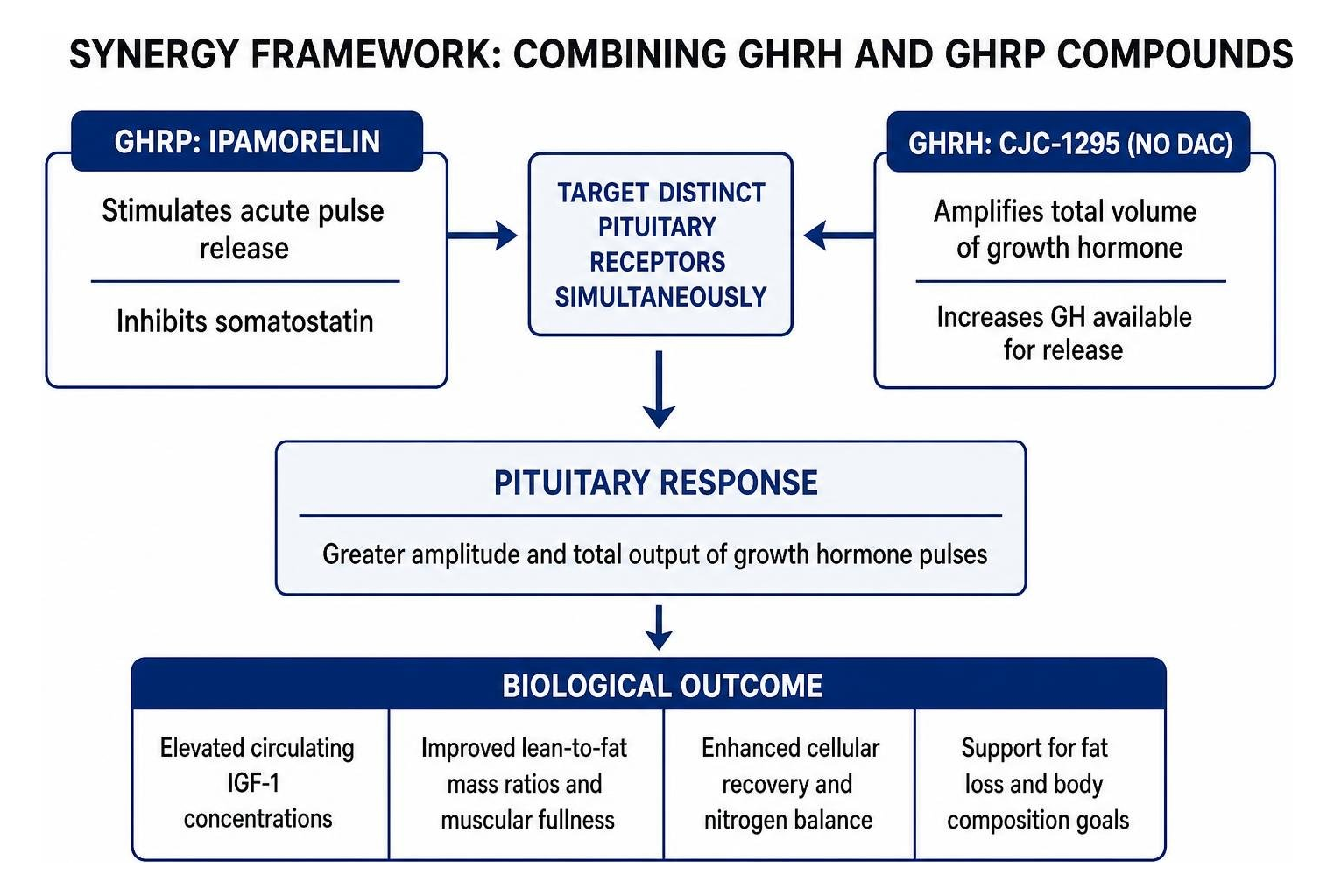
When paired with CJC-1295 without DAC (also known as Mod GRF 1-29), the two compounds target distinct pituitary receptors simultaneously:
- Ipamorelin stimulates the acute pulse release and inhibits somatostatin.
- CJC-1295 amplifies the total volume of growth hormone ready for release within pituitary stores.
According to The Clinically Guided CJC-1295 Ipamorelin Protocol Guide, co-administering both compounds at equal microgram amounts (e.g., 100 mcg of each compound) prior to nocturnal rest creates a synergistic growth hormone surge up to ten times greater than either compound administered alone.
Timing Rules, Fasted States, and Laboratory Monitoring
The timing of growth-hormone secretagogue administration determines the magnitude of the resulting endocrine pulse. Circulating macronutrients—particularly simple carbohydrates and fats—stimulate serum insulin and somatostatin release, which severely blunts pituitary growth hormone secretion.
To ensure maximal experimental efficacy:
- Fasting Window: Administer compounds at least 2 to 3 hours after the last meal, ensuring blood glucose and circulating insulin have returned to baseline.
- Post-Application Window: Maintain a fasted state for at least 30 to 45 minutes following administration to allow the growth hormone pulse to peak uninterrupted.
- Circadian Alignment: The single most effective administration window is 30 to 60 minutes prior to bedtime, capitalizing on the body’s natural nocturnal pulse during slow-wave sleep.
Rigorous scientific oversight requires comprehensive baseline and mid-protocol laboratory evaluation. Essential biomarker monitoring panels should include:
- Serum IGF-1: Evaluates long-term growth hormone exposure and biological response.
- Fasting Blood Glucose and HbA1c: Monitors for changes in peripheral insulin sensitivity.
- Comprehensive Metabolic Panel (CMP) and Lipid Panel: Assesses hepatic and renal clearance pathways and lipid metabolism changes.
- Complete Blood Count (CBC): Tracks overall systemic health markers.
Regarding regulatory status, growth hormone secretagogues, including ipamorelin, remain classified on the World Anti-Doping Agency (WADA) Prohibited List under Category S2 (Peptide Hormones, Growth Factors, Related Substances, and Mimetics) and are prohibited in competitive sports at all times. In the United States, ipamorelin remains an unapproved investigational compound designated for laboratory research purposes.
Frequently Asked Questions About Ipamorelin
What is the standard saturation amount for ipamorelin in research models?
The standard receptor saturation threshold occurs at approximately 1 mcg per kilogram of subject body weight, translating to a working range of 100 mcg to 200 mcg per single application. Exceeding 300 mcg in a single administration generally results in diminishing returns because pituitary ghrelin receptors become fully occupied.
Why must ipamorelin be administered during a fasted state?
Elevated serum glucose and circulating insulin trigger the release of somatostatin, an inhibitory hormone that suppresses growth hormone secretion from the pituitary gland. Administering the compound in a fasted state ensures that somatostatin levels remain low, allowing an uninhibited endocrine response.
How does ipamorelin differ from traditional secretagogues like GHRP-6?
Ipamorelin demonstrates exceptional receptor selectivity. While first-generation secretagogues like GHRP-6 trigger intense appetite stimulation via neuropeptide Y and elevate systemic cortisol and prolactin, ipamorelin induces growth hormone secretion without stimulating extreme hunger or elevating stress hormones.
Conclusion
Ipamorelin remains one of the most selective and well-characterized tools in endocrine and metabolic research. By triggering clean, pulsatile growth hormone secretion, it provides a precise mechanism for studying adipocyte lipolysis, lean-mass preservation, and cellular recovery pathways without the unwanted systemic side effects seen with earlier secretagogues.
Maintaining rigorous scientific standards—including precise volumetric reconstitution, structured 8-to-12-week timelines, strict fasted application windows, and regular biomarker monitoring—is essential for reproducible experimental outcomes.
To explore premium-grade research compounds, visit the Biogenix Peptides catalog and discover our complete collection of metabolic weight management peptides for your laboratory protocols.