
GLP-1 Peptides for Weight Loss: The Heavyweight Champions of Dieting
Disclaimer: The information provided in this article is for educational and informational purposes only. It is not intended as medical advice, diagnosis, or treatment. Products and compounds referenced are for research use only and are not approved for human or veterinary consumption. Always consult a qualified professional regarding health or medical decisions.
The Research Case for GLP-1 Peptides for Weight Loss
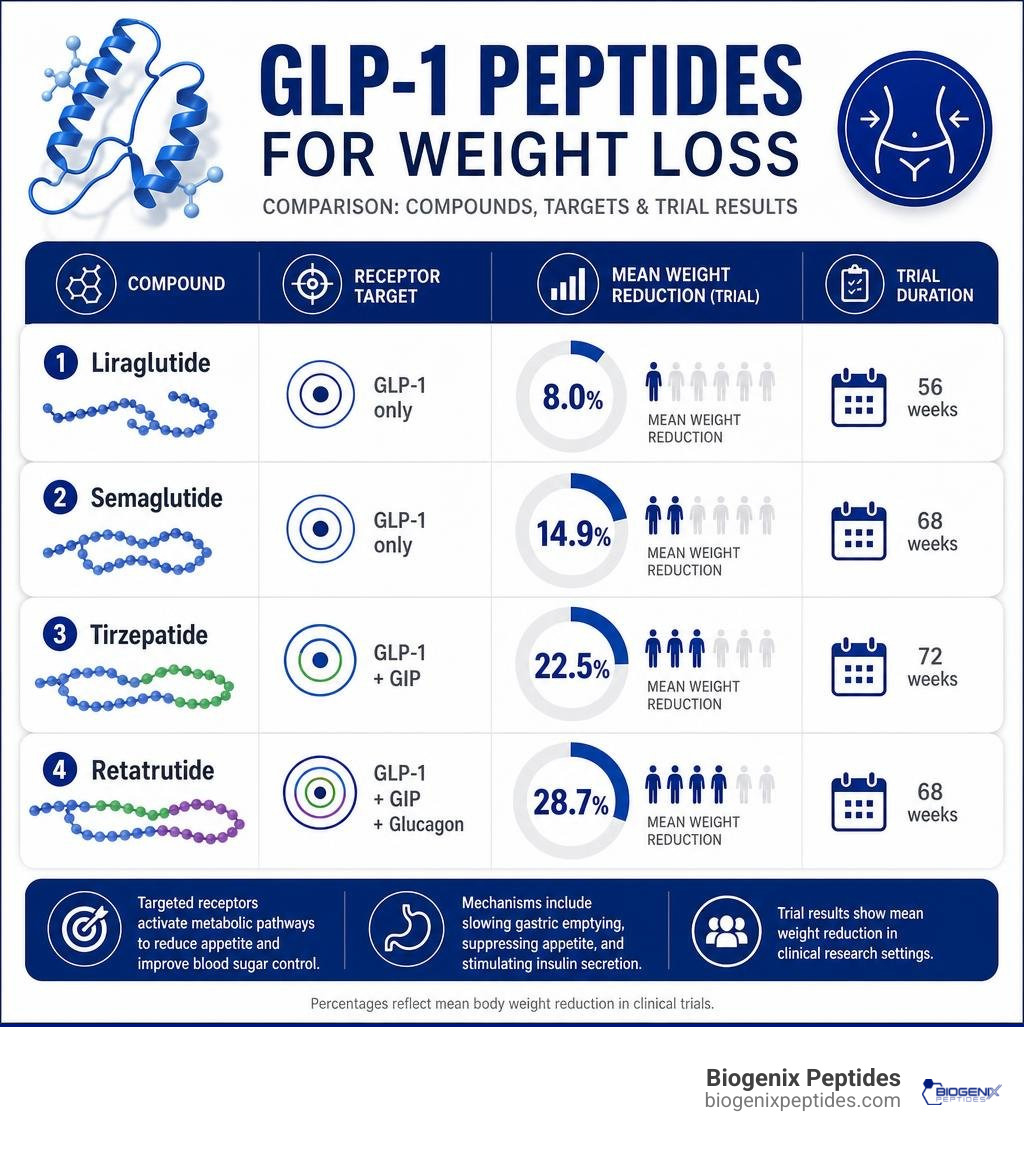
GLP-1 peptides for weight loss research has produced some of the most striking metabolic data in modern pharmacology. In clinical trial settings, compounds in this class have demonstrated mean body weight reductions ranging from 8% to nearly 29%, depending on receptor target and research protocol.
Here is a quick overview of where the key compounds sit in the research landscape:
| Compound | Receptor Target | Mean Weight Reduction (Trial) | Research Status |
|---|---|---|---|
| Liraglutide | GLP-1 only | ~8.0% over 56 weeks | FDA-approved (Saxenda) |
| Semaglutide | GLP-1 only | ~14.9% over 68 weeks | FDA-approved (Wegovy) |
| Tirzepatide | GLP-1 + GIP | ~22.5% over 72 weeks | FDA-approved (Zepbound) |
| Retatrutide | GLP-1 + GIP + Glucagon | ~28.7% over 68 weeks | Investigational (Phase III) |
A few things to keep in mind before diving deeper:
- Real-world results typically run 60–75% of trial figures, due to differences in adherence and lifestyle support.
- These compounds work by mimicking incretin hormones — slowing gastric emptying, suppressing appetite, and stimulating insulin secretion.
- Research has expanded beyond single-receptor agonists to dual and triple-receptor compounds, with each additional receptor target adding measurable efficacy in study models.
- Emerging investigational peptides like GEP44 aim to achieve similar appetite suppression without the gastrointestinal side effects seen in current compounds.
The data is compelling. But understanding why these peptides perform the way they do — and how they compare against each other — requires a closer look at the mechanisms, the molecules, and the evolving research pipeline.
I’m Jay Daniel, Founder and CEO of BioGenix Peptides, with years of hands-on experience in peptide science and research innovation, including close study of GLP-1 peptides for weight loss research and incretin-based metabolic compounds. In the sections ahead, I’ll break down exactly how these peptides work, how they compare, and what the emerging research pipeline looks like.
Glp-1 peptides for weight loss terms at a glance:
Understanding Mechanism: How GLP-1 Peptides for Weight Loss Work in Research
To understand why glp-1 peptides for weight loss have revolutionized metabolic research, we must first examine how endogenous glucagon-like peptide-1 operates within the mammalian endocrine system. Native GLP-1 is an incretin hormone secreted primarily by intestinal L-cells in response to nutrient ingestion. In its unadapted biological state, native GLP-1 has an extremely short plasma half-life of roughly two minutes due to rapid cleavage by the enzyme dipeptidyl peptidase-4 (DPP-4).
Modern research compounds bypass this enzymatic degradation through structural modifications, such as amino acid substitutions or fatty acid chain conjugation. These adaptations allow synthetic analogues to maintain prolonged binding affinity at the GLP-1 receptor. To explore the foundational biochemistry, see our breakdown on What Are GLP-1 Peptides?.
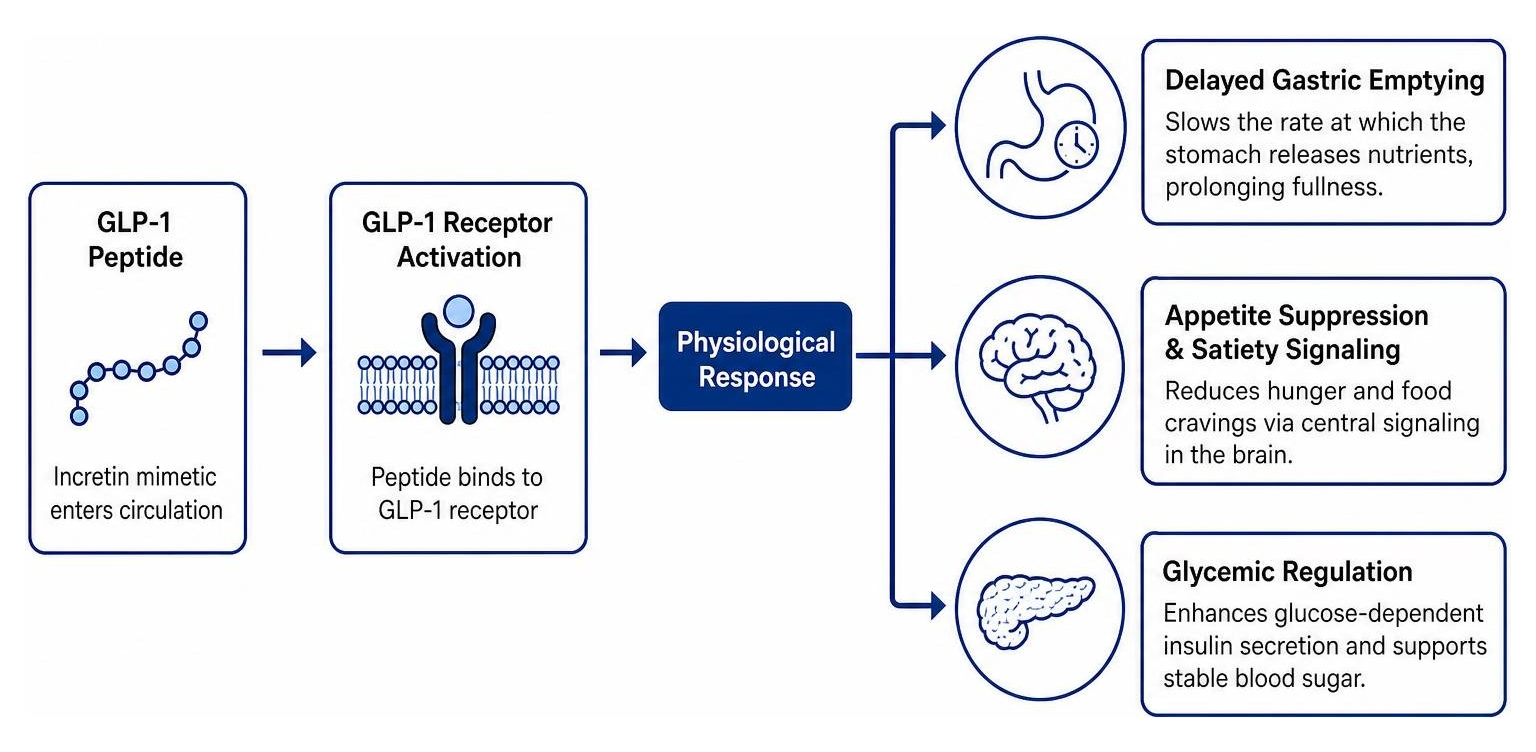
When an incretin mimetic engages the GLP-1 receptor, it initiates a cascading physiological response:
- Delayed Gastric Emptying: The rate at which the stomach releases nutrients into the small intestine is significantly reduced. This prolonged gastric retention creates a physical sensation of persistent fullness in research models.
- Appetite Suppression and Satiety: Central signaling in the hypothalamus and hindbrain suppresses hunger cues while diminishing reward-seeking behaviors associated with high-calorie foods.
- Glycemic Regulation: Pancreatic signaling is modulated to optimize glucose handling without triggering excessive hypoglycemia when glucose levels are baseline.
Incretin Receptor Agonism and Metabolic Cascades
The downstream metabolic effects of GLP-1 agonism extend across multiple organ systems. Within pancreatic beta-cells, GLP-1 receptor binding activates adenylate cyclase, elevating intracellular cyclic AMP (cAMP) and triggering glucose-dependent insulin release. Simultaneously, signal pathways in pancreatic alpha-cells inhibit postprandial glucagon secretion, reducing hepatic glucose output.
Beyond the pancreas, central nervous system pathways represent a crucial site of action. Receptors located in the arcuate nucleus of the hypothalamus receive GLP-1 stimulation, which activates pro-opiomelanocortin (POMC) neurons while inhibiting neuropeptide Y (NPY) and agouti-related peptide (AgRP) neurons. This neuro-chemical shift attenuates food reward mechanisms, reducing overall voluntary caloric intake in laboratory studies. For a detailed breakdown of these biological pathways, review our guide on GLP-1 Incretin Pathways.
Subcutaneous vs Oral Peptide Formulations in Laboratory Models
Traditionally, peptide compounds have faced strict administration constraints due to gastrointestinal degradation. Gastric acid and proteolytic enzymes rapidly denature unfolded amino acid chains, rendering oral bio-availability negligible under normal conditions. Consequently, subcutaneous administration models remain the gold standard for reliable systemic bio-availability and extended half-life delivery.
However, clinical and laboratory research continues to advance alternative delivery platforms:
- Oral Peptide Formulations (e.g., Oral Semaglutide): Utilizing absorption enhancers like sodium N-(8-[2-hydroxybenzoyl] amino) caprylate (SNAC), oral peptide formulations co-formulate the active chain to raise localized stomach pH and facilitate trans-cellular absorption across the gastric mucosa. These formulations require strict fasted administration conditions with limited fluid intake to ensure measurable systemic entry.
- Small-Molecule Non-Peptide Agonists (e.g., Orforglipron / Foundayo): Unlike true amino acid chains, small-molecule non-peptides are synthetic organic molecules that selectively bind and activate the GLP-1 receptor without requiring peptidase-protection chemistry or strict morning fasting protocols. In Phase II data, oral small-molecules demonstrate 9% to 15% weight reduction.
Regulatory bodies have emphasized the critical distinction between verified research materials and unregulated formulations. For official position details, review the FDA Statement on Unapproved GLP-1 Compounds.
Comparing Single, Dual, and Triple Receptor Agonists
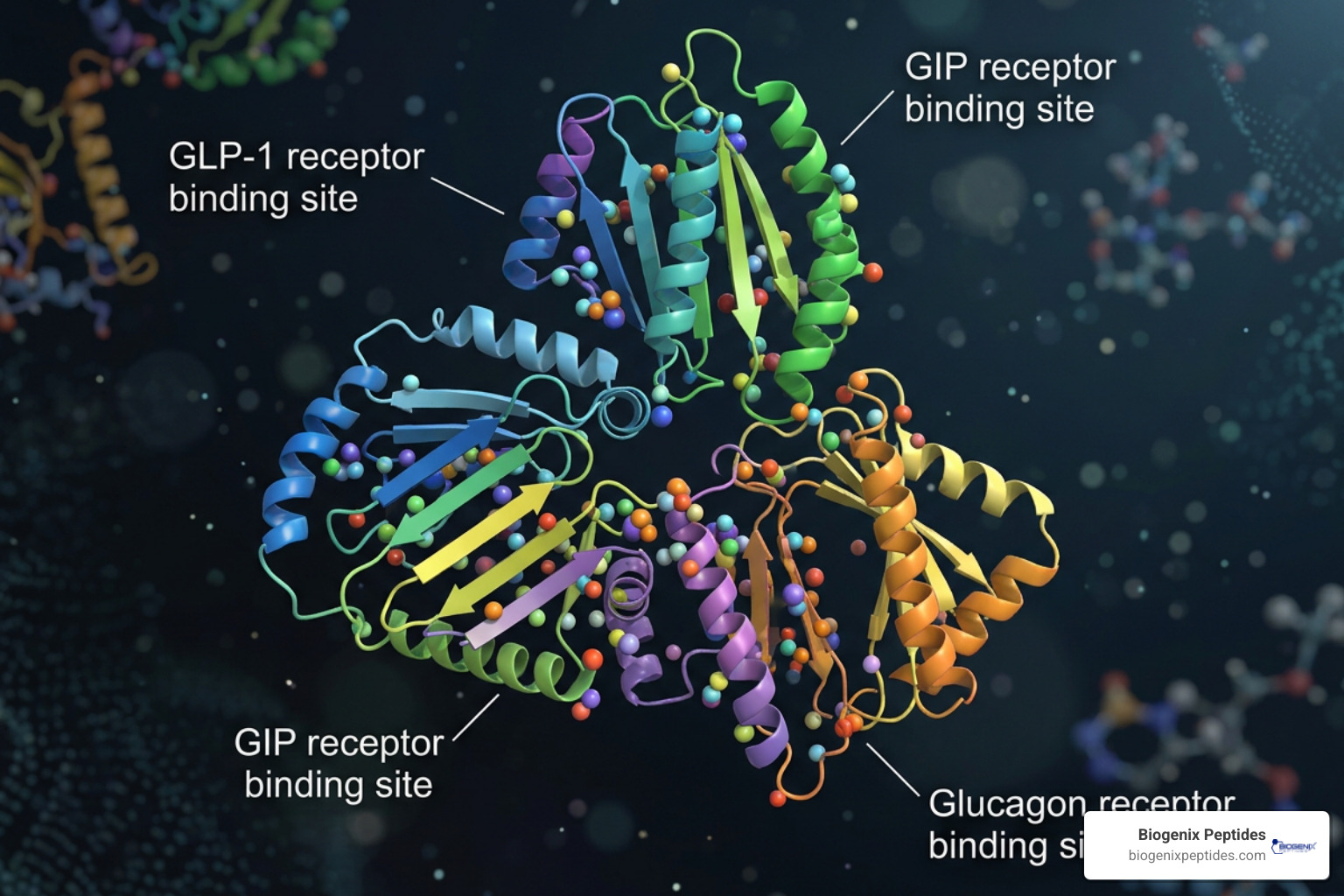
The evolution of incretin science has progressed rapidly from basic single-receptor targeting to multi-receptor agonism. By combining multiple endogenous hormone signals into a single chimeric peptide sequence, researchers have unlocked unprecedented metabolic efficacy.
| Agonist Category | Primary Compounds | Targeted Receptors | Trial Weight Loss Average |
|---|---|---|---|
| Single-Receptor | Liraglutide, Semaglutide | GLP-1R | 8.0% – 14.9% |
| Dual-Receptor | Tirzepatide | GLP-1R + GIPR | 20.2% – 22.5% |
| Triple-Receptor | Retatrutide | GLP-1R + GIPR + GCGR | 24.2% – 28.7% |
Single vs Multi-Receptor GLP-1 Peptides for Weight Loss Studies
In early studies such as the STEP 1 trial, single-receptor agonists targeting only GLP-1 (such as semaglutide 2.4 mg) demonstrated a 14.9% mean weight loss over 68 weeks. While highly effective, single-pathway stimulation eventually encounters a biological ceiling.
Dual-receptor agonism introduced gastric inhibitory polypeptide (GIP) pathway stimulation alongside GLP-1. In the landmark SURMOUNT-1 trial, tirzepatide demonstrated up to 22.5% body weight reduction over 72 weeks. GIP agonism enhances insulin sensitivity and lipolysis while acting synergistically with GLP-1 central signaling to further suppress appetite.
Triple agonism adds glucagon receptor (GCGR) activation into the sequence. Glucagon agonism increases energy expenditure and resting metabolic rate by stimulating hepatic lipid oxidation, countering the metabolic slowdown typically observed during sustained caloric deficit. For deeper scientific analysis of multi-agonists, read our article on GLP-1 Dual and Triple Agonists.
Comparative Efficacy and Evolving Incretin Pipelines
Head-to-head clinical data clearly illustrates the superior performance of multi-agonist platforms:
- SURMOUNT-5 Trial: In a direct head-to-head evaluation, dual-agonist tirzepatide achieved a 20.2% mean body weight reduction compared to 13.7% for single-agonist semaglutide over 72 weeks.
- TRIUMPH Phase III Trials: Investigational triple-agonist retatrutide reported a staggering 28.7% mean body weight reduction at maximum trial levels over 68 weeks.
Beyond retatrutide, novel chimeric formulations are pushing the boundaries of tolerability and pathway activation. For instance, the patented chimeric peptide GEP44 combines GLP-1 receptor agonism with neuropeptide Y (Y1 and Y2) receptor targeting. Preclinical models indicate that GEP44 can decrease food intake by up to 84% without inducing the typical emetic response or nausea behaviors associated with standard incretin drugs. For more details on this intellectual property, see the Monomeric Peptide Multi-Agonist Patent.
Research Indications, Side Effects, and Protocol Management

While incretin mimetics demonstrate exceptional efficacy, managing adverse effects requires strict adherence to gradual titration schedules. Escalating peptide concentrations slowly allows laboratory models to adjust to altered gastric motility and central signaling.
Evaluating Safety Profiles and Adverse Effect Mitigation
The primary adverse effects observed in incretin research involve gastrointestinal distress, including nausea, vomiting, diarrhea, constipation, and acid reflux. Gastrointestinal events affect 20% to 50% of research models, leading to trial dropouts in roughly 6% to 10% of cases if titration schedules are accelerated prematurely.
To examine common adverse reactions and clinical precautions, review our guide on 10 GLP-1 Side Effects.
Key research considerations and contraindications include:
- Medullary Thyroid Carcinoma (MTC): Research models with a personal or family history of MTC or Multiple Endocrine Neoplasia syndrome type 2 (MEN 2) must be excluded due to thyroid C-cell tumor signals identified in rodent studies.
- Pancreatitis Surveillance: Subjects with a history of pancreatitis require heightened baseline monitoring and immediate cessation if acute pancreatic inflammation is suspected.
- Gastroparesis and GI Disorders: Severe baseline delayed gastric emptying represents a clear contraindication due to exacerbation of gastric stasis.
Broad Peptide Therapy vs Target GLP-1 Peptides for Weight Loss Research
It is important to differentiate targeted incretin compounds from broader wellness peptides like CJC-1295, Ipamorelin, or BPC-157:
- GLP-1 Peptides: Metabolic signalers specifically engineered for metabolic regulation, glycemic control, delayed gastric emptying, and direct central appetite attenuation.
- Growth Hormone Secretagogues (e.g., CJC-1295 / Ipamorelin): Signaling molecules that stimulate pituitary release of growth hormone to enhance recovery, nitrogen retention, and sleep quality.
- Tissue Repair Peptides (e.g., BPC-157 / TB-500): Systemic peptides targeted toward soft-tissue healing, gut mucosal integrity, and inflammation modulation.
In advanced research designs, combining incretin therapy with muscle-preserving peptides or growth hormone secretagogues can attenuate the loss of lean tissue often observed during severe weight loss phases. To learn more about maintaining body composition during research studies, review our guide on the GLP-1 Muscle Guide.
Frequently Asked Questions About GLP-1 Research
How do clinical trial weight loss percentages compare to real-world research models?
Real-world weight reduction figures across the GLP-1 class typically average between 60% and 75% of published clinical trial statistics. While trial participants benefit from tightly controlled protocol adherence, structured diet counseling, and enforced titration compliance, real-world research models experience variable adherence, missed administration cycles, dietary inconsistencies, and premature cessation due to out-of-pocket costs or gastrointestinal intolerance.
How long do research models maintain subject administration of GLP-1 compounds?
Incretin mimetics are evaluated as chronic metabolic management compounds rather than short-term interventions. Clinical trials demonstrate that upon cessation of GLP-1 receptor administration, gastric emptying rates normalize, central appetite suppression fades, and subject models experience rapid weight regain alongside a return to baseline metabolic parameters. Sustained metabolic maintenance generally requires long-term protocol continuation or carefully structured post-cessation transition plans.
What emerging investigational candidates are entering metabolic research pipelines?
The next generation of metabolic research includes several high-potency pipeline candidates:
- Retatrutide: A triple GLP-1/GIP/Glucagon agonist demonstrating up to 28.7% mean weight loss in Phase III trials.
- Orforglipron (Foundayo): A daily oral, non-peptide small-molecule GLP-1 agonist that eliminates strict morning fasting and food/water restriction rules.
- GEP44: A chimeric GLP-1 and NPY multi-agonist designed to elicit profound hypophagia and weight reduction while completely avoiding nausea and vomiting pathways.
Conclusion
The landscape of glp-1 peptides for weight loss research has evolved rapidly from early single-receptor incretin mimetics to potent multi-agonist platforms capable of driving profound metabolic transformation. By harnessing dual and triple receptor pathways, modern compounds push therapeutic efficacy beyond historical limits while providing invaluable insights into energy balance, glycemic control, and neuro-endocrine appetite regulation.
As investigational pipelines introduce non-emetic chimeric agonists, oral non-peptides, and multi-pathway tissue signalers, researchers are equipped with an unprecedented toolkit for studying metabolic disease. To explore our high-purity selection of compounds for laboratory evaluation, visit the GLP-1 Research Peptides category page.