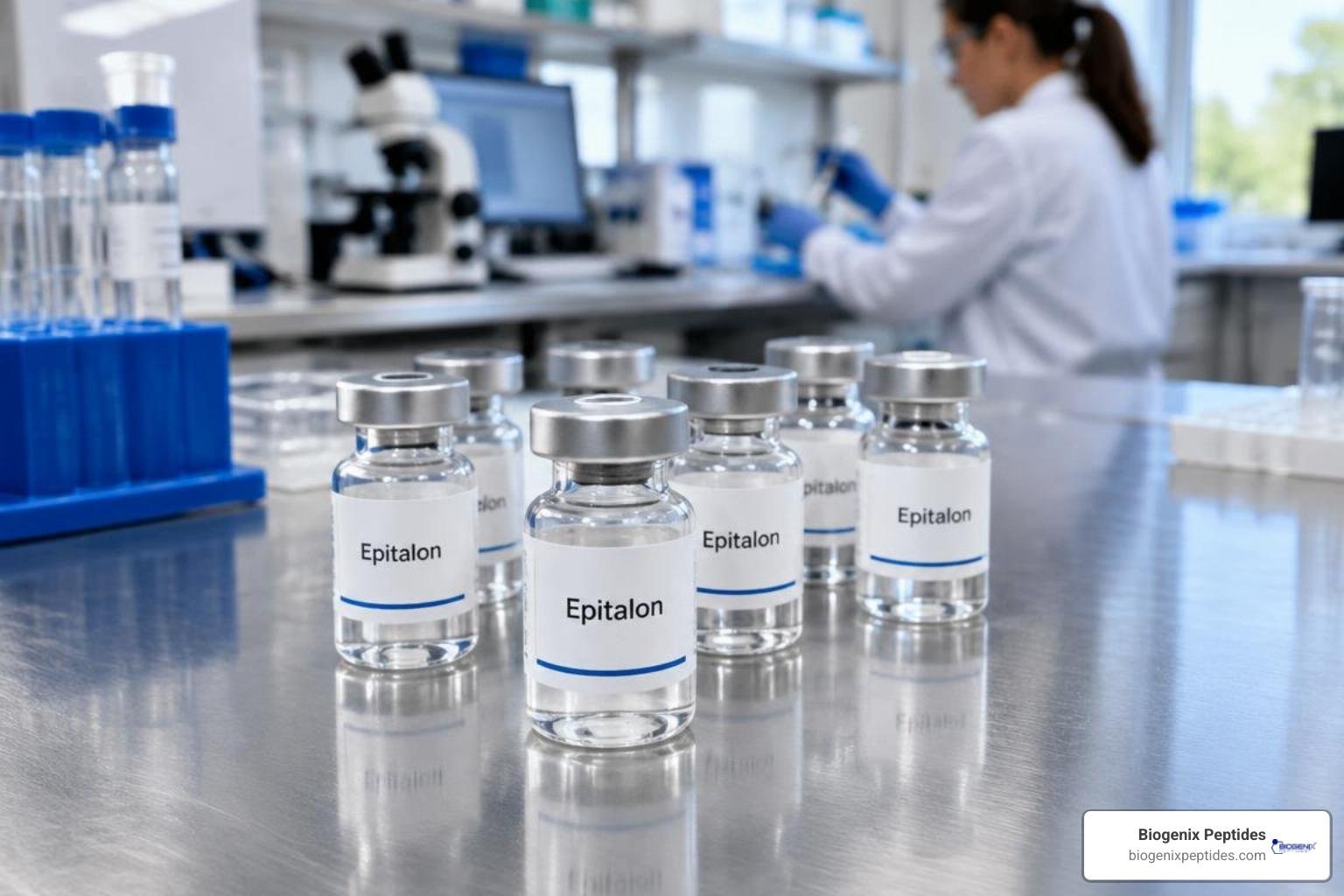
The Best Places to Buy Epitalon Peptide Online Today
Disclaimer: The information provided in this article is for educational and informational purposes only. It is not intended as medical advice, diagnosis, or treatment. Products and compounds referenced are for research use only and are not approved for human or veterinary consumption. Always consult a qualified professional regarding health or medical decisions.
Where to Buy Epitalon Peptide Online for Research
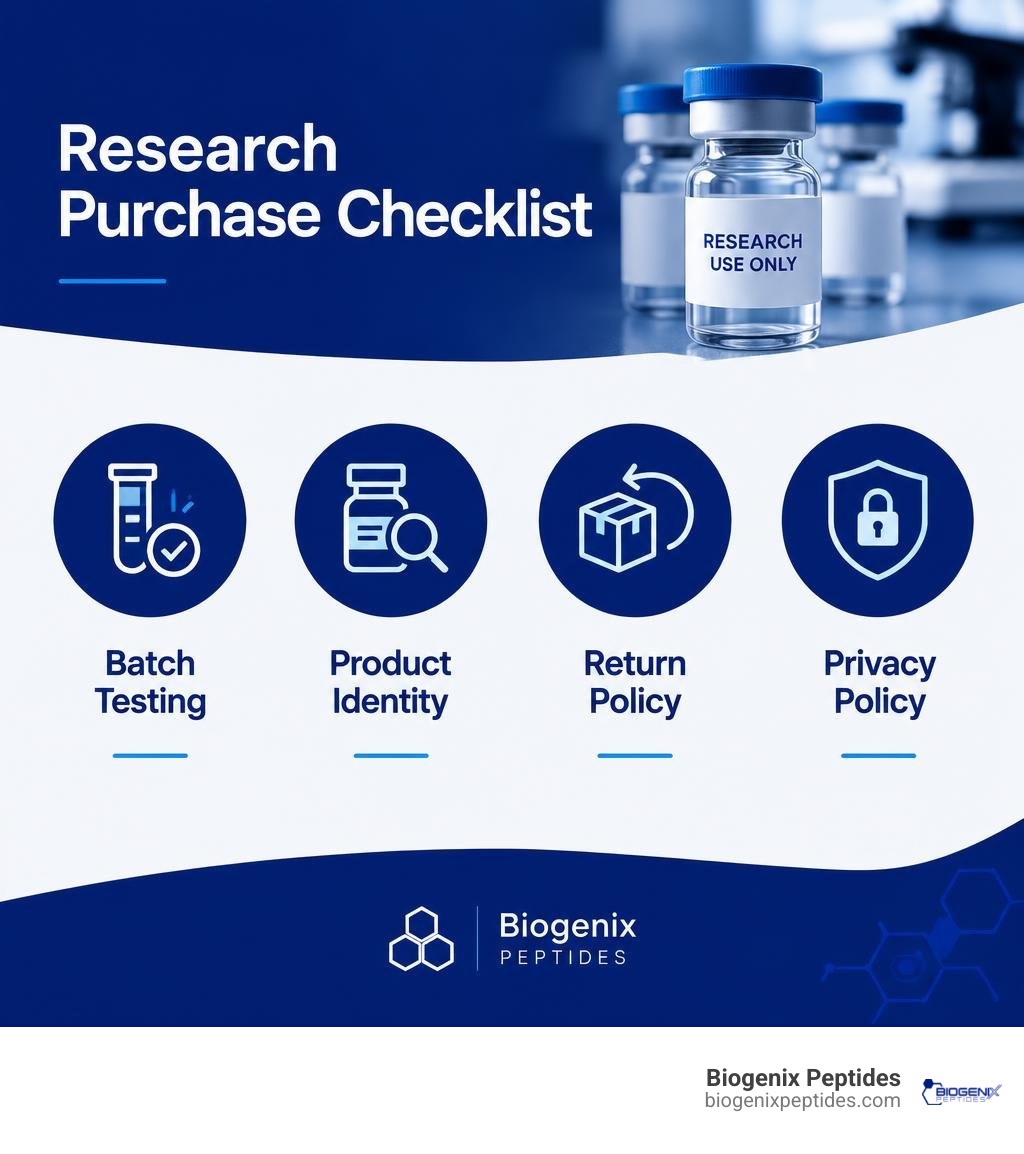
If you want to buy epitalon peptide now for laboratory research, look for a seller that provides a batch-specific certificate of analysis, clear product identification, and a transparent return policy. Check the seller’s privacy policy before ordering, too. Epitalon is not FDA-approved for human use, and a “research use only” label does not make a product safe to consume.
I’m Jay Daniel, founder and CEO of BioGenix Peptides. My experience with peptide sourcing and quality checks shapes my view of how to buy epitalon peptide now: verify the records before trusting the listing.
What Is Epitalon and How Does the Longevity Tetrapeptide Work?
Epitalon (also spelled epithalon) is a synthetic tetrapeptide consisting of four amino acids arranged in a specific sequence: L-alanyl-L-glutamyl-L-aspartyl-glycine (Ala-Glu-Asp-Gly or AEDG). This short chain was originally designed to replicate the biological activity of Epithalamin, a natural crude polypeptide extract derived from the bovine pineal gland. While initially created via chemical synthesis, mass spectrometry analyses in 2017 confirmed that this exact sequence is naturally present within mammalian pineal tissue.
Epitalon is studied for its potential effects on cellular signaling and gene transcription. To understand how these small chains modulate cellular behavior, researchers frequently study what peptides are and how cell signaling works to control protein expression. Preclinical scientific reviews, such as an Overview of Epitalon—Highly Bioactive Pineal Tetrapeptide…, detail how AEDG influences pineal regulatory proteins, cytokine synthesis, and telomeric DNA integrity.
Telomere Elongation and Pineal Hormone Regulation
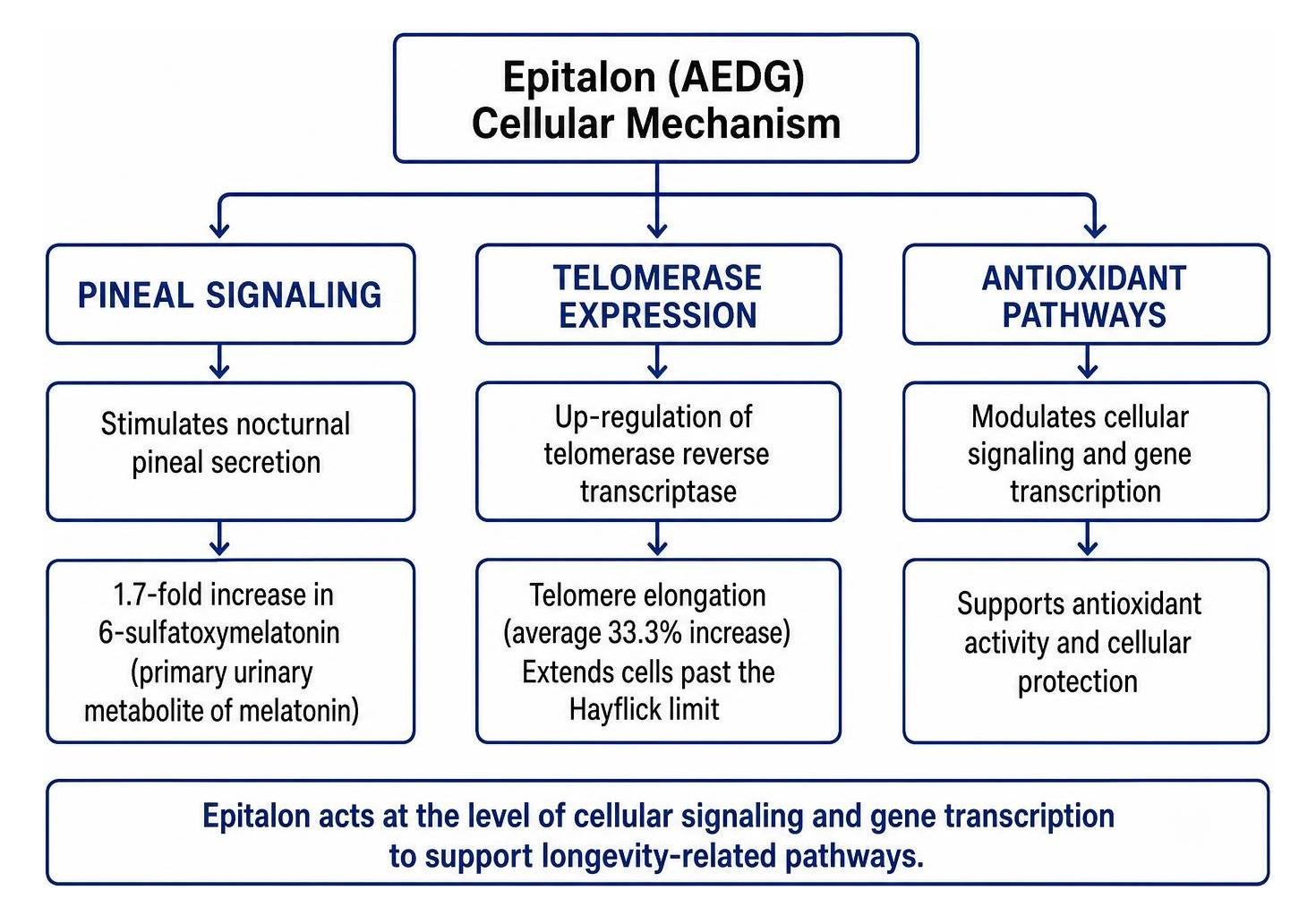
At the core of scientific interest in Epitalon is its effect on the Hayflick limit—the biological ceiling on how many times a normal somatic cell population can divide before reaching senescence. In landmark in vitro experiments, human fetal fibroblasts treated with Epitalon continued dividing past the 44th passage, whereas untreated control cultures lost their mitotic capacity after the 34th passage. Additional cell culture investigations have documented an average 33.3% extension in telomere length following exposure to the tetrapeptide, mediated by the up-regulation of telomerase reverse transcriptase.
Beyond chromosomal structure, the peptide plays an active role in neuroendocrine regulation. In rodent and human biomarker studies, Epitalon stimulates nocturnal pineal secretion. A 2021 study observed a 1.7-fold increase in 6-sulfatoxymelatonin—the primary urinary metabolite reflecting systemic melatonin synthesis—following peptide exposure. These dual pathways have driven extensive investigation into epithalon cellular reset peptide research across various model organisms.
Why Quality Matters When You Buy Epitalon Peptide Now
Procuring peptides for in vitro or animal models requires strict attention to biochemical purity. Synthetic peptides are assembled through solid-phase peptide synthesis (SPPS). Incomplete coupling reactions, side-chain deprotection failures, or oxidation can yield truncated sequences and chemical artifacts. When laboratories choose to buy epitalon peptide now for cellular investigations, verifying chemical identity avoids compromised experimental results.

Substandard materials can introduce bacterial endotoxins, heavy metals, or residual organic solvents that distort cellular viability assays. As documented in decades of cellular aging research on epithalon, reliable observations regarding cellular lifespan and enzyme activity rely entirely on verified, high-purity experimental samples.
Research-Grade vs Pharmaceutical-Grade Formulations
Understanding grade classifications is essential when assessing peptide listings:
- Research-Grade Materials: Synthesized specifically for non-clinical laboratory experiments. They should possess documented analytical purity (typically greater than 98%), but they are manufactured outside the strict Current Good Manufacturing Practice (cGMP) regulatory frameworks required for clinical human trials.
- Pharmaceutical-Grade Preparations: Produced in registered, highly regulated facilities subject to validated sterile processes, full raw material traceability, and continuous environmental monitoring.
For non-clinical laboratory researchers, selecting a supplier that adheres to rigorous analytical verification ensures that research-grade reagents meet high standards of chemical integrity.
Verifying Purity, Salts, and Certificates of Analysis
A valid Certificate of Analysis (CoA) should be verifiable and batch-specific. Legitimate testing relies on two main analytical methods: High-Performance Liquid Chromatography (HPLC) to establish purity percentages, and Mass Spectrometry (MS) to confirm the exact molecular weight of 390.35 g/mol for the free base.
Peptides are generally supplied as salts, typically with acetate or trifluoroacetic acid (TFA) counter-ions. Acetate forms are commonly preferred in biological models due to their biological neutrality compared to TFA. For laboratory staff learning to interpret these documents, our beginners guide to evaluating peptide quality outlines how to cross-reference chromatograms and identify batch discrepancies.
Current 2026 Legal Status and Sourcing Considerations
Navigating the regulatory landscape in 2026 requires understanding the distinction between research distribution, compounding designations, and formal drug approvals. In the United States, Epitalon is not FDA-approved as a medical drug for human therapy. There are no FDA-established safety profiles or published human pharmacokinetic data for the free base or acetate forms.
Investigative interest continues across academic laboratories studying cellular restoration research in animal models.
FDA 503A Advisory Committee Updates and Regulatory Standing
In April 2026, the FDA removed Epitalon from its Section 503A Category 2 bulk substances classification. Later, during the July 23–24, 2026 meeting of the Pharmacy Compounding Advisory Committee (PCAC), the committee recommended that Epitalon be considered for inclusion on the Section 503A Bulks List for compounding.
However, this recommendation is non-binding and does not equal formal FDA drug approval. As of late 2026, Epitalon is not included in 21 CFR 216.23 (the official federal regulation governing bulk drug substances permitted in compounding). The FDA continues to note an absence of large-scale clinical efficacy trials in clinical conditions such as chronic insomnia.
Where Researchers Buy Epitalon Peptide Now Online Safely
Because the general marketplace contains numerous mislabeled items, researchers must carefully screen chemical suppliers. Academic buyers should source directly from vendors that provide verifiable third-party testing rather than consumer-facing marketplaces where cosmetic products are often confused with analytical reagents.
To support laboratory investigations into pineal signaling and cellular senescence, we supply verified reference standards:
- order epithalon 10mg vials for targeted cell culture and assays.
- order epithalon 50mg vials for extended, multi-sample experimental runs.
Protocol Guide: Administration, Preparation, and Storage Requirements
In published literature, Epitalon is investigated via in vitro cell medium addition or subcutaneous administration in animal models. Animal studies typically examine short experimental courses lasting between 10 and 20 consecutive days, utilizing amounts ranging from 0.5 mg to 10 mg depending on the subject species and metabolic target.

Reconstitution and Subcutaneous Administration Cycles
Lyophilized peptide cake requires precise reconstitution prior to laboratory evaluation. For detailed instructions on proper handling, see our guide on how to reconstitute peptides in 5 easy steps.
- Allow the lyophilized vial to reach room temperature to avoid condensation.
- Cleanse the rubber stopper with an antiseptic wipe.
- Gently introduce bacteriostatic water or sterile saline down the inner glass wall to prevent shearing the tetrapeptide chain.
- Swirl gently until completely dissolved; avoid aggressive shaking.
In non-human biological models, cycles are often conducted once or twice per calendar year rather than continuously. For long-term preservation parameters, researchers should review our peptide storage guide to maintain peptide stability.
What to Know Before You Buy Epitalon Peptide Now for Laboratory Use
Lyophilized Epitalon remains chemically stable when stored between –20°C and –80°C away from light exposure. Once reconstituted in sterile bacteriostatic solution, the liquid formulation should be refrigerated at 2°C to 8°C and tested within 28 days to prevent hydrolysis. Using low-protein-binding borosilicate vials helps prevent tetrapeptide adsorption onto container walls.
Safety Profile, Contraindications, and Health Screening
Historical clinical trials from Russian research institutions, such as a 2002 evaluation involving 162 human subjects, reported no serious adverse events during short-term monitoring. Common observations in animal research are generally limited to mild local skin reactions at the administration site. However, Western regulatory bodies emphasize that extensive, multi-phase human clinical trial data remain limited. Further discussions on compound tolerance can be found in our frequently asked peptide safety questions.
Telomerase Activation and Theoretical Oncology Risks
The primary theoretical concern surrounding long-term telomerase activation is oncogenesis. Telomerase is naturally expressed in stem cells and germline cells, but it is also upregulated in many human cancers, enabling malignant cells to bypass senescence. While Epitalon demonstrated antimutagenic and tumor-suppressing tendencies in rodent longevity studies (such as a 2003 trial where it extended the maximum lifespans of the final 10% of surviving mice by 13.3%), uncontrolled cellular proliferation remains an area of scientific inquiry. Consequently, experimental models involving active or pre-existing malignancy require strict scrutiny.
Candidate Screening and Pre-Protocol Blood Work
In scientific settings where human physiological parameters are evaluated under institutional oversight, comprehensive baseline screening is standard:
- Complete metabolic profiles and liver function testing.
- Endocrine and circadian hormone panels.
- Complete blood counts and baseline cellular biomarkers.
- Exclusion of pregnancy and active neoplastic conditions.
Frequently Asked Questions About Epitalon
Is Epitalon FDA-approved for human consumption in 2026?
No. Epitalon is not FDA-approved to treat, prevent, or diagnose any human illness or condition. The July 2026 FDA advisory committee recommendation regarding the Section 503A Bulks List is non-binding and does not constitute formal drug approval or an endorsement for human consumption.
What is the difference between Epitalon free base and acetate?
The free base represents the pure tetrapeptide without an accompanying ionic salt. The acetate version incorporates an acetate counter-ion during synthesis. This modification improves aqueous solubility, formulation stability, and handling characteristics during laboratory reconstitution without altering the core amino acid sequence.
Conclusion
Epitalon remains one of the most studied pineal tetrapeptides in modern geroprotection and cellular longevity research. From extending cellular proliferative limits in vitro to modulating circadian hormone synthesis, its unique biochemical profile offers valuable avenues for laboratory investigation.
Maintaining experimental reliability requires rigorous verification of peptide purity, structural identity, and analytical documentation. When your laboratory needs to explore premium research peptides, Biogenix Peptides provides reference-grade compounds with batch-specific analytical testing to support your scientific work.
References
Araj SK, Brzezik J, Mądra-Gackowska K, Szeleszczuk Ł. “Overview of Epitalon-Highly Bioactive Pineal Tetrapeptide with Promising Properties..” International journal of molecular sciences, 2025. PMCID PMC11943447.