Epithalon (Epitalon): The Longevity Peptide That Sparked Decades of Research Into Cellular Aging
Important Disclaimer: This content is for educational and informational purposes only. BioGenix Peptides is not a licensed medical provider, and nothing in this article should be interpreted as medical advice, diagnosis, or treatment. Compounds discussed are intended strictly for research purposes.
Introduction: Why Epithalon Still Matters
In a space filled with constant “next big things,” few compounds have maintained scientific intrigue for as long as Epithalon, also commonly called Epitalon.
Originally studied in Russia, Epithalon continues to resurface in modern longevity conversations because its scientific focus reaches one of the deepest biological questions in aging research: how cells regulate lifespan, replication, and senescence.
While many compounds are studied for downstream effects such as inflammation, metabolism, or recovery signaling, Epithalon stands apart because much of the research centers on something more foundational:
The biological clock inside the cell.
What Is Epithalon?
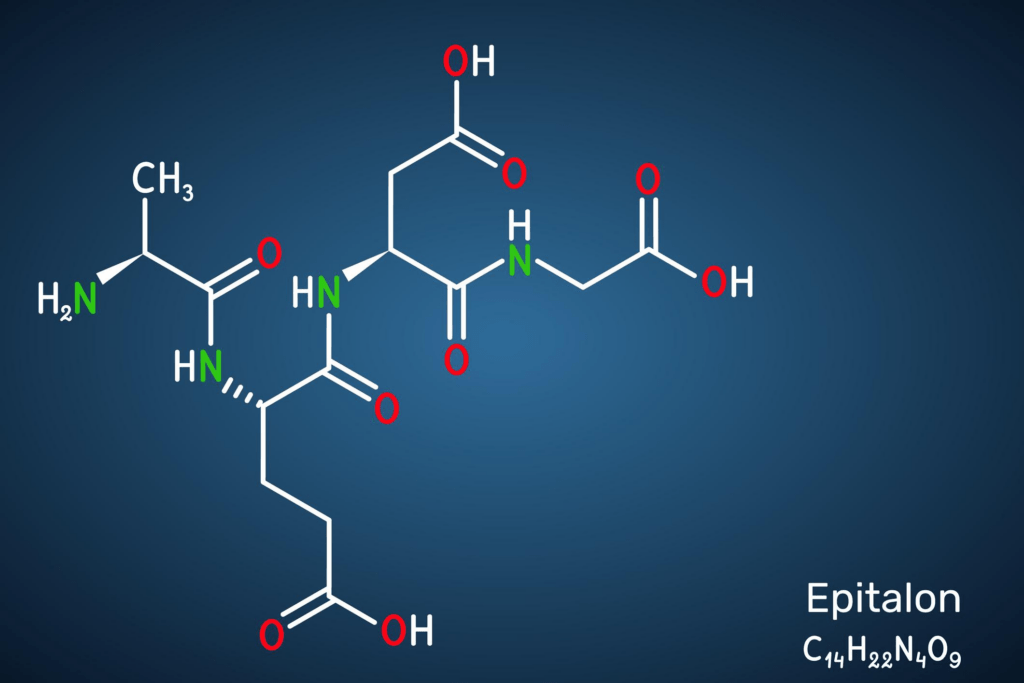
Epithalon is a synthetic tetrapeptide made from four amino acids:
- Alanine
- Glutamic acid
- Aspartic acid
- Glycine
It was developed as a synthetic analog of peptide compounds associated with the pineal gland, a small endocrine structure in the brain best known for regulating melatonin and circadian rhythm biology.
From the beginning, Epithalon research explored one major idea:
Could pineal-derived peptide signaling influence aging at the cellular level?
The Big Mechanism: Telomeres and Cellular Lifespan
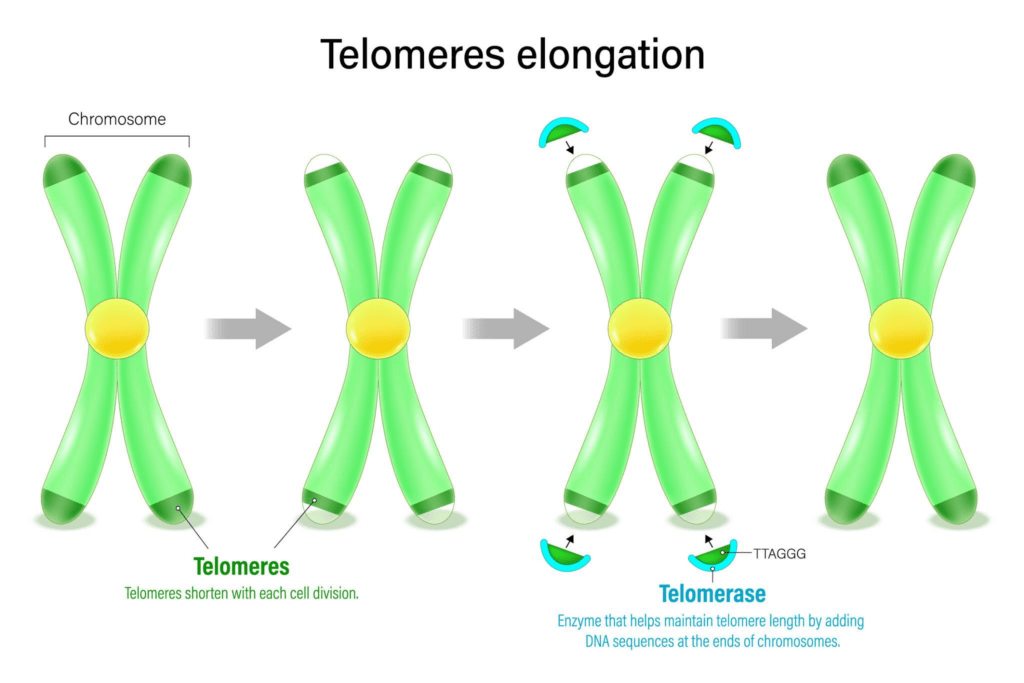
One of the most important areas of Epithalon research involves telomeres and telomerase.
Telomeres are protective structures located at the ends of chromosomes. A simple way to understand them is to imagine the plastic tips on shoelaces. Those tips protect the shoelace from fraying. Telomeres perform a similar protective role for DNA.
Each time a cell divides, telomeres tend to become shorter. Eventually, when telomeres become critically short, the cell can lose its ability to divide properly and may enter a state called cellular senescence.
This is one reason telomeres are frequently discussed in aging research.
Where Epithalon Comes In
Research has explored whether Epithalon may influence telomerase activity. Telomerase is the enzyme associated with maintaining and rebuilding telomere length in certain cellular contexts.
In simple terms:
Telomeres are the clock. Telomerase is one of the tools cells use to manage that clock.
This is why Epithalon became so interesting to longevity researchers. Instead of focusing only on downstream signs of aging, it has been studied for its potential relationship to one of the deeper mechanisms connected to cellular lifespan.
Pineal Gland Connection: More Than Sleep
The pineal gland is most often associated with melatonin production and sleep-wake cycles, but its regulatory influence extends beyond sleep alone.
Scientific discussions around pineal function often involve:
- Circadian rhythm regulation
- Melatonin signaling
- Oxidative stress response
- Age-related endocrine changes
- Systemic biological rhythm coordination
As organisms age, pineal function and melatonin output may decline. This decline is one reason pineal peptides became a subject of longevity research.
Epithalon research is tied to this broader question:
Can age-related changes in biological rhythm and cellular regulation be influenced through peptide signaling?
Upstream vs. Downstream Aging Research
One of the reasons Epithalon is so fascinating is that it fits into what many researchers would consider an upstream aging pathway.
Downstream approaches often study visible or measurable outcomes that occur after biological aging has already begun to express itself. These may include inflammation, oxidative damage, impaired recovery, metabolic slowdown, or changes in tissue resilience.
Upstream approaches look earlier in the process.
They ask questions such as:
- What controls cellular aging?
- What determines how many times a cell can divide?
- How does DNA stability change over time?
- Can biological rhythm disruption accelerate aging?
- Can peptide signaling influence gene expression patterns tied to longevity?
Epithalon has remained interesting because its research profile touches several of these upstream questions.
Epithalon and Gene Expression
Beyond telomeres, Epithalon has also been studied in relation to gene expression. This matters because aging is not just about damage accumulation. It is also about how cells regulate instructions over time.
Genes can be thought of as biological instructions. Gene expression refers to which instructions are turned on, turned off, increased, reduced, or modified in response to internal and external signals.
Some research has explored whether short peptides may interact with DNA or chromatin structures in ways that influence gene activity. This area remains complex and still requires more modern investigation, but it is one of the reasons Epithalon continues to attract attention.
In plain English:
Epithalon is not only discussed as a telomere peptide. It is also discussed as a peptide involved in cellular instruction signaling.
Epithalon and Oxidative Stress
Oxidative stress is one of the major biological processes associated with aging. It occurs when the production of reactive molecules exceeds the body’s ability to neutralize them.
In laboratory research, oxidative stress is often connected to:
- DNA damage
- Mitochondrial dysfunction
- Cell membrane damage
- Protein degradation
- Accelerated cellular aging
Epithalon has been studied in models related to oxidative balance and cellular resilience. While this does not make it an antioxidant in the simple supplement sense, it places Epithalon within a larger research category focused on how cells maintain stability under stress.
Epithalon and Circadian Biology
Circadian rhythm is the internal timing system that helps regulate sleep, hormone release, metabolism, temperature, immune timing, and other biological functions.
When circadian rhythm becomes disrupted, biological systems can become less synchronized. This matters because aging is not only about individual cells wearing down. It is also about systems losing coordination.
Because Epithalon research is linked to pineal biology, it naturally overlaps with circadian rhythm discussions.
This connection makes Epithalon especially interesting in longevity science because circadian rhythm disruption has been associated with age-related biological decline.
Why Epithalon Keeps Coming Back Into Focus
Epithalon has remained relevant because it sits at the intersection of several major longevity themes:
- Telomere biology
- Telomerase activity
- Pineal gland signaling
- Melatonin and circadian rhythm research
- Cellular senescence
- Gene expression
- Oxidative stress regulation
- Healthy aging research
That combination gives Epithalon a very different scientific identity from many newer compounds.
It is not primarily discussed as a fast-acting performance peptide. It is not mainly discussed as a metabolic peptide. It is not simply a recovery compound.
Instead, Epithalon belongs to a deeper category:
Peptides studied for their relationship to the biology of aging itself.
Important Research Limitations
Although Epithalon has a compelling research story, it is important to stay grounded.
Much of the published research comes from earlier scientific programs and region-specific studies. While the mechanisms are fascinating, modern large-scale human clinical trial data remains limited.
That means Epithalon should be discussed with scientific curiosity, not exaggerated certainty.
The correct framing is not:
“Epithalon reverses aging.”
The better scientific framing is:
“Epithalon has been studied for its potential relationship to telomerase activity, telomere biology, pineal signaling, circadian regulation, and cellular aging pathways.”
The BioGenix Peptides Perspective
At BioGenix Peptides, we believe the most exciting compounds are not always the loudest or trendiest. Often, the most meaningful research compounds are the ones that help explain biology at a deeper level.
Epithalon is one of those compounds.
Its value in the research conversation comes from the questions it raises:
- How does cellular aging actually unfold?
- What controls telomere maintenance?
- How does the pineal gland influence systemic aging signals?
- Can short peptides influence gene expression?
- Can aging be studied upstream instead of only downstream?
Those are the kinds of questions that move peptide science forward.
Final Thoughts
Epithalon remains one of the most intriguing peptides in longevity research because it is tied to the biological architecture of aging itself.
By connecting telomere dynamics, telomerase activity, pineal signaling, circadian biology, oxidative stress, and gene expression, Epithalon occupies a unique place in peptide science.
It does not represent hype. It represents a deeper scientific question:
Can peptide signaling influence the biological systems that determine how cells age?
That question is why Epithalon continues to matter.
About the Author
I’m Jay D Daniel, Founder and CEO of BioGenix Peptides and a peptide research specialist who has spent years studying the intersection of cellular biology, metabolic function, and peptide science.
My goal is to make complex peptide research easier to understand by breaking down the mechanisms, explaining the biology in plain English, and keeping the conversation grounded in science instead of hype.
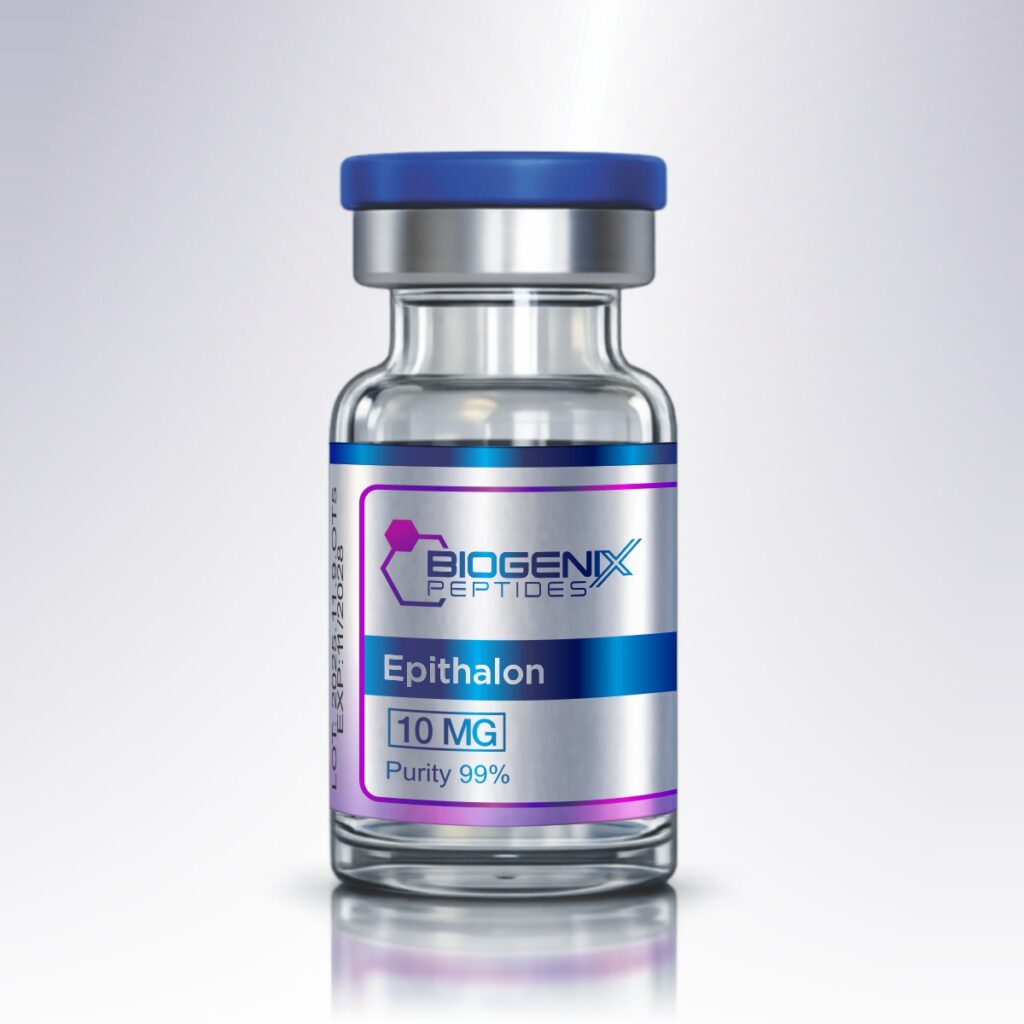
Epithalon 10mg
Epithalon, also known as AEDG peptide, Epitalon, or Epithalone, is a synthetic tetrapeptide composed of alanine, glutamic acid, aspartic acid, and glycine. It is modeled after Epithalamin, a naturally occurring pineal gland extract that has been studied for its effects on melatonin production, antioxidant activity, and cellular longevity.Research on Epithalon has suggested potential roles in pineal gland regulation, telomerase activation, oxidative stress reduction, and preservation of retinal and immune system function. Because of its connection to melatonin synthesis and circadian rhythm regulation, Epithalon has been investigated as a candidate for anti-aging, sleep, and neuroprotective studies.
In Stock
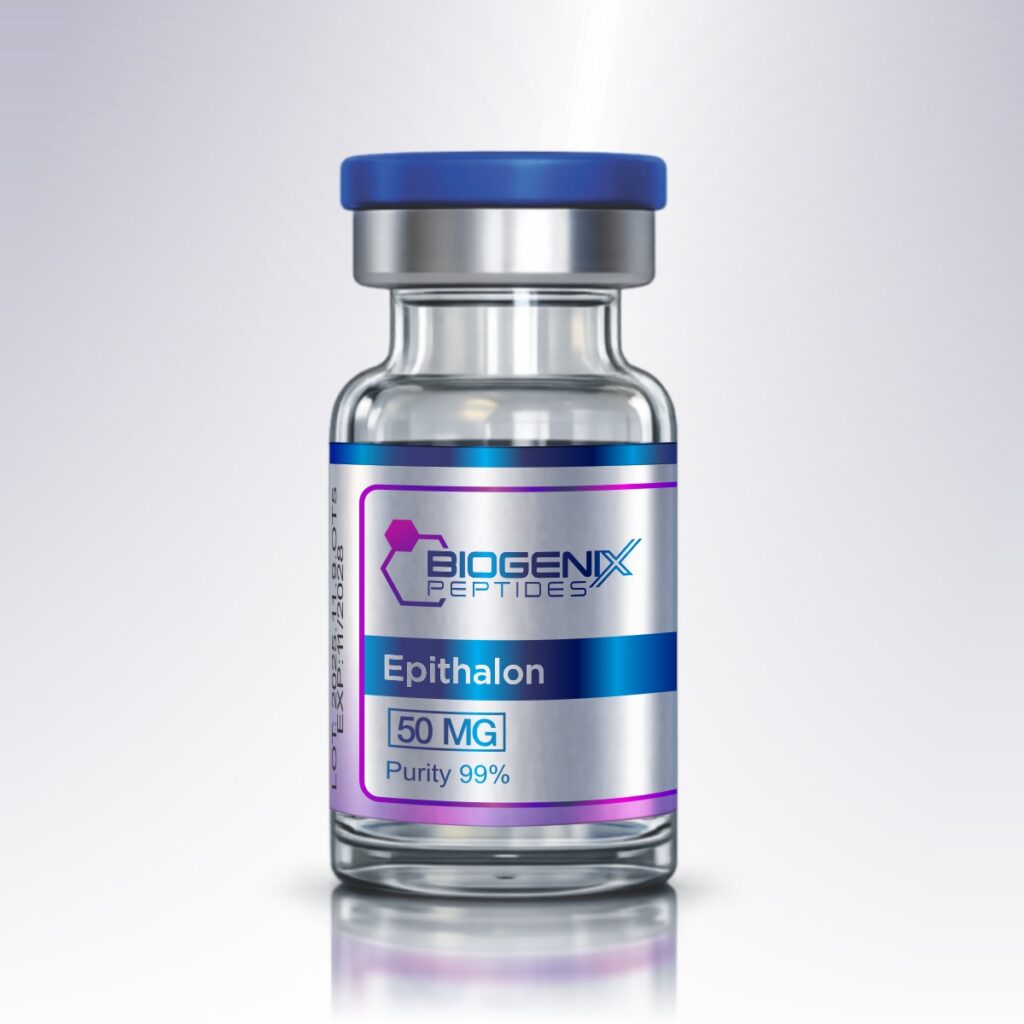
Epithalon 50mg
Epithalon, also known as AEDG peptide, Epitalon, or Epithalone, is a synthetic tetrapeptide composed of alanine, glutamic acid, aspartic acid, and glycine. It is modeled after Epithalamin, a naturally occurring pineal gland extract that has been studied for its effects on melatonin production, antioxidant activity, and cellular longevity.Research on Epithalon has suggested potential roles in pineal gland regulation, telomerase activation, oxidative stress reduction, and preservation of retinal and immune system function. Because of its connection to melatonin synthesis and circadian rhythm regulation, Epithalon has been investigated as a candidate for anti-aging, sleep, and neuroprotective studies.
In Stock