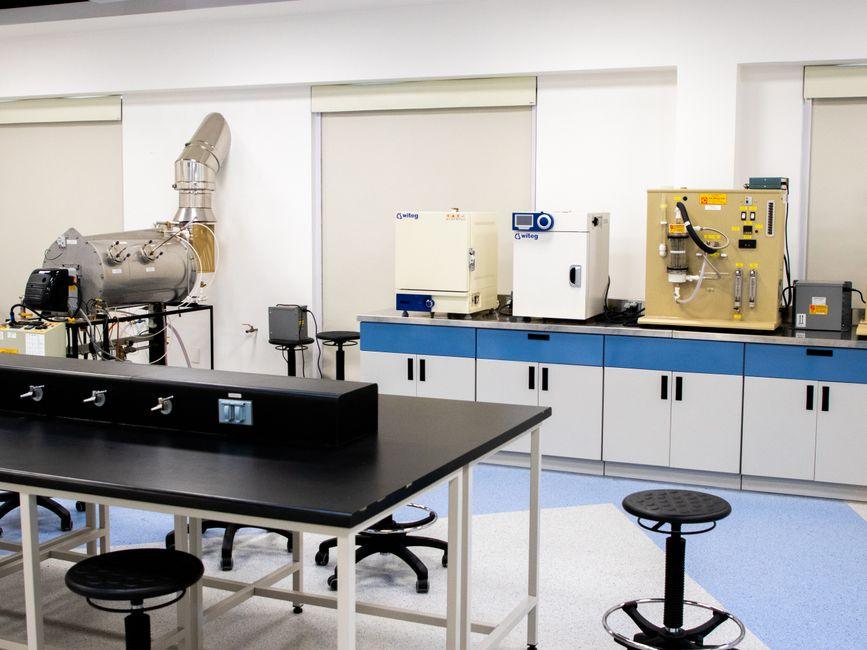
Ultimate Checklist for Finding Reliable Peptide Lab Suppliers
Disclaimer: The information provided in this article is for educational and informational purposes only. It is not intended as medical advice, diagnosis, or treatment. Products and compounds referenced are for research use only and are not approved for human or veterinary consumption. Always consult a qualified professional regarding health or medical decisions.
How to Choose Reliable Peptide Lab Supplies
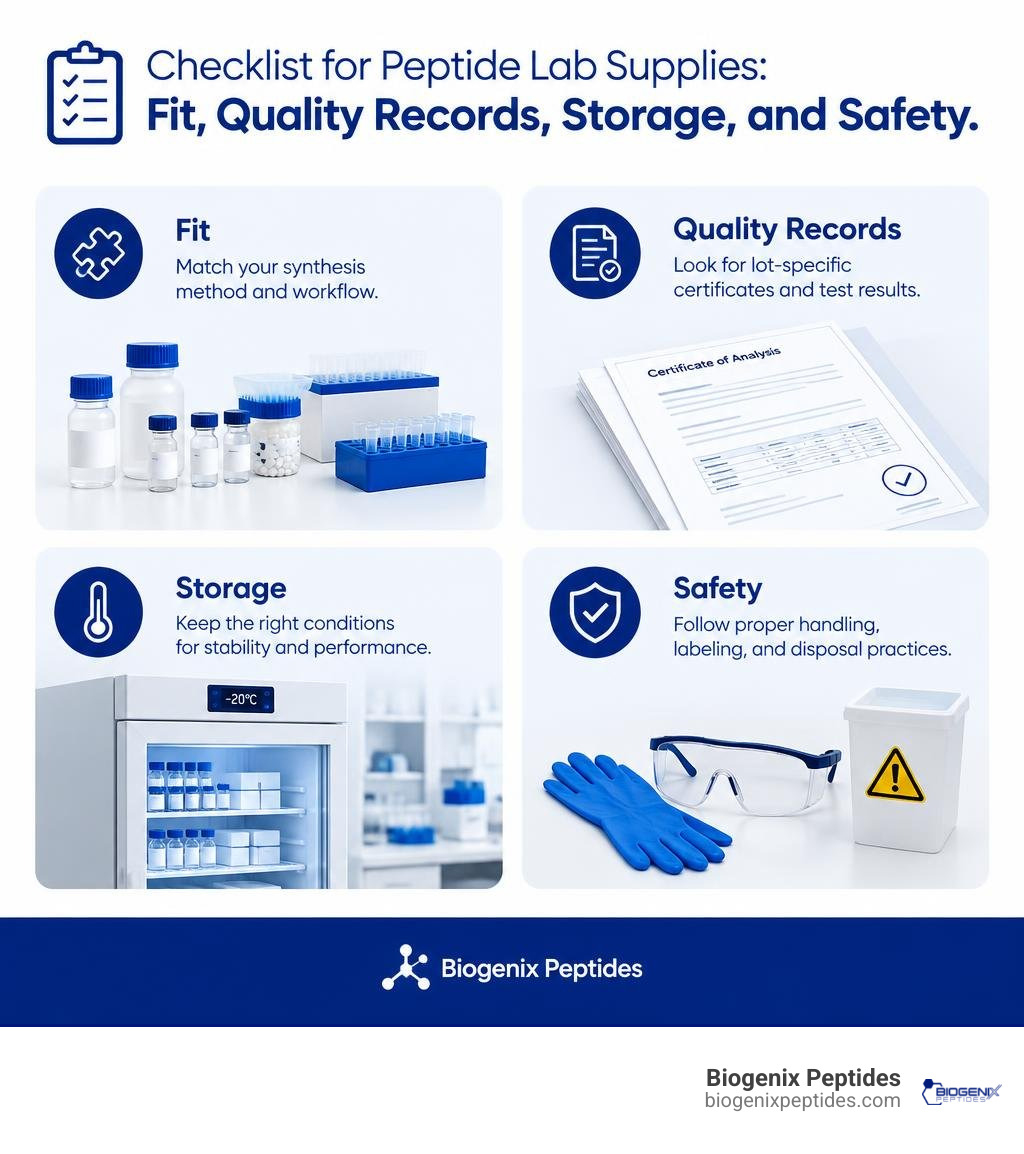
For research, start with a supplier checklist. Reliable peptide lab supplies should include suitable resins, protected amino acids, coupling reagents, solvents, and purification materials. Before ordering, ask for lot-specific quality records, check that each item fits your synthesis method, and confirm its storage and safety requirements. In my view, clear documentation matters more than a long product list.
I’m Jay Daniel, founder and CEO of BioGenix Peptides, with experience in peptide development, sourcing protocols, and quality control. I’ll use that background to explain how I assess peptide lab supplies for research work.
Peptide science continues to advance at a breakneck pace. The global peptide synthesis market was valued at approximately $4.2 billion in 2023 and is projected to reach $7.8 billion by 2030, expanding at a compound annual growth rate of 9.2%. Research into peptide-based therapeutics drives over 80% of the total demand for high-purity synthesis reagents and consumables.
Academic and research institutions account for about 60% of all procurement volume, while pharmaceutical and biotechnology developers represent the remaining 40%. Concurrently, the demand for automated peptide synthesizers has grown by 12% annually as high-throughput screening expands across discovery pipelines. As the baseline cost of core building blocks like Fmoc-protected amino acids has dropped roughly 15% over the past five years, access to sophisticated chemistry has never been greater.
Whether your team is synthesizing novel sequences or evaluating stability, establishing a rigorous procurement framework for your lab inventory ensures clean, reproducible results every cycle.
Essential Peptide Lab Supplies for Synthesis and Purification
Setting up a solid-phase synthesis line requires specific consumables and specialized glassware. Achieving high coupling yields and purity hinges on high-integrity hardware designed to withstand aggressive organic solvents and strong acids.

The heart of manual or semi-automated bench work is the solid-phase reaction vessel. These vessels typically feature integrated glass sintered filters (usually porosity coarse or medium, pore size 10 to 40 micrometers) that retain resin beads while allowing rapid vacuum filtration of excess reagents and wash solvents. Borosilicate glass vessels equipped with PTFE stopcocks and screw caps prevent contamination and resist degradation from continuous exposure to dimethylformamide (DMF) and dichloromethane (DCM).
Beyond the synthesis vessel, fundamental laboratory items include:
- Polypropylene fritted columns and cartridges for automated instrument loading
- Borosilicate transfer pipettes and solvent-resistant micropipette tips
- Chemically inert PTFE transfer lines and distribution manifolds
- Inert gas purge lines (nitrogen or argon) to maintain anhydrous reaction environments
- Lyophilization flasks and preparative glass collection tubes
A deep understanding of how these physical tools integrate into experimental workflows is fundamental when utilizing peptides in scientific research. To review the entire chemical pathway from design to final crude precipitation, consult our peptide synthesis complete guide.
Solid-Phase Resins and Linker Systems
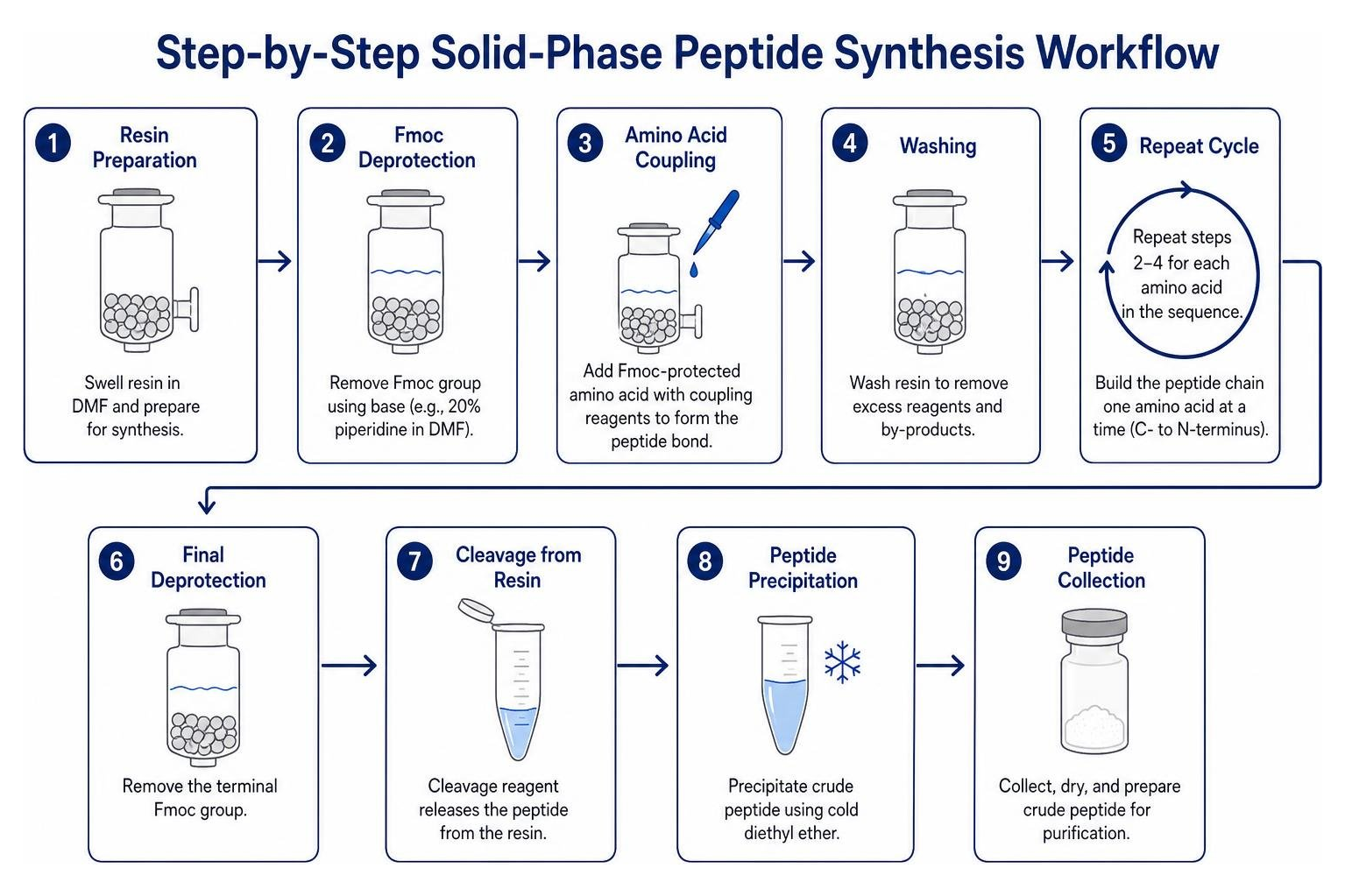
The solid support serves as the insoluble foundation upon which the peptide chain is constructed step by step from C-terminus to N-terminus. Choosing the correct polymer matrix and chemical linker dictates whether your final product yields a C-terminal carboxylic acid or a C-terminal carboxamide.
Common resin architectures include:
- Wang Resin (p-Alkoxybenzyl alcohol resin): The industry standard for synthesizing peptide acids via Fmoc chemistry. Cleavage with trifluoroacetic acid (TFA) liberates the free C-terminal carboxyl group.
- 2-Chlorotrityl Chloride (2-CTC) Resin: Highly steric and extremely acid-sensitive. Cleavage can occur under very mild conditions (such as 1% TFA in DCM), allowing researchers to isolate fully side-chain-protected peptide fragments for convergent fragment condensation. It also effectively suppresses C-terminal racemization of sensitive residues like cysteine and histidine.
- Rink Amide Resin (and Rink Amide MBHA): Used to produce C-terminal amidated peptides. Mild acid treatment yields the primary amide, mimicking natural post-translational modifications common in signaling hormones.
Resin performance depends on loading capacity (expressed in millimoles of functional groups per gram of resin, typically 0.3 to 0.9 mmol/g) and swelling efficiency. Resins must swell adequately in DMF, NMP, or DCM to allow reagents to diffuse rapidly into the interior porous matrix.
Sourcing High-Purity Peptide Lab Supplies for SPPS
Peptide synthesis is an unforgiving, cumulative process. If each coupling step achieves a 98% yield, a 30-mer peptide will yield only about 54% of the target sequence in the crude mixture; if coupling efficiency reaches 99.5%, that yield jumps above 86%. Impurities in starting materials generate truncated sequences, deletion peptides, and side-chain adducts that are difficult to separate downstream.
Key purity considerations when sourcing peptide lab supplies include:
- Solvent Purity: Dimethylformamide (DMF) must be peptide-synthesis grade or sequencing grade, free from dimethylamine (DMA) breakdown products. Primary and secondary amine contaminants cause premature Fmoc deprotection, leading to uncontrolled double insertions.
- Fmoc-Protected Amino Acids: Require analytical purity (>98.5% by HPLC and enantiomeric purity >99.8%). Low optical purity introduces D-amino acid diastereomers into the peptide chain.
- Deprotection Agents: Standard 20% piperidine in DMF must be kept fresh to prevent absorption of atmospheric moisture and carbon dioxide.
Mastering these basic starting requirements is crucial before embarking on advanced workflows outlined in our guide to Fmoc solid phase peptide synthesis basics.
Cleavage Cocktails and Scavenger Reagents
Once chain elongation is complete, the peptide must be cleaved from the solid support while simultaneously stripping all acid-labile side-chain protecting groups (such as Boc, OtBu, Pbf, Trt).
Trifluoroacetic acid (TFA) serves as the primary cleavage vehicle. However, global deprotection generates highly reactive carbocations (such as trityl, tert-butyl, and sulfonyl cations) that will irreversibly alkylate nucleophilic residues (tryptophan, tyrosine, methionine, and cysteine) unless neutralizers are present.
Cleavage cocktails rely on precise mixtures of scavenger reagents:
- Triisopropylsilane (TIS): The standard hydride donor scavenger, replacing toxic compounds for general carbocation quenching.
- Water (H2O): Traps tert-butyl cations generated during tBu ester and ether deprotection.
- 1,2-Ethanedithiol (EDT) or Dithiothreitol (DTT): Essential sulfur scavengers that prevent oxidation and alkylation of methionine and tryptophan, while preserving cysteine thiol integrity.
- Anisole / Thioanisole: Aromatic scavengers that accelerate cleavage kinetics and prevent sulfonium ion formation on methionine.
Following cleavage incubation (typically 1.5 to 3 hours), the crude peptide is precipitated by pouring the filtered cocktail into ice-cold anhydrous diethyl ether or methyl tert-butyl ether (MTBE), pelleted by centrifugation, washed, and dried.
Reagent Selection: Resins, Solvents, and Coupling Chemistries
Efficient peptide assembly requires activating the incoming amino acid’s C-terminal carboxylate without racemizing its chiral center. Coupling reagents have evolved from simple carbodiimides into sophisticated phosphonium and aminium (uronium) salts that facilitate near-instantaneous acylation.
| Coupling Reagent | Class | Additive Required | Racemization Risk | Primary Application Profile |
|---|---|---|---|---|
| DIC / Oxyma Pure | Carbodiimide | Oxyma (ethyl cyanohydroxyiminoacetate) | Very Low | Automated synthesis, microwave-assisted SPPS, green solvents |
| HBTU / TBTU | Aminium / Uronium | DIEA (diisopropylethylamine) | Low | Standard room-temperature SPPS; cost-effective routine assembly |
| HATU | Azabenzotriazole Aminium | DIEA or Collidine | Extremely Low | Difficult couplings, sterically hindered residues, cyclic peptides |
| PyBOP | Phosphonium | DIEA | Very Low | Base-sensitive sequences; prevents guanidylation side reactions |
| COMU | Oxyma-based Uronium | DIEA or TMP | Exceptionally Low | High solubility in green solvents, rapid reaction rates |
The development of advanced coupling reagents is complemented by innovative bioconjugation strategies, including enzymatic ligation in peptide manufacturing, which offer chemo-selective ways to ligate complex peptide segments without chemical epimerization.
Choosing Solid Supports and Functional Loadings
Selecting the right polymer backbone dictates physical swelling dynamics during peptide elongation:
- Microporous Polystyrene (PS) Crosslinked with 1% DVB: The traditional choice. Inexpensive and highly rigid, it works well for sequences up to 25 residues when functional loading is kept below 0.6 mmol/g.
- Polyethylene Glycol (PEG)-Grafted Polystyrene (e.g., TentaGel): Provides a uniform, highly solvated brush-like microenvironment that mimics solution kinetics. Excellent for long sequences (30 to 70+ residues) and difficult sequences prone to aggregation.
- Pure Crosslinked PEG Resins (e.g., ChemMatrix): Composed entirely of ether linkages, offering chemical stability and high swelling across organic solvents and water.
High resin loading can cause on-resin peptide aggregation via intermolecular beta-sheet formation during chain growth. For long or difficult targets, using low-loading resins (0.15 to 0.35 mmol/g) separates growing chains and prevents steric crowding.
Coupling Agents and Additives
For challenging couplings—such as coupling into secondary amines (proline or N-methylated residues) or incorporating bulky, non-canonical building blocks—HATU remains the gold standard. HATU benefits from an adjacent pyridine nitrogen that provides a neighboring-group catalytic effect, speeding up amino acid transfer.
When side-reaction capping is needed during difficult synthesis, acetic anhydride and DIEA in DMF can terminate unreacted amine handles, preventing near-length deletion impurities that are difficult to separate during HPLC purification.
Quality Assurance, Validation, and Storage Protocols
The integrity of peptide research depends on using verified, authentic starting materials. Low-grade supplies lead to failed couplings, batch rejection, and irreproducible experimental assays.
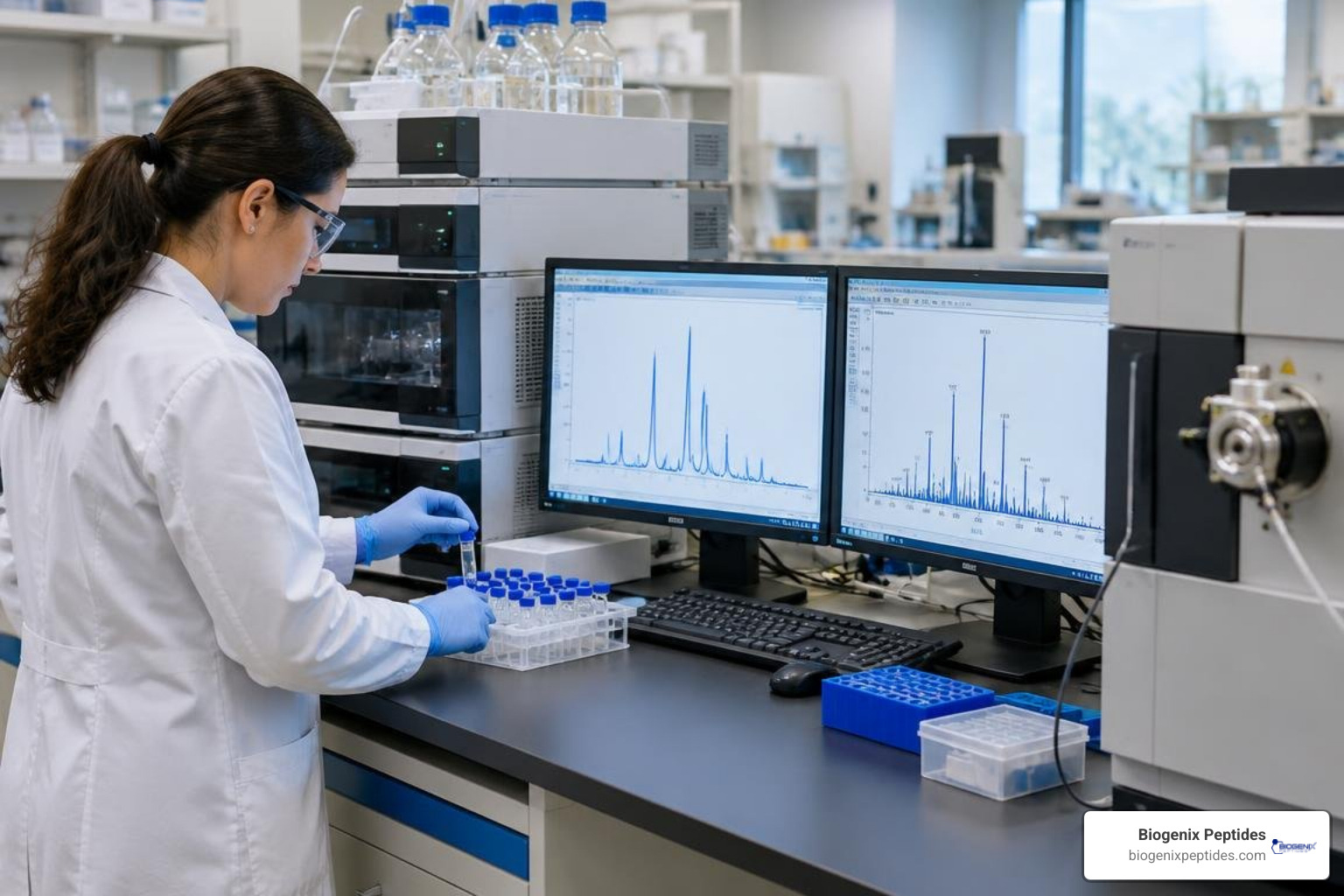
Every shipment of peptide lab supplies—from amino acid derivatives to functionalized resins—must include a batch-specific Certificate of Analysis (CoA). When vetting suppliers, verify that analytical claims match empirical tests performed using validated chromatographic and spectroscopic techniques.
Quality Control Protocols for Peptide Lab Supplies
Before introducing new lots into critical synthesis runs, perform internal quality checks:
- HPLC Profiling: Reverse-phase HPLC (RP-HPLC) verifies chromatographic purity and checks for degradation products.
- High-Resolution Mass Spectrometry (HRMS/ESI-MS): Confirms exact molecular weight and verifies that protecting groups (Fmoc, Boc, Pbf) remain fully intact.
- Karl Fischer Titration: Quantifies residual moisture in hygroscopic powders. High water content consumes coupling reagents and hydrolyzes active esters.
- Optical Rotation Measurement: Confirms the absence of enantiomeric degradation in chiral amino acid stocks.
Researchers can learn more about standard analytical thresholds in our guide to testing peptide purity and verifying quality. For detailed instructions on interpreting analytical records, review understanding HPLC and Mass Spectrometry.
Storage Conditions and Preventing Degradation
Synthesized peptides, resins, and protected amino acids are sensitive to thermal degradation, photo-oxidation, and hydrolysis. Establishing strict storage protocols prevents reagent loss and preserves sample integrity:
- Temperature Regulation: Lyophilized peptides and amino acid derivatives should be stored at -20°C in sealed containers. Long-term archives should be kept at -80°C.
- Desiccation: Reagents must be stored in desiccators with active silica gel or molecular sieves. Moisture exposure during warm-up causes condensation, initiating hydrolysis of active esters or peptide bond cleavage.
- Equilibration Before Opening: Always allow frozen reagent vials to warm to room temperature (typically 30 to 60 minutes) in a sealed desiccator before opening.
- Handling Reconstituted Solutions: When peptides are reconstituted for research assays, use sterile bacteriostatic water for reconstitution to inhibit microbial contamination in multi-use vials. Store liquid aliquots frozen and avoid repeated freeze-thaw cycles.
For broader storage guidelines, refer to our comprehensive guide on best practices for peptide storage and handling.
Lab Safety, Handling Standards, and Specialized Equipment
Peptide laboratories utilize hazardous organic solvents, potent corrosive acids, and skin-sensitizing coupling reagents. Establishing reliable safety engineering controls and maintaining specialized containment equipment protects researchers and maintains an uncontaminated research setting.
Standard laboratory procedures must align with sterile handling protocols to maintain compound purity, as outlined in our guide on creating a sterile research environment.
Chemical Handling and Personal Protective Equipment
Working with solid-phase reagents requires specific protective gear and engineering controls:
- Fume Hood Ventilation: All handling of trifluoroacetic acid (TFA), piperidine, scavengers (like ethanedithiol), and volatile coupling agents must take place inside certified chemical fume hoods with face velocities of 80 to 100 feet per minute.
- Hand Protection: Standard thin nitrile gloves offer limited breakthrough protection against DCM and TFA. Use heavy-gauge nitrile or double-glove with compatible barrier laminates, changing gloves immediately upon any splash contact.
- Neutralization Protocols: TFA waste streams must be segregated from halogenated and non-halogenated solvent carboys. Base scrubbers or dilute aqueous sodium bicarbonate baths should be maintained inside the hood for neutralizing acidic glassware before washing.
Research-Scale vs Commercial-Scale Equipment Differences
Equipment scale varies significantly depending on output requirements:
Benchtop microwave-assisted synthesizers allow rapid optimization of challenging sequences at milligram scales. In contrast, commercial pilot plants prioritize solvent recovery systems, robust process analytical technology (PAT), and automated batch records to ensure reproducible scale-up.
Frequently Asked Questions About Peptide Lab Sourcing
What are the most critical supplies needed to start solid-phase peptide synthesis?
The indispensable foundation consists of:
- High-grade solid supports (such as Wang, Rink Amide, or 2-CTC resin)
- Enantiomerically pure Fmoc-protected amino acids with appropriate side-chain protecting groups
- Primary coupling reagents and base additives (such as DIC/Oxyma Pure or HATU/DIEA)
- Peptide-synthesis grade DMF, DCM, and piperidine
- Sintered glass reaction vessels with vacuum manifolds
- Cleavage reagents (TFA, TIS, scavengers) and cold anhydrous ether for precipitation
How do you verify the purity of peptide reagents before synthesis?
Supplies should be verified through a four-part testing protocol:
- Assess chemical purity and degradation peaks via RP-HPLC
- Confirm molecular mass via ESI-MS or MALDI-TOF
- Measure water content using Karl Fischer coulometric titration to protect moisture-sensitive coupling steps
- Review manufacturer batch documentation to confirm low D-isomer content and the absence of residual synthesis impurities
What is the shelf life of reconstituted peptides and synthesis reagents?
Lyophilized peptides stored dry at -20°C in an airtight desiccator typically remain stable for 2 to 5 years. Solid protected amino acids and dry coupling reagents have shelf lives of 12 to 36 months when protected from light and moisture.
Once reconstituted into solution, stability decreases significantly. Reconstituted peptides kept at 2°C to 8°C generally remain stable for days to a few weeks, depending on the sequence (oxidation-sensitive residues like Met, Cys, and Trp degrade faster). Storing reconstituted stock in single-use aliquots at -20°C or -80°C helps prevent degradation from freeze-thaw cycles.
Conclusion
Building a dependable research pipeline requires sourcing quality peptide lab supplies. By vetting suppliers, demanding lot-specific analytical CoAs, maintaining strict desiccated cold storage, and adhering to chemical safety protocols, your laboratory can avoid synthesis failures and achieve reproducible experimental outcomes.
BioGenix Peptides supports high standards of scientific integrity across the research community. For recommendations on optimizing your workspace configuration, explore our essential research lab equipment guide.