Peptide Synthesis 101
Disclaimer: The information provided in this article is for educational and informational purposes only. It is not intended as medical advice, diagnosis, or treatment. Products and compounds referenced are for research use only and are not approved for human or veterinary consumption. Always consult a qualified professional regarding health or medical decisions.
What Peptide Synthesis Is and Why It Matters in Research
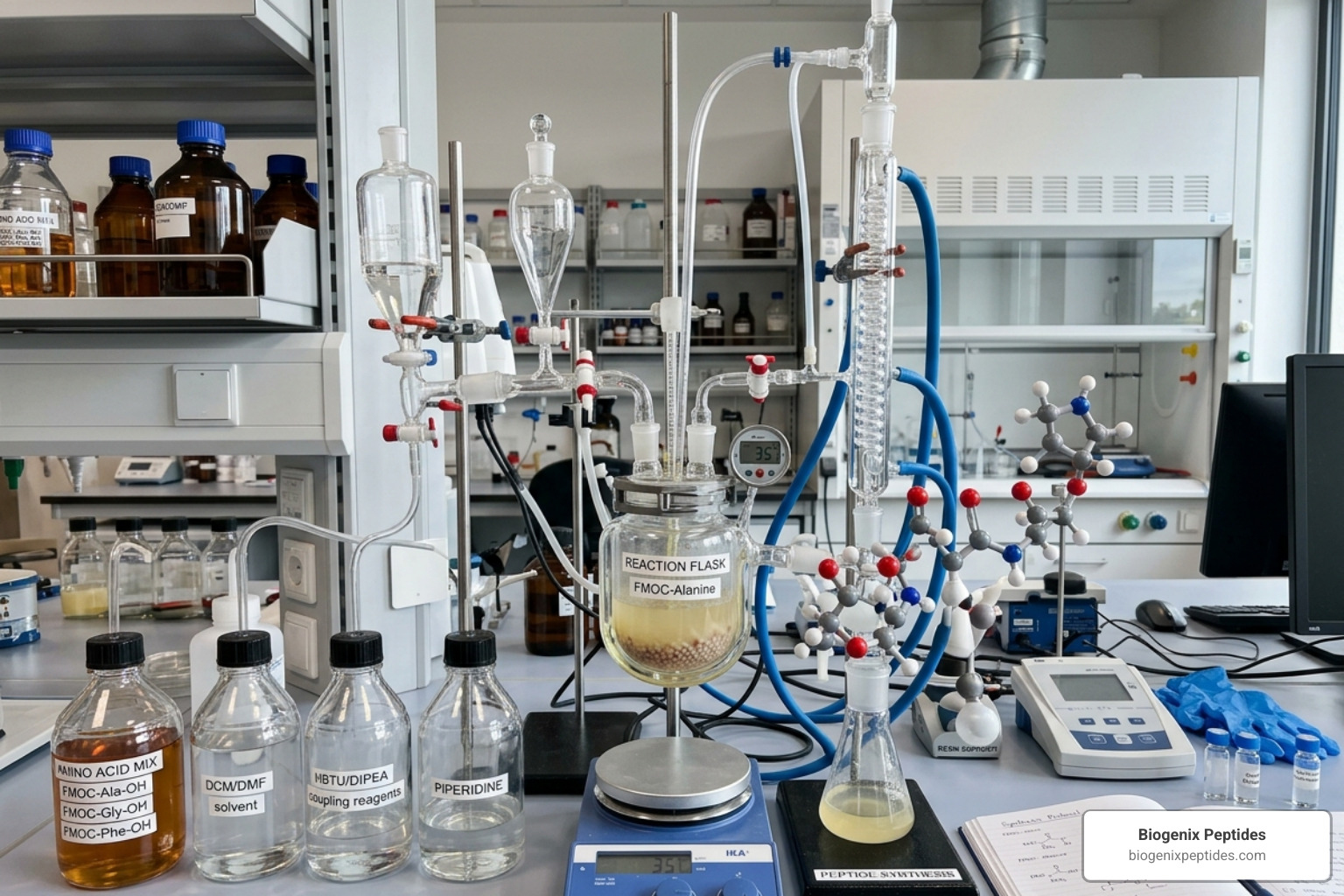
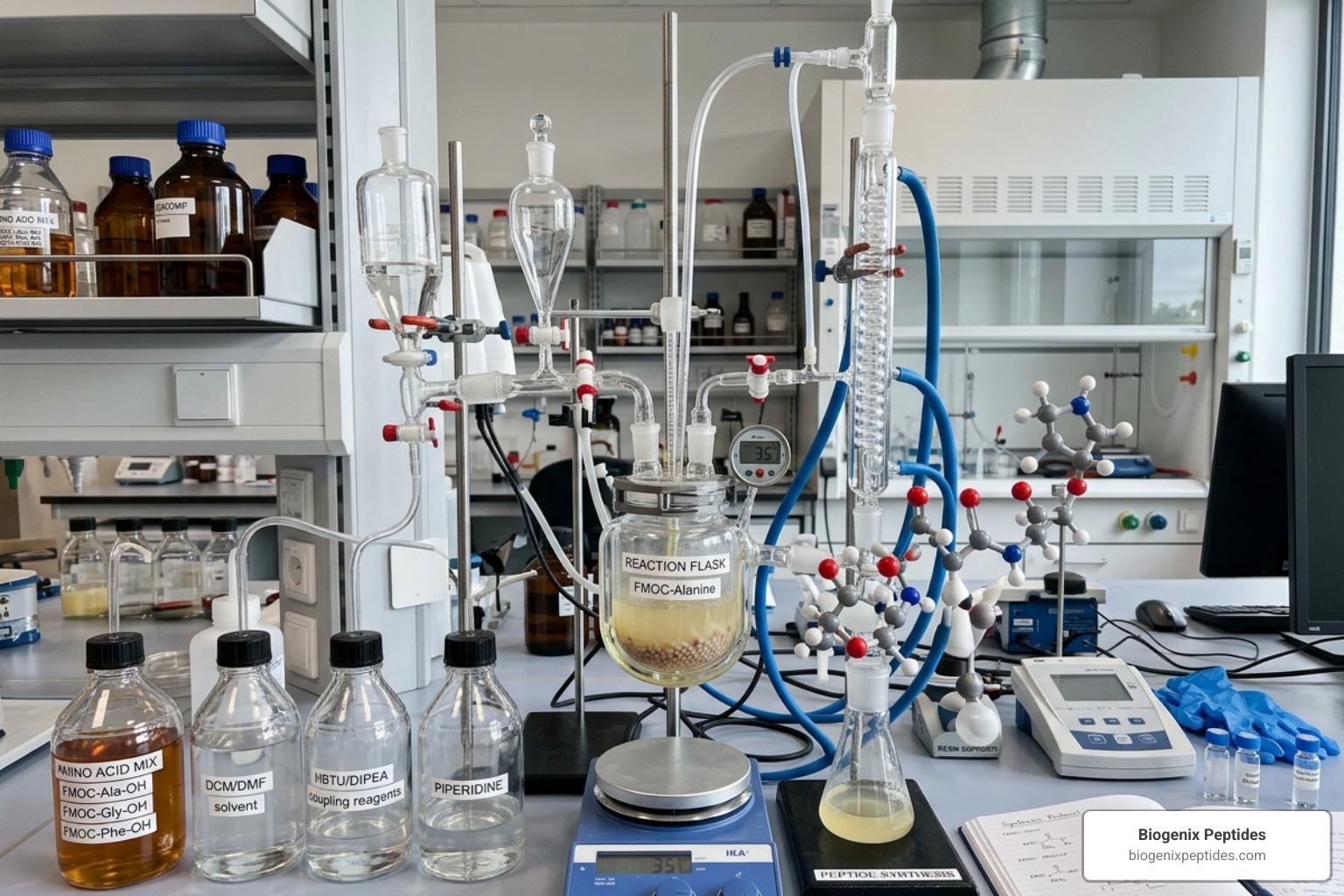
Peptide synthesis is the controlled chemical process of linking amino acids together in a precise sequence to build peptides — short chains of up to 30–50 amino acids — for research applications, drug discovery, and biological study.
Here is a quick overview of the key facts:
- What it is: A step-by-step chemical assembly of amino acids into a defined chain
- Main method: Solid-Phase Peptide Synthesis (SPPS), building from the C-terminus to the N-terminus
- Two main strategies: Fmoc (mild base deprotection) and Boc (acid deprotection)
- Key limitation: SPPS becomes unreliable beyond ~40–50 amino acid residues
- Solution for longer chains: Native chemical ligation and fragment assembly
- Applications: Hormone research, drug development, antibody production, mass spectrometry standards
- Market scale: The peptide therapeutics market reached multi-billion dollar levels by 2008, with over 400 peptides entering clinical studies
The word peptide was coined by Emil Fischer and Fourneau back in 1901. Yet despite over a century of history, the chemistry behind building these molecules reliably — residue by residue, without errors — remains one of the most technically demanding challenges in modern biochemistry.
From the sugar substitute aspartame to clinically studied hormones like oxytocin, synthetic peptides are foundational to some of the most important research happening today.
I’m Jay Daniel, Founder and CEO of BioGenix Peptides, with years of hands-on experience in peptide synthesis, quality control, and research-driven peptide manufacturing. In this guide, I’ll walk you through everything you need to understand the science of peptide synthesis from the ground up — so you can make informed decisions in your own research.
The Evolution and Importance of Peptide Synthesis
As we look at the landscape of biotechnology in May 2026, it is easy to forget how far we have come. The journey of peptide synthesis began over 125 years ago. While Fischer and Fourneau reported the first “peptide” in 1901, it took another half-century before the first successful synthesis of complex hormones like oxytocin and insulin proved that we could actually replicate nature’s work in a lab.
The real game-changer arrived in 1963 when Robert Bruce Merrifield introduced Solid-Phase Peptide Synthesis (SPPS). Before Merrifield, chemists had to purify the product after every single amino acid addition—a tedious, soul-crushing process that resulted in abysmal yields. Merrifield’s “solid-phase” idea allowed researchers to anchor the growing chain to a solid support, making it possible to simply wash away excess reagents. This was so it earned him the Nobel Prize in Chemistry in 1984.
Why does this matter so much for research? Because peptides are the “Goldilocks” molecules of biology. They are larger and more specific than small-molecule drugs, yet smaller and easier to synthesize than massive proteins. Today, the Peptide synthesis market is a multi-billion dollar industry. More than 400 peptides have entered clinical studies, serving as the basis for research into metabolic diseases, cancer vaccines, and antimicrobial agents.
Core Methodologies: Solid-Phase vs. Solution-Phase
When we talk about building a peptide, we generally choose between two paths: the modern Solid-Phase (SPPS) or the classical Solution-Phase (also known as Liquid-Phase or LPPS).
In our experience at Biogenix Peptides, the choice depends entirely on the scale and length of the sequence. For a detailed breakdown, you can explore our guide on Peptide Synthesis Explained Solid Phase Vs Solution Phase/.
Comparison Table: SPPS vs. LPPS
| Feature | Solid-Phase (SPPS) | Solution-Phase (LPPS) |
|---|---|---|
| Speed | Very Fast (Automated) | Slow (Manual) |
| Purification | At the very end | After every step |
| Scalability | Ideal for Research/Mid-scale | Best for Multi-kilo Industrial |
| Peptide Length | Up to 50 residues | Usually <10-15 residues |
| Solvent Use | High | Moderate |
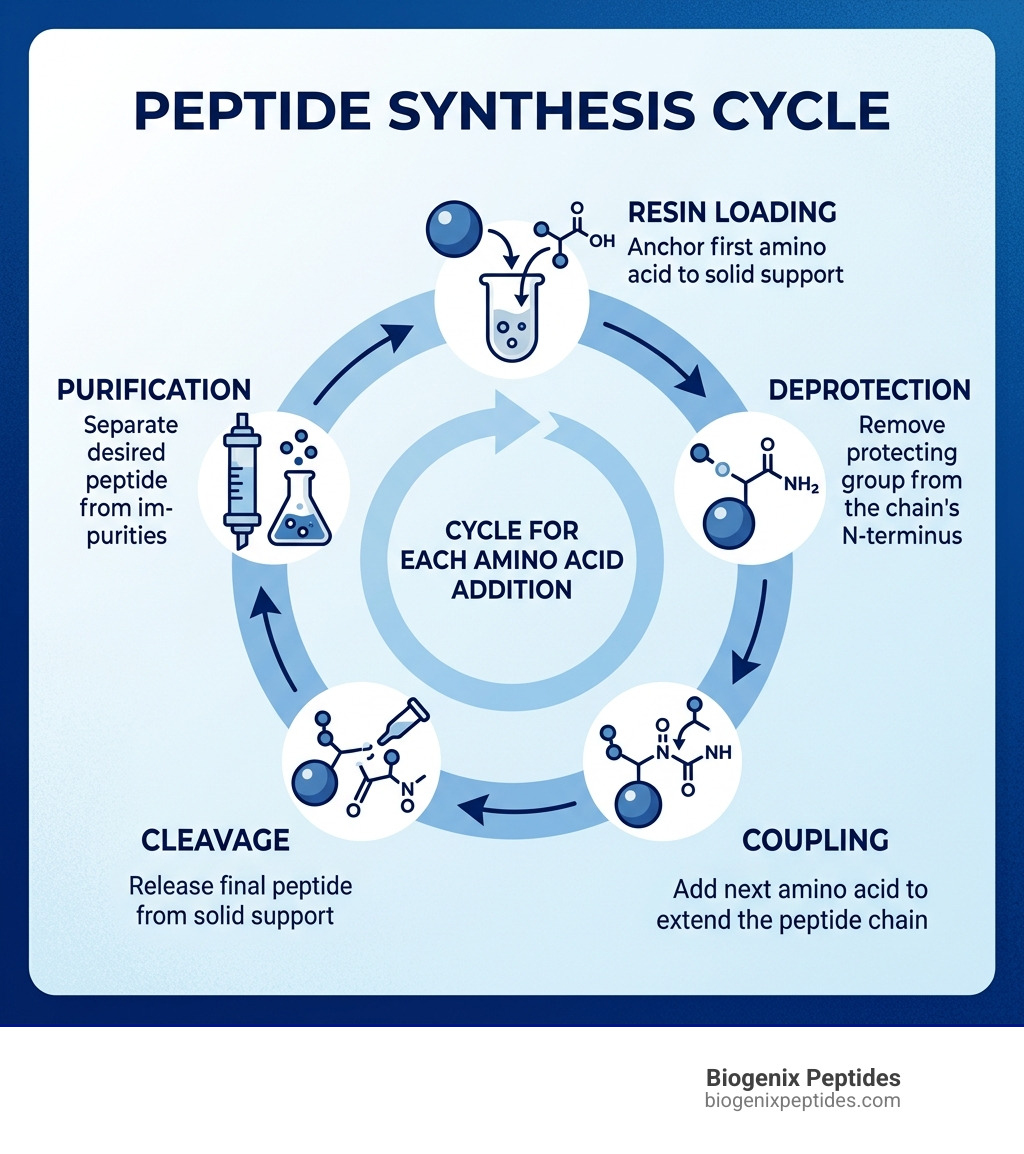
The C-to-N Direction
One of the most fascinating quirks of Custom peptide synthesis is the direction of assembly. In your body, your ribosomes build proteins from the N-terminus to the C-terminus. However, in the lab, we do the exact opposite. We build from the C-terminus to the N-terminus. This is done to prevent the growing chain from reacting with itself and to make the use of protecting groups more efficient.
While SPPS is the reigning champion for most research needs, LPPS remains relevant for very short peptides (like the dipeptide aspartame) because it is more atom-economical and can be cheaper at massive industrial scales.
The Chemistry of Solid-Phase Peptide Synthesis (SPPS)
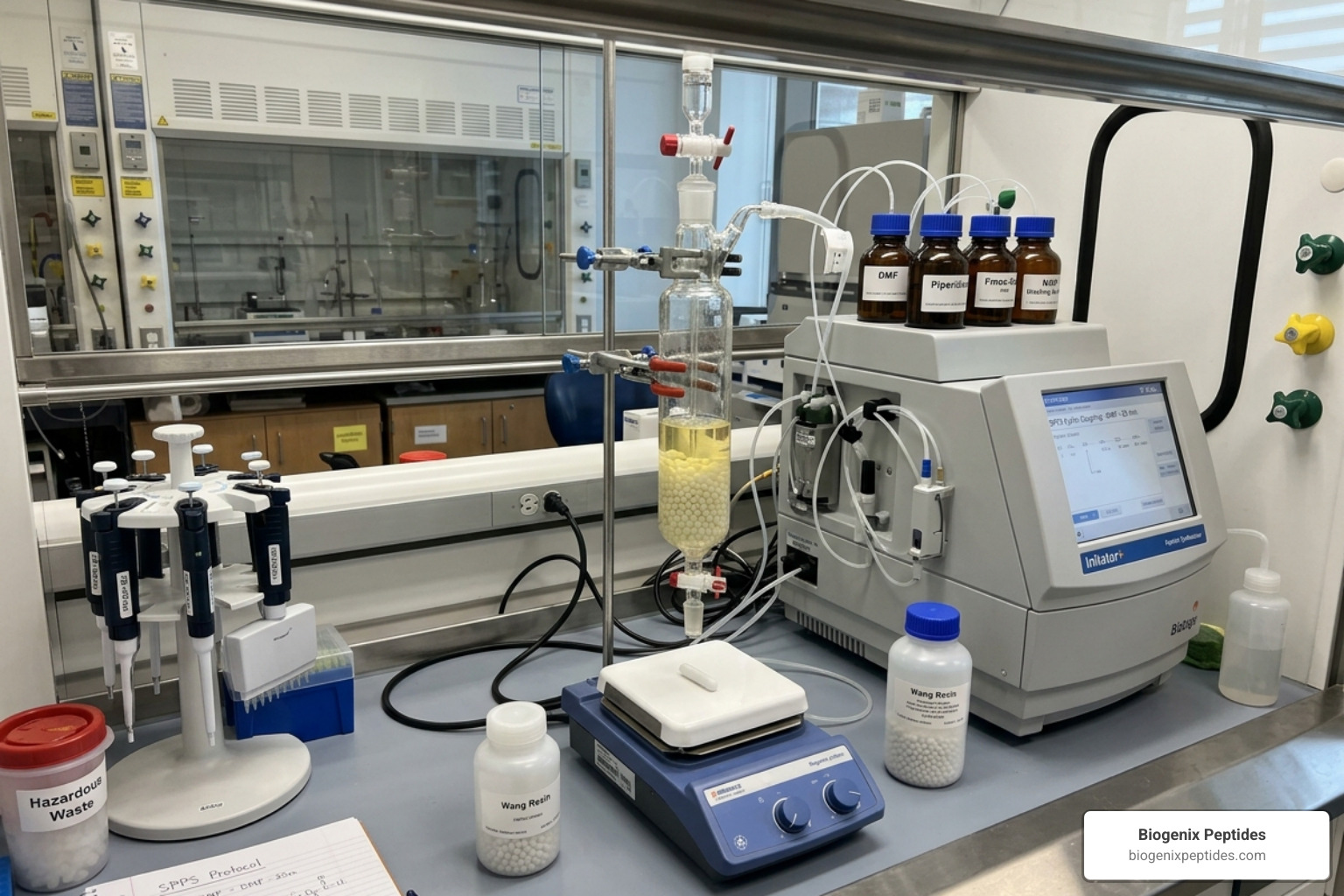
To understand how SPPS works, imagine a tiny plastic bead—this is our solid support. We anchor the first amino acid to this bead. Because the peptide is stuck to the bead, we can flood the reaction vessel with excess reagents to ensure every single bead gets a “hit,” driving the reaction to near 100% completion. Then, we simply filter and wash the beads to get rid of the leftovers.
For a deeper dive into these chemical mechanics, the Introduction to Peptide Synthesis – PMC provides an excellent academic foundation.
Protecting Group Strategies in Peptide Synthesis
If you just threw 20 different amino acids into a beaker, they would bond randomly, creating a useless chemical “soup.” To build a specific sequence, we must use “protecting groups.” These are chemical “masks” that block certain parts of the amino acid from reacting, leaving only the target bond-site open.
There are two primary strategies used today:
- Fmoc (9-fluorenylmethoxycarbonyl): This is the modern standard. It uses a base (usually piperidine) to remove the mask. It is considered “orthogonal” because the side-chain protections are removed by acid, while the main-chain mask is removed by base. By 1994, 98% of labs had switched to Fmoc because it is much milder and safer.
- Boc (tert-butyloxycarbonyl): The older method. It uses strong acids like Trifluoroacetic acid (TFA) for deprotection and even scarier stuff like Hydrogen Fluoride (HF) for the final cleavage. While it’s harsher, some researchers still prefer it for specific sequences that are sensitive to the bases used in Fmoc chemistry.
Solid Supports and Coupling Reagents
The “solid” in solid-phase is usually a polystyrene resin cross-linked with 1% divinylbenzene. These beads are tiny—about 50 to 100 microns in diameter.
- Wang Resin: The industry standard for creating peptides with a C-terminal carboxylic acid.
- Rink Amide Resin: Used when the research requires a C-terminal amide.
To actually form the bond between amino acids, we use “coupling reagents.” You might see names like HBTU, HATU, or DIC in your research papers. HATU is often considered the “gold standard” for difficult couplings because it’s incredibly efficient, though it is more expensive. We also add “suppressors” like HOBt or HOAt to prevent racemization—a fancy word for the amino acid accidentally flipping its molecular shape during the reaction.
Advanced Strategies for Complex Peptide Synthesis
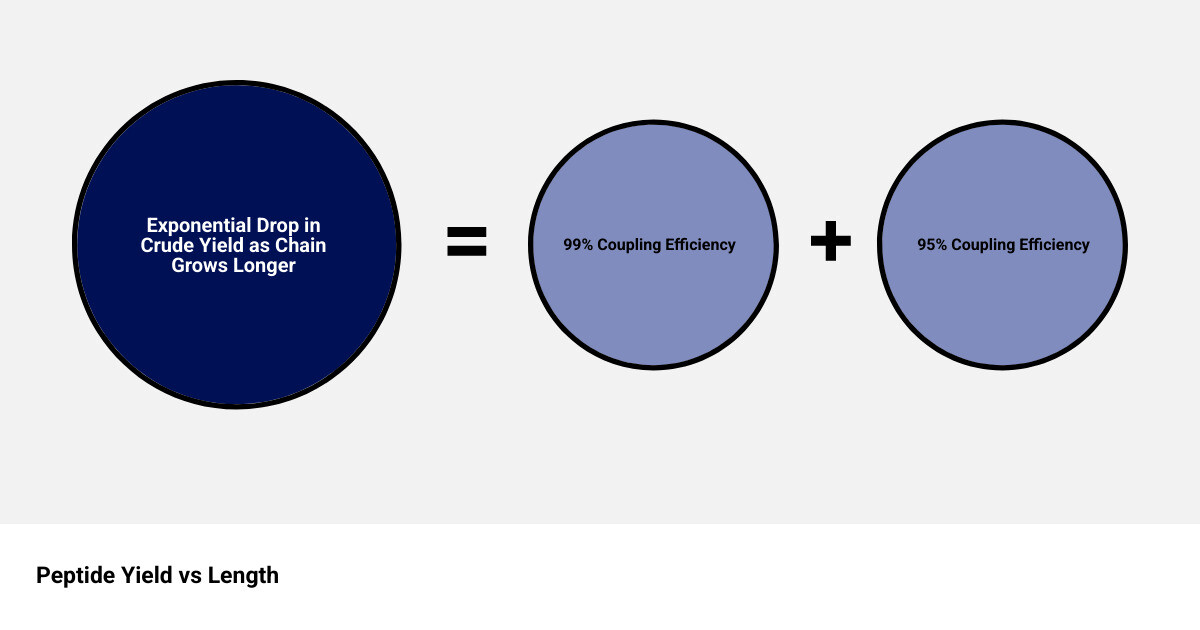
Standard SPPS is great, but it has its limits. Once a peptide gets longer than 40 or 50 amino acids, the “purity” starts to drop exponentially. If each step is 99% efficient, after 50 steps, your final yield of the correct sequence is surprisingly low.
This is where we get creative. You can keep up with these evolving methods in our Category/Peptide Synthesis/ section.
Overcoming Limitations in Long-Chain Peptide Synthesis
When we need to build a small protein (over 100 amino acids), we use a technique called Native Chemical Ligation (NCL). Instead of building one long chain, we build two or three smaller fragments and “glue” them together. This requires a specific “thioester” on one end and a Cysteine residue on the other.
Another modern leap is Enzymatic Ligation In Peptide Synthesis Why It May Be The Next Major Leap In Complex Peptide Manufacturing/. This uses modified enzymes (like Peptiligase) to snap peptide fragments together with perfect precision, often with much less solvent waste.
Modifications and Side Reaction Prevention
Research often requires more than just a simple string of amino acids. We are frequently asked to incorporate:
- Phosphorylation: Adding phosphate groups to Serine or Threonine.
- Glycosylation: Attaching sugar chains.
- Cyclization: Turning the peptide into a ring to make it more stable.
The “secret” to handling these complex modifications lies in the quality of the scavengers used during the final “cleavage” (when we cut the peptide off the bead). We use “scavenger cocktails” containing things like water, phenol, and triisopropylsilane to soak up reactive cations that would otherwise damage the peptide. This is part of The Secret Sauce Of A Top Tier Peptide Synthesis Company/.
Purification, Analysis, and Best Practices for Research
Once the peptide is synthesized and cleaved, it is “crude”—full of salts, leftover reagents, and “deletion sequences” (peptides missing one amino acid).
HPLC and Mass Spectrometry
We use High-Performance Liquid Chromatography (HPLC) to separate the pure peptide from the junk. Think of it like a race: the pure peptide moves through the column at a specific speed, while the impurities move faster or slower. We then use Mass Spectrometry (MS) to “weigh” the molecules and confirm that the mass matches exactly what we intended to build.
For a deep dive into reading these reports, check out:
- Hplc And Mass Spectrometry In Peptide Analysis/
- Category/Hplc Ms Analysis/
- How To Read A Peptide Coa Understanding Hplc Mass Spectrometry Ms/
Understanding Net Peptide Content
This is a point that often confuses researchers. If you buy 10mg of a peptide, you might only have 7mg of actual “peptide.” The rest is water and counter-ions (like TFA salts). This is called the Net Peptide Content, and it typically ranges from 50% to 80%. It is not the same as purity! A peptide can be 98% pure but only have 70% net peptide content.
Handling and Storage
To ensure your research remains consistent, follow these best practices:
- Storage: Always store lyophilized (freeze-dried) peptides at -20°C. For long-term storage (years), -80°C is even better.
- Solubility: Always try to dissolve a tiny “test” amount first. Start with sterile water. If it won’t dissolve, basic peptides might need a drop of acetic acid, while acidic peptides might need a drop of ammonium hydroxide.
- Avoid Oxidation: If your peptide has Cysteine or Methionine, keep it away from oxygen. Use deoxygenated solvents.
Frequently Asked Questions about Peptide Synthesis
What is the difference between purity and net peptide content?
Purity refers to the percentage of the total peptide material that is the correct sequence. Net peptide content refers to the actual weight of the peptide compared to non-peptide components like water and salts. If you are performing quantitative research, you must account for the net peptide content to ensure your calculations are accurate.
Why is chemical synthesis performed in the C-to-N direction?
This direction allows us to use N-protected amino acids, which are chemically more stable and easier to handle in a lab setting. It prevents a common side reaction called “diketopiperazine formation,” which can happen if we try to build in the biological (N-to-C) direction.
How are hydrophobic peptides handled in research?
Hydrophobic peptides are the “problem children” of the lab. They love to clump together (aggregate), which makes them hard to synthesize and harder to dissolve. We often use “low-substitution” resins to keep the growing chains far apart on the beads, or we add “solubilizing tags” like a string of Lysines to help them dissolve in water.
Conclusion
The world of peptide synthesis has evolved from a niche chemical curiosity in 1901 to a cornerstone of May 2026 biomedical research. Whether it is the shift toward “Green Chemistry” to reduce solvent waste or the use of microwave-assisted synthesis to deliver sequences in as little as 5 business days, the field is moving faster than ever.
At Biogenix Peptides, we believe that understanding the “how” and “why” behind your research materials is just as important as the research itself. By mastering the nuances of SPPS, protecting groups, and purification, you ensure that your data is reproducible and your findings are sound.
To learn more about the standards we uphold, explore The Secret Sauce Of A Top Tier Peptide Synthesis Company/ or browse our technical library in the Category/Peptide Synthesis/ section.
Disclaimer: The information provided in this article is for educational and informational purposes only. It is not intended as medical advice, diagnosis, or treatment. Products and compounds referenced are for research use only and are not approved for human or veterinary consumption. Always consult a qualified professional regarding health or medical decisions.