The Complete Guide to CJC-1295 with DAC & Ipamorelin Benefits
Disclaimer: The information provided in this article is for educational and informational purposes only. It is not intended as medical advice, diagnosis, or treatment. Products and compounds referenced are for research use only and are not approved for human or veterinary consumption. Always consult a qualified professional regarding health or medical decisions.
CJC-1295 with DAC and Ipamorelin: The Research Overview
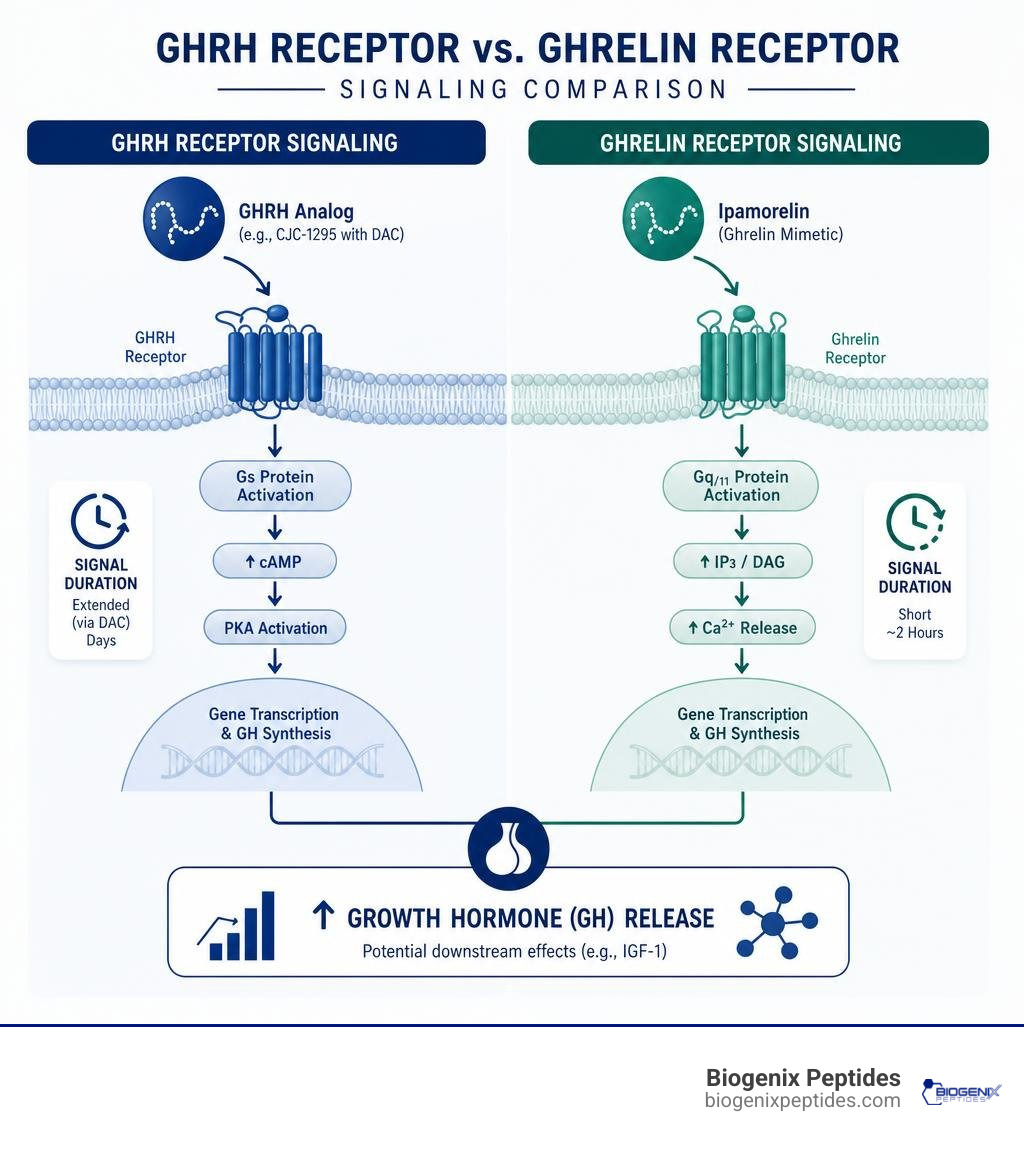
CJC-1295 with DAC and ipamorelin are studied as a dual-pathway growth hormone secretagogue combination. CJC-1295 with DAC is a long-acting growth-hormone-releasing hormone (GHRH) analog that binds albumin, while ipamorelin activates the ghrelin receptor. Together, researchers examine how these separate signals may influence growth hormone release and downstream IGF-1 activity.
The key distinction is timing: DAC extends CJC-1295 activity for several days, whereas ipamorelin has an estimated half-life of about two hours. This is investigational science, not an established treatment. CJC-1295 is not FDA-approved, and growth hormone-releasing factors are prohibited in sport under World Anti-Doping Agency rules.
I am Jay Daniel, Founder and CEO of BioGenix Peptides, with experience in peptide development, sourcing, quality control, and research education related to CJC-1295 with DAC ipamorelin. The sections below explain the mechanisms, pharmacokinetics, research findings, safety questions, and regulatory limits behind this combination.
What Is CJC-1295 with DAC and How Does It Differ from Mod GRF 1-29?
In peptide research, naming conventions often cause confusion. CJC-1295 is a synthetic peptide based on the first 29 amino acids of endogenous Growth Hormone-Releasing Hormone (GHRH 1-29). Native GHRH undergoes rapid degradation in serum due to dipeptidyl peptidase-4 (DPP-4) enzymatic breakdown, rendering its natural half-life under 10 minutes.
To resolve this limitation, scientists engineered a tetra-substituted GHRH analog (replacing native residues with D-Ala², Gln⁸, Ala¹⁵, and Leu²⁷). This modified structure is properly designated as Modified GRF 1-29. When researchers refer to CJC-1295 without DAC, they are discussing this exact 29-amino acid compound.
The variant known as CJC-1295 with DAC includes an additional chemical moiety: the Drug Affinity Complex (DAC), attached via a reactive maleimide group at a lysine linker (Lys³⁰). This single chemical alteration fundamentally alters how the peptide behaves in test environments.
Albumin Binding Mechanism
The Drug Affinity Complex allows the peptide to form a stable covalent bioconjugate with endogenous serum albumin via free thiol groups (specifically Cysteine-34 on circulating albumin). Because albumin possesses a prolonged circulatory half-life, this bioconjugation shields the peptide from rapid renal filtration and enzymatic cleavage.
Instead of rapid metabolic clearance, CJC-1295 with DAC establishes steady-state concentrations in systemic circulation over multiple days. This continuous bioavailability creates persistent somatotroph receptor interaction, yielding uninterrupted baseline elevations of Growth Hormone (GH) and Insulin-Like Growth Factor 1 (IGF-1).
Mod GRF 1-29 vs CJC-1295 with DAC
The critical difference between these variants lies in signaling architecture. Mod GRF 1-29 produces rapid, transient biological signals that mimic natural physiological pulses without prolonged receptor occupancy. In contrast, CJC-1295 with DAC generates continuous, non-pulsatile receptor stimulation.
Understanding CJC-1295 no DAC half-life dynamics reveals a 30-minute systemic window, whereas the DAC version extends into multi-day kinetics.
| Parameter | CJC-1295 with DAC | CJC-1295 without DAC (Mod GRF 1-29) | Ipamorelin |
|---|---|---|---|
| Primary Target | GHRH Receptor (GHRHR) | GHRH Receptor (GHRHR) | Ghrelin Receptor (GHS-R1a) |
| Structure | 30 amino acids + Maleimide linker | 29 amino acids (tetra-substituted) | Pentapeptide (5 amino acids) |
| Molecular Weight | ~3,648 g/mol | ~3,367.84 g/mol | ~711.87 g/mol |
| Estimated Half-Life | ~6 to 8 days (via albumin binding) | ~30 minutes | ~2 hours |
| Secretion Profile | Continuous / elevated basal GH & IGF-1 | Pulsatile / sharp transient GH pulse | Pulsatile / sharp transient GH pulse |
| Target Pathway | Adenylate Cyclase / cAMP / PKA | Adenylate Cyclase / cAMP / PKA | Phospholipase C / IP3 / DAG / Ca²⁺ |
The Science Behind CJC-1295 with DAC Ipamorelin Synergy
When studying growth hormone production, pairing a GHRH analog with a Growth Hormone Secretagogue Receptor (GHSR) agonist creates dual-pathway somatotroph activation. Cellular signaling research confirms that exploring HGH secretagogues optimization pathways requires an understanding of how anterior pituitary cells respond to simultaneous distinct biochemical inputs.
Receptor Crosstalk and Intracellular Signaling
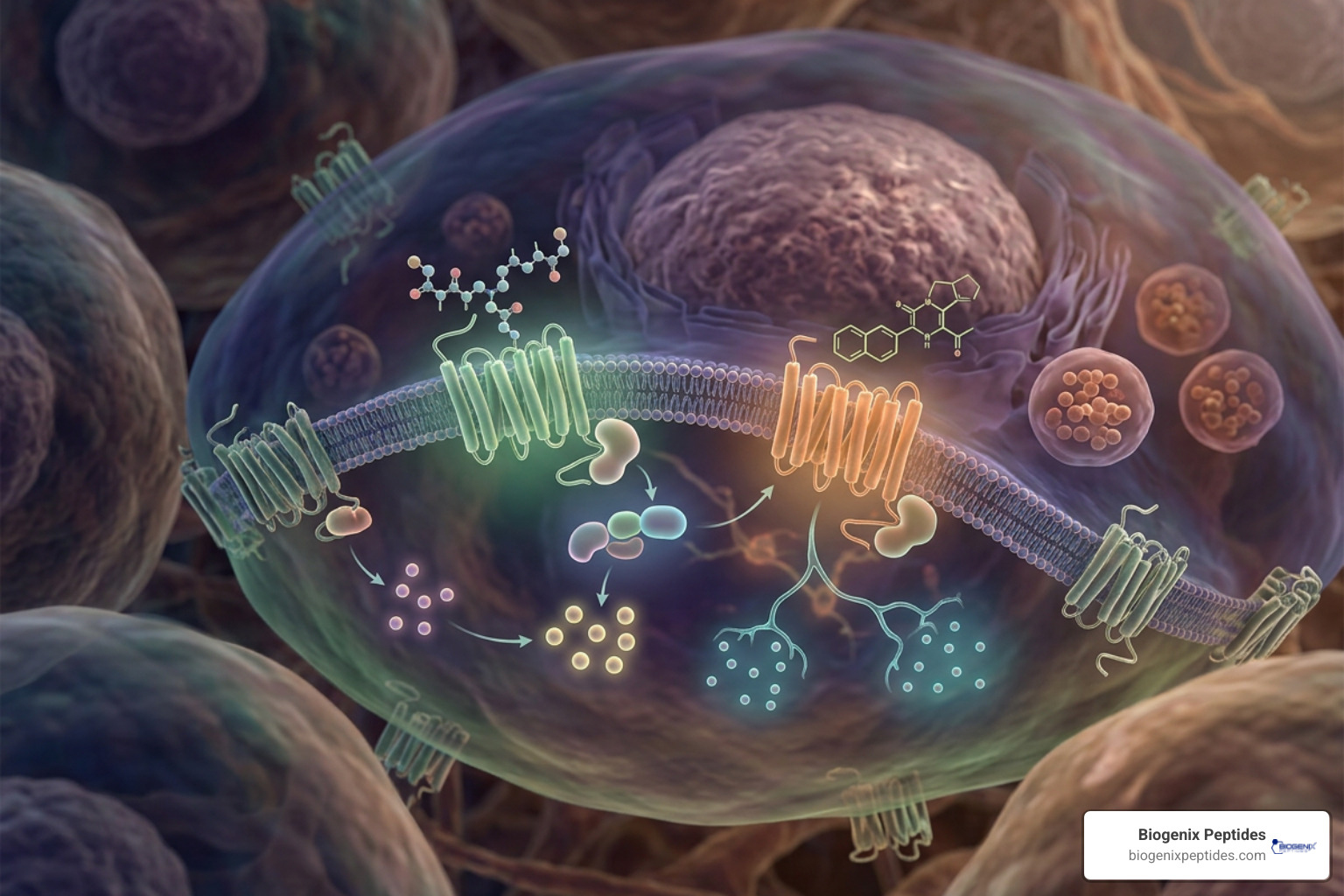
Somatotrophs in the anterior pituitary express both GHRH receptors (G protein-coupled receptors linked to Gαs) and Ghrelin receptors (GHS-R1a, linked to Gαq).
- GHRH Receptor Activation (CJC-1295): Binding activates adenylate cyclase, driving intracellular levels of cyclic adenosine monophosphate (cAMP) and activating Protein Kinase A (PKA). This opens voltage-gated L-type calcium channels, promoting vesicle fusion and GH transcription.
- GHS-R1a Activation (Ipamorelin): Binding stimulates Phospholipase C (PLC), producing inositol trisphosphate (IP3) and diacylglycerol (DAG). IP3 triggers calcium release from the endoplasmic reticulum, while DAG activates Protein Kinase C (PKC), which inhibits somatostatin-induced dephosphorylation.
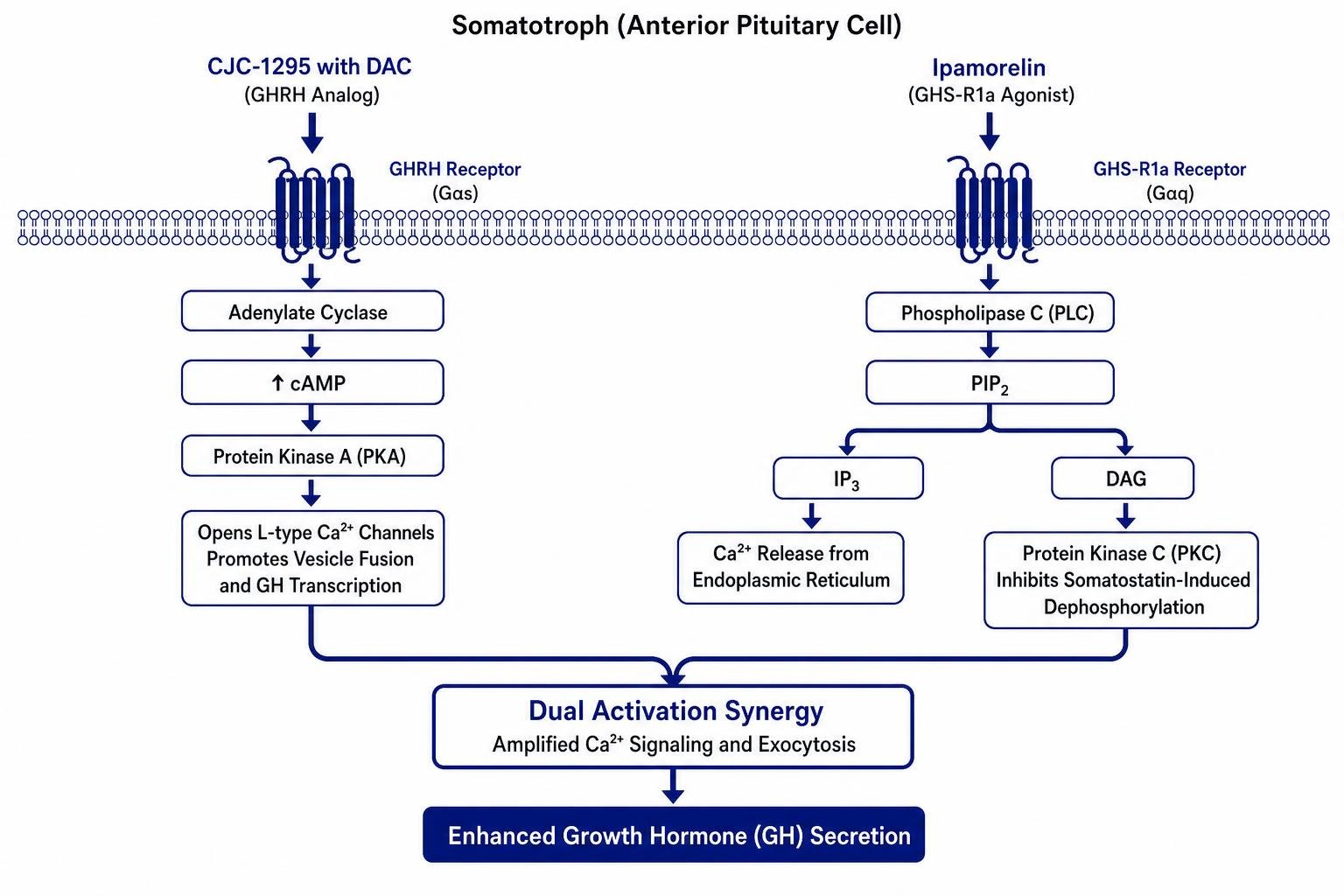
This dual activation generates amplified cellular depolarization and exocytosis. Because ipamorelin is selective for GHS-R1a, it triggers robust GH secretion without meaningfully elevating off-target adrenal or lactotropic hormones such as adrenocorticotropic hormone (ACTH), cortisol, or prolactin.
Key Laboratory Findings on CJC-1295 with DAC Ipamorelin Stacks
Scientific evaluations published in endocrinology literature demonstrate that combining GHRH analogs with ghrelin mimetics produces synergistic somatotroph responses that far exceed the mathematical sum of each peptide administered in isolation.
When evaluating research on peptide blends, researchers observe that CJC-1295 with DAC provides continuous GHRHR occupancy, raising the baseline responsiveness of the pituitary gland. When ipamorelin is introduced alongside this elevated baseline, it elicits an acute secretory discharge. Controlled studies in healthy models confirm that CJC-1295 with DAC produces sustained elevations in circulating GH and IGF-1 levels across multi-day evaluation windows.
Reported Research Benefits of Growth Hormone Secretagogue Combinations
The interest surrounding growth hormone secretagogues stems from their regulatory influence over cellular metabolism, tissue maintenance, and structural repair mechanisms.
Metabolic and Body Composition Research
Elevated GH and downstream IGF-1 signaling cascades play direct roles in substrate selection and tissue turnover:
- Adipocyte Lipolysis: GH directly stimulates hormone-sensitive lipase (HSL) in peripheral adipose depots, accelerating free fatty acid mobilization and oxidation while inhibiting lipogenesis.
- Nitrogen Retention: Elevated IGF-1 binds to IGF-1R tyrosine kinase receptors on skeletal muscle cells, upregulating the PI3K/Akt/mTOR pathway to stimulate protein translation while reducing cellular catabolism.
- Glycemic Homeostasis: Continuous GH signaling can reduce peripheral glucose uptake by downregulating insulin receptor substrate-1 (IRS-1) signaling in skeletal muscle, a variable closely observed in prolonged metabolic trials.
Recovery and Connective Tissue Repair
In cellular repair and regeneration models, growth factors downstream of secretagogue combinations influence several regenerative pathways:
- Fibroblast Activation: IGF-1 stimulates fibroblast proliferation and upregulates Type I and Type III collagen mRNA expression, facilitating tendon and ligament remodeling.
- Osteoblast Proliferation: Secretagogues support bone mineral metabolism and osteoblast differentiation in preclinical skeletal models.
- Slow-Wave Sleep Architecture: Pulsatile GHRH activity within hypothalamic-pituitary circuits correlates with slow-wave sleep (delta sleep) maintenance, an essential period for systemic cellular recovery.
Reconstitution, Half-Life Kinetics, and Laboratory Protocol Guidelines
Laboratory handling requires precision to preserve tertiary peptide structures and avoid structural denaturation.

Pharmacokinetics and Half-Life Comparison
The stark contrast in molecular persistence dictates specific laboratory timing frameworks:
- CJC-1295 with DAC: The maleimide-albumin complex exhibits a terminal elimination half-life of 6 to 8 days in animal models and human trials, maintaining consistent serum concentrations.
- Ipamorelin: Lacking albumin-conjugating groups, ipamorelin is cleared via rapid renal and hepatic pathways, demonstrating a half-life of roughly 2 hours with peak plasma concentration reached within 15 to 30 minutes.
Research Protocols for CJC-1295 with DAC Ipamorelin Administration
In preclinical protocols, researchers design schedules around these divergent kinetic windows. Reconstituted solutions are prepared using bacteriostatic water and stored strictly between 2°C and 8°C.
To review precise laboratory techniques, researchers reference standard protocols outlined in laboratory preparation and handling guidelines. In experimental models studying the cjc-1295 with dac ipamorelin stack, the DAC component is introduced at extended intervals (such as once or twice weekly), whereas the shorter-acting ipamorelin is applied on a daily schedule, often timed to fasted states to eliminate glucose-mediated somatostatin inhibition.
Safety Considerations, Monitoring Biomarkers, and Regulatory Status
The investigation of secretagogues requires objective biomarker tracking and an understanding of regulatory limits.
Recommended Research Biomarkers
To assess biological activity and monitor cellular homeostasis, studies employ targeted laboratory panels:
- Serum Total & Free IGF-1: The standard proxy for integrated 24-hour GH activity.
- Fasting Blood Glucose & HbA1c: Continuous GH elevation from DAC variants can induce insulin resistance; glycemic markers must be tracked at regular 4- to 8-week intervals.
- Serum Prolactin & Cortisol: Tracked to confirm that the ghrelin mimetic maintains its selectivity without off-target pituitary-adrenal stimulation.
- Comprehensive Metabolic Panel (CMP): Assesses hepatic and renal clearance markers during peptide exposure.
Preclinical Safety Profile and Tolerance
Reported observations in controlled literature include transient peripheral vasodilation (mild facial flushing) immediately following administration, driven by brief mast cell degranulation or rapid nitric oxide release. Localized site sensitivity, temporary fluid retention, and mild lethargy have also been noted. Long-term studies remain limited, and prolonged non-pulsatile GH elevation warrants caution regarding cellular proliferation and receptor desensitization.
Legal and Anti-Doping Regulations
CJC-1295 with DAC and ipamorelin are investigational research peptides and are not approved by the U.S. Food and Drug Administration (FDA) for human medical treatment. Furthermore, the World Anti-Doping Agency (WADA) strictly classifies all Growth Hormone Releasing Factors and Secretagogues under Section S2 (Peptide Hormones, Growth Factors, Related Substances, and Mimetics), banning them entirely in competitive sports at all times.
Frequently Asked Questions About CJC-1295 and Ipamorelin
What is the primary difference between CJC-1295 with DAC and without DAC?
The key difference is the Drug Affinity Complex (DAC). CJC-1295 with DAC binds to circulating serum albumin, extending its biological half-life to roughly a week and creating sustained, non-pulsatile elevations in GH and IGF-1. The without-DAC version (Mod GRF 1-29) does not bind albumin, has a half-life of approximately 30 minutes, and produces short, physiological pulses of GH release.
Why are CJC-1295 and ipamorelin paired together in peptide research?
They stimulate growth hormone release via two separate cellular pathways. CJC-1295 acts on the GHRH receptor (stimulating the cAMP/PKA pathway), while ipamorelin acts on the ghrelin receptor GHS-R1a (stimulating the PLC/IP3 pathway). When used together, they create a synergistic biological response that produces greater somatotroph secretion than either compound alone, without significantly raising cortisol or prolactin.
What blood markers are monitored during peptide research studies?
Studies routinely monitor serum IGF-1 levels to measure downstream growth hormone output. Fasting blood glucose, insulin, and HbA1c are tracked to evaluate glycemic impact, while cortisol, prolactin, and comprehensive metabolic panels are utilized to confirm selectivity and monitor systemic tolerance.
Conclusion
The combination of CJC-1295 with DAC and ipamorelin represents a compelling dual-action model in growth hormone secretagogue research. By pairing a multi-day GHRH analog with a selective, short-acting ghrelin receptor agonist, investigators can study both sustained baseline elevations and targeted pulsatile discharges of growth factors.
While the pharmacokinetic synergy of this pairing provides deep insight into somatotroph biology, the sustained action of the DAC moiety requires rigorous monitoring of glycemic markers and metabolic balance.
For research teams interested in exploring pulsatile release dynamics that mirror natural physiology without prolonged albumin binding, the standard CJC-1295 No DAC Ipamorelin blend remains an essential reference standard for in vitro and preclinical research applications. Research-grade compounds should consistently meet stringent purity standards verified through independent analytical testing.