The Best Sterile Water Multi Dose Options for Safe Dilution
Why Choosing the Right Sterile Water Multi-Draw Solution Matters for Research
Disclaimer: The information provided in this article is for educational and informational purposes only. It is not intended as medical advice, diagnosis, or treatment. Products and compounds referenced are for research use only and are not approved for human or veterinary consumption. Always consult a qualified professional regarding health or medical decisions.
Finding the right sterile water multi-draw option for your research setup is not as simple as it sounds. The wrong choice can compromise your reconstitution work, introduce contamination risks, or leave you with a single-use product when your protocol calls for repeated withdrawals.
Here is a quick breakdown of the most important things to know:
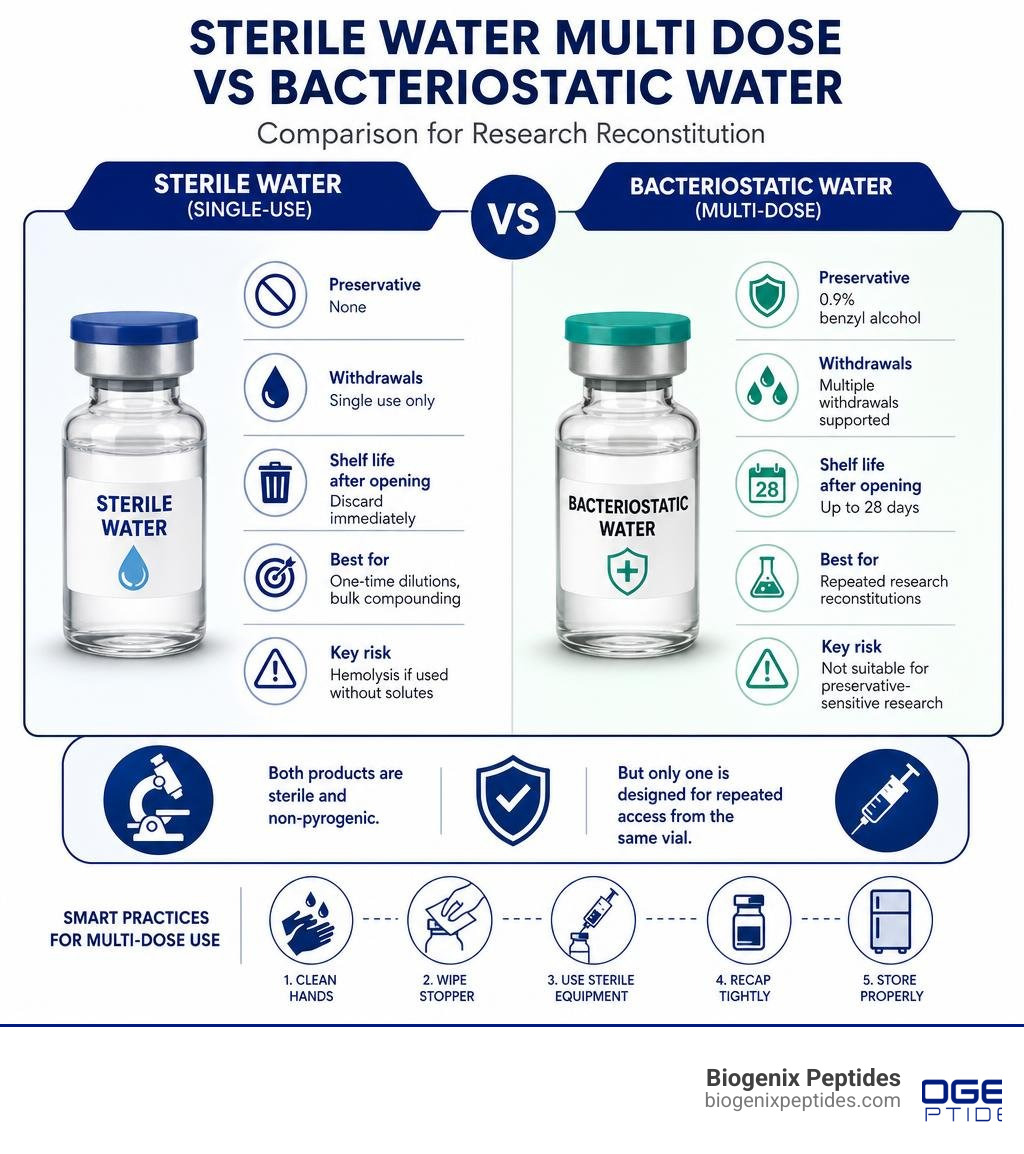
| Factor | Sterile Water (Single-Use) | Bacteriostatic Water (Multi-Draw) |
|---|---|---|
| Preservative | None | 0.9% benzyl alcohol |
| Withdrawals | Single use only | Multiple withdrawals supported |
| Shelf life after opening | Discard immediately | Up to 28 days |
| Best for | One-time dilutions, bulk compounding | Repeated research reconstitutions |
| Key risk | Hemolysis if used without solutes | Not suitable for preservative-sensitive research |
The core difference: Sterile water contains no preservatives and is strictly single-use. Bacteriostatic water contains benzyl alcohol, which inhibits bacterial growth and makes it the practical choice for multi-draw research applications.
Both products are sterile and non-pyrogenic. But only one is designed for repeated access from the same vial.
I’m Jay Daniel, Founder and CEO of BioGenix Peptides, and my hands-on experience in peptide research and reconstitution protocols has given me a deep understanding of how sterile water multi-draw selection directly affects research outcomes. In this guide, I’ll walk you through the top options so you can make a confident, informed choice.
Handy sterile water multi-draw terms:
Understanding Sterile Water Multi-Draw Options in Laboratory Research
When conducting laboratory experiments that require the reconstitution of lyophilized proteins, peptides, or other sensitive chemical agents, the quality of your diluent is paramount. A sterile water multi-draw preparation refers to a highly purified, pyrogen-free water source designed to facilitate repeated withdrawals while maintaining structural integrity.
In the research landscape of July 2026, maintaining strict control over chemical purity is more critical than ever. Standard tap water or even simple distilled water contains dissolved minerals, gases, and micro-organic debris that can interact unpredictably with your research compounds.
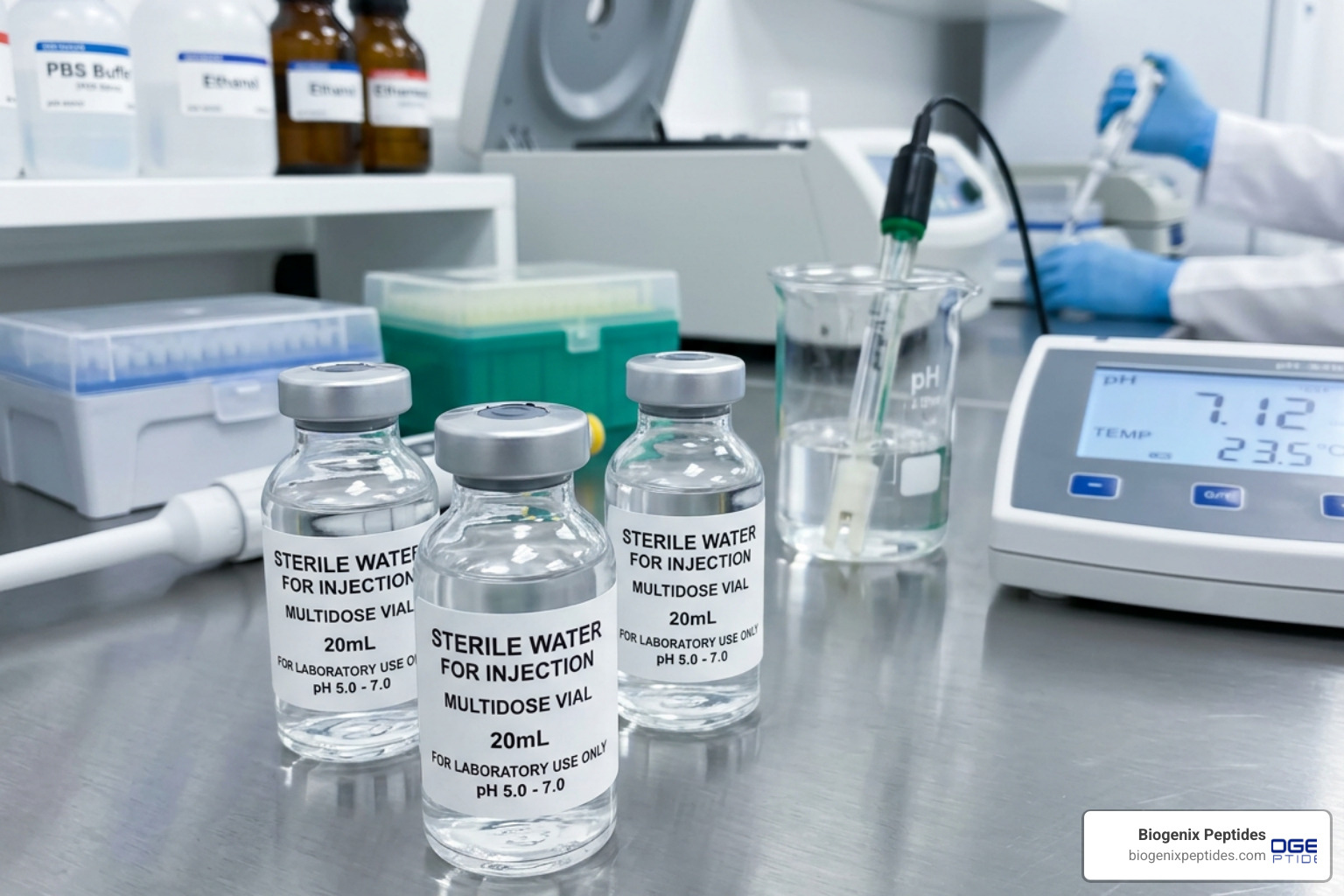
According to official FDA guidelines on sterile water specifications, high-quality laboratory water must maintain a strict pH range of 5.0 to 7.0. It must also be completely free of solutes, meaning there are no added buffers or minerals that could alter the chemical behavior of your test peptide.
For researchers, the primary challenge of using a pure sterile water vial is its lack of defense against environmental pathogens. The moment a needle penetrates the rubber stopper of a standard sterile water vial, the vacuum is broken, and microscopic contaminants can enter. If your research protocol requires drawing small quantities of liquid over several days or weeks, a standard single-draw vial becomes a significant contamination hazard after the initial puncture. This is where specialized multi-draw configurations and preservative-containing alternatives enter the picture.
Sterile Water vs. Bacteriostatic Water for Reconstitution
To ensure the integrity of your laboratory preparations, we must look closely at the structural and chemical differences between pure sterile water and bacteriostatic water.

Pure sterile water is entirely free of any antimicrobial agents. It is prepared through a rigorous distillation process, ensuring that the final liquid contains nothing but hydrogen and oxygen. Because it has no protective barrier against bacterial colonization, any unused portion must be discarded immediately after the initial opening.
In contrast, bacteriostatic water contains 0.9% (9 mg/mL) benzyl alcohol. This organic compound acts as a mild preservative that effectively halts the replication of bacteria. While it does not actively destroy existing bacterial spores like a strong sterilizing agent would, it keeps the environment completely static, preventing any introduced microbes from multiplying.
To dive deeper into these distinctions, you can Learn about sterile water and bacteriostatic water differences to see how they behave in different experimental settings. Additionally, reviewing the official Prescribing information for bacteriostatic diluents provides essential context regarding chemical stability, pH ranges, and the physical properties of these solutions.
When to Choose a Sterile Water Multi-Draw Solution
There are specific laboratory scenarios where a sterile water multi-draw approach or bulk sterile water configuration is preferred over a bacteriostatic alternative. The most common reason is chemical compatibility.
Some highly sensitive research peptides and proteins can be denatured or chemically altered by the presence of benzyl alcohol. The preservative can disrupt the delicate folded structures of certain proteins, rendering them useless for analysis. In these instances, researchers must use a preservative-free diluent.
To handle this safely, laboratories often utilize bulk compounding systems or pharmacy bulk packages. These are large-volume containers designed for use in controlled, sterile environments like laminar flow hoods. According to the FDA labeling for bulk pharmacy packages, these containers are designed to be punctured only once with a sterile transfer device to distribute the water into multiple single-use vials immediately.
If your target compound is incompatible with benzyl alcohol and you cannot use a bulk transfer system, you will need to explore other sterile options. Understanding the available Substitutes for reconstitution can help you maintain protocol safety without risking compound degradation.
The Role of Preservatives in a Sterile Water Multi-Draw Vial
For projects where the target compound is stable in the presence of alcohol, a bacteriostatic vial is the gold standard for multi-draw applications. The 0.9% benzyl alcohol content serves as a robust shield.
When a needle enters the vial, any airborne bacteria introduced during the puncture are prevented from growing. This preservative action allows the vial to be accessed repeatedly over a designated period—typically up to 28 days—before it must be safely discarded.
However, using a preservative-containing solution requires careful calculation. The addition of the diluent alters the overall concentration of your reconstituted solution. To ensure your research calculations remain precise, it is highly beneficial to study The science of reconstitution ratios, which explains how to balance solute volume and diluent quantities to achieve exact target concentrations.
Safety Protocols and Storage for Research Diluents
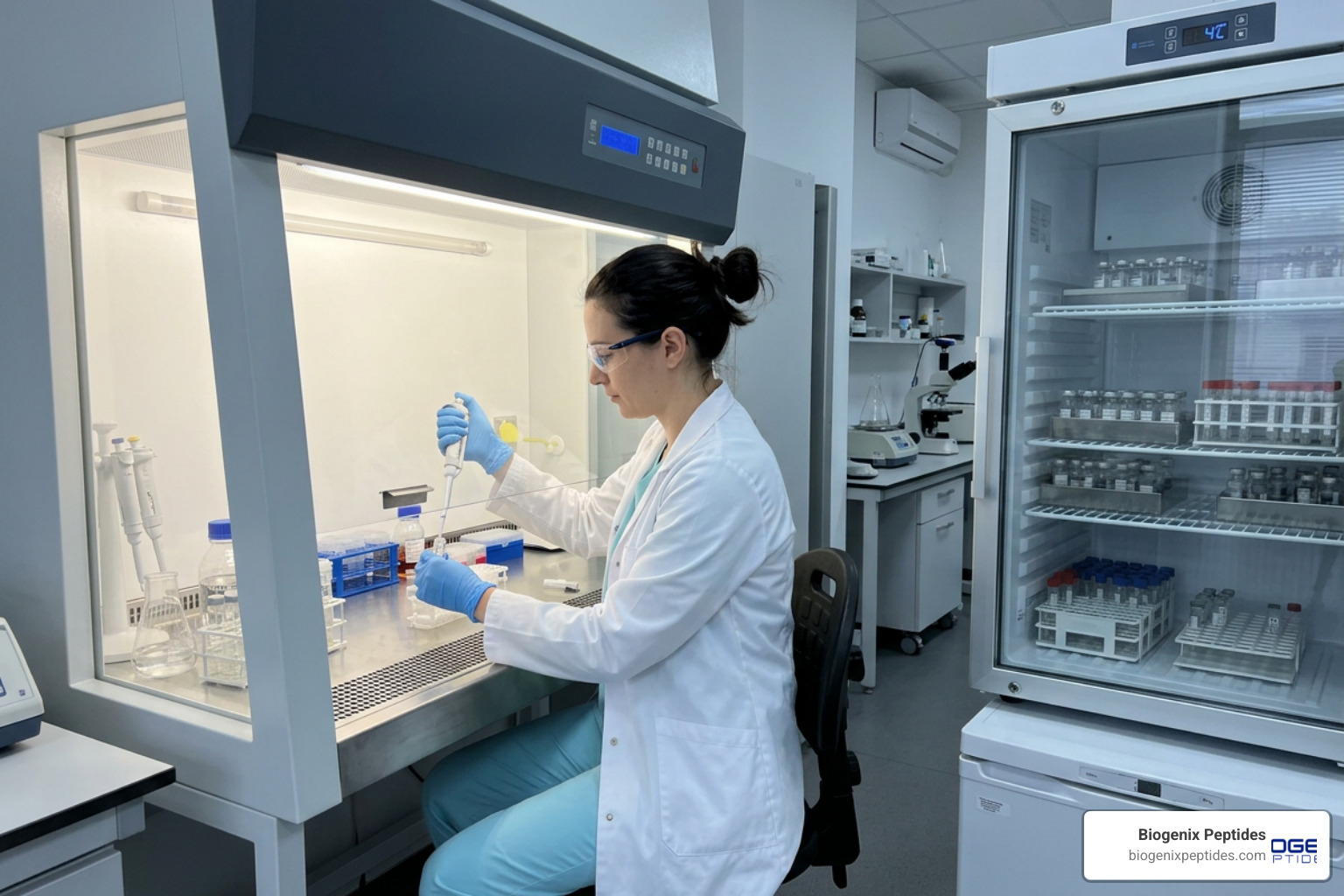
Whether you are working with a preservative-free sterile water multi-draw bulk setup or a bacteriostatic vial, maintaining strict safety protocols is non-negotiable. Contaminated diluents will ruin your research assays, lead to false data, and waste valuable laboratory resources.
We recommend implementing the following best practices in your laboratory:
- Aseptic Workspace: Always perform your liquid transfers inside a certified laminar flow hood or a thoroughly sanitized, draft-free workspace.
- Sanitize Every Surface: Before inserting a needle, scrub the rubber stopper of the vial with a fresh 70% isopropyl alcohol prep pad for at least 15 seconds, and allow it to air-dry completely.
- Never Reuse Tools: Use a brand-new, sterile syringe and needle for every single withdrawal. Re-entering a vial with a used needle is the fastest way to introduce bacterial colonies.
- Temperature Control: Store unopened vials at controlled room temperature, typically between 20°C and 25°C (68°F to 77°F). Protect them from direct sunlight and freezing temperatures.
- Label Everything: The moment a multi-draw vial is punctured, write the date, time, and discard deadline clearly on the label.
If you observe any signs of cloudiness, particulate matter, discoloration, or structural damage to the vial’s seal, discard the container immediately.
Frequently Asked Questions About Sterile Diluents
What is the shelf life of an opened sterile water vial?
If the vial is a pure, preservative-free sterile water container, its shelf life after opening is zero. It must be utilized immediately for a single transfer and any remaining portion must be discarded. If the vial is a bacteriostatic preparation (containing benzyl alcohol), it can be stored and accessed for up to 28 days after the initial puncture, provided it is kept under proper storage conditions.
Can sterile water be used as a direct substitute for bacteriostatic water?
Chemically, yes, because both are highly purified water. However, practically and procedurally, they are not direct substitutes in multi-draw protocols. If you substitute pure sterile water in a protocol that requires repeated withdrawals over several days, you run an incredibly high risk of microbial contamination. Sterile water should only replace bacteriostatic water if the entire volume is being utilized in a single, immediate application.
Why is sterile water contraindicated for direct intravenous administration without solutes?
Pure sterile water is highly hypotonic. It has an osmolarity of 0 mOsmol/L, which is far lower than the osmotic pressure of extracellular fluids and red blood cells (approximately 280 to 300 mOsmol/L). If pure water is introduced directly into the bloodstream without adding solutes to make it isotonic, water will rapidly rush into the red blood cells via osmosis, causing them to swell and burst (hemolysis). This can lead to severe systemic complications and renal failure in biological models.
Conclusion
Selecting the appropriate sterile water multi-draw configuration is a foundational step in ensuring the accuracy, safety, and reproducibility of your laboratory research. By understanding the distinct roles of preservative-free sterile water and bacteriostatic alternatives, you can protect your sensitive research compounds from degradation and contamination.
At BioGenix Peptides, we are dedicated to supporting the scientific community with premium, reliable resources. To ensure your laboratory is equipped with the highest quality diluents for your upcoming projects, you can Purchase premium reconstitution solutions directly from our secure store. Keep your research pure, your protocols precise, and your outcomes reliable.